
 Written by
 Introduction
In the labyrinth of human desires and obsessions, Jun’ichirō Tanizaki’s “Quicksand” serves as a mesmerizing exploration of the human psyche. As we venture into the intricate tapestry of this enigmatic novel, we find ourselves immersed in a world where reality blurs and the boundaries between passion and destruction, love and obsession, become dangerously thin. In this book review, we will delve into the layers of this work, exploring its themes, narrative style, and its enduring significance in the world of literature.
Context and author
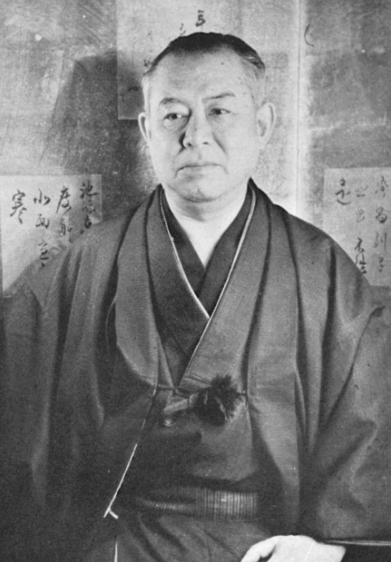
Jun’ichirō Tanizaki
Jun’ichirō Tanizaki was a Japanese author considered to be one of the most prominent figures in modern Japanese literature, being indicated for a Nobel prize in 1964. Some of his works delve into the themes of destructive obsessions and sexuality exploration, while others portray subtly the dynamics of family life in the context of the rapid changes in the Japanese society at the time.
Tanizaki played a pivotal role in Japanese literature during the Shinkankaku-ha movement of the early 20th century. This literary wave, defined by its emphasis on individualism, psychological exploration and the incorporation of innovative literary techniques, brought forth a transformation in storytelling. Alongside authors like Riichi Yokomitsu and Yasunari Kawabata, Tanizaki was committed to exploring the thoughts and emotions of his characters in a more direct and unfiltered manner. This approach allowed them to delve into the realms of desire, sexuality, and the intricate nuances of human relationships. This book is a prime example of the movement, as the characterizations and exploration of human desires align closely with its principles.
Plot
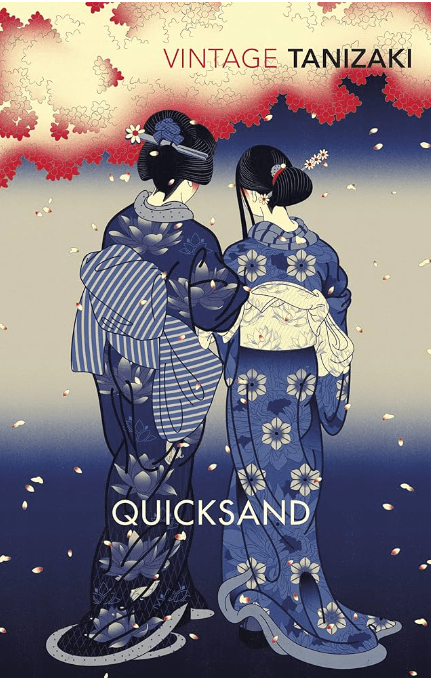
The book immediately draws you in, as it starts with an intimate conversation/confession between the main character and a friend, centered around an affair she had. The story is narrated by Sonoko Kakiuchi, a young woman trapped in a stifling marriage, who attends art classes at a women’s school. Rumors start spreading at the school of Sonoko’s alleged involvement in a romantic entanglement with another student, the beautiful Mitsuko. Despite barely knowing her, Sonoko feels inexplicably drawn toward Mitsuko, prompting her to initiate a friendship with the intriguing young woman.
The sexual tension between the two starts building up until they eventually start an affair, making the rumors a “self-fulfilling prophecy”. As she starts to get increasingly involved into a complex web of lies, deceit and manipulation, both women are pitted against the social norms of marriage in a deadly game that will engulf them both, jointly with Mitsuko’s fiancé and Sonoko’s husband.
The Japanese title, Manji, refers to the four-pronged Buddhist swastika, a symbol of the four lovers, in this case representing Sonoko, Mitsuko, Watanuki and Kotaro; the four main characters, three people that found themselves entangled as pawns in Mitsuko’s love game.
Themes and Impact
The characters within the narrative are multifaceted, with no clear demarcation between right and wrong. The whole book explores a murky sense of morality as it navigates through toxic relationships and dynamics. The narrative thoroughly delves into the concept of the anti-hero, compelling you to root for characters engaged in morally questionable acts.
The story has a lot of unexpected plot twists that constantly challenge and reshape your perception of the characters. It is often that the seemingly naive character undergoes a transformation, becoming the antagonist.
Tanizaki’s portrayal of women flourishing within a naturalistic social environment, where their lives are intricately intertwined with their inner selves, is both subtle and provoking. These women, restricted to domestic spheres and women-only schools, found themselves compelled into arranged marriages, navigating their inner thoughts and emotions alone. Frequently, they formed incredibly intimate, sometimes romantic, connections with their close female friends. The author depicts this hypersensitive inner world and relationships throughout the book, exploring its profound depths layered with a storm of emotions.
The author’s innovative writing style and thematic explorations influenced generations of Japanese writers. Overall, Tanizaki’s contributions to Japanese literature lie in his ability to capture the complexities of human experience, his exploration of cultural shifts, and his innovative narrative techniques, all of which continue to inspire and influence the literary landscape.
Style and Opinion
The whole book has an aura of intimacy almost leaving you with the sensation of overhearing a conversation meant for a therapist’s ears, something you weren’t meant to witness, yet engaging from the first paragraph.
This deeply personal narrative, shared in the first person, often conveys a nuanced portrayal of events, leaving room for interpretation. The reader has the feeling of an unreliable narrator, that can be totally blindsided by the unfolding events or their own feelings.
The storyline is intricate and rich with unexpected turns, adding to the engagement without veering into implausibility or losing the thread of the intricate love affair triangle, later evolving into a quadrangle. All of this unfolds against the backdrop of a traditional Japanese society on the cusp of modernity, enhancing the complexity of the tale.
It begs for the reader to ponder about what it is to feel powerless and ridiculous for love; about the limits of the selfishness one can indulge in the vein hope of the retribution of such powerful affection. How the pretense to love and the need to cling onto it can lead us into a path of self-justification and rationalization of actions that are not moral.
“(…) And even of if it was wrong to be secretly in love with another man, what was so bad about being in love with a woman, someone of my own sex? (…)”
Feeling powerless because of the uncertainty of someone’s feelings and intentions; an illicit affair fueled by love and irrationality that is all consuming is a timeless and universal subject as it is appealing to a passion ingrained in the core of human nature.
All these themes are taken to the extreme in this book, as the main character acknowledges her own impotence and inability to back off a relationship that makes her feel like a “fool”.
“So I found myself sinking deeper and deeper into the quicksand, and although I said to myself I had to escape, by this time, I was helpless. I knew I was being used by Mitsuko and that all the while she was calling me her dear sister she was actually making a fool of me.”
Conclusion
This book masterfully explores themes of jealousy, betrayal, and obsession within the context of illicit and unpredictable love. The characters’ intense desires and struggles against societal constraints and against each other create a deeply relatable and immersive experience for readers. The story’s authenticity and unexpected plot twists kept me thoroughly engaged. The author skillfully balances intricate character development with a suspenseful narrative, creating a compelling and thought-provoking read. I highly recommend this book for readers seeking a thrilling and fast-paced narrative that seamlessly combines suspense, romance, and psychological depth.
Maria Catarina Franco
 theawarenessnews.com