

 Written by
 Introduction
Black Friday is a significant event in the retail calendar, traditionally occurring, in the United States, on the Friday following Thanksgiving. Marking the beginning of the holiday shopping season, it is renowned for its substantial discounts, which attract a massive influx of shoppers both in physical and online stores, making it the busiest shopping day of the year.
Often strategizing for Black Friday months in advance, retailers plan their inventory, marketing campaigns, and logistical operations to handle the surge in demand, taking into account consumer behaviour as the shopping landscape has evolved to include not just the physical rush to stores but also the increasing emphasis on online sales. E-commerce has become a crucial component of Black Friday, with many clients preferring the convenience of shopping from home rather than braving the crowds in brick-and-mortar stores.
The Story Behind The Term “Black Friday”
In 1869, the term “Black Friday” found its origins in one of the most significant financial scandals of the time. On September 24, 1869, in the heart of Wall Street, two enterprising financiers, Jay Gould and James Fisk, conceived a scheme that would go down in history. Their audacious plan was to manipulate the gold market on the New York Stock Exchange by buying vast quantities of gold and then selling it at incredibly inflated prices, promising astronomical profits. However, their ambitions came crashing down on a fateful Friday when the U.S. government intervened, leading to a market collapse and the bankruptcy of numerous millionaires. This calamitous event marked the birth of the term “Black Friday”, associating it with financial disaster for a large period of time.
In fact, it would only be in 1950s that the term “Black Friday” began to take on different meanings, thanks to both the Philadelphia police force and retailers. On the one hand, the police force used it to describe the pandemonium that ensued on the day after Thanksgiving, as suburban tourists would flood into the city, in anticipation of the annual Army-Navy football game. On the other hand, around the same time, Philadelphia’s city merchants started to use “Black Friday” in reference to the long lines and shopping frenzy at their stores on the day after Thanksgiving due to the same abundance of people. However, upset that the name “Black Friday” had a negative connotation, retailers made efforts to change it to “Big Friday” instead, but the term “Black Friday” had already taken hold and continued to spread. So, venders, refusing to be deterred by the negative connotations of the term, changed the narrative, associating it to the financial term of being “in the black”, which refers to when a business is profitable and prosperous – perfectly reflecting and encapsulating what “Black Friday” would come to symbolize later on –, in contrast to being “in the red”, signifying a financial deficit.
Over time, Black Friday became a global phenomenon, extending well beyond a single day of wild shopping. Today, it encompasses an entire shopping season, with retailers offering deals not only on the specific Friday but also during the days leading up to it, turning it into a multi-day extravaganza. The term, once tied to financial scandal and chaos for the police force, has evolved into a symbol of consumerism and commerce that transcends its historical origins.
Consumer Behaviour & Spending Patterns
The Black Friday cultural phenomenon offers a unique window into distinctive consumer behaviours and spending trends, during which product categories and items experience a surge in popularity. Electronics, such as televisions, smartphones, and laptops, consistently top the list of sought-after items. Additionally, home appliances, clothing, beauty products, toys, and gaming consoles also witness increased demand during this shopping extravaganza.
Consumer research reveals that the appeal of Black Friday deals isn’t fundamentally based on need, but on the emotional satisfaction that comes with getting a fantastic deal. It’s about the thrill of buying something at a price lower than the standard one. As a result, consumers actively organize their shopping schedules around these deals, diligently seeking out the best bargains to maximize their savings. Moreover, the “Fear Of Missing Out” (FOMO) stands as a prominent driving force behind Black Friday’s shopping intensity. Companies adeptly employ the “scarcity principle” to create artificial exclusivity by imposing arbitrary limitations on stock, creating the illusion of limited supply. This tactic generates a compelling sense of urgency, propelling consumers to act swiftly to seize the perceived savings. Truly, FOMO can be intensified by various environmental factors, including heightened media attention in the run-up to Black Friday, increased social media usage, and the event’s timing, as it often coincides with payday for many individuals.

Black Friday Shopping (CNN)
Sales & Revenue Analysis
The sales and revenues generated on Black Friday are usually monumental for many businesses and they can significantly impact a company’s bottom line. Often serving as a barometer for the overall health of the retail industry, the success of this shopping event can indicate consumer purchasing power and the general direction of retail trends.
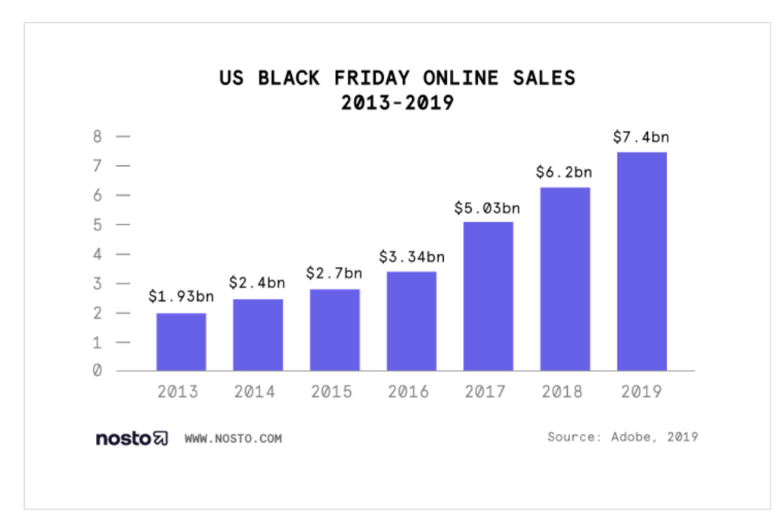
Over the span of six years, online sales during the US Black Friday event experienced substantial growth, rising from $1.93 billion, in 2013, to a noteworthy $7.4 billion, in 2019. In 2022, according to Adobe Analytics, it reached a record-breaking $9.12 billion, kicking off a solid start to the holiday shopping season despite the rise in inflation and other economic concerns. The 2023 forecasts indicate that the sales generated on Black Friday are expected to cross $9.8 billion.

According to the National Retail Federation, amongst the primary drivers behind this substantial surge in online sales and revenues observed during Black Friday, free shipping emerges as the top influencer, closely followed by promotions. On average, discounts hover around 25%, with a majority of stores offering significant discounts ranging between 70% to 80%.
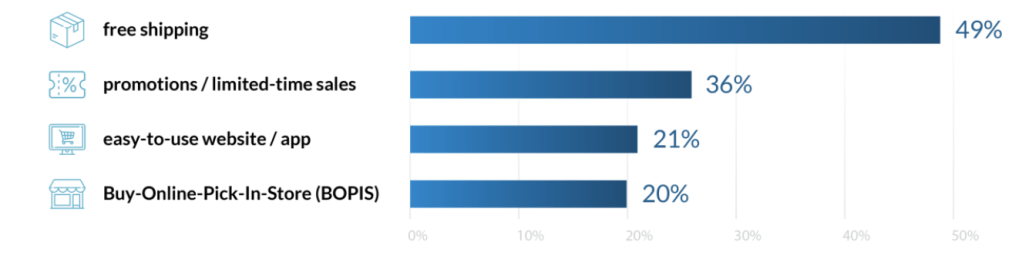
Factors influencing buyers’ online shopping decisions during Black Friday
Conclusion
Although originally celebrated in the United States, the global outreach of Black Friday is poised to expand further, transcending geographical boundaries as more countries adopt this retail trend. Among these, is the United Kingdom, where sales have continued to grow in recent years with shoppers spending more than 8.7 billion sterling pounds during last year’s Black Friday. The event’s success in various regions, coupled with the widespread appeal of significant discounts and exclusive deals, will likely lead to its continued international proliferation. Businesses and customers alike should expect an ever more expansive, technologically integrated, and protracted shopping fiesta in the years to come as Black Friday continues to evolve and adapt to market conditions and consumer demands.
Sources
Statista, Forbes, CNBC, McKinsey, NBC News, NY Times, Fabric Academy

Pedro Teixeira

Beatriz Gomes
 theawarenessnews.com