
 Written by
 Artificial Intelligence, AI, has changed many aspects of our lives over the past few decades, with global economic and social repercussions. Even though companies have always sought efficiency, innovation, and competitive advantage, nowadays AI tools play a fundamental role in their strategies, from automating repetitive tasks to enabling data-driven decision-making.
Job Market and Management Approaches
Inevitably, evolution brings opportunities and challenges, and the need to redefine the nature of work arises. New technologies create both winners and losers in the job market, effectively changing the current occupation demand, requiring adaptability and the re-evaluation of the workers’ essential skills.
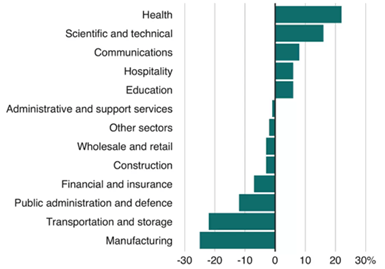
As expected, there is a rising need for experts in a variety of sectors, especially the ones dedicated to AI development, data science, cybersecurity, and E-commerce, being AI and machine learning specialists the fastest-growing job fields. The same happens with jobs that can difficultly be replaced by AI, namely within the health sector. However, in other cases—particularly in physical labour and services— technology is replacing labour rather than enhancing it. According to a McKinsey Global Institute study, by 2030, at least 14% of jobs in OECD countries will be easily automatable, forcing the workers to pursue a new career, while 32% could face substantial changes.
The Positive Symbiotic Relationship between AI and Company Functionality
Despite the threat that AI poses to jobs, there is also the potential for business to successfully integrate it into their operations to create a cooperative relationship between technology and human expertise, as machines excel at handling repetitive tasks and data analysis, while humans bring creativity, emotional intelligence, and complex problem-solving skills to the table.
As a matter of fact, AI reduces human error and boosts operational efficiency by automating repetitive operations and processes, completing them faster and more accurately, thus allowing workers to concentrate on more strategic and value-added work. Indeed, the European Parliament estimated an increase of 11-37% in labour productivity related to AI by 2035.
In the realm of logistics and supply chain management, AI optimizes operations by predicting demand, helping companies improve their supply chains and reduce costs. For example, in transportation, autonomous systems in driverless transport are reshaping logistics. Also, AI simplifies data analysis and customer service, improving productivity and cost-effectiveness levels. Through machine learning algorithms companies promptly assess trends and anticipate patterns in consumer behaviour to create more accurate strategic planning and enhance competitiveness. AI technologies further enable businesses to offer personalized experiences to their customers and instant support through chatbots, improving customer interactions and satisfaction.
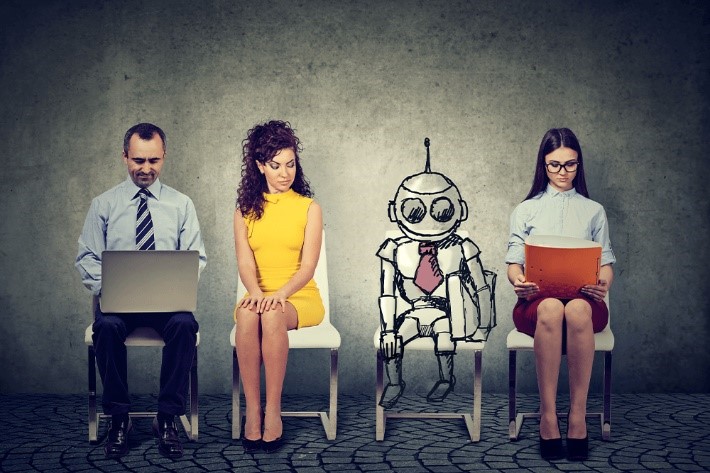
Additionally, AI is progressively making a pronounced appearance in the decision-making processes of managers and CEOs, from who these figures should hire or promote, to what the establishment of job evaluation standards.
On another note, as companies deal with more complex cyber threats, AI has become a crucial asset in fortifying cybersecurity defenses. Algorithms recognize patterns, spot security lapses, and react instantly to online attacks. By taking a proactive stance when it comes to cybersecurity, businesses can better protect their data and maintain stakeholders’ trust.
Machine learning, with its situation-specific adaptive capabilities, is unlocking new possibilities for controlling processes and predicting issues in production and utilization of resources. Thus, through advanced algorithms and data analysis, organizations can optimize resource usage, reduce waste, and implement eco-friendly practices.
Historically, context-dependent learning processes posed significant challenges to automation due to a reliance on implicit knowledge and tasks lacking explicit rules of action. However, a paradigm shift is taking place: individuals are no longer just intelligent learning beings but are also assisted by AI, forming a symbiotic relationship that enhances human potential.
AI’s Duality: a Boost to the Economy or a Destabilizer of the Job Market?
The field of artificial intelligence is subject to cycles of intense interest – AI summers – and periods of skepticism and disappointment with its development – AI winters. Currently, the prolonged summer we are experiencing is characterized by significant funding and widespread adoption within the business world, with companies such as Google testing virtual try-ons that utilize their generative AI exemplifying how AI is reshaping operational structures, driving innovation, and providing new services.
With this being the most preponderant summer yet, what does this mean for the economy?
Many have grand expectations, with studies carried out by Goldman Sachs pointing out to the fact that “widespread AI adoption could eventually drive a 7% or almost $7trn increase in annual global GDP over a ten-year period.”, referring also to a three-percentage-point rise in annual labour-productivity growth in firms that adopt the technology, representing a huge uplift in income compounded over the years. In addition, a study published in 2021 by Tom Davidson of Open Philanthropy talks about a more than 10% chance of “explosive growth”, that being an increase of at least 30% in global output, sometime this century.
Nevertheless, in tandem with the rise in the positive overview that AI may bring to the economy, concerns about job displacement and the future of many career paths persist, giving rise to an overall sense of uncertainty. In a recent publication, Tyna Eloundou of OpenAI has stated that “around 80% of the US workforce could have at least 10% of their work tasks affected by the introduction of LLMs [Large Language Models]”.
Furthermore, The Economist’s coverage of the unpreparedness of employers for AI and Timnit Gebru’s advocacy for responsible AI development highlight the ethical considerations that should underpin the development of AI technologies. All in all, defining ethical boundaries in AI should involve transparency policies and accountability for decision-making within companies that inevitably adopt the tool, so as to ensure that AI is developed and used responsibly without perpetuating bias or harm.
The future of the job market, therefore, requires a delicate balance between innovation and ethical considerations to foster a work environment that prioritizes both technological progress and human well-being. The most prevalent concern is the rapid adoption of AI eventually leading to the destruction of jobs at a pace surpassing their creation, as barriers to entry, particularly related to owning and generating vast amounts of data could potentially stifle competition and innovation. Thereby, the dual nature of AI, as both a source of optimism and anxiety, underscores the need for thoughtful consideration and strategic planning as businesses navigate this transformative technological landscape.
Conclusion: the Future of the Job Market
As we traverse this dynamic landscape, one central theme emerges: the future of employment relations hinges on achieving a harmonious coexistence between human ingenuity and the technological prowess of AI. The synergy between human skills and AI capabilities stands as the cornerstone for unlocking the full potential of this transformative partnership.
There is also to say that, despite the ongoing debate, academic evidence on whether AI and industrial robots harm employment remains inconclusive. This uncertainty underscores the importance of continued research and vigilance in monitoring the impact of AI on the job market.
It can be established that the transformative wave of AI in employment relations has the potential to be both an opportunity and a challenge. The pivotal point is to enhance transparency in AI development, coupled with accountability for its ethics. Striking this balance is crucial for fostering a job market that not only benefits businesses but also safeguards the well-being of employees.
Sources: The Wall Street Journal, World Economic Forum, European Parliament, The Economist, Vogue Business, BBC, The New York Times, Nexford University, Griffiths, Paul & Nowshade, Mitt. 2019. “European Conference on the Impact of Artificial Intelligence and Robotics”. EM-Normandie Business School, Oxford, UK, White House, European Commission. 2022. “The Impact of Artificial Intelligence on the Future of Workforces in the European Union and the United States of America

Madalena Zarco

Catarina Fernandes
 theawarenessnews.com