
 Written by
 Neanderthals, scientifically Homo Neanderthalensis, the most similar species to Homo sapiens, have long been imagined as aggressive and intellectually inert creatures, roaming the earth and throwing stones and sticks everywhere. However, in the last few decades, studies have led many to believe that there is much more to be said about these early humans. Not only did they possess many cognitive abilities, but they also originated the earliest rudimentary forms of sacred rituals and art.
The oldest known Neanderthal fossil is estimated to be 430 thousand years old. It was found in the Atapuerca Mountains, in Spain, and consists of the skull of a man whom archaeologists called “Miguelón”. On the other hand, the most recent traces of their lives date back to 40 thousand years ago. Hence, it is assumed that they existed during that time.
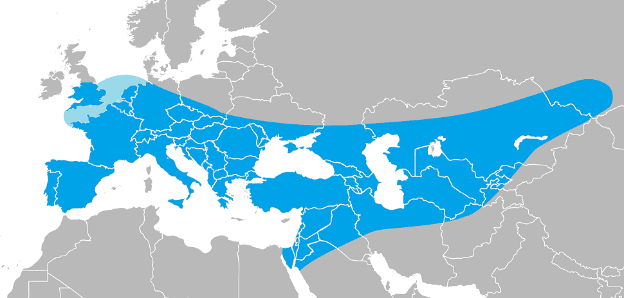
Spain and other European countries are not the only ones that were once home to these prehistoric humans. Because they lived through glacial and interglacial periods for millennia, this might have been a driving force for searching for food and warmer temperatures, leading to migration. Consequently, it is possible to find traces of their existence from Portugal to Central Asia, not only in fossils and artifacts, but also in ourselves: almost every European and Asian citizen carries up to 4% of their DNA.
What did they look like?
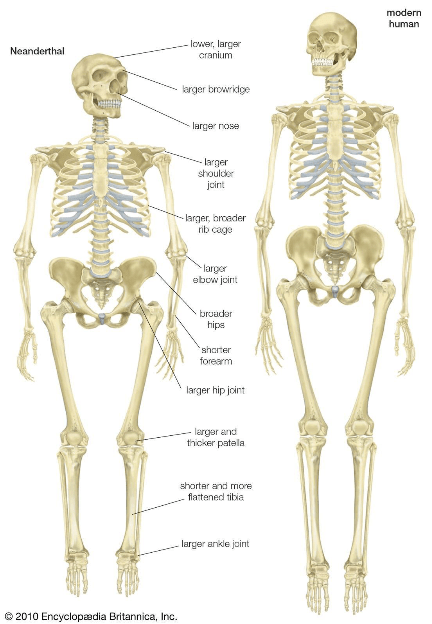
While Homo Sapiens’ physiology enables us to run at high velocities and move nimbly compared to some other similar species, Neanderthal´s attributes were a little bit different. They were shorter, heavier, with smaller and wider limbs and torsos. Their muscular mass was much more prominent, providing high levels of strength and resistance in the wild world. This also allowed them to preserve more heat in their bodies, something essential to survive in cold temperatures during the glacial ages. Besides, as they evolved in Europe and in central Asia, where the climate was harsher than in Africa (where Homo Sapiens came from), it is believed that these physical characteristics developed to guarantee adaptation in these areas. Their faces also had wider noses that helped the air be heated before reaching the lungs and jaw bones that grew forward until late adolescence.
How were their minds?
Neanderthal´s brains were also very characteristic, being the same size or larger than modern human ones. Bigger parts were allocated to vision and body movement and control. This also explains why their eyes were wider and their vision was better.Nevertheless, minor areas were directed at social cognitions. Consequently, their interactions were probably not as rich and didn´t play as an important part in their lives as in Homo Sapiens´. So, they didn´t build big social networks, preferring to live in small groups. This is beneficial in some cases, for example, the need to collaborate and take care of many members is not incessant, which could facilitate decision-making and movement from place to place. However, exchanging information, passing downknowledge through generations, and building some sort of culture are essential activities to lead populations to prosper and evolve throughout history. When that didn´t happen, extinction became easier and more common.
What did they eat and what did they do?
Living in a time where agriculture was nowhere in sight, hunting and gathering what was found in Nature was probably the major occupation of Neanderthals. Even though they have been imagined killing beasts like mammoths and sabretooth tigers, that idea is not entirely correct. Professor John Speth, from the University of Michigan, stated: “Neanderthals were not hypercarnivores; their diet was different.” Studies show that one common habit was letting large quantities of meat putrefy, hoping that it would attract mostly maggots, which are much easier to collect and consume. Besides, these little beings were a great source of protein, fat, and amino acids. Tubers, fruits, seeds, and plants as well as cannibalism contributed to their omnivorous diet.
Neanderthals used many small objects to serve various purposes in their daily activities. Items such as axes, scrapers, carved rocks, and burins helped with hunting and domestic tasks. Fire was already a controlled element, through techniques such as percussion with flint and pyrite. It contributed to body heating and cooking tasks. Flaking techniques assisted them in manufacturing clothing from animal skins, bones, and fur.

What did they create?
Notwithstanding, these sorts of items were also used with a symbolic meaning. Neanderthal remains that carried necklaces with eagle talons as pendants, as well as shells and feathers, have been found across more than 20 places in Western Europe. It is common that the objects that everyone carried meant something about their lives or role in the social group and were a tool for non-verbal communication. This also reveals that burial rituals could be practiced. In France, in a cave called La Chapelle-aux-Saints, in 1908, an untouched skeleton was discovered. More recent excavations concluded that the depression where it was found had been altered 50 000 years ago to bury this man or woman. That way, it remained protected from weather-related smoothing and animals.
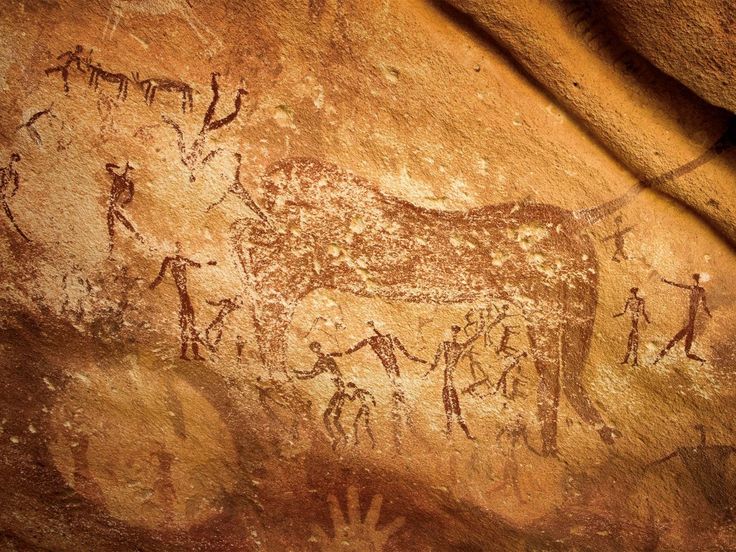
In many cases, not only bones were found, but also paintings on the walls.
In three different spots in Spain, after analyzing their pigments, researchers concluded that the paintings were at least 65 000 years old, being the oldest ones in the whole world. This raised a question: why were the first ever cave paintings found in Europe, rather than in Africa, where Homo Sapiens appeared? Besides, it is known that the first modern humans arrived in Europe around 50 000 to 40 000 years ago. More recently, in 2018, it was concluded that other artworks in Cueva de los Aviones, were at least 115 000 years old. This left scientists with one possible answer: Neanderthals were also artists. This raised various debates, where many started defending that they were not as different from Homo Sapiens as it was thought. Moreover, prejudice regarding their level of cognitive capacities, where modern humans crown themselves as being the smartest species of all time, might be led by presumption and not by real facts.

How did they become extinct?
Neanderthal’s extinction occurred around 40 000 years ago. Several theories have emerged to justify this fact. Many defend that this is simply nature running its course, since 99.9% of all species that ever existed have disappeared. Curiously, this prehistoric human extinction coincided with the migration and expansion of Homo Sapiens outside of Africa. Many experts claim that this extinction happened due to the competition and violence between the two species. Maybe Neanderthals had worse weapons to defeat the modern man or lost in the search for food and shelter. Perhaps, as they lived in smaller gatherings, they couldn’t procreate as much. Nevertheless, other theories suggest that instead of being violence the reason for their extinction, it was sex. Inbreeding between the two species might have caused a reduction in sexual relations between Neanderthal´s, which made their populations become smaller until they were outnumbered by Homo Sapiens. Another hypothesis is that a thousand-year cold snap that occurred around 40 000 years ago may have caused their population´s decline.
Conclusion
All in all, Neanderthals were far more complex and capable than the stereotypical image that has long defined them. Rather than viewing them as inferior, it may be more accurate to see them as different, yet remarkably similar to us. Whatever the reasons for their disappearance, their legacy did not entirely disappear, as traces of their DNA still live in human populations. There will forever be endless questions regarding their lives, the answers to which are timelessly buried in the past, and in the mute land they once walked on.
Sources for the text
https://www.nationalgeographic.com/history/article/who-were-the-neanderthals
https://www.nationalgeographic.com/history/article/neanderthals-extinction-homo-sapiens
https://anthrosource.onlinelibrary.wiley.com/doi/full/10.1111/aman.13654
https://www.britannica.com/topic/Mousterian-industry
https://www.nationalgeographic.com/culture/article/130911-neanderthal-fashion-week-clothes
https://www.nationalgeographic.com/culture/article/131216-la-chapelle-neanderthal-burials-graves
https://www.nationalgeographic.com/science/article/neanderthals-cave-art-humans-evolution-science
https://www.nationalgeographic.com/environment/topic/climate-change
https://www.pnas.org/doi/10.1073/pnas.1808647115
https://www.nationalgeographic.com/science/article/news-neanderthal-teeth-nursing-seasons-stress
https://www.britannica.com/topic/Neanderthal~
https://www.nhm.ac.uk/discover/who-were-the-neanderthals.html
https://humanorigins.si.edu/evidence/human-fossils/species/homo-neanderthalensis
https://europe.factsanddetails.com/article/entry-814.html
https://www.science.smith.edu/climatelit/disappearance-of-the-neanderthals-c-40000-bp/
Sources for the images
https://www.worldhistory.org/image/5958/geographical-range-of-neanderthals/
https://www.britannica.com/topic/Homo-sapiens/Bodily-structure
https://www.theguardian.com/science/2012/apr/18/favourite-science-writing-sleeping-neanderthals

Júlia Lobão
Writer
 theawarenessnews.com