
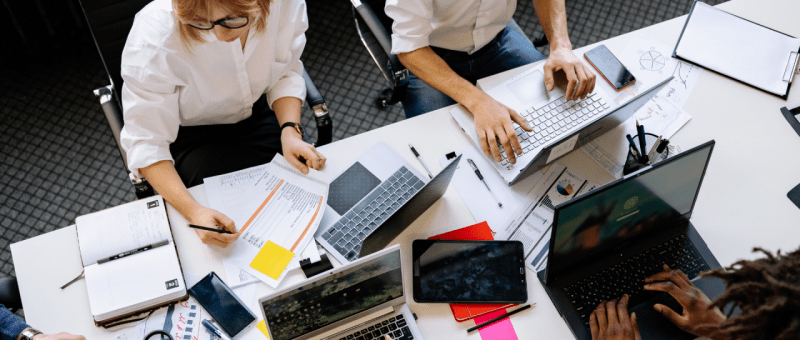
The landscape of work is undergoing a significant transformation, driven by technological advancements, evolving societal attitudes, and global events such as the COVID-19 pandemic. The pandemic acted as a catalyst, accelerating the adoption of remote work and prompting companies to reassess traditional work structures. Central to this evolution are the concepts of remote work, hybrid models, and the reimagining of traditional office spaces. These developments are not only altering the physical location where work occurs but are also reshaping the dynamics of the global workforce.
Remote Work: A Lasting Change?
The adoption of remote work has seen a substantial increase, particularly during the pandemic. Gallup reports that U.S. workers averaged 3.8 remote workdays per month in 2023, a rise from 2.4 days before the pandemic. This shift has led to enhanced productivity for many, as employees experience fewer office-related distractions and a better work-life balance. Additionally, companies can now access a broader talent pool without geographical constraints.
However, remote work is not without its challenges. Feelings of isolation and loneliness are common among remote workers, stemming from reduced face-to-face interactions. This can lead to a weakened sense of team cohesion and connection to the company’s culture. Moreover, the blurring of boundaries between personal and professional life can result in difficulties disconnecting from work, potentially leading to burnout. A survey by PwC in 2022 highlighted that 39% of employees were concerned about not receiving adequate training in digital and technology skills from their employers, underscoring the need for ongoing support in a remote setting.
Hybrid Models: The Emerging Standard
To balance the advantages and drawbacks of remote work, many organizations are adopting hybrid work models, which combine in-office and remote working. A PwC survey found that 46% of companies anticipated implementing a hybrid model by the end of 2022. This approach allows employees to engage in collaborative activities in the office while performing focused tasks remotely.
For hybrid models to be effective, a reevaluation of office design is essential. According to workplace strategy experts, companies are shifting away from the traditional cubicle-based layout in favor of open, flexible spaces that encourage teamwork and innovation. This may involve reducing the number of assigned desks in favor of creating more collaborative spaces that foster teamwork and innovation. Leading companies like Google and Facebook are at the forefront of redesigning their offices to support flexible layouts and incorporate technology that facilitates seamless collaboration between in-office and remote employees.
The Office’s Evolution: From Workspace to Collaboration Hub
The traditional office is being redefined from a place solely for individual work to a hub for collaboration and creativity. In this new model, the office complements remote work by providing spaces designed for team interactions and innovative endeavors. According to a report by JLL (Jones Lang LaSalle), while global office occupancy rates have declined, there is an increased demand for spaces that support collaborative work.
This shift has significant implications for the commercial real estate sector. As companies reduce their physical office spaces, property owners are compelled to offer more flexible leasing options and rethink office configurations to accommodate a more mobile workforce. For instance, some landlords are transforming traditional office buildings into co-working hubs, while others are integrating wellness-oriented designs that include outdoor workspaces, improved ventilation, and enhanced communal areas to foster employee engagement. The focus is now on creating environments that enhance employee experience, promote well-being, and support a variety of work styles.
Conclusion
The future of work is characterized by flexibility and adaptability. Remote work and hybrid models are becoming integral components of organizational strategies, necessitating a reimagining of the traditional office. As businesses navigate this evolving landscape, they must address the challenges associated with these new work arrangements, such as maintaining company culture, ensuring employee well-being, and providing adequate support and training. By embracing these changes thoughtfully, organizations can create a dynamic work environment that meets the needs of their employees and positions them for success in a rapidly changing world.
Sources: news.gallup.com , pwc.com

José Afonso Nunes Freitas
Research Team Member & Editor
 theawarenessnews.com