
 Written by
 Reading Time: 5 minutes
On March 10th, the Trump Administration announced that 83 percent of the programs run by the U.S. Agency for International Development (USAID) would be canceled. This decision follows a series of actions targeting USAID, including placing its officials on paid leave, discussing the agency’s potential shutdown, and labeling it as being run by “radical left lunatics” and a corrupt institution that misuses taxpayer money. The first major move came with a freeze on approximately 90% of USAID grants and contracts worldwide—making the latest cuts less surprising.
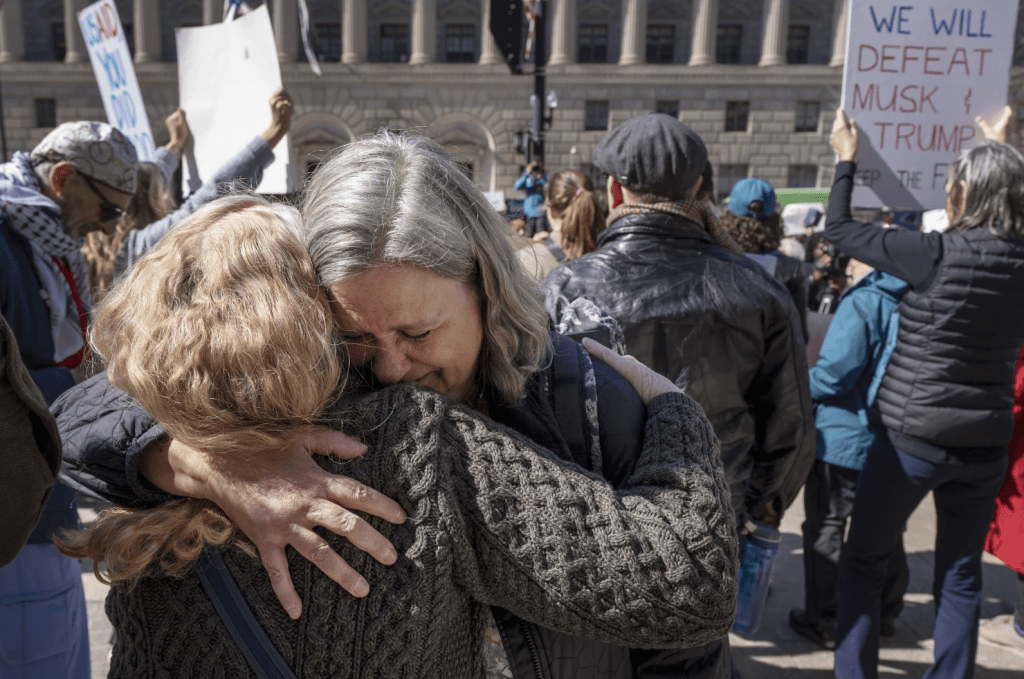
In a speech to Congress on March 4th, Trump outlined his reasoning behind these decisions. Reducing “the flagrant waste of taxpayer dollars” is part of his broader strategy to combat inflation, purpose for which the DOGE, the brand-new Department Of Government Efficiency headed by Elon Musk, was created. Trump listed several specific cuts, such as “$8 million to promote LGBTQI+ initiatives in Lesotho, which nobody has ever heard of,” and “$250,000 to increase vegan local climate action innovation in Zambia.” He also mentioned “$47 million for improving learning outcomes in Asia,” sarcastically noting that “Asia is doing very well with learning. You know what we’re doing—could use it ourselves.” Many other initiatives were dismissed as “scams.”
However, while some projects may be debated, the impact of these cuts extends to critical humanitarian aid programs. Initiatives preventing malnutrition and combating diseases such as malaria, polio, and AIDS have been shut down, leaving millions vulnerable around the world.
From a broader perspective, the decision aligns with a reshaped U.S. national interest—one that takes a narrower, more domestic-focused approach. While foreign aid cuts may contribute to reducing inflation, they also risk undermining stability in conflict-prone regions and weakening diplomatic relations. It remains to be seen what the long-term consequences of this decision will be for the US.
Impact on Developing Countries
But what can poor countries’ economies expect from such an abrupt dismantling of USAID?
It is inevitable that many African countries will face a profound distress, especially in the healthcare sector. For instance, in South Africa, 17% of funding for AIDS treatment comes from PEPFAR (the President’s Emergency Plan for AIDS Relief), which also supports the salaries of more than 15,000 healthcare workers. The situation could be even more critical in Ethiopia, USAID’s largest beneficiary, which receives over $200 million annually to support its healthcare system.
However, some argue that heavy reliance on foreign aid is not beneficial for recipient countries. There is no consensus on its overall impact on economic development. Some scholars argue that aid fosters growth through infrastructure improvements, pioneering investments, and attracting foreign capital. Others counter that it distorts labor markets and fosters dependency. Some have also compared foreign aid effects on local economies to the ones of natural resources revenues: these inflows can lead to currency appreciation, making locally produced locally produced tradable goods relatively more expensive and less competitive internationally, triggering the so-called “Dutch Disease” and weaking local manufacturing.

The Debate on Foreign Aid
Criticisms against aid arrive also from other Global South Activists, who claim that aid is just charity covering social injustice and perpetuating the colonialist “civilizing mission”.
One of the most prominent critics is Dambisa Moyo, a global economist born in Zambia and naturalized as an American. In her 2009 book, Dead Aid – Why Aid Is Not Working and How There Is a Better Way for Africa, she challenges the “greatest myths of our time: that billions of dollars in aid sent from wealthy countries to developing African nations has helped to reduce poverty and increase growth”. Moyo argues that foreign aid fuels corruption, distorts local markets, and creates a vicious cycle of dependency—ultimately increasing poverty rather than alleviating it. Moyo proposes the stop of aid funding, throughout the over a period of five years, as a solution to reduce poverty and improve economic growth and development in African countries.
Although Moyo’s plan differs significantly from Trump’s approach and underlying motivations, her perspective raises the question: Could these cuts ultimately push aid-receiving countries toward self-reliance?
Regardless of the answer to this question, Trump’s decision carries profound economic and humanitarian consequences for developing nations reliant on these funds, and challenges the West’s long-standing role in Global South development. If these cuts lead to reduced dependence on Western aid, they could open the door for alternative models and standards—ones that might ultimately foster more sustainable growth for recipient countries and prompt a reevaluation of an international cooperation system that has long been in need of reform.
Sources
Al Jazeera, Trump’s USAID freeze must serve as a wake-up call for Africa, available at https://www.aljazeera.com/opinions/2025/3/13/trumps-usaid-freeze-must-serve-as-a-wake-up-call-for-africa
Al Jazeera, Why some in the Global South are not mourning the demise of USAID, available at https://www.aljazeera.com/opinions/2025/3/3/why-some-in-the-global-south-are-not-mourning-the-demise-of-usaid
AP News, USAID cuts are already hitting countries around the world. Here are 20 projects that have closed, available at https://apnews.com/article/usaid-cuts-hunger-sickness-288b1d3f80d85ad749a6d758a778a5b2
Arellano, C., Bulíř, A., Lane, T., &Lipschitz, L. (2009). The dynamic implications of foreign aid and its variability. Journal of Development Economics, 88(1), 87-102.
Our World in Data, Foreign Aid Received, available at https://ourworldindata.org/grapher/foreign-aid-received-net
The Guardian, Rubio says 83% of USAid programs terminated after six-week purge, available at: https://www.theguardian.com/us-news/2025/mar/10/marco-rubio-usaid-funding
The Guardian, ‘The impact has been devastating’: how USAid freeze sent shockwaves through Ethiopia, available at https://www.theguardian.com/global-development/ng-interactive/2025/feb/21/the-impact-has-been-devastating-how-usaid-freeze-sent-shockwaves-through-ethiopia
The New York Times, All of the Trump Administration’s Major Moves in the First 5151 Days, available at https://www.nytimes.com/interactive/2025/us/trump-agenda-2025.html?categories=Foreign+policy
The New York Times, U.S. Terminates Funding for Polio, H.I.V., Malaria and Nutrition Programs Around the World, available at https://www.nytimes.com/2025/02/27/health/usaid-contract-terminations.html
Cao, W., & Du, D. (2024). Does foreign aid play a role in promoting economic development? Evidence from US aid. Applied Geography, 171, 103394.
Zambisa Moyo, Dead Aid, https://dambisamoyo.com/books/

Veronica Guerra
Research Team Editor & Writer
 theawarenessnews.com