
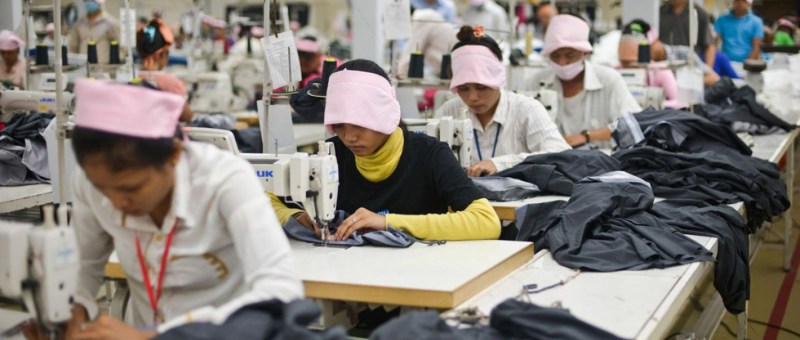
Over the course of history, the evolution of technology and methods of production has enabled humans to evolve from mere animals to creatures with the most complex societies and activities ever performed by living beings. We did not just find easier ways to collect what nature could give us; we started manipulating those resources for our own good. Nowadays, practically all the items we interact with every day, from food to buildings and clothes, have been touched by industrial processes or made from scratch. Humanity chose to live in a world constructed by its own kind.
Despite all the benefits that the industrial revolution brought, such as increasing productivity and reducing production costs, it has always carried a shadow: the exploitation of its workers. In western countries, the cradle of industrialization, a history of labor abuses like excessive working hours, negligible salaries, and nonexistent vacations has long been fought by unions and non-governmental organizations, and therefore has been reduced or annihilated. This is one of the reasons given to explain the relocation of factories of European and North American brands to the Global South. The crimes that are condemned in our pro-Human Rights societies have strategically migrated to other parts of the planet, like Asia, Africa, and South America.
In our daily lives, we see the result of workers’ suffering in those areas: our cheap, easily accessible clothing. Indeed, the garment and textile industries are among the most prone to exploiting their employees. They employ about 100 million people worldwide, of whom around 80% are women. Only 1% to 2% earn a salary that allows the coverage of the basic living costs like housing and food. This happens, in part, so that the profit margins of the companies are the highest possible, due to extremely low production costs. In countries like China, Vietnam, or Bangladesh, there is a hunt for those who are in such precarious living conditions that they accept some of the worst labor conditions seen today.
Asia is home to about 75% of the world’s garment and textile workforce, in which the majority produces for fast fashion brands like Pull&Bear, Stradivarius, H&M, and Mango. A recent report by International Amnesty has concluded that in countries like Bangladesh, Sri Lanka, India, and Pakistan, anti-union movements take place to repress recent protests by those who ask for better living conditions. A strategic alliance between brand and industry leaders, as well as miserable laws and inefficient organizations to protect workers in those countries, leads to a trap in which employees are caught, destined for poverty. This way, it also becomes simpler for the Western companies to blame the national policies of the countries where they install their factories for poor labor rules and therefore exonerate themselves of human rights violations.
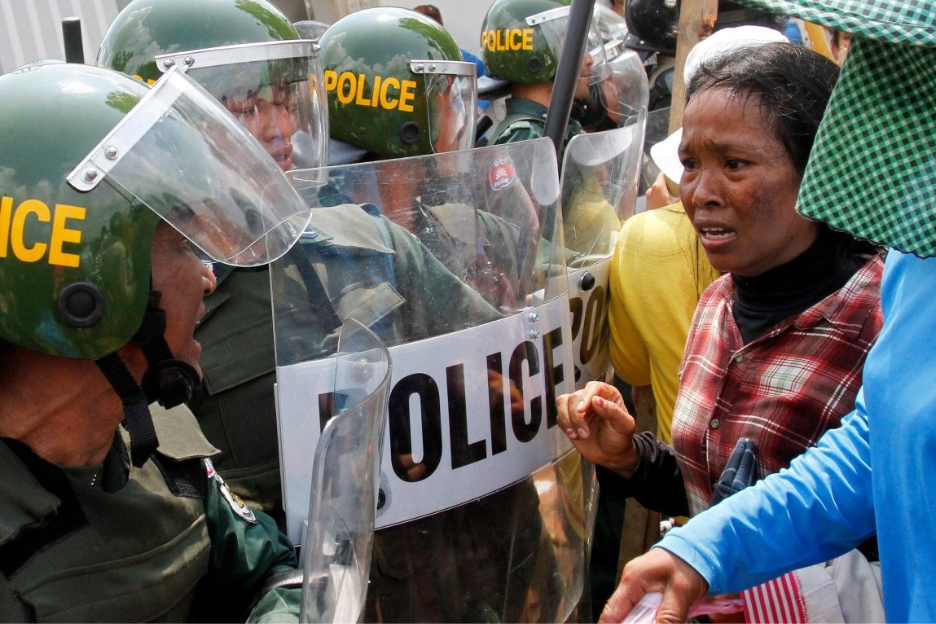
In Bangladesh, the garment sector represents 16% of GDP and 84% of exportations; however, 91% of the workers do not receive a salary good enough to buy the necessary food for their families. Besides, approximately 25% suffer abuse by their superiors, including sexual abuse, the majority of whom are, of course, female.
India is especially characterized by the vulnerability of women. Since many are home garment workers, they are not recognized as employees by law and therefore are not eligible to receive pensions and other benefits. Furthermore, both genders face highly discrimination due to their caste and social class. At the same time, increasing restrictions on workers’ ability to form and join independent trade unions have caused union numbers to decline significantly. In regions such as Delhi, complicated administrative procedures and the refusal to register unions have greatly weakened workplace union membership.
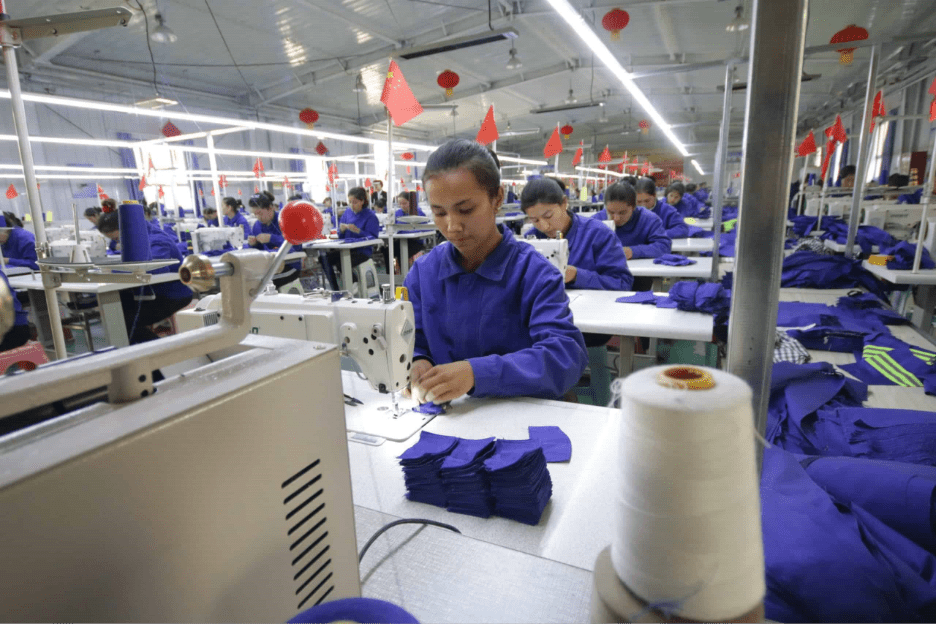
The Chinese workforce also faces severe difficulties. The north-western province of Xinjiang is the homeland of the Muslim minority Uyghur, who produces 80% of the Chinese cotton and 20% on a global level. The cotton of one in five products worldwide, including clothing, originates from their plantations and factories. However, these products are stained with crimes against humanity. The Chinese government has created forced labor camps to aggregate almost two million citizens of this and other religious minorities, with the justification to combat extremism. There, children are separated from their families and re-educated to lose all connections with their culture and become work machines. The employees sleep in cells, where sexual violence and female sterilization have been reported by the UN. Some of the almost uncountable brands that still take advantage of this mass forced labor are Polo Ralph Lauren, Lacoste, IKEA, Nike, Adidas, Zara, and Victoria´s Secret.
Additionally, more than leading to human rights violations, the garment industry, especially the fast fashion one, causes huge environmental damage. Consumers today buy 60% more clothes than they did in 2000, while keeping garments for only half as long. This culture of overconsumption generates enormous waste: a truckload of textiles is either burned or sent to landfills every second. Besides, the fashion industry produces more than 92 million tons of textile waste annually and consumes approximately 79 trillion liters of water every year. The production of a single cotton shirt requires around 2,700 liters of water, which is enough to satisfy one person’s drinking needs for two and a half years. Additionally, synthetic fibers such as polyester release microplastics into oceans and waterways, contributing to marine pollution.
All this production and waste largely contribute to climate change. Several reports estimate that fashion is responsible for around 10% of global carbon emissions, surpassing international aviation and maritime shipping combined. The production of one pair of jeans can emit as much carbon dioxide as driving a car for over 80 miles. Clothing production has nearly doubled in the last 15 years, driven by rapid fashion trend cycles and mass consumption.
More recently, non-governmental organizations started to spread more awareness about the catastrophic impacts of the fashion industry. Slow fashion and secondhand clothing have more marketing than a few years ago. However, an actual transaction to sustainable production and consumption cycles is still a utopian dream. Garments that weren´t made based on the exploitation of nature and workers are usually extremely rare and above the monetary costs that common citizens can afford daily. This is why only a complete revolution in the consumption patterns and impulses of the youngest generations in developed countries, allied with a transformation of the production methods themselves, can, indeed, make a difference for the better.
Sources
- https://www.propublica.org/article/nike-employment-cambodia-labor-rights
- https://www.thewirechina.com/2020/08/02/the-supply-chain-tangle/
- https://www.vogue.com/article/what-is-fast-fashion
- https://www.scientificamerican.com/article/fast-fashion-affects-climate-exploits-workers-and-creates-enormous-textile-waste/
- https://www.theguardian.com/fashion/2022/apr/10/shein-the-unacceptable-face-of-throwaway-fast-fashion
- https://www.nature.com/articles/s43017-020-0039-9
- https://www.unep.org/news-and-stories/story/environmental-costs-fast-fashion
- https://www.ellenmacarthurfoundation.org/a-new-textiles-economy
- https://www.wri.org/insights/numbers-economic-social-and-environmental-impacts-fast-fashion
- https://www.wri.org/insights/numbers-economic-social-and-environmental-impacts-fast-fashion
- https://earth.org/statistics-about-fast-fashion-waste/
- https://www.amnistia.pt/tag/uigures/
- https://www.amnistia.pt/marcas-de-moda-globais-lucram-com-repressao-dos-trabalhadores/
- https://sicnoticias.pt/mundo/2025-11-27-amnistia-internacional-denuncia-violacao-dos-direitos-laborais-na-industria-textil-asiatica-62208673
- https://www.amnistia.pt/qatar-2022/

Júlia Lobão
Writer

