
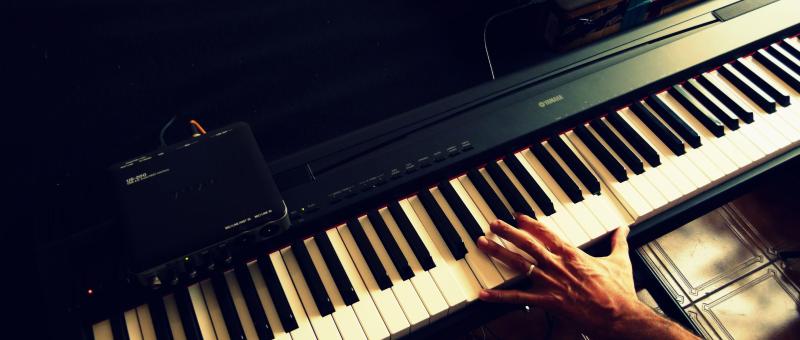
Music is often described as a language of emotion, but this definition barely captures its depth. Sound does far more than express feelings; it reshapes perception itself. Through rhythm, timbre, silence, and vibration, music can stretch or compress time, evoke entire environments, awaken memories, and subtly synchronize the body with external pulse. In this sense, music is not merely something we hear – it is something we inhabit.
A piece of music can therefore be understood as a form of temporal architecture. Instead of walls and corridors, it is built from tempo, frequency, texture, and silence, guiding the listener through a landscape that unfolds moment by moment. Producers, composers, and DJs become designers of these perceptual spaces, arranging sound in ways that influence how the mind experiences movement, tension, and release.
Within this architecture, biological rhythm, environmental memory, and personal association intertwine. The same sonic structure may resonate differently for each listener, making music both a shared physical phenomenon and a deeply individual experience. Rather than simply communicating emotion, music quietly reconfigures how we perceive time, space, and sensation.
Rhythm and Entrainment
At the foundation of musical experience lies rhythm, the most immediate interface between sound and the human body. Before melody or harmony is consciously processed, the brain begins to detect periodic patterns in incoming sound waves. This interaction often produces entrainment, a phenomenon in which internal biological rhythms synchronize with external rhythmic stimuli.
Neuroscientific research suggests that rhythmic music can influence neural oscillations, motor coordination, and even subtle physiological processes such as breathing and heart rate. This is why rhythm feels instinctively physical. A steady pulse invites movement – whether through walking, nodding, dancing, or shifting posture almost unconsciously.
Interestingly, many musical tempos correspond closely to natural patterns of human locomotion. Walking cadence frequently falls near 110–120 steps per minute, while running cadence often stabilizes around 170–180 steps per minute. Electronic dance music’s common tempo range of 120–130 beats per minute aligns remarkably well with these natural rhythms. When listeners encounter such tempos, the body recognizes them immediately as patterns that can be inhabited through movement.
In this way, rhythm functions less like an external stimulus and more like an extension of the body’s own internal tempo. The beat becomes a shared pulse between organism and environment, allowing listeners to physically synchronize with sound.
Timbre and Sonic Material
If rhythm determines movement through musical space, timbre determines the material of that space. Timbre refers to the tonal color of a sound – the unique spectral composition that distinguishes one instrument from another even when they play the same pitch.
Two identical melodies performed on different instruments can evoke radically different sensations. A violin produces fluid, organic warmth; a distorted electric guitar introduces grit and tension; a modular synthesizer may generate tones that feel simultaneously mechanical and otherworldly. These differences arise because each sound contains a unique combination of overtones and frequency distributions.
The brain processes these spectral characteristics with remarkable speed. In many cases, timbre is perceived even before melodic structure becomes clear, meaning that the emotional and atmospheric qualities of a sound often precede its musical content.
In architectural terms, timbre defines the surfaces of the sonic environment. It determines whether the listener feels surrounded by soft textures, metallic reflections, or expansive atmospheric layers.
Sonic Environments
Human perception of sound is deeply shaped by environmental associations developed over thousands of years of evolution. Certain sounds signal safety: rainfall, flowing water, rustling leaves, distant wind. Others suggest activity or potential danger: metallic impacts, mechanical rhythms, urban noise.
These associations persist within modern music production. Many tracks incorporate environmental textures that subconsciously evoke specific spaces. Ambient music often resembles natural soundscapes, with slow harmonic evolution that mirrors wind currents or ocean tides. Techno frequently draws upon industrial sonic imagery, using metallic percussion and machine-like repetition to simulate mechanical environments. House music tends to emphasize human presence, weaving together rhythmic pulse with vocal fragments and communal energy.
Acoustic ecology provides a useful vocabulary for understanding these sonic layers. Soundscapes can be divided into three categories: geophony, the sounds of physical environments such as wind or water; biophony, the sounds of living organisms such as birds or insects; and anthropophony, the sounds generated by human activity.
When these elements appear within music, they transform a track into something resembling a sonic geography. The listener enters an imagined environment constructed entirely from sound.
Silence, Anticipation and the Neuroscience of Release
Among the most powerful tools in musical architecture is the deliberate removal of sound. Moments of silence or rhythmic suspension (often called breakdowns) interrupt the body’s entrainment to pulse. For a brief period, the listener is left in a state of anticipatory tension.
Cognitive neuroscience suggests that these moments activate the brain’s predictive processing systems, which attempt to anticipate the return of rhythmic stability. When the beat eventually reappears, the resulting release can feel disproportionately intense.
This dynamic is closely linked to the brain’s dopamine reward system. Studies on musical pleasure indicate that dopamine is released not only when an expected reward occurs, but also when the brain correctly anticipates that reward after a period of uncertainty. In musical terms, this translates into the powerful sensation produced when a rising build-up finally resolves into a rhythmic drop.
Such moments illustrate how music can generate experiences that listeners describe as euphoric, electrifying, or even “orgasmic.” The sensation emerges from the delicate interplay between expectation, delay, and release.
Repetition and Trance
Repetition occupies a central role in many musical traditions, particularly within electronic genres. Rather than causing boredom, repeated rhythmic and harmonic structures can produce states of heightened perceptual focus.
When the brain recognizes a repeating pattern, it begins to allocate fewer cognitive resources to processing the predictable elements. This frees attention to detect subtle variations that might otherwise go unnoticed. A slight shift in percussion, a filter sweep in a synthesizer, or the gradual emergence of a new harmonic overtone suddenly becomes perceptually significant.
This phenomenon contributes to the trance-like states often associated with repetitive music. The listener’s attention narrows toward small sonic transformations occurring within a stable framework. Time appears to dissolve into a continuous present.
Elastic Time
Music possesses an extraordinary ability to distort our perception of time. A dense composition filled with rapid sonic events may feel longer than its actual duration, while a slowly evolving ambient piece can create the impression that time has nearly stopped.
Psychological research suggests that perceived time is strongly influenced by event density – the number of perceptual changes occurring within a given interval. Fast rhythms and complex melodic sequences increase this density, creating the sensation that time is accelerating. Sparse textures and slow harmonic changes reduce perceptual events, allowing time to feel suspended.
Within immersive musical environments, listeners may therefore lose their usual temporal reference points. Minutes dissolve into a fluid continuum shaped entirely by the unfolding structure of sound.
Bass and Physical Resonance
Low-frequency sound introduces an additional layer of sensory experience by engaging the body directly. Frequencies below approximately 100 Hz are not only heard through the auditory system but also felt as vibrations transmitted through the chest, abdomen, and floor.
Large sound systems amplify this effect dramatically. Sub-bass frequencies propagate through space with powerful physical presence, creating a sensation that blurs the boundary between hearing and touch.
Vibroacoustic research indicates that these vibrations can influence bodily awareness and emotional arousal, reinforcing the immersive quality of musical environments. The listener does not merely perceive the music; they physically resonate with it.
Memory and Sonic Nostalgia
Few sensory stimuli evoke memory as powerfully as sound. The auditory system maintains strong connections with the hippocampus, the brain structure responsible for encoding autobiographical memories. As a result, certain sounds can instantly transport listeners to specific moments in their personal history.
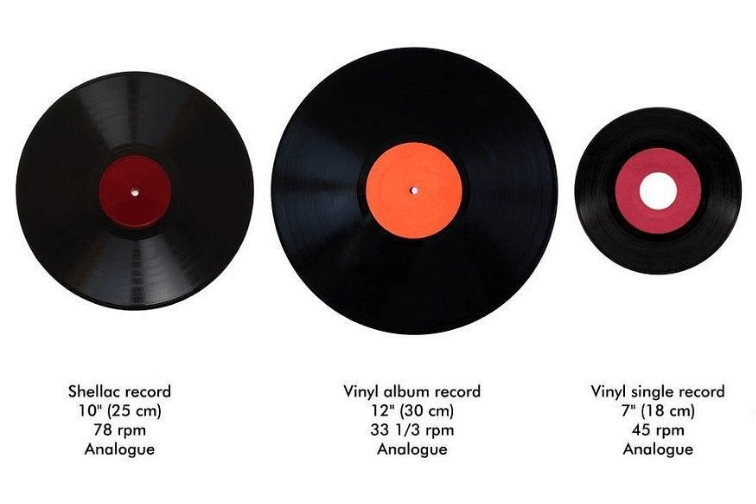
A crackling vinyl sample, the warm saturation of analog tape, or the distinctive tone of an early synthesizer can act as temporal triggers, collapsing years of experience into a single instant of recognition.
Modern producers often incorporate these textures deliberately. What once existed as technological imperfection – tape hiss, vinyl noise, lo-fi filtering – has become a sonic shorthand for nostalgia and emotional depth. These sounds evoke not only the music itself but also the historical contexts in which similar recordings were first encountered.
Conclusion
When rhythm, timbre, environmental sound, repetition, silence, bass frequencies, and memory interact within a piece of music, they create something more complex than a sequence of sounds. They form a structured perceptual environment.
Within this environment, listeners move through changing moments of intensity, anticipation, and release. Rhythms guide movement, textures define atmosphere, and small variations sustain attention.
Although the sound waves themselves are the same for everyone, the experience remains deeply personal. Individual memories and associations shape how each listener interprets what they hear.
Music therefore exists simultaneously as physical vibration and personal experience. By shaping rhythm, texture, environment, and expectation, it becomes a medium that organizes how we perceive time, space, and emotion.
Sources:
- Huron, David (2006). Sweet Anticipation: Music and the Psychology of Expectation. MIT Press.
- Salimpoor, Valorie N. et al. (2011). “Anatomically distinct dopamine release during anticipation and experience of peak emotion to music.” Nature Neuroscience.
- Zatorre, Robert J., & Salimpoor, Valorie N. (2013). “From perception to pleasure: Music and its neural substrates.” Proceedings of the National Academy of Sciences.
- Large, Edward W., & Snyder, Jeffrey S. (2009). “Pulse and meter as neural resonance.” Annals of the New York Academy of Sciences.
- Phillips-Silver, Jessica & Trainor, Laurel J. (2005). “Feeling the beat: Movement influences infant rhythm perception.” Science.
- Repp, Bruno H. (2005). “Sensorimotor synchronization: A review of tapping experiments.” Psychonomic Bulletin & Review.
- London, Justin (2012). Hearing in Time: Psychological Aspects of Musical Meter. Oxford University Press.
- Grondin, Simon (2010). “Timing and time perception: A review of recent behavioral and neuroscience findings.” Attention, Perception, & Psychophysics.
- McAdams, Stephen & Giordano, Bruno (2009). “The perception of musical timbre.” Oxford Handbook of Music Psychology.
- Grey, John M. (1977). “Multidimensional perceptual scaling of musical timbres.” Journal of the Acoustical Society of America.
- Schafer, R. Murray (1977). The Soundscape: Our Sonic Environment and the Tuning of the World.
- Krause, Bernie (2012). The Great Animal Orchestra: Finding the Origins of Music in the World’s Wild Places.
- Margulis, Elizabeth Hellmuth (2014). On Repeat: How Music Plays the Mind. Oxford University Press.
- Todd, Neil P. M. & Cody, Fiona W. J. (2000). “Vestibular responses to loud dance music.” Journal of the Acoustical Society of America.
- Janata, Petr (2009). “The neural architecture of music-evoked autobiographical memories.” Cerebral Cortex.
- Levitin, Daniel (2006). This Is Your Brain on Music. Dutton.

Teresa Catita
Editor and Writer



 theawarenessnews.com