DJ Systems and DJ Types 

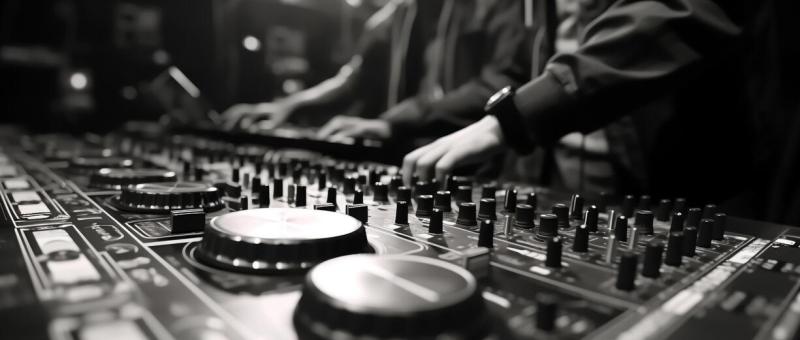
There’s a tendency to treat DJ setups as preference. Vinyl if it’s about authenticity, controllers if it’s about convenience, DVS if it’s somewhere in between. The assumption is that the core skill stays the same and the equipment just changes how it’s executed. 

In practice, that’s not what happens. 

Each system trains different habits. Not in a philosophical way, but in very concrete, repeatable situations: how tracks are started, how timing is handled, how mistakes are corrected, how quickly decisions are made. After a few months, those differences stop being technical and start becoming instinctive. The same person, using a different setup long enough, would not mix in the same way. 

On Vinyl, Timing Never Settles 

With vinyl, even a clean mix isn’t stable. Two tracks that sound aligned will slowly drift apart. It’s not dramatic, but it’s constant. That means timing isn’t something that gets “fixed” once – it’s something that has to be maintained the entire time the tracks are playing together. 

In practical terms, that leads to constant small adjustments. A slight push on the record to speed it up, a gentle drag to slow it down, a quick touch to bring things back into place. None of these are big corrections. Most of them are barely visible, but they happen continuously. 

This builds a very specific skill: noticing drift early. Not when it’s already obvious, but when it’s just starting. After a while, it becomes possible to feel when a track is moving ahead or falling behind before it’s clearly audible. 

It also changes how transitions are approached. Because there’s no visual reference for phrasing, structure is learned through repetition. Tracks are recognized by how they unfold, not by where they sit on a screen. Starting a track at the right moment becomes a matter of internal timing, not external alignment. 

Mistakes take longer to fix. If a track is brought in too early or slightly off, the correction happens gradually. There’s no instant reset. That makes hesitation less useful – waiting doesn’t provide more certainty. Decisions tend to be made earlier and then adjusted in real time if needed. 

With DVS, Timing Can Be Checked Instead of Felt 

DVS setups keep the turntables but add a screen with information: waveforms, beat grids, cue points. The physical interaction stays the same, but timing no longer has to rely entirely on hearing. 

If a mix feels slightly off, it’s possible to glance at the waveform and see it. If phrasing is uncertain, it can be confirmed visually. The system provides a second layer of feedback that wasn’t there before. 

This changes how decisions are made. Instead of committing based only on what is heard, there is the option to verify first. Transitions can be delayed slightly until things are clearer. The timing of drops and breakdowns becomes easier to anticipate. 

The benefit is control. Mistakes are caught earlier. Alignment can be corrected faster. Larger music libraries become manageable because tracks can be searched and previewed quickly. 

At the same time, the reliance on internal timing decreases. When information is available, it gets used. The ear is still active, but it’s no longer the only reference point. 

Another shift happens in how attention is distributed. On vinyl, most of the focus sits on the mix itself. With DVS, attention is split between the decks and the screen – managing the current transition while scanning for what comes next. The skill becomes not just mixing, but handling multiple inputs without losing track of what’s playing. 

On Controllers, Timing Becomes an Action, not a Process 

Controllers and CDJs take the digital side further. Timing is structured and visible. Beat grids show alignment. Cue points mark exact entry moments. Tracks can be started precisely on beat without manual adjustment. 

This removes the need for continuous correction. Instead of keeping two tracks aligned, the focus shifts to starting them correctly. Once they’re in, the system keeps them together. 

That turns timing into something discrete. A track is either started at the right moment or not. There’s less in-between. The process becomes: prepare, then execute. 

This allows for speed. Transitions can happen faster because less time is spent adjusting. It also allows for more complex techniques – looping sections, layering tracks, jumping between cue points – all of which depend on precise timing that would be difficult to maintain manually. 

The trade-off is that small timing adjustments are no longer part of the process. There’s no need to constantly monitor alignment, so that skill doesn’t develop in the same way. Instead, the focus shifts toward structuring the set and choosing the right moment to act. 

Preparation Starts Before the Set 

One of the biggest differences in digital setups is how much happens before playing. 

Tracks are organized in advance. Cue points are set. Sections are marked. Playlists are built for different situations. Part of the work is done away from the decks, deciding how tracks might fit together before they’re ever played. 

This changes the role of memory. On vinyl, knowing a track means remembering how it sounds and when things happen. On digital systems, some of that knowledge is stored externally. It’s visible on the screen, ready to be used. 

During the set, this speeds things up. Instead of recalling details, they can be recognized instantly. The focus shifts from remembering to navigating. 

That also changes the feeling of the set itself. It’s less about discovering what works in the moment and more about choosing between options that were already prepared. 

Mistakes Behave Differently Depending on the Setup 

The way mistakes play out has a direct effect on how risks are taken. 

On vinyl, fixing a mistake takes time. If two tracks fall out of sync or a transition is poorly timed, the correction is gradual and often noticeable. This makes mistakes more expensive and encourages more careful decisions. 

On digital systems, mistakes are easier to hide. A track can be re-cued instantly. A loop can extend a section to buy time. Alignment can be fixed quickly. Because the cost is lower, it becomes easier to experiment. 

This doesn’t just affect outcomes – it affects behavior. The same DJ is likely to take more risks on a system where recovery is quick than on one where mistakes linger. 

Track Selection Changes with the System 

The way music is chosen also shifts. 

With vinyl, the number of available tracks in a set is limited. Each one tends to be well known, played multiple times, understood in detail. Selection is constrained, but intentional. 

With digital systems, the limitation disappears. Hundreds or thousands of tracks can be accessed. Selection becomes faster, but familiarity with each track may be shallower. 

This leads to different strengths. Vinyl DJs often rely on deep knowledge of fewer tracks. Digital DJs rely on quickly filtering through many options to find what fits the moment. 

What Actually Changes 

The basic task stays the same: choosing what to play next and when to bring it in. 

What changes is everything around that decision. How much information is available. How quickly can a mistake be fixed. How much can be prepared in advance. Whether timing is something that has to be maintained or something that can be executed once and left alone. 

Those differences shape how the decision is made. Not just what gets played, but how confidently, how quickly, and under what conditions. 

The Setup Trains the DJ 

After enough time, the equipment stops feeling like a separate thing. The focus shifts to the music, the flow of the set, the reaction of the room. But by then, the system has already done its work. 

It has trained certain responses. When to act, how to correct, how much to rely on instinct versus information. It has defined what feels natural under pressure. 

So the difference between vinyl, DVS, and controllers isn’t just technical. It’s practical. Each one builds a different kind of consistency, a different kind of confidence, and a different way of handling the same moment – deciding what comes next and committing to it. 

Teresa Catita

Editor and Writer
How Music Shapes Time, Space and Inner Perception 

Music is often described as a language of emotion, but this definition barely captures its depth. Sound does far more than express feelings; it reshapes perception itself. Through rhythm, timbre, silence, and vibration, music can stretch or compress time, evoke entire environments, awaken memories, and subtly synchronize the body with external pulse. In this sense, music is not merely something we hear – it is something we inhabit

A piece of music can therefore be understood as a form of temporal architecture. Instead of walls and corridors, it is built from tempo, frequency, texture, and silence, guiding the listener through a landscape that unfolds moment by moment. Producers, composers, and DJs become designers of these perceptual spaces, arranging sound in ways that influence how the mind experiences movement, tension, and release. 

Within this architecture, biological rhythm, environmental memory, and personal association intertwine. The same sonic structure may resonate differently for each listener, making music both a shared physical phenomenon and a deeply individual experience. Rather than simply communicating emotion, music quietly reconfigures how we perceive time, space, and sensation

Rhythm and Entrainment 

At the foundation of musical experience lies rhythm, the most immediate interface between sound and the human body. Before melody or harmony is consciously processed, the brain begins to detect periodic patterns in incoming sound waves. This interaction often produces entrainment, a phenomenon in which internal biological rhythms synchronize with external rhythmic stimuli. 

Neuroscientific research suggests that rhythmic music can influence neural oscillations, motor coordination, and even subtle physiological processes such as breathing and heart rate. This is why rhythm feels instinctively physical. A steady pulse invites movement – whether through walking, nodding, dancing, or shifting posture almost unconsciously. 

Interestingly, many musical tempos correspond closely to natural patterns of human locomotion. Walking cadence frequently falls near 110–120 steps per minute, while running cadence often stabilizes around 170–180 steps per minute. Electronic dance music’s common tempo range of 120–130 beats per minute aligns remarkably well with these natural rhythms. When listeners encounter such tempos, the body recognizes them immediately as patterns that can be inhabited through movement

In this way, rhythm functions less like an external stimulus and more like an extension of the body’s own internal tempo. The beat becomes a shared pulse between organism and environment, allowing listeners to physically synchronize with sound. 

Timbre and Sonic Material 

If rhythm determines movement through musical space, timbre determines the material of that space. Timbre refers to the tonal color of a sound – the unique spectral composition that distinguishes one instrument from another even when they play the same pitch. 

Two identical melodies performed on different instruments can evoke radically different sensations. A violin produces fluid, organic warmth; a distorted electric guitar introduces grit and tension; a modular synthesizer may generate tones that feel simultaneously mechanical and otherworldly. These differences arise because each sound contains a unique combination of overtones and frequency distributions. 

The brain processes these spectral characteristics with remarkable speed. In many cases, timbre is perceived even before melodic structure becomes clear, meaning that the emotional and atmospheric qualities of a sound often precede its musical content. 

In architectural terms, timbre defines the surfaces of the sonic environment. It determines whether the listener feels surrounded by soft textures, metallic reflections, or expansive atmospheric layers. 

Sonic Environments 

Human perception of sound is deeply shaped by environmental associations developed over thousands of years of evolution. Certain sounds signal safety: rainfall, flowing water, rustling leaves, distant wind. Others suggest activity or potential danger: metallic impacts, mechanical rhythms, urban noise

These associations persist within modern music production. Many tracks incorporate environmental textures that subconsciously evoke specific spaces. Ambient music often resembles natural soundscapes, with slow harmonic evolution that mirrors wind currents or ocean tides. Techno frequently draws upon industrial sonic imagery, using metallic percussion and machine-like repetition to simulate mechanical environments. House music tends to emphasize human presence, weaving together rhythmic pulse with vocal fragments and communal energy. 

Acoustic ecology provides a useful vocabulary for understanding these sonic layers. Soundscapes can be divided into three categories: geophony, the sounds of physical environments such as wind or water; biophony, the sounds of living organisms such as birds or insects; and anthropophony, the sounds generated by human activity. 

When these elements appear within music, they transform a track into something resembling a sonic geography. The listener enters an imagined environment constructed entirely from sound. 

Silence, Anticipation and the Neuroscience of Release 

Among the most powerful tools in musical architecture is the deliberate removal of sound. Moments of silence or rhythmic suspension (often called breakdowns) interrupt the body’s entrainment to pulse. For a brief period, the listener is left in a state of anticipatory tension

Cognitive neuroscience suggests that these moments activate the brain’s predictive processing systems, which attempt to anticipate the return of rhythmic stability. When the beat eventually reappears, the resulting release can feel disproportionately intense. 

This dynamic is closely linked to the brain’s dopamine reward system. Studies on musical pleasure indicate that dopamine is released not only when an expected reward occurs, but also when the brain correctly anticipates that reward after a period of uncertainty. In musical terms, this translates into the powerful sensation produced when a rising build-up finally resolves into a rhythmic drop. 

Such moments illustrate how music can generate experiences that listeners describe as euphoric, electrifying, or even “orgasmic.” The sensation emerges from the delicate interplay between expectation, delay, and release. 

Repetition and Trance 

Repetition occupies a central role in many musical traditions, particularly within electronic genres. Rather than causing boredom, repeated rhythmic and harmonic structures can produce states of heightened perceptual focus

When the brain recognizes a repeating pattern, it begins to allocate fewer cognitive resources to processing the predictable elements. This frees attention to detect subtle variations that might otherwise go unnoticed. A slight shift in percussion, a filter sweep in a synthesizer, or the gradual emergence of a new harmonic overtone suddenly becomes perceptually significant. 

This phenomenon contributes to the trance-like states often associated with repetitive music. The listener’s attention narrows toward small sonic transformations occurring within a stable framework. Time appears to dissolve into a continuous present. 

Elastic Time 

Music possesses an extraordinary ability to distort our perception of time. A dense composition filled with rapid sonic events may feel longer than its actual duration, while a slowly evolving ambient piece can create the impression that time has nearly stopped. 

Psychological research suggests that perceived time is strongly influenced by event density – the number of perceptual changes occurring within a given interval. Fast rhythms and complex melodic sequences increase this density, creating the sensation that time is accelerating. Sparse textures and slow harmonic changes reduce perceptual events, allowing time to feel suspended. 

Within immersive musical environments, listeners may therefore lose their usual temporal reference points. Minutes dissolve into a fluid continuum shaped entirely by the unfolding structure of sound. 

Bass and Physical Resonance 

Low-frequency sound introduces an additional layer of sensory experience by engaging the body directly. Frequencies below approximately 100 Hz are not only heard through the auditory system but also felt as vibrations transmitted through the chest, abdomen, and floor. 

Large sound systems amplify this effect dramatically. Sub-bass frequencies propagate through space with powerful physical presence, creating a sensation that blurs the boundary between hearing and touch. 

Vibroacoustic research indicates that these vibrations can influence bodily awareness and emotional arousal, reinforcing the immersive quality of musical environments. The listener does not merely perceive the music; they physically resonate with it

Memory and Sonic Nostalgia 

Few sensory stimuli evoke memory as powerfully as sound. The auditory system maintains strong connections with the hippocampus, the brain structure responsible for encoding autobiographical memories. As a result, certain sounds can instantly transport listeners to specific moments in their personal history. 

A crackling vinyl sample, the warm saturation of analog tape, or the distinctive tone of an early synthesizer can act as temporal triggers, collapsing years of experience into a single instant of recognition. 

Modern producers often incorporate these textures deliberately. What once existed as technological imperfection – tape hiss, vinyl noise, lo-fi filtering – has become a sonic shorthand for nostalgia and emotional depth. These sounds evoke not only the music itself but also the historical contexts in which similar recordings were first encountered. 

Conclusion 

When rhythm, timbre, environmental sound, repetition, silence, bass frequencies, and memory interact within a piece of music, they create something more complex than a sequence of sounds. They form a structured perceptual environment

Within this environment, listeners move through changing moments of intensity, anticipation, and release. Rhythms guide movement, textures define atmosphere, and small variations sustain attention. 

Although the sound waves themselves are the same for everyone, the experience remains deeply personal. Individual memories and associations shape how each listener interprets what they hear. 

Music therefore exists simultaneously as physical vibration and personal experience. By shaping rhythm, texture, environment, and expectation, it becomes a medium that organizes how we perceive time, space, and emotion. 

Sources:

  • Huron, David (2006). Sweet Anticipation: Music and the Psychology of Expectation. MIT Press. 
  • Salimpoor, Valorie N. et al. (2011). “Anatomically distinct dopamine release during anticipation and experience of peak emotion to music.” Nature Neuroscience. 
  • Zatorre, Robert J., & Salimpoor, Valorie N. (2013). “From perception to pleasure: Music and its neural substrates.” Proceedings of the National Academy of Sciences. 
  • Large, Edward W., & Snyder, Jeffrey S. (2009). “Pulse and meter as neural resonance.” Annals of the New York Academy of Sciences. 
  • Phillips-Silver, Jessica & Trainor, Laurel J. (2005). “Feeling the beat: Movement influences infant rhythm perception.” Science. 
  • Repp, Bruno H. (2005). “Sensorimotor synchronization: A review of tapping experiments.” Psychonomic Bulletin & Review. 
  • London, Justin (2012). Hearing in Time: Psychological Aspects of Musical Meter. Oxford University Press. 
  • Grondin, Simon (2010). “Timing and time perception: A review of recent behavioral and neuroscience findings.” Attention, Perception, & Psychophysics. 
  • McAdams, Stephen & Giordano, Bruno (2009). “The perception of musical timbre.” Oxford Handbook of Music Psychology. 
  • Grey, John M. (1977). “Multidimensional perceptual scaling of musical timbres.” Journal of the Acoustical Society of America. 
  • Schafer, R. Murray (1977). The Soundscape: Our Sonic Environment and the Tuning of the World. 
  • Krause, Bernie (2012). The Great Animal Orchestra: Finding the Origins of Music in the World’s Wild Places. 
  • Margulis, Elizabeth Hellmuth (2014). On Repeat: How Music Plays the Mind. Oxford University Press. 
  • Todd, Neil P. M. & Cody, Fiona W. J. (2000). “Vestibular responses to loud dance music.” Journal of the Acoustical Society of America. 
  • Janata, Petr (2009). “The neural architecture of music-evoked autobiographical memories.” Cerebral Cortex. 
  • Levitin, Daniel (2006). This Is Your Brain on Music. Dutton. 

Teresa Catita

Editor and Writer

78 RPM: The Record That Revolutionized Music Before Vinyl Even Existed

Reading time: 8 minutes

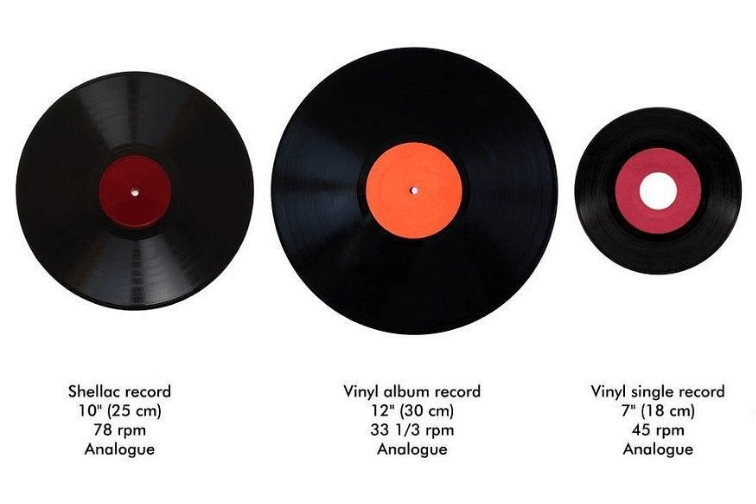
Before 33s, before 45s, and long before Spotify playlists, music moved at a speed most people today have never experienced: 78 revolutions per minute. These shellac discs weren’t just early records — they were time machines, cultural capsules, and experiments in sound. Place a needle on one, and you’re instantly connected to a world over a century old: jazz spilling out of a New Orleans club, blues echoing from a Mississippi porch, classical orchestras captured in studios that smelled of wood, varnish, and ambition. 

Most music listeners today assume vinyl starts at 33 or 45 RPM. Few realize that for decades, 78s were the format that defined recorded music, shaping how songs were written, performed, and even how we perceive rhythm and melody. Though they were eventually replaced by longer-playing, more convenient formats, 78s left a legacy that still pulses in collectors’ crates, DJs’ loops, and archival vaults. 

The Speed That Defined an Era 

The story of 78 RPM begins with engineering necessity. In the early 20th century, phonographs were mechanical marvels, and shellac discs became their natural companion. Heavier and more brittle than modern vinyl, these discs required a rotational speed that balanced mechanical stability with audio fidelity. 78 revolutions per minute emerged as the practical standard. 

In truth, “78” wasn’t always precise. Early records spun anywhere between 70 and 90 RPM depending on the manufacturer or motor. It took time, industrial consensus, and international standardization to settle on 78 as the global norm. 

The speed shaped more than just playback — it influenced composition. With only three to five minutes per side, musicians had to convey emotion, narrative, and musical complexity within tight temporal confines. Jazz improvisations were sharpened, blues storytelling distilled, and early pop songs meticulously structured. In a sense, the 78 RPM record didn’t merely capture music — it taught music how to exist

Shellac, Sound, and the Magic of Imperfection 

Vinyl enthusiasts often speak of warmth, but 78s possess a different kind of sonic magic. Shellac, the brittle resin used in these discs, produces a crisp, raw sound rich with harmonic textures and subtle distortions. Every pop, click, and crackle is more than noise — it is character, history, and memory embedded in grooves

Under a microscope, a 78’s groove twists like a miniature landscape, encoding vibrations that a needle transforms into audible emotion. Unlike modern vinyl, which strives for uniformity, shellac records bear the fingerprint of the craftsman, the whims of the pressing plant, and even minor environmental changes like temperature and humidity. Playing a 78 is hearing music through the lens of its creation

Digital reproductions often flatten this experience. Even high-quality vinyl reissues cannot replicate the unpredictable textures, the tiny inconsistencies, and the tactile intimacy of a shellac pressing. A 78 is more than a recording — it is a mechanical performance frozen in time, waiting for a needle to breathe it back to life. 

Cultural Pulse: 78s Around the World 

78 RPM records were not only technological achievements — they were vehicles of cultural exchange. Jazz leaped from New Orleans to Paris. Blues traveled from the Mississippi Delta to London parlors. Folk songs crossed oceans and continents. 

The format’s limitations — brevity, fragility, and speed — shaped the music itself. Artists learned to tell stories quickly, to craft hooks that lingered after mere minutes. Many songs we consider timeless were written to fit the mechanical boundaries of a machine. Without 78s, the architecture of modern pop, jazz, and blues might be fundamentally different. 

Collectors and DJs today prize these discs for rarity and texture. Test pressings and private editions, often never reissued, offer glimpses of performances long forgotten. Modern musicians and experimental sound artists sample 78s for loops, textures, and crackles that are impossible to generate digitally. In these grooves, the past meets the present in ways that are both sonically rich and culturally profound

Revival and Preservation 

Despite their decline after the mid-20th century, 78s have experienced a quiet renaissance. Archivists, collectors, and experimental musicians recognize them not as obsolete relics, but as living artifacts

Audiophiles chase the shellac’s signature sound. DJs and sound designers exploit the harmonic richness and crackle for texture. Archivists study stylus sizes, playback speeds, and groove geometries to digitize recordings with scientific precision, preserving sonic history with astonishing accuracy

Playing a 78 today is almost ritualistic. Each disc demands careful handling, meticulous cleaning, and precise playback speed. Minor deviations in pressure or RPM can alter pitch, tone, and timbre. In a digital age of effortless streaming, the 78 reminds us that presence, patience, and touch are part of the musical experience. 

Hidden Stories in Dead Wax 

Beyond the music, 78s carry secrets in the dead wax — the area near the label. Engineers and pressing plants etched matrix numbers, signatures, or cryptic messages, often unnoticed by casual listeners. These micro-details transform each disc into a narrative object, a conversation across decades

Listening to a 78 becomes a multi-layered experience: the music itself, the physical artifact, the hidden inscriptions, and the echo of human hands that shaped it all. It is auditory archaeology, where every crackle and pop carries historical context. 

Why 78s Still Matter 

78 RPM records are more than nostalgia — they are lessons in creativity under constraint, artifacts of global culture, and experiments in the interplay of technology and artistry. They challenge modern musicians and listeners to remember that limitations can foster genius, that fragility can convey intimacy, and that the tactile, mechanical world still has a place in the age of digital perfection. 

Holding a 78 is an encounter with history, science, and art all at once. The grooves spin stories of a world that is gone but echoes in every note. In that fragile, spinning disc, music is alive in a way that no stream, download, or even modern vinyl pressing can replicate

Conclusion: Spinning Time 

So, the next time you see a 78, slow down. Place the needle carefully. Listen not just to the notes, but to the echoes of time: the hum of early engineering, the resonance of human hands, the fleeting perfection of a performance captured in a fragile shellac disc. 78 RPM may have been replaced by more convenient formats, but its spirit endures — crackling, raw, and utterly alive

To play a 78 is not just to hear music. It is to spin history, touch culture, and feel the heartbeat of an era that still pulses beneath the grooves. 

Sources: This article was written based on the author’s personal knowledge and passion for vinyl records, drawing from years of independent learning and experience, rather than specific external sources.

Teresa Catita

Editor and Writer