
 Written by
 When you think of police brutality, your mind probably tends to think of the United States. Indeed, this topic has been put in the spotlight throughout the past decade and is being more and more publicly debated, especially in relation with the growth of the Black Lives Matter movement. Although they are vital, the talk against police brutality can give the impression that it is something that happens significantly more in the United States. This is inaccurate and stems from the fact that cases of it from the US are much more mediatized than ones from other countries. Accusations and cases of violence from the police, some of which accusations of racist violence, have been occurring for the past decades in Portugal. The police are essential in protecting the population and preventing crime. However, with any position of power can come abuse, which is why some of their actions can spark debate.

How to navigate public protesting?
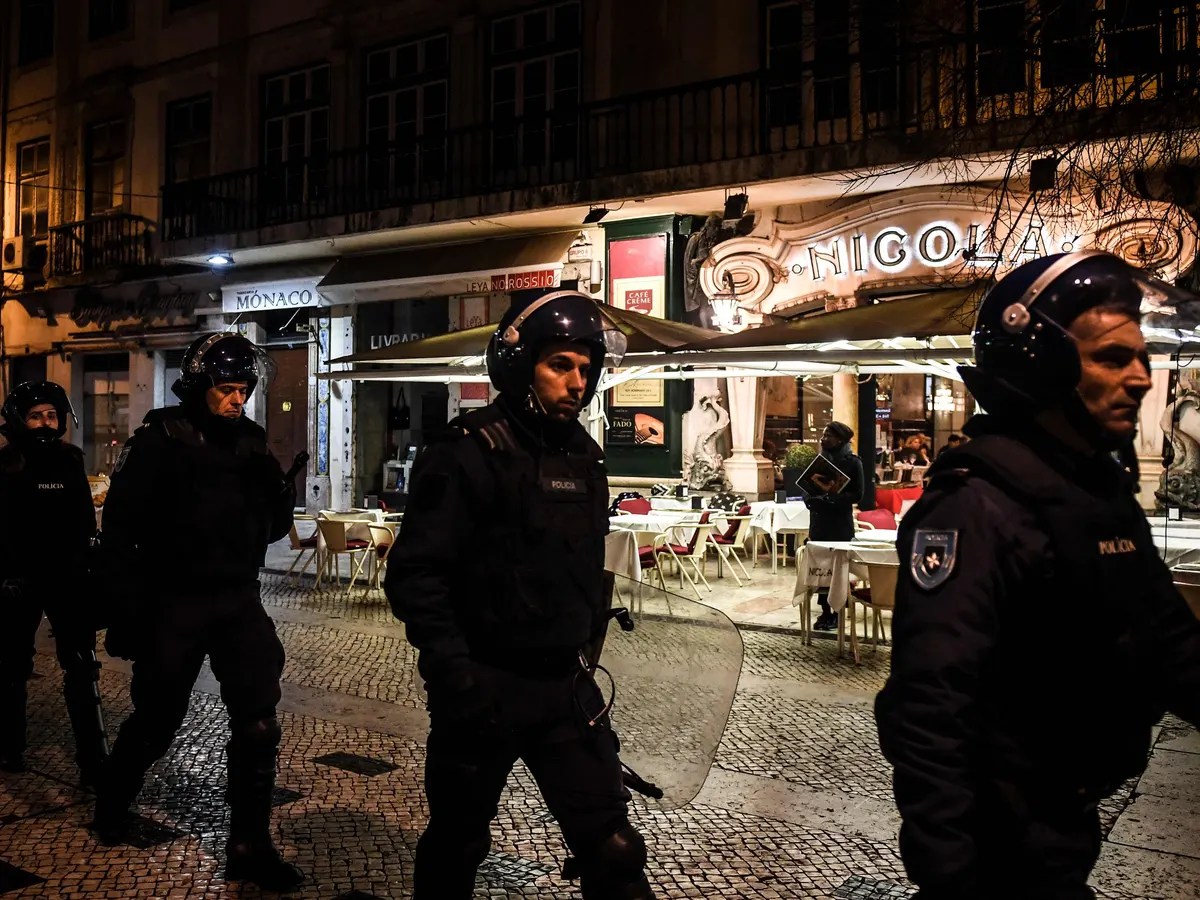
Firstly, on a more general scale, the excessive use of force by the Portuguese police, specifically PSP and GNR, has been called out on multiple occasions. During protests, police intervention tends to stir up the public. For instance, in December of 2023, the non-profit association for sustainability “Academia Cidadã” gathered sixteen other associations related to the fight against climate change, to write an open letter, addressed to the Portuguese President and to the deputies of the Republican Assembly, denouncing the “repression of climate activists by the police”. In the letter, they asked for the cessation of the arbitrary detention of activists as well as of “intimidating tactics and physical violence” and even police repression inside universities, claiming that the activists were merely exercising their right to non-violent protesting. The young climate activists had caused moments of disruption throughout the end of the year, especially in Lisbon, by painting building facades, interrupting initiatives, hitting ministers with paint or cutting off streets in their protests against insufficient environmental action from the government. More than two dozen had already been detained. The authors of the letter argued that the acts of violence from the police were a “threat to the existence of democracy, freedom of speech and the right to protest”. The letter was posted on Academia Cidadã’s website and has received no answer from the president, although he had stated, after climate activists had hit Minister of Finances Fernando Medina with green paint, that these attacks were not efficient: “If the goal is to attack the Portuguese environmental policy, it is very ineffective”, said Marcelo Rebelo de Sousa to journalists, on the sidelines of the 25th anniversary Congress of Family Businesses on the 20th of October of 2023. Furthermore, the actions of climate activists tend to divide public opinion. Many civilians not only defend the need for police intervention but take action themselves. This was the case when protesters blocking the entry in Lisbon on Viaduto Duarte Pacheco on the 14th of December of 2023 by sitting on the road, were dragged away by some of the drivers before the arrival of the police.
An International Angle on the police
On a more official note, the Department of State of the United States highlighted in its 2022 Country Reports on Human Rights Practices the growth of complaints relative to the excessive use of force by the police in Portugal. The report states: “While the constitution and law prohibit torture and other cruel, degrading, or inhuman treatment or punishment, there were credible reports of excessive use of force by police and of mistreatment and other forms of abuse of prisoners by prison guards.” This observation is based on the Inspectorate General of Internal Administration (IGAI) that indicated 1.174 accusations of mistreatment and abuse by the police in 2021, including slaps, punches, and kicks to the body and head as well as beatings with batons. This number has grown during the past decade and continued to do so after the report: there were 772 accusations in 2017 and 1.436 in 2022, the highest number in a period of 6 years and 22,3% higher than in 2021.
The European Committee for the Prevention of Torture (CPT), an organization from the European Council has also been addressing the topic of police brutality in Portugal for the past years. In 2016, Julia Kozma, attorney responsible for the delegation of the Committee that visited Portugal in 2016, claimed that the country was at the top of West European countries in terms of cases of police violence, also stating that Afro-descendent people were more at risk of this violence. The Committee called for an investigation on this topic by the Ministry of Internal Investigation (MAI), who, after being asked about the CPT’s report by the newspaper Publico, stated that “police training incorporates the priority given to human rights and firm opposition to any xenophobic or racist practices, contributing to the good evaluation of Portugal as an inclusive and tolerant country” and that “violations of the law are investigated by the security forces themselves, by IGAI and immediately transmitted to the Public Prosecutor’s Office”. Towards the end of 2020, Hugh Chetwynd, member of the CPT stated in an interview for newspaper Expresso that he considered that the issue of violence at the hands of police in the country is “deeper” than people think and that in a report from the Committee that gathered data from 2019 indicates that the mistreatment of civilians by police officers is a “reality” and not just a panoply of isolated incidents. Moreover, the report again states that a considerable number of the civilians that endured mistreatment from the police were foreign and, mostly, Afro-descendent. In December of 2023, the Committee published another report to highlight “once again” the necessity for Portuguese authorities to implement an efficient system to investigate mistreatment at the hands of police. However, in its reports, the CPT does not include quantitative data.
Some perspective on mainstream cases
Finally, a number of accusations of police brutality do stem from people of colour, many of which from peripheral neighbourhoods such as Cova da Moura, Quinta do Mocho, Quinta da Fonte, Quinta da Princesa and Bela Vista. Here are some examples:
On the 5th of february of 2015, police arrested young Bruno Lopes during a random search operation after he allegedly threw a rock at their vehicle, witnesses denied this. Bruno’s neighbours later claimed in the trial that the arrest was done in a violent manner and that the police dispersed whoever was on the street with rubber bullets. Later, five young men, some of whom were directors of the Cultural Association Moinho da Juventude, went to the Alfragide police station to get information on Bruno’s arrest. One of the men, Celso Lopes, retells the events of that day in an interview with Fumaça linked below. According to him, while attempting to get information from the police right outside the station, they were cornered and beaten by a group of around 15 officers who proceeded to take them inside the station and assault them again. The men also said that the officers directed racist insults at them throughout the assaults. The group, including Bruno Lopes, was released 48 hours later: one of them had been shot twice in the leg with rubber bullets, two of them had broken teeth and all five of them were riddled with bruises. At first, after the events, newspapers headlines spoke of an attempt of “invasion of the police station”, painting the Amadora residents as the perpetrators of the assaults. However, 5 days later, the High Commission for Migration released a statement indicating that the events suggested an “eventual practice of acts of racial violence”. Some of the agents involved were suspended and the Public Prosecution Service pressed charges on 18 PSP officers, followed by a trial. The agents were charged with slanderous denunciation, defamation, kidnapping, attacks on qualified physical integrity, torture, false testimony and falsification of documents, all aggravated by racial hatred. More than four years later, on May 20th, 2019, the panel of judges acquitted nine police officers, sentenced seven to suspended sentences (from two months to five years) and one to an effective sentence of one year and six months. It should be noted, however, that by these convictions, the Public Prosecutor’s Office had withdrawn the accusations of torture and racism.
Another example is the ongoing case of Claudia Simões. On the 19th of January of 2020, forty-two year old Claudia Simões was riding a bus in Amadora with her 8 year old daughter when the driver allegedly called out the fact that the little girl did not have a bus pass. Although children under 12 are allowed to travel by bus without paying, the driver got out of the bus to approach a police officer when the bus reached Simões’ stop. According to Simões’ testimony as well as her partner who was present at the scene, the officer who was approached, Carlos Canha, proceeded to violently assault her, leaving her completely disfigured. The officer claims that Claudia Simões was being aggressive and that he responded accordingly. She was then arrested and put in a police car where she tells was assaulted again and subjected to racist insults while handcuffed. Before going to the station, she had to be taken to the hospital due to the seriousness of her injuries. Canha has also stated that Simões retained her injuries by resisting being handcuffed and by throwing herself on the floor after reaching the station. Another officer who was in the car denied this alleged fall and told that he escorted Simões out of the car and into the station himself. The case went to trial in the Tribunal of Sintra almost four years later, at the end of 2023 and is still ongoing with the 6th session being held today (March 6th at 13h30). Carlos Canha is accused of three crimes of harm to qualified physical integrity, three of aggravated kidnapping, one of aggravated injury and one of abuse of power. Claudia Simões is also being charged of harm to qualified physical integrity for biting him which, she says was in self defence: “Se eu não mordesse o braço dele, eu morria” (“If I hadn’t bit him, I would have died”). The trial is open to the public.

There are more examples of accusations of prejudicial violence, however, few cases end in convictions. Furthermore, the subject of police brutality is delicate and gives way to a lot of grey areas as most of the accusations of brutality are based on witness testimonies.
Sources:
Plataforma Gueto_Violência Policial e Racismo: O caso do Kuku (Teaser do Doc)
Celso Lopes sobre como foi vítima de violência policial na Cova da Moura (Entrevista)

Marta Nascimento
 theawarenessnews.com