
The new era of Business: Exploring consumer-firm interactions

The corporate world is well-known by many as a “battleground” where firms compete for market power, higher profits and better public opinion.The search for the competitive edge has led companies to specialize and improve every aspect of their organizations, striving for differentiation in every front.As ideas start to run out and specialization reaches sky-high levels, firms are starting to realise that there is one area in particular that has both much room for improvement and the capability of providing the advantage they look for: the consumer approach.This phenomena is not only embraced by firms simply because they enjoy helping the community. Even though consumers benefit from it, these measures also allow firms to increase their profits. In fact, the consumer service has improved a lot over the years and the saying “The client is always right” has gained special attention from companies. Ever since trades started to occur, the idea of a consumer and a producer being two separate identities only linked by the currency exchanged has been rooted in our minds. However, as stated, firms are now shifting their focus towards the people who are the reason why they exist in the first place. More and more, organizations are trying to end this notion of separation and starting to approach customers with the goal of breaking barriers and gaining trust.One way to do so lies in customization. The development of the trend where buyers customize their own product according to their tastes and preferences has increasingly brought gains for firms. On the one hand, consumers become emotionally attached to the products as they feel like, by being responsible for part of the creative process, the resulting product becomes part of themselves, boosting positivity towards the merchandise and the brand. On the other hand, firms also have the opportunity to receive massive feedback about consumer taste, transforming the otherwise “passive customer” into an “active customer”, transforming the whole decision process – a win-win situation one could say.

The head of the Center for International Manufacturing at the University of Cambridge, Jagjit Singh Srai, even said that he believed most major companies would have customization operations in place within the next 5 years.

Nike is one of the most famous brands that embraces product customization

Nike is one of the most famous brands that embraces product customization

Another way to build consumer trust relies on brand development. Through jingles, logos, catch phrases and multiple initiates firms’ main goal is not only capturing a bigger audience, but also promoting brand loyalty among the regular consumers.It is with no shame that everyone can remember at least a handful of commercials or jingles from their favourite brands, even if they don’t want to. It is actually not our fault that the themes are so catchy that our brains cannot detach from them, or that we are exposed to the same commercial so many times that it sticks. It is a great investment of time and money on the behalf of firms to improve our perception of their reality.

Moreover, brand image is also boosted by campaigns related to events occurring in the world where brands decide to take a stand and defend a certain point of view in order to send a message to their customers, showing what ideals they support. As an example, multiple brands like Nike, Netflix, Ben & Jerry´s and Amazon, decided to make a stand against racism in light of the recent protests “Black Lives Matter” through financial contributions, social media posts and advertisements.


Part of Nike´s “For once, don´t do it.” Campaign.

Part of Nike´s “For once, don´t do it.” Campaign.

With all these measures the firm´s main goal is to be seen as much more than a company that trades a specific product or provides a service and more as an entity  linked with ways of living and thinking, wanting to sell an experience which their customers can identify themselves with and embrace. It is of great importance to feel part of a family that shares their same interests as it drives loyalty and brings security while promoting and expanding companies’ perception within the market.However, it is also very important to notice that by doing so, firms are now starting to interact more and more with social norms and less with market norms. That is, firms, by trying to reach an emotional attachment with consumers, start to fill an enlarged pool of expectations that if they are not able to fulfil, might generate disappointment among the loyal customers that saw them as more than a brand.


Picture this situation:

For years, you only buy shoes of a certain brand, either because you like the design better or simply because you really like the brand’s message. Imagine that you like it so much that you even have posters on your bedroom wall and stickers on your laptop of commercials and slogans by that specific brand. Well, it’s safe to say you have an emotional connection with this brand.

Suppose now, that you made your first order online and the product is nothing like what you expected and so you complain, calling and sending emails to the “Consumer  Help Service”. After hours waiting on the phone and a couple of sent emails, you receive no answer by the company you liked so much.

Now, you have a strong dislike towards this brand, you have been personally disappointed and it is very likely that you will not shop there again and will persuade your friends to do the same by telling them all about your experience. This feeling of betrayal would not exist if the emotional connection had never been established. Firms should have this in mind when they decide the type of image they want to send to the public.


To sum up, building an emotional connection with customers has numerous advantages and is a very prosperous way to gain market power and brand loyalty, but it is also a potentially dangerous measure that has the possibility of backfiring and having the opposite effect if the expectations are not met. This being said, emotional connections are a significant way to achieve consumer loyalty, but building an image that cannot be achieved can also greatly damage a firm’s reputation.


Sources: NY Times, The Guardian, Forbes Magazine

Scientific revision: Ana Clara Malta (Behavioral Economics Team Leader)

Is self-control equal to sacrificing pleasure?

Have you ever regretted eating that hamburger or that pizza some days later? Probably you have, and you are not the only one. How can this possibly be explained? Well, we are humans, it all lies in the way we perceive our own self-control.

Self-control is the concept of sacrificing short-term pleasure for an important long-term benefit. All existing theories are based on this idea of conflict of preferences between the “now” self and the “future” self. The “now” will seek (and consume) a tempting good, but the “future” one would regret such consumption.

Following this idea, preferences are a key element to have present. It is crucial to understand the reflection of individual taste as it explains one’s choice of consumption. Therefore, to address this opposing conflict we have to explore various properties of preferences and relate them with time.

Firstly, it must be recognized that the conflict between the present and the future implies that preferences actually change over time. This is what behavioural economists and scientists like to call time-inconsistent preferences.  Similarly, preferences are usually ranked, meaning that one is more important than the other. So, as the importance of immediate gratification fades quickly as time passes, long-term preferences end up being superior to the short-term ones, forming a hierarchy which consequently characterizes all forms of self-control conflicts. Considering the previously mentioned characteristics, talking about anticipated regret seems pretty logical. Smoking a cigarette provides pleasure to the smoker, but brings with it a sore throat immediately after smoking and potentially cancer in the long term. Knowing this, the smoker who anticipates that he may regret giving into the temptation of smoking a cigarette is experiencing a self-control conflict.


self control conflict

Where does this bring us? Around 96% of the papers that explore the concept of self-control and present it use this idea that self-control lies where there is a given sacrifice of pleasure. More recently this idea is being presented as flawed mainly because of its assumptions. On one hand, it assumes that all consumers trade-off short-term goals with long-term ones and that the absence of a self-control conflict would inevitably result in the choice of the long-term goal (while the short-term goal always represents a breakdown in self-control).

Nevertheless, many elements may change since not all consumers pursue the same superordinate long-term goals. Consider the choice between pizza and grilled chicken salad. A consumer may choose the former but not necessarily experience a self-control failure because he/she does not care about restraining her calorie intake, or because she is a vegetarian, or because she likes pizza more than salad. (Actually, even though American consumers, in general, believe the better a food tastes the less healthy it is, in a recent cross-national survey conducted in the US, UK, France and Belgium, consumers associated ‘unhealthy’ only weakly with ‘tasty’).

Why is this relevant? This is a powerful insight into consumer behaviour that is even relevant in policymaking. A good example of this is the food industry. Behavioural economists cannot substitute nutritionists but they can find a way to help consumers align their goals and actual behaviour with objective criteria. Consumer behaviour researchers can devise interventions that motivate consumers to consider the long-term consequences of their actions. Based on this “theorizing”, it should also be easier to exert self-control when abandoning the idea that pleasurable and beneficial consumption (hedonic consumption) represents a self-control failure. Rather than categorizing foods into good and bad, consumers could train themselves to use relative quantities as a benchmark for harmful consumption. Rationing portion sizes and consumption frequency are indeed powerful strategies to limit food-intake since how much we eat is as much governed by a food’s tastiness as by serving size.

Beyond food and bad habits, self-control is present in our day to day and regret is inherent to human nature. The more we sacrifice short-term pleasure for an important long-term benefit, the more we become aware and the less probable we are to be disappointed over something that we did or failed to do. Regardless, not everything in life is to be regretted and some things are meant to be done today.

Behavioral economics in action: the role of behavioral units in politics

In this era of social networks, communication has reached new levels of virality. The Network of Networks – the Internet – has facilitated the creation of a new status quo: from governments and businesses to common citizens, each piece of information inserted and shared in the Web has the potential (given some very small probability factors) to become viral. If that happens, it cannot be stopped. No matter how far you are from the formal location where the original information fluctuates you will know about it. And it only needs a fraction of seconds.

How should people be in such an environment?  At the current speed at which media spread, even words have tremendous impact when misused. Likewise, silences also have a tragic impact when speech is needed. There is a need to be fast and ready to process information. In the case of politicians, words mean actions, words mean decisions, and these decisions impact much more than themselves: they affect millions of lives.

One lesson that Behavioral Science has taught well is how it is human nature to systematically make mistakes in evaluating circumstances. This comes with no shame: our ancestors needed to make decisions quite fast, and that led us to develop mechanisms to quickly judge whether a shadow was one of a rock or say, a lion. This is no different at this time, as we are still required to make these fast decisions. Politicians, corporate top management, governmental bodies’ leaders, some people’s job is to make decisions better than others for others. Yet, very often is forgotten how even our leaders are human. As so, they are equally prone to the same heuristics of anybody else. Yes, they may be more aware, and yes, they are skilled decision makers (usually), but emergency situations require quick reactions.

Our brain is programmed to follow a more rational, logic system (lets call it system 2) when decisions are complicated and require abstraction. However, most is processed by a quick, instinctive mechanism (that we call system 1). The latter, is the one responsible for both convenient intellectual shortcuts as well as for all of our biases and heuristics.

Availability is the name for the heuristics that describes how we evaluate situations based on examples that come up to our mind. This is among the main reasons why people are more scared about a plane crash when the news has reported one unlucky case, ignoring how many flights are done daily, yearly, with virtually no accident.

For the same reason, when something has never happened (or, to better put it, has never happened while we were conscious and alive…), we fail to capture the potential consequences of that event dramatically. We human beings are simply very bad at evaluating probabilities. Again, this is true even for the most capable, skilled leaders! (see our article on Nudging for more insights)

The work of behavioral economists has helped highlight this condition. Starting from the first inception with the research of psychologists and Nobel prize recipient Daniel Kahneman and his fellow Amos Tversky, the more recent work of economists such as Richard Thaler and Dan Ariely (author of the acclaimed Nudge and Misbehaving, among others), helped spreading awareness about the potential benefits of the behavioral science among various high ranks. President Obama himself has been a perpetrator of the nudging theories in his second mandate; yet, it is a case rather than the norm.


2.png

Availability heuristics, Groupthink (the tendency of believing something just because others believe it), Inertia and many other cognitive and emotional biases, help us explain why governments failed to evaluate the Covid-19 threat on a systematic, large scale. Why did this happen, despite early warnings and examples by the first victims, from China to South Korea? No simple answer is the right answer: many actors from different contexts with different interests likely lead to an environment where cooperation and mission alignment is tough to achieve. But one thing we can be sure: we are all humans, and as such, as scientific research has demonstrated, we are all prone to biased decision making. Through this, perhaps we could find a common denominator, a common ground for global discussion, from individual to country level.

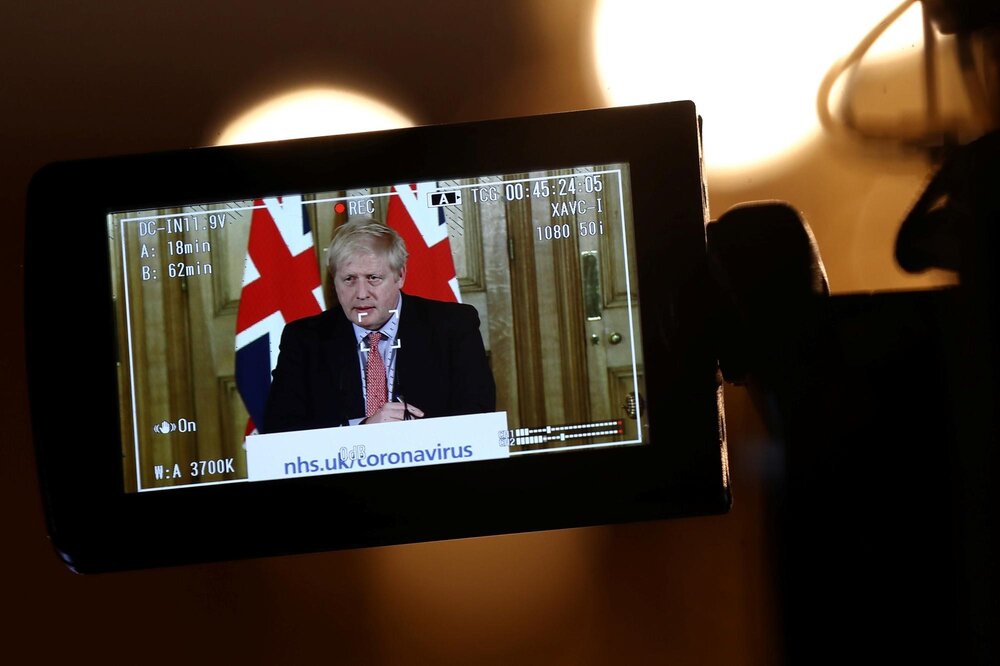
The current situation shows how the role of behavioral science is still unclear. As an example, the UK has indeed a behavioral insights team operating. In the last days, the debate is around the decision of prime minister Boris Johnson not to enforce quarantine measures but rather “nudge around” the situation. Is it the right choice? Is it the right time to act like this? Is behavioral science going to be blamed in case the decision doesn’t have the hoped results? Still, the ultimate decision power doesn’t lie in behavioral units, but in politicians. Takes unbiased foresight for a leader to understand when a threat has to be taken seriously despite no direct consequence can be observed in his/her community. In this case, we should keep in mind that it is the prime minister’s decision on when to take action and who to ask for collaboration from.


1.jpg

Should perhaps behavioral science be first a way to improve decisions at a widespread individual level, before becoming a toy at disposal of biased leaders? Behavioral units are still scarce, with a bunch of countries actively using them. We shall see how events unfold…

Take this little quiz to test which system you’re naturally relying on to read a piece:

1-A bat and a ball cost 1.10€ in total. The bat costs 1.00€ more than the ball. How much does the ball cost? … cents

2-If it takes 5 machines 5 minutes to make 5 widgets, how long would it take 100 machines to make 100 widgets? …Minutes

3-In a lake, there is a patch of lily pads. Every day, the patch doubles in size. If it takes 48 days for the patch to cover the entire lake, how long would it take for the patch to cover half of the lake? …days

To check your answers go to our instagram/web page. Did you get them? Maybe just some? If you’re interested in exploring more of the research behind “clever formulations” and its applications, consider the read of “Nudge”, by Richard Thaler and Cass Sunstein.

Sources: The Guardian, Politico, Apolitical, The conversation, Behavioural Economics.com, Springer

QUIZZ SOLUTIONS:
1- (5 cents)
2-(5 minutes)
3-(47 days)

From flies in urinals to higher savings rates: How nudging influences our decisions

“A choice architect has the responsibility for organizing the context in which people make decisions.”

— Richard H. Thaler, Nudge: Improving Decisions About Health, Wealth, and Happiness

Nudging has been the start point of many economic studies, in particular in the area of behavioral economics as it explores the way people´s decisions could significantly change in a predictable way by modifying the context of such decisions in a very subtle form. The concept was first introduced by the Nobel Prize winner Richard Thaler and Professor Cass Sunstein. Thaler, however, stressed the point that nudging should be used for good, with the goal of improving society’s welfare, but has his wish become a reality?

It all started at Amsterdam’s Schiphol Airport where Thaler´s discoveries were first explored by a simple experience aiming to solve a very real problem: the cleaning manager intended to reduce the “spillage” around urinals in order to reduce the cleaning expenses on the airports´ bathrooms.

Where does Thaler´s nudging theory come into play? Well, to the surprise of many the solution suggested was to “paint” a small fly near the drains of the urinals. Many may (and did) find it ridiculous and childish but actually it was a very credible and simple solution following the reasoning of human (particularly, men’s) behaviour. The goal was to “guide” men in to reducing spillage (without even noticing) and the results were an impressive 80% reduction in spillage and a consequent 8% reduction in cleaning costs. The raw truth is that men can’t help themselves and start aiming at the fly.

Fly painted in Urinal

Fly painted in Urinal

This is one of the most famous examples of the nudge theory, as it respects the most important principles that guide its use. Firstly, all nudging should be transparent and never intended to mislead (a common prevented practice – just like with publicity & advertisements since it can in fact be used to manipulate human behaviour). Secondly, it should be really easy to opt-out of the nudge (it is not mandatory for anyone). And thirdly, the behaviour encouraged should aim at improving the welfare of those being nudged (once more, no harm is intended).

Not only relevant for small problems, but also in various other areas, this theory has impacted and been adopted by governments all over the world. Over the last decade, many countries have seen and tested the effects of nudging – aiming at lower costs and better exploitation of long-lasting benefits – and the results have been astonishing. Whether the goal is to promote a healthier lifestyle by displaying healthy food at eye level in supermarkets – the impact of ordering and context framing – or increasing the savings rate of the population by automatically enrolling people in a savings plan, the results have been mostly  positive.


Another example that illustrates the impact of a nudge lies in organ donations: In countries where enrollment is necessary for those who want to donate organs after dying, the percentage of people that go through with the process is very low. On the other hand, in countries where organ donation is an opt-out option (that is, people are automatically enrolled), the acceptance rates are extremely high.

Effective consent rates, by country. Explicit consent (opt-in, gold) and presumed consent (opt-out, blue)

Effective consent rates, by country. Explicit consent (opt-in, gold) and presumed consent (opt-out, blue)


This enormous difference can be explained by what is called the default effect. Socially speaking, people tend to be change averse and avoid anything that poses extra effort and so accept the proposed default option even though they have the ability to reject it at any time.

This being said, one can probably anticipate that Thaler´s wish to use nudge for good, isn’t entirely respected as private entities are also trying to explore human psychology and use the nudge effect for profit purposes, appealing consumers to either buy or to use their products more often.

Think about these two cases in particular, Spotify and Netflix. If you don’t have a premium subscription in Spotify you may be tired of listening to something like “Don’t have premium? Try now a 1-month free trial!”. As you may know, this very tempting offer requires the allured clients to give their credit card information to be saved for the period after the free trial. Surely, after the free month, the consumer is given the choice to give up the premium account and not pay anything, but the statistics prove that many stay immersed in the inertia of the default effect and simply don’t have the energy to quit, leading them to a monthly payment that they wouldn’t otherwise have if Spotify hadn’t given the nudge. In the Netflix case, their nudge is even more camouflaged. By simply having an automatic count down to the next episode, they encourage people to go for the path of least resistance and keep watching.

Netflix automatic queue

Netflix automatic queue

It is important to highlight that in both cases, consumers weren’t forced to do anything, they were simply guided towards an option. Notwithstanding, this suggested (consumerist) human behaviour falls a bit short on doing good and has been a matter of concern to the authors of the theory.

“Whenever I’m asked to autograph a copy of Nudge, the book I wrote with Cass Sunstein, the Harvard law professor, I sign it, Nudge for good. Unfortunately, that is meant as a plea, not an expectation”

— Thaler to confess to the New York Times

Whether we notice it, or not, nudging is present in many of our daily lives and its influence can lead us to make choices that we wouldn’t otherwise. One could consider nudging anything like a simple buzz from a phone, a “ding” from a microwave or even a jingle played by the washing machine, warning and leading us to its use. The effects, however, go way beyond mere sounds and as people start realising that they could be being manipulated without even noticing, they start to distrust even the things that lead them to better choices, harming, this way, the true purpose of the theory. Regardless, it will continue to be part of our lives and it is our role as citizens to be aware of its potential but also of its limitations, so that we can make the most of such a powerful tool.


Sources:

  • Financial Times

  • NY Times

  • Washington Post

  • Book “Nudge” by Richard Thaler and Cass Sunstein

Scientific Revision: Ana Clara Malta, Behavioral Economics Team Leader

Culture, Language and Colours: How culture affects the decision-making process?

Have you ever thought about why we perceive Germans to be a precise people? Or why we consider the Chinese to be math geniuses? In a world where we tend to assume everyone thinks the same as we, members of the Western world, do, and ignore the potential effects of culture, you might be surprised as to just how powerful some of these small differences can be.


Most times, when we think about the decision-making process, we immediately think about the bounded nature of our minds. However, there are actually three sets of factors that have influence over our decisions.

They include (1) the features of the decision, (2) the situational factors and (3) the characteristics of the decision-maker.

The features of the decision concern how we are prepared to take them, how the situation is framed and how the options are ordered. The situational factors are related with time constraints, social pressure and other phenomena of this kind. The characteristics of the decision-maker include their age, gender, personality, social class and even their culture.

The first two sets presented are the ones that are discussed and studied the most, while the latter is sometimes ignored.


Culture has tremendous effects on many aspects of our lives,  even affecting some of the mental shortcuts we intuitively take. Therefore, it’s easy to realise the importance of understanding its impact over us. This is also  where it gets strange because, when we look at data, we realise that most research on decision making was made in Western countries such as the US: 96% of the samples in these studies come from countries that only represent 12% of the world’s  population. Moreover, the population of these regions live under special circumstances, their countries are democratic, and the population has high living standards and is highly educated. This enforces the idea that the samples we usually consider may not represent the entire world. This way, we are, in an implicit way, assuming that, cognitive biases are universal and operate in similar ways despite the different cultures, for instance. This is the reason why theories in cognitive psychology almost never consider culture as a factor. Again, we assume that the way we think is universal. However, recent studies might have shown the opposite.

Recent cross-culture research shows that culture can affect some of the most basic psychological domains such as visual perception, moral reasoning and self-concepts. Even though this kind of research is limited, it is proving itself to be extremely beneficial as it may allow us to unravel the deepest foundations of our behaviour.

It might seem natural to assume that people all over the world would perceive colours in the same way. Nevertheless, studies have found that colour categorisation may vary depending on the language – the way we formulate colour categories is connected with the linguistic terms used to describe them.

For example, the population of the Himba tribe (a tribe of around 50,000 people living in northern Namibia) have difficulties in distinguishing between green and blue, since their language only has one word for both colours. In contrast, another interesting example is tied to the way the Russian language has a different term for a lighter and darker tone of blue. This differentiation allows Russian speakers to categorise and distinguish colours faster than English speakers.


Another study has shown that culture and even age may affect even more basic aspects, like visual perception.

Image 1: The Müller-Lyer arrows

Image 1: The Müller-Lyer arrows

The Müller-Lyer arrows is an optical illusion where the line in the top arrow appears longer than the bottom one, despite both being the same length. The study found that the illusion is stronger to young American people and that almost disappear for the members of the San forager tribe (that live in the Kalahari Desert), for instance. A possible explanation for this is that American people tend to live in more urban areas, with straight lines, square corners and right angles, whereas forager tribes live in a more irregular environment. This greater exposure to rectangularity may lead Americans to be more susceptible to the illusion.

If simple things like colour categorization and visual perception vary significantly from culture to culture, what can we say about more complex psychological processes? Even though we do not have an answer, simple cross-culture studies found meaningful differences that question the way the world and our behaviour are perceived.  Their importance is increased when we consider that most of the samples- people from western countries- may represent outliers that by consequence ignore the profound differences created by our cultural context.


interculturel.jpg

The IKEA Effect

In a previous Behavioral Economics – related article (see article ‘The Power of $0.99’), we talked about what, and by which means, behavioral pricing strategies influence our brain. However, you might have realized that those strategies do not always succeed, especially when you are aware and start noticing them. It is important to understand to what extent we are sufficiently attached to a good or product, in order for that attachment to matter in our decision-making. It is equally important finding out why we value it so much. Michael I. Norton (Harvard University), Daniel Mochon (University of California) and Dan Ariely (Duke University), studied this phenomenon, naming it the IKEA effect.

In fact, it is fairly easy to understand that we give value to both things we make and to the completed end-products we buy. However, it may not be as easy to acknowledge that our neurology influences us to overvalue what we make, even if objectively it is not true. This is a cognitive bias dating way back in history.


One example puts us back in the 1950s, when cake mixes first emerged in common supermarkets. A high demand was to be expected, for a product of easy use that would facilitate every home baker across the world, saving precious time. However, in reality, the precise opposite occurred. In the process of understanding why people didn’t react well to such a time-saving product, it was discovered that consumers found it too easy. Unsurprisingly, marketeers went blue and struggled to understand why the product made people feel unattached. What they uncovered related exactly to this: attachment. Common, not-so-rational human beings give higher value to things they put a certain level of effort in. Following this theory, marketeers changed the recipe, requiring now that bakers add an egg to the mixture (instead of dried eggs being already included in the recipe). This led to an outstanding increase in sales, since the egg addition established an effort level sufficient enough to change consumers’ perception from being too easy to facilitating.

The big question lies in what that turning-point effort level is. It is a very difficult problem to solve, since its answer depends on the products, consumers and circumstances. Notwithstanding, this rationale is currently being used alongside behavioral pricing to spark consumers’ internal need for the companies’ products.


how-to-build-ikea-furniture-entity-1320x720.jpg

The IKEA effect name derived precisely from the extraordinarily intelligent strategy of the IKEA brand. By being an easy “build it yourself” brand, it captivates consumers’ attention for its products – even though it would be easier to buy already made furniture – regardless of the product quality. Buyers tend to view their IKEA furniture as theirs from the moment they spend time following the instructions and assembling the product themselves. The whole mechanism relies on personal investment in the creation that later tends to develop into a personal pride symbol that ultimately leads to an overvaluing of the final product. We might be aware or completely ignorant of this unconscious trick of our brains, but the truth is that we bake a ready-mix cake or build a ready-cut armoire and we take pride in it, giving us greater pleasure than eating or passing by the same readymade products. We smile when the cake is at the table or when we pass by the armoire in the living room. It is not related to our individual appreciation or gift for baking or building, it is in fact a general human bias.


In ‘The Upside of Irrationality’, Dan Ariely later discovered that we are largely unaware of this quotidian tendency and expect others to take as much awe in our cake as we do. It may be a paining truth to understand that others don’t think greatly of our cooking, designing, family, house, company or strategy as we do, but it is actually a very useful knowledge. Allowing this reality to sink in can be life-changing in the way that we look at our developed creations and subsequently it allows a more objective, real perception on them. The notion that our ideas are not always the most desirable to follow and the power of an objective perception are crucial for managerial success. Thinking greatly of made investments, even if they continually provide loss, can be an avoidable mistake through the recognition that not always our created and baked strategies are the most valuable ones.

An impartial and unbiased reasoning may lead us to understand that others’ ideas are not only not inferior, as they may be better adjusted for our current company operations.


IKEA-EFFECT-VALUE-MODEL.png

On the other hand, acknowledging that ‘greater effort ultimately leads to greater love’ (given that labour is successful) will encourage you to foresee relaxation over effort in completing your desired activities on the certainty that in the end you will be farming long-term satisfaction. In Economics, the labour market model leads us to believe that greater effort is the root of unbearable responsibility, frustration and stress, and that real happiness lies in immediate relaxation and no work. However, the human inheritance is to be proud of our deeds and accomplishments. Seeing a completed weekly objectives list makes us understand that all the sweat and tears given to that week’s work was why we felt the overall final enjoyment. 

Concluding with the same reasoning, it is often heard that the easy way is not always the best road to happiness and the IKEA effect came to prove it. The next time you feel like buying a cake, buy a ready-mix and complete it yourself, or the next time you need a new desk, take the time to assemble it. You might come to discover that you will take pride and a little bit of happiness from it, cherishing your success in a much deeper sense. At the same time, be aware that just like your valuing sentiment may not be equally perceived by others, our particular intuitions and ideas are not always the rational and most beneficial approach to the problem.

In today’s world, it is very difficult to be the best, but some strategies can make you feel the best while knowing it.


3053389-inline-s-4-this-innovative-new-ikea-logo.jpg
 

Check The IKEA Effect – Everything You Need to Know by InsideBE to find case studies and practical examples on how and when you should avoid this effect.


References:

  • Ariely, Dan; The upside of Irrationality; London; 2010;

  • I. Norton, Michael; Mochon, Daniel; Ariely, Dan; The “IKEA Effect”: When Labor Leads to Love; 2011; Harvard Business School;

Money, the most powerful motivator of all times. Or maybe not…

Imagine you were a manager and wanted to improve the performance of your team. What would you do? Let me guess, you would try to minimize the principle-agent problem by aligning the interests of the workers with the ones of the corporation, in a way which fitted all employees. You would take a look around, study the most commonly used sources of extrinsic motivation and finally come with the answer “money”. Why not? Who doesn’t like seeing its salary being increased and wouldn´t work harder for it? Higher salary, more effort, better performance, more profit. Pretty straight forward, right? Wrong!

Motivation is the reason for people’s actions, willingness and goals. It’s the “power” which allows us to wake up in the morning and perform difficult tasks, such as studying or going to work. There are two main types of motivation: intrinsic and extrinsic. Intrinsic motivation is the motivation which comes from “inside”, i.e., we perform a task because we enjoy it or find it interesting. Extrinsic motivation is the motivation which comes from the “outside”, i.e., when you do something for external rewards or to avoid negative consequences. Both intrinsic and extrinsic motivators can be either positive or negative. All intrinsic and extrinsic motivators, positive and negative, have its weaknesses and strengths. Intrinsic motivators differ from person to person, which makes it really difficult to apply them in large teams. However, they are much more long-lasting. Extrinsic motivators are easier to generalize. However, they may be only effective in the short-run or they may worsen the environment inside a team (in the case of negative motivators, such as threats to be fired or demoted).

Money is generally seen as a powerful extrinsic positive motivator, as it can be successfully used for motivating almost everyone. At least that’s what people believe and behave accordingly. However, they couldn’t be more wrong.

The MIT (Massachusetts Institute of Technology) conducted a study in which some of their students had to perform different tasks and received one of three levels of monetary rewards (few money, some money or a lot of money).

The students who received mechanical tasks increased their performance as the monetary rewards increased, i.e., the students who received higher rewards did a better job. However, if the challenge called for rudimentary cognitive skills, larger rewards conducted to poorer performance. In order to eliminate possible wealth variables, the researchers repeated the study in Madurai, rural India, where the purchasing power is way bellow the United States’ . Again, the study showed that, when the challenge involved cognitive skills, higher rewards led to worse performance.

This way, they concluded that the “carrots and sticks” approach (giving punishments and rewards) only works when the tasks that the employees perform are purely mechanical.

“So, the amount of money employees receive is not important?”, you may ask. Of course it is. However, it’s not the most important. If, as a manager, you don’t pay people enough for their effort, they won’t be motivated. However, if you incentivise them with monetary rewards, they may worsen their performance. This way, you should pay them enough to take the issue of money off the table, letting them focus on the work, rather than on receiving their salary.

And the question stands. What is the best way to motivate employees?

According to some scientific studies, there are three factors which lead to better performance and personal satisfaction: autonomy (the desire to be self directed), mastery (the urge to get better at performing a job) and purpose (the aim to do what we do in service of something higher than ourselves). Actually, if we look into some industry benchmarks, such as Google or Atlassian (an Australian software company) we see that these factors are taken into consideration in their management. In Google, engineers can use 20% of their working time to develop their own projects and, on a typical year, about half of the company’s new products are born during that 20% time. In Atlassian, a few times a year, employees have 24 hours to think of some new ideas and present it at a relaxed party at the end of the day. It comes that a whole array of software fixes was created during that period and may never had been created otherwise.


If we think of Wikipedia, for instance, it has a business model that economically makes no sense: it was created by employed and greatly specialised people completely FOR FREE and anyone can use it without paying. Why did the engineers provide it freely instead of profiting with their creation? On one hand, it is the desire for mastery, to overcome obstacles and create something never seen before. On the other hand, the purpose behind the platform and the free access to knowledge and information.


As a summary, people only perform difficult tasks because they are motivated to do so and, as a manager, it is vital that we keep our employees highly motivated. However, it is really difficult to find an effective motivator which fits all workers.

Money is still seen by a lot of corporations as an effective mechanism to motivate people but science proves otherwise. It may be good to incentivise mechanical tasks but, if the work involves some cognitive skills, higher monetary rewards leads to worse performance and destroys creativity. This way, managers should get rid of this extrinsic motivator, based in the “carrot and stick” approach, and replace it by the intrinsic motivator of autonomy, mastery and purpose. Besides being much long-lasting, this type of motivators engage workers and make them much more satisfied with their job, as they are contributing to a better world.

The Power of 0.99$

“In my opinion, there is no better theoretical and methodological basis than behavioural economics. ”

— Dr. Florian Bauer

Alongside psychologists, behavioural economists understand that there are countless things that influence the human brain, hence there are countless ways of changing its perception. A known approach is Behavioural Pricing. By understanding what influences its customers, companies are finding ways to turn the consumer’s behaviour in their favour, under the premise that, even though they don’t behave rationally, consumers are predictable. And so, over the years, marketing has been designed with the objective of making us go down a specific, well-planned path.

         If companies were to price items only based on traditional economic models, they wouldn’t be maximizing profit margins because these models assume that consumers already know, when buying a certain product, exactly how much they’re willing to pay for it.

However, as Dr. Florian Bauer1 tells us, “Behavioural Pricing has empirically proven that the notion of people having a predefined “willingness to pay” is wrong. Rather than having a willingness to pay, people tend to develop a price acceptance throughout their decision-making process“.


Herewith, one of the most known approaches is one we all have already been a victim of: the .99$ (or .95$) phenomena. This odd way to price items is an important tool to trick our subconscious into thinking that an item is cheaper than it actually is. There are two theories (one doesn’t invalidate the other) about why this has brought such extraordinary results. On one hand, it is thought that, when reading a price tag, our brain only focuses on the first digit, so when the price is something like 29.99$, our brain tends to think of it as being “20$ and something” and not 30$. On the other hand, and quoting Tim Harford2 (Financial Times), “a price ending in 99 is simply a shorthand for good value”. 

On our day-to-day, many situations confuse our objective reasoning with this technique. For example, let’s imagine we are choosing from two exactly equal gyms, only different in price subscription. Gym A costs a straightforward amount of 31$ per month, full time. Gym B costs 65$ per month full time, but only 34,99$ if you choose a less-hour schedule (8am-12am + 2pm-5pm). Rationally, 31$ is lower than 34,99$ or 65$ and full-time is greater than part-time, so a cost-minimizing consumer would choose the cheaper gym without even pondering the other alternative option. However, in reality, consumers think greatly on the subject and even knowing the gyms are exactly equal (same chain and location), there is always the thought in our heads that, if B is more expensive, then it may be better and we can take advantage of it by choosing the part-time option for more or less the same value because 31$ and 34,99$ are both “30$ and something”.

Is this irrational? Yes. Does it make any sense? No. But does it happen? Absolutely.


Professor Kenneth J. Wisniewski3 (University of Chicago) conducted a study on this topic to test the efficacy of prices ending in 9. In a local grocery chain, he lowered the price of margarine from 0.89$ to 0.71$ and observed an increase in sales of 65%. Then, he lowered it again to 0.69$, they’re increase in sales was 222%. The difference of 0.02$ translated in an exponential increase of 157% that proved empirically that the ending number of a given price is not as relevant as the initial one (0.6$ greatly preferred than 0.7$), even though the real difference being so low. Consumers’ neurological action influences choice as much as their tastes and needs.


In order to have a better understanding on the psychological games corporations like to play, let’s take a look into the Decoy Effect. Essentially, we face this effect when companies insert irrelevant, unprioritized alternatives to a set of options to trick consumers into buying the more expensive one. Imagine the following situation:

rsfg.png

For a subscription of The Economist you have three options:

  • 59$ with access to the online journal;
  • 125$ with access to the printed journal;
  • 125$ with access to both the online and printed journal.

The behavioural economist Dan Ariely4 analysed this set of alternatives and asked his students which one would they pick. Obviously, no-one chose only the printed option since it would cost the same to have both printed and online. Although, 16% chose only the online journal, a majority of 84% of his students preferred the combo. Alternatively, when he didn’t present them the “printed only” option, only 32% chose the combo and 68% chose the “online only” version. Thus, it seems that, when presented a clearly inferior alternative, by comparison, the combo option seemed more attractive.

It is eye-opening how simple tricks can influence our choices without our conscious perception.

Unlike what we previously thought, pure rationality is reserved to mathematics whereas everything that relates to humans and how they behave has a good dose of irrationality behind.

In fact, there are already consulting companies, like Vocatus, that specialize in Behavioural Pricing and advise other multi-sector companies to implement it on their own marketing and placing agendas.

“Behavioural economics demonstrates that people do not decide rationally and are not fully informed. They often behave (and purchase) hastily, forgetfully, illogically, impulsively, emotionally, myopically, or simply with indifference. At the same time, behavioural economics experiments show us that decisions follow clear patterns. So while they are irrational, they are in fact predictable. As soon as you have really understood the decision-making process of your customers, you can begin to influence them. This will give you a clear advantage over your competitors and a lasting edge.”

— Vocatus website, Consulting Company

Overall, the question that arises from this is:

How is this knowledge going to change the way you behave? Are you going to continue being tricked by marketeers?


Simple Biographies:

1 Dr. Florian Bauer is an internationally renowned expert and speaker in pricing psychology and behavioural pricing and is the author of several books on pricing research. He has a PhD in psychology and studied on the MIT and Harvard.

2 Tim Harford, “the undercover economist” is an economist, journalist and columnist for Financial Times.

3 Professor Kenneth J Wisniewski is author of the paper “Price-Induced Patterns of Competitors” with University of Chicago’s Professor Robert C Blattberg.

4 Dan Ariely is a Professor of psychology and behavioural economics at Duke University, he is also author to the New York Times best seller “Predictably Irrational”


Sources:

  • Fast Company

  • Financial Times

  • The Economist

  • OV Blog

Article Written By:


Carmo Romão - Carmo Romão Ana Clara Malta - Ana Clara Malta João Carvalho - João Carvalho

Risk: Are we “Picking up nickles in front of a steamroller?”

When we think about risk usually we do not associate it with biology. “It’s another parameter to consider when making an Investment” – is what we tell ourselves. We tend to perceive risk as an external factor internal to the asset or portfolio we are analysing and not to us. And why is that? Why do we associate risk to an irrational set of things when its existence is solely our making?


Picture7.png

Risk is a very hard concept to define. Some perceive it as being the unpredictability of our returns whilst others are more inclined to defining it as the loss we suffer when we don’t choose the safe bet. Whatever is the real risk definition it surely has lead to absolutely catastrophic situations. Elise Payzan-LeNestour, a behavioral scientist in the field of neurofinance, made an interesting experiment to test whether risk behavior comes from human incapability of perceiving it or human recklessness of taking it either way. In the final stages of her experiment she asked around 400 students to play a game called “The Bowman Game”. The students had to choose between two options: skip – the safe bet – or bet – the risky choice. If they chose to bet, the bowman could hit the mark, and they would win 2$, or miss it, and they would lose 40$. Also, there were two different types of bowmans: a novice – more likely to miss the mark – and an expert – more likely to hit it. After collecting all the experiment data, Elise discovered that students were actually very smart in the understanding whereas their bowman was a novice or an expert.

However, she also concluded that even when the bowman was a novice, 40% of the students took the risk of losing 40$ either way. With this, Elise was able to extrapolate to the financial market and conclude that, even though we are perfectly aware of the risks of choosing to gamble instead of the safe option, “we are greedy and lack self-control” in the sense that we evaluate those risks and still accept them when the perfectly rational choice would be to back away and choose safely.

After this discovery, Elise went deeper and associated our human need for this risky gamble to our brain functions, finding the culprit in Dopamine, a hormone triggered by potential reward opportunities.


Picture8.png

The presence of this greed makes us put our necks on the line without backup plans or emergency exits. Taking these risks can lead to the loss of irreplaceable or non-recoverable resources, not only financially but also environmentally, for example. Our overconfidence on the market that never goes down is lost when it inevitably does and the public money goes down the drain. When we are taking part in an investment and building a continuous flow of renewable income we have to be aware of the notion of risk and of how it is not exterior to us but actually very much correlated to our reasoning and individuality. Joe Wiggins, winner of the Brian Abel-Smith Prize for outstanding performance at MSc in Behavioural Science at the London School of Economics, tells us that when we manage a set of financial assets, the risk lies as much on the asset’s trading market performance as on how frequently we check our portfolio, our individual incentives, our differences and our past experiences, to name a few. The possibility to trade at any given moment in time makes public equity investments more risky than private ones where we are less faced with price fluctuations and so have less emotional reaction. In sum, the risk of making bad decisions is lower since the immediate forces are less known. On investment, Wiggins states, “We can think of this as our erratic perception of risk continually shifting our personal discount rates”.


Picture9.png

Risk goes beyond the convention of possible capital loss, it goes far from being only related to the asset or market characteristics, it lies much more on the human conscious action to ignore the possible (maybe less probable) consequences of losing it all. Behavioral Science & Economics alerts for the need to find tools able to deter investors from taking actions with possible “collapsing economy side-effects” because with risk “surely you will be harmed, you don’t know when, but surely you will”, says Elise Payzan-LeNestour.  Investors shouldn’t continue to be rolled over for picking up nickels.

Sources:

  • Ted Talks

  • Behavioural Investment

Surprise mechanics: Payment as the new Default

Inertia, a word that makes all the difference. We might be uncertain, the decision might be difficult or we might not even care, we simply follow the recommended or pre-set, and without understanding we are under the influence of default opinions. In a simplified way, default options are pre-defined or recommended courses of action established before any reaction from the decision maker. Even though it can look scary and invasive when presented in a more theoretical perspective, the truth is that examples of this phenomenon are immersed in our reality. They are in our phones in the form of strange ringtones, alarm sounds or even pulse notification lights, they are in the way we pay our purchases and even in the games we play.

Picture4.png

The industry that will be subjected to a more detailed analysis will be the video-game industry which has been startled by an increasing concern with changes in defaults and the way it influences gamers as economic agents. Default, by principal, is all over gaming from subscriptions that renew automatically to more technical details – such as the way games adapt to the user’s individuality.

Nevertheless, the increasing concern is related to the way these practises have become more aggressive and privacy-breaking as a new, premium source of purchases. Since the past generation of video games (that existed and dominated the market between 2004 and 2011- Playstation 3, Xbox 360 and Nintendo Wii) the cost of producing games has increased in an almost exponential rate, tendency which has been aggravated by the required usage of more expensive technologies and techniques. Games are no longer pixelated images, they are fotogenic forms of interactive art and as such require more and more production time and impose proportionally complex cost structures to firms. This is illustrated by the almost unimaginable and gigantic production costs. Let’s use as an example 2015’s game of the year, “The Witcher 3” (Image 1). Its production costs were around 81 million dollars and it took about three and a half years to produce it. As reasonable as it might seem, it puts a lot of pressure on companies, and here is the catch, because of a strong and rigid market structure firms are not able to increase the consumer-end price of their product and so they have to find other ways to do it. They found that if they could incentivize their customers to spend more money inside the game having already purchased it, games would become more profitable. As a consequence practices, such as microtransactions, DLCs (downloadable content) and loot boxes, appeared. First they were used in mobile games – as “Candy Crush” – where users had incentives to spend real world money in the game in order to accelerate progression. Since they proved to be effective, they were moved to “triple AAA” games with high budgets and lots of marketing.

Picture5.png

The most apparent way of how invasive it became is by comparing it to gambling. The most recent cases of such facts are EA’s games like “Star Wars battlefront 2” that had its progression based on loot boxes that could be purchased using real world money or “2k’s 2k20” that had explicit slot machines inside the game (the image 2 illustrates such practise). Recently, this practice has become so invasive that governments felt the necessity of intervening in order to understand if such behavior is not harming consumers. In the end, it all falls into the British government asking EA’s and King’s representatives about these practices and possibly unethical behavior.

To sum up, and making use of the EA’s representative words, “surprise mechanics” represent a shift in the default of this industry from a more consumer friendly to a more aggressive consumption, incentivizing industry, that in its attempt to overcome the pressure created by the market’s structure, has been moving closer and closer to gambling. Consequently, it has been accused of creating structures that focus increasingly more in getting money out of their customers and less in providing value added. As governments started to worry and fans stopped buying these games, the industry is again trying to adapt. Games as a service are proof of this reaction. But until when will we have to sustain and tolerate such economic behavior that set defaults that are no longer recommended actions and are now predefined payments?