“Years And Years”: The Series That Predicted World Future 

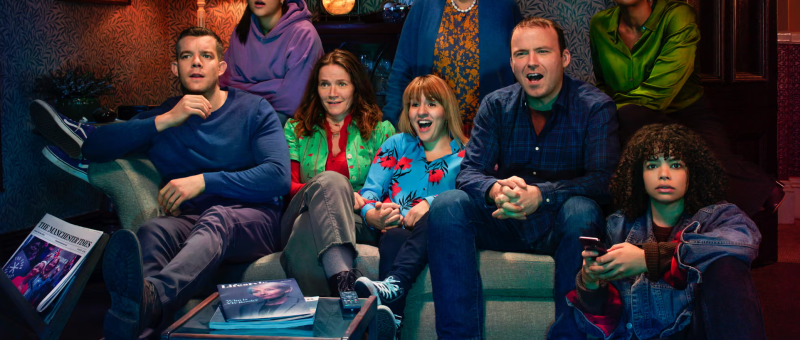
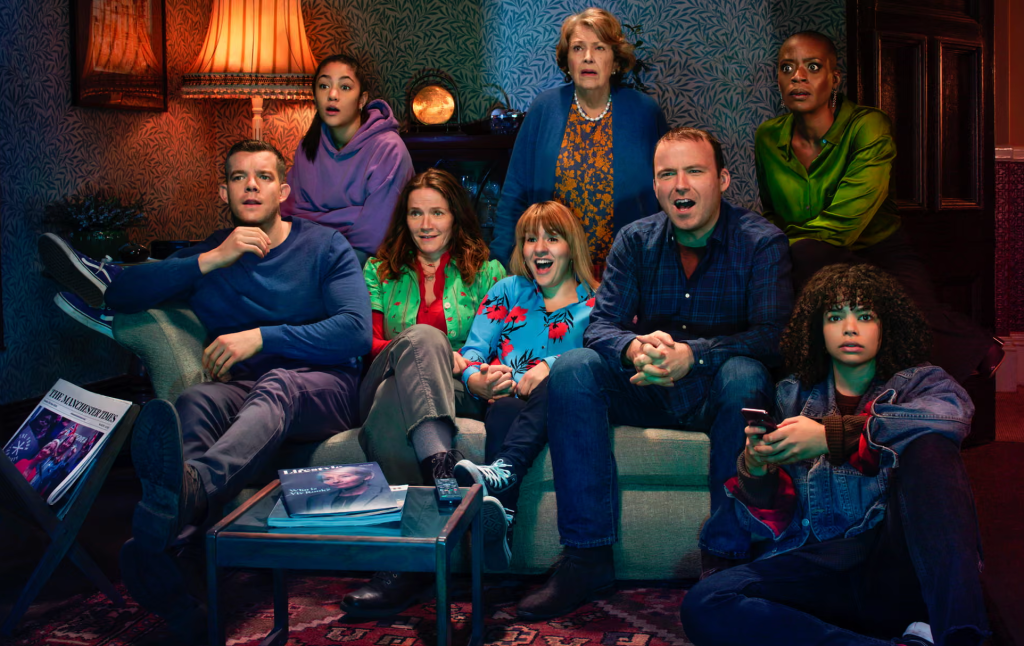
Image 1- The Lyons family  

Broadcasted in 2019, the television series Years and Years functioned less as traditional science fiction and more as a sociological simulation. By extrapolating the geopolitical, technological, and economic data available at the end of the 2010s, the series constructed a near-future timeline that closely mirrors the stark reality of the 2020s. To ground these macro-level global crises, the narrative anchors itself to the Lyons family, an ordinary household whose members serve as micro-level case studies. Over a span of fifteen years, the series documents the family’s diverging reactions as they are directly impacted by unfolding historical events, experiencing everything from financial displacement and political radicalization to technological assimilation and refugee advocacy. Through a comparative analysis of the series’ fictional timeline and our contemporary global situation, it becomes evident that the broadcast was highly predictive. It successfully forecasted events such as the war in Ukraine, the death of Queen Elizabeth II in 2022, a second term for Donald Trump, and the sweeping rise of global populism. By analysing its correlation to our current reality, we can learn from the Lyons family’s reactions to these unprecedented societal shifts. 

The Statistical Rise of Global Populism 
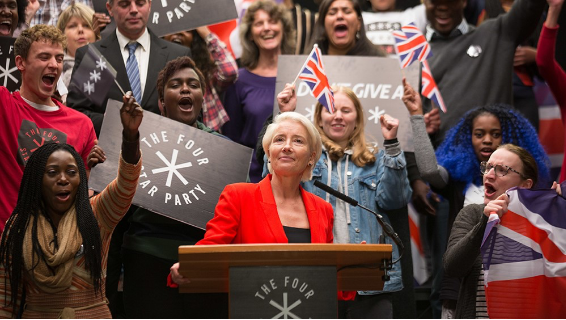
Image 2- Emma Thompson as Vivienne Rock 

In Years and Years, the character Vivienne Rook embodies the rapid ascent of modern populist movements. Initially dismissed as a fringe, controversial entertainer, Rook leverages anti-establishment rhetoric and unfiltered broadcasting to bypass traditional political decorum, ultimately being elected Prime-Minister of the United Kingdom and securing immense executive power. When cross-referenced with real-world political data from the late 2010s through the 2020s, this fictional trajectory accurately mirrors the measurable global shift toward populist leadership. Data collected by prominent political science organizations, such as the Tony Blair Institute for Global Change and the Pew Research Centre, demonstrates a verifiable surge in populist electoral success during this period. The fictional trajectory mirrors reality: between 2018 and 2023, right-wing populist movements successfully transitioned from the political fringe to securing executive power in nations such as Italy, Argentina, and the Netherlands, while maintaining immense, disruptive electoral influence in the United States and France. Rather than an isolated anomaly, this trend reflects a broader, systemic reaction against globalization, economic stagnation, and institutional distrust. The narrative uses the Lyons family to illustrate how a populace fractures in response to this political shift. Rosie Lyons serves as the target demographic for populist messaging, feeling economically marginalized, she enthusiastically embraces Rook’s blunt, anti-establishment rhetoric, demonstrating how populism capitalizes on working-class disenfranchisement. Conversely, Edith Lyons represents fierce ideological resistance, dedicating herself to actively exposing the human rights abuses enacted by Rook’s administration. Perhaps most critically, the matriarch Muriel and her grandson Stephen illustrate the mechanics of complicity. Muriel’s attributes Rook’s rise to the everyday apathy and consumerism, small actions that most of society adopted that in the long run turned helped building this scenario. While Stephen’s eventual employment managing Rook’s secret immigration detention centres demonstrates how personal financial ruin can drive educated citizens to collaborate with extremist policies.  
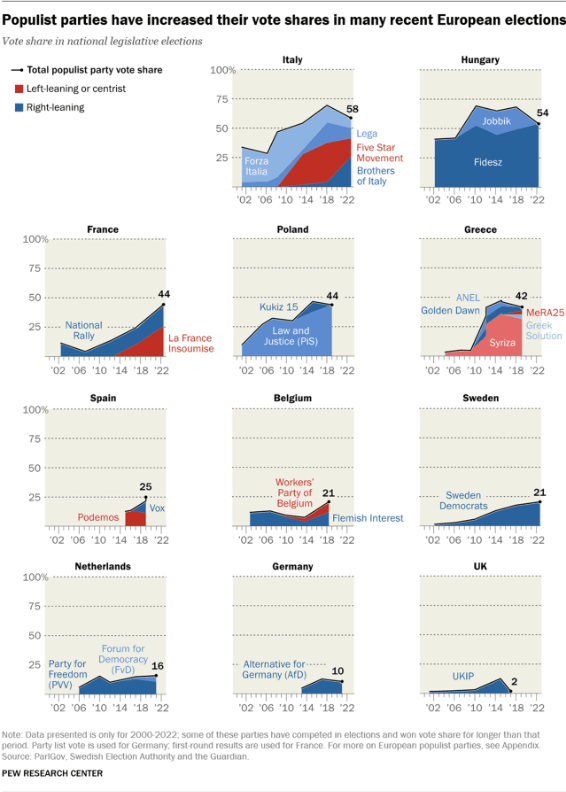
Image 3- Pew Research Center study demonstrating the predicted rise of populism 

Geopolitical Escalation: The War in Ukraine 

Continuing the analysis of the Lyons family, the series uses their experiences to map the human cost of severe geopolitical instability, most notably predicting the escalation of the Russia-Ukraine conflict. In the narrative, Daniel Lyons’ relationship with Viktor, a Ukrainian refugee fleeing persecution and conflict, serves to bring the abstract concept of war directly into the domestic sphere of an ordinary British family. Written in 2018 and aired in 2019, the show depicted a Russian military incursion into Ukraine that subsequently triggers a catastrophic, continent-wide displacement. When analysing geopolitical events from February 2022 onward, the series’ timeline stands as a strikingly accurate forecast of the massive humanitarian fallout that occurred.According to empirical data from the United Nations High Commissioner for Refugees (UNHCR), the real-world invasion displaced millions of citizens within weeks, closely mirroring the systemic European border crises and overwhelmed infrastructure depicted on screen. The show correctly anticipated that the ripple effects of such a conflict would not remain localized but would instead fundamentally alter international immigration policies and border security protocols across the continent. As noted in international security analyses following the real-world invasion: “The sudden displacement caused by the 2022 escalation created the fastest-growing refugee crisis in Europe since the Second World War, exposing the fragility of modern international asylum frameworks.” Furthermore, we can, on the micro-level analysis, watch the different approaches used by some members of the family to illustrate polarized societal responses to such crises. Daniel Lyons represents direct humanitarian empathy, his relationship with Viktor, a Ukrainian refugee fleeing persecution, highlights the desperate and often fatal lengths individuals endure to circumvent broken immigration systems. With a much different approach, his sister Rosie represents the growing societal apathy and distrust toward immigrants. Her character illustrates how economic disenfranchisement can lead ordinary citizens to embrace isolationist policies and reject global humanitarian responsibilities. Both these characters represent with precision the currentpolarized debate of this topic around the world. 

Technological Assimilation: Artificial Intelligence 

Finally, the series utilizes the youngest generation of the Lyons family to examine the profound sociological impact of exponential technological advancement. The character of Bethany embodies the concept of “transhumanism”—a growing desire to transcend the physical body by integrating cybernetic implants and, ultimately, uploading human consciousness to the cloud. Concurrently, the broader societal backdrop of the show depicts widespread economic anxiety as advanced algorithms rapidly displace traditional cognitive labour and professional services, this is an example that happened with the character Celeste, since her job as an accountant was taken by Artificial Intelligence. While full digital consciousness remains theoretical, the series’ depiction of severe workforce automation and the normalization of human-computer interfacing perfectly mirrors the explosive, disruptive growth of the modern Artificial Intelligence sector. According to the World Economic Forum’s Future of Jobs Reportand data from the Stanford University Artificial Intelligence Index, the real-world integration of generative AI (such as Large Language Models) has accelerated at an unprecedented rate since 2022, threatening millions of white-collar roles previously thought immune to automation. Furthermore, actual advancements in neurotechnology, such as successful clinical trials for brain-computer interfaces like Neuralink, demonstrate that the biological-technological merger desired by Bethany is actively transitioning from speculative fiction into medical reality. As highlighted in recent technological labour analyses, “The current acceleration of generative algorithms represents a fundamental restructuring of the global workforce, wherein cognitive automation will rapidly displace traditional roles while simultaneously demanding new, untested frameworks for human-machine integration.” 

Ultimately, Years and Years transcends typical speculative fiction by operating as a data-driven sociological forecast. Through the grounded experiences of the Lyons family, the series provided a highly accurate, predictive model of the 2020s. The show successfully demonstrated that the cascading crises of our current decade, the surge of populist governments, the humanitarian catastrophe in Ukraine, and the disruptive integration of Artificial Intelligence, were not sudden anomalies, but the inevitable results of measurable 2019 data trends. By treating the series as a historical case study rather than mere entertainment, we can observe that predictive media serves as a vital tool for societal awareness. The polarized reactions of the Lyons family illustrate a deeply fractured society, yet they also highlight humanity’s inherent, relentless capacity for adaptation. While the societal norms we accept as common today may become entirely unrecognizable in the years ahead, the series proves that we are never truly flying blind, we can always catch a glimpse of what is approaching. The true warning of Years and Years is not that the future is predetermined, but that it is actively unfolding in the present, visible to anyone willing to critically observe the shifting realities of our society. 

Sources: 

  • Years and Years TV series- BBC 

Guilherme Mendonça  

Writer

          Oscars 2025: A Review

          Reading Time: 4 minutes

          More than a week has passed and our Arts and Culture members had time to digest this Oscars season… Here are their thoughts on the results for Best Picture, Best Actor and Best Actress!

          Ana Cardoso– A&C Member and Writer

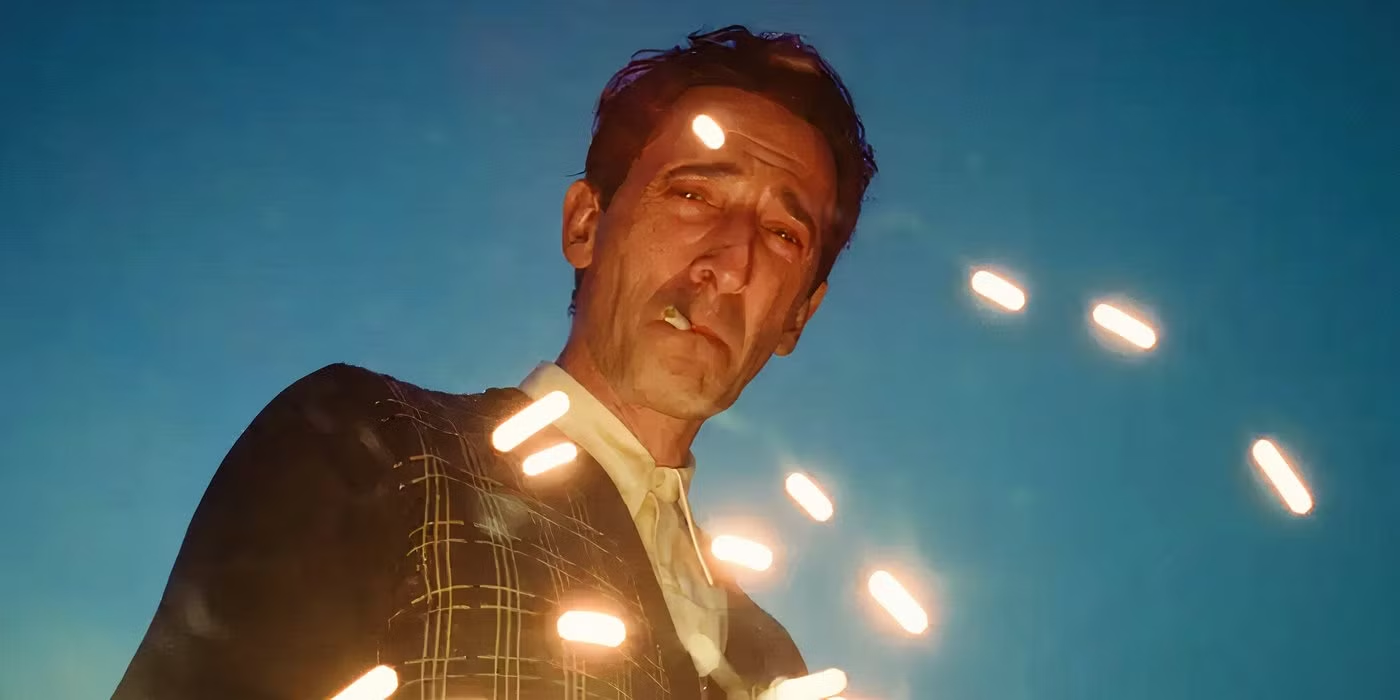
          For best picture and actress, my bet was on Fernanda Torres and Ainda Estou Aqui. The film delivers a deeply moving narrative about resilience and identity, following a young woman’s journey of self-discovery after an unexpected loss. Its emotional depth and powerful performances made it my favorite. However, Mikey Madison and Anora took home the win—an unexpected but understandable choice. The film, which tells the captivating  story of a woman navigating love and survival in a world that constantly underestimates her, captivated audiences with its authenticity and storytelling. While Anora’s victory came as a surprise, its impact on indie movies is undeniable. Finally, best actor was none other than Adrien Brody. Performance after performance, Adrien has consistently proven his brilliance as an actor.

          His ability to fully immerse himself in complex and emotionally charged characters is remarkable, making us believe in every emotion as if it were his own. In Brutalist, Adrien elevates his performance to the level of the one that secured him his first Oscar. No surprise here—this win was well-deserved.

          Marco Pagliacci– A&C Member and Writer

          For best picture, Anora is definitely an unconventional and unexpected choice. The film has a good pace and keeps the viewer engaged, the film breaks traditional patterns, but I struggled to connect with the protagonists and fully understand the reasons behind their actions in a love story without love. However, the ending redeems it, offering a reflection on the hidden fragilities beneath the surface. I wasn’t particularly struck by Mikey Madison’s performance, which felt primarily physical rather than deeply expressive. While undeniably intense, it lacked the emotional depth needed to make the character truly compelling. It’s not even comparable to Emma Stone’s performance last year, which had layers and complexity.

          For best actor, it was a well-deserved and anticipated victory for Adrien Brody, who captivated with an extraordinary and nuanced performance, as said in his final speech that can and should teach us something. In the final stretch, it seemed that Timothée Chalamet, with his portrayal of Bob Dylan, could threaten Brody’s win. However, Brody’s deeper and more personal interpretation of the drama ultimately triumphed, making him the rightful winner.

          Marta Nascimento– Head of Arts & Culture

          Best Picture’s winner was unexpected! But I loved the love that Anora got! It told such a striking story with layered characters (especially Anora) all brought together by Sean Baker’s beautiful cinematography. Mikey Madison also deserved to win, I think her part in Anora showed great range for her as an actor, especially considering her more laid back personality in real life. I was rooting for her and obviously for Fernanda Torres who I thought was outstanding in I’m Still Here. For best actor,  I confess I was rooting for Colman Domingo or Timothee Chalamet but, nevertheless, Adrien Brody delivered, as always, an outstanding performance in The Brutalist (was it worth such a long speech though?).

          Mafalda Carvalho– A&C Member and Writer

          Regarding the best actress and best pictures awards, although my Portuguese-speaker pride would have liked to see I’m Still Here and Fernanda Torres much deservedly win, I can definitely say that Anora and Mikey Madison were my second favorites. Anora was my first Sean Baker film, and I was not ready for it. The movie and performances are incredibly realistic, conveying all the pain, joy, and discomfort felt by the characters, which can only be achieved through a deep research and understanding of the realities they depict. Sean Baker, as in all his movies, and Mikey Madison alike sure did a good job at this, especially seeing how the actress’ seemingly demure character, in interviews, contrasts with the lively, almost feisty, Anora.

          As for Adrien Brody winning best actor, with The Brutalist, although neither actor nor movie were favorites of mine, it is undeniable that Adrien Brody delivers, once more, an impeccable performance. Nonetheless, I believe that the academy has looked past incredibly talented nominees, namely Timotheé Chalamet in A Complete Unknown, and Colman Domingo in Sing Sing.

          The future of cinema: Addressing the technological landscape behind film 

          Once again, the world of cinema is undergoing a noticeable transformation, that in this case is propelled by the confluence of contemporary trends and the unprecedented disruptions brought about by the COVID-19 pandemic. As audiences, filmmakers, and industry professionals navigate through a rapidly changing landscape, it becomes evident that the way we consume and experience film is evolving

          This transformation takes part with the rise of streaming platforms, the innovations in filmmaking techniques and implicit adaptation of traditional movie theaters, the impact of social media on the viewer’s experience and film promotion, and the growth of Artificial Intelligence (AI) use within the creative and operational process. 

          The subject of such changes lies not only within the form but also the substance of the art. In the sequence of the release of his most recent epic, Killers of the Flower Moon, Martin Scorsese takes part in BBC’s Talking Movies series, where the director descends on a reflection about what the future of cinema holds. In the interview, Scorsese unravels his fears regarding the exponential rise of franchise movies – that many times fail to deliver distinctive storytelling -, the lack of platforms for more alternative cinema, and the fragmentation of films’ landscape. 

          Cinema and Technology 

          The COVID-19 pandemic deeply injured movie theater affluence. Data collected from Statista displayed that in the United States before the pandemic, only 15% of the sample claimed to never go to the cinema, a percentage that jumped to 52% between the months of January and April of 2022. One of the most evident effects of such a scenario is the rise in demand for streaming platforms, with preferences shifting towards streaming, as it can be a cheaper option, with a wave of new content ultimately releasing in a digital format on the platforms upon merely two or three months of their debut. Besides providing licensed content, most of the streaming platforms are betting on original movie and series production. The profitability of such an undertaking is connected to the possibility of creating movie and series franchises, gaining not only from viewership but also from branding and merchandise. 

          However, the cinema is fighting back with the development of cinematic experiences that the audience doesn’t get to partake in from their homes. Some examples could be the IMAX and 4D experiences. The IMAX screen offers unparalleled picture quality on a grand scale, along with elevated sound technology. Furthermore, when a film is recorded utilizing an IMAX camera, the cinematic presentation on an IMAX screen is such that it effectively utilizes the entire expansive screen. The general audience became more invested in the concept with the release of Oppenheimer, after the director, Christopher Nolan, made an appeal to the public to watch it, if possible, in theaters that accommodate IMAX 70mm. The 4D cinema incorporates seat effect simulation with 3D, having an augmented reality paired with seats that shake, turn, or roll accordingly. The technology used in filmmaking is also evolving. One example of such could be the cameras that James Cameron helped design to shoot parts of Avatar 2: The Way of Water, underwater. 

          Filming underwater on the set of “Avatar: The Way of Water” (20th Century Studios) 

          Another tool that is becoming more popular in the broadcasting world is AI. Its major use is related to audience data collection and analysis, informing studios about content and market decisions. Based on such knowledge, it can be involved in the production, by casting and location scouting. It can be used in visual effects (VFX), creating more realistic and immersive special effects. AI also established the possibility of screenwriting, by analyzing scripts and coming up with new projects, reducing the costs of labor. 

          Social media: Interaction and promotion 

          The film experience is also changing because of social media. The rise in movie rating apps such as IMDb and Rotten Tomatoes, or even more interactive ones such as Letterboxd, has been making cinema more accessible for people and has been adding to the social aspect of cinema. IMDb and Rotten Tomatoes display critics and selected users’ reviews, while Letterboxd is, in a way, a social media app for movies.  

          Besides these more specific tools, a big part of movie advertisement is being conveyed through social media, such as Instagram, Facebook, or even TikTok. Often, this involves capitalizing on the involvement of well-known individuals in a film project. In that sense, the promotion of movies nowadays doesn’t rely solely on film critics, but also on audience reviews and social media presence. Lately, a greater weight of the marketing campaigns has been shifting towards influencers, such that studios try to control the pre-release narrative by leveraging influencers and social media, which often creates a bias in the public reception of the film, taking up space from the more specialized opinion of critics. 

          Nonetheless, social media focused advertisement also carries the potential to shift the weight of movie distribution from major studios into theater companies, as Taylor Swift did for her new production, a concert in the film format entitled Taylor Swift: The Eras Tour, that surpassed $200 million globally. This cultural phenomenon is relevant as it allowed Taylor to handle the promotion and distribution of her own movie, allowing for similar deals to take place in the future, and it wouldn’t be possible if it weren’t for the global presence of the artist online. 

          Taylor Swift fans during the “Eras Tour” concert film at Emagine Canton theater in Canton, Michigan  

          (Daniel Mears, The Detroit News) 

          Writer’s strike 

          Although technology has the potential to be a tool for creatives, it can turn into a way of subjugation, as it carries the potential of labor destruction. In a scenario where media companies have invested billions in streaming services, the compensation for writers was negatively affected. In a broader context, the proportion of television writers earning at least the minimum agreed salary rose from 33% in the 2013-14 period to encompass nearly half of all writers by the 2021-22 timeframe. Writers Guild of America, a trade union that represents more than ten thousand TV and movie writers across the United States, decided to go on strike on the 2nd of May of 2023, to guarantee the survival of writing as a profession. This strike lasted 146 days and had a significant impact on TV and movie production, especially since it gained a lot of sympathy from the audiences. The deal that was made touches on matters such as increases to minimum wage, better pension and health fund rates, greater residuals (such as royalties), including foreign streaming residuals, more transparency with viewership data, and a set of terms concerning the use of AI – such that the use of the tool can’t be forced on writers and the writer’s content can’t be used to train programs. This event has had major significance when it comes to defining the line between creative work and its automatization. 

          Demonstrators rally outside a studio (Jae C Hong/AP) 

          Ultimately, although there is a clear potential for technological improvements to harm both creatives and audiences, if conveyed properly, they can serve as tools to elevate the art, to educate the public and to promote critical discussions. This delicate balance underscores the importance of ethical and responsible use of technology, where creatives are empowered to harness digital tools to unlock new realms of creativity and audiences are equipped to navigate the vast digital landscape with discernment, with the prospect of the valorization of the 7th art.  

          Sources: 

          The Guardian, BBC, Rolling Stone, Statista, Vox, TIME, The New York Times 

          Author: 

          Maria Francisca Pereira