Wealth: to tax or not to tax?

There has been a topic marking all the debates throughout America in the past few weeks: the proposals of two Democratic candidates, Elizabeth Warren and Bernie Sanders, regarding a tax on wealth. Their proposals, coupled with all the recent articles and book releases about rising inequality all across the world, has been the hot topic on top of the table (better said, on top of the House).


Bernie Sanders and Elizabeth Warren

Bernie Sanders and Elizabeth Warren

A tax on wealth consists of a tax on the net wealth a person holds – that is, their assets minus their debts. Assets may include, for instance, bank deposits, real estate, financial securities, personal trusts, jewellery, or even a Picasso Painting. However, according to Bernie Sanders’ proposal, this tax would only be applied to people with a net worth value above $32 million, whereas candidate Warren would impose a tax on wealth only for values above $50 million.

They believe this is a much-needed source of revenue in order to ensure public health care for every American citizen. 


There have been many countries adopting similar forms of wealth taxes. However, according to records, most of these countries have already dampened its usage. Only three out of the twelve European governments that implemented this tax in the 1990s continue relying on its revenues.

Furthermore, the numbers regarding tax revenue are not encouraging. The country that collects the most revenue from a tax on wealth is Switzerland, where its wealth tax revenue amounts to 3.1% of GDP. The other two countries, Norway and Spain, show really modest values, ranging between 0.2 and 0.8 percent of GDP.

The reasons provided by these countries are based on the fact that it is too costly to implement such a tax policy, due to the difficulty in assessing and evaluating the stock of assets each person owns, from personal effects and durable goods to future pension rights. Besides this, the OECD found clear evidence of the tax evasion and avoidance that is expected following the implementation of such policy.


Additionally, studies based on past experiences showed that, as this tax is calculated based on the difference between assets and debt, people were encouraged to borrow and invest in exempted assets and in assets that were hard for the government to identify. Farms and small businesses, artwork and antiques, forests and non-profit organizations are all examples of assets exempted from a tax on wealth.

The concerns of Senator Warren and other policymakers regard the ‘concentration’ of wealth in a small number of individuals. But the truth is that their wealth is mainly dispersed across the economy in productive business assets and, looking just at billionaires, only 2 percent of their wealth is accounted for by their homes and personal assets, such as cars, jewellery, and artwork.


Greg Mankiw

Greg Mankiw

Economist Greg Mankiw suggested a model in which there were only capitalists and workers. His findings showed that people should support taxes on wages, but not on capital. The reason is that the supply of capital is elastic or responsive to taxation – not entirely realistic -, such that setting a tax equal to zero would generate increased savings and boost investment. Consequently, worker productivity and wages would rise and, in the long run, the after-tax wages of workers would be higher under this policy rather than under a policy of imposing taxes on capital. From an average workers’ point of view, it is beneficial for the wealthy to maximize their savings and reduce consumption.


Still, the question remains:

How can we have a tax system that does not penalize beneficial wealth accumulation but also distributes the tax burden equitably? How do we ensure that the rich pay a fair share of taxes while simultaneously not discouraging savings? 

Many have been the countries and cities, from Chile to Lebanon, appealing and begging for a more equal treatment and more egalitarian policies from their governments. For the sake of social harmony, tackling this issue is as urgent as it is to reach a consensus regarding climate change policies. However, wealth taxes may not be the right way to achieve the so-called general equilibrium.


Sem Título.jpg

Sources:

  • Business Insider

  • National Public Radio

  • CATO Institute

China’s Grand Strategy: The Belt and Road Initiative

The acute awareness of a new world being knitted together has helped prompt plans for the future that will capitalise on and accelerate the changing patterns of economic and political power. Chief among these is the Belt and Road Initiative (BRI), President Xi’s signature economic and foreign policy, which uses the ancient Silk Roads and their success as a matrix for Chinese long-term plans for the future.

Since the project was announced in 2013, nearly $8 trillion have been promised to infrastructure investments, mainly in the form of loans to around 1,000 projects in 65 countries.

Some believe that the amount of money that will be ploughed into China’s neighbours and countries that are part of the BRI over sea – Maritime Silk Road – and land – Silk Road Economic Belt – will eventually multiply several times over to create an interlinked world of train lines, highways, deep water ports and airports that will enable trade links to grow even faster and stronger. In the meantime, the IMF issued a warning, in 2017, regarding the credit bubble, stating that the debt levels were not so much of a concern but rather a real danger.

China’s BRI was decided when the new leadership faced the combined pressure of the economic slowdown, US pivot to Asia and the deterioration of the relations with neighbouring countries after the 2008 Global Financial Crisis.

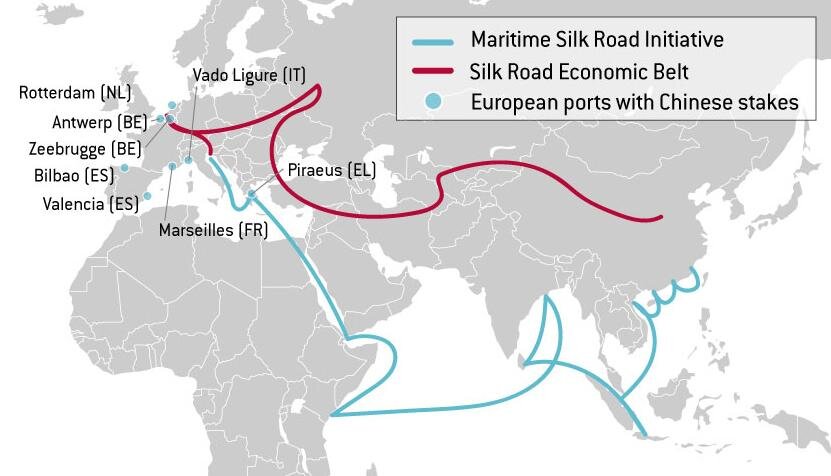
The continental economic belt focuses on the connectivity between China and Europe through Central Asia, and also between China, the Persian Gulf and the Mediterranean through Central and Western Asia. In addition, the maritime road aims to link China’s seaports to the South China Sea, the Indian Ocean and Europe.


1.jpg

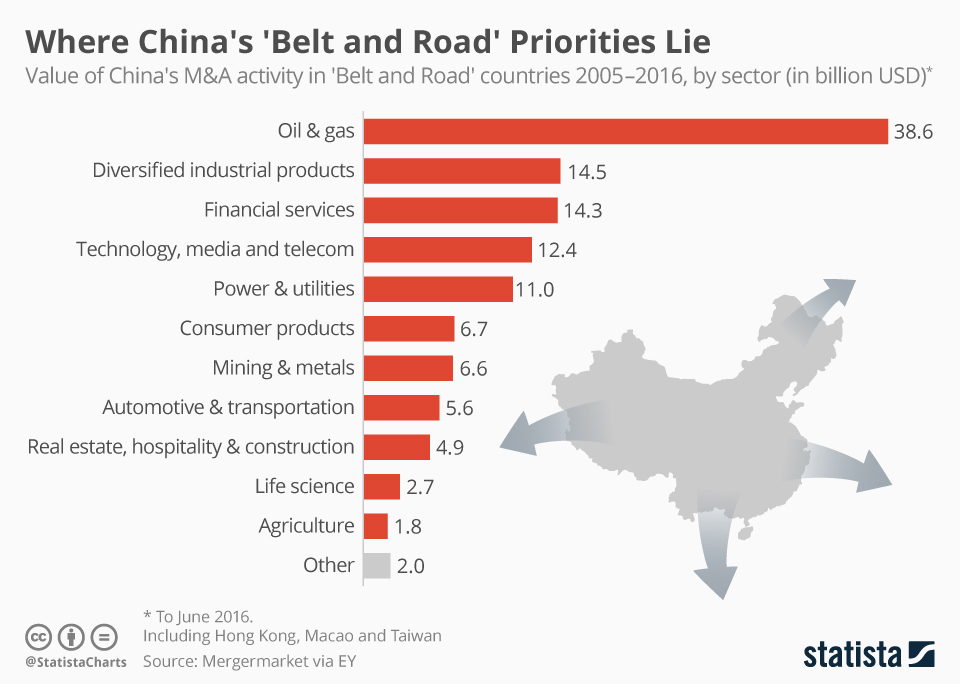
The BRI’s five major goals are claimed to be: promoting policy coordination, facilitating connectivity, unlimited trade, financial integration and people-to-people bonds. The sectors in which the BRI has focused more time and effort are oil and gas, diversified industrial products and financial services, as shown in the chart below.


chinas belt and road priorities.pngchinas belt and road priorities.png

Dealing with the ‘new normal’

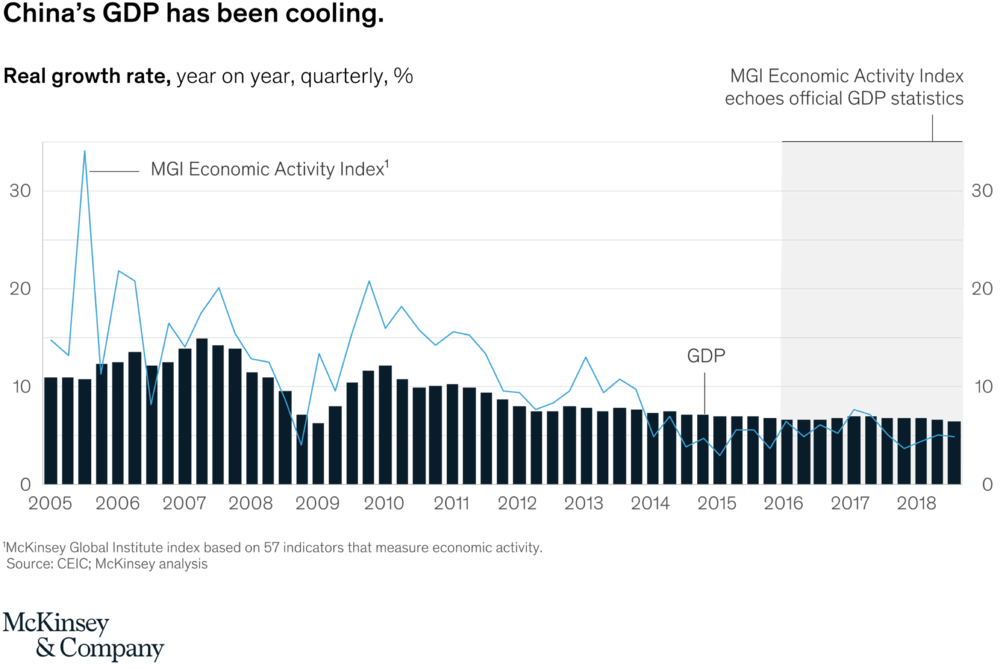
Serious challenges to the Chinese economy account for the most important drivers of the BRI. After the Global Financial Crisis and experiencing high-speed growth, the Chinese economy has slowed down since 2012 and entered the state of a ‘new normal’. China’s engine is cooling down, yet it continues to rack up one of the fastest rates of economic growth in the world. Given its enormous scale, this translates into substantial additions in absolute terms. In 2019, China added the equivalent of the entire Australian economy to its GDP. Nevertheless, the efficacy of China’s government stimulus has been waning.

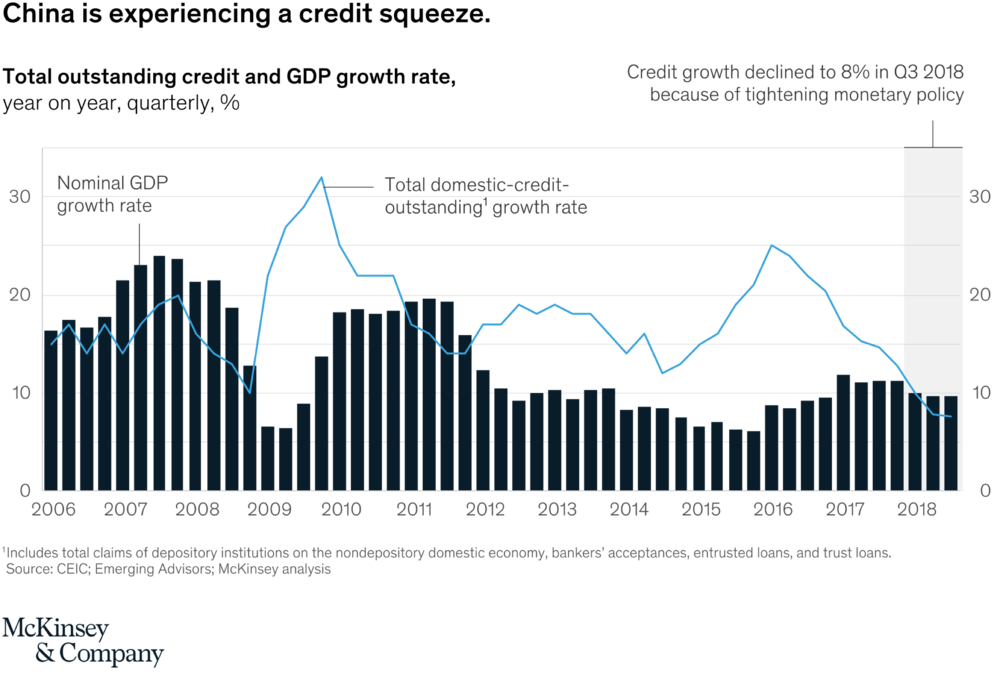
Each renminbi of economic stimulus that the government pumped into the economy delivered less in actual GDP growth than in the past. The rise in ICOR (Incremental Capital-Output Ratio) – the amount of money the government needs to put in to yield a unit of growth – meant that economic stimulus was, in other words, getting more expensive.

china's gdp cooling.png


china credit squeeze.png

Two major problems that the Chinese economy carries, which can be partially solved by the trade generated from the BRI, are overcapacity and excessive foreign exchange reserves.

The problem of overcapacity is not only in labour-intensive traditional industries, such as steel and cement sectors, but also in the so-called high value-added emerging industries, including new energy sectors. Overcapacity has kept the growth rate down, which makes it urgent to find alternative oversea markets.

Excessive foreign exchange reserves were mostly caused by the large-scale stimulus package, as high as $586 billion, and further imbalance of the economy. The accumulation of excessive foreign reserves reflects worsening external imbalance, though it is also an upside factor to an emerging economy facing the risks of global adjustment. China’s foreign exchange reserve has rapidly increased to $4 trillion in recent years and about $1.4 trillion was invested in the purchase of US treasury bonds. Undoubtedly, this development is not sustainable and China’s economic leaders face severe political and economic pressure in tackling this issue.

In order to increase efficiency, China needs to find more exits for such large amounts of resources.

Studies made by Think Tanks such as the Asian Development Bank have shown that there is huge demand for infrastructure in Asian developing economies which is not largely met with existing multilateral and regional development financing institutions. It is believed that there is huge space for mutual cooperation between China and Asian economies on infrastructure investment, which is the reason why so many Asian developing countries have signed up for the two Chinese initiatives.


Debt vulnerability in BRI countries

As anticipated, BRI spans at least 65 countries with an announced investment as high as $8 trillion for a vast network of transportation, energy and telecommunications infrastructure connecting Europe, Africa and Asia. It is an infrastructure financing initiative for a large part of the global economy that will also serve key economic, foreign policy, and security objectives for the Chinese government.

Yet, important questions arise on sustainably financing the initiative within BRI countries and how the Chinese government will position itself on debt sustainability. Infrastructure financing, which often entails lending to sovereigns or the use of a sovereign guarantee, can create challenges for sovereign debt sustainability. When the creditor itself is a sovereign, or has official ties to a sovereign as China’s policy banks do, these challenges often affect the bilateral relationships between the two governments.

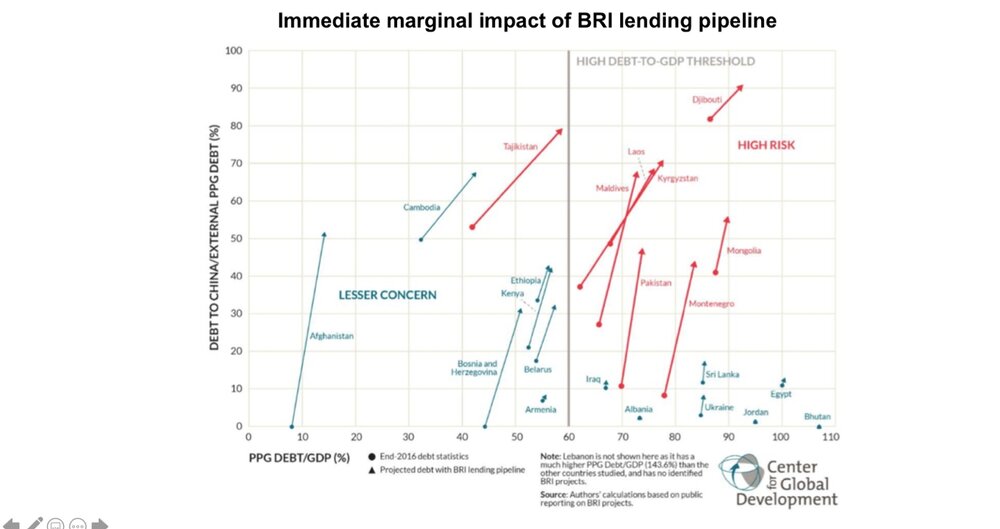
Even though China’s plan sounds like a brilliant idea to fix its own problems, it is not all sunshine and rainbows. There is a concern that debt problems will create an unfavourable degree of dependency on China as a creditor. Increasing debt, and China’s role in managing bilateral debt problems has already exacerbated internal and bilateral tensions in some BRI countries, such as Sri Lanka and Pakistan. Washington-based Center for Global Development raised serious concerns about 8 nations receiving BRI financing, namely Pakistan, Tajikistan, Maldives, Laos, Mongolia, Montenegro, Djibouti and Kyrgyzstan. These nations’ mounting debt to China puts their economies at risk of potential widespread default.

immediate+marginal+impact+of+BRI+lending+pipeline.jpg

In Sri Lanka, citizens have regularly clashed with police over a new industrial zone surrounding Hambantota Port. Many argue that Chinese financing has led to a debt trap in Sri Lanka where the Hambantota Port project performed poorly once it was operationalised, operating at a loss. Consequently, on December 2017, the Sri Lanka Ports Authority renegotiated a deal with China Merchant Port Holdings (CM Ports), where CM Ports injected $1.1 billion for an 85% stake and a 99-year lease.


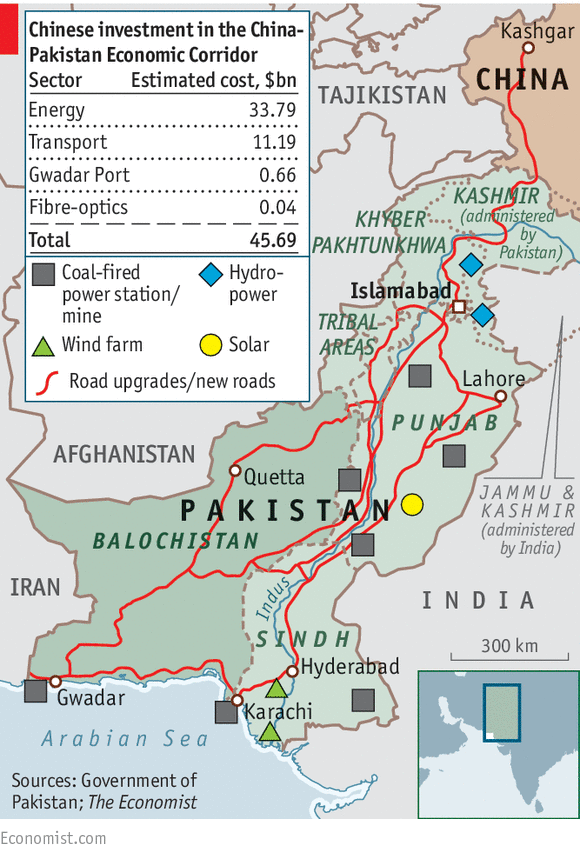
chinese investment in the china-pakistan economic corridor.png

In Pakistan, Chinese officials openly appealed to opposition politicians to embrace the construction of the China-Pakistan Economic Corridor (CPEC), which is BRI’s ‘flagship project’ to bolster ties between Beijing and Islamabad.

The CPEC is the only corridor that links China to one single country – Pakistan, comprising an important trade route to China, particularly because of the country’s location between China and its energy suppliers in Africa and the Middle East, enforcing China’s huge energy appetite.

Pakistan may have taken more than what it was expecting when it took China’s loans. The country’s Prime Minister is fighting to keep the economy afloat and some are worried that Pakistan’s debt to China may ultimately hurt those efforts. The total value of CPEC projects is currently estimated at $62 billion.

The Belt and Road Initiative is President’s Xi’s most ambitious foreign and economic policy initiative. Much of the recent discussion has concerned the geopolitical aspects of the initiative. There is little doubt that the overarching objective of the project is to help China’s neighbouring countries become more closely tied to Beijing. However, there are many concrete and economic objectives behind BRI that should not be obscured by a focus on strategy.

Additionally, the lack of political trust between China and some BRI countries, as well as instability and security threats in others, are considered obstacles which have to be taken deeply into account when designing an action plan.

Finally, despite ad hoc approaches to the treatment of debt problems, there are some signs that Chinese officials are moving toward greater policy coherence and discipline when it comes to avoiding unsustainable debt.

The last of a generation – Alexandre Soares dos Santos, Mr. Pingo Doce

Alexandre Soares dos Santos, the man behind Jerónimo Martins’ empire and the main sponsor of the foundations created in his grandfather’s honour, the Francisco Manuel dos Santos Foundation (FFMS). One of the richest men in Portugal, he is accredited for changing the business environment in his family’s company, as well as the rest of Portugal.

“I am unpredictable”


Early days

Alexandre Soares dos Santos was born to a family of entrepreneurs from Oporto, at the same time as his father was taking over the helm of his father-in-law’s business. Mr. Soares dos Santos interchanged his studies between Lisbon and Oporto, eventually going on to study Law, following his father’s wishes. However, to his father’s disappointment, Alexandre Soares dos Santos soon dropped out, which led their relationship to quickly sour.

As a result, Mr. Soares dos Santos joined Unilever in Germany, the consumer goods’ giant, where he’d go on to build a career for himself. At the time that he was in charge of the marketing department in Brazil, Alexandre Soares dos Santo’s father passed away, forcing him to move back to Portugal in order to take over the firm’s leadership.


Jerónimo Martins

His beginning at JM:

When thinking about the Portuguese retailer Jerónimo Martins, Alexandre Soares dos Santos should be a name that immediately pops up in our mind, being an inevitable figure in the retail giant. His ties with the company go back to way before he took charge. In 1935, his family decided to move to Lisbon, when Alexandre ́s father was offered a job to work with his father-in-law in a relatively unknown company based in the Portuguese capital: Jerónimo Martins.

Jerónimo Martins is currently the biggest food retailer in Portugal and the 56th largest retailer in the world, according to a study conducted by Deloitte, “Global Powers of Retailing”, in 2018. Although the company ́s foundation goes back to 1792, its most glorious and prosperous times occurred during the time Alexandre Soares dos Santos was the CEO of the retailer.

Deloitte’s Global Powers of Retailing, 2018Deloitte’s Global Powers of Retailing, 2018

Distribution is the answer

The revolution began as soon as Alexandre started administering the firm. In his earliest days, he started a new brand “FIMA”, bought the factories of the ice-cream company “Olá” (internationally known as Algida) and signed agreements with Unilever. This last measure is particularly relevant, as it marked the entry of the Jerónimo Martins group in the distribution market, which would later lead to the opening of the supermarket chain “Pingo Doce” – the group’s most valuable brand in Portugal. This was just the beginning of one of the most successful stories in Portuguese corporate history.

In more recent years, the group has consolidated in its main markets, with special emphasis on Poland, verifying increases in revenues from 13 billion euros in 2013 to close to 18 billion in 2017. Jerónimo Martins’ outstanding performance is not only shown by sales figures, but also by distancing itself from its closest competitor, Sonae, through a greater growth performance.

Jerónimo Martins and Sonae’s revenues between 20013 and 2017Jerónimo Martins and Sonae’s revenues between 2013 and 2017

The Brazilian Setback

Although today Jerónimo Martins is a synonym of success, that has not always been the case. Back at the turn of the millennium, the company faced serious financial difficulties following the expansion into Brazil and Poland. The company lacked financial resources to withstand investing in these two growing economies, leading to debt accumulation, eventually forcing the sale of the Brazilian assets.

Despite being mostly deemed as a bad bet, Mr. Soares dos Santos took personal responsibility, blaming his own arrogance for the company’s failure in Brazil, as well as the lack of market knowledge, planning and overconfidence. He believed that the lesson learnt was a major turning point for the firm, which defined the success in Poland.

“I don’t care about the past. I only care about the day of tomorrow.”

Vision for Portugal

Alexandre Soares dos Santos was long known for his strong criticism of the political landscape and personalities in Portugal. He believed the current economic and banking systems in Portugal to be faulty, in part due to political pressure and widespread corruption. In addition, he defended that the Government creates excessive constraints to investment and job creation through a bureaucratic and centralized decision-making process, which results in little to no prosperity and growth whatsoever.

Mr. Soares dos Santos’ views of the current environment in Portugal were the result of a lifetime of investing, reflecting his several experiences abroad in countries such as Germany, the Netherlands and Poland. Nevertheless, he’d always maintain a distance from politics so as not to hamper his businesses.

I argue that the businessman does not have to get into politics. There is a conflict between being in the government and being in a business.  We obey to one goal: to defend the interests of the company and those who work there. Once a politician, a respectful guy, told me: ‘A politician’s goals are the next elections. Yours, not’”

Legacy – Fundação Francisco Manuel dos Santos

Besides his impact in business, Alexandre Soares dos Santos played a big role in some of the most relevant studies regarding the Portuguese reality in recent years, through the foundation he and his family created back in 2009: “Fundação Francisco Manuel dos Santos”. This foundation was created with the main goal of “Studying the great national problems and making them understandable for all, while stimulating open discussions regarding those topics”, as said by Mr. Soares dos Santos when presenting it. FFMS is also responsible for creating the popular statistical platform Pordata.

The database Pordata is one of the most successful projects of the FMS Foundation. It was started in 2010 as the “Database of Contemporary Portugal” and the project embodies one of the priorities of the Foundation: the collection, systematization, and dissemination of data on multiple areas of society. Pordata has a significant relevance at an economic level, as its ties with the Portuguese National Statistics Institute (INE) mean the database is one of the biggest sources of reliable economic information, not only at a national level, but regarding all of Europe.

All of this information about the Portuguese and European economic environment provide an unbiased and trustworthy analysis, which is fundamental to look into existent structural issues present in each country.

“Soares dos Santos had a great social sense, and he was sometimes frustrated that this sense was not perceived from outside.”Seixas da Costa.

Final thoughts

Mr. Soares dos Santos was the last of a generation of industrialists, having transformed a small company into one of the most important conglomerates in the Portuguese economy, and its biggest employer. Moreover, his views of the economic and political environment led him to create a foundation which is key to understanding how Portugal can develop itself.

Mr. Soares dos Santos is seen as an example for Portuguese people, but most importantly an inspiration to the next generation of entrepreneurs who wish to make a difference.

Sources: Observador, Jornal Económico, Jornal de Negócios

Nice Dress in the Closet, Big Weight in the Shoulders

Welcome to the world of fast fashion

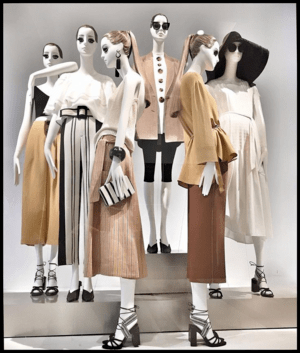
Dressing up fashionably is becoming an increasingly mindless task. Shop windows change every two weeks with new collections and t-shirts may cost as low as 5$. Amazing, right? You are able to be on trend without ruining your budget. Besides, according to some well known economists such as John Maynerd Keynes, you are contributing to the growth of your economy the more you consume.

Fast fashion retailers introduce new products multiple times a week, making us feel that the clothes we own are outdated or have a poor design. Most times, this is not true.

When we think of mass production which results in low quality products, labour exploitation, environmental disregard and lack of security at work, the beautiful world of fast fashion becomes a little bit less pretty.

It’s undeniable that a consumerist world may bring some economical and even social benefits for a tiny part of the population. However, in this article, we invite you to look to the other side of the coin – the one we tend to ignore, the one which doesn’t directly affect us.


Mass production in the fast fashion industry


2.png

“No, it is not our choice. We must work overtime. If not, the gate is open for us to quit our job.”  

According to the world resources institute, the average consumer is buying 60% more clothes now than in 2000, which explains why the fast fashion industry has grown so much. According to the Ellen McArthur Foundation, clothing production  has approximately doubled in the last 15 years, driven by a growing middle-class population across the globe. This industry is expected to continue growing due to the foreseen 400% increase in world GDP by 2050.

The fashion industry represents 4% of the global market share (406 billion dollars), having huge implications on both the economic growth and social welfare in several countries.

Since trade law changes in the 1970’s, the supply chain has been spreading out geographically to sub-developed economies, as firms wanted to keep increasing their production while reducing average costs.

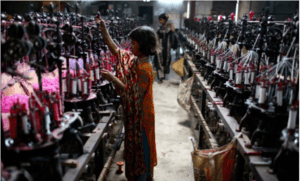
To achieve economies of scale, fast fashion industries chose to produce in countries where there were low wages and poor labour regulation.

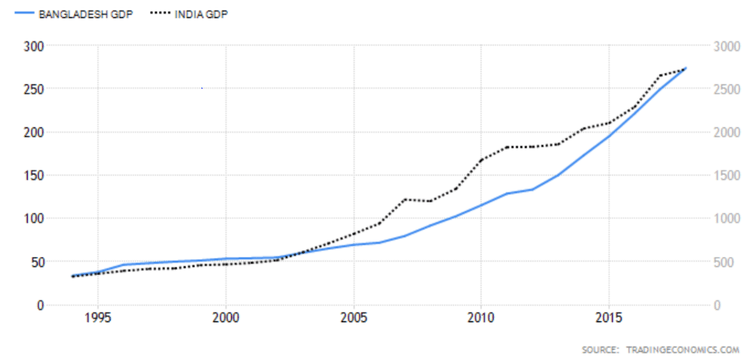
Because of that, these countries have increased their GDP. In Bangladesh as well as in India, GDP growth was exponential, growing from 25 billions of dollars in 1995 to almost 275 billions of dollars in 2015. However, this increase in GDP was not translated into an increase in welfare. According to the United Nations’ development programme, Bangladesh has an Inequality-adjusted Human Development Index  (IHDI) of 0.462 and 67.3% of the total labour force lives under poverty. In India, the reality is almost the same, the IHDI is 0.462 and 42.9% of the total labour force lives with less than 3 dollars per day.

3.png

According to the American Apparel & Footwear Association, during the 1960s roughly 95% of the apparel worn in the U.S. was made domestically. Nowadays, it’s less than 3%. The fashion landscape has changed from being seasonal to new clothes arriving every week, but at what cost? In 2007, labour rights organizations in Bangalore, India, estimated that the bare minimum a garment worker’s family (average size: 4.4 members) needs is around 4364 rupees (€ 80) per month to live. Yet the minimum wage for garment workers in Bangalore starts at 2418 rupees (€ 42) per month, and, according to Labour behind the Label, many workers earn just this amount.

Similarly in Bangladesh, a study for Clean Clothes Campaign by Martin Hearson discovered some workers on the minimum wage of 1662 taka (€ 16.60) and most factories paying an average take-home wage (boosted by considerable amounts of overtime) in the region of 2,500-3,000 taka (€ 25-30). However, at the time that this minimum wage was set, in 2006, living wage1 estimates for a Bangladeshi garment worker’s family were around 4,800 taka (€ 48). Low payment like this often means that garment workers are keen to work overtime to help bring in more money. However, in the majority of workplaces that Clean Clothes Campaign surveyed, a significant proportion of the overtime is unpaid. This is often because employers set impossible daily targets, requiring workers to stay at work until they have met them. Only then they are paid. A tailor in Tirupur told Clean Clothes Campaign “No, it is not our choice. We must work overtime. If not, the gate is open for us to quit our job.”  

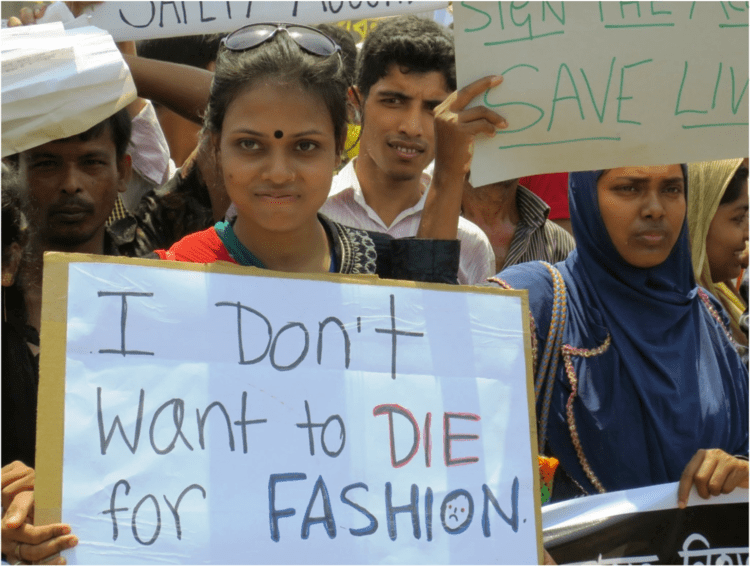
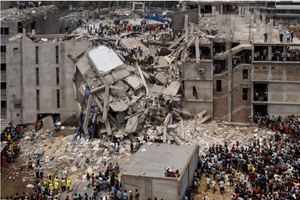
In Bangladesh, Garment workers and their families protested on the first anniversary of the Rana Plaza collapse, demanding compensation for the deaths and injuries of thousands of workers.

Besides paying low wages, the factories where these workers spend most of their time have, in general, really poor working conditions, which frequently leads to severe accidents. According to Reuters, between 2005 and 2016 at least 9 deadly accidents happened in Bangladesh, most of them in garment factories which supply global clothing brands.

6.png

The worst accident happened in April 2013 when an eight story building, Rana Plaza, housing 5 garment factories, collapsed due to a structural failure. Besides the failure to meet security standards, according to the head of Bangladesh Fire Service & Civil Defence,  the upper floors had been built without permission. On the day before the collapse, some cracks in the walls of the building had been noticed and the building was evacuated. However, on the following day, workers were ordered to enter the factory despite the complaints about the appearance of cracks in the walls. Bank and stores employees were not there but more than 3000 workers, mostly women and young people, were inside the building when it collapsed, and 1134 of them died.


Affordable does not always mean sustainable

Besides the social harm of mass production, this practice will also generate negative environmental externalities. According to the World Resources Institute, to produce one cotton shirt 2,700 liters of water are needed, the equivalent of what a regular person drinks in two and a half years. On the other hand, the production of a pair of jeans generates as much greenhouse gases as driving a car for more than 80 miles. Washing clothes releases 500,000 tons of microfibers into the ocean every year.

B3-EV511_GETTYI_1000V_20190828144804.jpg

This way, the fast fashion industry is responsible for 20% of the global water waste and 10% of total gas emissions.

To produce at a lower cost firms use cheaper materials (such as polyester, acrylic or nylon), synthetic fabrics, dangerous dyes and toxic chemicals. Moreover, when consumers wash their clothes they release plastic fibres into the ocean as most of the materials used to produce clothes in the fast fashion industry are made from petroleum. The most widely used input in the fast fashion industry, polyester, is a fine example. More than 70 million barrels of oil are used every year to produce this material and it is responsible for 35% of the microplastics present in the ocean.


“ If we only have one body, why do we need thousands of clothes?”

Slow fashion, which is the deliberate choice of purchasing better quality items, but less often, has risen in opposition to fast fashion. By using high quality resources and production methods, guaranteeing better working conditions and compensation for employees, this alternative is considered environmentally and ethically conscious rather than trend driven.

However, there are other ways beyond slow fashion capable of softening fast fashion environmental consequences, such as:

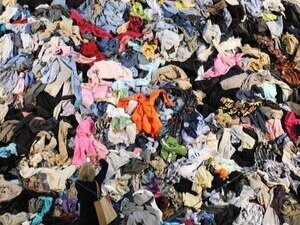
  • Donating unused clothes to charity institutions or to your family and friends. Do not  throw them in the organic bins as, if they are composed of synthetic, non-biodegradable fibers, they will just pile up in the landfill;

  • Looking for shops which take back used clothes from their own brands or even from other’s;

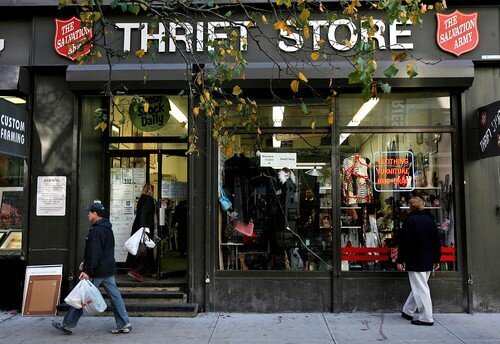
  • Trying your luck in second hand stores, a sustainable and economically efficient way of getting rid of what you don’t need anymore but which may be useful for someone else.

transferir.jpg

If it is true that not all of us are able to afford slow fashion items or they simply don’t satisfy our tastes, it is also true that companies produce according to our “production orders”. That is, if we keep on buying clothes just because they are fashionable or cheap, disregarding the environmental and social  impacts of their production, this situation is never going to change.

As consumers, we have the power to dictate the rules. If we demand corporations to give their employees better working conditions or their production cycle to be more sustainable, they have no other way than to adapt. However, this would require a collective change of behaviour, so that corporations feel forced to satisfy our “new purchasing preferences”.

Besides, this problem could simply be solved with pure rationality. If we only have one body, why do we need thousands of clothes? Does it make any sense?

The first step in the fight against the environmental deterioration and social damages caused by the fast fashion industry is the change in our shopping routines, something reachable by all of us. We need to work together –  there are no jobs on a dead planet. There is no equity without rights to decent work and social protection. Ultimately, there is no peace if we are uncertain about the sustainability of our planet.

It’s time to change.


1 A living wage enables workers and their dependents to meet their needs for nutritious food and clean water, shelter, clothes, education, health care, and transport, as well as allowing for a discretionary income.


Article Written By:


Inês Costa - Inês Costa Mariana Inglês - Mariana Inglês Shanice Sousa - Shanice Sousa

Joana Pereira - Joana Pereira Vladyslava Shortuma - Vladyslava Shortuma

The Interesting System of a Islamic Finance

“Those who consume interest cannot stand [on the Day of Resurrection] except as one stands who is being beaten by Satan into insanity. That is because they say, “Trade is [just] like interest.” But Allah has permitted trade and has forbidden interest. So, whoever has received an admonition from his Lord and desists may have what is past, and his affair rests with Allah. But whoever returns to [dealing in interest or usury] – those are the companions of the Fire; they will abide eternally therein.”

— Qur’an – Surah Al-Baqarah [2:275]

““O you who have believed, fear Allah and give up what remains [due to you] of interest, if you should be believers.”
And if you do not, then be informed of a war [against you] from Allah and His Messenger. But if you repent, you may have your principal – [thus] you do no wrong, nor are you wronged.

— Qur’an – Surah Al-Baqarah [2:278-279]

If you wish to hear the recitation of the verses, links are provided here: 2:275; 2:278; 2:279


These three quite ominous verses sum up, succinctly and clearly, what grim fate Allah has planned for those who deal in interest. However, it might be more accurate to say riba (ربا), rather than interest. Indeed, it could be argued that translations of the verses above which keep riba untranslated are more accurate. (Truthfully, any version of the Qur’an in English could be classified as unduly westernized.) This Arabic word’s original meaning is something along the lines of “increase”, “excess” or “addition” but is now primarily used to refer to the practice of interest or usury.


  • Some defend that riba doesn’t apply to all interest but, rather, only to unusually high interest-rates: usury. There is a lot of Islamic literature which equates riba with interest and that claims that there is a consensus amongst Muslim scholars that this is so.

There are many justifications given by religious scholars for the banning of interest by Allah, namely claiming that lending with interest is exploitative and that the lender/borrower relationship created undermines the spirit of brotherhood that should exist amongst Men. This religious ideal is not unique to Islam. Indeed, other Abrahamic religions have things to say about interest:

“Do not charge interest on the loans you make to a fellow Israelite, whether you loan money, or food, or anything else.”

Holy Bible – Deuteronomy [23:19]

Human beings’ innate fear of falling in eternally burning fires and our puzzling love for masochistic submission to an almighty father figure came together in the Muslim world to create a Sharia-compliant banking system commonly referred to as Islamic Banking. In broad terms, to be in accordance with Allah, Islamic banks must not receive nor pay interest and must not invest in or involve themselves with businesses which partake in haram (forbidden) activities, such as selling alcohol, pork, gambling, etc.

Now, the question lingering in everyone’s minds: “How do these institutions function?”

In Islamic Banking, the most common way of financing is what is called Murabaha. It is, essentially, a contract of sale in which the bank buys a good that its client needs and then sells it to him with a previously agreed upon mark-up cost. Say, for instance, that you need a new set of tables for your restaurant. The bank buys said set of tables from the table-maker at X€ and sells them to you at X+P€, an amount that you pay through deferred payments.

Imagem1.png

I don’t need a revelation from Allah to know that many of my esteemed readers are scratching their heads in utter confusion trying their hardest to understand how such a transaction amounts to anything different than paying interest on a loan. Is it just interest with extra steps? Indeed, this is a criticism which Murabaha-type financing receives in ample amount, implying, therefore, that it is not Shariah compliant. However, since this removes the much-frowned-upon aspect of “money generating money on its own” and involves specific commodities, supposedly, Allah is pleased. And so, in spite of its criticisms, Murabaha contracts are calculated to represent about 80% of total financing made by Islamic Banks.


transferir.png

Another type of financing contract that exists in Islamic finance is called Mudarabah which, contrary to Murabaha agreements, is broadly accepted as Shariah compliant. This method, which closely resembles venture capital financing, is a type of contract in which an agent provides the capital (called the rabb-ul mal (رب المال), literally “lord of money) to another agent, who invests it and operates the investment (called the mudarib). The mudarib has complete authority in operating and managing the investment. Profit after the repayment of the borrowed capital, when it exists, is split amongst both parties in a previously agreed-upon manner. On the other hand, if the project fails, the losses fall entirely on the rabb-ul mal, who will lose his invested capital.

Due to the very high risk that the rabb-ul mal faces, Mudarabah contracts contain covenants which protect him from negligence by the mudarib. However, the viability of this method of financing still suffers heavily from structural agency problems: the mudarib does not suffer from losses nearly as much as the rabb-ul mal. For the financier to be willing to take projects with higher risk, he will demand a higher profit share. However, this, in turn, diminishes the incentives that the borrower has to generate profits. And so, mechanisms that better align the incentives of both parties, like the ones used to align the incentives of shareholders and managers (for example shareholders voting to elect a Board of Directors), need to be incorporated to actually make this a practical way of financing.

A similar type of contract exists, called Musharakah, but where two or more parties pool capital for an investment and divide profits according to it.

There is a hadith in which prophet Muhammad says:

A dirham of riba which a man receives knowingly is worse than committing adultery thirty-six times.

Assuming that this is true, and that people, in general, don’t like adultery, then, it is no surprise that Islamic Finance continues to grow, with global assets exceeding $2000bn. However, its growth is not restricted to Muslim-majority countries. Many financial companies, like J.P.Morgan, now offer Sharia-compliant financial services and the United Kingdom is at the forefront of this industry’s growth in the west. With about 5% of its population being Muslim there are already 5 different, completely Islamic, banks operating in the U.K.

This is a topic whose surface I was only able to scratch in this article due to its surprising complexity. But, surely, its relevance will only increase as Islamic Finance evolves and migrates from the Muslim-majority countries to the rest of the world.

The Great Firewall of China

Let us say, for instance, that, with great enthusiasm to visit such wonders as the Forbidden City or to gaze at those fabled clay soldiers, someone buys a plane ticket to the ever-so-mysterious People’s Republic of China. He sallies forth towards the unknown, and embarks both on an adventure and on an airplane. Suffering from a major case of jet-lag after a 13-hour-long flight, he falls headfirst on the hotel bed. So as to take his mind off of his nausea, he connects to the hotel’s Wi-Fi and decides to check his Gmail account or to watch a YouTube video. More knowledgeable or experienced readers in this matter will undoubtedly, understand that our hypothetical subject will find himself rather flustered at what will seem, at first, shamefully poor internet speed. Eventually, he will be cursing his naivety since this encounter with Chinese censorship could have been avoided by the timely purchase of a VPN service.

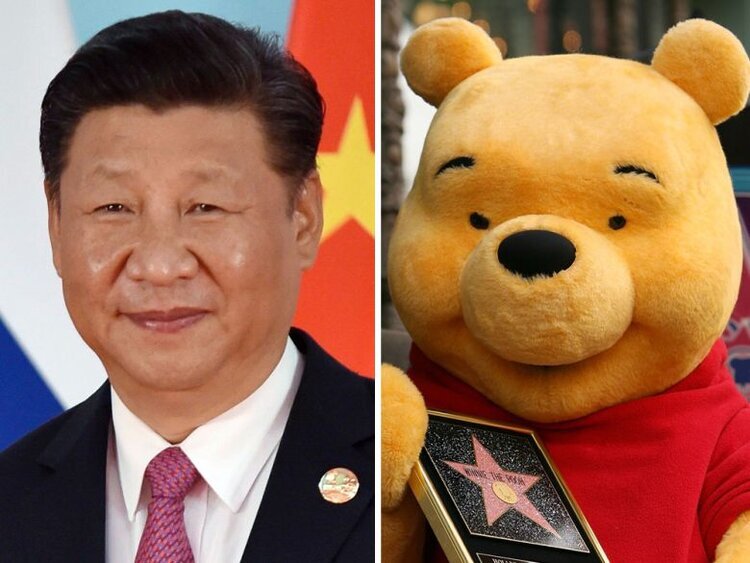
For most westerners, this reality, where a government would censor what content we can and cannot access, seems very distant. Indeed, the many humorous visual comparisons posted online between Winnie the Pooh and Xi Jinping, combined with the fact that, in 2018, the live-action movie of Winnie the Pooh was banned in China, make a lot of us laugh. However, this laughter often carries an undertone of empathy for those who live under such a regime and of relief for the fact that our country is different.

The yellow bear became, for many in China, a symbol of rebellionThe yellow bear became, for many in China, a symbol of rebellion

Those of us with a constitution that enshrined our right to freedom of speech may breathe a sigh of relief. For example, if a government operating under such constitution were to prevent a company from operating because it printed pro-opposition propaganda, this would be, undeniably, a clear constitutional violation. However, what would happen if an outside state that doesn’t respect this fundamental right was able to exert pressure on firms to self-censor and to censor their users?

China is a giant market that many tech and media firms would profit greatly in entering. However, their biggest obstacles often are the blue-pencil-wielding bureaucrats that decide what content is permissible and what is not. As such, firms wishing to expand to China or to maintain their business there may find it profitable to do some adjustments on how they operate in order to surmount this Great Wall.

For example, many Hollywood movies, competing to get into the limited number of foreign films that can be aired in China each year, are criticized for “watering-down” some more sensitive topics that, if kept unchanged, could cause the film to be struck down by Chinese censors.

And, more recently, due to the chaotic situation in Hong Kong, there have been a few incidents which have sparked outrage online: The NBA was heavily criticized for their swift condemnation of a tweet supporting the Hong Kong protesters by one of their team’s general managers. In addition, video-game company Blizzard came under fire after banning players for expressing their support for the Hong Kong protests.

Then, one might think that, perhaps, there is a normative argument to be had about whether or not a constitution that enshrines the right to freedom of speech should or shouldn’t prevent corporations from undertaking this sort of behaviour which stem, not from a nation’s own state, but, rather, from the economic pressure exerted by foreign dictatorship.

If you are opposed to this sort of behaviour, fortunately for you, there is no need to sit around demanding government intervention or naively hoping that profit-seeking companies will stop acting in a profit-seeking way. Indeed, better than trying to teach moral lessons to corporations, you are able to vote with your money. If you find it reprehensible that these companies would bow to oppressive regimes, then through the power of the boycott, you can join hands with the protesters in Hong Kong and with those unable to ungag themselves and make it so that the profitable route for companies to take is the one of defiance, not submission to evil.

Freedom of speech is of paramount importance to the development of a society. If you yearn for a society in which corporations value the protection of that fundamental right and consider it a priority to fight for, then there is already much power in your hands to contribute towards that goal.

Veganism Impact on the Environment

In recent years, there has been a growing concern on the way we eat, being it motivated by health concerns, animal welfare or the environment. It is impossible not to have noticed the rising popularity of vegetarianism. Our generation is being strongly marked by change and the fight for what we believe in.

“Where millennials lead, businesses and governments will follow.” – The Economist

And so, markets adjusted to these growing demand for veg-friendly products. From the increasing supply of vegetarian products with even specific store sections, to the change in menus in your usual restaurants, to the emergence of new veg-friendly businesses, the change is visible everywhere. Even policy has changed. In 2017, the Portuguese Parliament approved a law making mandatory that every canteen and public cafeteria offers a vegetarian meal option.

When did this change happen?

According to Associação Vegetariana Portuguesa (AVP – Portuguese Vegetarian Association), this emerging market has increased 514% from 2008 to 2018. In this 10-year period, the number of veg-friendly stores increased 323%, existing now, in Portugal, 172 businesses of this kind (both restaurants and stores).

In Portugal, 120 000 people follow a vegetarian diet, representing 1.2% of the population. According to a study by Nielson, women and people between 25 and 34 years old are the ones representing a higher percentage of non consumption of meat, fish and dairy.

In touristic regions, vegetarianism has become a business opportunity, since these regions are not only searched for its traditional food, but more and more for the vegetarian offer, attracting a new type of consumers.

Nonetheless, there is a huge and worrying consumption of meat and fish in Portugal. Regarding meat consumption, according to Instituto Nacional de Estatística (INE – Nacional Statistics Institute), in 2018, the average Portuguese consumed 114 kilos of meat. Portugal is also the European country that registers the highest consumption of fish per capita, consuming 55 kilos, on average, per person each year.

The situation in Europe is not that different. The European Union accounts for only 6.8% of the world’s population, but are responsible for 16% of the world’s total meat consumption.

Analyzing the most recent available data (2013) from the UN Food and Agriculture Organization (FAO), Spain is the country registering the highest meat consumption per capita (94 Kg) and Georgia the lowest (28 Kg). In 2013, the average Portuguese consumed 88Kg of meat.  East countries registered much lower consumption per capita, when compared with western countries, which can be a consequence of average income, since consumption of meat is socially associated with a higher purchasing power.


dfbh.png

The impact of meat on the environment

What we eat has a huge impact on the environment, avoiding meat consumption is one of the most efficient ways to reduce the negative damage causing climate change. The amount of carbon in the atmosphere is rising every day and beef production is one of the main contributors. For every gram of protein, beef production releases 221.6 g of CO2  into the atmosphere. .

The impact of meat consumption is not limited to carbon emissions; producing beef also requires a lot of space and water. Every kg of beef requires 15 400 liters of water, lamb consumes 8 736 liters, while pig and chicken consume 6 000 liters. Vegetables, on the other hand, consume only 300 liters per kg. Furthermore, livestock provides only 18% of the calories we eat, farming them uses 83% of farmland.

A study by the University of Oxford, showed meat and dairy produces 60% of agriculture’s greenhouse gas emissions and takes ups 83% of farmland, but delivers just 18% of daily calories and 37% of protein. On top of that, early this year, Greenpeace stated that over 70% of EU farmland is used to feed livestock which means, for the production of meat and dairy.

A major downside of meat production occurred during the 1990’s, when 94 000 square km of forests a year were destroyed to plant crops for livestock, according to FAO. This has dangerous consequences for the environment. Nowadays, land retains just 1% of total CO2, while in the past, it was able to retain 7%. The UN recalls the importance of stopping deforestation, one of the causes of erosion and climate change.

The impacts of consuming meat are huge, starting by greenhouse emissions, passing through the large amount of natural resources needed, and ending with pollution. In fact, water pollution is one of the main consequences of meat production. Besides, animal waste and fertilizers end up degrading water suppliers, which causes severe negative impact on biodiversity.

BBC states that, eating a steak a day, in one year, is equivalent  to driving 11 571 km or taking 8 flights from London to Malaga, and it uses the space equivalent to 31 tennis courts. 

What can we do about it?

United Nations agencies such as Food and Agriculture Organization and the World Health Organization recognize that decreasing meat consumption would positively impact the environmental problems. Furthermore, the European Union agriculture outlook showed a study pointing out that reducing 50% of meat consumption as well as dairy products and eggs, would allow for a reduction of around 25% to 40% of agriculture greenhouse gas emissions.

For this ending, there are several movements promoting a lower meat consumption. One of them is the Meat Free Mondays movement, which was occurring in 29 countries worldwide in the beginning of 2014. Plus, there are several organizations established around the world with the purpose of promoting a Meat Free life and animal welfare. Some names to consider are Eurogroup for Animals and People for the Ethical Treatment of Animals which are directed to the developed countries, mostly the wealthy and middle-class citizens. However, there are also organizations whose target involves worldwide population and which promote sustainable agriculture and food consumption such as La Via Campesina in 79 countries within 5 continents worldwide, such as More and Better, and Food Sovereignty Movement.

Another major contribution to reduce the negative impact of meat on the environment is the protein substitution. This is a solution mostly targeted at the wealthy and middle-class populations who are typically more concerned about having a healthy diet and who can afford for these alternative products. To reduce this impact created, there are several protein alternatives to opt for such as tofu, quinoa, lentils, nuts and nut butters, seeds and tempeh; other than that, there are also high protein vegetable sources which are affordable to everyone such as some vegetables (spinach, broccoli) and legumes (beans, chickpeas). An interesting example is South Korea, a country where plant protein is highly demanded through the consumption of aquatic plants.

Nowadays, it is even easier to avoid meat consumption since there are several companies creating alternatives. Examples are Tofurky with a wide range of plant-based proteins such as beef, chorizo, sausages, or non-beef burgers from Beyond Meat and Impossible Burger. In fact, the demand for plant-based foods has grown from 8% in 2017 to 20% last year in America.

“If the average American cut just a quarter pound of beef a week from their diet, it would be the equivalent of taking 10 million cars off the road for a year”.

— Bergen Sujatha

Lastly, the promotion of local feed production also decreases ecological footprint: it does not only avoid the transport of live animals and the typically highly and unhealthy processed meat products, but also has a lower impact on the environment than the mass production of the meat industry.

Studies show that in the United States food typically travels up to 4000 km before getting to one’s plate and in the UK, food is traveling 50% farther than it used to twenty years ago.

The number of vegetarians has been rising since the last decade. It shows that society is becoming more aware about how we can tackle the issue of climate change. The way we eat has a huge impact on the environment.  It is one of the most powerful drivers behind most of the world’s major environmental issues, whether it’s climate change or biodiversity loss. Changing your diet can make a big difference on your personal environmental footprint, from saving water to reducing pollution and deforestation.  It is imperative to do something to stop greenhouse gas emissions and it can start from small changes. Every small change has a huge impact if we’re all committed to a bigger cause. Together we can cut our footprint just by doing small changes in the way we eat.  It is in our hands to stop climate change.

Sources:O Jornal Económico, Público, BBC News, Euronews, The Guardian, The Conversation, Vegetarian Center, New Food Economy, Portuguese Vegetarian Association, Medium


Untitled.png

The Eurozone Crisis: Not Even Past

Nearly ten years have passed since the eurozone was on the brink of collapse. In a moment where enthusiasm for the euro and the European project has climbed, as Europeans find a strange form of solidarity in the face of Brexit, it is easy to forget that for a few months in 2011 and 2012, the eurozone seemed to be about to fall apart.

Although the onset was sudden, the fragilities that were exposed on the eurozone crisis went far from unnoticed until then. In fact, in the lead-up to the introduction of the euro, in 1999, many prominent economists, among them Milton Friedman, judged the move towards the single currency as a mistake. Friedman wrote that it would “exacerbate political tensions” as divergent economic shocks would lead to difficulties in setting a eurozone-wide monetary policy stance. History would only prove him right.

Arguably, the eurozone’s troubles started even before its conception, as credit conditions between its members converged in antecipation of the euro’s introduction. As can be seen in the graph below, this was reflected in the government bond yields: by 2001, Greece paid out the same interest as Germany on its newly-emitted debt. The implied probability of default for the two countries was the same.


Source: OECD

Source: OECD

Although this may seem preposterous with the benefit of hindsight, at the time this was not seen as such a concerning development. There was a belief that in general, governance across the eurozone was becoming more similar, with countries being subject to the same incentives.

A development that could be in particular singled out was the elimination of currency risk. As countries like Greece no longer had control over the currency their debt is denominated on, and the “No Bailout” clause of the Maastricht treaty prevented the ECB from financing any particular country’s debt, eurozone members could no longer pay off their debt resorting to the printing press. This somewhat reassured investors, as they assumed this would force governments in the single currency area to adopt responsible fiscal policies.

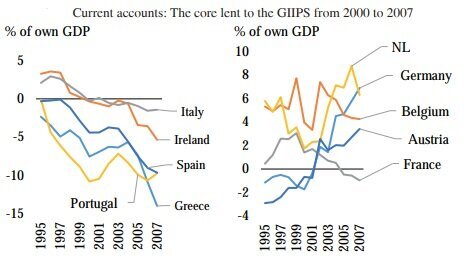
As credit conditions converged in the early years of the monetary union, there began an outflow of capital from the core of the euro area to the periphery. This can be seen from the graph below, which shows the current account balances of select eurozone countries in the period in question.


core+lent+to+the+GIIPS+from+2000+to+2007.jpg

Source: WEO

Although it may seem surprising today, these flows of credit were contemporarily seen as success, as they were in accord with what economic theory predicted for convergence: the richer nations, where the returns on capital were lower, would lend to the poorer nations, which would catch up in terms of productivity as a result.

But any apparent real convergence was merely illusory, and these imbalances had perverse consequences.

Much of the investment in peripheral economies was squandered on non-traded sectors, such as construction, fueling housing booms, and government consumption. Since there was little build-up of export capacity, there was little hope of ever repaying external debt.

There was also a resulting widening of the competitiveness gap. As the credit boom in the peripheral countries of the eurozone resulted in an expansion of the construction industry, among others, excess demand for labour fueled above average wage inflation. Ironically, instead of promoting convergence among economies, the supposedly healthy imbalances were actually accentuating existing differences.

At this point, it might be important to note that unlike what is commonly believed, the core root of the crisis was not necessarily public debt. In fact, if we look at the figure above, we can see that in 2007 Ireland and Spain’s public debt-to-GDP ratios were actually far below Germany’s, which stood at 63.7%.


3.png

These two countries, however, saw instead excessive accumulation of private debt. This materialized in the form of excessive bank lending: for example, Irish banks had assets worth seven times the GDP of Ireland in 2007. This private debt also fueled housing bubbles, which made public debt ratios look better than the underlying conditions were, as significant chunks of GDP were based on highly speculative construction. These liabilities later overflowed into the governments’ balance sheets, as banks went bankrupt and had to be propped up by sovereigns.

In light of these excesses, it was a matter of time until all this leverage unraveled. In October 2009, the new Greek government revealed that the government deficit was much higher than previously thought. While the draft target set by the European Commission in 2008 for 2009 was a deficit of 1.8% of GDP, the final figure ended up being 15.6% of GDP. At this point, financial markets understandably started to panic about Greece’s ability to pay off its debt. The Greek spread over the German Bund started to climb.

Greece, in a last ditch attempt to save itself from ruin, agressively engaged in austerity measures, cutting spending and raising taxes, but this worked against its purpose. As the fiscal stance became more contractionary, economic growth, already feeble, slowed, and creditors started losing faith in Greece’s ability to repay. The spread kept getting higher, and the first bailout became inevitable.


4.png

But would have avoiding austerity saved Greece? It is all too easy to don a pair of rose-tinted glasses and argue that avoiding austerity would have kept growth in Greece steady and led to a sustainable debt position. But the counterfactual is not available, and it is as easy to argue that avoiding a more restrictive fiscal stance would have equally worried investors, who would be concerned about a lack of concrete steps towards debt sustainability. Eventually this would also prevent Greece from rolling over its public debt.

Restructuring the debt would also work only to a point. A significant amount of Greek debt was held by banks of other faltering eurozone countries, such as Italy and Spain, and debt relief could have brought over the edge those already fragile banking systems. Furthermore, a third of Greek public debt was held domestically, and as such a restructuring would also lead to demand-side drags on the economy.

Greece’s membership of the eurozone was critical in how the crisis escalated. If Greece still had control over its currency, it could simply devalue it, lightening the real burden of debt and bringing its current balance closer to equilibrium. Crucially, Greece also had no lender of last resort, as the ECB was bound by the Maastricht “No Bailout” clause. If the introduction of the euro were accompanied by a greater degree of federalism, this might not have been a problem, as there would be income transfers from the core of the eurozone through the action of automatic stabilisers.

Fearing the eurozone would unravel if nothing was done, the EU called on the IMF in order to provide for a first bailout of Greece in early 2010. While there were doubts from the IMF that the resulting arrangement was sustainable, it provided €30bn of financing, with other eurozone members providing a further €80bn.

As this happened in Greece, investors started to worry about the credit they were extending to other periphery countries. Their reluctance to extend financing translated into a rise in other countries’ borrowing costs. This was the so-called “sudden stop” that brought the eurozone to a halt. Portugal and Ireland soon needed bailouts of their own. Later, private sector involvement in subsequent bailouts made things even worse, as the losses forced on private bondholders increased the intensity of the capital flight.

At the core of the market panic was an apparent self-fulfilling crisis, with two internally consistent equilibriums. In the first “good” equilibrium, bondholders believe debt is sustainable, and therefore interest payments remain low, debt being then manageable. In a second “bad” equilibrium, bondholders start to doubt the sovereign’s ability  to repay, and escalating rises in interest payments might mean debt is no longer sustainable. In traditional economies, a lender of last resort, the central bank, which is always willing to buy the sovereign’s debt, ensures the “good” equilibrium is the one to prevail. In the eurozone the “No Bailout” clause prevented this.

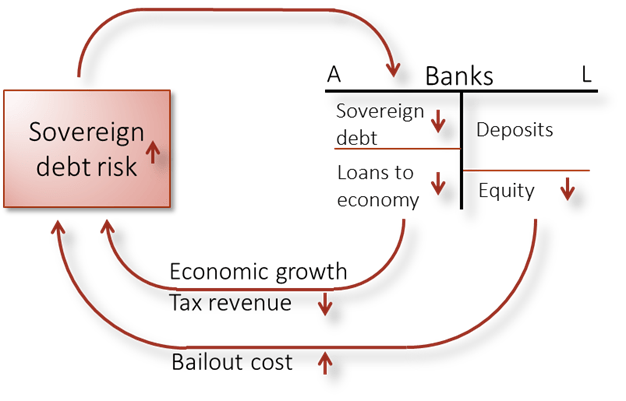
Equally relevant was a mechanism known as the “bank-sovereign doom loop”, which was crucial in the spread of the crisis to countries that had low public debt but large current account imbalances. Through this process, illustrated in the following diagram, failing banks have to be bailed out by the government, which leads to a deterioration of its fiscal position. As domestic banks tend to hold a disproportionate amount of home country bonds, this has a negative impact on their balance sheet. Gradually, both the situation of the country’s financial system and that of its sovereign become precarious. Concerningly, this issue has hardly been solved in the wake of the crisis, even though it could be solved by the simple introduction of a joint eurozone bond, as core countries complain of moral hazard problems.


5.png

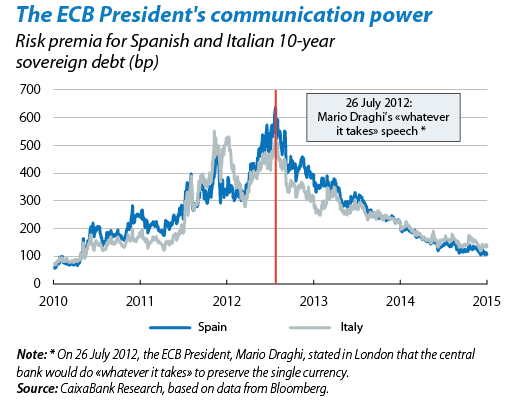
As the spreads of even supposedly safe countries like Belgium and France began to climb precipitously, Mario Draghi decided to take an unconventional turn in terms of policy. Pledging to do “whatever it takes to save the euro”, he announced the Outright Monetary Transactions (OMT) program, which allowed the ECB to purchase government bonds of countries in distress. The program implied a very strict conditionality, with any countries joining the program being required to enact domestic reforms. This was done to allay concerns by core economies that peripheric countries would be allowed to ‘free-ride’ on the ECB, avoiding doing painful reforms. Even then, the program was legally challenged in the German constitutional court, as it was believed to breach the “No Bailout” clause. Thankfully, this was unsuccessful.

Ultimately, the true testament to the OMT’s success is that it has never been used. As soon as it was announced (its announcement coincided with the “whatever it takes” speech; see graph), spreads over the eurozone area started to drop. This ended up marking the beginning of the long road to recovery.


6.png

Nonetheless, the cleavages both exposed and exacerbated by the crisis seem to be here to stay, as Friedman ominously predicted more than two decades ago. Given the recent slowdown in eurozone growth, Draghi pushed the ECB towards restarting Quantitative Easing (QE), its large-scale program of liquidity injection into the bond market. The same core economies that long have run current account surpluses have opposed the move, citing not-so-new concerns on easy money being a deterrent of reform in southern economies.

The restart of the QE program also brings new problems, as the ECB already holds significant portions of debt of eurozone countries, and is required to hold less than 33% of each. Although increasing the limit is a possibility, it might put the ECB on the difficult position of being a majority debtholder of eurozone governments. This could be easily solved if countries like Germany and Netherlands, where the ECB is closest to its imposed limits due to their low amount of debt, used the fiscal space they have available to provide a much-needed stimulus for the eurozone. But they seem loth to do so. Only recently, Annegret Kramp-Karrenbauer, Germany’s apparent chancellor-in-waiting, defended the country’s commitment to balanced budgets even in the face of an economic slowdown.

With Draghi now leaving his post, and Lagarde taking over, it is all too easy to hail this as a watershed moment where the eurozone finally casts off any lingering reminder of the crisis. But this would be a mistake. Europe’s economic dysfunction seems here to stay, and the shadow of the crisis will long hang over Europe.

This article was written in partnership with the Nova Investment Club.

Developing Development Economics

It was not that long ago when development economics was underrated and not recognised by the classical economists as a worth studying field. The issue was that the macroeconomists who were interested about these subjects always focused on one specific country, such as South Korea, and tried to understand what had driven it to outperform other economies. Meaning that they acknowledged what led to each countries’ development, but they could not implement that in another place, due to the fact that the conditions in each case study were unique and intrinsic to the countries’ features, so they could not be replicated on another location.

This has changed since figures like Esther Duflo, Michael Kremer or Abhjit Banerjee stranded their position on the world of development economics.

Previous studies on development economics had a major flaw that prevented them from discovering the most efficient treatments to ultimately eradicate poverty, across all fields, such as health, education, corruption, among others. By studying a specific countries’ case, economists were never fully able to state whether an intervention had a causal effect on the combat against poverty or not, even if it such relation was heavily supported by economic theory. The reason behind that is the lack of a counterfactual effect – economists were incapable of observing the outcome in the case that individuals had not benefited from the intervention previously made. Without directly observing a counterfactual effect, conclusions on previous studies about economic research were most likely biased from previous economic theory already conducted, and no causal effect could be stated.

Aiming to overcome this handicap in economic research, these economists borrowed a key tool from clinical medicine: the Randomized Controlled Trial (RCTs).

In order to be able to conduct causal inference, they took a brand new approach to economic research that, very simply put, was characterized by the following:

• The creation of a treatment/intervention that, supported by economic theory and empirical evidence, is believed to be able to diminish poverty in a certain field

• The collection of a random sample within the same field, to which half, randomly assigned, would benefit from the treatment – the Treatment Group -, whereas the other half would perform as the Control Group, not receiving any treatment.

Basically, the creation of this control/base group of individuals was what ultimately able these economists to be Nobel Prize winners. Having a Control Group randomly assigned enables economists to observe the so wanted counterfactual effect of an intervention, giving their studies enough strength to conduct causal inference, and this was crucial for the advancements on development economics discoveries.


“The Miracle of Microfinance? Evidence from a Randomized Evaluation” was a study conducted by Duflo, Banerjee, (two out of the three Nobel Prize Winners), Glennerster & Kinnan (2013) that perfectly exhibits the power of RCTs.

Microfinance has created big enthusiasm and hope for fast poverty eradication. Through the lending of microloans, it was believed that small enterprises would be able to grow and expand, and therefore generate welfare at an individual level in the developing world. However, the above study concluded that microcredit generated no changes in any of the development outcomes that are often believed to be affected by microfinance, including health, education, and women’s empowerment. This study was conducted on a sample of 104 slums in India, where half of it was randomly selected to benefit from a loan product from a particular microfinance institution, whereas the other half received nothing. As such, given the strength of an RCT, it was enough to ultimately refute economic theory, proving that, in reality, microfinance has no impact at all. This study is just one, among many others, that serves as an example to explain the strength that RCTs have when stating economic conclusions and results.

As such, by conducting RCTs, we are treating development economics exactly as the science it actually is. When in a sample of mice, half of it receives a drug whereas the other receives nothing, with the goal of discovering cures for illnesses, scientists and doctors are using RCTs. However, one might think: is it ethical to treat individuals, or small enterprises, merely as guinea pigs from a scientific experience?

Accordingly, many authors and researchers have been criticizing the RCTs approach to conduct economic research. One of the first studies using RCTs was done in Kenya in the 1990s, whose goal was to increase school attendance through the eradication of parasitic worms in children. Despite the great results this paper generated, one cannot forget that these results came at the expense of many children not benefiting from free deworming pills, only because they were unlucky enough to be in one of the schools which were part of the Control Group of the experiment. As such, it is fair to argue that ethics should have a higher role in economic research, and that the poorest cannot be seen from economic researchers merely as experimental subjects from their experiments.

However, the flip side of the coin regards the effectiveness of RCTs. The strength of its results is enough to compensate the unlucky parties of the Control Groups, since in the long-run the Control Group will also be better due to the intervention. They claim that, only because of the results of RCTs, the lives of the worst-off people around the world will be improved.

Nevertheless, despite the divergence of opinions that RCTs are creating, there is no doubt that this approach is truly disrupting development economics research, and the world in general. And the fact that these three development economists were finally recognised by the community is a sign of the changing times we are living.

Why is central bank independence important?

Central banks are today some of the most important institutions in the economy, charged with regulating interest rates and the overall flow of money supply. This makes them responsible for a nation, or group of nations, monetary policy. Normally, since they have this responsibility central banks are charged with keeping inflation and prices stable, but some reserve banks have added duties, such as the FED which also has to keep unemployment low.

In order for central banks to pursue these objectives it’s generally assumed that they should be independent from political power and decision making. Nonetheless, lately central banks have seen their autonomy being challenged, such in: the US, where Donald Trump has repeatedly criticized the FED’s actions, Modi’s India where the governor resigned in December over clashes with the PJP’s leader, Turkey in which Erdogan fired the governor for allegedly refusing to lower interest rates or Argentina where Mauricio Macri’s government is hoping that the central bank will issue more pesos.

But why were central banks given more autonomy in the first place?

To answer this, we first have to go back to the 1960s and 70s when reserve banks where far more influenced or out-right controlled by government policy. Around this time, economists and specially politicians believed that you could lower unemployment by increasing inflation, a theory backed by the Philips Curve, so general wisdom demanded central banks to increase money supply to curb unemployment. This theory made it irresistible for politicians to pressure central banks to stimulate the economy ahead of an election, so as to boost their chances of winning. Everyone knows that an incumbent leader is more popular with a low unemployment rate and a bustling economy. This was what exactly happened with Richard Nixon ahead of the 1972 election in which he pressured the FED’s chairman, at the time, to increase the money supply. However, this decision is largely seen as having left the US economy vulnerable to the great increase in inflation the world saw throughout the 70s that was largely caused by the oil embargo. Nonetheless, the monetary paradigm of the time is widely seen as a reason for the prolonged inflation bubble.

It was from this point on, that the world started coming to the conclusion that giving independence to central banks could largely be a positive outcome. From the graph below, we can see that countries such as Germany and Switzerland, home to very independent central banks had lower inflation rates than countries such as the US or UK where the reserve banks were not as independent.


Inflation rate of various countries throughout the years, data from the World Bank

Inflation rate of various countries throughout the years, data from the World Bank

After all it makes sense that central banks should be independent, since chairman’s have a long-run view of the economy instead of just the next election year cycle. It’s much harder for politicians to pursue unpopular measures that might bring short term difficulties, but they are necessary to assure the overall health of the economy in the long run. To raise interest rates or cut budget deficits in an election year, are examples of those unpopular measures. Given this, the world gradually moved in the direction of giving more autonomy to central banks in the 1980s and 90s, and the results have been clear. Inflation has been far more stable as well as interest rates. This in turn has helped consumers and businesses by not having to adapt to new prices and interest rates in very short spans of time.

Times of change

Nevertheless, the 2008 global recession has changed the view of many with regards to central bank independence. Many believe that central bankers don’t have necessarily the public interest on their minds and that their actions are too secretive, pointing to the fact that they are not elected and are autonomous from public branches, and thus some believe they should have more oversight. Others point out that too much reserve bank’s independence may cause a contradiction between monetary policy and fiscal policy, which is a government responsibility. Which in turn could destabilize the economy and make it more difficult to wither recessions. Moreover, the general rise in populism has also put these institutions under threat of attacks both by the right in the case of Donald Trump and by the left, in the case of Jeremy Corbyn which criticizes the Bank of England’s actions and wants to use it as a tool to finance bigger public investment.

With this, central banks dependence or attempts to curb their autonomy, have become a good indicator of authoritarian like regimes. One such example is Venezuela, where inflation has reached 10 000 000%. Another one is Zimbabwe where inflation reached 89.7 sextillion percent year-on-year in mid-November of 2008. So, there is a tendency for authoritarian regimes to attack central bank autonomy and make reckless decisions with regards to monetary policy.


Inflation rate in Venezuela, data from Statista

Inflation rate in Venezuela, data from Statista

All in all, one thing is clear, central banks are going to have to change the way they operate and adapt it to the new reality. Even top figures, such as Mario Draghi, recognize that monetary policy and, therefore, central banks have to act in a more coordinated manner with fiscal policy (government) in order to allow for a more cohesive strategy when dealing with the economy and achieving more stability. The world is changing and the central banks’ operation process is too.