Modern economies are built around growth. Countries want higher GDP, companies want higher profits, and consumers are encouraged to buy more. This model has achieved a great deal. It has supported technological progress, expanded global trade, and helped lift millions of people out of extreme poverty.
However, it has also created serious problems. Climate change, overconsumption, burnout, and inequality show that growth can come with major costs. This raises the question: should economic growth always be treated as the main goal?
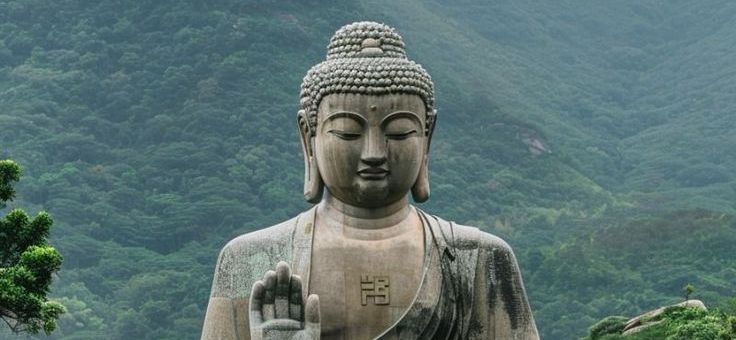
Buddhist economics offers a different way of thinking. It does not reject capitalism, markets, or development. Instead, it asks what the economy is supposed to serve. From this perspective, economic activity should support human well-being, meaningful work, community, and environmental balance, not growth for its own sake.
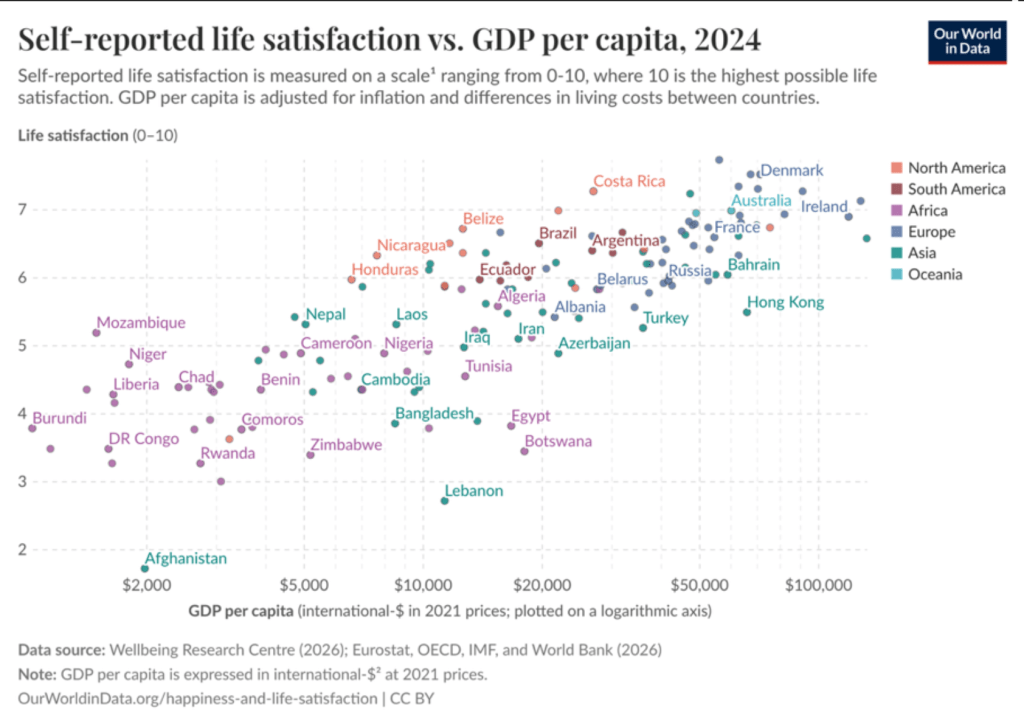
Figure 1: Relationship between GDP per capita and self-reported life satisfaction, 2024.
The Achievements and Problems of Modern Capitalism
Any serious discussion of Buddhist economics must recognize what capitalism has achieved. Market competition has helped drive innovation, technology, and global trade. Economic growth has also helped reduce poverty. Since the 1990s, extreme poverty has fallen sharply, partly because of market-based growth and international trade.
Still, capitalism can damage the well-being it claims to improve. Consumer culture has created a constant desire to buy more. Advertising, social media, and changing trends encourage people to replace products long before they need to, creating waste in areas such as fashion and electronics.
The workplace shows a similar problem. Many economies are more productive than ever, yet many workers experience stress, exhaustion, and burnout. A society can produce more while still leaving people overworked and dissatisfied. This is one of the contradictions Buddhist economics tries to address.
As E. F. Schumacher wrote in Small Is Beautiful: “The economy should serve people. People should not serve the economy.”
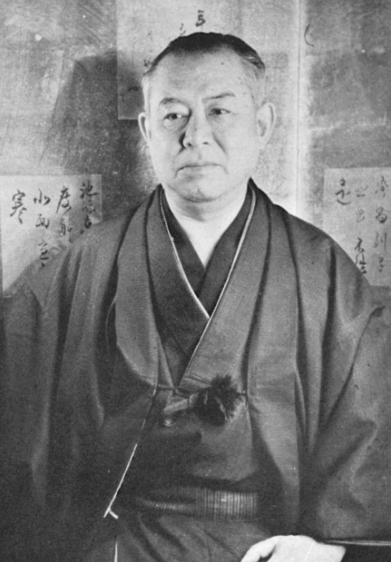
Schumacher and Buddhist Economics
The modern idea of Buddhist economics is closely linked to E. F. Schumacher’s Small Is Beautiful, published in 1973. Schumacher argued that conventional economics made a mistake by treating labour mainly as a cost and consumption mainly as a benefit. In reality, work can provide purpose and a way to contribute to society. At the same time, consumption does not automatically create happiness, especially once basic needs have been met.
This connects to the Buddhist idea of “right livelihood.” In economic terms, right livelihood means that work should help people develop their abilities, support the community, and provide a dignified life. Work that harms people, communities, or the environment should not be considered successful only because it is profitable.
Another important idea is “enoughness.” Modern economies often assume that more is always better, more income, production, consumption, and growth. Buddhist economics challenges this assumption. It suggests that after a certain point, having more may create stress, waste, and environmental damage instead of improving life quality.
This idea is supported by happiness economics. Research associated with Richard Easterlin suggests that once people reach a certain level of income and security, extra income has a weaker effect on life satisfaction. Growth matters most when it helps people meet real needs. Beyond that point, its benefits become less clear.
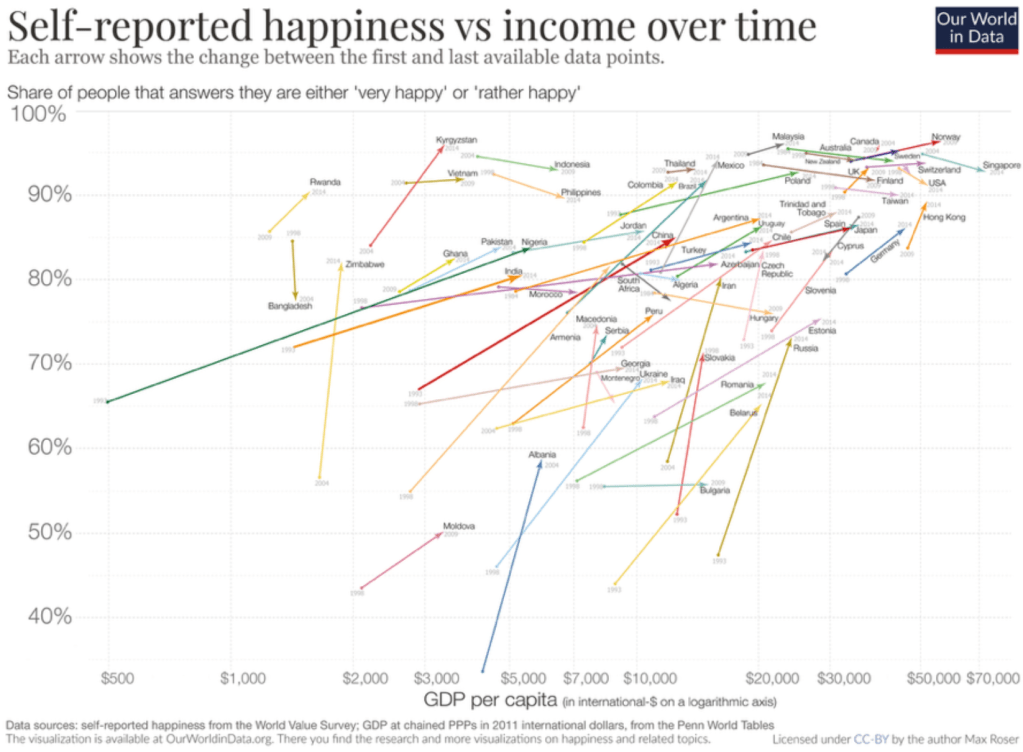
Figure 2: The Easterlin Paradox: beyond a moderate income threshold, further wealth yields diminishing gains in reported well-being.
Where These Ideas Are Already Being Tested
Some Buddhist economic principles are already being used, directly or indirectly, in different parts of the world.
Japan is an interesting case because it challenges the idea that slow GDP growth always means social failure. For decades, Japan has had weaker growth than many developed economies, yet it still performs well in life expectancy, safety, infrastructure, and social stability. Japanese culture also includes ideas that connect with Buddhist economics. Ikigai, often translated as a sense of purpose, reflects meaning in daily life. Mottainai, linked to regret over waste, reflects respect for resources. Japan is not a perfect example, but it shows that a society can value purpose, balance, and stability while still being a major advanced economy.
Iceland provides another useful example. Between 2015 and 2019, it tested shorter working hours for thousands of employees. Many workers moved from a 40-hour week to around 35 or 36 hours, without losing pay. In many workplaces, productivity stayed the same or improved, while workers reported less stress and better work-life balance. This challenges the idea that longer hours always mean better economic results.
Bhutan is probably the clearest example of Buddhist economics in national policy. Since the 1970s, Bhutan has used Gross National Happiness, or GNH, to guide development. Instead of judging progress only through GDP, GNH considers health, education, culture, environment, time use, well-being, and community life. Bhutan’s approach asks whether development genuinely improves people’s lives, rather than only whether it increases income.
What Could Be Applied?
Many Buddhist economic ideas already appear in mainstream economics and business. ESG investing, for example, considers environmental, social, and governance factors alongside financial returns.
Another example is the circular economy. Instead of designing products to be used briefly and thrown away, circular models aim to repair, reuse, and recycle materials. This reflects the Buddhist concern with avoiding waste and respecting limited resources.
There is also growing interest in moving beyond GDP as the main measure of national success. Indexes such as the OECD Better Life Index, the UN Human Development Index, and the World Happiness Report measure progress more broadly, including health, education, life satisfaction, inequality, and environmental quality.
These approaches do not require countries to abandon capitalism. They suggest that markets need better goals and limits. Economic activity can still involve innovation, trade, and profit, but it should be guided by a wider understanding of well-being.
Criticisms and Limitations
Buddhist economics also has weaknesses. The first problem is that modern welfare states often depend on economic growth. Healthcare, pensions, education, and public services require tax revenue. If growth slows too much, governments may struggle to fund these systems, especially in countries with older populations.
The second problem is measurement. GDP is limited, but it is clear and easy to compare across countries. Happiness, well-being, and life satisfaction are harder to measure because they can be influenced by culture, expectations, and personal circumstances.
The third problem is competition. A company that reduces working hours, pays higher wages, or limits environmental damage may face higher costs than competitors that do not. This means some principles may only work widely if governments create shared rules or countries cooperate internationally.
These criticisms do not mean Buddhist economics should be ignored. They show that it must be applied carefully. The point is not to stop growth, but to think more clearly about when growth helps, when it causes harm, and how economies can focus more on people’s real needs.
The Purpose of the Economy
The most important contribution of Buddhist economics is that it asks what growth is for. If the purpose of an economy is human flourishing, then GDP alone is not enough. People also need meaningful work, time to rest, stable communities, fair opportunities, and a healthy environment.
Capitalism has produced enormous wealth and innovation. But its current form also encourages overconsumption, overwork, and environmental damage. Buddhist economics does not offer a complete replacement for capitalism. However, it reminds us that economies are tools, not ends in themselves.
The lesson taken from this article is not that societies should stop developing, but that development should be judged by whether it genuinely improves human life. Buddhist economics is not a rejection of capitalism, but a challenge to make it more humane and sustainable.
Sources
Schumacher, E. F. (1973). Small Is Beautiful: Economics as if People Mattered.
World Bank. (2024). Poverty, Prosperity, and Planet Report 2024.
Our World in Data. (2024). Self-reported life satisfaction vs. GDP per capita.
Easterlin, R. A., McVey, L. A., Switek, M., Sawangfa, O., & Zweig, J. S. (2010). The happiness–income paradox revisited. Proceedings of the National Academy of Sciences.
Autonomy & Alda. (2021). Going Public: Iceland’s Journey to a Shorter Working Week.
OECD. (2024). Bhutan’s Gross National Happiness Index.
Oxford Poverty and Human Development Initiative. Gross National Happiness.
OECD. Better Life Index.
UNDP. Human Development Index / Human Development Reports..
Theme: Economics

Margarida Ferreira
Writer