The Impact of Donald Trump’s Tariffs on Markets and International Trade 

Reading Time: 5 minutes

Tariffs have always been a contentious tool in global economic policy, and former President Donald Trump’s administration relied heavily on them to reshape America’s trade relationships. Trump’s approach to tariffs was characterized by the belief that they would protect American industries, reduce the trade deficit, and pressure foreign partners into negotiating more favorable deals for the United States. However, the actual effects of these tariffs have been complex and far-reaching, influencing everything from global supply chains to consumer prices. This article explores the potential and actual impacts of Trump’s tariffs on markets and international trade, offering examples, economic analysis, and perspectives from multiple sources. 

What Are Tariffs and Why Did Donald Trump Use Them? 

Tariffs are taxes imposed on imported goods. By making foreign goods more expensive, tariffs are intended to encourage consumers to buy domestic alternatives. Trump saw tariffs as a tool to reduce America’s trade deficit, particularly with China, and to protect domestic industries like steel, aluminum, and technology manufacturing. 

Key Examples of Trump’s Tariffs: 

  • In 2018, Trump imposed a 25% tariff on steel imports and a 10% tariff on aluminum. 
  • In the same year, the administration slapped tariffs on $250 billion worth of Chinese goods, leading China to retaliate with tariffs on American products like soybeans, cars, and airplanes. 
  • In 2020, Trump threatened additional tariffs on European Union exports such as wine, cheese, and aircraft parts in retaliation for EU subsidies to Airbus. 

How Tariffs Affect Domestic Markets 

1. Higher Costs for Consumers 

While tariffs target foreign producers, the actual cost burden often falls on domestic consumers. Importers pass higher costs onto consumers, making everything from cars to electronics more expensive. A study by the Federal Reserve Bank of New York estimated that by the end of 2019, Trump’s tariffs cost the average American household about $831 per year due to higher prices.  

Example: When tariffs were imposed on washing machines in 2018, prices jumped nearly 12% within months, according to research published by economists at the University of Chicago and the Federal Reserve.  

2. Disruption of Supply Chains 

Many U.S. industries depend on imported components and raw materials. Tariffs on Chinese technology parts, for instance, disrupted the electronics and automotive sectors, which rely heavily on Chinese factories for affordable parts. This forced companies to either raise prices or absorb losses, weakening profit margins and investment. In the long run, some firms moved production out of China, but this led to higher transition costs and inefficiencies.  

Impact on International Trade 

1. Retaliatory Tariffs and Trade Wars 

When the U.S. imposed tariffs, trading partners retaliated with their own tariffs. China targeted American agricultural exports, including soybeans, corn, and pork, hurting U.S. farmers who relied on the Chinese market. By mid-2019, U.S. agricultural exports to China had fallen by 53% compared to 2017. 

Example: The American soybean industry suffered particularly harsh consequences. Before tariffs, China imported about $12 billion worth of U.S. soybeans annually. By 2019, that number dropped to under $3 billion. The U.S. government ended up subsidizing farmers to offset their losses, costing taxpayers billions. (Source: Bloomberg, 2019) 

2. Erosion of Trade Alliances 

Trump’s unilateral use of tariffs alienated key allies, including the European Union, Canada, and Mexico. When Trump imposed steel and aluminum tariffs, both Canada and the EU retaliated with tariffs on iconic American products, from Harley-Davidson motorcycles to bourbon whiskey. This strained long-standing trade relationships, particularly within the World Trade Organization (WTO) framework, which is built on predictable, rules-based trade.  

Effects on Financial Markets 

1. Market Volatility 

Trump’s tariff announcements often led to immediate stock market swings. When tariffs on China were announced in March 2018, the Dow Jones Industrial Average plunged 724 points in a single day, reflecting investor fears of a full-blown trade war disrupting global economic growth.  

2. Sectoral Winners and Losers 

Some sectors benefited from protectionism, particularly domestic steel producers. However, industries reliant on steel (like automotive and construction) faced rising costs, eroding their competitiveness. Agricultural stocks, particularly in soybeans and pork, plummeted due to lost export markets.  

Long-Term Economic Impacts 

1. Reshoring vs. Offshoring Diversification 

One goal of the tariffs was to bring manufacturing back to the U.S., a process called reshoring. Some companies did shift production, but many opted to diversify away from China to other low-cost countries like Vietnam, Mexico, and Thailand instead. This resulted in a fragmentation of global supply chains, increasing overall uncertainty.  

2. Reduced Global Trade Growth 

The uncertainty surrounding U.S. trade policy under Trump contributed to slower global trade growth. According to the World Bank, global trade growth fell from 5.4% in 2017 to just 1.1% in 2019, with tariffs playing a significant role.  

Case Study: The U.S.-China Trade War 

The most high-profile example of Trump’s tariff policy was the U.S.-China Trade War, which began in 2018. It involved escalating tariffs on hundreds of billions of dollars in goods on both sides. The conflict led to: 

  • Higher costs for American businesses and consumers. 
  • Reduced Chinese investment in the U.S.. 
  • A reshaping of Asian supply chains, with companies shifting production to Southeast Asia. 

Ironically, despite Trump’s goals, the U.S. trade deficit with China actually increased in some sectors, as American companies stockpiled Chinese goods before tariffs took full effect.  

Trump’s tariffs were a bold attempt to reset global trade dynamics, but the unintended consequences were significant. While they did pressure China into signing Phase One of a trade deal in 2020, they also: 

  • Raised prices for American consumers 
  • Hurt American exporters through retaliation 
  • Increased market volatility 
  • Weakened global trade growth 
  • Undermined trust in the international trade system 

As the world moves with the Trump era, policymakers face the challenge of rebuilding stable trade relationships while addressing the legitimate grievances about unfair trade practices, especially concerning China’s industrial subsidies and intellectual property violations. Whether tariffs were the right tool for this job remains hotly debated, but their lasting impact on markets and international trade is undeniable. 

Sources

BBC, 2018; Peterson Institute for International Economics, 2020; Federal Reserve Bank of New York, 2019; Flaaen et al., 2019; Harvard Business Review, 2020; Congressional Research Service, 2020; CNBC, 2018; Reuters, 2018; Brookings Institution, 2020; Bloomberg, 2019; World Bank, 2020; Peterson Institute for International Economics, 2020.

Afonso Freitas

Research Editor & Writer

Regional economic and security cooperation 

Reading time: 7 minutes

Economic Interdependence and Geopolitical Tensions in Northeast Asia 

Introduction 

China’s economy exceeded expectations, growing 5.3 per cent in the first quarter compared to the preceding year. Chinese businesses keep growing, after a boom in the mainland, bubble tea chains are eyeing stock market listings as they aim to expand overseas. The pace of China’s post-pandemic development should be a wake-up call for western manufacturers, writes Thomas Hale in the Financial Times. As this economic momentum accelerates, different perspectives on the way to deal with them arise, prompting questions about the role of economic cooperation in fostering interstate peace, particularly in the case of China. 

Does economic cooperation lead to interstate peace in the case of China? In the differing International Relations theories, there are different approaches to this question; while liberal thinkers argue that the growth of economic interdependence between states can create pressures and incentives for states to pursue peace, realist thinkers have a more cynical approach. 

An intensive trade culture and strong investment relations often lead to the interdependence of the regions involved and a more peaceful and stable environment. This is the case of Northeast Asia. However, this interdependence may also bring negative effects, such as the trade disputes between China and Australia, which arose from security and geopolitical issues. There are two major developments that depict the dynamic of economic integration and geopolitics of this region: The rise of China and the proliferation of regional trade agreements (RTAs). 

Differing Perspectives and Expectations 

As stated before, different theories take different approaches when it comes to interdependence between states and, namely, different expectations and perspectives in the case of the rise of China. 

Former president of the US, Bill Clinton, a liberal voice, thought that China had to be brought inside the WTO (World Trade Organization) and that it was in the US’ interest to promote building prosperity and partnership with Asia. In order to get the China relationship right, it was necessary to increase the interdependence between the two countries: a more interdependent China would be a more cooperative China.  

“The world will be a better place over the next 50 years if we are partners, if we are working together.” – Former President of the US, Bill Clinton 

The realist counterargument against this policy is that the changing power position of China and the US will matter more than economic interdependence and democratic government. According to this approach, China will seek to use its power to expand its influence and control over its region, and perhaps the wider world. The rise of China – and its likely desire to dominate East Asia – will pose a fundamental threat to the United States in the near future. 

“The best way to survive in this system is to be the biggest and baddest dude on the block. . . Nobody fools around with Godzilla.” – Political scientist John Mearsheimer, (Quoted in Nathan Swire, ‘Mearsheimer explores threat of China’, The Dartmouth, November 14, 2008) 

Unravelling of China’s rise 

China’s prosperity acted as an effective boost for regional growth due to the country’s rapid economic and technological growth. Nonetheless, this event also changed the power balance of the region, as China gained competitive power over other countries, ultimately resulting in increasing tensions.  

The trade between China and the Association of Southeast Asian Nations has been increasing steadily. Since all these countries manage their relationship with China cautiously, this growth stresses the idea that an increased interdependence is highly linked with a sense of peace. Hence, as trade with China is crucial to the economy of these countries, they would avoid engaging in conflicts and anti-China policies.  

However, and as stated before, this interdependency may lead to increasing tensions between the parties involved. Still following this example, although no government in the Asian-Pacific region has adopted a clear anti-China policy, there have occurred some sporadic anti-China riots in Indonesia, Malaysia, and the Philippines. 

Proliferation of regional trade agreements 

The rise of trade agreements, which create rules for trade and investment relations, reduces these risks by providing platforms to solve disputes, ultimately separating economic issues from security ones. In this context, the ASEAN free trade agreement was the pioneer, followed by bilateral and regional agreements. However, since relations between major players, like China, Japan, and Korea did not exist, their economic relations were prone to tensions. 

Political conflicts and the trade systems 

Countries often fail to separate their political conflicts from their already established trade systems. For instance, South Korea and Japan are still imposing trade barriers due to the Japanese invasion that occurred many years ago. In other words, limiting trade due to geopolitical issues.  

A good example of this is the US vs China chip war. In a nutshell, this conflict arises from the US concern that the Chinese army could surpass the US’ (one) in terms of overall power if they have easy access to their chip production process. The chip production process was spread across the US and its allies. Although China has increasingly been settling production centers of its own, a key part of the chip had always to be imported from these countries. This resulted in a series of protectionist measures, in particular, Chinese businesses and individuals being unable to buy advanced chips without a specific license from the US government. 

On the article “An agenda for regional economic and security cooperation” Yose Rizal Damuri comments that these countries “must do more”. He argues that the key is to address these problems under a regional framework, rather than bilaterally, with region-wide agreements such as the Regional Comprehensive Economic Partnership (RCEP). Meanwhile it is also crucial to address common regional and global challenges together, for example, energy transition. However, these should be complemented by covering emerging issues such as intellectual property and cross-border digital investment. As mentioned in the article, specific common projects increase trust, facilitating conversation on difficult issues and ASEAN may be a key driver of these initiatives. 

ASEAN 

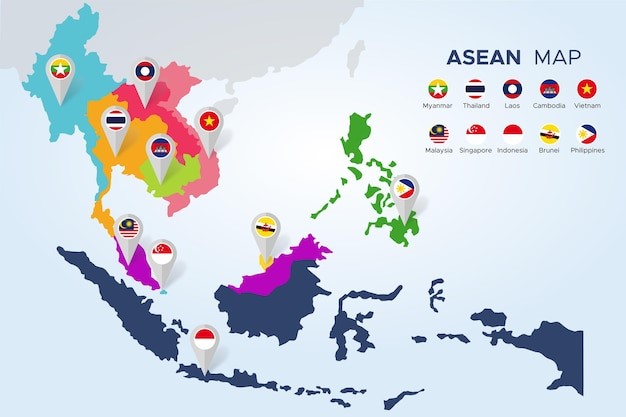
ASEAN, which is the Association of Southeast Asian Nations, is an intergovernmental organization that aims to promote economic and security cooperation among its ten members: Brunei, Cambodia, Indonesia, Laos, Malaysia, Myanmar, the Philippines, Singapore, Thailand, and Vietnam. The group has played a central role in Asian economic integration, joining negotiations to form the world’s largest free trade agreement, and signing six free trade deals with other economies in the region.  

Nevertheless, the group’s impact remains limited due to a lack of strategic vision, diverging priorities among member states, and weak leadership. Their biggest challenge is said to be the development of a unified approach to China, since ASEAN countries are strongly dependent on China, and benefit a lot from this relationship. However, this relationship also limits their growth, thus, a balance between the advantages of trading with China and the risks from overdependency should be achieved. The aim of this would be not only to maintain peace but also to pave out a more resilient and sustainable economic future for ASEAN countries. 

Looking ahead 

So, what can these countries do? Some argue that the answer is to enhance diversification efforts – They can start by diversifying their trading partners which would mitigate the risks of their excessive reliance on China and would also create a viable alternative for businesses relocating from China. Strengthen trade agreements – An additional way of doing this would be to prioritize the intra- ASEAN trade and integrating supply chains. This would lead to diminishing dependence on imports for components and materials, for example in the sectors of electronics and cars.  

Besides this, strategic trade relationships with other countries should be considered. This measure would not only grant ASEAN countries a greater access to significant markets such as Canada (for which there are ongoing negotiations to sign an agreement) but also, once again, promote trade diversification. Aligning China’s Foreign Direct Investment with sustainability – Interdependence with China cannot be abruptly broken, and it is important in maintaining peace. Following this rationale, as China’s FDI is important, ASEAN countries should ensure that these investments align with their sustainable growth goals, for example, transparency and accountability. 

Conclusion 

In summary, as China tries to steer a manufacturing-led revival of the world’s second-largest economy, the data from Beijing heightens Western concerns about Chinese competition. The opinions on how to approach this rising economy diverge, and the effects of interdependence are bittersweet. While on one side it may lead to peace and stability, since conflict is costly, on the other hand, it also provides room for disputes to emerge.  

The ultimate consequence of this is the incapability to separate political issues from economic trade. There are many suggestions to address these matters under regional frameworks rather than country-to-country. To effectively do so, these agreements should be comprehensive including emerging potential causes of conflict, like the ASEAN. 


Sources: Damuri, Y. R. (2022). An agenda for regional economic and security cooperation – East Asia Forum. East Asia Forum Quarterly: Volume 14, Number 4, 2022, 14(4), 5–7, Hawkins, A. (2023, July 5). Chip wars: how semiconductors became a flashpoint in the US-China relationship. The Guardian. Maizland, L., Albert, E., Hong, L., & Galina, C. (2023, September 18). What Is ASEAN? Council on Foreign Relations, Wester, S. (2023, November). Balancing Act: Assessing China’s Growing Economic Influence in ASEAN. Asia Society, XIA, M. (2018). “China Threat” or a “Peaceful Rise of China”? – New York Times. Nytimes.com, Hale, T. (2024, April 4). Manufacturers need to face up to new wave of Chinese competition. – Financial Times, Joseph Grieco, G. John Ikenberry, Michael Mastanduno (2024). Introduction to International Relations- Enduring Questions and Contemporary Perspectives 

Catarina Franco  

China at a crossroads: when will it be too late?

China will strengthen green and low-carbon policies and regulations with a view to strictly control public investment flowing into projects with high pollution and carbon emissions both domestically and internationally”. These were the words of President Xi Jinping in 2014. Later on, in July 2019, China committed to “update” its climate target “in a manner representing a progression beyond the current one”. Furthermore, it also vowed to publish a long term decarbonization strategy by next year.


But can this nation live up to the promises?

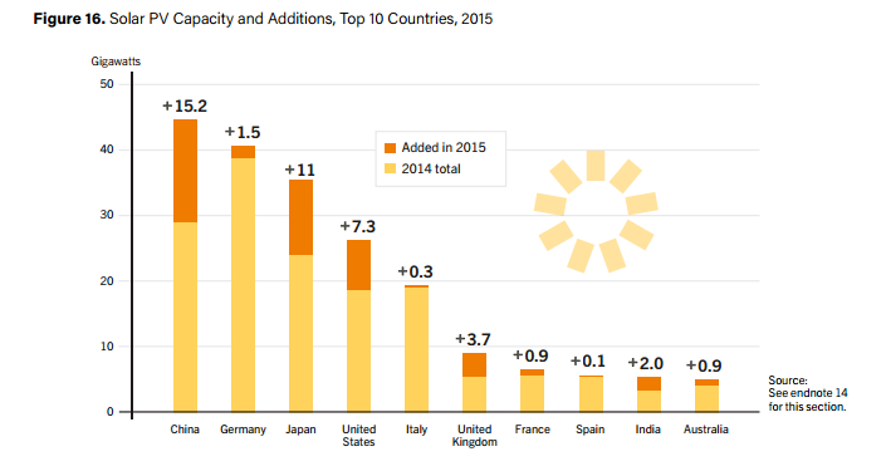
Indeed, China made an effort in promoting green development: in 2015,  it increased its wind power capacity by over 30 gigawatts, becoming the number one leader in this parameter.

In that same year, China saw a huge growth in solar power production, moving into first place, surpassing the previous solar leader, Germany.

China has been the world’s leading country in electricity production for renewable energy sources, according to Global Commission on the Geopolitics of Energy Transformation, establishing itself as a global pacemaker in driving a domestic decarbonization agenda.

On the one hand, tension arises upon the fact that the country finances clean energy, representing 11% of its budget spent on electric power generation. On the other hand, investment in coal production amounts to a total of 36% of the Belt and Road Initiative. [1]

Conflicts of interest have emerged between the promise to reduce coal production and the fact that it has been one of the biggest contributors to the growth in the power sector. In fact, China is responsible for 51% of coal’s global demand as well as 46% of its global production – if the country continues to go down this path, its reliance on coal will not fall not even close to the promised value.

  • Demand-side: China’s coal consumption has been growing at a slower rate and not necessarily declining. It could indeed be said that Chinese coal demand has been relatively flat for a few years now, but it has not been falling in the absolute sense.

  • Supply-side: Coal power generation has been rising at 6% per year and China has reached 1.76 billion tonnes of this fossil fuel in the first half of 2019 – which represents a 2.6% increase from the same period last year.

On top of that, China’s financial institutions are providing $36 billion in funding to build coal power plants outside the country.

A unit-by-unit analysis of all global coal plants under development, based in 2018, shows that Chinese investment has had a significant increasing role in supporting and funding new coal plants in international markets as shown in the image below:


Source: Global Coal Plant Tracker (July 2018) IEEF analysis

Source: Global Coal Plant Tracker (July 2018) IEEF analysis

Moreover, Chinese financial institutions and corporations have agreed to fund over one-quarter of the 399 gigawatts (GW) of coal plants currently under development outside China. This comes at a time where many financial institutions such as the World Bank are shifting away from the coal industry.

According to research organization Climate Action Tracker (CAT) China’s actions and policies are highly insufficient to meet the challenge of holding global warming below even 2ºC, let alone the Paris Agreement limit of  1.5ºC.

As the world’s leading greenhouse gas emitter, CAT also predicts that China’s emissions will rise at least until 2030, at a point which is likely to be too late to curb the country’s impact on climate change.

Nonetheless, another question arises: will China be able to successfully decrease its coal production so fast as it pledges?

With Beijing’s push to reduce coal burning, nearly 13 million households in northern China have switched to electric or gas-heating since 2016.

In 2017, when northern China experienced the biggest ever campaign to replace coal with natural gas it was reported that, in Beijing alone, 140,000 households, across 336 villages bid farewell to coal.

In addition, the toughest restrictions ever on industry were also put in place, from mid-November to mid-March: 15 key cities had to cut steel manufacturing output by 50% which was a big improvement regarding environmental changes, since over 71% of the steel produced uses coal. Also, aluminium production was cut by 30 % as the energy for its digestion plant is derived from steam raised by using coal.

Despite the major decline in atmospheric pollution in those areas and the decrease in the national coal capacity, the rushed measures caused serious problems, since China’s infrastructures were not prepared for this significant change.

Since there was not enough time to install the gas pipes underground in Shijing, they were left above ground causing safety risks for civilians.

Furthermore, widespread reports from the winter of 2016 disclosed heating problems caused by failures to complete the switch to gas on schedule. As a result, some schools in rural zones had no heating, given that coal-fired boilers had been removed before natural gas pipes were installed. Similarly, in Linfen, a village located in Shanxi, had a 155 square kilometer “no coal zone” where residents had to remove coal stoves and they were not even allowed to keep coal at home – yet no alternative heating was provided, despite sub-zero temperatures.

Also, market-wise, as many firms and industries were highly dependent on coal, these restrictions placed them on the verge of shutting down. Eventually, gas heating increased, resulting in supply shortages and causing inadequate heating for many households.

All in all, the world’s success in bringing down global warming is dependent on China’s action, the world’s largest carbon emitter.

Yet, it appears that China’s interests are ebbing as its economy slows. Combined with an ongoing trade war with the United States as well as  Trump Administration’s withdrawal from the Paris Agreement, this economic slowdown has reduced China’s enthusiasm to lead in this global battle. The aforementioned is no excuse for China to forgo a leading role in the fight against global warming. Indeed, embodying the “torchbearer” may be the country’s best bet for a sustainable transition to a stronger and low-carbon economy.

[1] The Belt and Road Initiative (BRI) development strategy aims to build connectivity and co-operation across six main economic corridors encompassing China and: Mongolia and Russia; Eurasian countries; Central and West Asia; Pakistan; other countries of the Indian sub-continent; and Indochina, quoted from  OECD Business and Finance Outlook 2018


Sources: The World Economic Forum, The New York Times, Climate Change News, The Diplomat, Forbes, Institute for Energy Economics & Financial Analysis, Reuters, Chinadialogue, OECD