
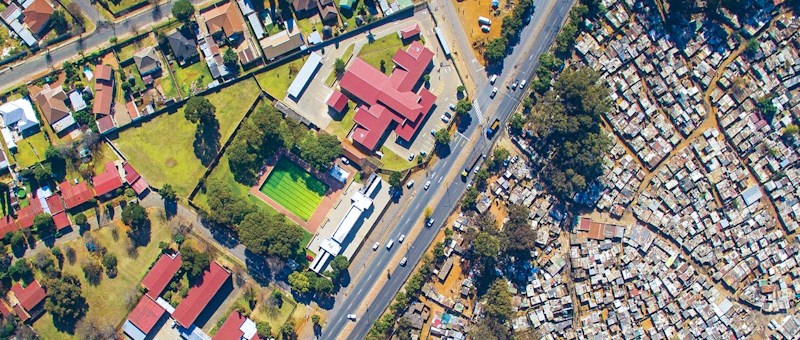
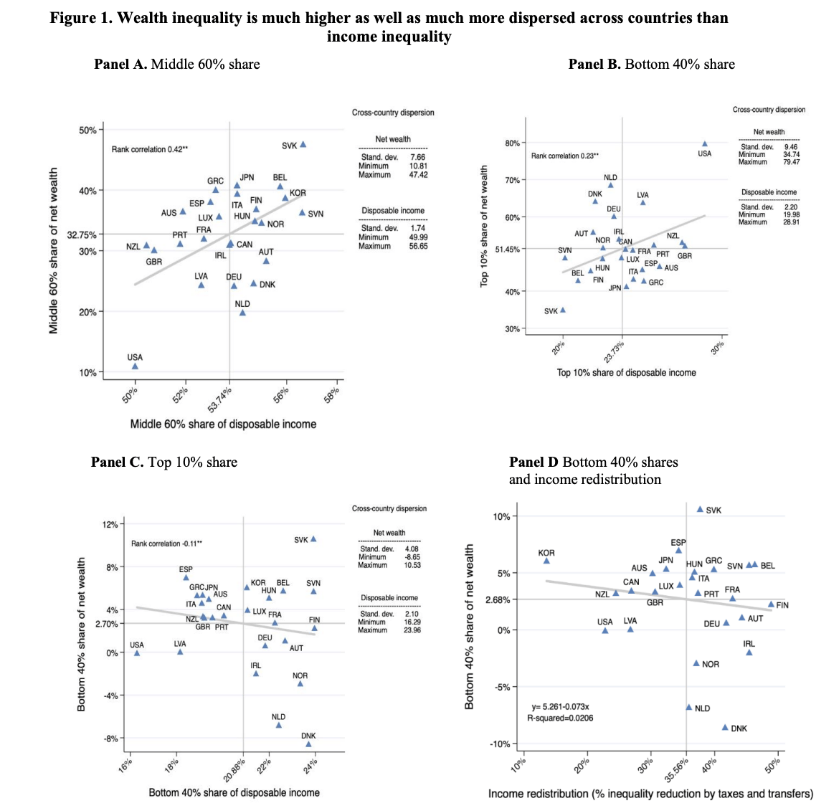
For a long time, inequality was mostly discussed in terms of income, jobs, and education. But in many rich countries today, the real difference is often about who owns property. Two households can earn similar salaries and still have very different futures if one owns a home and the other rents. Housing is no longer just a place to live. It is one of the main ways families build wealth, gain financial security, and pass advantages on to their children. Across OECD countries, wealth is much more unevenly distributed than income, the richest 10% of households own more than half of total household wealth on average, while the bottom half owns very little.
Asset Inequality
Income shapes what a household can afford today. Wealth shapes what it can survive, invest, and pass on tomorrow. This matters because wealth gives protection against unemployment, illness, rising prices, and economic shocks in a way that income alone often cannot. A household with a modest salary but a fully paid home may be much more secure than a household with the same salary, no assets, and high rent. Research on OECD shows that wealth inequality is greater than income inequality, and that housing makes up a large part of household wealth, especially for people outside the extremely richest groups.
Housing is important because it is both something people need and something that can make them wealthier. Everyone needs a place to live, but people who own a home can slowly build value with it, benefit if house prices go up, and sometimes use it to borrow money. This gives housing a big effect on people’s financial security and future opportunities. That is why housing does not just show inequality but can also make it worse.
Homeownership Creates Advantage
Owning a home creates advantages in several ways. First, mortgage payments can gradually turn monthly housing costs into ownership. Rent, by contrast, pays for shelter but does not create an asset. Second, homeowners may benefit if the value of their property rises over time. Third, owning a home often brings more stability, since owners are usually less exposed to sudden rent increases or be forced to leave their home. Finally, housing wealth can later help pay for education, retirement, or children’s future home purchases.
This means the gap between owners and renters increasingly looks like a class divide. Owners can build wealth while meeting a basic need. Renters usually cannot. Over time, that difference grows. A family that buys early may spend years building equity. A family that rents for the same period may face rising housing costs without gaining any asset in return. In this way, housing turns inequality from a matter of monthly income into a matter of long-term ownership.
Why Buying A Home Is Getting Harder
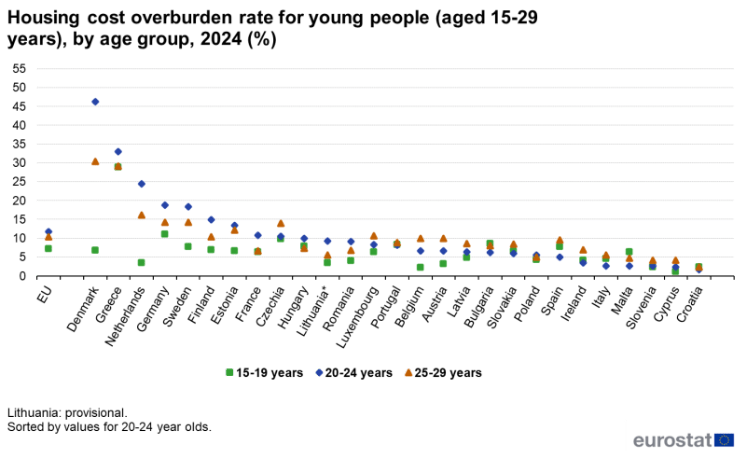
This would matter less if everyone had a fair chance to buy a home. But entering the housing market has become more difficult, especially for young people. House prices have risen sharply in many places. Down payments are harder to save for. Credit rules are often stricter. And high rents make saving even harder. Eurostat data shows that in some EU countries, young people spend a very large share of their income on housing.
This matters because high rent does not only create pressure in the present, but it also reduces the ability to save for the future. The result is a cycle, those who already own homes benefit when prices rise and those who do not own face a higher barrier to entry every year. In this sense, the housing market often rewards those who are already inside it while making it harder for outsiders to enter.
Inherited Wealth
This is where the issue becomes generational. When homes become so expensive that wages alone are not enough to buy one, family wealth starts to matter much more. Parents may help with a down payment, give property directly, or leave an inheritance that makes homeownership possible. In that kind of system, access to property depends less on current income and more on whether someone’s family already owns assets.
OECD evidence suggests this is not a small issue. In several European countries, a significant share of low-income homeowners got their homes through inheritance or gifts rather than through purchase alone. OECD research on inheritance also shows that wealth transfers tend to increase inequality, because the people who receive inheritance are often already better off.
This does not mean income no longer matters. Salaries still affect daily life, access to credit, and the ability to pay a mortgage but income alone matters less when wealth already gives some people a head start. A good salary helps, but it may still not be enough to buy a home without family support. At the same time, a household with inherited property may enjoy more security and wealth growth than a renter with a higher income.
The Political and Social Effects
When property matters more than income, the effects go beyond money. Homeownership can shape access to better neighborhoods, better schools, more stability, and greater security in old age. It also affects politics. Existing homeowners often benefit from rising house prices and may oppose reforms that would lower them, even if those reforms would help younger or poorer households.
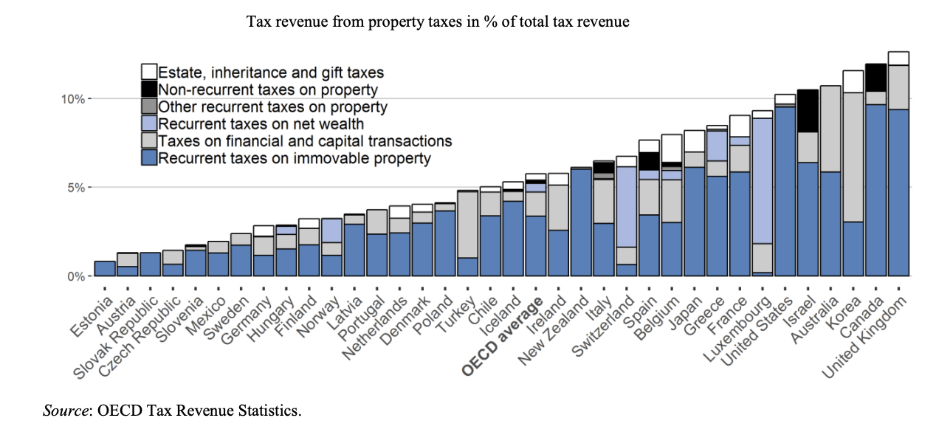
This helps explain why housing policy is so difficult. Building more homes, changing zoning laws, expanding social housing, or taxing property more effectively could improve access for people outside the market. But these policies may conflict with the interests of people who already own property. As the World Bank has noted, housing affordability is not only a social issue, but it can also reduce labor mobility and stop young people from moving to places where the best jobs are.
Conclusion
The class division today is not just between people with high salaries and people with low salaries. More often, it is between people who own property and people who do not. Housing is the clearest example, because owning a home can give families more than shelter, it can give them wealth, stability, and something to pass on to their children. As buying a home becomes harder, and more dependent on family support, inequality becomes more deeply rooted across generations. If this trend continues, what matters most may not be who earns the most, but who already owns something valuable.
Sources:
- OECD, Housing, Wealth Accumulation and Wealth Distribution: Evidence and Stylized Facts, Inequalities in Household Wealth and Financial Insecurity of Households, Inheritance Taxation in OECD Countries https://www.oecd.org/
- Eurostat, Young People – Housing Conditions, Living Conditions in Europe – Housing https://ec.europa.eu/eurostat
- World Bank, EU Faces Affordable Housing Crisis Excluding Young People From Top-Quality Job Opportunities https://www.worldbank.org/ext/en/home
- IMF, Housing’s Unique Role in Lives and Economies Demands Greater Understanding https://www.imf.org/en/blogs/articles/2024/12/04/housings-unique-role-in-lives-and-economies-demands-greater-understanding

Margarida Ferreira
Writer
 theawarenessnews.com