A Surprising Landslide: What will the Socialist Party do in the next 4 years?

Reading time: 6 minutes

On the 25th of October of 2021, after long negotiations between the left-wing parties, the Portuguese Government’s Budget for 2022 was rejected by the Parliament. The ruling Socialist Party (PS) had been dependent on either the Left Bloc (BE) or the Unitary Democratic Coalition (CDU) for the approval of each year’s Government Budgets since the 2019 elections. In October of last year, these two parties sided with their right-wing counterparts and voted against the government’s 2022 State Budget. Consequently, on the 5th of December, President Marcelo Rebelo de Sousa officially decreed the dissolution of the Parliament and called for snap legislative elections on the 30th of January.

Figure 1 – President Marcelo Rebelo de Sousa officially dissolving the Portuguese Parliement and calling for snap elections. Picture from Diário de Notícias.

What did the polls say?

On the day of the election, the average of polls created by Rádio Renascença put the Socialist Party ahead in the polls with 36 % of the vote and the main opposition party, the Social Democrats, with 32.3% of the vote. Nobody could predict the winner of the election since both parties were within the margin of error, and most political analysts did not expect a defining result until long into the early morning of the next day. It was also clear that no party was polling close enough to obtain an absolute majority and the election would result in a hung parliament. The only question was: which party would come in first place?
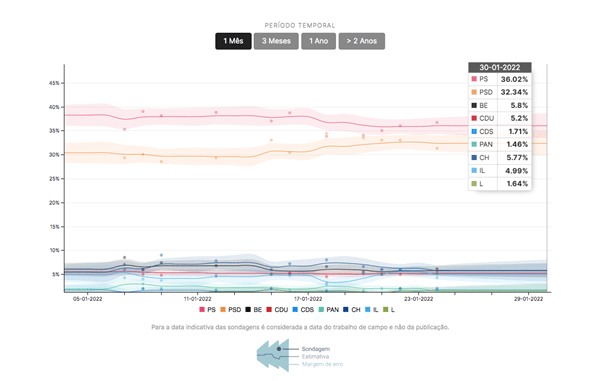
Figure 2 – Polls of polls by Rádia Renascença.

Election day

As the exit polls came out at 8:00 pm on the main four news channels in Portugal, everyone could see that the ruling Socialist Party was on their way to a landslide victory over the Social Democrats. By late night on election day, the news networks announced the Prime Minister party had elected a majority of the deputies of the Assembleia da República and would be able to govern without the support of any other political party, a rare phenomenon in recent political history in Portugal.
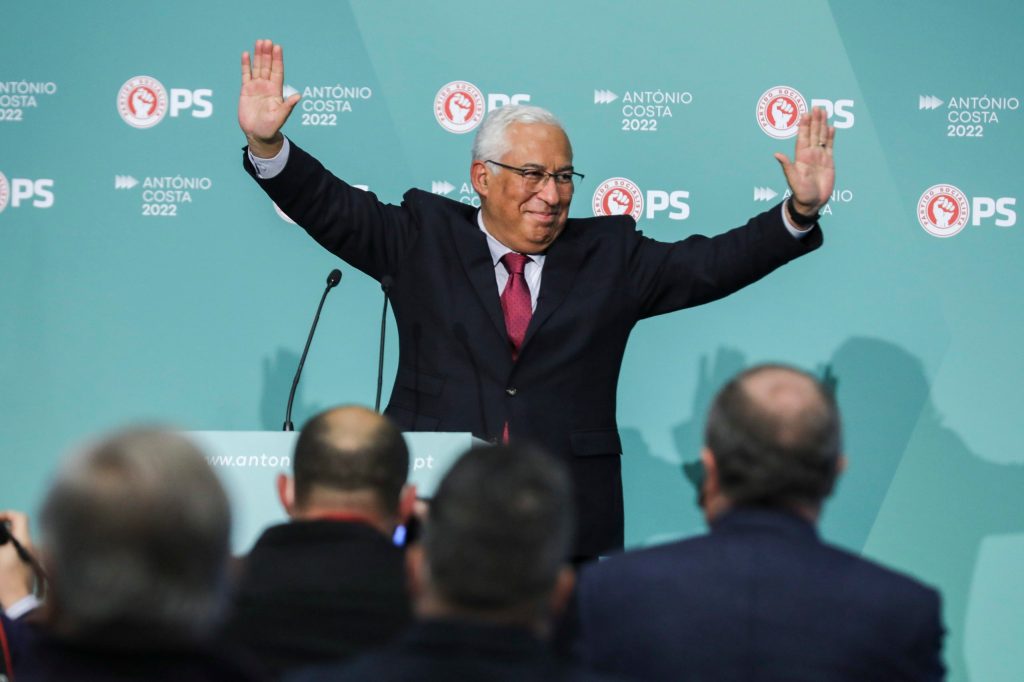
Figure 3 – Prime Minister António Costa speaking to the nation after learning his party won a majority in parliament. Picture by Semanário Novo.

The results are still provisional but as of this moment, the Socialist Party won 41.7% of the vote and elected 117 deputies (116 needed for a majority) while the Social Democrats had 29% of the vote and elected 76 deputies. In third-place, came the right-wing populist party Chega, and in fourth-place came the social and economic liberal party, Iniciativa Liberal. As for the two old partners of the government, the Left Block and the CDU lost a combined 355 thousand votes compared to the 2019 election which resulted in a reduction in their number of deputies from 31 to 11. In seventh place came the conservative Popular Party with 1.9% of the vote and, because of the characteristics of the electoral system, failed to elect a deputy for the first time since the 1974 democratic revolution. In eighth and ninth place came the animalists party PAN and the eco-socialists Livre respectively, who gathered enough support in the district of Lisbon to elected 1 deputy each.

Figure 4 – Election results from Expresso

Socialist Party’s  proposals for the next 4 years

Let us look at what the Socialist Party, also known as PS, defends in its electoral program on three key essential points; economic, social, and foreign policies. The program is 122 pages long, so it is impossible to cover everything, but we will try to go over the most important parts.

1. Economic policies

One of the most important economic and fiscal policies proposed by the governed is the creation of two additional income tax (IRS) brackets, which would give a 150 million euros tax break to the middle class and increase the progressivity of the tax. Additionally, PS proposes to increase the time span from 3 to 5 years of the IRS Jovem, a tax benefit that reduces income taxes paid by young people by an annual average of 22%. As for the minimum wage, PS defends an increase from the current 705 euros per month to 900 by 2026. Another target is the 20% increase in the average income of Portuguese workers over the next 4 years.

Regarding the government debt, which is one of the largest in Europe, PS promises to continue its policy of aiming towards a balanced budget and to reduce the debt to GDP ratio from 127.5% to 110% by 2026.

In terms of economic growth, PS does not specify concrete numbers but aims to have the GDP per capita of Portugal converge with Europe by growing 1% above the Eurozone and 0.5% above the European Union averages.

Figure 5 – Minimum wage in Portugal (PT) compared to some EU countries.

2. Social Policies

Regarding education, PS aims to invest in new educational practices and scientific-pedagogical training, as well as improving the access to higher education. The party also proposes to invest in the National Healthcare Service by constructing or renovating 100 healthcare units,  increasing primary care centers and strengthening palliative and continued care, as well as issues concerning mental health.

As for the climate crisis, the only target for 2026 is to increase to 80% the weight of renewables on energy production, however, the program sets a 55% cut on greenhouse emissions by 2030.

Although the parliament had already voted to legalize euthanasia last year, the veto by President Marcelo Rebelo de Sousa in late November means the new parliament will have to vote on this topic again this year. The PS program does not mention this topic at all, but only 7 out of 108 socialist deputies voted against the measure last year, so it is likely to pass again in 2022 with the support of the Left Block and Iniciativa Liberal.

Figure 6 – Protests infront of the Assembleia da República against Euthanasia. Picture from Liberation.

3. Foreign policy

Regarding the European Union, the Socialists want to continue to monitor the implementation of the 2021-2027 Multiannual Financial Framework and monitor the implementation of the Porto Social Committee that occurred last year during the Portuguese Presidency of the European Council.

As for the United Nations, the program aims to support the current reforms of the Secretary-General, elect Portugal to the UN Security Council in the biennium 2027-2028, and host the second World Oceans Conference in Lisbon this year.

In terms of bilateral relations, the program of PS wants Portugal to give priority to nearby countries, such as Spain, the UK, France, Italy, and the US. The latter is important to affirm the country’s role in being a diplomatic bridge between Europe and North America. The program also defends a reinforcement of our diplomatic network by the opening of new embassies in some countries in Africa and Asia.

Figure 7 – European leaders after signing the Porto Social Commitment. Picture from the Portuguese Government.

What will happen now?

It is impossible to predict if the Socialist Party will be able to implement the proposals or reach the targets we can find on their electoral program, but for the first time in Antonio Costa’s premiership, his party will be able to pass laws and the government budget without the support of any other political party, meaning the responsibility of what happens in the next 4 years is now, almost for its entirety, the responsibility of the Prime Minister and his party. In 2026, or maybe even earlier, all Portuguese voters will once again head to the polls and decide whether they have indeed delivered on their promises.


Sources: RTP, Diário de Notícias, Electoral Programs of PS, BE, CDU, CDS, IL, PAN, “Livre” and “Chega”, Público, Jornal Económico, Jornal de Notícias, Expresso, Electoral Program of PSD

Afonso Monteiro

Hugo Canau

João Sande e Castro

André Rodrigues

Maria Mendes Silva

Supply Chains Constraints: Can the solution be delivered on time?

Reading time: 6 minutes

The Covid-19 pandemic has disrupted global supply chains. These are still facing huge challenges and struggling to bounce back in a period where demand has surged. This is leading to increases in the prices of products, shortages, and delays in deliveries. With Christmas around the corner, a season with above average consumption, the situation is only expected to worsen as the problems in the supply chain don’t seem to have an end near.

But what exactly are global supply chains? What led to the problems that we are observing worldwide? What have governments done to ease the situation?

What are the Global Supply chains?

Nowadays, a desire for something can be fulfilled with a simple click, but it was not always easy as today. In fact, a dramatic change occurred in the markets around the 80’s with the globalization, and liberalization of world’s markets, lower transports costs, advances in information and communication technology, and innovations in logistics. From that moment forward, low cost, high quality and satisfied customers became the buzz words, and with this new reality in global markets a new concept was implemented: Global Chain.

Global chains are networks that can span across multiple continents and countries with the purpose of sourcing and supplying goods and services. It also involves flow of information, processes and resources across the globe enhancing its efficiency. With this new concept, firms and organizations could now have its production broken into different parts in different countries to achieve high quality while lowering costs. The importance of the global chain is so notable that since 1995 intermediate manufacturers represent more than half of manufactured exports and imports at a global level.

Different geographical regions have a different net effect in the global chain. Africa and Oceania export more intermediate goods as a share of their manufactured exports than others. In Europe there is a balanced intermediate imports and exports. Meanwhile in Asia imports exceed exports as a share of their intermediate imports and exports.

However, the pandemic disrupted the normal functioning of the global supply chain. These difficulties showed up at the beginning of the pandemic with countries like China, South Korea, Germany, and Southeast Asian countries, being forced to reduce their production since workers were sick or in lockdown, leading to an overall decline in global supply with shortages in food, toys, chips, etc., driving prices up. 

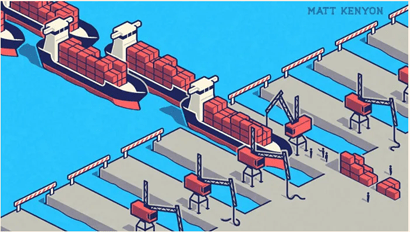
Figure 1 – Supply Chain Problems by Matt Kenyon.
Source: Financial Times

The causes behind the disruption in Global Supply Chains

Many factors lie behind the explanation for the supply chain crisis that the world has been facing. Overall, it is a culmination of lingering Covid-19 disruptions and a sudden surge in demand, with the supply side not being able to adapt quickly enough to demand´s rapid pace. Indeed, on the demand side, in the past few months, with many restrictions being lifted, the economy has been experiencing an unparalleled boom in demand. However, on the supply side of the issue, we face a still slowly recovering productive industry from the hardships imposed by the past year’s Covid-19 restrictions.

Many factories were forced to shut down, some have had to cut back on the number of workers and as such production still falls quite behind pre-pandemic levels, being unable to keep up with this increase in demand. Moreover, general labour issues across the globe, particularly a shortage of workers, have also greatly contributed to a clogging up of transportation networks. The lack of sufficient truck drivers has been a troubling concern in multiple countries, particularly in the UK as recent months have shown, with Brexit having greatly contributed to it. In the US, significant labour shortages have been felt in warehouses companies and major ports. This reality, combined with inadequate infrastructures and a shortage of the proper space and equipment to deal with the surging demand have resulted in warehouses running out of space and ports working under full capacity, leading in turn to port congestions and blockages in multiple cities.

Adding to all of these, the punctual raw material shortages as well as a scarceness of key components (such as the case of the microchip crisis), have also compromised timely deliveries of final products. Indeed, one of the biggest issues with the supply chain crisis is that the way the productive and distributive chain of a large deal of activities is organized, with numerous intermediaries and bottlenecks along the route from the assembly line to the final consumer, it makes it so that as one supplier depends upon another´s delivery, and the delays end up feeding on each other, amplifying the effects of the disruptions. 

Figure 2 – Number of vessels sitting in the main ports.
Source: Refinitiv Eikon
Figure 3 – US active truck utilisation. Source: Bloomberg

What has been done to ease the situation?

In the U.S., the Biden administration has been increasing its dialogue with the corporate sector to try to ease some of the ways that supply chain issues could affect consumers. Namely, the U.S. Gov. has secured pledges from retailers such as Walmart and from shipping companies UPS and FedEx to increase their working hours in an effort to ease some potential difficulties that could arise during the hectic holiday shopping season that is expected to be strong this year due to the fiscal stimulus pursued by the Biden administration. They are also urging rail and trucking companies to increase their transportation capacity, but labor shortages in these areas have made this difficult, which has contributed to worsening the bottlenecks. Moreover, the FTC (Federal Trade Commission) has requested information from big retailers to monitor whether they engage in dishonest business practices which might amplify the damages form the supply chain problem.

In September, in the U.K., to help with problems in the supply of fuel, the government resorted to the military to help deliver fuel to gas stations. A shortage of fuel would be even more devastating to other supply chains as it wouldn’t allow transportation of goods by truckers. Also in the U.K., the Treasury introduced measures to freeze taxes on the trucking sector, to attempt to ease supply chain pressures there. However, logistics companies say that this does not address the truck driver shortage that is bottlenecking many of their operations.

The U.K had also previously implemented 25 measures to try to tackle the chronic shortage of HGV (heavy goods vehicle) drivers, including increasing capacity for testing new drivers by the Driver and Vehicle Standards Agency (during the pandemic these tests had been severely decreased) and, generally, making it easier for new drivers to enter the truck-driving labor force. The U.S. new infrastructure bill would also allow drivers as young as 18 to drive trucks across states (currently the minimum is 21).

Conclusion

Economies all over the world have been struggling with a global crisis in supply chains in result of the pandemic. Even though governments have put forward legislation to help ease these problems, the issue is still very present. Higher prices, shortages and delays in delivery are just some of the problems that consumers and businesses have been dealing with. These problems won’t last forever but they are likely to get worse before they get better.


Source: CNDC, Bloomberg, BusinessInsider.

Diogo Almeida

João Baptista

Inês Lindoso

João Correia

Do not bet against these biases

Reading time: 6 minutes

How many of you bet on Placard, or Bet click, or any other similar gambling website? How many of you have gone to the casino, or want to go and play in the slot machines? All these games generate feelings of excitement, that rush of not knowing what the outcome might be, and if we are going to win or not. But maybe next time you decide to bet on your favourite sport’s team or go to the casino, there are some things you must take into consideration, such as fallacies and biases we sometimes, unconsciously, fall for. With this article, we will explain some of the most common ones, how they work and how they are present in our daily lives.

Cognitive biases influence us more than we are aware of

The Conjunction Fallacy

The difference between plausibility and probability is the source of this fallacy. Normally, we are more inclined to believe in the probability of an occurrence the more detailed it is, when in fact, and according to our statistics and probabilities lessons, it is exactly the contrary: the more exact and detailed an event is, the less likely it is to occur. For example, the probability of a person being a teacher is higher than the probability of a person being a teacher and a woman (even though, when describing a person with these characteristics, it is more plausible if we add more detail and, therefore, can incur in the mistake of thinking that it is more probable).

This is called the conjunction fallacy as it refers that the probability of the conjunction, P(A&B), must be always smaller than the probability of its constituents, P(A) and P(B), as “the extension (or the possibility set) of the conjunction is included in the extension of its constituents.’’

We can relate this fallacy to sports, as there is a lower probability of an event to happen if we add more restrictions. So, for example, let’s assume that:

  • Probability of A, P(A), is equal to team A scoring a goal (and the result to be 1-0)
  • Probability of B, P(B) to correspond to team B scoring a goal (0-1).

Therefore, the probability of A and B, P(A&B), is equivalent to both team A and team B scoring a goal (and the result to be equal to 1-1). As the probability of the conjunction of A with B, P(A&B), is always lower than the P(A) (or P(B)), then we can assume that the likelihood of a draw is lower than the probability of just one goal.

Picture showing that P(A&B) £ P(A) or P(B)

Applying this to real life, when you bet on Placard, the more you specify the occurrence of an event, the more an outcome, if positive, generates higher rewards, as the probability of occurring is lower. For example, betting on Benfica winning Sporting or Sporting not scoring any goal, if true, generates less money than betting Benfica will win and Sporting will not score any goal.

Hot Hand Fallacy

Another quite common mistake that many people who bet incur in is the Hot Hand Fallacy. As the term suggests, this comes from the bias that people tend to have regarding the likeliness of something that has been successful in the past to continue that way in the future. Because, if for instance, a specific horse keeps winning race after race, it means that next time it will result in the same outcome, right? Well, not necessarily…

In fact, we are only considering a small number of random events, instead of analysing the bigger picture. Although a goalkeeper may be in a “hot streak”, defending every possible goal that comes his way, his average save percentage can be way different. People wrongly assume that a small number of occurrences give the possibility to make safe predictions of what is going to happen. In other words, people infer future outcomes prematurely based on small and recent samples of evidence, disregarding other sources that have been recording performance data for years.

This fallacious reasoning comes from human’s inevitable propensity to formulate patterns and find trends to make sense of the environment that surrounds them. Such usually leads us to have a hard time assessing randomness, viewing events as dependent while they are actually independent of each other.

So, how can we overcome this? Although it is difficult, people should think twice before jumping into conclusions, regardless of how exciting things can be going for them. There’s a need to check and ensure how things usually play out in the long run, to derive better and more rational decisions.

The End-of-Day Effect

Moreover, have you ever noticed that you tend to incur in higher risk when something is about to end, that being either an event or around in the casino, regardless of your previous results being losses or gains?

Once again, let’s use the casino example: you are preparing to leave, and this is going to be your last bet. If your previous results were of gains, then you will tend to incur higher risks, as explained by the hot hand fallacy. On the other hand, if you accumulated losses, then you also tend to incur higher risks, but in this case in an attempt to recover said losses. The end-of-day effect relates to the fact that gamblers are more willing to have higher risks at the end of the session, either to make up for losses or due to the hot hand fallacy. This effect occurs because perceived endings cause participants to be more concerned with gains rather than losses, and this increase in risk-taking in the final round is mediated by a motivational incentive. This motivational stimulus caused by time perception affects the ability to process information in the frontal lobe, interfering with decision making and impulse control.

People tend to incur higher risks when it is the end of something

The Recall Biases

Lastly, the Recall Bias: it can be explained by the tendency to remember and overestimate wins, whilst forgetting about or underestimating losses. Let’s use our old casino example: you have played and lost in the roulette 2 times in a row. However, when you play it a third time, you end up winning. The outcome will be for you to overvalue that win, and forget the other losses, consequently deciding to play one more time, confident that you will win, even though your net effect might still be negative. Another implication of this bias is that losses will not act as an incentive for individuals to stop gambling, since they believe that they will eventually win.

Conclusion

All things considered, any kind of gambling can be addictive and frequently a dangerous behaviour. Examples of individuals getting addicted to gambling, ruining their bank accounts and having negative effects on their own personal lives exist to no end, and the biases and mechanisms presented throughout the article are certainly part of the causes of many of them. Thus, next time you responsibly consider making any bets we recommend you to be mindful and try not to fall into these behavioural traps.


Sources: The Economics of Sports, The Decision Lab, Frontiers in Psychology, ESPN, American Psychology Association, Springer Link, Forbes, Peel Research Partners, VSin.

Benedita Elias

Mariana Gomes

The Vaccination Mandate Crisis

Reading time: 5 minutes

As of November 2021, the COVID-19 pandemic has spurred over 250 million cases and taken the lives of over 5 million worldwide. Though it has been two years since the first reported case of this new strand of the SARS‑CoV‑2 virus, its impacts have not stopped leaving their mark: countries are reporting or anticipating a fifth wave of infection; others are on the verge of a renewed national lockdown, and others, still, are urging towards a third dose of the vaccine for risk groups.

It seems the world might yet need to adapt to this ever-evolving health crisis. The glimmer of hope in recent times has come in the form of a Digital COVID Certificate, which indicates either full vaccination, immunisation (due to recent recovery), or negative test result. It provides support in ensuring restrictions can be lifted in a coordinated manner. Among other scenarios, it exempts the holder from free movement restrictions and enables larger capacity inside closed venues. As of late, countries have considered and begun to impose vaccination mandates as a labour requirement, which is being met with mixed responses.

Figure 1: Digital COVID Certificate becomes more widely compulsory for entry into closed venues and crowded spaces.
Picture from Public Health.

In the United States, where an average of about 1,100 – mostly unvaccinated – Americans are dying daily from COVID-19, President Joe Biden has declared such a mandate. It states workers at U.S. companies with at least 100 employees must be vaccinated against COVID-19 or be tested weekly starting the 4th of January 2022 – affecting around 84 million workers. Workers in healthcare facilities and nursing homes, participating in the Medicare and Medicaid government healthcare programs, are also required to get their shots. Failure to comply is expected to trigger fines of about $14,000 per violation, with a chance to increase. Washington’s declaration was met almost immediately with opposition from Florida, Iowa, and Indiana governors, who argued infringement on individual freedom. Lawyers and companies, opposing the federal vaccination mandate, have been successful in interrupting its implementation, following an Appeal’s Court ruling. Nonetheless, there seems to be majority support of the vaccine mandates among citizens, with only about 1% of the total workforce refusing to comply with these measures.

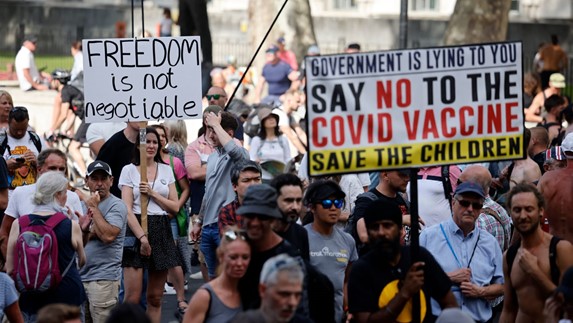
Figure 2: Protests in the US ensure Washington’s decision to impose vaccination mandates for firms with more than 100 workers.
Picture from Reuters
 

In Europe, however a similar majority public support, these mandates have been met by a larger labour force and populace opposition.

Italy, the first European country to make the Covid-19 vaccine mandatory for healthcare workers and where vaccination rates stand at around 85%, has seen an increase in the periodicity, size and hostility of protests. The country’s Green Pass, compulsory for all employees as well as customers at all public or private sector workplaces, has been accused of undermining individual freedoms and of damaging the economy by the centre-right block. This sentiment seems to be growing among the general populace since Italy’s health ministry extended the use of the Covid-19 health pass system until March of 2022, led by a significant increase in positive cases week-on-week.

Similarly, attempts to mandate vaccination in France have been met with public backlash. In July of 2021, President Emmanuel Macron issued an ultimatum for public and private healthcare workers to be vaccinated. In September, still, tens of thousands remained unvaccinated and about 3000 workers were suspended without pay. Correspondingly, the immunity passport requirement was met with protests in Paris, Marseille, and other cities: some citing anti-vax sentiments; others pro-liberty; and others, still fed up with Macron. Nevertheless, the administration has not backed down from its efforts. Unlike the US, French courts say the “health pass” is constitutional, showing less judicial system resistance.

In contrast, the UK has not yet issued a mandate, requiring health workers to be vaccinated against COVID-19 only by April of 2022. Though it might still be early to measure its impact, the high NHS staff vaccination rate – at around 90% – and the majority of public support in both Tory and Labour voters, would indicate low resignation from workers in protests.

Figure 3: Healthcare officials defend freedom of choice against mandatory vaccination.
Picture from New York Times.

Thus, the question arises as to the legitimacy of said mandates. The large debate centres around the right to freedom of choice. The majority advocates a utilitarian approach, claiming personal choice should not interfere with the wellbeing of the collective. Few preach freedom, equating vaccine mandates to a form of tyranny and oppression and evoking the Human Rights Act, which states any individual has the right to body autonomy and to refuse any medical treatment.

The latter holds that – though not a direct match to forced vaccination – the resulting social and economic conditions are indirect coercion mechanisms. The prohibition from entry into establishments and weakened job positions impairs return to normality.

Additionally, recent studies by Goldman economists estimate vaccination mandates may result in lower employment in the short run, resulting in refusal to comply.

Many argue, however, that this argument is used to mask the true driver of vaccine resistance: politics. One example can be found in US politics, where a successful vaccination campaign could mean a successful Biden administration, spurring the desire for agitation.

The utilitarian school of thought stands on the benefits of vaccination, defending vaccination compulsion against many diseases has been taking place for generations now and that the upsides outweigh any freedom of choice objection. Scientific testing and recent developments have provided evidence that (1) unvaccinated people are in higher risk of contraction, (2) are more infectious, and (3) are more likely to require hospitalisation, placing additional stress on the health care system. Mandates would, therefore, be expected to improve public health, decrease total infections and diminish contagion rates.

Furthermore, supporters are of the opinion that the predicted short-run unemployment will be more than offset by economic recovery and relaunching. During periods of high infection and death rates, consumption and spending fall, resulting in output contraction and lower employment rates. Thus, long-run recovery is possible only after the resolution of the public health crisis.

Though possibly not ideal, vaccination mandates have emerged as the contemporary solution to the two-year-long public health crisis of the COVID-19 pandemic. While some view these measures as an attack on freedom of choice, the majority acceptance and support has driven its implementation from political debate to reality. It remains only to be seen if these mandates will enable the return to normality.


Sources: New York Times, Reuters, The Guardian, France24, BBC, ABC News, NPR, CNBC, Politico

Afonso Monteiro

Hugo Canau

João Sande e Castro

André Rodrigues

Maria Silva

Back to the basics: How is inflation measured?

Reading time: 6 minutes

Inflation has been making headlines all around the globe, as prices increase at unprecedent rates. But how is inflation measured? Are the measures presented by policy makers trustworthy?

Inflation has always been a hot topic of discussion – and a particular favourite of central banks all over the world. Indeed, with price stability as one of the core objectives of virtually all central banks across the globe, it comes as no surprise that inflation targeting is seen as the key guiding point for monetary policy.

So, if inflation is such a key determinant of economic activity in the eyes of most central banks, how do they go about measuring it? Multiple measures are generally and simultaneously used, with the most common being undoubtedly the CPI (Consumer Price Index) – used for example by the FED in the US – as well as its EU counterpart, the HICP (Harmonised Index of Consumer Prices), favoured by the ECB.

One may ask to what extent are all these measures able to fully capture the actual inflation that is being felt in the economy, and what role do central banks play in assessing inflation and its respective expectations, seeing as the ultimate decision of when and how to act when it comes to inflation targeting falls entirely upon them.

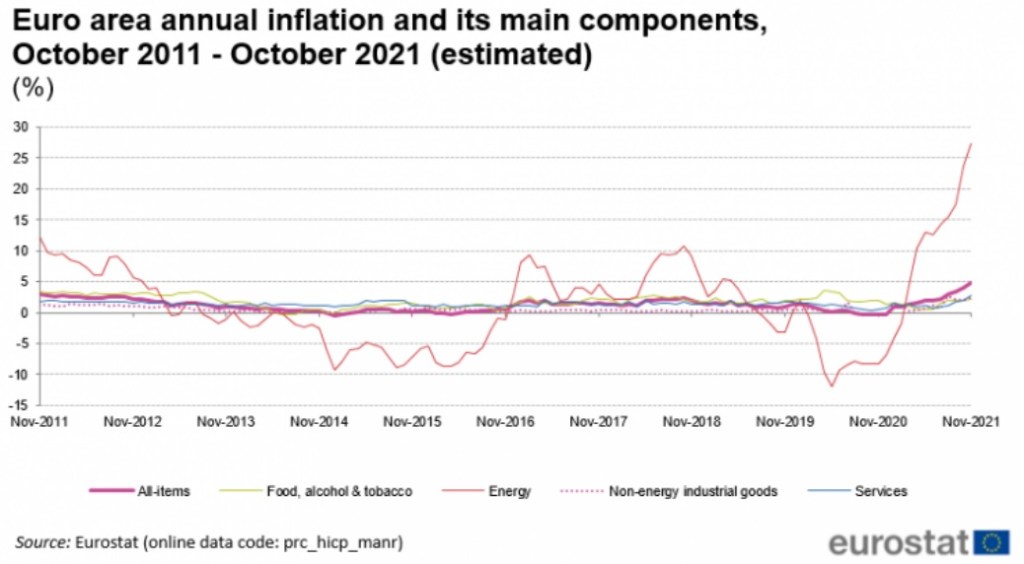
Figure 1 – Euro Area Annual Inflation and main components. Source: Eurostat

Measuring Inflation – From the CPI to more complex metrics

Most Central Banks stated primary objective is to maintain price stability. In the Euro Area and in the U.S., the European Central Bank and the Board of Governors of the Federal Reserve normally have their eyes set on a long-run target of 2% annual inflation. For Central Banks to keep track of the effect that their monetary policy is having on current inflation they need measures of… well, inflation[1]! Unfortunately, there is not one which is truly accurate or one which could take everything into account, and commonly used measures, such as the CPI (Consumer Price Index), are regularly subject to criticism of their methodologies and their over or under-estimation of inflation, depending on when and who you ask.

The CPI is one of the most mentioned measures of inflation and, generally, consists of, at a first stage, obtaining a set of weights to give to different expenditure items based on the consumption pattern of the average consumer (In the U.S., the U.S. Bureau of Labour Statistics, which publishes the CPI, calculates this based on its Consumption Expenditure Survey). Next, in the case of the U.S., for example, the U.S. Bureau of Labour Statistics obtains data on the prices of over 90,000 goods. Based on the previous weights, the index is then calculated and with it, we should get an idea of how the price of the average consumer’s basket of goods has changed.

Figure 2 – The 8 major groups of the Consumer Price Index

However, there are many pitfalls associated with its interpretation, especially in the context of informing monetary policy. For example, a considerable percentage of consumers’ income is spent on energy consumption. As has become quite apparent recently, these commodities are subject to wild price fluctuations. However, despite being largely caused by factors other than the monetary policy of Central Banks, the recent price increase in energy has reflected strongly on the CPI. To combat this, we may remove energy and food (which may also be quite volatile) items from the CPI and present only the Core CPI.

And we may go even further and say that, in fact, the Core CPI may still be providing a biased estimate of inflation due to large changes in specific items and that, instead, we should look at the Trimmed CPI, which has the top 8% and bottom 8% biggest price increases and decreases chopped off. Others may say that we should look also at the Median CPI which measures the price change of the 50th percentile good on the basket list.

Taking all these different measures into account we can build a better, more complete picture of whether recent inflation measured by headline CPI in the U.S. is simply related to wild swings of a few items due to supply shocks, or whether it is a broad-based, demand-driven phenomenon resulting from expansionary monetary policy.

Beyond the usual metrics – The importance of Inflation Expectations

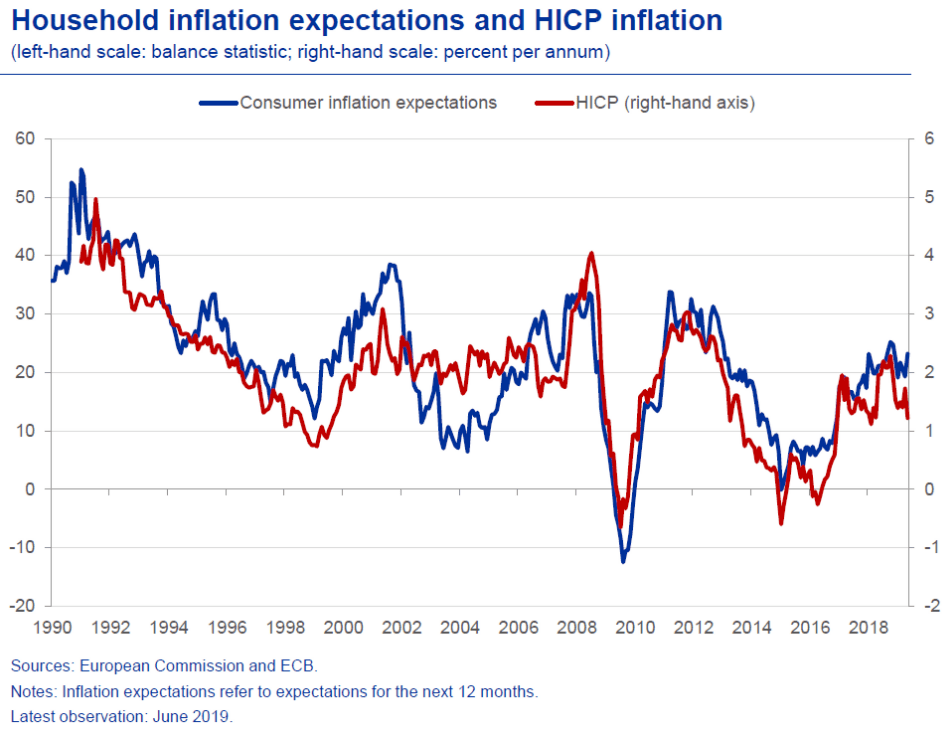
The focus of Central Banks to meet their inflation targets is highly correlated with inflation expectations. These are simply the rate at which people expect prices to rise in the future. They matter because actual inflation depends, in part, on what we expect it to be. Let’s say that everyone expects prices to rise at a 4% rate over the next year; then, businesses will want to raise prices by at least that amount, and so will want workers to increase their wages. All else equal, if inflation expectations rise by one percentage point, actual inflation will tend to rise by one percentage point as well.

This means that for Central Banks it is important to anchor expectations at their inflation targets. The absence of anchoring, in a period of high inflation, can create a wage-price spiral. This term defines the cause-and-effect relationship between rising wages and rising prices. The wage-price spiral suggests that rising wages increase the demand for goods and cause prices to rise. These price rises will then increase the demand for higher wages and the cycle repeats.

Figure 3 – Household inflation expectations and HICP inflation. Source: ECB

Conclusion

Most of the younger European generations have never experienced high inflation. Still, the inflation rate was not always stable and low. In the ’70s, with deregulation of the international monetary system and two oil shocks, inflation had climbed to values never seen before (around 12% – 13%) only declining in the next decade (80’s). With some fluctuations over the years, this measure has seen a downward trend over the years laying down values between 0.18% in 2016, 1.7% in 2018 and 0.5% in 2020. 

This trend can be changing. In the past months, inflation has been alarmingly increasing, now reaching values that are further away from the usual target, with the EU currently registering around 3.6% inflation rate and the US a concerning 5.4%.

The fact that inflation is rising is not entirely unexpected, as expansionary monetary policies such as the ones that have been conducted for the past year and a half as a response to the COVID-19 pandemic – characterized by massive bond-buying initiatives that provide ample injections of liquidity in the economy and incredibly low interest rates – are usually followed sooner or later by a rise in inflation as demand starts to pick up once again. Coupled with this, the skyrocketing energy prices that come as a natural response to the global energy crisis that we are currently facing have also contributed to pushing this raise in prices even higher.

Nevertheless, even though the inflation values that exclude these energy fluctuations are a bit more promising (EU = 1.8% and US = 4%), they are still off from the recommended ones (especially the US), which indicates that a Central Bank intervention should be imminent, particularly from the FED where the scenario appears to be worse. Still, Central Banks are in-between the sword and the wall. On one side we see rising inflation pressure but, on the other side, there is still an economy that is recovering from the impacts of the pandemic crisis. Nonetheless, it is clear that the current landscape would not be sustainable for long, so it could be said that the Central Banks’ reluctance to act upon it will inevitably have to come to an end in the near future.


[1] Central Banks also often look at measures of inflation expectations to guide their monetary policy.

Sources: EBC, Investopedia, IMF, Trading Economics

Diogo Almeida

João Baptista

Inês Lindoso

João Correia

Africa’s food crisis: Can sustainable agriculture be the answer?

Reading time: 6 minutes

Food crisis has been a reality in Africa for many years, and at this point images of malnourished African people, although still shocking, are no longer news. In 2020, due to the pandemic, we saw a tremendous worsening of world hunger. This calls for an urgent change in the primary sector, mainly to more sustainable practices.

If we don’t change the way we are operating in the agri-food systems we won’t be able to achieve the SDGs (sustainable development goals), and the goals for 2030

Food and Agriculture Organization of the United States Chief
Mother and child in Nigeria suffering from hunger and malnutrition

The primary sector still stands as the main driver of African economies. Modernization and research on this matter are, however, far from its potential, as most workers are still unqualified. Aligned with this is the lack of farmers commitment to change their practices and see the long-term results of overexploitation. Consequently, responsible and fact-based agriculture is rare, especially in rural areas. These damaging agricultural and pastoralist methods, alongside climate change and its resulting extreme weather conditions, will be unsustainable for African ecosystems. As consumers begin to value organic and chemical-free production, a greener approach could improve both the environmental and economic situation of African nations. Sustainable agriculture is an almost perfect fit with Africa’s current state.

But what is meant by sustainable agriculture?

This concept consists of managing renewable natural resources in such way that provides food, income and livelihood for present and future generations, while maintaining or improving the economic productivity and ecosystem services of these resources. This type of farming combines environmental safety with economic profitability and efficient use of non-renewable resources. Conserving water resources, reducing the use of chemicals, developing ecosystem and crop biodiversity are just some of the goals of sustainable agriculture.

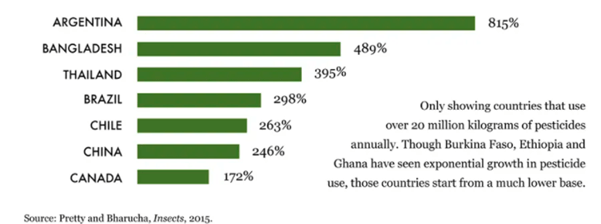
Over the years, value and demand for organic products has increased, thus by adopting sustainable agricultural practices, Africa would distinguish itself from most of the developing world that, unfortunately, has been increasing its use of pesticides and synthetic fertilizers, as it is the case of Brazil and Bangladesh. In addition, to purchase those same pesticides and fertilizers, farmers need to request loans, limiting household budget as debt accumulates. Thus, unlike their counterparts, organic farmers have increased their earnings and food security.

Graph 1: Increase in pesticide use, from 1990 to latest data (2007-12)

The benefits of sustainable agriculture

An example that clearly illustrates the benefits of sustainable agriculture is Ethiopia. In the degraded region of Tigray, a 10-year experiment, starting in 1996, provided evidence that organic and sustainable agriculture does have benefits to poor farmers and communities. To do so, ecological agricultural practices were introduced, including composting, water and soil conservation activities, among others.

The impact of compost on crop yield was rapidly visible, and data collected from 2002-2004 indicated that, on average, composted fields gave higher yields, sometimes double, than those treated with chemical fertilisers. Moreover, the positive effects of compost can remain up to 4 years, opposite to the latter that must be applied every year. With this, farmers have not only been able to cease debt resulting from fertilizers purchases, but also, since they are obtaining higher yields, it leads to economic returns. All this just by changing from fertilizers to compost.

Furthermore, since organic production focuses on smaller and more diverse crops, communities have access to a wider variety of nutrients and vitamins that help fight hunger and malnutrition. This also has a positive impact on HIV/AIDS patients that when malnourished, develop the full symptoms of the disease at a faster pace. Other health benefits include the reduction of illnesses and deaths due to agrochemical exposure.

A more independent continent

Nevertheless, as we all know, foreign aid is a very present reality for Africa, which contributes for it to be overshadowed by other nations. Thereby, offering local people work-for-food opportunities allows them to take care of their immediate food needs, while ensuring that they feel ownership of a project they have built themselves. This type of model encourages long-term participation for a truly sustainable system, and it improves physical capital, since market accessibility becomes a requirement. By building a network between farmers, NGOs and the government, many infrastructures would improve, as the agriculture industry tends to move forward in these African nations.

An indirect benefit would be African communities’ view on education, as their traditional knowledge builds up with new information. Educational programs on agriculture have been proven effective in other regions. In China, for example, farmer field schools helped reduce pesticide usage while raising crop yields. By seeing their educational and technological improvements literally bear fruit, governments can value sustainable agriculture differently and ensure children attendance at school. An increase in productivity can benefit the latter, since selling production surpluses will help paying for school fees. Similarly, an increase in labor demand for related activities could increase women’s participation in the economy and generate different sources of income for households.

However, it is not that easy…

Some challenges arise for African countries when seizing opportunities regarding the adoption of sustainable agricultural practices, especially in terms of market access difficulties and building productive capacities. This happens mainly due to the absence of economic incentives from the African Governments and their decision to implement policies, such as agrochemical subsidies, which makes the transition even less appealing.

UN calls for more funding for organic farming in Africa

A further constraint is the lack of awareness, not only at the farm level but in the whole society. The fact that this type of agriculture is completely absent from its agricultural education and R&D leads to massive misinformation barriers that inhibit its implementation. Related to this is the fact that no system can become operational if it is not institutionalized: in many African countries, research and development in agriculture are inadequate and suffer from lack of trained personnel, facilities, and motivation, making it difficult to build satisfactory research traditions and local expertise.

Additionally, there are three conditions that are crucial to analyze when studying the possible implementation of sustainable agriculture in a country: reasons for non-sustainability must be known, there must be sufficient information on the resource base to target activities that will foster sustainability, and the resource base can be monitored to evaluate sustainability. The problem is that these are uncertain in almost every African country. Another relevant restriction is the fact that developing countries do not have the appropriate research methodology to implement sustainable agriculture. Fundamental questions, such as what treatments to implement, what measurements to consider, how the data can be analyzed and how long the experiments should be conducted, are yet to be answered.

African farmer using pesticides

The challenges are worth surpassing

All in all, sustainable agriculture is assured to have a positive impact in Africa, but it requires appropriate incentives and intensified financial and technical assistance to ensure food security and social stability. It is essential for African governments to create awareness on the subject so that private organizations can contribute to the implementation of sustainable agricultural practices.

In a time where the world population does not seem to cease increasing, additional land will have to be cultivated, which gives even more importance to this issue: since all the major causes of land degradation are the result of poor land management, sustainable agriculture will do a great job preventing it.


Sources: The Borgen Project, Vox, African Wildlife Foundation, Stein T. Holden, Regional Office for Africa, African Business, Rainbow for the Future, Science Direct, Taylor & Francis Online, UNDP, Agence Française de Développement (AFD), The African Exponent, African News, Africa Center, United Nations Conference on Trade and Development, Third World Network.

Madalena Andrade

Magda Costa

Is Biden in trouble?

Reading time: 7 minutes

It has been almost 11 months since Joe Biden took the oath of office and replaced Donald Trump as President of the United States. The early success of the coronavirus vaccination process and a rapid economic recovery from the sharp decline in GDP experienced in 2020 due to the government-imposed lockdowns, made most political commentators think the new President was on his away to an easy political year. So why has Biden’s popularity plummeted over the last few months and why did his party loose the gubernatorial election in Virginia, a state governed by the Democrats for the last 12 years and on which Biden beat Trump by more than 10 percentage points?

Figure 1: Decline of Biden’s approval rating and increase of his disapproval ranting over the last few months.
Picture: 538

Anus horribilis?

Contrary to what was initially predicted, Joe Biden’s first year in office has been marked by a number of serious setbacks. Over the rest of the article, I will focus on 3 that are believed to be causing the increase in discontent with the new President and his party.

Vaccination hesitancy

On April 30th, the President’s promise to deliver 100 million vaccines on his first 100 days was met two times over and around 46% of the population had already received at least one dose of the vaccine, a percentage twice as high as that of the EU and six times that of the rest of the world. Daily new Covid cases and deaths were on a decline and a return to normal was on the horizon.

The early success of the vaccination process was, however, hiding the effect of the large vaccination hesitance in the country. According to a poll conducted for The Economist, around 30% of the population does not want to be vaccinated or is unsure, the highest rate in the developed world. Once those willing to get the jab received their doses, the US vaccination rates plummeted, creating the perfect ground for the new Delta Variant to hit the US in a dramatic way. Daily covid cases and deaths increased tenfold and new poorly communicated restrictions had to be imposed to halt the spread of the virus. For someone who had ran on a platform of bringing the coronavirus pandemic “under control”, this return to restrictions and rise in deaths was seen as failure by the President, and has resulted on sharp decline of his approval on handling covid from 63% to 49% in just six months.   

Figure 2: Anti-vacination protest.
Picture: Daily Beast

Evacuation of Afghanistan

When Biden became President the war in Afghanistan was already the longest conflict in US history. After 2448 US servicemen deaths, a cost of $2.3 trillion (around $7000 per American), and 19 years of conflict, the Taliban maintained a significant and growing presence in Afghanistan. The war had become very unpopular among voters, and both 2020 candidates ran on ending the war. In February of 2020, Trump stroke a deal with the Taliban to leave Afghanistan, and on April the 14th, despite a strong push from the Pentagon to remain until the Afghan security forces could assert themselves against the Taliban, Biden delivered on the deal and announced the US would pull all troops out of the country by September 11th.

As the American troops began to be pulled out, the Taliban went on the offensive and made rapid gains on the country. As the world saw the Afghan struggling to push back on the Taliban offensive, Biden defended his decision by saying it was “highly unlikely” the Taliban would ever take control, but a little over a month later the Afghan government fled the country and the Taliban were entering Kabul virtually unopposed.

Once the government fell, the NATO forces organized a massive airlift of nationals, embassy staff, and Afghan citizens who worked with coalition forces. The chaos and panic that ensued at the Hamid Karzai international airport following weeks was broadcasted all around the globe, with heartbreaking pictures of desperate people hanging on to wheels of planes and falling to their deaths as they took off.

Although these awful images were already a stain on Biden’s Afghan policy of redrawing all troops, the worse episode came on August 26th when a suicide bomber and gunmen from ISIS targeted a gate at the airport where thousands of people were crowing trying to find a way out of the country. A total of 182 people lost their lives, 13 of them being US servicemen. Despite the chaos of the evacuation, by August 30th the US last military airplane took off with the last remaining troops, officially ending the 19th year military intervention. Over the 17 days that followed the fall of Kabul, the US and its allies evacuated over 120 thousand people out of the country. This success was not, however, enough to offset the horrifying scenes broadcasted from the airport over the next few days, with a poll by ABC News showing that 60% of Americans disapproved Biden’s handling of Afghanistan.  

Figure 3: Biden receives bodies of us servicemen killed in the airport terrorist attack at Dover Airbase.
Picture: The Times

Gridlock in Biden’s agenda

On the 2020 elections, Biden’s Democratic party not only won the Presidency but also won a majority in the Senate and maintained their majority in the lower house, the House of Representatives. It is although important to note that the majority held in the House of Representatives, also known as just the House, was cut down to just 9 seats, the lowest majority held by any party since 2000. In the Senate, the Democrats are tied with the Republicans with 50 seats each, but Vice President Kamala Harris can also vote in the Senate which gives the party control of this chamber as well. Although a bill needs 60 votes to be passed by the Senate, the Democrats can use a special rule to avoid this called “Reconciliation” and approve certain legislations with just 51 votes.

These two razor thin majorities in congress have made it very hard for the President to move forward with his legislative agenda without having every single senator and all but 4 congressmen on board. The long and complicated negations have severely delayed two important bills, a $1.2 trillion bill that aims at modernizing the country’s infrastructure and a social spending $3.5 trillion social spending bill combines major initiatives on the economy, education, social welfare, climate change and foreign policy. These two bills are highly popular among voters, with a Quinnipiac poll giving them a 60% approval, however, the party infighting between moderate and progressive Democrats has delayed the passage of this bills for months.

This deadlock in congress and failure to deliver on electoral promises has created an image of an incompetent party and President, and according to a Emerson College poll, a plurality of voters now want Republicans to regain control of both the Senate and the House in next year’s midterm elections. If this were to happen, Biden would have little to no chance of moving forward with any of his legislative agenda as Republicans would try to block any Democratic bills.

Troubling times

There are several other reasons for Biden’s fall in popularity among the American public: the slower than expected economic recovery, the fears of inflation or maybe it is just normal for Presidents to see their approval rates decrease as their “honeymoon” period wears off. Whatever the reason is, it seems to be a big problem for Democrats even though the 2024 elections are still three years away. One should note, however, that even despite the fall in support, Biden’s most likely opponent, Trump, is even more unpopular than the current President. This was seen in Virginia, a state Biden won easily in 2020, where the Republican Glenn Youngkin won the state’s gubernatorial election, but he did so by distancing himself from Trump and focusing on local issues. Also, Afghanistan will most likely not be on people’s minds by then, and the current gridlock in congress seems to be coming to an end, as congress has finally passed the infrastructure bill and is moving closer to find a consensus on the 3.5 trillion social spending one. The signs are not good for Democrats coming into next year’s midterm elections, and current projections show they will lose the majority they currently hold in both chambers of congress, but a lot can still happen in one year, and especially in three.


Sources: The Atlantic, Our World in Data, NPR, 538, Daily Beast, New York Times.

João Sande e Castro

Printing Money: The wrong band-aid all along?

Reading time: 6 minutes

Have you ever wondered why governments do not just print money every time they have a large debt? After all, if there is a need for funds, and if the governments have the means to create more money, then why do not they do it?

In fact, in the United States, the president Joe Biden has been actively printing money to overcome the pandemic crisis. Such measure has been concerning most of the American population, as the inflation rates are increasing by the minute and a hyperinflation crisis is in the mind of many.

A question imposes, should we be concerned? What can history tell us about using these mechanisms to overcome major depressions? The answer to this lies in the balance between rising inflation and the reduction of debt. In this article, we will analyse this equilibrium, and explain the consequences of rising inflation throughout history.

The Mechanics used in overcoming a Crisis

First and foremost, we must observe the mechanisms used to overcome an economy which is deleveraging. During economic hardships, the amount of debt increases to a point where the debt repayment grows at a much faster pace than levels of income, thus decreasing spending. As one’s spending is another’s income, we have an ongoing stream of less borrowing (since people become less creditworthy), while the debt repayment still prevails.

In such extreme situations, lowering interest is not enough to overcome these crises (as the Central Banks would do when faced with a short-term recession). Thus, to decrease debt burdens, there are usually four ways to do so: Cut Spending, Reduce Debt, Redistribute Wealth and Print Money.

While the first three are deflationary forces, still resulting in income decreasing at a higher rate than debt, printing money is an inflationary and stimulative force controlled by the Central Bank and used to buy financial assets and government bonds, increasing their value. As the Central Bank is only capable of buying financial assets and the Central Government (not able to print money) of spending on goods and services, giving the money directly to households, these two institutions must combine forces to stimulate the economy. This reinforces the importance of policy makers, who need to balance the mix between deflationary and inflationary forces to maintain stability, ensuring a debt decline relative to income, positive economic growth and a controlled inflation.

However, there have been many times when this did not happen. The Central Bank needs to print money in such a way that the rate of income growth is higher than the rate of interest on accumulated debt. Since this method is quite preferable to the other alternatives and easy to undertake, it is no surprise that it has been abused a lot throughout history, leading to disastrous outcomes as hyperinflation.

Examples of Hyperinflation throughout time

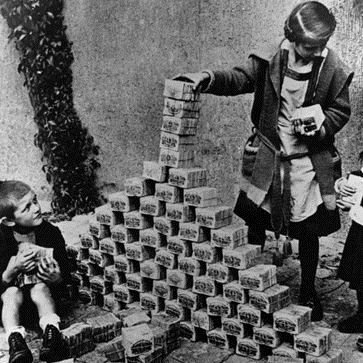
Most of us recall hearing that post World War I Weimar Germany was one of the worst cases of hyperinflation. In fact, during the war, Germany financed most of its army and resources through money printing, portraying it as an investment since they believed they would win the conflict. Consequently, the German government not only used propaganda to appeal to patriotism, as to disguise the immanent inflation that was on the horizon, but also censored a lot of information regarding the stock exchange market and foreign exchange rates.

After the war came to an end, the major debt in Germany’s economy culminated with the well-known Versailles Treaty. The Germans were left to pay an astronomical and unrealistic debt after a miserable conflict. By September 1920, prices were 12 times higher than the ones before the war, and France was starting to put pressure on Germany to reimburse its repairment payments, going as far as, in March 1921, surrounding and occupying German ports.

While instability spread across the country, Germany tried to start implementing the mentioned above mechanism, mainly through deflationary forces, such as wealth redistribution. However, due to the abnormal high taxation, it is said that the rich started to spend all their money in whatever they could, to avoid giving it to the government. Simultaneously, Germany kept printing money, trying to stay afloat, perpetuating the vicious cycle of inflation and uncertainty which would lead to the rise of the extremist and far-right party.

This is a very good example of how dangerous it can get when the two main forces mentioned are not managed correctly.

The depreciation in value of money made paper notes so worthless that children used them as building blocks

Furthermore, another known and current example is Venezuela. Throughout the last decades, Venezuela’s currency, the Bolívar, and its overall economy had been highly dependent on oil exports. However, due to the global price drop, the foreign demand for the Venezuelan currency to buy oil crashed, and with it the Venezuelan economy. In 2013, after the presidency of Hugo Chavez, his new successor, Nicolas Maduro, decided to start printing money as a solution, because of its intrinsic inflationary force.

However, as the price of oil kept falling and Venezuelan oil output decreased, even more investors decided to look elsewhere, which deepened even further the devaluation of the bolívar. As prices began to rise, the government kept printing more money to pay its bills and debt, entering into a hyperinflation cycle.

Faced with the tremendous devaluation of the currency and to deter the population of adopting the US Dollar, the government decided to issue currency controls, namely a fixed exchange rate that would stop currency transactions. The government also made many attempts at valuing the currencies by creating new ones tied to the oil price but never succeeded. Moreover, this led to many cases of unofficial currency trading, fomented by the uncertainty and distrust of the Venezuelan population towards the country’s political and economic instability, which only worsened the situation.

Regarding this case, we may note that, faced with a crisis, the Venezuelan government emphasized inflationary mechanisms, failing to establish a sustainable balance.

Venezuelan population started trading bolívars with dollars

A look in the present

One of the most discussed policies nowadays is Biden’s. After Fed’s injection of 2.3 trillion dollars in the economy, with a total amount of stimulus checks to households of 391 billion dollars, we have seen rising inflation in the US, with the consumer price index reaching 5,4% in September 2021 (Graph 1).

Graph 1: Annual percentage change in consumer prices

In order to explain this value, there are several matters to consider. Firstly, some external shocks to monetary policies have an impact, such as the energy shock, as the prices of energy and fuel have been rising (consequence of lack of resources). Besides that, some supply chains that were disrupted have not returned to normal, leading to price increase in imported goods. On the demand side, with the economy returning to ordinary again, the demand escalates in some sectors, such as services, and this disturbance can lead to the rise of prices, as families attempt to return to their previous consumption habits and companies seek to compensate the losses. Another important aspect is related to long-term expectations. The inflationary forecast can lead to an even higher inflation rate in the long run.

Will the United States repeat the past?

All in all, USA’s inflation is dependent on many consequences that came out of the pandemic crises other than Biden’s stimulus policies, unlike the mentioned examples. However, all of them share a similar imminent problem regarding the excess amount of debt they are supporting, despite the United States currently being able to attenuate it.

We are living uncertain times and as long as policy makers are aware of the need to find an equilibrium between inflationary and deflationary waves, this current deleveraging may occur in a stable way.


Sources: Business Insider, Caixa Bank Research, CNBC, Financial Times, Forbes, The Conversation, The Economist, The Guardian, The New York Times, The Washington Post, The White House, Trading Economics, VOX.

Benedita Elias

Mariana Gomes

The Pandora Papers

Reading time: 6 minutes

Tax revenue keeps civilization afloat but not all taxpayers play by the same set of rules. While some wealthy and well-connected people have avoided paying trillions of dollars in taxes, you are left to cover the bill.

            The Pandora Papers are a leak of almost 12 million documents that uncovered hidden wealth, tax avoidance and money laundering by some of the world’s rich and powerful. These include the King of Jordan, the presidents of Ukraine, Ecuador and Kenya, the prime minister of Czech Republic, and more than 130 billionaires from Russia, the United States, Turkey, and other nations. This leak comes years after the well-known Panama Papers.

            This is made possible by tax heavens. These are generally countries or places with low or no corporate taxes that typically limit public disclosure about companies and their owners. Independent countries like Panama, some areas within countries like the U.S. state of Delaware, or territories like the Cayman Islands are examples of such.

Figure 1 – Number of politicians named in the Pandora Papers per country.
Source: Statista

What is offshoring: technicalities and legalities

When investigations such as this come to light, talks about tax evasion or money laundering inevitably lead to discussions about the practice of offshoring and its legalities and technicalities. Offshoring can be succinctly defined as the practice of moving economic activities (be it a company or a bank account, etc.) from the country of origin towards a foreign jurisdiction overseas, separate from the one where the beneficial owner resides. Therefore, in its simplest form, as the name indicates, offshoring is primarily a geographic activity of moving operations from one country to another. However, the legal intricacies and moral aspects that revolve around it make it an activity quite frowned upon in the international community. 

Offshoring offers a number of enticing advantages to those who practice it, such as simpler corporate regulations and possibly lower costs for companies going offshore, as well as better asset and lawsuit protection. Moreover, and perhaps the biggest reason why people choose to move their enterprises and records of less than morally righteous business deals to countries such as Panama or the British Virgin Islands has to do with the tax benefits those countries provide to outsiders, as well as a promise of financial privacy and confidentiality that many appreciate in order to keep their financial transactions under the radar.

Concerning these taxation benefits, most of the so called “Tax Heavens”, terribly appealing to offshoring practices, allow these foreign entities to usufruct from an entirely different fiscal system from the national one, having to pay much less taxes (and in some particular cases none at all) and to collect tax-free capital gains from the operations conducted.

However, and as ludicrous as it may seem, the issue lies in the fact that this practice of moving operations from one country to another mostly to pay less taxes is entirely legal in many cases. In fact, despite all the scandal surrounding the Papers, most of those indicated are not infringing any law – rather they just opt to adhere to a judiciary and fiscal system quite different from the one in their home country. Hence, while tax evasion is illegal, tax avoidance by moving to a different jurisdiction is entirely legal, only not very morally accepted by society.

Why is this practice legal then?

That is a rather difficult question to answer as these offshore tax heavens have existed for many decades and not much seems to have been done to end them, despite all the investigations that have revolved around them in the past few years. In the end, it is very much the issue that many of the power players who could actually have a say in putting a stop to these practices – such as politicians and influential personalities – are also those that benefit the most from it, making it clear that it is really not much in their interest to limit offshoring in the near future.

From the Panama Papers to the Pandora Papers

The Pandora papers are similar to its predecessor, the Panama Papers, in that they both revealed the inner workings of offshore loopholes and shed light on many of the dealings that some high-profile, well-known figures engaged in.

Both the Panama and the Pandora papers consist of millions of files, 2.6 TB and 2.94 TB worth of information, respectively, which included legal and financial documents detailing many of the activities and property purchases of high-profile individuals, including billionaires, politicians, and world-leaders.

The Pandora papers were obtained and compiled by the International Consortium of Investigative Journalists (ICIJ) from a variety of different sources of information: 14 in total. ´

Meanwhile, its predecessor, the Panama Papers, came from a single source: Mossack Fonseca. Mossack Fonseca was a law firm and provider of corporate services, located in Panama (therefore, Panama Papers) that specialized in offshore financial services and that, before the leak, had a very relevant position in the industry. Because of this, it had access to large amounts of documents and files that detailed the activity that went on within the offshore dealings of many individuals. In 2016, a whistle-blower, whose identity is still unknown, leaked many of Mossack Fonseca’s documents to the International Consortium of Investigative Journalists.

While offshore activities are not, by themselves, illegal, they can be used to disguise and hide criminal activities. As a result, with the help of the information detailed in the Panama Papers, crime authorities in many different jurisdictions were able to uncover criminal activity and arrest and prosecute many suspects: In the U.S., the Panama Papers allowed the IRS to uncover several cases of tax evasion through offshore dealings, ultimately leading to the arrest of several people; U.S. authorities also found several cases of fraud. The Canada Revenue Agency also claims to have discovered 35 different cases of tax evasion. In late 2020, Germany issued two international arrest warrants for Juergen Mossack and Ramon Fonseca (the founders of Mossack Fonseca) for their involvements in the criminal activities of Mossack Fonseca, although they are unlikely to be extradited.

However, these types of investigations and legal procedures often take years to culminate in an arrest or a conviction and, so, we can expect that the Panama Papers will continue to aid authorities in investigations for many years to come. That will likely also be the case for the more recent Pandora Papers.

A possible solution – The Global Minimum Tax

A possible solution to tax heavens might be through a global minimum tax. A global deal to ensure big companies pay a minimum tax rate of 15% and make it harder for them to avoid taxation has already been agreed by 136 countries. The global minimum tax rate would apply to overseas profits of multinational firms with 750 million euros ($868 million) in sales globally. Governments could still set whatever local corporate tax rate they want, but if companies pay lower rates in a particular country, their home governments could “top up” their taxes to the 15% minimum, eliminating the advantage of shifting profits. A second track of the overhaul would allow countries where revenues are earned to tax 25% of the largest multinationals’ so-called excess profit – defined as profit in excess of 10% of revenue. Applying a similar version to individuals might just do the trick to combat tax avoidance by wealthy individuals.

 Conclusion

Offshoring allows companies and individuals to take advantage of low or no corporate taxes and limit public disclosure about companies and their owners. These practices are legal, but they pose a fundamental morality question. Offshoring practices provide benefits for the countries being used as the offshoring destination while negatively impacting the ones from which the money is being taken out off. This might create social unrest on these practices as taxpayers feel like not all citizens/companies are paying their fair share.


Sources: DW, Forbes, ICIJ, The Guardian.

Diogo Almeida

João Baptista

Jonathan Magzal

Inês Lindoso

João Correia

2021 Local Elections: Surprise in Lisbon, landslide in Cascais

Reading time: 7 minutes

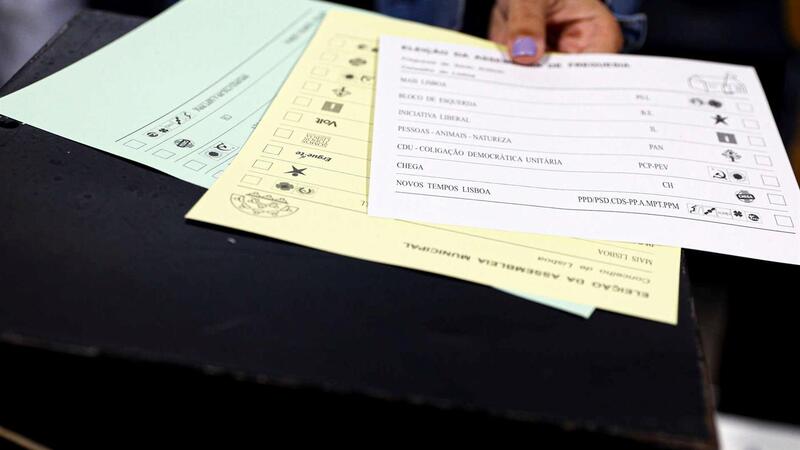
On the 26th of September of 2021, every single Portuguese over the age of 18 had the opportunity to cast 3 ballots, one to elect its mayor (green), one to elect its parish council (white), and one to elect the members of its municipality assembly (yellow). In total, there were 3707 elections on this day and over thirty-five thousand people were elected across the three different local governing institutions. In no other electoral act in Portugal are so many citizens involved and elected as in the local elections the country has every 4 years.

Figure 1: The three balots of the local elections.
Picture by António Cotrim from Lusa

National Results

On the national level, the ruling Socialist Party (PS) won, for a third consecutive time, this year ‘s local elections, obtaining 37.1% of the national vote. The party elected 148 mayors out of 308. In second place and with a 32.1% share of the vote, came the main opposition party, the Social Democratic Party (PSD), electing 114 mayors. The remaining 46 elected mayors are from smaller parties or independent movements.

Despite the win for the government’s party (PS), at the end of the night, they had a net-loss of 12 mayorships while the main opposition party (PSD) had a net gain of 16.

Figure 2: National election results for every mayor’s race. Picture from Diário de Notícias

Cascais, the municipality of Nova SBE
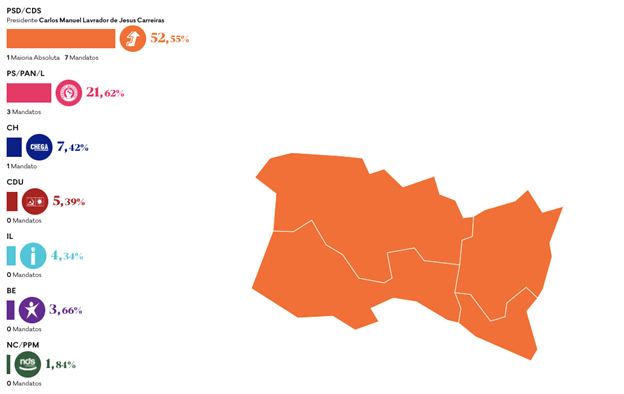
              Our university is located right at the border of the Municipality of Cascais and all the students who live here have Carlos Carreiras as their mayor. Mr. Carreiras is 60 years old and has been mayor of Cascais since 2011. He was re-elected for a third time under a coalition called Viva Cascais which was supported by PSD and the People’s party (CDS), beating his main rival, Alexandre Faria, from the Socialist Party, by more than 30% points and winning 7 out of the 11 councilors. Viva Cascais also won all 4 of the Parish Councils. The Carcavelos e Parede Parish, where Nova SBE is located, will be presided by Nuno Alves. Contrary to Mr. Carreiras, Nuno Alves did not win a majority of the councils in the Parish (9 out of 19 mandates) so he will need to work with one of the 5 opposition parties to govern.

Figure 3: Carlos Carreiras, the Mayor of Cascais.
Picture from WSA

Figure 4: Nuno Alves, President of the Parish of Carcavelos and Parede.
Picture from União de Freguesias de Carcavelos e Parede
Figure 5: Electoral result in Cascais.
Picture from Expresso

Carreira’s program

On his program, Carreiras proposed several measures to prepare Cascais’s economy for the post-covid world. The three main ones are policies to support local businesses to transition to the digital economy, create a digital local currency, and use Cascais as lab to the introduction of a universal basic income.

With regards to mobility, the electoral program promises to maintain free public transport for every resident in Cascais, the creation of more bike lanes plus bike-sharing stations, and the continuation of the replacement of fossil-fuel powered buses with ones that are powered by either electric engines or hydrogen.

For housing, the program includes an investment of 160 million euros (paid by European funds) in the construction of 800 houses for low-income people. Additionally, the Convent of Saint Mary of the Sea, in Carcavelos, will be renovated to offer rent-controlled residences for college students.

As for the environment, the executive led by Carreiras pledges to reduce green-house gases emissions in the municipality by 55% until 2030 and promised that every citizen of Cascais will have a green space less than 400 meters from his or her house. Despite these promises, the opposition has accused the mayor of causing the destruction of hundredths of thousands of square meters of green areas due to the substantial number of new housing units being built over the last 4 years. On top of these accusations by the opposition, due to the possible construction of a massive residential neighborhood in the “Quinta dos Ingleses,” the green area right by Nova SBE with more than 4 thousand trees, is in danger of disappearing.

Additional proposals from Carreira’s electoral program are the creation of a fund of 2.5 million to finance an e-learning scheme for the unemployed, increase in the amount of charging stations for electric vehicles, and the attribution of 25 scholarships in universities located in the municipality of Cascais, Nova SBE being one of them.

Contrary to all the other 7 candidates who ran for mayor of Cascais, the program of Carreiras is the only one that is no longer online, as the campaign website has been shut down. Thus, the information previously mentioned is not easily accessible.

Lisbon, the surprise of the night

Before the election on the 26th of September, every single poll gave a significant advantage to the incumbent Mayor of Lisbon, Fernando Medina of the Socialist Party, to be easily re-elected. However, against all expectations, the former European Commissary for Innovation, Carlos Moedas, defeated Medina by less than 1% of the vote. Moedas led the Novos Tempos coalition, which was supported by PSD, CDS, and 4 other smaller parties. Although the former Commissary won the plurality of the votes, the Socialist Party and other left-leaning parties elected the majority of the councilors (10 of out the 17) and the deputies in the Municipality Assembly of Lisbon (41 of 75). This means the new mayor of Lisbon will have to negotiate with the opposition to successfully implement the electoral program promised to the citizens of Lisbon.

Figure 6: Carlos Moedas, the new Mayor of Lisbon giving his victory speech on election night. Picture from TSF

Moeda’s program

              One of Moedas biggest campaign’s promised was to offer free public transportation for people who are under the age of 23, 65 or older, unemployed, and handicapped. In addition to free public transport for some residents of Lisbon, the “Yellow-Bus” program would guarantee free transportation to school for children in primary school. Moedas also wants to expand the metro line in Lisbon by building new stations in Alcântara, Miraflores, and Algés. If you are a monthly subscriber to monthly public transportation pass, Moedas also wants to include the bike sharing planform in Lisbon, called Gira, in the bundle of methods of transport that you can use.

Although the new Mayor promised a lot to the users of public transportation, car users will benefit from parking meters that are 50% cheaper plus 20 minutes of free parking per day in the city.

              Another campaign promise was the exception of the municipal tax on the transaction of properties to buyers under the age of 35 who are buying their first house. This measure could save young home buyers thousands of euros in taxes. The municipality will also return 32 million euros in income taxes to its residents. However, these last two measures could be rejected by the opposition as they have been accused of benefiting wealthier individuals; this is supported by the fact that 60% of Lisbon residents do not make enough money to pay income taxes, and young first-time home buyers tend to be wealthier than younger people who are renters.

As for climate related policies, the Moedas is not as ambitious as the former Mayor, who had promised to cut emissions in the city by 70% until 2030. Despite these smaller focus on the climate crisis, his program includes a modernization of the flood preventing system of the city, the promotion of solar panels in buildings, and the gradual implementation of a “Pay As You Throw” system of garbage collection to prevent waste.

Additional proposals on Moedas’ electoral program are the creating of a grid of free Wi-Fi in Lisbon, the creation of cultural centers in every neighborhood of the city, and free health insurance for seniors.

Figure 7: Electoral result in Lisbon
Picture from Expresso

For the coming 4 years, both Lisbon and Cascais will have mayors from the center-right Social Democratic Party, although both Moedas and Carreiras were elected under an electoral coalition that involved other political parties. Whether or not the two politicians will be able to implement their electoral programs is impossible to know, but 4 years from now, all the Portuguese voters, including the ones from these two municipalities, will have the opportunity to scrutinize their local leaders with their vote, or even by running for office.


Sources: Expresso, Cascais24, TSF, RTP, SICNoticias, Publico, ONovo.

Afonso Monteiro

Hugo Canau

João Sande e Castro

André Rodrigues

Maria Mendes Silva