B-Corporations: The New Tomorrow

Reading time: 5 minutes

Consumer Activism Nowadays 

In a progressively connected world with access to more information and data than ever before, consumer demands are becoming ever greater and more ambitious. Consumers’ choices are based on their tastes and values and, therefore, it is expected that they would want to buy and use companies’ products that are aligned with said values. With companies operating on an increasingly public stage, we have witnessed the advent of mainstream media and social platforms that accelerate consumer movements, which in turn has culminated in the concept of Consumer Activism – consisting, in simple terms, on taking an action in favor of a company (BUYcott) or against it (BOYcott).  

Consumers´ Impact 

The wake of a more demanding and aware consumer, with a larger desire to see their consumption habits produce as little environmental impact in the world as possible (or at least in some way improve upon it), has led companies on an ongoing journey towards sustainability and corporate social responsibility. This change in the outlook of firms has as main goals not only the satisfaction of customer needs and demands but also an improvement on customer loyalty, that is translated through repeated purchases, word of mouth, increased revenues, and a more positive reputation

This change of path is being clearly reflected in the actions that many large corporations have taken recently, in the form of pledges and initiatives towards a more sustainable world. For example, Google is aiming to become carbon free by 2030, being already carbon neutral since 2007. The firm announced in October 2022 that it has restored over 15 acres of native habitats with oak and willows in Silicon Valley. Amazon has also pledged to become net-zero carbon by 2040. In 2019, it created the Right Now Climate Fund, a $100 million fund to restore and preserve forests, wetlands and grasslands globally, currently supporting programs in Italy, Germany, Brazil and the United States. In 2021, 85% renewable energy was used in its operations, with the plan being to exclusively rely on this type of energy by 2025.

Questionable Decisions

However, this road towards sustainability has not always been smooth, with clients becoming increasingly more skeptical of the claims enterprises make in this department to justify some of their controversial actions. An example of this was seen when in 2020, with the announcement of the iPhone 12, Apple made the decision to no longer provide its customers with a wall charger or earphones included in the box when purchasing an iPhone, claiming that it was it could “fit up to 70% more products on a shipping pallet, removing carbon emissions in their global logistics chain” due to a “smaller and lighter iPhone box” leading to lower shipping emissions and the reduction of e-waste. Nevertheless, the removal of these items created knock-on effects as clients needed to buy a separate charger as older chargers are less efficient and are susceptible to breaking. Consequently, this requires more packaging to be utilized and even more fossil fuels to be burnt due to its shipping. This decision led Apple to be able to reduce costs and diversify its revenue streams by increasing the likelihood of selling either its chargers or earphones to its clients and, ultimately, improving its financials, with environmental concerns ultimately pushed to the background and essentially used as an excuse.   

B-Corporations

Nowadays, it is possible to characterize a company in as many ways as the consumer sees fit: “sustainable”, “environmentally friendly”, “polluting”, among many others. A point has been reached in which, with the aim of standardizing the classifications given to companies and ensuring clients of the truthfulness of the claims said enterprises make, the creation of non-profit organizations becomes essential. 

With this motto in mind, the B-Corp Movement was built to change the economic system and to “Make Business a Force For Good”. This movement has its starting point on the slogan “There’s no Planet B”, in a way to create an international network of organizations that all together will lead economic systems towards change in order to support an inclusiveequitable, and regenerative economy. Moreover, the B-Corp movement is responsible for analyzing and certifying companies according to rigorous standards to ensure that B-Corps and Non-B-Corps jointly plan a more resilient future. 

B-Corp Movement

Therefore, certified B-Corporations are companies verified by B Lab to meet high standards of social and environmental performance, transparency, and accountability.

ECOALF’s Case

The number of B-corporations has grown immensely over the past few years around the world, currently accounting for 5,981 firms spanning 158 industries. A successful case is ECOALF – combination of “ECOLOGY” and “ALFRED” – a Spanish company, founded in 2009, operating in the apparel industry, manufacturing its products with fabrics made from 100% recycledplastic, cotton, wood, coffee, fishnet, and tires. In 2018, the company obtained the B-Corporation certification, recognizing its core business as being an environmentally responsible business while still seeking to make profit at the same time. In this same year, ECOALF was already a case of success with a product portfolio with high quality garments, footwear, and accessories featuring in various global media outlets (i.e., The economist; Bloomberg; etc.), essentially becoming an icon of the sustainable fashion industry. 

ECOALF´s logo

All this success is greatly due to several and heavy investments that the company made in research and development to create a unique and unparalleled production process and input fabrics, as well as cooperating with well-known brands and personalities, creating alliances and partnerships to increase brand awareness.

Conclusion

All in all, ECOALF is a success story among many others that is able to showcase that, with help and having the right direction and goals in mind, there is a growing market directed towards sustainability yet to be fully explored by companies, challenging them to attract investors and entrepreneurs through impact investments for an area that benefits everyone.

However, at the end of the day, there is still a long path to forge before a fully sustainable, greener, and circular economy is reached. Nevertheless, efforts by various entities, authorities and companies trying to channel the effort of society towards that end are remarkable and seem promising.


Sources: Forbes, Google, Amazon, The Verge, B Lab, Pasquini, Martina; Kolk, Berend van der. (2019). “Because There Is No Planet B: El Caso de ECOALF”. In IE Publishing

João Correia

Hannah Ribeiro

Bad Behaviour: a Behavioral Economics take on Corruption

Reading time: 7 minutes

What is corruption? Is it taking a bribe? Smuggling millions to a tax haven? Or skipping the line on a public service because the office clerk is your neighbor’s nephew’s kid? “Corruption is what those dirty bankers, politicians, and the referee who conducted the last match my club lost at are guilty of, that’s what it is!” – any of us will enragedly say. “I”- we confidently add – “would never do it”.

But is this really so straightforward? The prevalence of corruption in a given society can be hard to measure, both due to its secretive nature and differences in how it is defined. We rely essentially on what law enforcement records (a biased source if the authorities happen to be corrupt themselves) and on perception surveys, both of the general public and of experts on the matter (which may also be skewed if people have different ideas about what constitutes a corrupt act). But statistical issues aside, the truth is that corruption appears to be a worldwide phenomenon, and a relatively stable one at that. According to Transparency International, the Corruption Perception Index (measured in a 0-100 scale, 100 being the least corrupt), in 2021, was lower than 50 for two thirds of the world. 131 countries “made no significant progress against corruption over the last decade”. Portugal ranked 32nd least corrupt out of 180 countries, at 62 points.

Corruption Perception Index, 2021

So, it seems we don’t really think of ourselves as corrupt, but we perceive corruption around us. Is it external factors and mechanisms that influence a person’s choice to engage in the kind of behavior that we call corruption? We know what an economist’s point of view would be on the matter: each choice is dependent on incentives and preferences (of the agent making that choice), and on a rational cost-benefit analysis of the situation. And, like with any decision process, Behavioral Economics also has something to add on the subject: the agent’s choice is conditioned by cognitive biases and bounded rationality. This means that people could be guided (or should we say, nudged?) towards a different behavior pattern. Let us now explore these ideas.

Why are we corrupt?

If there’s one thing we should remember when dealing with corruption is that it is harmful, undoubtedly undermining the potential for human and economic development. Corruption can be like a disease, spreading all over and destroying a system from within. Corruption, in fact, corrupts.

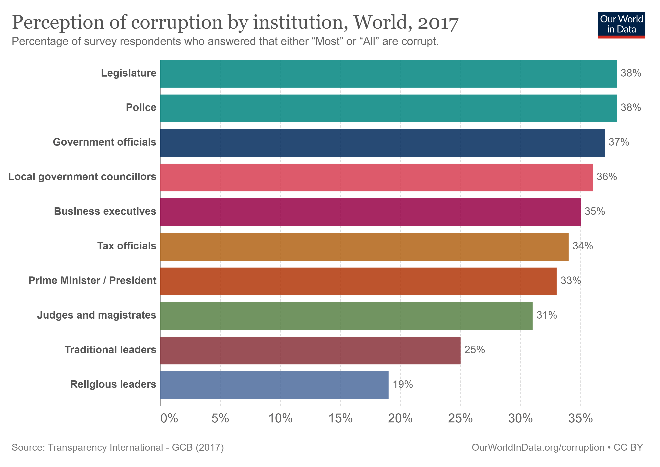
Perception of Corruption by Institution, 2017

At its core, an act of corruption is a break of trust. An agent is trusted with some power or task and is expected to act according to the best interest of those who deposited that trust in him/her. We can think of it as a contract being made between society and the agentThe agent is trusted by society as a whole to act in society’s best interest. It is easy to see where the problem starts. Two things, together, provide an incentive for the contract to be breached: a conflict of interest between the agent and society, and asymmetry of information. In other words, there is a risk of corrupt behavior if the agent stands to gain something from breaking the contract and can do it without being caught. 

Given this, the economic reasoning for acts of corruption is simple enough – an agent will rationally assess the costs and benefits of breaking ethical rules and do it if the benefit exceeds the cost. So, a public official who is offered a 5-million-euro bribe will simply perform a cost-benefit analysis (5 million in my pocket vs some time in jail if caught) and decide accordingly.

Following this line of reasoning, anticorruption policies should focus on increasing transparency and accountability, decreasing asymmetry of information (making it harder to act without our actions becoming public knowledge), and better aligning the agent’s and society’s interests, so that not breaking the contract becomes in the agent’s best interest.

In a simple, perfectly rational world, this would be all. For better or for worse, that is hardly the picture the world we live in paints.  

A Behavioral Economics Approach

A person’s actions are hardly ever determined solely based on costs and benefits. Any agent is affected by mental shortcuts, reciprocity, context, fast-thinking and social norms. People rarely go about their lives carefully deliberating every choice. Indeed, many decisions are automatic. For example, a public official may hire his friend’s nephew for his office without necessarily thinking about ethical rules or the public good. Nonetheless, this is a textbook case of nepotism.

Another important mechanism is reciprocity – the “you scratch my back, I’ll scratch yours” mentality. This could be seen either in a large-scale favor exchange between two powerful people or in something as small as a driver bribing a police officer to avoid getting a speeding ticket.

Bribery Payers Index, 2011

But it is not all about automaticity in decision-making and ethical blind spots. Although no one likes to see themselves as the bad guy, even when agents are aware of the dubious nature of their actions they may still choose to engage in corrupt acts. Why?

The moral “weight” of corruption is lighter when the agent feels somehow distanced from the action. Experimental evidence shows that having an intermediary as a third party who arranges the bribe (someone to “do the dirty work”, so to speak) significantly increases the percentage of people willing to offer and accept bribes! Thus, bribery is perceived as a common transaction.

Another problem is our tendency to consider only obvious and immediate results (fast thinking). Corruption presents an obvious, palpable gain, and is often thought of as a “victimless crime”. It is easier to break a rule if no one seems to be worse-off by it. However, according to the United Nations, corruption, bribery, theft, and tax evasion cost at least US$1.26 trillion each year to developing countries, money that essentially could have been implemented in much-needed social and economic policies.

Finally, let us not forget that as human beings we tend to abide by the perceived behavior of the majority. As a matter of fact, we are easily influenced by our peers, with the underlying mentality of “If everyone is doing it, what’s the big deal if I do it too?” being heavily present in many of the choices we make, corruption decisions not excluded.

What can we do about it?

So, does this mean that nothing can be done about corruption, that it should be accepted as a feature of humanity, and that we may as well have to learn to live with it? Far from that! Truth is, by identifying the cognitive biases and mental shortcuts that stir people towards corruption, we are also learning which buttons to push to get them away from it.

A simple way to surpass the ethical blind spot problem in our decision-making is to simply reiterate the ethical principles a person is already trying to live by. An experiment was conducted where the participants were asked to solve a math test, while being given incentives to cheat. However, some were asked to write down the Ten Commandments they remembered beforehand. Those participants cheated much less than the control group, having been reminded beforehand of the existence of a moral code (not even necessarily their own). As it turns out, awareness matters

In turn, this opens the door for new anticorruption initiatives. Businessmen could, for example, be asked to sign a document stating their awareness of the organization’s ethical code. Politicians may be required to publicly state all their possible conflicts of interest before taking office. 

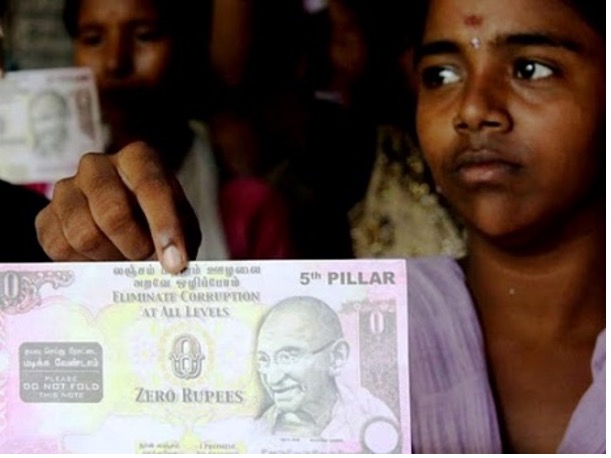
5th Pillar, an Indian NGO, created a Zero Rupee note with a pledge against corruption, to be given to officials who ask for a bribe

Moreover, nudges that communicate the ethical standards people have for each other may be helpful, again, as a reminder of the trust society puts in each individual, which may work in itself as an incentive for citizens to live up to that trust.

We know these small nudges are hardly the definitive solution to end corruption once and for all – transparency and accountability measures are still the ones most likely to have a noteworthy impact. However, the nudges we discussed may be just what is needed to curb the small corrupt tendencies in a society in which more sizable schemes are tolerated or even go unnoticed. We may never live in a fully honest world, but awareness of what makes it dishonest is crucial to make sure it never becomes fully, and irreversibly, corrupt.


Sources: Muramatsu, Roberta; Bianchi, Ana Maria. (2021). “The big picture of corruption: Five lessons from Behavioral Economics”. In Journal of Behavioral Economics for Policy. Vol. 5, Special Issue 3: Roots and Branches, pp. 55-62., Muramatsu, Roberta; Bianchi, Ana Maria. (2021). “Behavioral Economics of Corruption and Its Implications”. In Brazilian Journal of Political Economy. Vol. 41 (1)., Ma, Qingguo; Yan Min. (2018). “Psychological, Behavioral, and Economic Perspectives on Corruption”. In International Journal of Psychology and Psychoanalysis., Statista, Our World in Data, India Times.

Mariana Gomes

Leonor Cunha

Joana Brás

The growing cracks on the Chinese economy – Is the country heading for a collapse?

Reading time: 6 minutes

The People’s Republic of China, with its 1.4 billion population, is the most populous nation on earth, boasting the 2ndhighest economy in nominal terms.  Being considered one of the largest economic miracles in recent history, – with sustained growth levels above 5% since 1990 up until 2020 – millions of Chinese people have been lifted out of poverty following the country’s embrace of international trade and investment. Nevertheless, ever since the beginning of the COVID outbreaks, China has struggled to maintain its historic impressive figures. While its zero Covid policy has certainly pressed the brakes on economic activity, through mandatory lockdowns and business shutdowns, a series of deeper and more serious problems – from a faulting real estate market to government overspending – have recently started to showcase the cracks on the country´s economy.

A brief recent history of China’s economy

For a large part of recent history, particularly between the 14th and 18th century, China is believed to have been responsible for one of the largest shares of economic activity worldwide. While it experienced a heavy economic decline in the subsequent period, it was during the 1970s that its share on global output began to rise once again. Following the end of the Chinese Cultural Revolution, the Four Modernizations were adopted to kick start the nation´s production sectors, with a special focus on agriculture, industry, defense, and science. This program heavily moved away from the “iron rice bowl”, or “work for life”, previously in place, and embraced a meritocratic system where workers and managers were rewarded if they hit or exceeded their targets. 

In the 1980s, China implemented Special Economic Zones in its southeastern region, creating pockets free to trade internationally and receive direct foreign investment without Beijing’s direct control, in a bid to increase productivity and prosperity. Fast forward to 2001 and the World Trade Organization welcomed China as its newest member, allowing the nation to access the world’s markets and more favorable rates, marking it one of the most consequential events of the 21st century. The country has since become responsible for almost one third of manufacturing output, surpassing Japan in 2010 to become the 2nd largest economy, and is now home to 12 of the 100 largest firms by market capitalization, more than any country apart from the United States.

Economic Troubles: The Real Estate indebtedness

China, unlike the vast majority of the developed world, imposes restrictions on capital outflows. Coupled with a very volatile stock market, Chinese consumers tend to favor housing as the main form of investment, visible by its high ownership rates (around 90% compared to the US’s 65%) and the increasing purchase of 2nd and 3rd homes. Home ownership also seems to be a consequence of China’s demographic imbalance, with men vastly outnumbering women, as it seemingly becomes a pre-requisite for marriage. This leaves the country heavily vulnerable to this market, with some estimating that it is responsible for as much as 30% of the GDP when accounting to related activities. In addition, as China’s population begins to decline, the increase in prices that supports this investment can only go on for so long. 

The year of 2008 marked one of the worst financial crises on record, shooting the world’s collective output growth into negative territory for the first time in at least 50 years. This tumble, however, did not seem to reach China as its output still recorded an impressive growth rate of 9%, due, in no small part, to the introduction of a massive stimulus package keeping interest rates low and borrowing cheap. This allowed companies like Evergrande – the largest (by sales) real estate developer in China as of 2016 – to use its lands as collateral to borrow money, to then be used to acquire more land (and so on), which, while allowing for massive growth, meant that debt levels also grew. With growing levels of non-financial debt by 2020, and with the goal of mitigating the risk, the Communist Party introduced the “three red lines” aimed at limiting the ease with which developers could accumulate debt. Going back to Evergrande´s case, while it announced plans to reduce its debt, issues resurfaced in 2021. With 1,5 million homes partially paid for, and an estimated 300 billion US dollars in liabilities, homebuyers began to protest in Guangzhou in a showing of the climbing proportion of these difficulties, and the company finally defaulted in December of 2021. With other major property developers having defaulted as well, namely HNA and Sunac, the sector is at risk of severely fragilizing one of the world’s largest economies.

Evergrande real estate group

Economic Troubles: The Railway headache

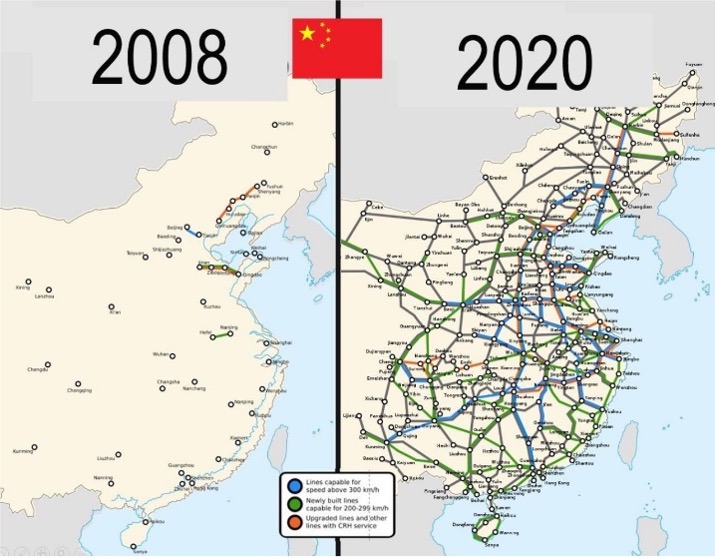
The massive fiscal stimulus of 2008 was not restricted to the real estate sector. In fact, to keep the economy going, China embarked on heavy infrastructure spending, of which the railway was a big part. Infrastructure spending is one of the most efficient ways to boost an economy; not only does it employ a large number of people, but it produces something that continues to offer value long before the project is concluded. Notwithstanding, this railway investment soon began to give the nation headaches. Not only was it plagued with corruption accusations, but by not technically being managed by the government but by public companies that could more easily borrow capital, a construction spree gave way to a bigger problem. As the most profitable lines between the largest populational centers had been constructed, the growth of the system was based on connecting smaller cities further apart, meaning profit was harder to come by. The troubles began to intensify in 2015 when operating profits didn’t even cover interest payments and have since worsened. As tracks began to age, requiring more frequent maintenance, and with ticket prices rigidity blocking a revenue increase, the issues began to pile up. Ultimately, COVID dealt the final blow, plummeting ridership numbers and effectively making every line unprofitable, leaving a system with estimated levels of debt close to a trillion dollars.

Railway evolution in China 2008-2020

Caveats and final thoughts

China has been recently facing a large number of economic headwinds, from a potential housing market collapse and overspending on infrastructure to more recent extensive lockdowns, trade wars, heat waves and floods. But to answer the question raised – “Is the country heading for a collapse?” – most probably not. Economies naturally go through booms and busts, and the latter, while painful, offer a way to remove the least efficient and productive elements in the market, and in the case of China, a chance to move away towards more sustainable sectors such as tourism or R&D. Furthermore, with a tight grip on the economy and the largest pile of foreign reserves of any country, China has a cushion against any possible bank runs and the ability to guarantee currency stability. The country has, for now, also dodged the climbing inflation levels seen in much of the rest of the world, and the central bank has even lowered interest rates. With the mentioned problems being addressed, and some more, including the lockdowns and environment irregularities set to dissipate in the short to medium run, China may no longer be able to support the huge growth levels it once did, but its economy is surely far from collapsing, with continuous stability and development guaranteeing its position as one of the largest and most robust on earth.  


Sources: World Bank, Trading Economics, Business Insider, Oxford, Boden, Statista, Bloomber, Market Cap, Financial Times, Reuters, New York Times, CNBC, Eurasian Times, FRED

Manuel Rocha

Patagonia: The owners that don’t own

Reading Time: 6 minutes

The debate about the true role of a firm in society is a longstanding and recurring one. Since Milton Friedman publishing, in 1970, that managers bear the responsibility of conducting the business according to shareholders’ wants and requirements – generally achieved by maximizing shareholder value – the concept has evolved over time. Now, a broader definition comes into play, with many perceiving a company as being an entity that has a responsibility towards the environment and the society it is inserted in, which has subsequently led to the creation and adoption of concepts such as Corporate Social Responsibility (CSR). This extension of a firm’s responsibility towards other stakeholders and society more broadly has paved the way for companies that test the limits of the definition of for-profits, such as the American clothing company Patagonia, Inc.   

Patagonia’s Foundation  

Yvon Chouinard, an American rock climber since his 14 years old, founded Patagonia, Inc in 1973, having always shown an entrepreneurial spirit throughout his earlier life: from making his own rock-climbing tools to teaching himself blacksmithing, and later moving on to selling rock-climbing tools and clothing.   

Patagonia has made significant strides in distinguishing itself from other brands, offering a wide range of products in its portfolio, from food to hiking clothing, while assuring a commitment to the environment and its causes. This fact stems a lot from its founder Chouinard, who has always sought to do more for the planet, pledging the word “activism” as a motto for the brand. 


Consumer Activism Nowadays 

In an increasingly connected world with access to more information and data than ever before, consumer demands are becoming ever greater and more ambitious. Consumers’ choices are based on their tastes and values and, therefore, they want to buy and use companies’ products that are aligned with their values. Nowadays, companies operate on an increasingly public stage, with mainstream media and social platforms accelerating consumer movements, leading to Consumer Activism, consisting of taking an action for (BUYcott) or against a company (BOYcott).  

Indeed, according to a study conducted by Weber Shandwick, 60% of US and UK consumers have reported some form of activism, as of August 2017. Here, any activism action can range from something simple like stop watching a show that a brand is advertised on or recommending a brand to friends, to larger scale events such as taking part in demonstrations or protests against or in support of a brand. 

Differentiating through environmental concerns  

Patagonia has been able to create a competitive advantage in comparison to its peers by continuously differentiating itself in its environmental sustainability efforts, which are entirely aligned with the previously mentioned consumer activism. Patagonia’s stance and values can be comprehended through several examples of marketing practices which actually tend to be considered by many “anti-marketing” campaigns. A well-known example of this marketing strategy is Patagonia´s “Don’t Buy This Jacket” campaign that was launched in the middle of the Great Recession in which they demonstrated the impact that the production of one of their best-selling garments had on the environment.  

Also, Patagonia is known for putting in practice the messages it preaches as it promotes used wear on its website, through the platform Worn Wear. There, customers can find second-hand items that have been cleaned and/or repaired, contradicting the fast-fashion trend and consumerism issue, which tends to be associated with higher profits for companies due to increased sales, but also a higher impact on the environment. Moreover, currently, Patagonia is pledging 1% of sales to the environment’s preservation and restoration. 

The results of these actions and core values have not only led Patagonia to grow its business and brand recognition but also to occupy a distinct position in the customer’s portfolio, as it has become intrinsically associated with environmental consciousness, especially targeting consumers that are preoccupied with sustainability and climate change. 

Patagonia’s Activism 

In September 2022, Chouinard donated his family’s ownership of the company, with a US$ 3 billion estimated valuation, stating that “Earth is now our only shareholder”.   

Back then, before the donation, various paths presented themselves for Patagonia´s future, including those most referred to as “common route” ones, such as the possibility of selling the company to the highest bidder, and then proceeding with the donation of that amount, or quoting the firm in the stock market through an IPO. However, after analyzing the various available options on the table, Chouinard reached the conclusion that neither would be totally aligned with Patagonia´s (and his own) values, as made clear in his open letter posted on Patagonia’s official website. There, he states that they “ couldn’t be sure a new owner would maintain [their] values or keep [their] team of people around the world employed” or how quoting the firm in the stock market through an IPO wouldn´t also work because “even public companies with good intentions are under too much pressure to create short-term gain at the expense of long-term vitality and responsibility”, considering that the company managers would become myopic and succumb to short-run pressures to provide a return on the new stockholders’ investment.  

So, faced with this situation, Chouinard and his team decided to tailor make a solution that would go in line with what the company represents, creating checks and balances to ensure that its mission and values remain unharmed. This solution, in which Patagonia will continue to operate as a private enterprise but the Chouinard family will not continue to have control over it was put into operation in two stages.   

To begin with, back in August 2022, the family transferred irreversibly 2% of Patagonia to a newly created entity called Patagonia Purpose Trust. This trust will continue to be supervised by members of the family and their advisors and has voting stock, having as its main goal safeguarding that Patagonia remains independent and its average profits of US$ 100 million would be used to combat climate change and protect the forests. Due to the portion of voting stock, the family will have to pay US$ 17.5 million in taxes for the donation. Secondly, this September, the family proceeded to donate the remaining 98% to Holdfast Collective, a non-governmental organization that will use the profits to fight climate change, with this part of the donation consisting of non-voting stock.   

Conclusion 

The decision to donate the shares has an incalculable social impact attached to Patagonia, stakeholders and society. With this action, Patagonia, Inc. opens a new possibility in the markets, creating the potential of donating shares for the benefit of society instead of the unbridled pursuit of profits. 

One thing is certain, this decision will be a subject of debate and study in the future in order to analyze if this solution will be the one that is able to yield the best results in the trade-off between cash flow maximization, including profit maximization towards these charitable causes, and ensuring that Patagonia remains the B-Corp corporation that continues true to its values for which their clients have come recognize it for.  


Sources: Financial Times, Observador, Público, McKinsey, “Battle of the Wallets: The Changing Landscape of Consumer Activism” (2018), in Weber Shandwick

João Correia

Hannah Ribeiro

Let’s play: Behavioral Game Theory

Reading time: 8 minutes

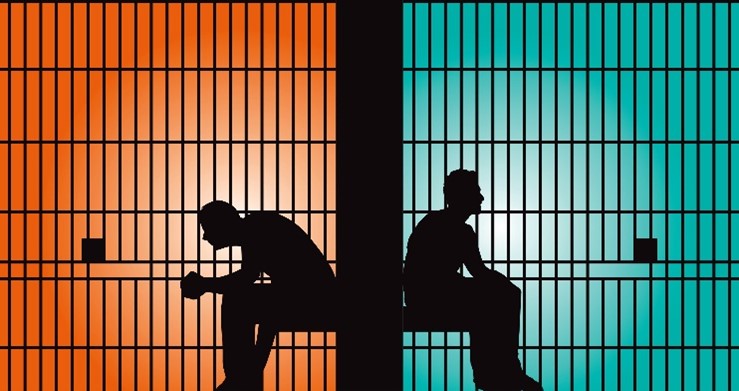
Picture this scenario: you’ve been locked in an interrogation room for hours, and the police finally layed out their cards on the table. They know you’re guilty and have your partner in crime in the other room. The police needs a confession, and the one to provide it can walk out freely, leaving the other to serve a long sentence in jail. If you both confess, you both go to jail, but for a shorter time. However, if neither does, both go to prision but receive an even shorter sentence. It is up to you to decide. What do you do? 

Would you confess or keep quiet?

If you’ve ever been formally introduced to game theory, you know that its answer is that both of you should run to the officers and tell them the truth. This is the economic prediction as it’s the rational thing to do. But would you do it? Most people’s answer is the economists’ favorite response to (almost) every question: it depends. Who is the other person? How much do you trust them? Is it your friend or your 3rd-floor neighbor? Is it your mother? And how long are those sentences? You may hold your ground facing 6 months, but what if you’re looking at 25 years? Are you even truly guilty? Are you willing to trade away your integrity for a shorter sentence?

The conventional game theory looks at the game elements (what are the actions and the payoffs?) for the answer. Behavioral game theory tries to look at all the other questions.

Game Theory vs Behavioral Game Theory

But let’s back away for a second: what even is game theory, and how exactly is behavioral game theory different?

Well, game theory’s main objective is to predict behavior through a systematic, mathematical approach. No need to close the article, this is only the “scary” version of the definition. Thankfully, we are not in a Microeconomics class, so we can use a much more pleasant definition: game theory analyses games. Of course, by “games”, we do not mean football or basketball (although that would be fun) but are instead referring to any interaction between people (the players), where their behavior (actions) determines what they get out of the game (their payoffs). Any economic, political, or social interaction can be rewritten as a game, and thus seen through the lens of game theory. The interrogation room situation we started with is a classic example. It is frequently used as an introduction to the subject. The idea is that each player will look at their possible strategies (if my partner confesses, I can confess/not confess…) and where those strategies will land them (if we both confess, we go to jail…), deciding then what the optimal course of action will be. It’s like playing chess – if, for example, your opponent moves the bishop to B7, and you take your knight to C4, you’re doomed; if instead you move your queen to D6, checkmate! The optimal course of action: queen to D6. 

Game Theory tries to find the optimal course of action

Game theory does a wonderful job predicting the outcome of such games, but the jump to real life can be tricky. Notice that the optimal course of action was left undefined. “Optimal” depends on what each person wants out of the game, on their preferences. The usual assumption is that players are self-interested to the extreme and completely rational, caring only about getting the best possible outcome for themselves, regardless of what happens to the other player.

This is exactly where behavioral game theory steps into the picture. It has a practical approach to the games, rather than theoretical. Game theory uses logic and mathematics to find out what a rational and self-interested player would do in a game, and then states what people will choose rationally in such a situation. Behavioral Game Theory takes the opposite path. It asks actual people to play the game and observes their behavior. Such experiments make it possible to see how different preferences affect human behavior (how things like altruism or fairness influence people’s decisions) and how that differs from the theoretical predictions. Why would this matter? Well, these preferences can be incorporated in the models, making them closer to the reality we know, and therefore allowing for better predictions of behavior.

Playing the Game

Ultimate Game

The Ultimatum game is an early example of behavioral game theory’s experiments. In this game, one player is given a certain amount of money (say, 10€) and asked to split it with the other player in whatever way they want. The second player then decides whether to accept the offer or to reject it, in which case neither player gets anything.

Conventional game theory’s prediction is that the first player should offer as little as possible (1 cent out of 10€) and pocket the rest, since the second one would have no reason to reject it – after all, 1 cent is better than nothing, right?

The Ultimatum Game consists of proposing a split that the other player accepts or not

Now, picture yourself playing the game. Do you accept such a low offer? Can you think of anyone who would? Do you think this is the right prediction? If not, congratulations! You are a wonderful forecaster of human behavior. In fact, when this experiment was first conducted, the average offer was equivalent to 3.5 €, and offers below 5€ were more likely to be rejected the further down they went. The experiment has been replicated over the years, with high and low amounts to be split, with consistent results.

The preference uncovered here is known as negative reciprocity – being willing to “pay a price” (give up some amount) to punish unfair or inappropriate behavior in others. Upon seeing what they considered as an unfair split (a much too low offer from the first player), most players decided they would rather gain nothing than allow the other person to, in their eyes, treat them unjustly.

Dictator Game

The dictator game is a slight modification of the Ultimatum game: here, the second player has no power to reject the offer. The first player (the dictator) proposes a split of the initial sum, and that is exactly what each one takes home, even if it means that the second player gets nothing at all. Of course, the theoretical prediction is exactly that – the “dictator” will choose to keep the entire 10€ to themselves and won’t offer anything to the second player.

But when the experiment was conducted this was not what happened at all! In fact, around two thirds of people chose to offer the equivalent of 1€ to 5€, keeping the rest.

Those unlikely nice “dictators” were displaying what is known as an altruistic preference. Someone with altruistic preferences is more content with an outcome if the well-being of others increases. That means they play not only with their own outcomes in mind, but also that of others involved in the game, and prefer situations where other people are also benefitted. This behavior can be found in everyday interactions too: when people donate to charities or help someone in need, they are manifesting altruistic preferences.

Altruistic behavior is found in everyday interactions

Gift Exchange Game

Now, for a break from ultimatums and offers, let’s look at the gift-exchange game. This is simply a game made to mimic the interaction between an employer and an employee. First, the “employer” offers the “employee” some amount of money (a “wage”). Then, the employee must perform a task to earn it. Now, what the task is in particular is not so important (it can be anything at all, as long as it is not completely effortless), what is really at stake is how much effort the “employee” puts into completing it.

Game theory’s prediction here is that being offered any amount at all the “employee” would work as little as possible (self-interested as they are). But do you think that happens? Chances are, you’ve had to do some job in your life, and put some amount of effort into it. Do you always do the least possible required? As it turns out, most people didn’t. They responded to more generous “wages” by working harder. They were, in fact, displaying negative reciprocity’s nicer counterpart: positive reciprocity, the willingness to reward generous actions. People presenting this preference respond positively to actions that benefit them: they go an extra mile when they feel that someone has acted in their best interest.

People often choose to work harder if they feel they were offered a generous wage

Notice that neither of these experiments challenge the validity of standard game theory. Its systematic and logic process is still sound – games do have optimal courses of action. Its cornerstone assumptions are the ones that fail: behavioral game theory shows that people in general are not merely self-interested, so what is “optimal” varies according to their preferences.  

Behavioral game theory is a great example of what the branch of behavioral economics can do for the economic science. It is not a replacement of traditional game theory, but a way to expand on and improve it: behavior models can arise from practice, not from theory. After all, there’s no better way to figure out someone’s behavior than to observe it.


Sources: American Economic Association, BehavioralEconomics.com, Blackwell Handbook of Judgment and Decision Making, Behavioural Economics: Introduction to Behavioral Game Theory and Game Experiments.

Constança Almeida

Mariana Gomes

Leonor Cunha

The death of Roe v. Wade and what it means for abortion in the United States

Reading time: 6 minutes

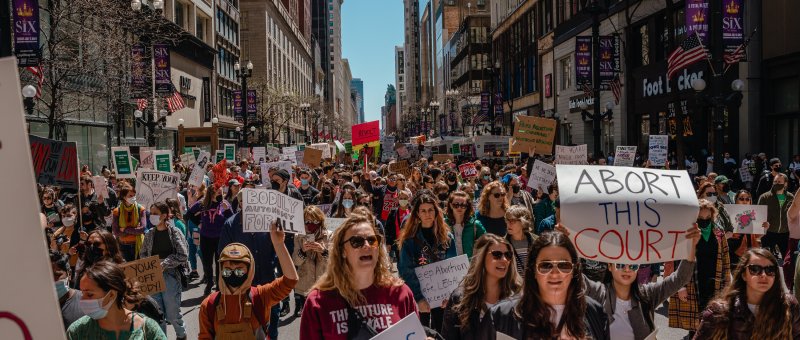
The decision is not official yet but according to an unprecedented leak of the Supreme Court of the United States, the 1973 decision on the Roe v. Wade judicial case that gave the right to women in America to have an abortion is about to be overturned. The overturn of the decision on this landmark case does not mean women will lose the right to have an abortion everywhere; it instead means that the Federal States will be free to set their abortion laws. However, it is estimated that half the women of reproductive-age live in US states that will further restrict or outright ban abortions if the Roe v. Wade decision is overturned. 

Figure 1: Pro-life protesters in front of the Supreme Court Building in Washington DC.
Picture from New York Times.

Before we dive into the consequences of what the end of the Roe v. Wade decision will mean for the United States, let us quickly look at the history of abortion in America and explain what exactly was the Roe v. Wade decision.

History of abortion in the United States

For much of American history, states did not regulate abortion before something called “fetal quickening”, the point in the pregnancy where the movement of the fetus can be detected in the womb. Well into the 19th century, abortions were widely practiced in the United States. Before the American Civil later in the second half of the 19th century, nearly 100% of women’s reproductive healthcare was done by women (midwives). This meant popular ethics regarding abortion and common law was grounded in the female experience of their own bodies.

The creation of the American Medical Association (AMA) in 1847 started the push to outlaw abortion. The AMA argued that abortion was immoral and that “quickening” was irrelevant because, after fertilization, a new human life would take place if no one interrupted its development. Many also argued that abortions lead to a declining birthrate of white protestant women, meaning it had to be outlawed to prevent the “browning” of America. The AMA was eventually successful, and by 1880, every US state had introduced criminal abortion laws.

Despite the criminalization of abortion, women continued to have them. It is estimated that there were up to 1.2 million abortions each year after 1880. Practitioners did their work behind closed doors or in private homes. The procedure became unsafe, and it was responsible for one-fifth of all recorded maternal deaths in 1930.

Attitudes towards abortion began to shift in the 1960s as people started to push for the liberalization of reproductive laws. In 1970, Hawaii, New York, Alaska, and Washington State were the first states to legalize abortion. However, the biggest shock came in January 1973 when the Supreme Court announced its landmark decision in Roe v. Wade, in which it decided that the restrictive states’ regulations on abortion were unconstitutional.

Figure 2: Protest for the legalization of abortion before Roe v. Wade.
Picture from Time Magazine.

Roe v. Wade explained

The Roe v. Wade Supreme Court case started when a young Texan woman named “Jane Roe” (her real name was Norma McCorvey)  wanted to have an abortion in 1969. At the time, abortion was illegal in Texas except to save the woman’s life. Since Jane Roe was not a risk, she tried unsuccessfully to get an illegal abortion and was approached by two attorneys that wanted to challenge anti-abortion laws. On the other side was the district attorney of Dallas, Henry Wade,  who enforced the Texas abortion law and was later sued by Roe. The case eventually went all the way up to the Supreme Court, and on January the 22nd of 1973, the court struck down the Texas’ law. The court ruled that a woman’s right to privacy in the 14th amendment superseded a state’s right to ban abortion. Abortion was now legal everywhere in the United States.

Figure 3: Norma McCorvey, also known as Jane Roe.
Picture from New Yorker.

What happened after 1973?

In 1973, the majority of the population supported the legalization of abortion; however, the Supreme Court Decision fueled a movement against abortion within the more religious and conservative electorate. While initially anti-abortion Americans were evenly divided between the two main parties, the Democrats and the Republicans, over the years, the Republican party adopted the overturning of the Roe v. Wade decision as one of its biggest political platforms. Their plan was simple, the party had to nominate enough conservative judges to the Supreme Court until there was a majority to overturn the 1973’s decision. Although it was simple, the plan was not easy to accomplish; Judges on the Supreme Court serve for life, and replacements have to be nominated by the President and approved by the Senate. However, between 2016 and 2020, the Republicans managed to nominate three conservative judges to the Supreme Court (out of a total of nine), which added to the three conservative judges already on the court. Although it is not yet officially known, it is expected that at least five of these six conservative judges have decided to overturn Roe v. Wade on their decision in the current case on abortion “Dobbs v Jackson Women’s Health Organization”.

The consequences of overruling Roe v. Wade

If the rumors are true and the Supreme Court decision is indeed overruled, it is expected that over half the states will prohibit all or virtually all abortions. Twelve states have “trigger laws” that have been designed to automatically ban abortion in the event Roe v. Wade is overruled. The likelihood of Congress passing federal laws to protect abortion access is very low since it would the support of ten Republican Senators to pass. Wealthier women will be able to travel to states where abortion is legal but poor women and teenagers will likely face the choice between an unsafe abortion or an unwanted child. The New York Times estimates that 34 million women of reproductive age live in states at risk of losing access to abortion.

Figure 4: Picture from Fortune

Conclusion

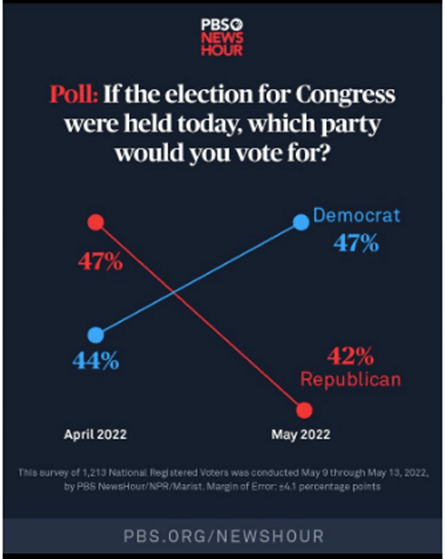
It is impossible to predict the social and political consequences the overruling of the 1973 landmark decision will have on America. According to recent polls, a large majority of the US population does not support overturning Roe v. Wade, and with the midterms around the corner, the Republican party is expected to face some backlash from voters for its role in ending the nationwide right of abortion. However, it is unlikely that the backlash will be large enough for Democrats to gain ten Senate seats from the Republicans needed to establish a Federal law on abortion. So if Roe v. Wade is indeed overruled, the landscape of abortion rights in America will change for decades to come.

Figure 5: Large shift in the polls after the leak from the Supreme Court came out.
Picture from PBS News Hour.

Sources: PBS Newshour, New York Times, Times, Fortune, Washington Post, Healthline, CNN, The Guardian, The New Yorker

André Rodrigues

Maria Mendes Silva

João Sande e Castro

Natalie Enzelmüller

Can the Euro survive its own diversity?

Reading time: 7 minutes

In general, there are many pros and cons to the creation of a monetary union. The creation of a single currency among many countries allows for the lowering of cross-country transaction costs, increases certainty for investment while, because of this, stimulating trade and job creation. On the other hand, it means that the union’s monetary authority has the responsibility of implementing a “one size fits all” monetary policy, which may create problems if the members of the monetary union have very different economies or if the shocks which monetary policy is meant to address occur asymmetrically across countries.

The creation of the Euro

An Economic and Monetary Union has been an objective of the European Union from as early on as the late ’60s/early 70s, with the first steps towards the coordination of the member states´ monetary policies having been taken with the launch of the EMS (European Monetary System) in 1979. However, it wasn´t until a decade later that the idea of a single currency union really started to take shape, upon the presentation in the “Delors Report” of a three-stage plan to be applied in the ’90s to prepare the union for what would come to be known as the euro area, ultimately culminating in the creation of a single currency and the European Central Bank.

The idea of a common currency first and foremost appeared as an important symbol of political and social integration in Europe, tied with the notion that an increased integration of the European member states would reduce the risk of war and crisis on the continent. Then, on an economic viewpoint, a common monetary policy centered around price stability was viewed as an important propulsor of economic stability. Likewise, those who supported the creation of the euro believed it would allow for an increase in market integration, consequently reducing transportation costs and improving market efficiency and price transparency.

In 1991, the Maastricht Treaty effectively cemented the transformation of the European Community into a full Economic and Monetary Union, laying down the rules for qualification for membership of the Monetary Union. Indeed, a set of macroeconomic criteria that member states had to respect to be able to participate in the EMU and adopt what would be the new common currency (the euro) was defined. These became commonly known as the four convergence criteria, focusing on price stability, public finances, exchange-rate stability, and long-term interest rates. In terms of price stability, a member state´s inflation rate (measured by the HCPI) should not exceed more than 1.5% of the best three performing member states. As for public finances, to ensure that they are sustainable, government deficit should not surpass 3% of the GDP and public debt should be below 60% of the GDP (although some accommodation here was made at the time of the start of the Union, as many member states did not fulfil these specific public finance requirements). Moreover, regarding long-term interest rates, to guarantee the durability of the convergence, they must not be more than 2 percentage points above that of the three member states with the lowest interest rates. Finally, when it comes to ensuring exchange-rate stability, applicants to the common union should have been participating in the ERM II (Exchange Rate Mechanism) for at least two years prior to the adoption of the common currency without severely devaluing against the euro.

The need for this set of requirements to be put in place prior to the entrance into the monetary union came as a necessary part of subjecting such a wide range of countries – still very much asymmetrical in some regards – to a single monetary policy but allowing them to keep their national fiscal policies. Indeed, some countries with better performing public finances and benefiting from low interest rates (such as Germany) expressed their concerns of how being associated with other not as well performing countries could negatively impact their economy, hence their pressure for a system of rules to be establish so as to guarantee as much as possible convergence among the member states. This type of concern is also reflected in the way much of EU´s monetary policy is designed, particularly in their rigidity and zealous focus on price stability, as is greatly patented in the way the European Central Bank was created in 1998 very much influenced by the German model, mirroring their Bundesbank.

Ultimately, the euro was officially launched on January 1st, 1999, with the exchange rates of the participating currencies being irrevocably fixed, replacing its precursor (the “ecu”, a transitory currency composed of a basket of European currencies to serve as a basis for fixing the exchange rates of the member states) at 1:1 value. In this initial phase the euro only served in the form of cashless payments, having been put effectively in circulation in 2002.

Figure 1 – Euro Statue in Frankfurt.

The beginning of the Monetary Union and the Financial Crisis

The process of increasing openness of financial markets alongside the adoption of the Euro’s convergence criteria by countries wishing to join the monetary union meant that during the 1990s there was a convergence of interest rates across countries, with some countries like Portugal, Greece and Italy enjoying interest rates much lower than before.

During the early 2000’s, thanks in part to the abundant credit and to the advances in economic openness, some countries (such as Portugal, Greece, and Italy) began accumulating large current account deficits. These may simply be the sign of a healthy economy, if they are being used to finance future growth so that, later, the current account deficit can be matched by a current account surplus. However, if this is not the case, then current account deficits will accumulate, increasing a country’s external debt until, at some point, external credit stops being granted. While they were accumulating large stocks of external debt, some of these countries were also amassing very significant amounts of public debt.

In 2008, as the financial crisis began, and its contagion spread across financial markets there was a global flight to safety. Because of this, Portugal, Spain, Greece, Italy, and Ireland, which, to differing extents, fell into the trends described above, began facing international credit crunches and the yields on their sovereign bonds began increasing, with Portugal and Greece being the most affected. This sovereign debt crisis then led to troubles in the banking sectors of these countries which can then worsen the sovereign debt crisis, creating the “Doom Loop”.

The Greek banking and debt crisis was challenging and, in 2012, the possibility of a default was looming. Certain actions, like currency devaluation to decrease current account deficits or drastic increases in liquidity to Greek banks to avoid the banking system from grinding to a halt, were not available to Greece, since monetary policy was delegated to the ECB. Because of the deteriorating situation and due to the possibility of Greece exiting the Euro, the ECB decided to do “whatever it takes” to save the Euro and announced a program for purchasing debt of the distressed countries on the secondary markets, reassuring markets and bringing down the debt spreads, and, potentially, saving the Euro.

Who to favor?

The ECB mandate has one and clear focus, price stability. To ensure so, the central bank applies all the tools that it has available. However, the effects from such tools impact multiple variables which have important macro-economic consequences for Eurozone countries, such as FX rates or credit spreads. This, coupled with an asymmetric impact on the moves of these variables for different countries creates a huge dilemma for the policy makers behind ECB’s decisions: Who to favor?

Does the question sound simple to you? Let’s think of today’s scenario for policy makers at the ECB. In Europe we are experiencing broad record inflation, way above the defined target for price stability, meanwhile credit spreads are already very high compared to historical values, mainly for peripherals countries, and the Euro FX is at some of its lowest levels, especially against the dollar. Should the central bank tighten financial conditions to fight inflation and strengthen the Euro but, at the same time, risking a default/crisis in peripherals countries? Or should it do the exact opposite?

What would you do, who do you favor?

Graph 1 – 10Y BTP-Bund Bond Spread [Italy – German], in bps.
Source: Borsa Italiana
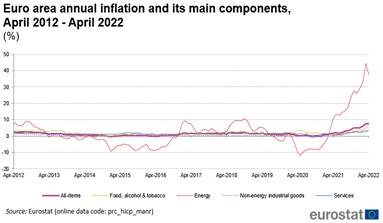
Graph 2 – Euro area annual inflation rate, in %.
Source: Eurostat

Conclusion

The introduction of the euro brought many benefits for the countries involved but it is still a long way from its counterparty in the United States of America. These problems arise mainly due to the structural differences between all the economies in the Eurozone. The “one size fits all” is still one of the biggest challenges going forward with some steps already made into solving it.


Sources: European Commission

Diogo Almeida

João Baptista

Sara Robalo

Inês Lindoso

João Correia

Power up: Sustainable energy in Developing Economies

Reading time: 6 minutes

Sustainable Energy

With the global population growing and industrialization spreading in developing countries, humanity’s hunger for energy has reached unprecedented levels. Currently, energy is the largest source of greenhouse gas emissions from human activities, and developed countries are the main ones responsible for this crisis. The average person in these countries consumes 100 times more than the average person in some of the poorest countries. 

With increasing awareness about the environmental effects of burning fossil fuels, the call for a more sustainable base has never been louder. All around the world, developed countries are powering towards a low-carbon future by embracing solar, wind, geothermal and other renewable energy sources. However, developing and emerging countries still face challenges regarding this new transition.

Making a distinction between these two types of countries, developing countries rely primarily on agriculture, having a low income per capita. On the other hand, emerging countries have already witnessed economic growth due to the development of the industrial and technological sectors.

Sustainable Energy in Developing Countries

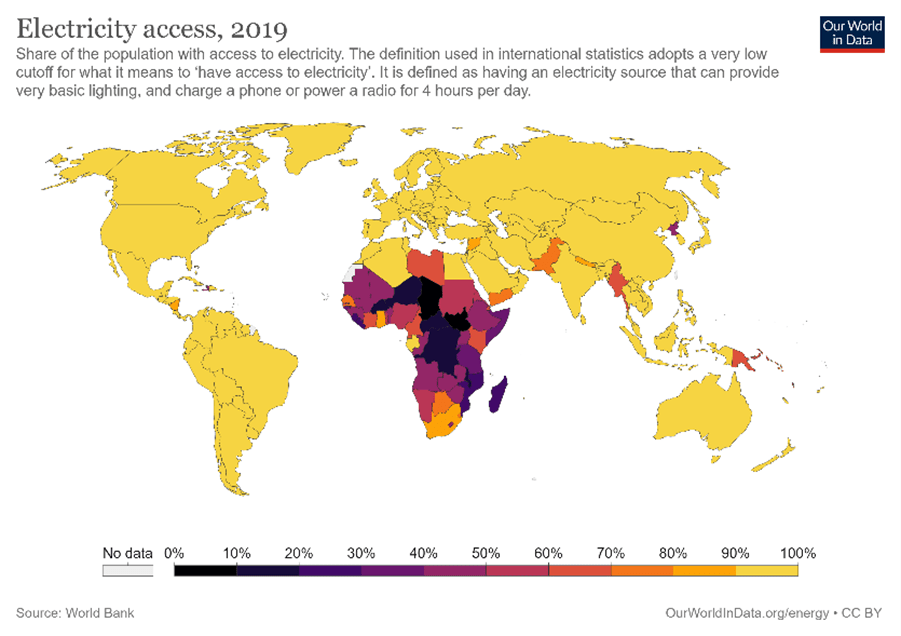
Energy access is not equally distributed around the globe. In fact, many developing countries, like Kenya or Ethiopia, are just starting their process of industrialization, and electricity is still not available to everyone, as approximately 13% of the global population still lacks access to this primary need. 

Energy poverty is not only a matter of sustainability, but also a major problem for human physical and mental health. It is estimated that, around the world, people spend a combined 200 million hours a day collecting water, a colossal waste of their valuable lifetime.

This crisis affects women disproportionately, making up nearly 75% of those affected by energy poverty. Women are the main consumers of electricity in households since social norms have (sadly) assigned them the responsibility of housing chores like cooking or washing, which require electricity, making them especially vulnerable to the effects of energy poverty.

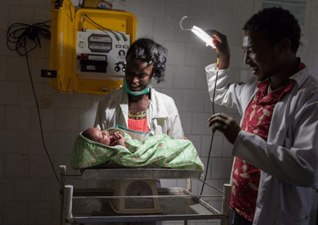
Moreover, it affects health through different pathways. Exposure to cold temperatures due to the lack of energy is known to be associated with high blood pressure, heart attack and stroke risks, among other diseases. This impacts the day by day of every individual that lives under this circumstance, from the child that cannot have a properly cooked meal to the doctor that could not save a life due to the lack of electricity. 

Doctors struggle to give their patients proper care without reliable electricity access

Insufficient energy also jeopardizes agriculture and manufacturing, thus keeping the poorest countries trapped in a vicious circle between energy poverty, air pollution and inequality; and they cannot afford the energy that can drive them out of this cycle. So, what is stopping countries to ensure worldwide energy access in an affordable, reliable, and sustainable way?

Developing nations are quite different within themselves, but they face similar challenges when it comes to energy sustainability. Let’s unwrap the idea a little more. One of the biggest constraints to attaining the previous goal is geographical, as the population in need is primarily concentrated in rural regions with no grid energy, and its extension is frequently financially and logistically impossible. In truth, fossil fuels were at the heart of industrial revolution, providing huge economic benefits to Western countries. Burning fossil fuels enabled an era of explosive growth for selected countries leading to extensive advances in productivity, income, wealth and living standards. 

Energy grids don’t reach everyone

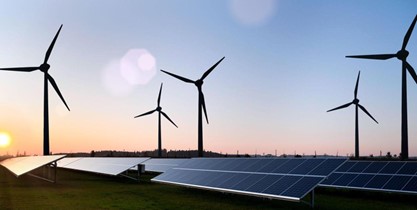
As developing countries now express the wish to industrialize and share those same benefits, they must find a way to do so sustainably. They cannot let themselves fall into the same fossil fuel dependency trap western economies did. Therefore, the future must be sustainable, and renewable energy should receive early attention in these high growth areas. Improving efficiency and reducing carbon dioxide is easier and less expensive to achieve at the time of the new construction for energy, rather than at later stages. So, it is indeed an initial investment worth making. Besides that, many of these initial costs are money that otherwise would have been spent on fossil fuel exploration, extraction and conversion to electricity. 

In the long-run, sustainable energy alleviates a country´s balance of payments. The initial investment could be high, however, renewables, like solar or wind, are the cheapest source of power. Also, most developing countries have abundant renewable energy resources, which decreases manufacturing costs. Thus, this gives developing countries a competitive advantage when compared to emerging economies. 

Countries have a choice between investing in fossil or renewable energy

This idea is not just as theoretical and utopical as it may seem. Sustainable energy is already making an impact in the developing world, with many developing countries using renewable energy sources, an idea considered science fiction only a few years ago. In the last few years, these nations invested more in these technologies than developed countries, accounting for 63% of global investment in renewable energy (when viewed on per gross domestic product basis). However, it is important to refer that the economic distress caused by COVID-19 may jeopardise future investments.

Power Africa

Two out of three people in sub-Saharan Africa lack access to electricity, being one of the most serious barriers to long-term economic growth and development in this region. Launched in 2013 by President Obama, Power Africa program’s goal is to install at least 30 000 megawatts of cleaner and sustainable energy by 2030, as well as 60 million new households and businesses. It is meaningful to select and prioritise efforts. Policymakers must continue to develop effective policies to secure a successful transition to sustainable renewable energy systems within the framework of sustainable development

Sustainable Energy in Emerging Countries

The main problem regarding sustainable energy in emerging economies lies in the transition from fossil fuels to renewable energy sources for electricity generation. Part of the industrialization of emerging economies, like China or India, involved already non-sustainable energy, using fossil fuels, so there are already sunk costs when investing in sustainable energy. Countries such as Costa Rica and Brazil use renewable energy as their primary source of energy, accounting for 90% of Costa Rica’s and 85% of Brazil’s energy production.

Solar Energy International (SEI) opened its first International Solar Training Center in Costa Rica in 2018

In the last decade only, China has grown to become a renewable superpower, dwarfing all developed countries in terms of renewables. China is also making efforts to become an important environmental partner for African countries, providing financial and technical assistance to developing countries. Recently, it also announced two new Chinese funds totalling US$ 5.1 billion to help developing countries tackle climate change and development problems

War Impact

The current Russia-Ukraine war is having an impact on how the world sees fossil fuel dependence. Many voices in Europe are now, more than ever, questioning the continent’s heavy dependence on Russian oil and gas for energy. The threat of official sanctions on Russian fuel is strengthening the argument for a shift towards endogenous, sustainable energy sources. Some countries turning to clean energy may just be what is needed to weaken the crude business for the transition towards sustainable sources to be recognized as inevitable. 

Many question Europe’s dependence on Russian oil and gas

However, there is a danger that countries will not use this event as a chance to make deep, structural changes to their energy systems, but as an opportunity for quick profits. A European ban on Russian imports will leave large quantities of oil ready for the taking, which could be an incentive for other countries to do just that. India, for example, has already begun to heavily import Russian crude. If prices rise, they stand to gain a reasonable profit from refining Russian oil and selling it onwards, for example, to Europe.


Sources: Open Edition Journals, Our World Data, Science Direct, OCDE, Enel, Inspire Clean Energy, The Economic Times.

Constança Almeida

Mariana Gomes

Leonor Cunha

Are we getting too old?

Reading time: 8 minutes

Did you know that Millennials make up about 27% of the world’s population? Maybe you didn’t but this information comes from a science that we all know and yet often don’t give its due value: Demography. 
Demography is, by definition, the study of statistics such as births, deaths, income, or the incidence of disease, which illustrate the structure of populations. The individuals that study these factors are called demographers. 

In fact, this science led to curious conclusions, like the one at the beginning, but this science is much more and more complex than that. As we will show to you later in this article, demography has a very close link to the economy, as it is with the data collected and treated that, for example, financial, banking, or even insurance institutions establish their rates and conditions.

There are many factors that demography considers, but the most important ones are population size, population density, age structure, fecundity, mortality and sex ratio. All these factors affect the economy: for instance if population size decreases the working-age population will also decrease, which reduces labor input and leads to a slowdown in economic growth, resulting in the end in a decreasing growth rate of GDP per capita.  

Different Countries, different demographics

During the last 20 years, the global demographic landscape has suffered several changes in terms of population, age structure and wealth. Nevertheless, these changes are not linear across the globe, so there are various countries with very different demographic trends due to other variables such as culture and climate.

Demographics in developed countries

Developed countries, such as the United States, Japan, and European Union member countries are generally characterized by their high level of industrialization and high income per capita.   Their population structure is estimated to have already peaked and so, the total population is expected to gradually begin to decline due to low birth rates and rising average age. In fact, it is estimated that in the most developed countries the population over 65 years old will reach 25% of the total population by 2040. In relation to Europe, the projected average age is 47 years, although it is estimated that the people in Greece, Italy and Spain will age faster. Japan and South Korea will reach average ages of 48 and 44, respectively. In these circumstances, a slowdown in productivity is expected, as well as an increase in the GDP share earmarked for pensions and medical care for the elderly.

During the next 20 years, a strong trend of immigration to developed countries is estimated due to their stability, quality of life and economic incentives despite not being able to change the overall structural direction.

Demographics in emerging countries (China, India)

In emerging countries, some Asian countries follow the same trend as European ones, although slower. That is, while European countries have already passed their populational peak, Asia will see its population increase exponentially until 2040 and then gradually decrease. Besides, it is expected that by 2027 India will be the country with the most population, surpassing China.

In terms of their human development evolution from demographic scenario, it is expected drastically improve given the increase in the proportion of working-age adults, greater female participation in the workforce and higher social stability in the most advanced age groups. However, the increase in development is thought to be faster than the increase in income, particularly in China, posing some challenges for governments.

Demographics in Underdeveloped Countries

The reality of developing countries is completely dichotomous from that of developed countries, not only at the economic level, as the former have a very limited level of industrialization and low per capita income, but mainly at the demographically. For example, countries like Sub-Saharan Africa have an infant mortality rate 18 times higher than the average of developed countries, whose infant mortality, on average, is less than 1%. Moreover, other differences strongly affect both birth and death rates, which are quite high, due to weak and limited health services, lack of access to information and contraceptive methods and few professional prospects, resulting in a short average life expectancy.

Developing countries are expected to increase their level of urbanization in the coming years, as their key development factor. In fact, according to the UN Report, the number of urban workers will increase from 1 billion to 2.5 billion in 2040, which suggests a huge boost in the development of these countries. However, the speed of urban growth is not enough to keep up with population growth – like in the case of Sub-Saharan Africa, whose population is expected to double by 2050, so these countries will probably overload their capacity to provide infrastructure and educational systems, necessary to enhance economic growth and human development.

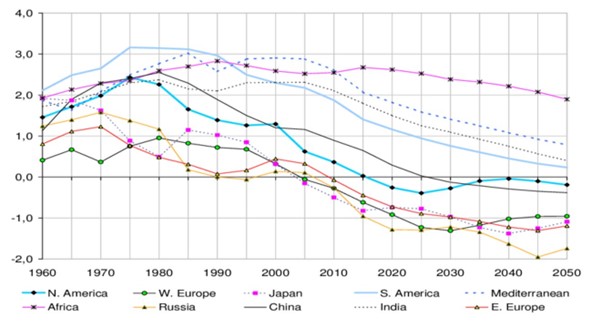
Graph 1 – Historical and projected labor force change per region.

Impact of demography on interest rates, savings and investment

Demography, particularly in aspects such as population ageing, will have a determinant impact on interest rates, bringing attached serious consequences for household savings and investment. Therefore, it is fundamental to take into account how current demographic trends like increasing life expectancy and the decline in fertility rates (with the baby boom generation moving higher up in the demographic pyramid) will impact the savings and investment market.

First, it is crucial to understand how net savers and net borrowers are usually distributed in an economy across different age groups. In accordance with the life cycle model developed by Franco Modigliani, savings are expected to vary across a person´s lifetime in a U-shaped form, suggesting that younger people and the elderly are usually those that actively save the least, whereas the middle-aged are responsible for the biggest share of savings. This is related to the notion of consumption smoothing over a person´s life, making it intuitive that people are more prone to save when they have higher incomes to then use these resources for times in which their incomes are relatively lower (during retirement or in the early years of their careers when their wages are usually lower).

Related to the notion of population dynamics, we can start by exploring how life expectancy will influence the savings market. Considering the case of increasing life expectancy that has been more or less experienced all across the globe in recent years, keeping the retirement age constant, it would imply that people would have to spread out their accumulated resources over the course of their lives over a longer retirement period. This, in turn, will trigger two different scenarios: one in which people anticipate this and increase their savings rate to offset the impact – resulting in a lower interest rate – and another in which they do not adjust their savings accordingly, leading to lower resources in the long-run and a higher interest rate.

On another note, we can also look at the effect of birth rates on savings and investment. Taking into account a reduction in birth rates, we can distinguish two effects. On one hand, it results in lower population growth, consequently contributing towards a lower GDP growth and thus a decrease in demand for investment – pressure for a lower interest rate. On the other hand, it contributes towards a higher number of the elderly/middle aged relative to the young; with the elderly usually being associated with lower savings rate but higher accumulation of capital, this will make it so two contrasting forces will clash, with the lower savings rate contributing towards a higher interest rate but a higher volume of accumulated savings/capital having the opposite effect. As for the fact that the middle aged are also to occupy a much more preponderant role in the population composition, as the savers of the economy, they will contribute to a higher demand for financial securities, hence pushing interest rates downwards.

With so many forces at play, the overall impact of demographics on the investment/savings market is rather unclear, even though all seems to point out that the current downward pressure on interest rates that has been felt in the past decades/years in developed (and ageing…) economies is likely here to stay, probably being itself already a manifestation of the impact of demographic trends on this facet of the economy.

Graph 2 – Historical and projected population aged 15-64 and Household savings rate

Can productivity save the weak demographics in developed countries?

Increases in productivity can lessen the impact of such population shifts, and technological advances are the ideal source of productivity boosts. This, however, is a double-edged sword. On one hand, technological progress increases productivity, but at the same time, it can eliminate jobs, increasing unemployment.

Since the 2008 financial crisis, year-on-year productivity growth has slowed. Still, even though the rate of productivity growth has slowed, the absolute output per worker is now the highest it has ever been in real economic terms. This highlights the offset of productivity on demographics as there are fewer and fewer people in the workforce but a higher productivity per worker.

Conclusion

Demographics do not determine the fate of economic growth, but they are certainly a key determinant for an economy’s growth potential. An ageing population coupled with a declining birth rate in the developed world points to a decline in future economic growth.


Sources: Office of the Director of National Intelligence – Global Trends, Harvard Business Review, Caixa Bank Research, Warwick, Fraser Institute.

Diogo Almeida

João Baptista

Sara Robalo

Inês Lindoso

João Correia

Will Sweden and Finland be joining NATO?

Reading time: 6 minutes

As a consequence of the war in Ukraine, Sweden and Finland have been considering changing their geo-political position towards NATO, as Russia´s invasion has abruptly changed the security balance in Europe. For many years, both Finland and Sweden have maintained a neutral stand in world politics. What might be the cause for this position? Why may it be changing now? And what could be the implications of both countries joining NATO?

Sweden and Finland’s neutrality statute

Both Sweden and Finland’s geopolitical neutrality strategy is largely explained by their long historical relationship with Russia. In Sweden’s case, from the 12th century until the 19th, the country fought several wars with Russia. During the Napoleonic Wars, Sweden lost significant territories and Russia gave the country support against the French invaders. All these events led to a Russian superiority over Sweden, which resulted in the emergence of Swedish neutrality in the 19th century, as a means to ensure independence. Therefore, after the Napoleonic Wars, King Karl XIV Johan altered the foreign policy position of Sweden from one of military engagement to a policy of neutrality – Policy of 1812 – that exists to this day. As a result, more than a hundred years later, during the Cold War, Sweden chose to stay neutral, and, despite having joined the EU in 1995, it has significantly reduced its military capabilities, continuing to remain a non-aligned state.

Similarly, Finland also has a long historical relationship with Russia. However, unlike Sweden, and similar to Ukraine, Finland shares a 1287km border with Russia, which makes Finnish much more vulnerable to Russian aggression. From the early 19th century until 1917, the year of the Bolshevik Revolution, Finland was ruled by Russia, before gaining its independence. Even so, years later, during the Second World War, Finland had to fight again for its sovereignty against the Soviet Union, losing 10 percent of its territory to Moscow. This repression along the centuries, reinforced by the Soviet invasion during WWII, resulted in Finland adopting a neutral foreign policy in 1955, a consequence of the treaty signed with Moscow in 1948, where it assured not to join either NATO or the Warsaw Pact, to ensure Finnish sovereignty. Since then, Finland has remained a neutral state, even after the Cold War, whilst developing strong relationships both with the West and Russia.

How has the War in Ukraine impacted this neutrality statute?

Before the Russian invasion of Ukraine, both the Swedish and Finnish public opinion had long been in favour of their country’s neutrality. This is because, until that moment, it had ensured peace and independence.

However, after Russia’s Ukraine assault, public opinion in both countries has rapidly changed in favour of joining NATO, since the independence ensured by neutrality was no longer that certain.

A recent poll from the 20th of April has shown that a majority of Swedes (57%) wanted to join NATO, while 21% were against it. A more drastic result was obtained, in March, from a survey that found that 60% of Finnish people supported Finland joining NATO. This shows a massive and rapid shift in Finland’s public opinion, as a previous similar study from 2021 showed that only 34% supported the membership.

EVA survey on Finnish people’s opinion on NATO membership
Demoskop opinion poll on Swedish people: “Should Sweden join NATO?”

In Finland’s case, there is already the support of 96 out of the 200 lawmakers for the country to join NATO, whilst only 14 are against it. Furthermore, the Finish Prime Minister, Sanna Marin, commented on the conflict by saying that “Russia is not the neighbour we thought it was”, while also clarifying that the decision regarding NATO membership would only be made in the spring. Two weeks later, the Finish Government unveiled a security-policy report that stated that the mutual defence clause of NATO would be very beneficial to Finland’s security.

Regarding policy makers’ point of view, in early March the Swedish Prime Minister, Magdalena Andersson, rejected calls for Sweden to join NATO by telling reporters that “If Sweden were to choose to send in an application to join NATO in the current situation, it would further destabilize this area of Europe and increase tensions”. However, the Prime Minister has in the meantime reversed her position by stating that she does not rule out NATO membership “in any way”. The Social Democrats, the ruling party, who have consistently rejected calls to join NATO, arguing that military non-alignment has served the country well, have also stated that, due to Russia’s invasion of Ukraine, will review their international security policy. On the other hand, the main opposition party – Moderate Party – has announced more clearly its position regarding Sweden’s neutrality, by making NATO membership one of its 5 pledges for the 2022 upcoming elections.

 
Swedish Prime Minister Magdalena Andersson (on the left) welcoming Finnish Prime Minister Sanna Marin (on the right) prior to a meeting on whether to seek NATO membership

In response, NATO has already told Sweden and Finland that the organization would welcome their applications, highlighting the fact that the four largest military powers of the alliance (US, UK, Germany and France) supported the inclusion of both Sweden and Finland in NATO.

Implications of Sweden and Finland joining NATO

If Sweden and Finland were to join NATO, they would be much less vulnerable to Russian attacks, under the protection of Article 5 of the North Atlantic Treaty, where it is stated that an armed attack against one or more of the Parties shall be considered an attack against them all. At the same time, these two memberships would largely facilitate NATO and difficult Russian operations in the Baltic Sea, as all the countries on the Baltic Coast, apart from Russia, would be part of the Western alliance.   

Nevertheless, from the moment Sweden and Finland file membership applications until their acceptance, both countries will be especially vulnerable to Russian attacks. Dmitry Medvedev, deputy chairman of Russia’s Security Council, has already said that, should Sweden and Finland join NATO, then Russia would have to strengthen its land, naval and air forces in the Baltic Sea – where Russia has its Kaliningrad exclave sandwiched between Poland and Lithuania. 

Russian President Vladimir Putin, on the right, with Prime Minister Dmitry Medvedev, on the left

As matter of fact, Russia’s effective attack options are currently limited, since it would not be able to spare many troops to the Nordic borders while the war in Ukraine still grinds on. Still, other options such as cyberattacks on Finnish and Swedish governments, submarine incursions or fighter jet intrusions in both countries’ territories are most likely to happen. Nonetheless, the bigger concern arises with regards to Russia’s most destructive military weapons, which Putin may choose to use if, aligned with Sweden and Finland’s NATO membership, the war in Ukraine begins to look like a defeat for Moscow. In fact, on the 14th of April, Medvedev explicitly raised the nuclear threat, by saying that “there could be no more talk of any nuclear-free status for the Baltic” if Sweden and Finland were to join NATO. However, Russia was the one responsible for these countries to question their neutrality statute, when it decided to invade Ukraine in the first place.


Sources: EVA, Demoskop, TIME, Aarhus Universitet, Deutsche Welle, Reuters, The Economist, The Guardian

André Rodrigues

Maria Mendes Silva

João Sande e Castro

Natalie Enzelmüller