Brexit delays shorten the fuse in Northern Ireland 

Brief context: the Troubles 

From the late 1960’s until the late 1990’s, the historically contested region of the United Kingdom, Northern Ireland, experienced decades of sectarian tensions and constant politically driven violence known by many as the Troubles. These conflicts were motivated by disagreements between the Protestant loyalists, who wished to remain a part of the UK, and the pro-secession Catholics, who fought for the union of Northern Ireland (NI) with the Republic of Ireland (ROI), resulting in the death of more than 3500 people throughout the years.  

In 1998, the Good Friday Agreement was signed, managing to attenuate the tension between the dominant protestant parties and the catholic minority. This settlement established a power-sharing government, in which the two sides served together, facilitated disarmament, and even abolished the border checks between NI and the ROI. Since then, Northern Ireland has made remarkable progress and, twenty-five years later, it was commonly understood that the former period of violence and instability was put behind in history. 

The Good Friday Agreement

Is this too good to be true? What happened since? – Brexit  

Recently, Brexit has thrown a wrench in the peace process: the twenty-fifth anniversary of the Good Friday Agreement has been overshadowed by the Brexit-related trade impasses, which prompted increasing doubts in the region’s hard-won gains. Furthermore, the newly set trade and border arrangements have brought discontent among Protestants, sparking newfound concerns and buried conflict

In Northern Ireland, about 56% people voted in favor of staying in the European Union, with the Democratic Unionist Party being the only major Northern Irish party to support the separation. The majority of votes were clear on their motives, since the EU was directly involved in the funding of reconciliation programs, amounting to almost 2 billion euros since 1995. 

Following the vote for Britain to leave the EU, many questioned what new agreements were to come regarding trade and customs, but one question in particular gathered the most interest and concern: What was going to happen between NI and ROI, to the only land border between the two separating blocks? The UK had two choices: either draw the border in the island of Ireland, returning to a hard border between the once in conflict regions and threaten the Good Friday Agreement, or draw it in the Irish Sea, effectively separating NI from the rest of the UK. Despite Boris Johnson claiming that there would be no checks on goods going from NI to Great Britain (GB), the government ultimately decided in favor of the latter, creating the Northern Ireland Protocol.  

Issues on the agreement quickly arose as it became clear that this decision was not supported by the NI’s Democratic Unionist Party (DUP) and the European Research Group (ERG) – a group of British Brexiter members of parliament –, criticizing what they understood to be too many checks and the continuous jurisdiction of the European Court of Justice over NI, pressuring the government for a renegotiation. Nevertheless, negotiations stalled for years, with successive governments failing to come to a resolution. It came as a surprise, therefore, when Rishi Sunak’s government announced that it had reached a deal with the EU in the form of the Windsor Framework

Democratic Unionist Party
European Research Group( ERG)

The new compromise established regulations for green lanes – goods moving from GB to NI, requiring only minimal checks – and red lanes – goods moving from GB and through NI to the ROI, requiring the whole range of checks imposed by the EU. Moreover, agreements were reached regarding the democratic deficit between the regions. Previously, NI was subject to not only present but also future EU regulations, with the understanding being that if the region would maintain access to the block’s single market, it would have to comply with its rules. Under the new accord, however, roughly 1700 pages of EU regulations would not be enforced in NI, meaning only some 3% “strictly necessary” rules would be applicable in the province. The deal also gives NI an emergency break option, the Stormont brake, under which changes to EU agricultural, goods, and customs rules can be vetoed by the northern Irish assembly if expressed “in a detailed and publicly available written explanation” why the rule has a significant impact on NI’s citizens’ everyday life. Under those circumstances, the rule would be suspended, and it would be up to a joint UK and EU committee to renegotiate the directive.  

Even after significant progress, both sides were seemingly unwilling to budge further. While the Sinn Féin Social Democratic and Labor Party expressed optimism, NI’s other major party, the DUP, expressed doubts, insisting there was “still some work required” as some concerns revolving the ECJ remained unattended. They were quickly joined by the ERG that said they would not support a deal that allowed a role for the ECJ. Ursula von der Leyen was also quick to clarify that the ECJ would remain the final arbiter of the EU law.  What role would the ECJ have if the Stormont brake were to be, in the eyes of the EU, unjustly activated, remains unclear. 

What comes next? 

If Sunak’s government can convince the EU to waiver the jurisdiction of the ECJ in NI and convince the DUP to agree to the new conditions, the deal would be finalized, and the issue resolved. Nevertheless, this looks extremely unlikely, as not only would the EU likely be adamant on the ECJ’s role to maintain EU rules and jurisdiction in place, but the DUP has historically given little concessions over their idea of complete separation of the UK from the European block of 27. This leaves the government with two options: scrap the deal – appeasing Brexiters, though leaving the issue unresolved, and irking along the way both the EU and the British public that are increasingly fed up with the Brexit movement – or move forward with the deal – effectively relying on the British labor party votes to approve it in the parliament, though irritating the other major political party – the conservative parliamentary party. 

As was the case for its two predecessors, many predict that the government will follow the first option. Nevertheless, if Sunak can break the trend, there is a chance for the deal separating the UK from the EU to finally reach its conclusion


Sources: HISTORY, Council on Foreign Relations, Intelligencer, NBC News, Associated Press News, BBC News, Brookings, Reuters, Customs4trade, The Guardian, European Commission 

Manuel Rocha

Madalena Zarco

Commons: Tragedy or Comedy? 

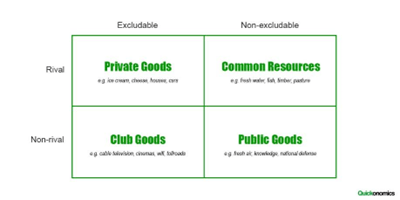
The four categories of goods, given their degree of excludability and rivalry

Definition “rivalrous and non-excludable goods”. Big words. And what do they mean, exactly? Well, let’s break it down. First, excludability: an excludable good is a good/resource that someone can bar (or limit the access to) other people from using. Second, rivalry. Despite the name, rivalrous goods are not the ones that lose their temper when their football team is losing. Rivalry simply means that if one person uses the good, someone else will either have less of the good to use or be unable to use it at all. Think of the shirt you are (presumably) wearing now: while you wear it, no one else can. Music, for example, is just the opposite – if someone is listening to a song, there won’t be any less of the same song for others to hear (unfortunately, in some cases). With these 2 characteristics, we divide goods into 4 categories: private goods, the excludable and rivalrous ones; club goods, excludable but non-rivalrous; public goods, neither excludable nor rivalrous; and the ones we will be focusing on, the non-excludable and rivalrous goods, the commons

So, common goods are the ones that everyone has access to (or at least it would be hard to block anyone from using them), while also being diminished with every utilization, that is, there is progressively less quantity available the more they are used. Now, you may recognize this description as the one of most natural resources: fish in the sea, mineral deposits, the shells at the beach…Consequently, it is easy to see the problem that arises from these characteristics: their sustainability

THE TRAGEDY 

The Tragedy of the Commons. Despite the rather theatrical name, it is neither a Shakespearean play nor a Mexican soap opera (we’ve checked). 

This Tragedy is an economic term coined in 1968 by Garrett Hardin to describe the phenomenon of over-exploitation of common-pool resources: users of the common good behave opportunistically, seeing the resource as “free”, since they cannot be excluded from it, so they reap all the benefits without taking in the costs, which ultimately leads to depletion.   

The extinct dodo

We do seem to have a tendency to explore every resource we can until thorough extinction (I mean, when was the last time you saw a dodo around?), with no regard for their long-term (or even short-term) sustainability. The rationale is rather simple: if it belongs to everyone, it belongs to no one, so you should be quick to grab as much as you can before it’s over. 

The problem with this is, as we’ve seen, the risk of depletion. And this is not merely childish or selfish behavior. This is, in fact, very standard rational economic behavior. Every user can be immediately better-off by taking more than what is sustainable to take, so they do it, until inevitably the resource is gone. Individuals have no direct incentive to behave sustainably. Sustainability is often in the best interest of a community, but not necessarily of a single person. See the problem?  

NEED A SOLUTION? ELIMINATE THE PROBLEM 

This is the standard economics’ layout of the issue – and standard economics presents a solution. Think of a small forest, of around 30 trees, and 3 lumberjacks. Every year, in the spring, the lumberjacks come and take down trees to sell the wood. Now, the forest is capable of regenerating: if they leave at least 3 trees standing, next year 30 will be there again (it’s a very mathematically exact forest). What would be optimal? Easy, right? Each lumberjack could take down 9 trees, and all could come back next spring to get more. But each one has an incentive to outperform the others, sell a lot of wood and get rich. So, each takes as many trees as they can, leaving none in the forest. How can we prevent this?  

The forest and lumberjacks’ metaphor

Whatever we do, the good will not magically become non-rivalrous, but we can do our best to make it excludable. In other words, if the problem arises from collective ownership of the resource, then the solution is surely to change that ownership form. One way to do this is to effectively switch ownership to the government, who then regulates who has access and how much of the resource can be consumed. In our magic forest example, this would mean passing a law stating that each lumberjack could take no more than 9 trees every year. 

It should be noted that this solution requires some form of enforcement – a surveillance authority to ensure regulations are upheld, as well as a penalty in case of breach of the system. These are usually provided, or at least legitimized, by the same governmental authority that controls the resource. 

Such top-down, centralized solutions suffer from certain inherent problems, namely rent-seeking (one entity trying to gain some profit without further contributing to the productivity of the system – like governmental officials trying to collect bribes from the citizens to grant them access to the resource), principal-agent conflicts (when there is a conflict of interest between the citizens and the agent meant to act in their behalf, like the government representative) and knowledge issues (the government may not be fully accurately aware of the needs of the population). 

If state control is not the ideal answer, then maybe we should go in the opposite direction: privatization. Maybe each person could be given a part of the resource to explore (say, each lumberjack is given a certain amount of trees), and trade between themselves, so that each gets the best deal they can potentially obtain. 

If state ownership is not the solution, how about privatization?

Unfortunately, this is not a perfect solution either. Besides the physical impracticability of dividing up some of these goods, there is again the issue of enforceability. Besides, this solution comes with a problem at the very beginning: each person is given a part of the resource to exploit – but… given by whom? Often enough, such a project of privatization requires a government taking control of the resource and then assigning its exploration as it sees fit. So, at its very core, this solution is not so different from the first. Both rely on a higher authority defining and enforcing regulations to limit the use of the common good. They follow a very simple logic: if commons are so tragically doomed, then our efforts should focus on tackling their core characteristics, what makes them common goods in the first place.  

So far, we have looked at the problem and formulated solutions assuming this is how individuals act when faced with a resource to share. But do we always have the behavioral standards of a preschooler? Thankfully, no. In fact (poor dodos aside), we are actually very capable of collectively managing common resources. 

OSTROM’S THEORY 

In 2008, economist Elinor Ostrom was awarded the Nobel Prize in Economic Sciences (becoming the first woman to receive it). The reason? Her breakthrough research on common-pool resource management.  

Elinor Ostrom

Ostrom took a different approach to the problem. Hardin had looked at common goods and their rivalrous and non-excludable nature and tried to explain their over-exploitation based on standard economic theory’s behavior predictions: people behave selfishly and without considering others or the future; therefore, the Tragedy is only natural. Ostrom, on the other hand, decided to start from observation, not from assumptions. And what did she discover? Examples, many in fact, of sustainable management of a common-pool resource! This real-life examination allowed her to arrive at a new theory. In all these successful cases, the management was done by the local communities! Yes, the solution was right there in the name all along.  

So, all we need to do is to leave common goods alone, trusting local communities to handle the matter? Great! Economics is so easy (…said any economics freshman right before their first midterm season…). The theory is, of course, slightly more elaborated.  

Ostrom laid down a set of conditions under which local community management – what she called management through collective action – of common resources can be optimal

  1. Define clear boundaries of the common resource 
  1. Rules governing the use of common resources should fit local needs and conditions 
  1. As many users of the resource as possible should participate in making decisions regarding usage 
  1. Usage of common resources must be monitored 
  1. Sanctions for violators of the defined rules should be graduated 
  1. Conflicts should be resolved easily and informally 
  1. Higher-level authorities recognize the established rules and self-governance of resource users 
  1. Common resource management should consider regional resource management 

Let’s think of what this looks like in the previous 30-trees-for-3-lumberjacks example: 

First, the community should clearly set down who the resource is meant for. By community, we mean the people who live and work within the ecosystem the forest in inserted in – a village where the lumberjacks live, the market they trade on. The group allowed to explore the resource is the lumberjack professionals – they are the ones who make their livelihoods from the forest. It should also be clarified how much of the resource can be taken, and the lumberjacks should take part in the rule making. The people in the village know better than anyone how the forest works: they know at least 3 trees must be left for the forest to regenerate, and have an interest in its sustainability, and the lumberjacks want to reap the benefits of its exploration. Besides, people are more likely to comply with rules they helped write themselves. Of course, the forest must be monitored, and if someone takes more than their share they must be punished by the community. But this punishment should be gradual – not immediately banning, but warning, sanctioning and informal social condemnation (the offender should feel ashamed to break the rules). If there is any disagreement regarding the forest, it should be able to be resolved quickly, in an informal way. The community should also feel assured that their rules will not be overturned by a higher authority. Lastly, they should remember that the forest does not stand alone. It is part of a larger system that should be had in mind, so that resources are explored in a way that does not hurt the rest of the system. 

CONCLUSION 

Common-pool resources management is a puzzling subject. They can be invaluable tools for the subsistence and development of local communities, or they can be consumed to extinction in a heartbeat. Ostrom’s Co-operative Collective Action Management Theory is a clever and helpful way to think about sustainability, one of the greatest challenges of our century. Her work proves observation and context are important tools for economic research, perhaps the most important ones.  


Sources:Investopedia, Wikipedia, Harvard Business School, American Enterprise Institute, Aeon, Corporate Finance Institute 

Leonor Cunha

Joana Brás

The Collapse of SVB: A Cautionary Tale for the Financial Sector 

Growing concerns on the stability of the financial sector 2023 has seen a wave of bank failures, from Credit Suisse in Switzerland to Signature and Silicon Valley Bank (SVB) in the United States (US). These recent collapses of prominent banks have sparked concerns about the stability of the financial sector, leading to a surge in Google searches for “financial crisis” not seen since 2008.  Given the already-present fears of a recession, the collapses only added to the public’s anxiety, shaking consumer confidence in the economy. While the situation is unsettlingly familiar, the uncertainty and fear of contagion remain daunting. This latest banking crisis highlights the potential side effects of financial disarray and underscores the need for swift and effective intervention to restore stability. To exemplify the bank failures and bankruptcy, this article will focus on the case of SVB.  

A perfect combination of events leads the “bank of start-ups” to collapse 

Known as the “bank of start-ups”, especially for those in the tech sector, California-based SVB was established in 1983, with the mission of helping “individuals, investors and the world’s most innovative companies achieve their ambitious goals”, counting as their clients start-ups and tech companies of the likes of Shopify or Insight Partners. In 1988, they went public through an IPO on Nasdaq and, in 2008, they went international. But how did a bank that was the 16th largest bank in the United States, reporting, in Q4 for 2022, $212B in assets, $342B in total client funds and $74B in total loans, collapse on the 10th of March? 

Silicon Valley Bank

The short answer to this question revolves around the typical suspect when referring to the failure of banks: bank runs, which are a self-fulfilling prophecy. However, in the case of SVB, it can be seen as a perfect combination of events which led to this disastrous outcome. The first motive can be linked to the Federal Reserve’s decision to increase interest rates to fight the increasing inflation rates, which are corroding American consumers’ purchasing power. This macroeconomic environment would lead SVB’s long-term investments in government bonds to be eroded as SVB had $21 billion invested with an average yield of 1.79%, as they had been purchased when interest rates were near the zero-lower bond. In comparison, currently, a 10-year Treasury bond has a yield of around 3.9%. Simultaneously, startups were raising fewer rounds of venture capital investment, due to the current economic environment, which decreased the amount of deposit inflows and increased the outflows. So, SBV’s cash decreased, such that the bank had a lower amount of resources to finance its operations. Consequently, in order to raise funds, SVB resorted to the sale of their government bonds. However, as they were yielding a lower interest than those that investors had access to if they bought directly from the government, this led SVB to sell a portion of said bonds at a discount to compete with the competitive market, resulting in a loss of $2 billion. The ultimate blow to SVB’s credibility would be the capital raise announcement, resulting in a generalised panic amongst SVB’s depositors, as more than 90 percent of them exceeded $250,000 in guaranteed Federal Deposit Insurance Corporation (FDIC). At the end of last year, according to the Wall Street Journal, SVB had over $150 billion in uninsured deposits. Fear led to large withdrawals, with depositors pulling out $42 million, in just one day alone. Consequently, SVB’s stock plummeted.  

To avoid a widespread panic and broader contention, despite appearing that SVB’s problems spilt over to Signature Bank, the government intervened in the form of California regulators shutting the bank down and placing it in receivership under the FDIC with SVB’s senior managers, including its CEO, Greg Becker, being removed. SVB’s collapse has been deemed as the 2nd largest in American history, only losing to Washington Mutual which collapsed in the 2008 Financial Crisis. Furthermore, in an unusual decision, the FDIC agreed to guarantee all SVB deposits, even those above the $250,000 per account threshold.  

SVB stock price performance month-to-date in US dollars
Annual nº of US commercial bank failures and total associated assets

What else is being done? 

Deputy Treasury Secretary, Wally Adeyemo, sought to reassure the public about the health of the banking system after the sudden collapse of SVB, in an exclusive interview to CNN, stating: “Federal regulators are paying attention to this particular financial institution and when we think about the broader financial system, we’re very confident in the ability and the resilience of the system”. In reality, the 2008 financial crisis prompted stricter regulations in the United States and around the world. In response, regulators imposed more rigorous capital requirements on American banks, with the aim of preventing the collapse of individual banks from having a ripple effect on the wider economy and financial system. 

Following the collapse of SVB, federal regulators acted promptly to mitigate depositors’ losses and restore trust in both the banking system and the broader economy. To achieve this, they put into effect a series of measures aimed at reassuring the public and bolstering confidence in the financial sector. The government introduced a program called the Bank Term Funding Program (BTFP) – a lender of last resort facility- which serves as a safety net for financial institutions. This program, which is backed by the Federal Reserve, provides loans to banks, credit unions, and other deposit-taking institutions in times of need. The loans can last for up to one year and enable these institutions to meet the needs of their depositors without having to resort to selling their high-quality securities at short notice.

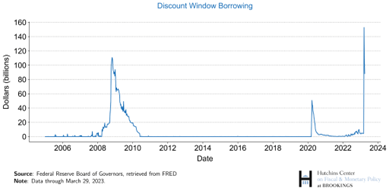
Discount Window Borrowing

Another way the government relied on to regulate the financial industry differently was through a discount window, a facility that offers banks the option to borrow cash on a permanent basis, typically for short periods, such as a few days or weeks. From March 9 to March 15, borrowing at the discount window escalated from $4.6 billion to $152.9 billion, before declining to $88.2 billion by March 29. However, the decrease was mostly offset by augmented borrowing through the BTFP. 

Numerous banks overseas borrow and lend in U.S. dollars. Although foreign central banks possess the capability to print their own currencies, like Euros, Yens, and British pounds, to lend to their struggling banks, they do not have the authority to print U.S. dollars. In response to the Global Financial Crisis, the Federal Reserve initiated a sequence of agreements with foreign central banks, whereby it would exchange U.S. dollars for foreign currencies with other central banks. On March 19, 2023, the Federal Reserve announced that it would conduct daily swaps at least until the end of April to enhance the efficacy of the swap lines.

In the end, the FDIC’s race to find another bank willing to merge with SVB to safeguard unsecured deposits was successful as First Citizens Bank purchased SVB’s remaining assets, deposits, and loans. 

Conclusion 

Bank failures like this have happened before—there were more than 550 banks shut down between 2001 and the start of 2023. But this one was particularly newsworthy due to its dimension, being the second-largest bank failure in US history. 

There is now less anxiety about the stability of the banking sector due to the significant regulatory reforms put in place after the crisis in 2008 and the steps taken by the Federal Reserve following the collapse of SVB to improve confidence in the banking system and prevent future banking failures. The risks of broader contagion are thought to be limited for now but, even if a recession occurs, analysts don’t think it would be as long lasting as the Great Recession. 

According to Mike Mayo, a senior bank analyst at Wells Fargo, back in the prior crisis “Banks were taking excessive risks, and people thought everything was fine. Now everyone’s concerned, but underneath the surface the banks are more resilient than they’ve been in a generation.” 


Sources: The Economist, TIME, Silicon Valley Bank, Wall Street Journal, CNN, The American Prospect, CNN Business, Investopedia, Brookings, Expresso 

Hannah Ribeiro

Pedro Teixeira
Teachers: Fight for a better life 

Reading time: 6 minutes

Introduction

October 5th, 2022, marked the 112th anniversary of the implantation of the portuguese Republic, with the president and the prime minister attending the official Lisbon town hall ceremonies. This time, however, as a small protest of educators and instructors gathered near the country’s political power, attention began to rise for the day’s second vital symbolism – the world teachers’ day.  

Brief History:

The portuguese education system has been on shaky grounds ever since the 2008 financial crisis, with the government markedly cutting its funding between the years of 2011 and 2015, making Portugal the OECD country where teachers’ salaries dropped most significantly, and where the number of students per teacher rose most predominantly.  

Through the years, there have been significant uprisings over the teaching conditions in Portugal. 2013 saw high school teachers boycott the national student evaluation period, with direct repercussions on access to higher education, protesting against mandatory weekly working hours rising from 35 to 40. It was also a way to contest the delay in including teachers in the “special mobility” government program in which they would stop being allocated to a school district hundreds of kilometers away from their place of residence. 2018 also saw notable unrest in the streets of the capital, as educators demanded a renegotiation of their contracts that had been “frozen” ever since the beginning of the financial crisis, more than 9 years prior. 

While instructors’ teaching conditions have ever so slightly improved since the worst days of the budget crisis – with salaries finally being (partially) unfrozen, the firing spree coming to a close, and finally breaking the increasing number of students per professor trend – unsatisfaction remained strong. Most notably, as per 2016, Portugal was still below the education spending average of both OECD and EU countries.  

In what ended up to be a small gathering, the 2022 5th of October protest saw pre-school and primary school teachers advocating for a rehauling of the “Estatuto da Carreira Docente”, the set of regulations that governs the career progression, working conditions, and professional rights and obligations of teachers and educators in Portugal. Teachers, however, promised to increase the pressure. Not waiting for the end of the year, December 17th saw a staggering 20 to 25 thousand teachers from all across the country rallying, with “Teachers fighting are also teaching” and “Teachers united will never be defeated” phrases multiplying in the crowd. Calling for the chance for school principals to be able to choose their teaching staff regardless of professional graduation, the absence of service time count that has been frozen, and penalties on retirement after 36 years of service, teachers, under the “STOP” union, announced a strike “for an undetermined amount of time”

Current situation:  

Continuous discontent for the state in which the education system has been for years culminated in some of the biggest teachers´ protests in memory. In February, once more under “STOP”, an estimated 150 thousand teachers took to the streets to demand better pay and a more democratic and decentralized school management system.  

Teacher’s protests in Lisbon, February 2023

The uprising continued through March, in which thousands of teachers, under “Already, here we are again” banners, paraded in Lisbon in protest against government proposals for a new recruitment and placement regime and the lack of openness to negotiate old claims such as the recovery of service time. In what heavily focused on the precariousness of the teaching profession, known for the “carrying their houses on their back” slogan due to the frequent job relocations, even teachers’ children and students came to the rally in support.  

The struggles with the impacts of the strikes have led the ministry of education to request a formal assessment of the legality of the procedures of “STOP”. It was confirmed that, despite the previous warnings made regarding strikes being legal, the execution was, in fact, dubious. Furthermore, the “Procuradoria-Geral da República” (PGR) issued comments questioning the legality of the “self-service” strike established by “STOP”, claiming to have been an “abusive” practice. Teachers have challenged these claims and accused the ministry of education of depriving them of the right to strike and protest for better working conditions. 

Ultimately, these occurrences, coupled with the increased and continuous discontent of teachers for not having their needs met, have managed to amplify the already heightened levels of tension between the two parties, making any prospect of a resolution between the government and teachers appear increasingly remote.  

What are the social implications of the movements?  

As dimensions around the strikes and protests augment exponentially within the sector, opposing opinions and positions on the matter in discussion begin to gain force, in what could jeopardize its original cause. Some professionals working in the sector recently began to view the movement as “extremist” and disagree with the way labor unions have gone about their complaints, with many arguing it to be counterproductive. Opinions are evenly divided among the portuguese people, with studies conducted informing that half the population being sampled displays support for teachers, while the other half argues that the demands are unrealistic and excessive. 

The union societies in charge have, recently, announced strikes that can affect evaluation meetings, in which grades are discussed and attributed to students per trimester. This intensification is, mainly, due to the lack of concessions on the government´s side, namely to solve the issues regarding the allocation of teachers to schools.  

Thus, questions regarding the future of the education system arise: What are the implications for students looking to apply for a higher education degree? What about students in primary school who need to learn how to read and write? What about students with special needs? Inequality and compromised evaluations are at stake and, despite being sympathetic towards the cause, parents are concerned with the future of their children.  

To combat these valid concerns about the education system and on-going disputes, teachers agreed to strike during extraordinary hours of service and non-academic endeavors at schools. 

So, do teachers have a chance at having their demands met? 

A few days after the demonstrations, a big battle was won by teachers as the government approved the new regime for the recruitment of teachers and academic personnel which has been negotiated for at least five months. However, the primary goal of compensating educators for the career freeze endured for six years, having not allowed for career development, remains elusive

Upon the current public manifestation for better working conditions and job satisfaction among teachers, one additional concern comes to light: the lower academic pursuits for teaching positions.  

In addition to the decreasing engagement with the profession itself, these public disputes only strengthen the newfound priority for the government within its educational systems: find solutions for the lack of professionals – as reflected in the aggravation in the number of students without a teacher in at least one subject from 60 thousand to 80 thousand in October 2022. Therefore, both parties involved will need to tread carefully to not dispirit aspiring teachers and professors even more. Considering this issue, what demands may be met with the current discussions, and can they succeed in making the job more attractive for prospective future teachers? 

The government has not yet agreed to entirely make up for the frozen years in professors’ careers. This does not mean that the government will not support teachers, since it was already stated that the asymmetries caused by the instance are set to be corrected and two years will be compensated. Additionally, modifications in the recruitment process in schools will also be dealt with to target precarity among teachers and reduce the distance between home and the school in which they are allocated. There is still, however, much discontent with the measures and the strikes do not appear to see an end to the tunnel just yet

Final thoughts:   

The overall consonance is that the value attributed to teachers is below par. The demands for better conditions and support for teachers are seen as valid, as these professionals compose the first pillar of society. Unlike other professions, where lack of services can be countered with outsourcing of foreign employees or alternate closing of businesses, in the teaching market these solutions are not viable. Nevertheless, there is room for innovation in the sector, as demonstrated by the adaptive measures put into practice during the COVID-19 period. 

It should be of utmost importance to guarantee the continuation and satisfaction of workers within such an instrumental function of society. As Portugal remains in the tail end of most education indicators within the EU, from number of students per teacher to early dropout rates, the government should look at these massive protests with concern.  


Sources: Observador, SIC Notícias, FENPROF, Expresso, PÚBLICO, Diário de Notícias, Jornal de Negócios, Governo de Portugal 

Madalena Zarco

Manuel Rocha

Halfway: a look at SDG progress so far

Reading time: 6 minutes

Wouldn’t it be nice to live in a world with no poverty, no discrimination, clean energy, and peace for all mankind? Fear not, such a world is in the making! Well, at least in its planning stage… 

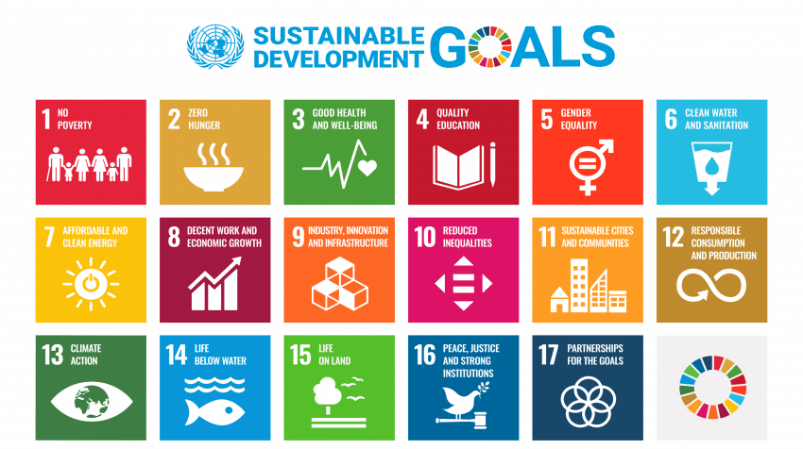
In 2015, the UN adopted the SDGs, Sustainable Development Goals, as a “universal call to action to end poverty, protect the planet, and ensure that by 2030 all people enjoy peace and prosperity”. Together they represent 17 goals, 17 areas of action, each interconnected, all contributing to power-sustained social, economic, and environmental development, particularly for those who are furthest behind. 

We gave ourselves 15 years to accomplish all of this. Right now, we are roughly midway through this ambitious deadline. How are we doing so far?  

Meeting the goals

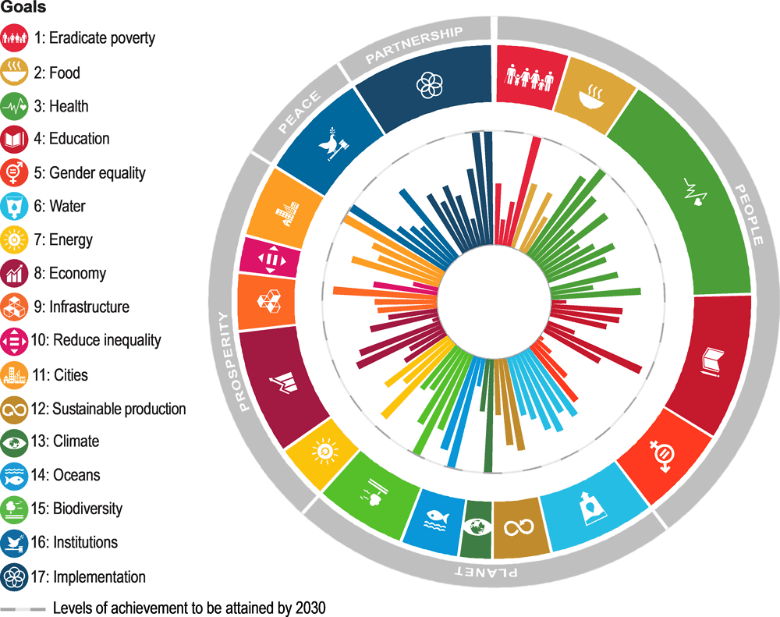
The 17 SDGs are divided into 169 targets. Meet the targets, and we meet the Goal they belong to. Seems easy, right? Let’s take a look as to how much we have accomplished up until now… 

The question that now presents itself is whether or not we are currently up to date. Well, the truth is that when the goals were first agreed upon, no one thought of the possibility of a pandemic of the caliber of the Spanish Flu or the Plagues of many centuries ago imposing a worldwide lockdown and an almost total shutdown of the world economy. Oops. Or that one of the largest suppliers of grain in the world would be invaded by its neighbor with imperialistic tendencies, who happened to be the top energy supplier to several European countries. Double oops. Or that the Taliban would return, the USA would drop out of the Paris Agreement for a few years, or… You get the picture. The last few years have been filled with “once in a lifetime” and “unthinkable” events, that, due to their unpredictable nature which has made them unable to be accounted for in advanced, have hindered progress in an already superhuman task. 

Every year, the UN releases a report reflecting the respective SDGs’ progress. Unfortunately, the 2022 report has some not-so-fantastic news… 

Checking the numbers

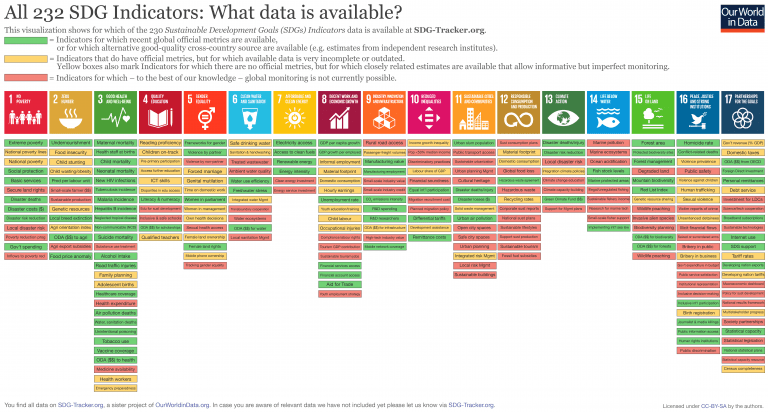
Progress on each Goal, and on each of its individual targets, is tracked by 232 unique indicators, whose new version was launched in 2018. If we want to know how far down the road we are, those are the numbers we should be looking at. 

According to the previously mentioned Sustainable Development Goals Report of 2022, the COVID-19 pandemic was the event that had the greatest impact on the progress in all SDGs. And, of course, largely not in a positive way.  

Take the 10th SDG – Reduced Inequalities, for example: The pandemic caused the first increase in between-country income inequality in a generation! Indeed, for the first time in this generation, the gap between rich and poor countries widened, instead of decreasing, as it had been the pattern in the past years. Between 2017 and 2021, inequality in country incomes rose by 1.2%, while the projection with no COVID would have been a 2.6% decrease. Another 4 years of progress were wiped out in the 1st SDG – No Poverty. 2020 marked the first time in the 21st century where the working poverty rate actually rose, from 6.7% to 7.2%. It may not seem like a big change, but those tiny 0.5 percentage points represent 8 million additional workers who crossed the line into poverty (close to the current total population of Portugal!). To add to the problem, widespread high inflation, coupled with the Ukraine War, are most definitely not helping the recovery, with many significantly sized economies having been affected due to a large dependency on Ukrainian grain and/or Russian energy. The Russian invasion threw Europe and its surrounding areas into disarray, sending waves of repercussion throughout the world.  

If poverty rates are not doing well, it should come as no surprise that world hunger is following in its path. Hunger is particularly troubling in young children. Have you ever heard of stunting? It is the impaired growth and development of children due to malnutrition, meaning that a child simply does not have enough food to adequately grow, bearing lasting consequences in health and cognition. In 2020, 149.2 million children under the age of 5 suffered from stunting. The SDG agenda aimed at a 50% reduction in this number by 2030 – that appears to be an impossible feat unless the rate of decline doubles, which, given rising food prices and inequalities, doesn’t seem likely. Think of how this impacts the future. World Health (SDG 3 – Good Health and Wellbeing) will surely suffer, adding to the setback we already saw during COVID (which, as a disease, primarily impacted health). 

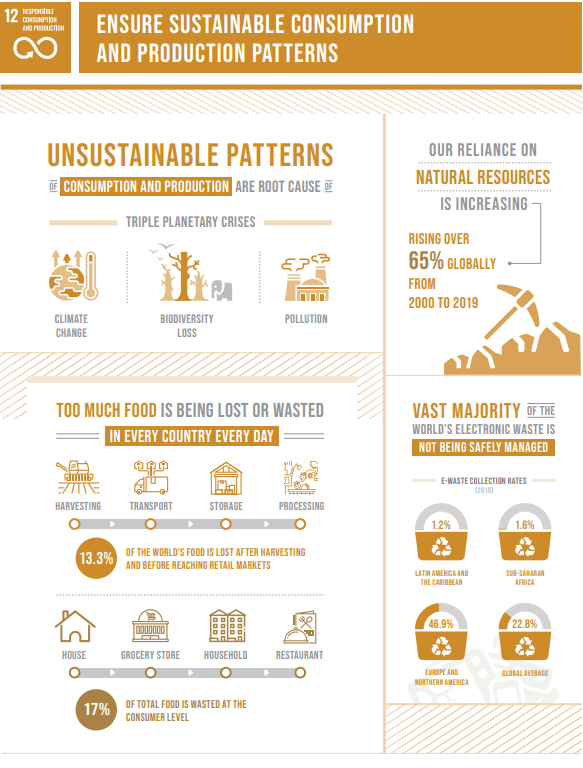
But let’s not be so gloomy! If the pandemic had such an impact, the solution should be as simple as directing all effort towards recovery, and reversal of the impact will follow, right? Unfortunately, it is not that easy. Efforts to recover economically imply a heavier reliance on cheap energy, resource exploration, and production, much of it highly polluting. In 2021, as the economy re-heated, so did the planet: energy-related CO2 emissions were the highest ever. SDG 13 – Climate Action progress is stumped. Countries are not contributing the yearly 100 billion they committed to for climate action (less than 80% of the goal is met). And just because the world is recovering, it doesn’t mean everyone is doing so at the same rate. Progress on the 9th SDG – Industry, Innovation and Infrastructure is mixed: total global manufacturing caught up with the setback from the crisis, but Least Developed Countries (LDC) still haven’t! The Sustainable Development Goals seem to have been left behind amidst recovery efforts. 

But not all is bad news. The 17th SDG – Partnerships for the Goals, has seen some progress, although not in all fronts. Official Development Aid reached an all-time high in 2021 (largely from COVID-related aid). Internet access and use also saw a significant increase during the pandemic. Pleas and efforts towards Global Peace grew as well, although the balance for the 16th SDG – Peace, Justice, and Strong Institutions is largely negative: we are seeing the largest number of violent conflicts since World War II, thus reflecting hardly any progress towards peaceful coexistence. 

Is there still hope?

These news are definitely rough to hear. All the progress we were making, the difficult yet sure steps we were taking towards our ultimate goal of a better world, were wiped out in just a couple of years. So, one may start to wonder, is it still worth it? The SDGs were already immensely ambitious, and the setbacks of recent years seem to mean we will not be able to achieve them, and definitely not by 2030. Should we just give up? 

Hey, not so fast! Just because we’re falling behind, doesn’t mean we can’t finish the race. Setting a high bar means incredible high results, even if you never reach the mark exactly. The SDGs are not just a wish, they’re the standard the members of the United Nations hold themselves to. Even if we fall short of perfection, we have an obligation to continue to strive towards it. 

In 2015, countries committed themselves to improve the world. The task requires all citizens to embrace that mission, and the Sustainable Development Goals are the targets we should aim for to accomplish it. So go ahead. Spread the message. Act. Change the World. 

You can find the 2022 Sustainable Development Goals Report here.  


Sources: United Nations, United Nations Development Programme, OECD, Our World in Data, World Health Organization, SDG tracker.

Joana Brás

Leonor Cunha

Olympics Boycott 

Reading time: 6 minutes

Several sanctions have been imposed upon Russia due to the unprovoked and unjustified invasion of Ukraine a year ago, on the 24th of February 2022, which initiated the ongoing war that is estimated to have killed so far over 7,100 civilians and 200,000 soldiers. As a consequence, Russia has been the target of sanctions aimed at weakening its economy, such as the European Union’s ban on imports of oil and coal, on the export of ammunition and military vehicles, and on the SWIFT ban for 10 Russian banks, among others.  

With little over a year before the Paris Summer Olympics, a political question looms over the event: will Russian athletes be able to compete? At the beginning of the war, the International Olympic Committee (IOC) encouraged their ban from international competitions. However, more recently, this decision appeared to be partially reversed.  The IOC did in fact impose sporting sanctions on both Russia and Belarus, which included the prohibition of athletes of both nations to represent their countries – a decision deemed to be “non-negotiable” – but they would still be allowed to participate in the diverse competitions and events as “neutral athletes” – as justified through the following phrase: “No athlete should be prevented from competing just because of their passport”. As a response, Ukrainian president Volodymyr Zelensky stated that the terrorism could not be “covered up with some pretended neutrality or white flag”. 

On the one hand, 40 countries, including Ukraine, Poland and the United States, have adhered to the boycott of the Games if Russian athletes are allowed to participate. On the other hand, the IOC states that this action would be a violation of the Olympic charter, as it mandates the countries to send athletes and that “As history has shown, previous boycotts did not achieve their political ends and served only to punish the athletes of the boycotting countries”. A fact to remember is that the 2024 Olympics, under normal circumstances, would see the return of Russian athletes competing under the Russian flag, after their 2-year ban due to doping. 

The Olympic Games go all the way back to Ancient Greece, with the first written evidence being from 776 BC, showing the measurement of time in Olympiads – equivalent to the duration between each edition of the Games. Back then, they were held every 4 years to honour the god Zeus through various activities ranging from music and singing to the discus throw. However, they were eventually banned by Roman Emperor Theodosius I and were not revived until the 19th century. After several attempts due to the lack of coordination between countries, the first Olympic Games of the modern era, in 1896, would revisit its originating country, having been held in Athens. Through the link of sport and culture, the Olympic Games have as principle the construction of a better world through sport without discrimination, leading to the development of physical and mental qualities. 

Going back in time 

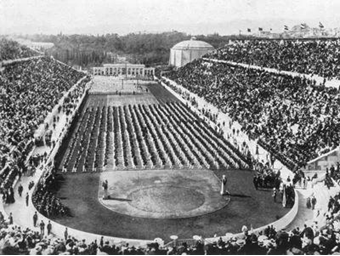
Athens, 1896 Olympic Games

Since then, the Games have developed throughout the years with women starting to compete in the 1900’s Paris Games. Yet, only in the London 2012 Games would women be able to compete in all sports of the programme. The 1904’s St. Louis Games saw the first known disabled person to compete, with the 1912 Games being the first to have competitors from all 5 continents. 1936 saw the Games being broadcasted for the first time, but, as a result of being held in Berlin at such a turning point in history, they ended up serving as a way to disseminate propaganda of the Nazi regime. Having been cancelled in the meantime due to two World Wars and postponed because of the COVID-19 pandemic, the upcoming Games are expected to take the stage in Paris next year. 

Politics & The Olympics 

Although the Olympic Games have been widely viewed as a success, uniting people from diverse nations to celebrate various sporting events, they have not been immune to controversies. Some critics have accused the Olympics of allowing politics to infiltrate what was intended to be a neutral environment, with territories such as China, Brazil and Russia leveraging the event’s favourable image to boost their own international image whilst often engaging in questionable human rights and environmental practices. More crucially, however, the Games have also had a long history of politically charged boycotts. 

Following the World Wars, the 1956 Melbourne Summer Olympics marked the first great challenge to the modern Olympics, as the first attempts to boycott began to rise, with states from Europe, Africa and Asia choosing not to send their athletes to the event. Protesting the Soviet Union’s quash of Hungarian attempts of independence, Spain, The Netherlands, and Switzerland skipped the event, eventually joined by Egypt, Iraq, Lebanon. At the same time, Cambodia was protesting the Israeli invasion of the Sinai Peninsula and the People’s Republic of China the participation of Taiwan in the global event as an independent country.  

Tensions remained high in the lead up to the 1964 Tokyo edition, as Indonesia mounted a competing sports competition for the emerging economies, GANEFO, calling the Olympics and the International Olympic Committee “an imperialist tool”. In response, Indonesia was temporarily banned from the IOC and GANEFO participants were barred from attending the Olympics. The Tokyo edition also marked the start of South Africa’s 28-year ban, following the country’s segregation policies and refusal to send multiracial teams to the event. The Cold War incited yet another wave of boycotts, as the opposing superpowers avoided each other’s Games, with a record 65 nations refusing to participate in the 1980 Moscow Summer Olympics, leaving it with the lowest number of participating federations in almost 30 years.  

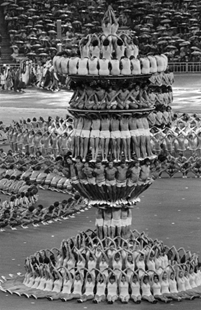
Soviet gymnast rehearsing for the opening ceremony in the 1980 Moscow Olympics

Despite the numerous attempts, many still question the point of political challenges to Olympic participation as there has rarely, if ever, been a significant political shift as a result. Hungary only gained independence more than 30 years after the first boycott in their support, the Suez Canal crisis still happened, emerging nations eventually all embraced the “imperialist” Games and South Africa´s Apartheid still lasted for almost 3 decades in spite of their ban.  

Conclusion 

While many can agree that a protest in one of the biggest stages in the world can certainly bring awareness to these issues, most had already been widely covered by the media by the time the issue reached the sporting world. The efforts’ lasting impact, sadly, has only been leaving national athletes to wait for 4 more years to follow their dreams, and a permanent dent on the Olympic legacy. With the Russian-Ukrainian conflict on its first-year anniversary, and with the Paris 2024 Olympic preparations well underway, calls for boycotts have been rising once again. The question now raised is whether in an effort to show solidarity for the Ukrainian people we are letting history repeat itself by penalizing Russian athletes for the ongoing war their president has started.  


Sources: Statista, BBC News, Radio Free Europe/ Radio Liberty, International Olympic Committee, RTP, BBC Sport, NPR, Paris 2024, HISTORY, The New York Times, Britannica 

Hannah Ribeiro

Manuel Rocha

Xingjian Detention Camps – The dark side of China’s treatment of Uyghurs

Reading time: 7 minutes

In 2017, satellite images captured strange looking buildings in Xingjian, China, quite unlike any other typical infrastructure in the region. At first glance, they resemble schools or hospitals, but once we zoom in these images, high walls and watch towers are visible as well, exposing a much darker truth. Deemed by the Chinese government “re-education camps”, – after multiple attempts of trying to deny their existence – these more than 380 detention camps in Xingjian are estimated to be holding prisoner more than 1 million people.

Satellite image of one of the re-education camps

Who are the 1 million people detained?     

The Xingjian region has been under China´s control since 1949, after being independent twice for a short time. For centuries, it was known for its strong agricultural activities and trade, having been part of the silk road. Today, this region is responsible for the largest natural gas production in the country. 

In Xingjian live more than 11 million Uyghurs, a minority ethnic group of Muslims that have their own language and tradition and that culturally identify themselves with the surrounding countries of central Asia. 

Uyghurs in mosque

China views the religious beliefs of Uyghurs as extremist and separatist, using as an argument the terrorist attacks that occurred in 2013 and 2014, planed by extremist Uyghurs. For this reason, and rooted on a fear of losing the Xingjian territory to separatist Uyghurs, the Chinese authorities defend that the camps are a necessary tool to stop the terrorism and the separatist movements in the area. These assumptions are considered by the rest of the world as an unfair generalization that revolves on the denomination of all the Uyghur people as extremists. 

NYTimes reveled, in 2019, documents that exposed military orders coming from the Chinese government that incentivize Xingjian´s troops to act without mercy: “We must be as harsh as them”, “and show absolutely no mercy”, “Freedom is only possible when this “virus” in their thinking is eradicated, and they are in good health”. 

What is happening to the Uyghur community?

From Xingjian come all sort of accounts from the community, disclosing religious-motivated detentions, assaults, interrogations, and torture. Those who are sent to the camps are admitted and not just re-educated as claimed.

In social media, requests to find missing family members are multiplying and sometimes, when clamors become too loud to be silenced, the answer arrives in the form of a phone call from said missing family members, nervously asking to never being contacted again, fearing the repercussions.

Even outside the camps, the Uyghurs that are still free are yet being constantly monitored by security cameras in the streets with facial recognition and with QR codes in the entry of buildings and police stops being put in place applying to just this minority. 

In 2017, men were forbidden from using long beards and women from using the hijab, being also prohibited to teach their religion to children or give them names of Islamic origin. 

Uyghurs using the hijab and the police controlling them

In 2021, Uyghur women revealed that they are forced to use birth control as an attempt to decrease the numbers of the Uyghur population. Indeed, according to Association Press, the government subjects hundreds of thousands of Uyghur women to pregnancy tests, sterilizations and abortions. 

Restrictions on this minority´s freedom also include trips inside and out of Xingjian. Moreover, reports from civil servants and university students claim that they are forbidden from conducting many religious practices, such as fasting during Ramadan or going to mosques – which are being gradually destroyed in the region.

Having come across reports of ex-detainees, western social media channels have been exposing the practices used in the re-education camps, especially BBC. This in turn has gathered the attention of the Chinese government, which promptly accused the news channel of spreading fake news, blocking their broadcasts in the country, with the justification that they need to stop with their occidental propaganda.

Images of these camps that are shared inside the country are strictly controlled by the government. In the official government records the Uyghur minority appear happy, followed by the statement that the Uyghurs come to the camps by free choice, because they want to learn and work to achieve better economic status – a very different story from the one that reaches us from international media of the likes of BBC…

What is really happening inside these camps?

Firstly, Uyghurs are forced to learn mandarin – which is the least of their concerns. Among some witnesses that BBC gathered, one of them said: “After almost five months in the Karamay police cells, between interrogations and random acts of cruelty – at one stage I was chained to my bed for 20 days as punishment, though I never knew what for – I was told I would be going to “school””. 

Between these statements of ex-detainees, some of them reported having been victims or having witnessed systematic episodes of rape, sexual abuse, and torture. According to BBC, “An ex-detainee, Tursunay Ziyawudun, said she received injections until she stopped menstruating and was repeatedly beaten on her lower stomach during interrogations”. 

Protest in favor of Uyghurs

            Furthermore, an investigation of NYtimes revealed the existence of Uyghur workers being exposed to forced labor practices in some factories, such as in solar companies and in the production of face masks (“Chinese solar companies tied to use of forced labor”, “China is using Uyghur labor to produce face masks”).  

            All in all, the majority of ex-detainees is unanimous in their assessment and retelling of China´s approach to the Uyghur minority: “their goal is to destroy everyone”. 

Ripples in the rest of the world

According to a coalition of organizations for Uyghurs rights, one in each 5 items of clothing that we wear has its origin in forced Uyghur work. Besides, 20% of the cotton produced in the world comes from Xingjian, and 17 brands – amongst which we have Nike, Apple, Adidas, Coca Cola and Amazon – were accused of using this cotton on their products. 

 On the other hand, H&M showed some displeasure about the treatment that the Uyghurs are receiving, and the possibility of forced work being used in the cotton fields did not please the brand. China reacted to H&M immediately: a lot of Chinese websites have stopped showing the brand´s products, resulting in a loss of around 135 million euros for the company, just in the first semester of 2021.

China is not without allies, however, as 37 other countries postulated in a written letter their support in favor of China, vouching for the important role China plays in the international cause of human rights. On the other hand, a different position in regards to China´s treatment of human rights is expressed by the UK and Europe, that together with other 27 ONU member states, including the US and Canada, have taken a stand accusing China of genocide and promising not to stop fighting for this minority´s freedom. 

This conflict has resulted in sanctions from both sides. From China´s side, five European MPs were forbidden from entering Chinese territory. In response, Canada, the US and the UK have joined forces with the EU to apply sanctions against China and its allies.

The story of the youngest person arrested

Rahile Omer, detained in a re-education

Rahile Omer was only 15 years old when she was arrested by the Chinese authorities. The accusation process began when she was just 14, in Xingjian. Having been identified and classified by the security cameras in the streets as a “type 12 person” – someone connected to an existing police case – a target was set on the girl. According to police records, they found out that Rahile´s mother was serving six years in prison for disturbing the “social order”, after being accused of following extremist religion practices. By attachment, her father was deemed a “type 12 person” too, leading to his detention and subsequent admittance in one of the re-education camps in 2017. Assuming Rahile to be a dangerous person due to her connection to her parents, she was sent to a detention camp as well, at the mere age of 15. 

Conclusion

Last century, during World War II, the world watched as numerous atrocities were committed against a community because of their religious beliefs, different customs and appearance, and how they were imprisoned in camps where the majority would meet their end. Now, albeit in a different context, a similar pattern of discrimination against a minority is happening again in concealment, with mistakes from history being repeated. 

Unfortunately, this is far from the only case of discrimination of minorities and violation of human rights that is happening right now all over the world. In a way, globalization has brought about new challenges and setbacks, where global powerful brands and consumers are willing to close their eyes to various violations of human rights if it benefits them.

Can we call this evolution if there are still people being harmed because of their religious beliefs, way of living and exaggerated generalizations of the actions of a few to a whole community?


Sources: Observador, BBC, New York Times

Inês Pedroso

Smart cities: are they a smart idea?

Reading time: 7 minutes

Article written in partnership with Nova Tech Club.

In the European Union’s point of view, a smart city goes beyond the use of digital technologies for better resource use and less emissions. It means smarter urban transport networks, upgraded water supply and waste disposal facilities, as well as more efficient ways to light and heat buildings. It also means a more interactive and responsive city administration, safer public spaces and striving to meet the needs of an aging population.

SDG 11 of the UN 2030 Goals looks at these solutions as ways to achieve more inclusive, safe, resilient, and sustainable human settlements. For example, their 2022 report highlights that 99% of the world´s urban population breathes polluted air, and municipal solid waste has collection and management problems that need to be tackled immediately (only 82% of this waste is collected and only 55% is managed in controlled facilities). In line with this, smart cities emerge as a possible approach to deal with these issues.

In short, smart cities are designed to achieve a sustainable organization as a society. It incites discussions between urban planners, city councils and even technology giants so as to enhance the population´s lives. Nonetheless, opposing views bring forth a sense of distrust related to the actual smartness of an actual implementation of the concept of smart cities.

Portugal’s Smart Cities initiatives

Unbeknownst to many, Portugal has a vast number of initiatives with the aim of creating or developing smart cities by easing collaborations between municipalities
SMART PORTUGAL has been promoting the ‘smartification’ of Portuguese cities through various events, namely Smart Cities Tour and the “Cimeira dos Autarcas”, in an effort to increase national and international collaboration, but crucially, to let the public in on the innovations already in development. In collaboration with “Associação Nacional de Municípios Portugueses”, NOVA Cidade – Urban Analytics Lab, the organization behind SMART PORTUGAL, has implemented an annual activity plan to accelerate smart city innovation in the country, having also created simple and clear guidelines and standards, paving the way for Portugal to become a global leader in the field.

Portugal Smart City, under the SMART PORTUGAL program, tries to bring cities and companies together to connect innovators and implementors. Gatherings and fairs, such as the SMARTCITY Expo World Congress, allow businesses, academics, and legislators to come together and find partners for pioneering projects. Some initiatives have already broken ground and are producing palpable results. Rener Living Lab, or RPCI, formed in 2009, is a national smart city network that now accounts for more than 120 municipalities with certified smart projects, distinguishing their quality and workability, and increasing their international projection. 

SMARTCITY Expo World Congress

In more practical terms, a number of Portuguese cities have been recognized as being in the forefront of positive change. 2020 saw Lisbon crowned European Green Capital following efforts to use residual waters to feed the city’s parks and an affordable public transport pass that allows citizens to cheaply travel between the cities and surrounding 18 boroughs. Valongo has been distinguished with the European Green Leaf award in 2022 as a result from an effort to increase city energy efficiency and create urban farms. Guimarães has also been classified as one of “100 Smart Cities” by the European Commission through its efforts in river shore quality with the construction of “Ecovias”, as well as a bet in a circular economy with the programme RRRCICLO, among others. 

The European Approach on Smart Cities

On a European scale, there have been in the past few years many examples of city implementations and EU initiatives. Take Copenhagen for a great urban design example: approximately 43% of all commutes are conducted by bikeVienna´s Citizens´ Solar Power Plant project must also be highlighted since it was very successful in engaging its citizens and energy companies to promote solar power energy. In Barcelona for example, the REC (Real Economy Currency) is introduced as a local social currency, which allows transactions in a community between individuals, institutions and businesses that accept it. This project fosters small businesses that are struggling to survive in digital times and in big cities.

The European Union has been very avant-garde when it comes to respecting the historical roots of cities and advocating for their sustainable future. EU Missions are a new way to bring concrete solutions to some of our greatest challenges. They have ambitious goals and hope to deliver tangible results, with the Climate-Neutral and Smart Citiesinitiative being one of the most ambitious missions that aims to deliver 100 climate-neutral and smart cities by 2030, ensuring that these cities will act as experimentation and innovation hubs to enable all European cities to follow suit by 2050. Funding will cover a wide range of subjects such as urban planning and design for climate-neutral cities, sustainable urban mobility, positive and clean energy districts, with a lot of projects already being implemented. Furthermore, personal data protection is also a pertinent subject to the EU´s concerns. Project Decode, for instance, provides tools that put individuals in control of whether they choose to keep their personal information private or share it for the public good.

Smart Cities across the World

While smart city projects exist and thrive worldwide, some cities have gone above and beyond in creating a smart ecosystem for its residents, improving sustainability and efficiency. Masdar, in the UAE, was what can perhaps be called the most significant green project in the Arab World. This pilot project aimed at housing 50 thousand people in an urban landscape with no automobiles and making sole use of renewable energy. While the initiative has seen its fair amount of success, it’s important to point out that it is still significantly smaller than first planned, with some critics also pointing out that the focus should be on greenifying existing cities and not creating new ones. 

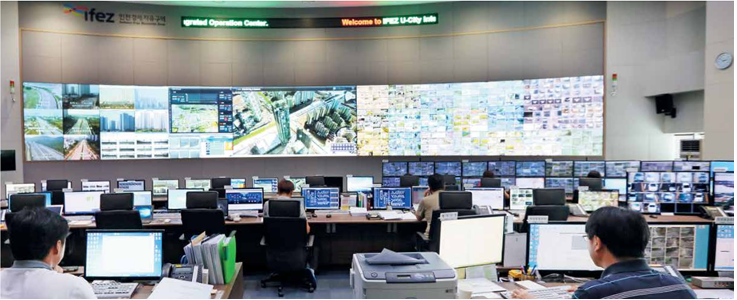
Songdo, South Korea followed a similar path to Masdar, though at a more significant scale. With innovative urban waste collecting systems, trash is transported using a network of pipes eliminating the need for trucks. With the concept of Ubiquitous City – where citizens can access services anywhere, anytime, from home banking and teleconferencing to intelligent transport systems and remote sensing – becoming an area of intense focus, Songdo has also incorporated some innovations in line with it. CCTV and sensors, for example, have become essential for the Korean city to control traffic flows and quickly respond and adapt when accidents occur, informing locals of exact public transport timetables and occupancy. 

Songdo Control centre (CCTV and sensors control)

Nevertheless, this city concept has its flaws. Korean residents have complained that, maybe due to its intent as an international city, Songdo doesn’t feel quite authentic. Foreigners, in contrast, have a sense of deja vu as the replicas of the boulevards of Paris, pocket parks of Charleston, Central Park in New York City, or the canals in Venice make the city seem like a patchwork of other urban areas.  Another big area of complaint has been what many thought would be the city’s main selling point: technology. Constant surveillance and monitoring have left many with a feeling of unease, with concerns for privacy and intellectual property growing. Similar smart projects have been halted entirely after encountering significant pushback from citizens not wanting to share so much information. Alphabet’s Sidewalk Labs Toronto project, with “(…) mass timber housing, heated and illuminated sidewalks, public Wi-Fi, and, of course, a host of cameras and other sensors to monitor traffic and street life(…)” was one of said projects, facing heavy criticism from the get-go.

Conclusion

Smart Cities are now more popular than ever. Meeting UN’s SDG 11, this project has even gained momentum in small countries such as Portugal, with EU legislation adapting to ease the rise of smarter and more sustainable practices. Worldwide examples, from the Middle East to South East Asia, offer a glimpse of more radical initiatives, along with its benefits and shortcomings. While services may be improved upon, privacy is an ever-growing concern, and if legislators, investors, and urban planners want to go ahead with these new forms of design and construction, the safeguard of private information needs to be on top of everyone’s mind.  


Sources: Energy Cities Hubs, DECODE project, European Commission, The Global Goals, NOVA Cidade Urban Analytics Lab, Forum das Cidades, Jornal de Negócios, The Verge, Bloomberg

Manuel Rocha

Manuel Lourenço

(guest writer NTC)

Is GDP a good measure of a country’s development?

Reading time: 6 minutes

Gross Domestic Product (GDP) is the standard measure for the value added generated by the production of goods and services in an economy over a specific time period – the total value of all goods and services produced in a country minus the value of the goods and services required for their production. But is it enough to measure a country’s development?  

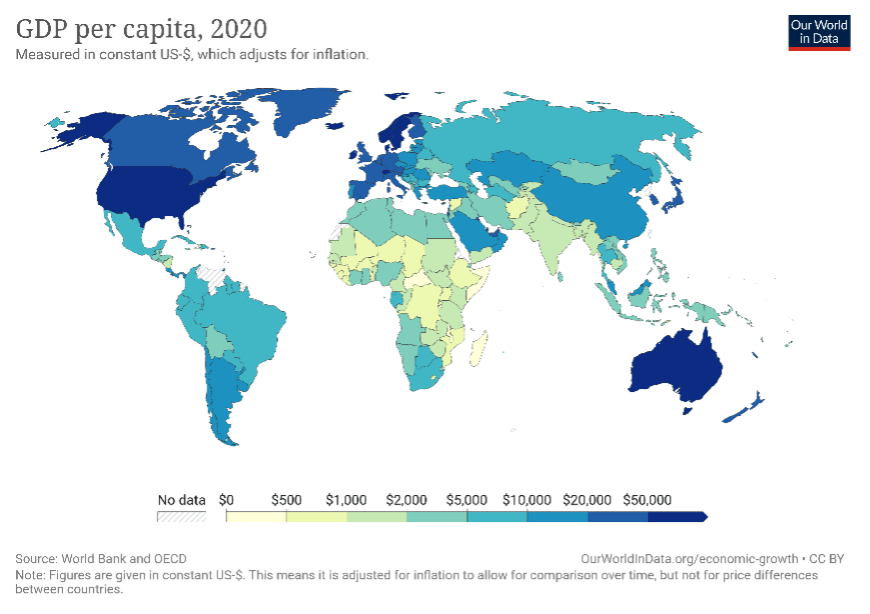
This measure can be divided by the country’s population, returning the amount of money that each individual gets in a particular country, known as GDP per capita, which provides a much better determination of living standards as compared to GDP alone, allowing comparisons between countries of different sizes. 

GDP per capita per country in 2020

Since it is simpler to quantify the production of commodities and services rather than measure other welfare accomplishments using a multi-dimensional index, GDP is the most commonly used indicator to gauge economic growth. However, it is not a sufficient indicator of development on its own. Development is a multifaceted idea, with not only an economic component but also a social and environmental one that should just as well be taken into account.

Economist view 

Thomas Piketty, renown professor and French economist, states that future economic downturns brought on by technological or populational reductions would most likely result in enormous concentrations of economic and political power as the richest individuals amass more capital (or wealth). In line with this, he claims that inequality is rooted in ideology and politics and argues that his beliefs explain the fundamental flaws in capitalism’s market system. Given this, Piketty says it cannot be expected that sustainable development would always result from an increasing GDP.

Thomas Piketty argues against using GDP growth as synonym for development

Other economists have also weighed in on the topic, as exemplified by Nobel Prize-winning economist Simon Kuznets´s view that GDP should not be used as a gauge for “the welfare of a nation”.

Moreover, Nancy Folbre, professor of economics at the University of Massachusetts Amherst, once said that “Time that you spend taking care of your kids is very valuable time, but it doesn’t get factored into GDP.” According to Folbre, about half of the time people spend working, on average, is unpaid work which is not accounted for in GDP. She thus states that the GDP measurement will only be able to provide an estimation of a portion of the overall economic picture that is regularly taken into account.

Alternate measures

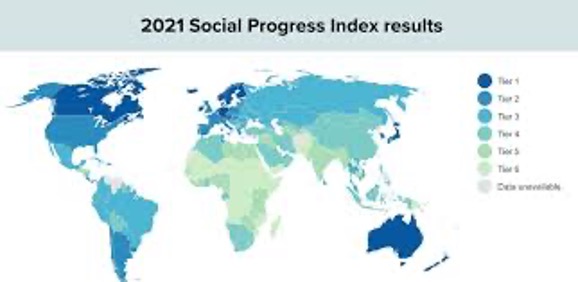
As an alternative to GDP per capita, the United Nations Development Programme (UNDP), The World Bank, and the non-profit Social Progress Imperative, launched, respectively, the Human Development Index (HDI), the Human Capital Index (HCI) and the Social Progressive Index (SPI).

The Human Development Index

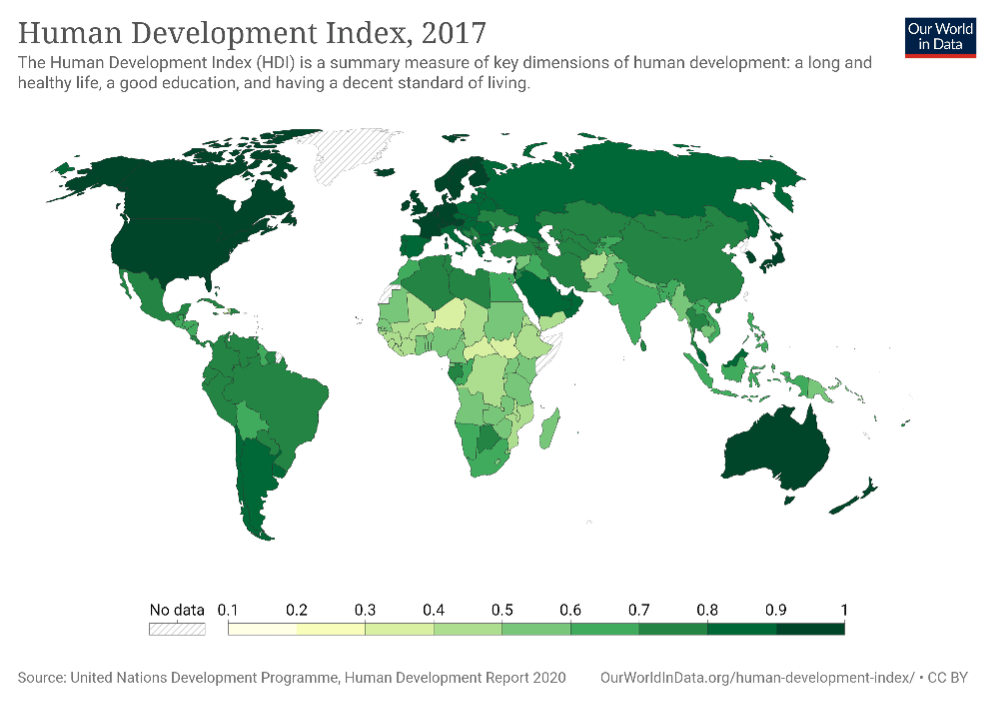
The Human Development Index (HDI), an indicator of the multi-dimensional aspect of development, incorporates the conventional approach to measuring growth in the economy while accounting as well for education and health, which are key factors in determining how developed a society is. This is determined by taking the geometric mean of the GDP per capita, the life expectancy at birth, and the average of the mean and expected school years.

Human Development Index per country in 2017

The Human Capital Index

The Human Capital Index (HCI) ranks 157 countries on a set of four health and education indicators. The main advantage is that, unlike GDP, it emphasizes output rather than input. For instance, the weighting of educational quality in relation to school years is better when it is determined by actual adjusted learning. The main criticism of the HCI is that it might overvalue the tangible advantages of health and education, commoditizing people instead of valuing their contributions to society and inherent status as fundamental human rights. However, it is anticipated that the HCI will be used primarily by developing countries to quantify the outcomes of social sector investments, leading to increased expenses on human development, which the World Bank claims has been overlooked in favor of infrastructure and institutional development.

The Social Progress Index

The SPI is arguably a more accurate metric for assessing societal development. Created by the non-profit organization Social Progress Imperative, the SPI is one of the main achievements of the Stiglitz-Sen-Fitoussi Commission on the Measurement of Economic Performance and Social Progress. The Commission’s main goal was to look into alternative metrics to the one-dimensional GDP measure for measuring a nation’s wealth and social development. Despite only having data for the past four years, this indicator is still relatively new and covers more than 130 nations.  

The SPI is an improvement over the HDI because it increases the number of composite indicators from four to fifty-four in a variety of areas, including fundamental human needs, well-being pillars, and advancement opportunities. This index can therefore synthesize the most important factors that influence development. As an illustration, it considers the availability of water and sanitation, education and health outcomes, public crime, housing, information access, and communication, among others. Naturally, the SPI’s primary flaw is that it is comparatively complicated and impractical to use in informing policy decisions.

Social Progress Index per country in 2021

Weakness of GDP – Examples

The biggest weaknesses that are attributed to GDP target the fact that it solely considers average income, hence failing to reflect how most people actually live or who benefits from economic expansion. Many crucial elements that affect well-being are not included in how much consumable material things people produce, such as a healthy environment and good physical condition. 

For instance, an oil spill can raise GDP because it costs money to clean it up, but it also has a negative impact on the environment. Besides this, GDP includes the value of the sugar-sweetened beverages we sell without deducting the health issues they cause. In a similar fashion, it counts the number of cars we make without accounting for the amount of emissions they produce, and adds up the cost of developing new cities without deducting the cost of replacing vital forests.

Moreover, there is concrete evidence, such as the data from The Office for National Statistics (ONS), which reports that the UK’s annual GDP growth averaged just under 2% from 2009 to 2019. In contrast, over that ten-year period, income inequality rose by 2.2%, and in the year ending March 2020, the ONS’s annual average ratings of life satisfaction, happiness and anxiety all declined. Despite GDP growth, the trend of rising income inequality shows that not everyone is benefiting from it or living a prosperous life, proving that GDP is a poor indicator of citizens’ well-being.

Conclusion

Although GDP is a rough indicator of a society’s standard of living, it does not directly consider leisure, health, education, environment, changes in income inequality, advances in technology or the importance that society may place on different types of output, be that positive or negative.

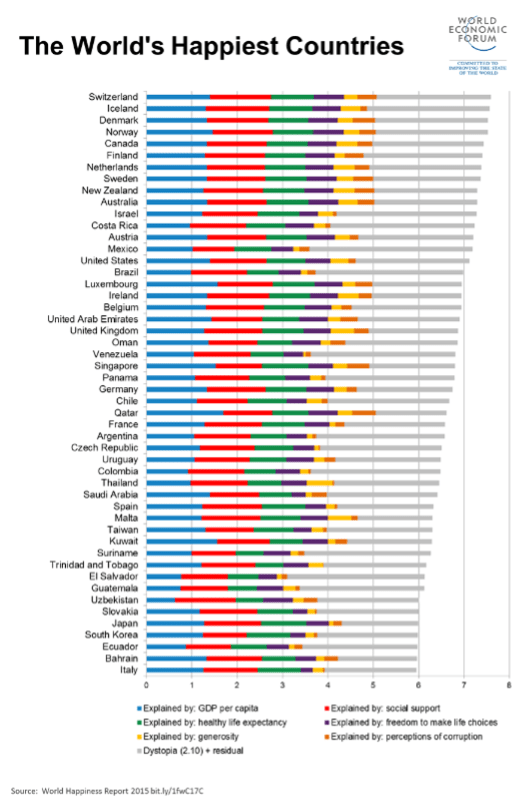
The World´s Happiest Countries (2015)

All aspects of the standards of living, whether they are purchased and sold on the open market or not, have an impact on people’s happiness, and that is why GDP is not a perfect measure for a country’s development. Given this, the HDI, the HCI and particularly the SPI, have come to try to solve some of the concerns raised over GDP´s accuracy, adding important information on a country´s development levels.


Sources: International Growth Centre, Scientific American, Our World in Data

Mariana Gomes

Joana Brás

Leonor Cunha

Urban Master Plan: Cities Built from Scratch

Reading Time: 7 minutes

Introduction

From Paris to Rome, Alexandria to Benghazi, and Tokyo to Beijing, cities tend to be perceived as old creations, with hundreds if not thousands of years of age, that grew naturally throughout the course of history. Usually built with military purposes in mind, or taking advantage of natural geographical conditions, a significant number of today’s major metropolises have followed this pattern, showing their evolution through their centuries-old buildings, monuments, and traditions. 

Nevertheless, a not so insignificant number of recent populational centers have been built following detailed masterplans with years of planning and significant financial commitment.  While some have arguably successfully transitioned into well-established cities, others may have been left abandoned as a reminder that a successful urban center is much more than just a cluster of buildings. These initiatives can broadly be categorized depending on the issue they intended to address – Politics, Environment and Economic development – and the motive for their success or failure most often results from how relevant this issue was and how well it was tackled.

Politics

One of the most common reasonings for planning a new city has to do with the need for the creation of a neutral capital city that has a more central position to the country’s population distribution. 

Washington DC, established in 1790 by the Residence Act, had its location defined as a compromise between the opposing forces of the expanding United States at the time. In what came to be known as the Compromise of 1790, Alexander Hamilton, aligned with the northerner states, agreed to move the capital to the states of Maryland and Virginia in an exchange with Thomas Jefferson, aligned with the southerner states. The deal paved the way for the establishment of the 100 square mile (256 square kilometers) new capital. While having its size diminished (following the decision of the area formerly belonging to Virginia to rejoin the state), with a population greater than 700 thousand, a strong economy, and continuing to serve its original purpose of capital of the United States, Washington DC is certainly a success story. 

Washington’s original design

Other planned capital cities that stood the test of times include Canberra – created in the middle of the two largest and rivaling Australian cities of Sydney and Melbourne – and Brasilia – in a push to develop Brazil’s interior region.


However, Egypt’s successive failed attempts to move its capital away from Cairo – to Nasr city, New Cairo, and even the 10th of Ramadan, a city shaped and sized similarly to the original DC – show that there is room to fail. The country is now planning yet another capital move, to the still-in-construction “New Administrative Capital”. Situated roughly 45km east of Cairo, this new multi-billion-dollar project has officially been initiated to alleviate congestion in the current capital, currently boasting a population of 22 million people. Nevertheless, some have pointed out that the significant potential financial gains by the military and construction industries may be the true motive behind the move. By planning to increase the distance between government buildings and the masses at Cairo, the move has also given rise to allegations that, in truth, this is an attempt by President Al-Sisi to hold on to power, attempting to prevent a repetition of the events of the Arab Spring. 

Environment 

protection from environmental issues in an existing important city, or simply a need to experiment with innovative sustainable ideas, have also fueled the creation of new urban areas across the globe.

Jakarta, Southeast Asia´s most populous city, is currently facing severe flooding problems, with the coastal city sinking as much as 25cm per year in some districts. This is far from a recent issue, however, going way back and beginning with the arrival of the Dutch in the XVII century. As an attempt to emulate the urban planning found in the Netherlands at the time, the existing settlements were torn down and a new one was built with a heavy use of canals. These canals, however, due to lack of upkeep, eventually clogged up and turned out to be a channel of disease-spreading, forcing the Europeans to relocate further south, where a system of pipes to distribute clean water was introduced. These pipes, nevertheless, took decades to reach the canal region, and even today don’t reach more than half of the city’s population. This particular circumstance left many with no option but to pump water directly from subterranean aquifers, ultimately sinking the city in the process

Furthermore, the city has consistently ranked among the worst polluted areas worldwide. Heavy traffic due to high population density and low public transport use, as well as the existence of several coal fired plants in the city outskirts, have all contributed for the city to register “unhealthy air” days for more than half of the 2019 calendar year. A move to the brand-new Nusantara, more than 1000km away from Jakarta, powered by renewable energies, plans to fix most of these issues.

Map of Batavia (current Jakarta)

Across the continent, in the Middle East, the EAU have been building the city of Masdaraimed to be the first zero emissions city, in an effort to test the limits of urban sustainability. The green efforts started right in the construction phase, through the reuse and recycling of waste material. The city is also striving to be completely powered by renewable energy. The urban space was designed with buildings close together, providing protection from the desert heath. Additionally, The Masdar City wind tower, a modern spin on the traditional Arabic “barjeet”, is expected to reduce electricity needs throughout the whole city.  

While effectively an experiment in urban sustainability, having Siemens and the International Renewable Energy Agency relocating their Middle East headquarters to the city are certainly important anchors for Masdar to achieve its goals of housing 50 thousand people and succeed as not just a test-trial, but as an overall functioning city. 

Economics 

Oftentimes, the urban landscape is shaped purely by economic efforts to develop a region and guarantee better living standards

One such case is Malaysia’s Cyberjaya, aiming to emulate Silicon Valley’s success. Launched in 1997, the city was envisioned as “a space for startups to create and innovate; for students to pursue dreams of changing lives with technology; for tech giants to make new discoveries; for small businesses to conquer the world one market at a time”. Flexible repayment schemes and competitive rental rates were among the vast number of incentives offered to attract talent. More than 20 years onwards, having attracted the likes of Shell, DHL, Dell and HP, and with a population of 85 thousand people, some have called the initiative a success. Critics, however, point out the dominance of low-level employment, with the city’s residents mostly employed in call centers for global firms as opposed to the promised innovative and highly specialized tech outlook.

On another spectrum, pure financial motives can lead to vanity projects, as exemplified by Azerbaijan’s Khazar Islands. As the brainchild of billionaire Ibrahim Ibrahimov, it was projected to include luxury apartments and villas, a yacht club, a Formula One track, and even what was to be the tallest building in the world – the Azerbaijan Tower. In a country where GDP per capita is barely above the 5000 US$ mark, with a project such as this one accounting for a price tag of 100 billion US$, many have criticized the endeavor due to its lack of meaningful contribution for the development of the country. The lavish undertaking ultimately failed due to lack of funding, with construction coming to a stop in 2015 just four years after work had begun, a striking reminder that an ambitious plan and piles of cash may not be enough to support the creation of a brand-new metropolis.

Conclusion 

Moving away from the historical trends of organic development, there has been a growing trend of planning cities from scratch, with politics, the environment and economics coming up as the top motivators for such blueprints. These fresh creations, with varying degrees of success, come to show that planned projects of huge scale are in fact possible. Nevertheless, in many occasions, pure financial availability or political power are not sufficient to sustain them. Besides needing to address a real issue, these projects, like any urban area, need to create the right set of conditions to attract people and businesses, in order to successfully make the transition from just an idealized setting into an actual living space.  


Sources: Washington DC, Britannica, Ellis, Joseph J. (2000). “Founding Brothers: The Revolutionary Generation”, Statista, Davison, G. (2001). “Canberra” From “The Oxford Companion to Australian History”. In Oxford University Press., Cairo Observer, Aljazeera, Channel News Asia, Centre for Research on Energy and Clean Air, Arab News, Masdar, Diário de Notícias, World Bank, IDEAS (Institute for Democracy and Economic Affairs), Wired, Plaza London, Harris-Brandts, Suzanne; Gogishvili, David. (2018). “Architectural rumors: unrealized megaprojects in Baku, Azerbaijan and their politico-economic uses. In Eurasian Geography and Economics, Armenian Weekly, Azer News.

Manuel Rocha

Leonor Cunha