“Whatever it takes” to bring Europe back from the dead?  

Reading time: 8 minutes

A look into the integration and competition concerns of the Draghi Report 

“Europe faces a choice between exit, paralysis, or integration” – Mario Draghi 

Unlike many of us perceive, European integration is far from figured out.  

In practical terms, integration is all-around. From the euro to the European Court of Justice, touching on more simplistic aspects such as the citizen’s identification as Europeans. On the other hand, macro shocks like the Sovereign Debt Crisis might be able unveil more sensitive aspects of this fragile social, economic and political commitment, for example, by leading us to question whether European countries should pay for each other’s debt.  

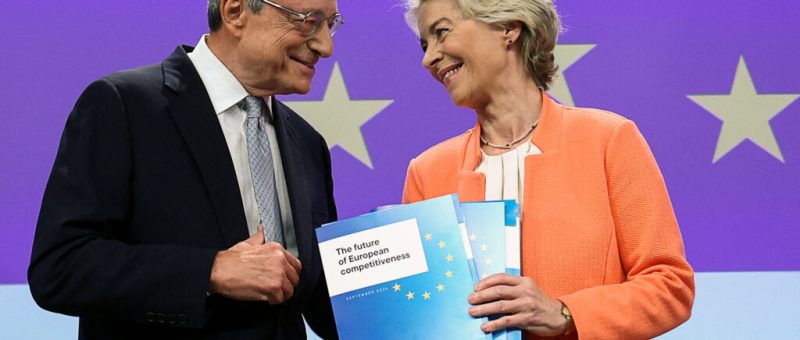
So, how much integration is too much integration? Mario Draghi, former Italian prime minister and president of the European Central Bank (ECB) brings this issue back to the fore with the release of his 400-page report on European competitiveness. There, Draghi identifies a rather plain and apparently sensible solution for its stagnation: cooperation and coordination. The former president of the ECB calls for an additional annual €800bn in investment, paired with a profound policy redesign to foster the European’s assertiveness in global competition. For many, a courageous punch full of truth, while for others, a political disaster.  

This article will further delve into the specific intricacies of the mediatic Draghi’s Report, while dissecting the competition dilemma that Europe faces and intertwining them with the pervasive message of integration throughout report. Thus, alluding to the question of whether it exists a trade-off between resilience in global position and the core of current European values. 

Nicolas Tucat, AFP 

Background 

The idea that the European Union is falling behind the United States, China and other advanced economies, when it comes to competitive edge, has been abiding for a while now.  

The report dedicates a fair number of pages exploring the evolution of these dynamics. For instance, the gap in GDP level at constant prices is said to be widening, from 15% in 2002 to 30% in 2023. When measured in Purchasing Power Parity (PPP), it amounts to 12%. The gap growth is more sluggish when translated into per capita terms, but the authors claim is still significant, rising from 31% in 2002 to 34% today. The catalyzers for these disparities are precisely differentials in productivity: About 70% of the gap in per capita GDP with US at PPP is explained by lower productivity levels in the EU. 

2024, The future of European competitiveness – Part A 

On the other hand, the European Union is the proud face of some of the lowest levels of inequality, reportedly disclosing rates of income inequality around 10 percentage points below the ones evidenced in the United States (US) and China. It also surpasses these countries when it comes to life expectancy at birth, low levels of infant mortality, and education. In fact, its education systems allow a third of adults to have completed higher education. The EU is also the world leader in sustainability, environmental standards and progress towards the circular economy. (2024, The future of European competitiveness – Part A).  

Plans had already been forged to deal with this issue of modest competition efforts across the European landscape. In November 2023, Ursula von der Leyen delivered her annual State of the Union speech, where she presented the main lines of action for the European Commission for the next year. Von der Leyen dedicated around a third of her speech to reshaping the EU’s economy, but the headline announcement was, precisely, Draghi’s Report. (2023 Foy) 

Proposals 

The report identified three main areas of action: The first is closing the innovation gap with America. According to the report, emerging technologies are still underdeveloped in the EU, not by lack of ideas or competence, but because of structural blocks, in the form of said inconsistent and restrictive regulations. Europe must focus on easier access for researchers when it comes to the commercialization of ideas, joint public investment in breakthrough technology or even investment in infrastructure to lower the cost of developing AI. Furthermore, training and adult learning should be at the core of the agenda.  

The second area for action is combining decarbonization with competitiveness, by reforming Europe’s energy market, so that end-users can benefit from a competitive clean energy price, supporting industries that allow for decarbonization (e.g. clean tech and electric vehicles), while jointly promoting green industries.  

The third area is increasing security and reducing dependencies. This vector of action is a result of the political turmoil instituted by the geopolitical instability. The EU is called to build a true “foreign economic policy”, by establishing coordination mechanisms in trade agreements and direct investment, ensuring stock of specific critical goods and devising industrial partnerships to establish robust supply chains.  

To add on to this, the article takes a more thorough look at some more specific recommendations that have been particularly featured within the mediatic space, as the ones where it may be more difficult to achieve political consensus towards.   

Competition Policy  

“There is a question about whether vigorous competition policy conflicts with European companies’ need for sufficient scale to compete with Chinese and American superstar companies” – Draghi’s Report 

A controversial point of discussion encompasses the question of competition policy enforcement, particularly mergers. EU antitrust policy has long been praised for protecting against abuses of dominant position. However, the report claims that this might be compromising the forging of European world-beaters, instead of only preserving competition within the EU (2024, Financial Times). In practical terms, this can be translated into the concern that European firms won’t be able to compete with significant global firms.  

To achieve this, the report suggests an increased weight of the innovation factor in the assessment of mergers, by allowing higher market share concentration if this were to produce the development of new technologies by the merging firms. Of course, this might raise concerns regarding the misuse of this type of defense on a merger deal, allowing for a situation in which firms might commit to innovation only for the possibility of acquiring increased market power. So, Draghi suggests making companies showcase measurable levels of investment that can be tracked in the years following merger approval. The commission might, for instance, require companies to provide data on pricing or investment.  

What is more, it is proposed a less stiff approach towards collaboration between rival corporate executives, with the argument that coordination might be necessary to maximize investment in research, or technological standardization (2024, Foy & Espinoza). 

The report also recommends defining telecoms markets at the EU level – as opposed to the Member State level. To exemplify, a merged telecoms group could function in an almost monopolistic setting in individual countries, if their market share across the entire single market was less than 40 percent, which serves as a threshold for merger policy (2024, Foy and Espinoza). 

These last measures have been subject to much mediatic scrutiny. On a paper published in Vox EU, the professors Tomaso Duso, Massimo Motta, Martin Peitz and Tommaso Valletti expressed their concerns regarding the telecom policy recommendations provided by the report. They claim that “They propose a broader, EU-wide market definition, which would artificially de-concentrate the relevant market, thereby making intra-national mergers appear no longer problematic on paper”, which ultimately creates the possibility to accept mergers that would be detrimental to European businesses and consumers. 

Integration 

Draghi claimed that the new “industrial strategy for Europe” would cost approximately €750- €800bn, which corresponds to 4.4-4.7 percent of EU GDP. Large amounts of money should be placed on joint funding key projects, such as innovation, as well as other European “public goods” —such as defense procurement, cross-border grids or common energy infrastructure. 

Another concern expressed in the report points to the levels of financial fragmentation of the capital markets of the EU. Its integration is seen as an essential procedure towards the introduction of economic momentum that would allow for the development of the investments needs.  

With the case of banking fragmentation, the report reminds us of the incomplete implementation of the Banking Union. While the unified supervision aspect is solidified, Europe has failed to implement a common debt insurance scheme, and the single resolution authority lacks a financial backstop. One of the proposed actions to facilitate this process is the creation of a common safe asset, particularly, the report appeals to “issue common debt instruments to finance joint investment projects that will increase the EU’s competitiveness and security.” However, it also established that a necessary condition for this to happen would be that “the political and institutional conditions are in place”, which can signify an impediment.   

Moreover, the report asks for the extension of qualified majority voting (QMV) in the Council of The European Union, such that voting subject to QMV would be elongated to more areas, or even generalized, implying the end, or at least, reduction of the veto power under unanimity voting.   

The difficulty here lies exactly in gaining political momentum to implement such reforms. In fact, the German finance minister Christian Lindner has already spoken on the matter, dismissing the Draghi’s suggestion to raise additional common debt to fund breakthrough innovation: “Each individual EU member state must continue to bear responsibility for its own public finances”. (2024 Hall). Eelco Heinen, finance minister of the Netherlands, said that “Europe has to grow, and I totally agree with that. An economy will grow if you reform (…) more money is not always the solution.”.   

Conclusion 

To conclude, the Draghi Report could represent either a turning point for Europe or just another document to be archived and forgotten about in the years to come. And although it may not be translated into policy action, at least for the time being, it has the power to ignite the public discussion back to “After all, what is the Europe that we want?” 


References: Dragui, Mario. 2024. “Mario Draghi outlines his plan to make Europe more competitive”. The Economist.  https://www.economist.com/by-invitation/2024/09/09/mario-draghi-outlines-his-plan-to-make-europe-more-competitive

Draghi, Mario. 2024. The future of European competitiveness: Part B | In-depth analysis and recommendations. European Comission. https://commission.europa.eu/document/download/ec1409c1-d4b4-4882-8bdd-3519f86bbb92_en?filename=The%20future%20of%20European%20competitiveness_%20In-depth%20analysis%20and%20recommendations_0.pdf

Draghi, Mario. 2024. The future of European competitiveness: Part A | A competitiveness strategy for Europe. European Comission. https://commission.europa.eu/document/download/97e481fd-2dc3-412d-be4c-f152a8232961_enfilename=The%20future%20of%20European%20competitiveness%20_%20A%20competitiveness%20strategy%20for%20Europe.pdf

Foy, Henry. 2024. “Why Draghi went for broke in calling for €800bn of new EU spending”. Financial Times.  https://www.ft.com/content/76e8458d-3eb7-46d3-8d9c-42d524d60800

The Editorial Board. 2024. Whatever it takes to boost European competitiveness”. Financial Times.  https://www.ft.com/content/a87af4c4-5e5f-44a8-88a5-9a4037a16d19

Foy, Henry and Ian Johnston. 2023. “The EU’s plan to regain its competitive edge”. Financial Times. https://www.ft.com/content/124b4cdb-deb9-49a0-b28d-d97838606661  

Foy, Henry, Javier Espinoza, and Paola Tamma. 2024. “Mario Draghi confronts the EU’s merger police”. Financial Times.  https://www.ft.com/content/515d5a42-a760-42f1-9afa-89d4dcdc2a99

Duso, Tomaso,  Massimo Motta, Martin Peitz , and Tommaso Valletti. 2024. “Draghi is right on many issues, but he is wrong on telecoms”. Vox EU. https://cepr.org/voxeu/columns/draghi-right-many-issues-he-wrong-telecoms

Hall, Ben. 2024. “Will Mario Draghi’s masterplan get the momentum it needs?”. Financial Times. https://www.ft.com/content/a5e1264c-4004-440e-b3d9-2e130a68853

Maria Francisca Pereira

To Moral Hazard or Not to Moral Hazard?  

It would be possible to end poverty in the United States, at least in theory. Using a pure means-tested transfer system, the authorities could compensate each individual in the amount remounting the difference between the poverty line value and their income. This would cost only 131 billion dollars, about one-sixth of the value cost of the Social Security program (Using the U.S. Bureau of the Census 2019). The problem is that such computation doesn’t account for the Moral Hazard implications that come with benefit guarantees, as Jonathan Gruber points out in his book Public Finance and Public Policy (2019, Chapter 17).  

What happens is that this program may have a way of disincentivizing work to some extent, as it can motivate people slightly above the poverty line to stop working to receive the full benefit without substantially having to lower their consumption. Thus, increasing the number of people receiving the benefits, along with the policy’s costs

This phenomenon, named Moral Hazard, largely studied by economists, constitutes a change in people’s behavior provoked by the acquisition of insurance, either literally or figuratively speaking. In economics, this event usually leads to inefficient allocations of resources since it induces individuals to have a consumption different from the optimal level. The most common examples of Moral Hazard situations are observed in public policy, such as in the scenario described above, with insurance-related issues, such as health insurance or car insurance, and even during the Great Recession, the topics for the discussion in this article.  

Illustration by Christoph Niemann, The New Yorker 

Moral Hazard in Public Policy  

There are multiple applications of this concept within the realm of insurance in public policy. Unemployment, disability, injury, retirement, and poverty, appear as somewhat unpredictable situations against which agents want to be insured. If one is to think about it, much of the population seeks to smoothen their consumption throughout life. This can be translated into preferring to pay a fixed amount in insurance premiums so as to benefit from compensation in the face of an adverse event, like job loss, in such a way that consumption does not brutally fall.  

Here, Moral Hazard usually conveys disincentives to work: Take the example of Unemployment Insurance (UI), that functions as a means of compensating individuals if they lose their jobs. If the payment amounted to 100% of workers’ salaries, people would not have the incentive to seek employment throughout the duration of the benefit, which would ultimately lead to a lower-than-optimal provision of labor in the economy. Additionally, much of the workforce would have an incentive to stop working, adding up to the costs of the program. This is why not only UI but also schemes that cover these and other types of adverse events often do not contemplate full insurance. Instead, they try to weigh out the consumption smoothing ability that the program carries with its Moral Hazard costs.  

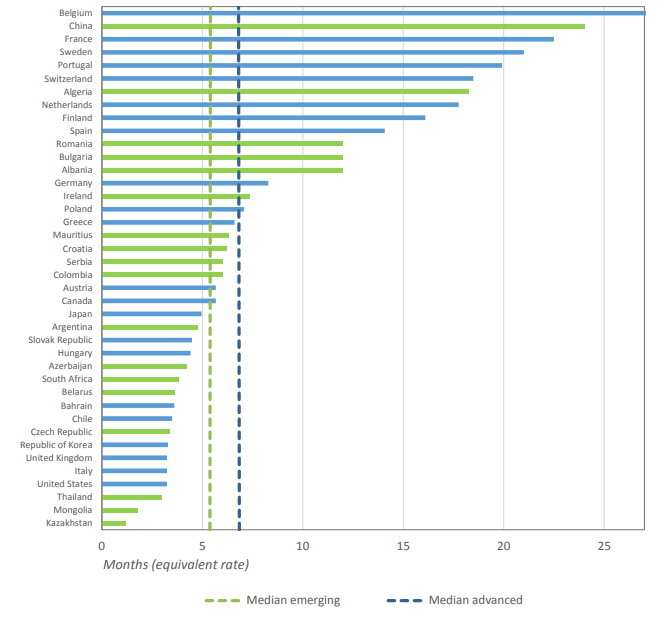
Countries may choose different schemes of Unemployment Benefits, depending on their internal policies. According to the Figure, it can be pointed out that the United States provides one of the lowest financial disincentives to return to work and constitutes one of the countries with a lower maximum amount for the duration of the benefits program (Figure 2). On the other hand, in most European countries the disincentive is more substantial and the threshold for the benefits is higher.  

Fig.1 – Financial disincentive to return to work (2023, OECD Data) 

Fig. 2 – Maximum duration of unemployment benefits at an equivalent rate (2019, ILO) 

Moral Hazard in Health Insurance  

Once again, insurance (in the health case) promotes consumption smoothing when faced with an adverse event (sickness). Its importance relates to the fact that it facilitates necessary treatments without the injured having to carry out major payments.  

Yet, another common means for Moral Hazard to manifest itself is through health insurance, which can comprise two types: Ex ante and ex post Moral Hazard. The first one illustrates cases where individuals have less incentive to indulge in activities that reduce the risk of sickness or illness (e.g. smoking), when insured, whereas the last comprises a circumstance in which insurance beneficiaries are less likely to limit the use of healthcare when sick (e.g. going to consultation because of a cold).  

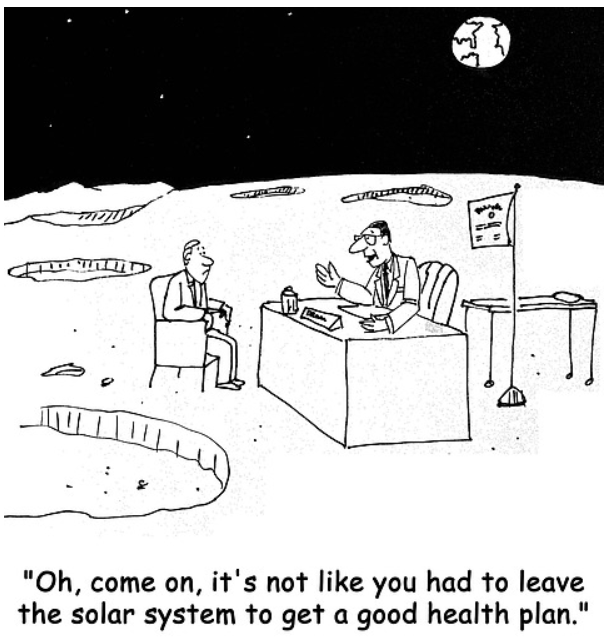
When provided with health coverage, individuals may be more prone to seek medical care for minor conditions or undergo unnecessary procedures. This overutilization can strain healthcare resources, and lead to inefficiencies in the delivery of care. Additionally, it can drive up costs for insurers, leading to greater insurance premiums.  

However, would it be unreasonable to assume this increase in healthcare utilization can come from the actual need for medical care?  

“Too Big to Fail”: Moral Hazard in the Great Recession 

Moral Hazard is not only present in the daily life of the average person but also in the most pressing global financial crises. The most prominent example being the 2008 Financial Crisis. In the years leading up to this crisis, the United States had evidenced an exponential increase in housing prices, stemming from factors such as the accessibility of credit, lower interest rates, and permissive lending standards. This allowed a significant number of subprime borrowers to obtain mortgages, bundled by Financial Institutions to form Mortgage-Backed Securities (MBS) and Collateralized Debt Obligations (CDO) which were posteriorly sold to international investors with higher credit ratings.  

Why did Financial Institutions engage in such risky lending practices? 

Credit rating agencies played an instrumental role in the crisis by assigning high ratings to MBS and CDO, prompting a false sense of security about the degree of risk of these securities. This is where Moral Hazard comes in, as the financial institutions involved operated in accordance with the misbelief that they were “too big to fail” (Stewart McKinney, 1984). This entailed the expectation that, because of financial institutions’ vitality to the economy, regulating authorities would not allow them to fail due to the systemic risk that could influence the course of the global environment. Thus, these continued to operate with disregard for possible unfavorable outcomes so, when housing prices peaked and proceeded to decline in 2006, borrowers defaulted on their mortgages, leading to a collapse in the value of MBS.  

The losses caused a domino effect in the financial sector and major financial institutions faced bankruptcy, with long-lasting effects on the global economy prompting a significant need for regulatory reforms. One measure was the Dodd-Frank Wall Street Reform which implicates more strenuous capital and liquidity requirements for banks with at least $50 billion in assets, and the Consumer Protection Act in the US to further protect financial activity in the country. Its provisions included the Volcker Rule, which argues that banks that take on hazardous risks should not be government-subsidized and aims at constraining banks from using their own money to trade securities, rather than depositor money. The latter faced opposition as many of the institutions that integrated this failure did not take on deposits and would not have been subject to such rules. 

So, are authorities able to contain Moral Hazards? 

Silicon Valley Bank (SVB), a bank with assets totaling $209 billion in late 2022, according to the Federal Deposit Insurance Corporation, collapsed one week after being listed on Forbes’ America’s Best Banks List, making the sour transition from one of the best American banks, into the second-largest bank failure in US history.  

This unfortunate occurrence sprang from the large amount of deposits with scarce cash held by the bank, with which SVB would buy treasury bonds and other long-term debts that have low returns and risk. However, as the Federal Reserve increased interest rates to combat inflation, SVB’s bonds became riskier and, thus, saw a stark decline in value which prompted mass customers to withdraw funds, leading to its collapse.  

It is also argued that this failure started before the Federal Reserve’s regulations, with the overturn of the Dodd-Frank Act whose requirements were relived in 2018 by former President Donald Trump. This was done through the Economic Growth Regulatory Relief, and Consumer Protection Act, according to which the law increased the threshold to $250 billion. Thus, another instance of moral hazard lies with the bailout provided to SVB, raising concerns regarding other banks’ propensity to take risks. It is, therefore, of great importance to acknowledge the dichotomy faced by the Federal Reserve when weighing price stability and financial stability, since interest rates, despite being conventionally perceived as a powerful strategy to stabilize inflation, can rapidly escalate to become a trigger for Moral Hazards within the financial sector, rooting global financial instability. 

Policy implications  

Evidently, public policy applications of Moral Hazard come with implications. Many economists focus their work on the design of these. With the UI, policymakers try to balance the consumption smoothing benefits of the insurance with its Moral Hazard costs, which depend on the magnitude and predictability of adverse events. For example, retirement is a rather predictable event, so people may prepare in advance. On the other hand, unemployment is considered of low magnitude, meaning that some may be able to self-insure. The functioning of both Disability Insurance (DI) and Workers’ Compensation (WC) goes along those lines, which ultimately impedes these programs from offering full coverage. 

Poverty alleviation programs, as mentioned in the introduction, also carry Moral Hazard concerns. In such a case, there are policies designed to try to make sure that everyone who needs the benefit gets it and those who do not don’t, although this might be difficult. There are some instruments impregnated in society to try to regulate this, such as ordeal mechanisms, that make welfare programs somewhat unattractive to guarantee that only the population that necessitates benefits from them. For example, the long lines in soup kitchens.   

In 2010, President Barack Obama signed the Patient Protection and Affordable Care Act, often referred to as the Affordable Care Act (ACA) or Obamacare. This legislation aimed to extend health coverage to millions of uninsured Americans by expanding Medicaid, establishing health insurance exchanges, and introducing various health-related provisions. The ACA sought to make health insurance more accessible and affordable. It offered premium tax credits and cost-sharing reductions to individuals with lower incomes. However, the Act may also have exacerbated existing moral hazards within the health insurance industry, as Sean Ross discusses in his article (2023). Some of the provisions included the mandatory coverage of some essential benefits, the obligation to buy insurance, provided with an exemption for low-income citizens, and restricting prices. However, in such a scenario, one should also consider the fairness argument for the existence of programs that lower the efficiency of an economy. At the end of the day, it is a trade-off.  

Illustration by Andrew Grossman, IAS 

Conclusion 

From work disincentives to devastating financial crises, moral hazards’ ever presence within a country’s economy underscores the intricacy in policy making towards a balance between social welfare and economic efficiency. While initiatives such as healthcare or social benefits aim to mitigate disparities, moral hazard reminds governments of the complexity implicit in policymaking and surfaces the question introduced in this article: To moral hazard or not to moral hazard? 

References  

Aklin, Michaël, and Andreas Kern. 2019. “Moral Hazard and Financial Crises: Evidence From American Troop Deployments.” International Studies Quarterly (Print) 63 (1): 15-29. https://academic.oup.com/isq/article/63/1/15/5290056 

Asenjo, Antonia, and Clemente Pignatti. 2019. Unemployment insurance schemes around the world: Evidence and policy options. ILO Working Paper no 49 (October): 20-24 https://www.ilo.org/wcmsp5/groups/public/—dgreports/—inst/documents/publication/wcms_723778.pdf 

Dewan, Shaila. 2012. “Moral Hazard: A Tempest-Tossed Idea” The New York Times. February 25, 2012. https://www.nytimes.com/2012/02/26/business/moral-hazard-as-the-flip-side-of-self-reliance.html 

Duggan, Wayne. 2023. “A Short History of the Great Recession.” Forbes Advisor, June 21, 2023. https://www.forbes.com/advisor/investing/great-recession/ 

“Financial Crisis and the Ethics of Moral Hazard on JSTOR.” n.d. Www.Jstor.Org. https://www.jstor.org/stable/24575743 

Gruber, Jonathan. 2019. Public Finance and Public Policy, 6th Edition, Chapters 14, 15, 17. New York: Worth Publishers 

OECD (2024). Financial disincentive to return to work (indicator). https://data.oecd.org/benwage/financial-disincentive-to-return-to-work.htm#indicator-chart  

Ross, Sean. 2023. The Affordable Care Act Affects Moral Hazard in the Health Insurance Industry. Investopedia. 2023. https://www.investopedia.com/ask/answers/043015/how-does-affordable-care-act-affect-moral-hazard-health-insurance-industry.asp  

Stiglitz, Joseph. 2023. “Silicon Valley Bank’s Failure Is Predictable – What Can It Teach Us?” The Guardian, March 13, 2023. https://www.theguardian.com/business/2023/mar/13/silicon-valley-bank-failure-svb-collapse 

SVB: US Regulators Have Generated a ‘Moral Hazard.’” n.d. The Banker. https://www.thebanker.com/SVB-US-regulators-have-generated-a-moral-hazard-1679645486 

Team, Investopedia. 2023. “How Did Moral Hazard Contribute to the 2008 Financial Crisis?” Investopedia. October 26, 2023. https://www.investopedia.com/ask/answers/050515/how-did-moral-hazard-contribute-financial-crisis-2008.asp 

The Economist. 2017. “How The 2007-08 Crisis Unfolded.” The Economist, June 8, 2017. https://www.economist.com/special-report/2017/05/04/how-the-2007-08-crisis-unfolded 

Madalena Martinho do Rosário

Maria Francisca Pereira

Commons: Tragedy or Comedy? 

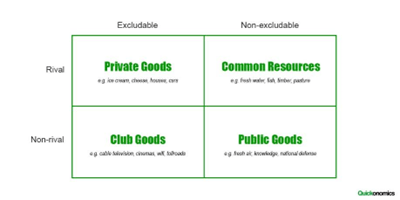
The four categories of goods, given their degree of excludability and rivalry

Definition “rivalrous and non-excludable goods”. Big words. And what do they mean, exactly? Well, let’s break it down. First, excludability: an excludable good is a good/resource that someone can bar (or limit the access to) other people from using. Second, rivalry. Despite the name, rivalrous goods are not the ones that lose their temper when their football team is losing. Rivalry simply means that if one person uses the good, someone else will either have less of the good to use or be unable to use it at all. Think of the shirt you are (presumably) wearing now: while you wear it, no one else can. Music, for example, is just the opposite – if someone is listening to a song, there won’t be any less of the same song for others to hear (unfortunately, in some cases). With these 2 characteristics, we divide goods into 4 categories: private goods, the excludable and rivalrous ones; club goods, excludable but non-rivalrous; public goods, neither excludable nor rivalrous; and the ones we will be focusing on, the non-excludable and rivalrous goods, the commons

So, common goods are the ones that everyone has access to (or at least it would be hard to block anyone from using them), while also being diminished with every utilization, that is, there is progressively less quantity available the more they are used. Now, you may recognize this description as the one of most natural resources: fish in the sea, mineral deposits, the shells at the beach…Consequently, it is easy to see the problem that arises from these characteristics: their sustainability

THE TRAGEDY 

The Tragedy of the Commons. Despite the rather theatrical name, it is neither a Shakespearean play nor a Mexican soap opera (we’ve checked). 

This Tragedy is an economic term coined in 1968 by Garrett Hardin to describe the phenomenon of over-exploitation of common-pool resources: users of the common good behave opportunistically, seeing the resource as “free”, since they cannot be excluded from it, so they reap all the benefits without taking in the costs, which ultimately leads to depletion.   

The extinct dodo

We do seem to have a tendency to explore every resource we can until thorough extinction (I mean, when was the last time you saw a dodo around?), with no regard for their long-term (or even short-term) sustainability. The rationale is rather simple: if it belongs to everyone, it belongs to no one, so you should be quick to grab as much as you can before it’s over. 

The problem with this is, as we’ve seen, the risk of depletion. And this is not merely childish or selfish behavior. This is, in fact, very standard rational economic behavior. Every user can be immediately better-off by taking more than what is sustainable to take, so they do it, until inevitably the resource is gone. Individuals have no direct incentive to behave sustainably. Sustainability is often in the best interest of a community, but not necessarily of a single person. See the problem?  

NEED A SOLUTION? ELIMINATE THE PROBLEM 

This is the standard economics’ layout of the issue – and standard economics presents a solution. Think of a small forest, of around 30 trees, and 3 lumberjacks. Every year, in the spring, the lumberjacks come and take down trees to sell the wood. Now, the forest is capable of regenerating: if they leave at least 3 trees standing, next year 30 will be there again (it’s a very mathematically exact forest). What would be optimal? Easy, right? Each lumberjack could take down 9 trees, and all could come back next spring to get more. But each one has an incentive to outperform the others, sell a lot of wood and get rich. So, each takes as many trees as they can, leaving none in the forest. How can we prevent this?  

The forest and lumberjacks’ metaphor

Whatever we do, the good will not magically become non-rivalrous, but we can do our best to make it excludable. In other words, if the problem arises from collective ownership of the resource, then the solution is surely to change that ownership form. One way to do this is to effectively switch ownership to the government, who then regulates who has access and how much of the resource can be consumed. In our magic forest example, this would mean passing a law stating that each lumberjack could take no more than 9 trees every year. 

It should be noted that this solution requires some form of enforcement – a surveillance authority to ensure regulations are upheld, as well as a penalty in case of breach of the system. These are usually provided, or at least legitimized, by the same governmental authority that controls the resource. 

Such top-down, centralized solutions suffer from certain inherent problems, namely rent-seeking (one entity trying to gain some profit without further contributing to the productivity of the system – like governmental officials trying to collect bribes from the citizens to grant them access to the resource), principal-agent conflicts (when there is a conflict of interest between the citizens and the agent meant to act in their behalf, like the government representative) and knowledge issues (the government may not be fully accurately aware of the needs of the population). 

If state control is not the ideal answer, then maybe we should go in the opposite direction: privatization. Maybe each person could be given a part of the resource to explore (say, each lumberjack is given a certain amount of trees), and trade between themselves, so that each gets the best deal they can potentially obtain. 

If state ownership is not the solution, how about privatization?

Unfortunately, this is not a perfect solution either. Besides the physical impracticability of dividing up some of these goods, there is again the issue of enforceability. Besides, this solution comes with a problem at the very beginning: each person is given a part of the resource to exploit – but… given by whom? Often enough, such a project of privatization requires a government taking control of the resource and then assigning its exploration as it sees fit. So, at its very core, this solution is not so different from the first. Both rely on a higher authority defining and enforcing regulations to limit the use of the common good. They follow a very simple logic: if commons are so tragically doomed, then our efforts should focus on tackling their core characteristics, what makes them common goods in the first place.  

So far, we have looked at the problem and formulated solutions assuming this is how individuals act when faced with a resource to share. But do we always have the behavioral standards of a preschooler? Thankfully, no. In fact (poor dodos aside), we are actually very capable of collectively managing common resources. 

OSTROM’S THEORY 

In 2008, economist Elinor Ostrom was awarded the Nobel Prize in Economic Sciences (becoming the first woman to receive it). The reason? Her breakthrough research on common-pool resource management.  

Elinor Ostrom

Ostrom took a different approach to the problem. Hardin had looked at common goods and their rivalrous and non-excludable nature and tried to explain their over-exploitation based on standard economic theory’s behavior predictions: people behave selfishly and without considering others or the future; therefore, the Tragedy is only natural. Ostrom, on the other hand, decided to start from observation, not from assumptions. And what did she discover? Examples, many in fact, of sustainable management of a common-pool resource! This real-life examination allowed her to arrive at a new theory. In all these successful cases, the management was done by the local communities! Yes, the solution was right there in the name all along.  

So, all we need to do is to leave common goods alone, trusting local communities to handle the matter? Great! Economics is so easy (…said any economics freshman right before their first midterm season…). The theory is, of course, slightly more elaborated.  

Ostrom laid down a set of conditions under which local community management – what she called management through collective action – of common resources can be optimal

  1. Define clear boundaries of the common resource 
  1. Rules governing the use of common resources should fit local needs and conditions 
  1. As many users of the resource as possible should participate in making decisions regarding usage 
  1. Usage of common resources must be monitored 
  1. Sanctions for violators of the defined rules should be graduated 
  1. Conflicts should be resolved easily and informally 
  1. Higher-level authorities recognize the established rules and self-governance of resource users 
  1. Common resource management should consider regional resource management 

Let’s think of what this looks like in the previous 30-trees-for-3-lumberjacks example: 

First, the community should clearly set down who the resource is meant for. By community, we mean the people who live and work within the ecosystem the forest in inserted in – a village where the lumberjacks live, the market they trade on. The group allowed to explore the resource is the lumberjack professionals – they are the ones who make their livelihoods from the forest. It should also be clarified how much of the resource can be taken, and the lumberjacks should take part in the rule making. The people in the village know better than anyone how the forest works: they know at least 3 trees must be left for the forest to regenerate, and have an interest in its sustainability, and the lumberjacks want to reap the benefits of its exploration. Besides, people are more likely to comply with rules they helped write themselves. Of course, the forest must be monitored, and if someone takes more than their share they must be punished by the community. But this punishment should be gradual – not immediately banning, but warning, sanctioning and informal social condemnation (the offender should feel ashamed to break the rules). If there is any disagreement regarding the forest, it should be able to be resolved quickly, in an informal way. The community should also feel assured that their rules will not be overturned by a higher authority. Lastly, they should remember that the forest does not stand alone. It is part of a larger system that should be had in mind, so that resources are explored in a way that does not hurt the rest of the system. 

CONCLUSION 

Common-pool resources management is a puzzling subject. They can be invaluable tools for the subsistence and development of local communities, or they can be consumed to extinction in a heartbeat. Ostrom’s Co-operative Collective Action Management Theory is a clever and helpful way to think about sustainability, one of the greatest challenges of our century. Her work proves observation and context are important tools for economic research, perhaps the most important ones.  


Sources:Investopedia, Wikipedia, Harvard Business School, American Enterprise Institute, Aeon, Corporate Finance Institute 

Leonor Cunha

Joana Brás

The growing cracks on the Chinese economy – Is the country heading for a collapse?

Reading time: 6 minutes

The People’s Republic of China, with its 1.4 billion population, is the most populous nation on earth, boasting the 2ndhighest economy in nominal terms.  Being considered one of the largest economic miracles in recent history, – with sustained growth levels above 5% since 1990 up until 2020 – millions of Chinese people have been lifted out of poverty following the country’s embrace of international trade and investment. Nevertheless, ever since the beginning of the COVID outbreaks, China has struggled to maintain its historic impressive figures. While its zero Covid policy has certainly pressed the brakes on economic activity, through mandatory lockdowns and business shutdowns, a series of deeper and more serious problems – from a faulting real estate market to government overspending – have recently started to showcase the cracks on the country´s economy.

A brief recent history of China’s economy

For a large part of recent history, particularly between the 14th and 18th century, China is believed to have been responsible for one of the largest shares of economic activity worldwide. While it experienced a heavy economic decline in the subsequent period, it was during the 1970s that its share on global output began to rise once again. Following the end of the Chinese Cultural Revolution, the Four Modernizations were adopted to kick start the nation´s production sectors, with a special focus on agriculture, industry, defense, and science. This program heavily moved away from the “iron rice bowl”, or “work for life”, previously in place, and embraced a meritocratic system where workers and managers were rewarded if they hit or exceeded their targets. 

In the 1980s, China implemented Special Economic Zones in its southeastern region, creating pockets free to trade internationally and receive direct foreign investment without Beijing’s direct control, in a bid to increase productivity and prosperity. Fast forward to 2001 and the World Trade Organization welcomed China as its newest member, allowing the nation to access the world’s markets and more favorable rates, marking it one of the most consequential events of the 21st century. The country has since become responsible for almost one third of manufacturing output, surpassing Japan in 2010 to become the 2nd largest economy, and is now home to 12 of the 100 largest firms by market capitalization, more than any country apart from the United States.

Economic Troubles: The Real Estate indebtedness

China, unlike the vast majority of the developed world, imposes restrictions on capital outflows. Coupled with a very volatile stock market, Chinese consumers tend to favor housing as the main form of investment, visible by its high ownership rates (around 90% compared to the US’s 65%) and the increasing purchase of 2nd and 3rd homes. Home ownership also seems to be a consequence of China’s demographic imbalance, with men vastly outnumbering women, as it seemingly becomes a pre-requisite for marriage. This leaves the country heavily vulnerable to this market, with some estimating that it is responsible for as much as 30% of the GDP when accounting to related activities. In addition, as China’s population begins to decline, the increase in prices that supports this investment can only go on for so long. 

The year of 2008 marked one of the worst financial crises on record, shooting the world’s collective output growth into negative territory for the first time in at least 50 years. This tumble, however, did not seem to reach China as its output still recorded an impressive growth rate of 9%, due, in no small part, to the introduction of a massive stimulus package keeping interest rates low and borrowing cheap. This allowed companies like Evergrande – the largest (by sales) real estate developer in China as of 2016 – to use its lands as collateral to borrow money, to then be used to acquire more land (and so on), which, while allowing for massive growth, meant that debt levels also grew. With growing levels of non-financial debt by 2020, and with the goal of mitigating the risk, the Communist Party introduced the “three red lines” aimed at limiting the ease with which developers could accumulate debt. Going back to Evergrande´s case, while it announced plans to reduce its debt, issues resurfaced in 2021. With 1,5 million homes partially paid for, and an estimated 300 billion US dollars in liabilities, homebuyers began to protest in Guangzhou in a showing of the climbing proportion of these difficulties, and the company finally defaulted in December of 2021. With other major property developers having defaulted as well, namely HNA and Sunac, the sector is at risk of severely fragilizing one of the world’s largest economies.

Evergrande real estate group

Economic Troubles: The Railway headache

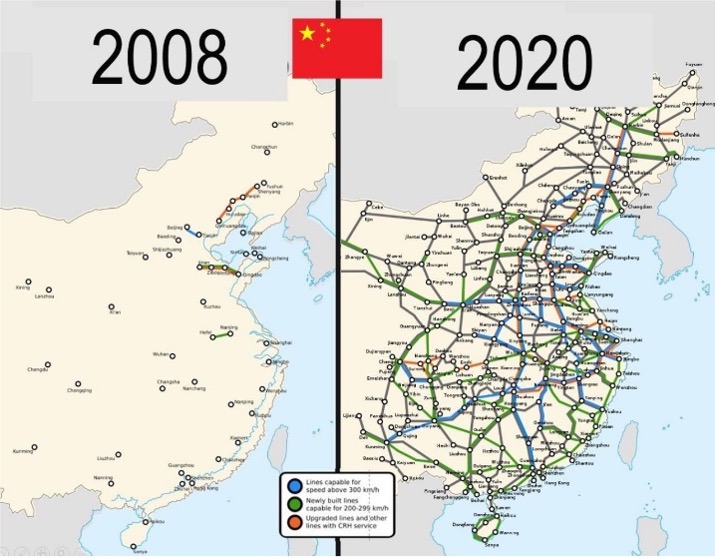
The massive fiscal stimulus of 2008 was not restricted to the real estate sector. In fact, to keep the economy going, China embarked on heavy infrastructure spending, of which the railway was a big part. Infrastructure spending is one of the most efficient ways to boost an economy; not only does it employ a large number of people, but it produces something that continues to offer value long before the project is concluded. Notwithstanding, this railway investment soon began to give the nation headaches. Not only was it plagued with corruption accusations, but by not technically being managed by the government but by public companies that could more easily borrow capital, a construction spree gave way to a bigger problem. As the most profitable lines between the largest populational centers had been constructed, the growth of the system was based on connecting smaller cities further apart, meaning profit was harder to come by. The troubles began to intensify in 2015 when operating profits didn’t even cover interest payments and have since worsened. As tracks began to age, requiring more frequent maintenance, and with ticket prices rigidity blocking a revenue increase, the issues began to pile up. Ultimately, COVID dealt the final blow, plummeting ridership numbers and effectively making every line unprofitable, leaving a system with estimated levels of debt close to a trillion dollars.

Railway evolution in China 2008-2020

Caveats and final thoughts

China has been recently facing a large number of economic headwinds, from a potential housing market collapse and overspending on infrastructure to more recent extensive lockdowns, trade wars, heat waves and floods. But to answer the question raised – “Is the country heading for a collapse?” – most probably not. Economies naturally go through booms and busts, and the latter, while painful, offer a way to remove the least efficient and productive elements in the market, and in the case of China, a chance to move away towards more sustainable sectors such as tourism or R&D. Furthermore, with a tight grip on the economy and the largest pile of foreign reserves of any country, China has a cushion against any possible bank runs and the ability to guarantee currency stability. The country has, for now, also dodged the climbing inflation levels seen in much of the rest of the world, and the central bank has even lowered interest rates. With the mentioned problems being addressed, and some more, including the lockdowns and environment irregularities set to dissipate in the short to medium run, China may no longer be able to support the huge growth levels it once did, but its economy is surely far from collapsing, with continuous stability and development guaranteeing its position as one of the largest and most robust on earth.  


Sources: World Bank, Trading Economics, Business Insider, Oxford, Boden, Statista, Bloomber, Market Cap, Financial Times, Reuters, New York Times, CNBC, Eurasian Times, FRED

Manuel Rocha

Can the Euro survive its own diversity?

Reading time: 7 minutes

In general, there are many pros and cons to the creation of a monetary union. The creation of a single currency among many countries allows for the lowering of cross-country transaction costs, increases certainty for investment while, because of this, stimulating trade and job creation. On the other hand, it means that the union’s monetary authority has the responsibility of implementing a “one size fits all” monetary policy, which may create problems if the members of the monetary union have very different economies or if the shocks which monetary policy is meant to address occur asymmetrically across countries.

The creation of the Euro

An Economic and Monetary Union has been an objective of the European Union from as early on as the late ’60s/early 70s, with the first steps towards the coordination of the member states´ monetary policies having been taken with the launch of the EMS (European Monetary System) in 1979. However, it wasn´t until a decade later that the idea of a single currency union really started to take shape, upon the presentation in the “Delors Report” of a three-stage plan to be applied in the ’90s to prepare the union for what would come to be known as the euro area, ultimately culminating in the creation of a single currency and the European Central Bank.

The idea of a common currency first and foremost appeared as an important symbol of political and social integration in Europe, tied with the notion that an increased integration of the European member states would reduce the risk of war and crisis on the continent. Then, on an economic viewpoint, a common monetary policy centered around price stability was viewed as an important propulsor of economic stability. Likewise, those who supported the creation of the euro believed it would allow for an increase in market integration, consequently reducing transportation costs and improving market efficiency and price transparency.

In 1991, the Maastricht Treaty effectively cemented the transformation of the European Community into a full Economic and Monetary Union, laying down the rules for qualification for membership of the Monetary Union. Indeed, a set of macroeconomic criteria that member states had to respect to be able to participate in the EMU and adopt what would be the new common currency (the euro) was defined. These became commonly known as the four convergence criteria, focusing on price stability, public finances, exchange-rate stability, and long-term interest rates. In terms of price stability, a member state´s inflation rate (measured by the HCPI) should not exceed more than 1.5% of the best three performing member states. As for public finances, to ensure that they are sustainable, government deficit should not surpass 3% of the GDP and public debt should be below 60% of the GDP (although some accommodation here was made at the time of the start of the Union, as many member states did not fulfil these specific public finance requirements). Moreover, regarding long-term interest rates, to guarantee the durability of the convergence, they must not be more than 2 percentage points above that of the three member states with the lowest interest rates. Finally, when it comes to ensuring exchange-rate stability, applicants to the common union should have been participating in the ERM II (Exchange Rate Mechanism) for at least two years prior to the adoption of the common currency without severely devaluing against the euro.

The need for this set of requirements to be put in place prior to the entrance into the monetary union came as a necessary part of subjecting such a wide range of countries – still very much asymmetrical in some regards – to a single monetary policy but allowing them to keep their national fiscal policies. Indeed, some countries with better performing public finances and benefiting from low interest rates (such as Germany) expressed their concerns of how being associated with other not as well performing countries could negatively impact their economy, hence their pressure for a system of rules to be establish so as to guarantee as much as possible convergence among the member states. This type of concern is also reflected in the way much of EU´s monetary policy is designed, particularly in their rigidity and zealous focus on price stability, as is greatly patented in the way the European Central Bank was created in 1998 very much influenced by the German model, mirroring their Bundesbank.

Ultimately, the euro was officially launched on January 1st, 1999, with the exchange rates of the participating currencies being irrevocably fixed, replacing its precursor (the “ecu”, a transitory currency composed of a basket of European currencies to serve as a basis for fixing the exchange rates of the member states) at 1:1 value. In this initial phase the euro only served in the form of cashless payments, having been put effectively in circulation in 2002.

Figure 1 – Euro Statue in Frankfurt.

The beginning of the Monetary Union and the Financial Crisis

The process of increasing openness of financial markets alongside the adoption of the Euro’s convergence criteria by countries wishing to join the monetary union meant that during the 1990s there was a convergence of interest rates across countries, with some countries like Portugal, Greece and Italy enjoying interest rates much lower than before.

During the early 2000’s, thanks in part to the abundant credit and to the advances in economic openness, some countries (such as Portugal, Greece, and Italy) began accumulating large current account deficits. These may simply be the sign of a healthy economy, if they are being used to finance future growth so that, later, the current account deficit can be matched by a current account surplus. However, if this is not the case, then current account deficits will accumulate, increasing a country’s external debt until, at some point, external credit stops being granted. While they were accumulating large stocks of external debt, some of these countries were also amassing very significant amounts of public debt.

In 2008, as the financial crisis began, and its contagion spread across financial markets there was a global flight to safety. Because of this, Portugal, Spain, Greece, Italy, and Ireland, which, to differing extents, fell into the trends described above, began facing international credit crunches and the yields on their sovereign bonds began increasing, with Portugal and Greece being the most affected. This sovereign debt crisis then led to troubles in the banking sectors of these countries which can then worsen the sovereign debt crisis, creating the “Doom Loop”.

The Greek banking and debt crisis was challenging and, in 2012, the possibility of a default was looming. Certain actions, like currency devaluation to decrease current account deficits or drastic increases in liquidity to Greek banks to avoid the banking system from grinding to a halt, were not available to Greece, since monetary policy was delegated to the ECB. Because of the deteriorating situation and due to the possibility of Greece exiting the Euro, the ECB decided to do “whatever it takes” to save the Euro and announced a program for purchasing debt of the distressed countries on the secondary markets, reassuring markets and bringing down the debt spreads, and, potentially, saving the Euro.

Who to favor?

The ECB mandate has one and clear focus, price stability. To ensure so, the central bank applies all the tools that it has available. However, the effects from such tools impact multiple variables which have important macro-economic consequences for Eurozone countries, such as FX rates or credit spreads. This, coupled with an asymmetric impact on the moves of these variables for different countries creates a huge dilemma for the policy makers behind ECB’s decisions: Who to favor?

Does the question sound simple to you? Let’s think of today’s scenario for policy makers at the ECB. In Europe we are experiencing broad record inflation, way above the defined target for price stability, meanwhile credit spreads are already very high compared to historical values, mainly for peripherals countries, and the Euro FX is at some of its lowest levels, especially against the dollar. Should the central bank tighten financial conditions to fight inflation and strengthen the Euro but, at the same time, risking a default/crisis in peripherals countries? Or should it do the exact opposite?

What would you do, who do you favor?

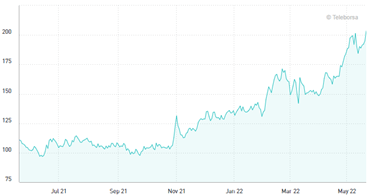
Graph 1 – 10Y BTP-Bund Bond Spread [Italy – German], in bps.
Source: Borsa Italiana
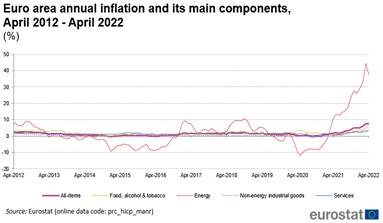
Graph 2 – Euro area annual inflation rate, in %.
Source: Eurostat

Conclusion

The introduction of the euro brought many benefits for the countries involved but it is still a long way from its counterparty in the United States of America. These problems arise mainly due to the structural differences between all the economies in the Eurozone. The “one size fits all” is still one of the biggest challenges going forward with some steps already made into solving it.


Sources: European Commission

Diogo Almeida

João Baptista

Sara Robalo

Inês Lindoso

João Correia

Are we getting too old?

Reading time: 8 minutes

Did you know that Millennials make up about 27% of the world’s population? Maybe you didn’t but this information comes from a science that we all know and yet often don’t give its due value: Demography. 

Demography is, by definition, the study of statistics such as births, deaths, income, or the incidence of disease, which illustrate the structure of populations. The individuals that study these factors are called demographers. 

In fact, this science led to curious conclusions, like the one at the beginning, but this science is much more and more complex than that. As we will show to you later in this article, demography has a very close link to the economy, as it is with the data collected and treated that, for example, financial, banking, or even insurance institutions establish their rates and conditions.

There are many factors that demography considers, but the most important ones are population size, population density, age structure, fecundity, mortality and sex ratio. All these factors affect the economy: for instance if population size decreases the working-age population will also decrease, which reduces labor input and leads to a slowdown in economic growth, resulting in the end in a decreasing growth rate of GDP per capita.  

Different Countries, different demographics

During the last 20 years, the global demographic landscape has suffered several changes in terms of population, age structure and wealth. Nevertheless, these changes are not linear across the globe, so there are various countries with very different demographic trends due to other variables such as culture and climate.

Demographics in developed countries

Developed countries, such as the United States, Japan, and European Union member countries are generally characterized by their high level of industrialization and high income per capita.   Their population structure is estimated to have already peaked and so, the total population is expected to gradually begin to decline due to low birth rates and rising average age. In fact, it is estimated that in the most developed countries the population over 65 years old will reach 25% of the total population by 2040. In relation to Europe, the projected average age is 47 years, although it is estimated that the people in Greece, Italy and Spain will age faster. Japan and South Korea will reach average ages of 48 and 44, respectively. In these circumstances, a slowdown in productivity is expected, as well as an increase in the GDP share earmarked for pensions and medical care for the elderly.

During the next 20 years, a strong trend of immigration to developed countries is estimated due to their stability, quality of life and economic incentives despite not being able to change the overall structural direction.

Demographics in emerging countries (China, India)

In emerging countries, some Asian countries follow the same trend as European ones, although slower. That is, while European countries have already passed their populational peak, Asia will see its population increase exponentially until 2040 and then gradually decrease. Besides, it is expected that by 2027 India will be the country with the most population, surpassing China.

In terms of their human development evolution from demographic scenario, it is expected drastically improve given the increase in the proportion of working-age adults, greater female participation in the workforce and higher social stability in the most advanced age groups. However, the increase in development is thought to be faster than the increase in income, particularly in China, posing some challenges for governments.

Demographics in Underdeveloped Countries

The reality of developing countries is completely dichotomous from that of developed countries, not only at the economic level, as the former have a very limited level of industrialization and low per capita income, but mainly at the demographically. For example, countries like Sub-Saharan Africa have an infant mortality rate 18 times higher than the average of developed countries, whose infant mortality, on average, is less than 1%. Moreover, other differences strongly affect both birth and death rates, which are quite high, due to weak and limited health services, lack of access to information and contraceptive methods and few professional prospects, resulting in a short average life expectancy.

Developing countries are expected to increase their level of urbanization in the coming years, as their key development factor. In fact, according to the UN Report, the number of urban workers will increase from 1 billion to 2.5 billion in 2040, which suggests a huge boost in the development of these countries. However, the speed of urban growth is not enough to keep up with population growth – like in the case of Sub-Saharan Africa, whose population is expected to double by 2050, so these countries will probably overload their capacity to provide infrastructure and educational systems, necessary to enhance economic growth and human development.

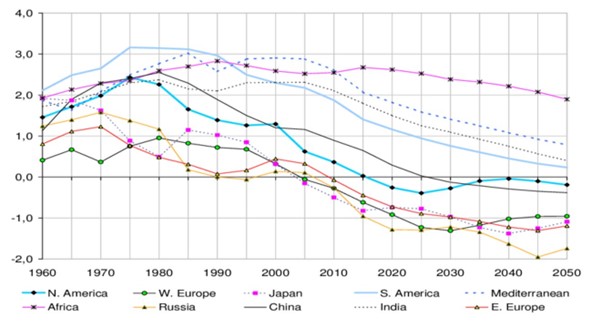
Graph 1 – Historical and projected labor force change per region.

Impact of demography on interest rates, savings and investment

Demography, particularly in aspects such as population ageing, will have a determinant impact on interest rates, bringing attached serious consequences for household savings and investment. Therefore, it is fundamental to take into account how current demographic trends like increasing life expectancy and the decline in fertility rates (with the baby boom generation moving higher up in the demographic pyramid) will impact the savings and investment market.

First, it is crucial to understand how net savers and net borrowers are usually distributed in an economy across different age groups. In accordance with the life cycle model developed by Franco Modigliani, savings are expected to vary across a person´s lifetime in a U-shaped form, suggesting that younger people and the elderly are usually those that actively save the least, whereas the middle-aged are responsible for the biggest share of savings. This is related to the notion of consumption smoothing over a person´s life, making it intuitive that people are more prone to save when they have higher incomes to then use these resources for times in which their incomes are relatively lower (during retirement or in the early years of their careers when their wages are usually lower).

Related to the notion of population dynamics, we can start by exploring how life expectancy will influence the savings market. Considering the case of increasing life expectancy that has been more or less experienced all across the globe in recent years, keeping the retirement age constant, it would imply that people would have to spread out their accumulated resources over the course of their lives over a longer retirement period. This, in turn, will trigger two different scenarios: one in which people anticipate this and increase their savings rate to offset the impact – resulting in a lower interest rate – and another in which they do not adjust their savings accordingly, leading to lower resources in the long-run and a higher interest rate.

On another note, we can also look at the effect of birth rates on savings and investment. Taking into account a reduction in birth rates, we can distinguish two effects. On one hand, it results in lower population growth, consequently contributing towards a lower GDP growth and thus a decrease in demand for investment – pressure for a lower interest rate. On the other hand, it contributes towards a higher number of the elderly/middle aged relative to the young; with the elderly usually being associated with lower savings rate but higher accumulation of capital, this will make it so two contrasting forces will clash, with the lower savings rate contributing towards a higher interest rate but a higher volume of accumulated savings/capital having the opposite effect. As for the fact that the middle aged are also to occupy a much more preponderant role in the population composition, as the savers of the economy, they will contribute to a higher demand for financial securities, hence pushing interest rates downwards.

With so many forces at play, the overall impact of demographics on the investment/savings market is rather unclear, even though all seems to point out that the current downward pressure on interest rates that has been felt in the past decades/years in developed (and ageing…) economies is likely here to stay, probably being itself already a manifestation of the impact of demographic trends on this facet of the economy.

Graph 2 – Historical and projected population aged 15-64 and Household savings rate

Can productivity save the weak demographics in developed countries?

Increases in productivity can lessen the impact of such population shifts, and technological advances are the ideal source of productivity boosts. This, however, is a double-edged sword. On one hand, technological progress increases productivity, but at the same time, it can eliminate jobs, increasing unemployment.

Since the 2008 financial crisis, year-on-year productivity growth has slowed. Still, even though the rate of productivity growth has slowed, the absolute output per worker is now the highest it has ever been in real economic terms. This highlights the offset of productivity on demographics as there are fewer and fewer people in the workforce but a higher productivity per worker.

Conclusion

Demographics do not determine the fate of economic growth, but they are certainly a key determinant for an economy’s growth potential. An ageing population coupled with a declining birth rate in the developed world points to a decline in future economic growth.


Sources: Office of the Director of National Intelligence – Global Trends, Harvard Business Review, Caixa Bank Research, Warwick, Fraser Institute.

Diogo Almeida

João Baptista

Sara Robalo

Inês Lindoso

João Correia

Equal, but different: what’s up with inequality?

Reading time: 6 minutes

Concerns about inequality are not a novelty and we see signs of it everywhere. Some billionaires are flying to space while some people scramble for money to make ends meet. We see voices of support for more progressive tax systems and even talks of universal basic income to support the poor, while others claim tax burdens are already too high. Inequality is right in front of us and independently of how big we consider this to be problematic, it is endemic in the developed world.

Ever since the 1980’s there has been an increasing gap between the rich and the poor. The top 10% have been receiving more income compared to the bottom 50% of the population in North America. Without any intervention of the tax system to correct asymmetries, the top 10% in North America in 2020 earned more than the triple of what half of North Americans combined did. The data we present shows inequality has been increasing since the 80s, but in fact, this trend can be observed ever since the post-war period. Yet, albeit less serious, this is also an issue in Western Europe. In this corner of the world we see that, before intervention through the tax system, in 2020 the top 10% received already 1.75 times more than the entire bottom 50%.

Why have income inequalities increased?

Naturally, there is not one simple cause for this phenomenon. Although there might be some appeal to the idea that capital income can benefit the richest and help increase socioeconomic cleavages, it is likely that the current trend of increasing inequality is, at least for now, due to deep differences in labor earnings as well (Piketty 2006, Piketty & Saez 2014). 

 One possibility is that the technological progress of the last decades, in part caused by the introduction of information technologies, increased the demand for highly specialized skills that were then compensated with higher wages. Therefore, high-skilled wages increased at a higher pace than low-skilled wages and so the income gap between highly educated workers and the rest of the population widened. 

 Nevertheless, if we look at the very top incomes such as the top 1% we might consider other factors. Particularly in the US, top executive compensation has been increasing and even though CEOs undoubtedly have highly sought-out skills, they also have the bargaining power that regular workers do not have when negotiating their wage or accepting job offers. Standard economic theory would predict workers receive a wage equal to their marginal product of labor, but companies don’t have benchmarks on which to expect how much a CEO will contribute to their production activities. Consequently, incomplete information can leave some room for top executives to bargain greater wages (Piketty et al., 2014).

Inequality in Portugal 

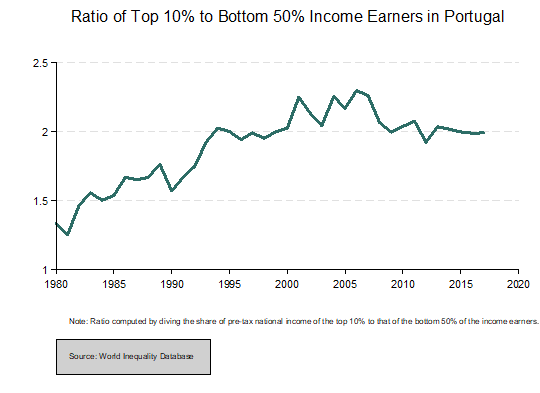
Although data stops at 2017 and from there onwards we only have extrapolated data, it seems that the Portuguese case has two relevant features. First, compared with the aggregated data for Western Europe, inequalities are greater in Portugal as in the last decade the top 10% received twice the pre-tax national income that accrued to the bottom 50%. 

However, contrarily to the aggregated data observed for the United States and Western Europe, it seems that the trend of increasing inequality in Portugal observed since the 1980s has slowed down, started falling in 2005, and has stabilized in the last decade. Whether this is a short-term phenomenon or not is still uncertain, and it will depend on the policy stance of the government. 

In short, even though a pessimistic account might identify Portugal as having inequality levels above those of Western Europe, the inequality growth spur has been calmed down for now.

Inequalities go far beyond income

It is often the case that we use income to assess inequalities because it is a unidimensional measure that is easy to understand. However, inequalities go way beyond what people receive at the end of the month. Income inequalities are associated with other asymmetries which might be even more concerning. 

Families of high socioeconomic status can often provide more stimulating environments for their children to grow. Consequently, children from disfavored backgrounds might lack resources such as cognitive stimulation and appropriate interaction with family members that are vital at early stages in life where key cognitive and behavioral traits are being developed.

One finding is that children from wealthy families have more cognitive capabilities than their peers in families of lower socioeconomic backgrounds. By age 6 socioeconomic status is already associated with math capabilities, and evidence suggests the school system is not particularly effective at fighting them over time (Heckman, 2006). If any measure needs to be taken, it might be more effective to start at a very young age. The environment in which a child grows during their first years of life has structural influences on their development and consequently on long-term life outcomes. 

Taken from Heckman (2006), using data from Carneiro & Heckman (2003)

How early is very early? As soon as the child is born, the environment is already exerting its effect. Even when kids are 3 years old, we can already see a relationship between socioeconomic status and cognitive capacities being formed. In particular, 3-year-olds from poorer families have worse verbal skills and even though attending kindergarten can help them improve their skills they still fall behind their peers (Becker, 2011). 

Inequalities in family income are also associated with different long term health outcomes. Children born in poorer families tend to have not only poorer health compared to their wealthier peers when they are young, but these differences persist and even widen in magnitude as they become older. In other words, income inequalities might not only be related to differences in health levels but might also be widening the health inequality gap even further (Case, 2002; Heckman 2007).

We can think this might lead to feedback loops, as poor families raise individuals with lower capabilities and worse health, which then makes them weaker in the labor market. As a consequence, they receive lower incomes, and the cycle continues. On the other hand, more affluent families can guarantee a better path to help their children attain higher wages in the future. Hence, it is natural to wonder if higher income inequality now will not be, in itself, a cause of higher income inequality in the future.

So what?

 We have seen that inequality in incomes has been around for the last decades and likely came to stay unless any action is taken. Moreover, even though current debates both in the media and in public society are often about differences in income, it is much more than that. Inequality is a very broad phenomenon, but indeed income inequalities are related with many other differences we observe in society. 

 Yet, we can always ask: why care? This is where no clear answer exists. We all have different preferences and views for what we consider to be tolerable levels of inequality, and so the debate can never be just about economics. Our concerns of equity and fairness must come into play too and the discussion can never be settled through facts alone. The decision of whether we want to stay in the age of inequality or leave it is not only a question of which actions to take, but also on whether there is collective will to take them.


References:

  • Becker, B. (2011). Social disparities in children’s vocabulary in early childhood. Does pre‐school education help to close the gap? 1. The British journal of sociology62(1), 69-88.
  • Heckman, J. J. (2006). Skill formation and the economics of investing in disadvantaged children. Science312(5782), 1900-1902.
  • Heckman, J. J. (2007). The economics, technology, and neuroscience of human capability formation. Proceedings of the national Academy of Sciences104(33), 13250-13255.
  • Heckman, J., & Carneiro, P. (2003). Human Capital Policy. In J. Heckman & A. Krueger (Eds.), Inequality in America: What Role for Human Capital Policies? (pp. 77–240). MIT Press Books, 1.
  • Piketty, T., & Saez, E. (2006). The evolution of top incomes: a historical and international perspective. American economic review96(2), 200-205.
  • Piketty, T., & Saez, E. (2014). Inequality in the long run. Science344(6186), 838-843.
  • Piketty, T., Saez, E., & Stantcheva, S. (2014). Optimal taxation of top labor incomes: A tale of three elasticities. American economic journal: economic policy6(1), 230-71.
  • Case, A., Lubotsky, D., & Paxson, C. (2002). Economic status and health in childhood: The origins of the gradient. American Economic Review92(5), 1308-1334.

Nuno Gomes

The Economic Side of the Russia-Ukraine Crisis

Reading time: 7 minutes

“A Russian invasion to Ukraine seems more and more probable day after day.”

This phrase was initially written as we started to prepare this article. Time ended up confirming the worst. The conflict escalated quickly, and, on the 24th of February, Russia invaded Ukraine. This is one of the worst disputes in Europe since 1945.

In this article, we do not aim at exploring the history and motivations of the conflict. Instead, we focus on the potential economic impact of this crisis for Europe. It is important here to mention that the EU/NATO condemn the Russian military action and are providing military supplies to Ukraine. This way we can understand the motivations behind the sanctions and the importance of the commercial trading patterns between these countries.

Trade Balance

Ukraine and the EU

The EU is Ukraine’s largest trading partner, accounting for more than 40% of its trade in 2019. Total trade between EU and Ukraine reached €43,3 bn in 2019.

Ukraine exports to the EU amounted to €19.1 bn in 2019. The main Ukraine exports are raw materials (iron, steel, mining products, agricultural products), chemical products and machinery. This is a considerable increase of 48,5% since 2016.   The EU exports to Ukraine amounted to over €24.2 bn in 2019. The main EU exports to Ukraine include machinery and transport equipment, chemicals, and manufactured goods. EU exports to Ukraine have been subject to a similar impressive increase since 2016 of 48,8%.

Russia and the EU

In 2020, Russia was the fifth largest partner for EU exports of goods (4.1 %) and the fifth largest partner for EU imports of goods (5.6 %). Among EU Member States, Germany was both the largest importer of goods from and the largest exporter of goods to Russia in 2020. China is the largest Russia trading partner.

Over time the trade balance between Russia and EU has been getting closer to zero due to the decrease in imports from Russia while the exports remained steady. The balance has been always negative but is now closer to zero than ever before.

Figure 1 – EU goods trade balance with Russia from 2010 to 2020. Source: Eurostat

The more meaningful exported commodity from Russia is mineral fuels and mineral oils followed by pearls, iron, and steel. Russia also represents around 40% of Europe’s gas, being the biggest gas supplier, and for 26% of EU’s oil imports, crude oil and coal delivered through a sprawling pipeline network. This is one of the main points giving Russia bargaining power over EU. On the counterpart, the EU is the largest investor in Russia.

The Russian secret weapon

Oil (and gas) are the oil of the gears of today’s economies. No different is the case for the European machine which needs to maintain lubrification amid a period of rising oil and gas prices and rising inflation (partly driven by the increase in the price of these commodities). In addition, it needs to do all of that while attempting to punish a nation, which supplies around 35% of its oil and gas.

Figure 2 – Map of the major existing and proposed Russian natural gas transportation pipelines in Europe. Source: Samuel Bailey 

The networks of oil and gas pipelines from Russia to Europe are extensive. Main pipelines include the Yamal-Europe which travels by land across other countries and into Germany and Nord Stream 1 which crosses the Baltic Sea directly to Germany. As of recently, flows of oil from Russia have been slow. Adding to this, Europe has had a winter with especially weak wind which has made its renewable energy production weaker and its energy reliance on oil and gas bigger. Oil reserves are at low levels, all of which is contributing to higher energy prices. These high energy prices give Mr. Putin an ability to exert significant leverage on Europe with a single turning of the tap.

By its very nature, energy reliance is something that is slow to adjust: it takes time to build more diverse energy infrastructure. And, as it stands now, short-term options which may include obtaining oil and gas from other places such as pipelines from Norway (although infrastructure capacity there seems to be already near the maximum), or from the pipeline in the Adriatic Sea or the pipeline through Turkey. Switching to more usage of coal is also a potential option. The EU also has plans to deal with an oil and gas supply emergency and alleviate some of its impact.

As of the 22nd of February, the approval process of a new pipeline – Nord Stream 2, which has been criticized for contributing to more European energy dependence on Russia – has been halted following the recent actions of Russia with regards to Ukraine.

On the same day, Mr. Putin remarked that Russia planned to continue the supply of oil and gas to the markets without interruptions. Still, this remains as one of the biggest weapons that Putin has in this conflict over the EU.

The EU/NATO Economic sanctions to Russia

As a way to punish Russia from moving forward with the invasion of its neighboring country, and even looking to possibly cause a de-scalation of Russian military actions, EU/NATO applied economic sanctions. 

Figure 3: NATO members

Some of the first measures aimed at putting an immediate stop to the newly installed Nord Stream 2 pipeline, targeting “Russia where it hurts the most” given that it’s a big exporter of energy to the EU. Furthermore, the EU, the UK and the US have gone ahead with blacklisting specific individuals and companies with close ties to the governing. Adding to that, the US have acted upon its threat against Russia’s government debt by blocking the county’s access US capital and financial markets, effectively “cutting it off from western financing”, as per President Biden’s words. 

A second package of sanctions was announced later that included actions on the connection to the US financial system for Russia’s largest financial bank, Sberbank (holds nearly one-third of Russia’s banking sector assets); sanctions on Russia’s second-largest financial institution, VTB Bank (holds nearly one-fifth of Russia’s banking sector assets); similar full-blocking sanctions on Bank Otkritie, Sovcombank OJSC, and Novikombank and dozens of its subsidiaries; New debt and equity restrictions on 13 critical Russian financial entities; Additional full-blocking sanctions on Russian elites and their family members and individuals “who have enriched themselves at the expense of the Russian state”; Two dozen Belarusian individuals and entities were also sanctioned for supporting the attack on Ukraine; Russia’s military and defense ministry restricted from buying nearly all US items and items produced in foreign nations using certain US-origin software, technology, or equipment; Defense, aviation, and maritime technology subject to Russia-wide restrictions aimed at choking off Moscow’s import of tech goods.

Later, a major sanction was applied by excluding a selected group of Russian banks from the SWIFT global payment system. Swift has a total of 291 Russian members that represent 1,5% of the messages sent in the platform. This new sanction was announced together with the blocking of Russia Central Bank assets.

The impact of these sanctions does not stay restricted to Russia. Europe is in the front row of potential losers as a side effect of the sanctions. Most of the losses are tied to the energy dependency of some European countries to Russia. Other commodities that are exported by Russia will also likely see an increase in price. This side-effect is especially important given the rampant inflation in the Eurozone and US, contributing to further price increases and pressuring policy makers.

Moreover, in terms of sanctions covering the banking and financial sector, those with subsidiaries operating on Russian soil and/or with close financial ties would also fare badly under these conditions, with once again Europe as the most affected one, particularly Italy, France and Austria, being the most exposed international lenders to Russia.  

Effect on financial markets

The uncertainty that surrounds the whole conflict is being reflected in all major international financial markets which have been quite volatile in the past weeks, driven by multiple factors including geopolitical risk.

The invasion of Ukraine by Russia caused an initial panic in risk assets, including European and US equities whose main indices started the day down more than 2 or 3%. They ended up recovering intraday, with Nasdaq index closing the day up more than 1%. Also, the day saw a strong dollar (risk-off asset) and a rally in bonds. On the other side we saw the Russian Stock Market index plunging as much as 50% intraday, a weak Rubble and bond spreads exploding up for Russian debt. Commodities also rallied higher, namely oil.

Conclusion

This conflict recalls some of the darkest times in European history which has lived an extended period of peace. The true cost of this conflict goes well beyond the economic cost and is centered mainly around the lives of those fighting in this conflict. The side-effects caused on European countries by the sanctions seem to be the lowest price possible to defend democracy and liberty from those who want to take it from us.


Sources: CNN, European Commission, Politico, Reuters

Scientific revision: Patrícia Cruz

Diogo Almeida

João Baptista

Inês Lindoso

João Correia

Back to the basics: How is inflation measured?

Reading time: 6 minutes

Inflation has been making headlines all around the globe, as prices increase at unprecedent rates. But how is inflation measured? Are the measures presented by policy makers trustworthy?

Inflation has always been a hot topic of discussion – and a particular favourite of central banks all over the world. Indeed, with price stability as one of the core objectives of virtually all central banks across the globe, it comes as no surprise that inflation targeting is seen as the key guiding point for monetary policy.

So, if inflation is such a key determinant of economic activity in the eyes of most central banks, how do they go about measuring it? Multiple measures are generally and simultaneously used, with the most common being undoubtedly the CPI (Consumer Price Index) – used for example by the FED in the US – as well as its EU counterpart, the HICP (Harmonised Index of Consumer Prices), favoured by the ECB.

One may ask to what extent are all these measures able to fully capture the actual inflation that is being felt in the economy, and what role do central banks play in assessing inflation and its respective expectations, seeing as the ultimate decision of when and how to act when it comes to inflation targeting falls entirely upon them.

Figure 1 – Euro Area Annual Inflation and main components. Source: Eurostat

Measuring Inflation – From the CPI to more complex metrics

Most Central Banks stated primary objective is to maintain price stability. In the Euro Area and in the U.S., the European Central Bank and the Board of Governors of the Federal Reserve normally have their eyes set on a long-run target of 2% annual inflation. For Central Banks to keep track of the effect that their monetary policy is having on current inflation they need measures of… well, inflation[1]! Unfortunately, there is not one which is truly accurate or one which could take everything into account, and commonly used measures, such as the CPI (Consumer Price Index), are regularly subject to criticism of their methodologies and their over or under-estimation of inflation, depending on when and who you ask.

The CPI is one of the most mentioned measures of inflation and, generally, consists of, at a first stage, obtaining a set of weights to give to different expenditure items based on the consumption pattern of the average consumer (In the U.S., the U.S. Bureau of Labour Statistics, which publishes the CPI, calculates this based on its Consumption Expenditure Survey). Next, in the case of the U.S., for example, the U.S. Bureau of Labour Statistics obtains data on the prices of over 90,000 goods. Based on the previous weights, the index is then calculated and with it, we should get an idea of how the price of the average consumer’s basket of goods has changed.

Figure 2 – The 8 major groups of the Consumer Price Index

However, there are many pitfalls associated with its interpretation, especially in the context of informing monetary policy. For example, a considerable percentage of consumers’ income is spent on energy consumption. As has become quite apparent recently, these commodities are subject to wild price fluctuations. However, despite being largely caused by factors other than the monetary policy of Central Banks, the recent price increase in energy has reflected strongly on the CPI. To combat this, we may remove energy and food (which may also be quite volatile) items from the CPI and present only the Core CPI.

And we may go even further and say that, in fact, the Core CPI may still be providing a biased estimate of inflation due to large changes in specific items and that, instead, we should look at the Trimmed CPI, which has the top 8% and bottom 8% biggest price increases and decreases chopped off. Others may say that we should look also at the Median CPI which measures the price change of the 50th percentile good on the basket list.

Taking all these different measures into account we can build a better, more complete picture of whether recent inflation measured by headline CPI in the U.S. is simply related to wild swings of a few items due to supply shocks, or whether it is a broad-based, demand-driven phenomenon resulting from expansionary monetary policy.

Beyond the usual metrics – The importance of Inflation Expectations

The focus of Central Banks to meet their inflation targets is highly correlated with inflation expectations. These are simply the rate at which people expect prices to rise in the future. They matter because actual inflation depends, in part, on what we expect it to be. Let’s say that everyone expects prices to rise at a 4% rate over the next year; then, businesses will want to raise prices by at least that amount, and so will want workers to increase their wages. All else equal, if inflation expectations rise by one percentage point, actual inflation will tend to rise by one percentage point as well.

This means that for Central Banks it is important to anchor expectations at their inflation targets. The absence of anchoring, in a period of high inflation, can create a wage-price spiral. This term defines the cause-and-effect relationship between rising wages and rising prices. The wage-price spiral suggests that rising wages increase the demand for goods and cause prices to rise. These price rises will then increase the demand for higher wages and the cycle repeats.

Figure 3 – Household inflation expectations and HICP inflation. Source: ECB

Conclusion

Most of the younger European generations have never experienced high inflation. Still, the inflation rate was not always stable and low. In the ’70s, with deregulation of the international monetary system and two oil shocks, inflation had climbed to values never seen before (around 12% – 13%) only declining in the next decade (80’s). With some fluctuations over the years, this measure has seen a downward trend over the years laying down values between 0.18% in 2016, 1.7% in 2018 and 0.5% in 2020. 

This trend can be changing. In the past months, inflation has been alarmingly increasing, now reaching values that are further away from the usual target, with the EU currently registering around 3.6% inflation rate and the US a concerning 5.4%.

The fact that inflation is rising is not entirely unexpected, as expansionary monetary policies such as the ones that have been conducted for the past year and a half as a response to the COVID-19 pandemic – characterized by massive bond-buying initiatives that provide ample injections of liquidity in the economy and incredibly low interest rates – are usually followed sooner or later by a rise in inflation as demand starts to pick up once again. Coupled with this, the skyrocketing energy prices that come as a natural response to the global energy crisis that we are currently facing have also contributed to pushing this raise in prices even higher.

Nevertheless, even though the inflation values that exclude these energy fluctuations are a bit more promising (EU = 1.8% and US = 4%), they are still off from the recommended ones (especially the US), which indicates that a Central Bank intervention should be imminent, particularly from the FED where the scenario appears to be worse. Still, Central Banks are in-between the sword and the wall. On one side we see rising inflation pressure but, on the other side, there is still an economy that is recovering from the impacts of the pandemic crisis. Nonetheless, it is clear that the current landscape would not be sustainable for long, so it could be said that the Central Banks’ reluctance to act upon it will inevitably have to come to an end in the near future.


[1] Central Banks also often look at measures of inflation expectations to guide their monetary policy.

Sources: EBC, Investopedia, IMF, Trading Economics

Diogo Almeida

João Baptista

Inês Lindoso

João Correia

The Pandora Papers

Reading time: 6 minutes

Tax revenue keeps civilization afloat but not all taxpayers play by the same set of rules. While some wealthy and well-connected people have avoided paying trillions of dollars in taxes, you are left to cover the bill.

            The Pandora Papers are a leak of almost 12 million documents that uncovered hidden wealth, tax avoidance and money laundering by some of the world’s rich and powerful. These include the King of Jordan, the presidents of Ukraine, Ecuador and Kenya, the prime minister of Czech Republic, and more than 130 billionaires from Russia, the United States, Turkey, and other nations. This leak comes years after the well-known Panama Papers.

            This is made possible by tax heavens. These are generally countries or places with low or no corporate taxes that typically limit public disclosure about companies and their owners. Independent countries like Panama, some areas within countries like the U.S. state of Delaware, or territories like the Cayman Islands are examples of such.

Figure 1 – Number of politicians named in the Pandora Papers per country.
Source: Statista

What is offshoring: technicalities and legalities

When investigations such as this come to light, talks about tax evasion or money laundering inevitably lead to discussions about the practice of offshoring and its legalities and technicalities. Offshoring can be succinctly defined as the practice of moving economic activities (be it a company or a bank account, etc.) from the country of origin towards a foreign jurisdiction overseas, separate from the one where the beneficial owner resides. Therefore, in its simplest form, as the name indicates, offshoring is primarily a geographic activity of moving operations from one country to another. However, the legal intricacies and moral aspects that revolve around it make it an activity quite frowned upon in the international community. 

Offshoring offers a number of enticing advantages to those who practice it, such as simpler corporate regulations and possibly lower costs for companies going offshore, as well as better asset and lawsuit protection. Moreover, and perhaps the biggest reason why people choose to move their enterprises and records of less than morally righteous business deals to countries such as Panama or the British Virgin Islands has to do with the tax benefits those countries provide to outsiders, as well as a promise of financial privacy and confidentiality that many appreciate in order to keep their financial transactions under the radar.

Concerning these taxation benefits, most of the so called “Tax Heavens”, terribly appealing to offshoring practices, allow these foreign entities to usufruct from an entirely different fiscal system from the national one, having to pay much less taxes (and in some particular cases none at all) and to collect tax-free capital gains from the operations conducted.

However, and as ludicrous as it may seem, the issue lies in the fact that this practice of moving operations from one country to another mostly to pay less taxes is entirely legal in many cases. In fact, despite all the scandal surrounding the Papers, most of those indicated are not infringing any law – rather they just opt to adhere to a judiciary and fiscal system quite different from the one in their home country. Hence, while tax evasion is illegal, tax avoidance by moving to a different jurisdiction is entirely legal, only not very morally accepted by society.

Why is this practice legal then?

That is a rather difficult question to answer as these offshore tax heavens have existed for many decades and not much seems to have been done to end them, despite all the investigations that have revolved around them in the past few years. In the end, it is very much the issue that many of the power players who could actually have a say in putting a stop to these practices – such as politicians and influential personalities – are also those that benefit the most from it, making it clear that it is really not much in their interest to limit offshoring in the near future.

From the Panama Papers to the Pandora Papers

The Pandora papers are similar to its predecessor, the Panama Papers, in that they both revealed the inner workings of offshore loopholes and shed light on many of the dealings that some high-profile, well-known figures engaged in.

Both the Panama and the Pandora papers consist of millions of files, 2.6 TB and 2.94 TB worth of information, respectively, which included legal and financial documents detailing many of the activities and property purchases of high-profile individuals, including billionaires, politicians, and world-leaders.

The Pandora papers were obtained and compiled by the International Consortium of Investigative Journalists (ICIJ) from a variety of different sources of information: 14 in total. ´

Meanwhile, its predecessor, the Panama Papers, came from a single source: Mossack Fonseca. Mossack Fonseca was a law firm and provider of corporate services, located in Panama (therefore, Panama Papers) that specialized in offshore financial services and that, before the leak, had a very relevant position in the industry. Because of this, it had access to large amounts of documents and files that detailed the activity that went on within the offshore dealings of many individuals. In 2016, a whistle-blower, whose identity is still unknown, leaked many of Mossack Fonseca’s documents to the International Consortium of Investigative Journalists.

While offshore activities are not, by themselves, illegal, they can be used to disguise and hide criminal activities. As a result, with the help of the information detailed in the Panama Papers, crime authorities in many different jurisdictions were able to uncover criminal activity and arrest and prosecute many suspects: In the U.S., the Panama Papers allowed the IRS to uncover several cases of tax evasion through offshore dealings, ultimately leading to the arrest of several people; U.S. authorities also found several cases of fraud. The Canada Revenue Agency also claims to have discovered 35 different cases of tax evasion. In late 2020, Germany issued two international arrest warrants for Juergen Mossack and Ramon Fonseca (the founders of Mossack Fonseca) for their involvements in the criminal activities of Mossack Fonseca, although they are unlikely to be extradited.

However, these types of investigations and legal procedures often take years to culminate in an arrest or a conviction and, so, we can expect that the Panama Papers will continue to aid authorities in investigations for many years to come. That will likely also be the case for the more recent Pandora Papers.

A possible solution – The Global Minimum Tax

A possible solution to tax heavens might be through a global minimum tax. A global deal to ensure big companies pay a minimum tax rate of 15% and make it harder for them to avoid taxation has already been agreed by 136 countries. The global minimum tax rate would apply to overseas profits of multinational firms with 750 million euros ($868 million) in sales globally. Governments could still set whatever local corporate tax rate they want, but if companies pay lower rates in a particular country, their home governments could “top up” their taxes to the 15% minimum, eliminating the advantage of shifting profits. A second track of the overhaul would allow countries where revenues are earned to tax 25% of the largest multinationals’ so-called excess profit – defined as profit in excess of 10% of revenue. Applying a similar version to individuals might just do the trick to combat tax avoidance by wealthy individuals.

 Conclusion

Offshoring allows companies and individuals to take advantage of low or no corporate taxes and limit public disclosure about companies and their owners. These practices are legal, but they pose a fundamental morality question. Offshoring practices provide benefits for the countries being used as the offshoring destination while negatively impacting the ones from which the money is being taken out off. This might create social unrest on these practices as taxpayers feel like not all citizens/companies are paying their fair share.


Sources: DW, Forbes, ICIJ, The Guardian.

Diogo Almeida

João Baptista

Jonathan Magzal

Inês Lindoso

João Correia