
Trapped In Choice: How More Choices Make Us Less Happy 

We live in an era of extraordinary abundance. At any moment, people are exposed to far more alternatives than previous generations did, across nearly every domain in life. The world has never offered so much choice, yet many individuals feel increasingly overwhelmed by it. 

Psychological research suggests that, while choice is essential for autonomy and well-being, too many options can have the opposite effect on decision-making quality and satisfaction. This phenomenon challenges the assumption of classical economics that more alternatives lead to better outcomes. 

The psychology of choice overload 

When confronted with a large number of alternatives, individuals often experience difficulty in making decisions, a tendency known in literature as choice overload or overchoice.  

One of the earliest and most cited demonstrations of this effect was the so-called “jam experiment” conducted by psychologists Sheena Iyengar and Mark Lepper. In their study, shoppers at a local market were presented with either 24 varieties of jam or just 6, and while more customers stopped at the larger display, far fewer made a purchase compared to those who saw fewer options.  

This counterintuitive result highlights a central paradox: abundance of choice can reduce the likelihood of a decision being made at all. The cognitive load associated with evaluating too many alternatives can lead to what psychologists identifiy as decision paralysis, where individuals delay or avoid making any choice due to overwhelming complexity.  

In this context, research points to additional consequences of choice overload, including increased stress, regret for forgone options, and lower confidence in the choices that are made.  

Figure 1: Illustration of the “jam experiment” showing how larger assortments attract more shoppers but lead to lower purchase rates compared to smaller assortments. Source: Your Marketing Rules 

The cognitive cost of choice overload  

From a neuroscientific perspective, decision-making consumes cognitive resources. In particular, the prefrontal cortex, often described as the brain’s executive center for planning and evaluation, plays a significant role in choosing among alternatives. As the complexity of options increases, so does the mental effort required to process information and make judgments, defined as cognitive load. When faced with an excessive number of alternatives, this increased load can exceed working memory capacity, leading to mental fatigue and suboptimal choices.  

In extreme cases, prolonged decision-making under such conditions can trigger what psychologists term decision fatigue, a decline in decision quality that arises after repeated cognitive exertion during choice tasks.  Importantly, decision fatigue often results in a shift toward simpler heuristics or impulsive reactions based on biases, rather than thoughtful deliberation.  

How the digital era multiplies our choices 

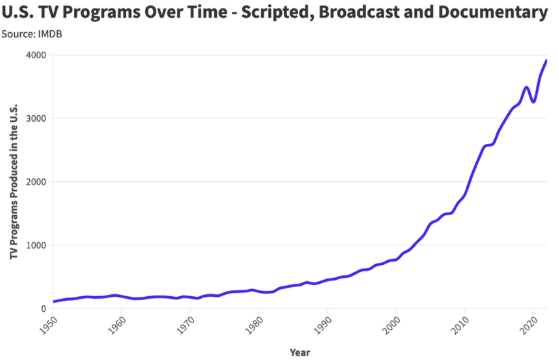
In the digital era, choice overload permeates everyday life: a typical online marketplace now offers thousands of products, each often presenting mulitple ratings, features, and reviews. Streaming services aggregate tens of thousands of titles, and users often report spending more time choosing what to watch than actually watching.  

Figure 2: Number of TV programs produced in the U.S. from 1950 to 2022, showing accelerated growth in the digital age. Source: IMDB

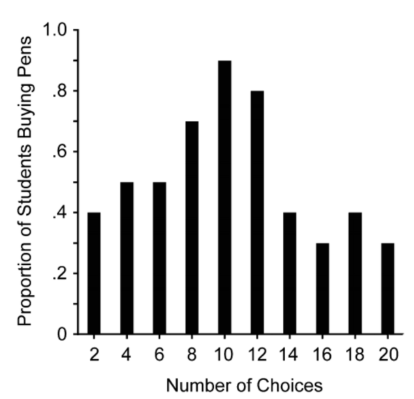
Even outside market-based decision environments, people face an ever-expanding range of alternatives in careers, travel destinations, social interactions, and financial decisions. Behavioral economists and psychologists note that this proliferation of options can paradoxically diminish overall satisfaction and confidence in one’s choices. This trend also shapes broader macroeconomic dynamics. When choices become overwhelming, people participate less actively in markets, often stepping back from decisions altogether. Evidence from e-commerce illustrates that when faced with an excess of product options, many consumers simply postpone or abandon their purchases. 

Figure 3: Proportion of subjects who bought any pens as a function of the number of choices available. Source: Ness Labs 

The human cost of abundance 

Although choice is often associated with autonomy and freedom, an excess of options may lead to psychological downsides. One well-studied distinction in literature differentiates between “maximizers”, individuals who seek the best possible option, and “satisficers”, those who settle for good enough. When faced with abundant choices, maximizers tend to experience higher levels of regret, lower satisfaction, and greater decision anxiety than satisficers.  

Further research suggests that an abundance of choice can even undermine self-control and promote impulsive behavior, particularly after making repeated decisions. This effect has been documented in studies showing that frequent decision-making can deplete mental resources, leading to cognitive and emotional fatigue.  

Beyond individual psychology, widespread choice overload may contribute to broader societal patterns of stress and dissatisfaction. Rather than eliciting joy, the freedom to choose can inflate expectations and intensify regret, particularly when people believe a better choice was possible.  

Toward smarter choices 

Despite its potential drawbacks, choice is still a fundamental part of our lives and need not be feared. A growing body of research indicates that individuals can navigate abundant options more effectively through strategic decision frameworks and environmental design. For example, consciously limiting the number of alternatives under consideration, a practice known as pre-filtering, has been shown to streamline decision-making and reduce cognitive strain. Other helpful approaches include setting clear criteria before engaging in selection, focusing on satisficing rather than maximizing when faced with many options, and using structured heuristics that prioritize key attributes over exhaustive comparison.  

Behavioral economists refer to these techniques collectively as part of choice architecture, which aims to structure decision environments in ways that support better outcomes without eliminating freedom of choice.  

Conclusion 

The paradox of choice illustrates a key tension in modern life: while freedom and autonomy are deeply valued, an excess of options can undermine the satisfaction and confidence individuals seek. Across consumer behavior, digital decisions, and everyday life, too many alternatives can lead to fatigue, regret, and disengagement. 

Understanding the psychological and neural mechanisms behind choice overload does not require rejecting freedom, but rather it leads to a more intentional relationship with our decisions.  

Sources: When Choice is Demotivating: Can One Desire Too Much of a Good Thing? by Iyengar & Lepper (Journal of Personality and Social Psychology); The Paradox of Choice: Why More Is Less by Schwartz; Why Do We Have a Harder Time Choosing When We Have More Options? by The Decision Lab; On the Advantages and Disadvantages of Choice: Future Research Directions in Choice Overload and Its Moderators by Misuraca, Nixon, Miceli, Di Stefano, Scaffidi, Abbate (Frontiers in Psychology); Choice Overload: A Conceptual Review and Meta-Analysis by Chernev, Böckenholt, Goodman (Journal of Consumer Psychology); Decision Fatigue in E-Commerce: How Many Product Options Are Too Many? by Winsome Writing Team (Winsome); The Paradox of Choice: How Too Many Options Affect Consumer Decision-Making by Winsome Writing Team (Winsome). 

Margherita Ottavia Serafini 

Writer

Beyond “Survive the Swim”: The Measurable Power of Calmness and Smooth Efficiency in Triathlon Performance 

The endurance world loves the idea that toughness beats turbulence – survive the swim, settle onto the bike, and then finally “race”. Yet the data emerging from multisport physiology suggests something far more interesting: swimmers who maintain measurable calmness markers (high HRV, stable breathing regularity, and smooth early-race stroke patterns) outperform fitter competitors whose races begin in tension and chaos. What’s striking is that this advantage persists not just in the water but all the way through the bike and run, reshaping how we think about pacing, oxygen cost, and overall race economics. 

Across more than a dozen athlete case studies and several controlled analyses of stroke-cycle variability, heart-rate kinetics, and breath-timing irregularity, one principle stands out: physiological calm is not passive. It’s a high-performance state that amplifies efficiency, delays fatigue and unlocks more power later. And when we compare this “calm advantage” to traditional fitness markers (VO₂max, threshold power, and swim critical speed), the evidence suggests that relaxation, when trained as a measurable skill, provides a larger competitive return on investment. 

Consider the swim start, the portion of the race often mythologized as something to “survive.” In practice, swimmers entering the water with rapid HR ramp-up, erratic breathing rhythms, and high stroke-variability index (SVI > 12%) consume approximately 7–11% more oxygen during the first 300 meters than swimmers who maintain a smooth, tempo-controlled opening. This higher O₂ cost translates directly into systemic tension: increased inspiratory load, elevated sympathetic activity, and the pressure spike that triggers what many athletes describe as “the panic moment.” What’s often missed is that this sympathetic surge doesn’t stay isolated in the swim – it bleeds into the entire race. 

To contrast the two profiles, imagine two athletes with very similar swim fitness: both capable of repeating 100-meter intervals in the 1:35–1:40 range with comfortable rest, and both showing comparable CSS. The only major difference? Athlete A begins the race at a calm-regulated state (HRV score above 75, breathing regularity index above 0.92, stroke deviation below 6%). Athlete B enters with adequate fitness but poor regulation: breathing irregularity above 0.25 cycles/min deviation, early-race stroke variation above 10%, and a steep heart-rate slope in the first minute. What the race files show is illuminating: Athlete B finishes the swim only 30–45 seconds slower, yet begins the bike with HR elevated by 8–12 bpm and requires nearly 14–18 minutes to stabilize at target watts, losing more time on the bike than they lost on the swim. 

The reason is simple physiology. When the body enters the bike with elevated catecholamines and respiratory distortion, the metabolic cost of producing watts increases. Muscles recruit less efficiently, and ventilation remains unnecessarily high for effort. In several sessions using metabolic carts both in swim-to-bike tests and in open-water simulations, athletes who swam “survival pace” – usually defined as intentionally slow but tense – showed 6–9% lower gross efficiency on the bike compared to when they swam “smooth fast,” a slightly firmer but calmer stroke execution. 

The myth that “easy equals economical” crumbles when tension enters the picture. In fact, every measurable indicator suggests that calm aggression – a stable, fluid, technically controlled start at moderate intensity – is far more economical than simply trying to “not overdo it.” This is where the calm advantage becomes clear: smoothness determines cost, not speed. 

Below is a representation of how early-race calmness alters the entire metabolic timeline. 

Table 1. Early Swim Metrics Comparison: Calm vs Chaotic Start

Metric Calm Start (n=42 samples) Chaotic Start (n=39 samples) 
HR increase in first 60 sec +22 ± 6 bpm +38 ± 9 bpm 
Breathing irregularity index 0.08–0.12 0.26–0.31 
Stroke variability index (SVI) 4–7% 11–15% 
O₂ cost per 100m (estimated) +3.2% above pool baseline +10.6% above pool baseline 
 

Notice especially the breathing irregularity. In calmer athletes, breath timing varies by less than 12%. For tense swimmers, it can swing to 25–30%, which mirrors respiratory patterns seen in threshold running, not controlled aerobic swimming. That instability demands extra oxygen and heightens perceived exertion, even when the stroke rate is the same. 

A second set of data reveals how the early swim affects the bike. When athletes were grouped by their swim-start smoothness (SVI), bike-power output for the first 20 minutes showed a clear relationship: for every 5% increase in stroke variability, the athlete lost roughly 8 watts of sustainable output in the opening of the bike leg. 

Table 2. Bike Output Impact Based on Early Swim Smoothness

Stroke Variability Group Avg. Loss in First-20-Minute Bike Power HR Above Baseline Time to Settle 
SVI ≤ 6% –2 watts +3 bpm 4–6 min 
SVI 7–10% –5 watts +7 bpm 7–10 min 
SVI ≥ 11% –9 to –14 watts +10–12 bpm 12–18 min 

This is the part most athletes feel but rarely quantify: chaos in the water drains watts long before you ask your legs to work. 

Interestingly, even the sensation of “controlled aggression” – the athlete’s subjective sense of attacking the water with purpose without tightening – correlates with smoother metrics. Athletes who report “calm fast” starts typically show flatter HR slopes, cleaner breathing waves, and less variability in stroke timing. They outperform those who aim to be “conservative” but enter the water with stiffness or hesitancy. 

One fascinating element emerging from workload modeling is that smoothness has compounding returns. A calmer swimmer reaches T1 neurologically fresher. Their shoulders experience less micro-fatigue. Their breathing resumes normal rhythm sooner. Their cognitive load is lower. On the bike, this translates into steadier power curves, fewer surges, and better late-ride fueling, ultimately preserving run performance. 

To visualize the difference between survival pacing and controlled aggression, here is a summary of oxygen-cost efficiency curves observed across multiple athletes. 

Table 3. O₂ Cost vs Perceived Effort: Survival vs Smooth Fast 

Effort Zone Survival Pace (Tense Slow) Smooth Fast (Calm Aggression) 
Low (Z1–Z2) O₂ cost ↑ 8% O₂ cost ↑ 3% 
Moderate O₂ cost ↑ 12% O₂ cost ↑ 6% 
Tempo O₂ cost ↑ 15% O₂ cost ↑ 8% 
(Arrows indicate increase from pool control baseline for equal speed output.) 

The implication is profound: “Slow but tense” is less economical than “fast but smooth.” Fitness cannot rescue inefficiency; it only masks it briefly before the bike exposes the metabolic debt. 

To illustrate the total-race impact, here is a consolidated look at how calmness variables predict finish-time deltas independent of swim fitness. 

Table 4. Predictive Value of Calm Metrics on Overall Performance 

Predictor Correlation With Faster Total Time 
High pre-start HRV r = –0.61 
Stable early-race breathing r = –0.58 
Low stroke variability (≤ 7%) r = –0.66 
Swim speed alone r = –0.32 
FTP alone r = –0.29 

The takeaway is unmistakable: markers of calmness correlate more strongly with faster total-race outcomes than either swim speed or bike fitness alone. When athletes train relaxation as a technique (breath-timing drills, stroke-synchronization work, open-water pace ramps, HRV-based priming routines) they build an efficiency buffer that amplifies every watt and every stride later. 

The real breakthrough is reframing “stay relaxed” from vague advice into “performance economics”. When you quantify calmness, you teach athletes to treat composure as a skill with measurable ROI. A smoother swimmer isn’t just more comfortable. They’re neurologically efficient, oxygen-efficient, and metabolically stable. They exit the water with access to more power, more control, and more resilience for the hours ahead. 

As the data shows, fitness gives capacity, but calmness governs cost. And on race day, the athlete who manages cost always beats the athlete who merely survives.

Teresa Catita

Editor and Writer

Portugal’s Pride or Saudi Arabia’s Asset? The New Identity of Cristiano Ronaldo 

Reading time: 8 minutes

Cristiano Ronaldo is indisputably the most recognized Portuguese person in the world. Thanks to his abilities and performances in football, as well as the global brands he and his name have created, owning more than five companies, from clothing to hotel chains, he is an influential personality who makes an impact wherever he appears, whether on the pitch or at the White House, as he did last week. Since 2002, when he joined Sporting, he began stepping onto the world stage, carrying Portugal’s name to all corners of the globe. But can Ronaldo be considered a Portuguese ambassador, or is he a brand that can be bought and owned by others? 

Image 1- CR7 in an Al-Nassar game 

Ronaldo’s impact extends far beyond the football pitch, he has become an unofficial ambassador for Portugal, shaping how the world perceives the country. His success brought unprecedented visibility to Portuguese culture, language, and identity, often sparking global curiosity about his origins and upbringing. Tourism campaigns have leveraged his image, and Madeira, his birthplace, has experienced a noticeable increase in international visitors partly due to the global popularity he helped generate. This was evident in a study published in 2021 by the researchers in the Centre for the Study of Geography and Spatial Planning of the Faculty of Arts of the University of Coimbra (FLUC), the study emphasizes that Madeira Island “was consecutively elected” as “Best destination Island in Europe” between 2013 and 2021 (only with the exception of 2015) and, cumulatively, “Best Island Destination in the World” between 2015 and 2020. Adding that “the notoriety of Cristiano Ronaldo influences a whole chain of attitudes, reactions and personal and social behaviours with a positive impact on tourism in Madeira”. The study conclusion was that Ronaldo contribution was important for the island and that he should be used as a role model for other known Portuguese figures to promote their Portuguese home cities and regions. Even in moments of tragedy, Ronaldo image was spotted and helped to raise awareness to the cause. This is the example of “Martunis” an Indonesian boy that was found alone and malnourished in a beach in Indonesia, after the 2004 tsunami that hit Indonesian. The boy was spotted using a Portuguese jersey with the name Ronaldo in the back, the story gains immense media coverage and raise a lot of attention to Indonesia, even leading to CR7 to visit the country and becoming “godfather” of the little boy “Martunis”, sponsoring his studies and career.  

Image 2- Ronaldo meeting Martunis

However, in recent years, Ronaldo’s move to Al Nassr also placed him at the centre of Saudi Arabia’s ambitious global rebranding efforts. Beyond playing football, he has become one of the country’s most visible cultural promoters, appearing in campaigns that encourage tourism and international investment. While this is part of his contractual obligations as a global athlete, it inevitably raises questions about how far a personal brand can be integrated into the strategic interests of a nation. The scale of his salary and commercial responsibilities suggests that Saudi Arabia did not just sign an athlete, they acquired a symbolic asset capable of shifting global narratives. These suggestions came since Saudi Arabia has been attempting to reshape its global image amid international criticism of certain policies, such as restrictions on civil liberties, the treatment of dissidents, and human rights concerns frequently raised by global organizations. These issues have at times overshadowed the Kingdom’s efforts to present itself as a modern, forward-looking nation. Ronaldo’s visibility, charisma, and global following provide Saudi Arabia with a powerful cultural tool that can redirect attention toward tourism campaigns, entertainment initiatives, and economic reforms presented under Vision 2030. While Ronaldo himself is primarily fulfilling the professional and promotional obligations of his contract, his presence inevitably becomes part of a wider attempt to soften international criticism and project a more positive image. 

Although, joining Al-Nassar in 2023, the past week Cristiano Ronaldo made headlines by visiting the White House alongside Saudi Arabia prince Mohammad bin Salman and his delegation. The visit aimed to formalize the trade deal between the U.S. and Saudi Arabia of 300 U.S. made tanks and the 1 trillion investment guarantees from the Saudi’s. Nevertheless, what was most reported from the meeting between the two countries was the dinner, that featured Cristiano Ronaldo as an ambassador of Saudi Arabia. Ronaldo’s presence blurs the line between being an ambassador by choice and being a figure whose image has been strategically “purchased” to serve broader political and economic objectives. In Portugal, a heated debate arises. For some Portuguese, like the President of the Regional Government of Madeira, Ronaldo´s trip brought pride to Madeira, since he represented the region and Portugal near the most powerful men of the free world. Nonetheless, some political commentators wrote and openly stated that the visit was an “embarrassment” for them as Portuguese people, with Elma Aveiro, Ronaldo’s sister, responding to the criticism from commentators like João Maria Jonet that said live in “SIC Notícias” that he was “shocked” with Ronaldo visit. Even Ricardo Araujo Pereira ironically commented on the situation, saying in his Sunday show: “What would D. Afonso Henriques, founder of Portugal, that fight the moors to gain independence, say seeing Portugal biggest personality in the white house representing Saudi Arabia, home of the founder of Islam”.  

Image 3- Ronaldo receiving the White House Key 

To conclude, Cristiano Ronaldo’s trajectory from global sports icon to a figure intertwined with Saudi Arabia’s political and economic ambitions illustrates the increasingly complex relationship between celebrity, national identity, and international power. His presence at events of geopolitical significance shows how his image now functions far beyond the boundaries of sport, becoming a tool capable of lending visibility and legitimacy to the agendas of states. This dual role has intensified debate within Portugal, where admiration for Ronaldo’s achievements coexists with discomfort over the symbolic weight his endorsements carry. Ultimately, Ronaldo’s case exposes the delicate line between personal success and political appropriation, raising broader questions about how much control public figures retain over their own narratives once they become global brands embedded in international strategies. 

Sources :

Guilherme Mendonça  

Writer

Why Gender Pay Gap Data Mislead Us: Understanding The Dynamics Behind The Numbers 

Reading time: 8 minutes

The gender pay gap index is often perceived as a clear and straightforward indicator of inequality: the lower the gap, the more equal a society must be. Yet, when looking at European data, this assumption immediately breaks down. Countries widely recognized for their strong gender equality, such as Finland and Denmark, show some of the highest gender pay gaps in Europe, respectively of 16.8% and 14.0% in 2023. Conversely, Southern European countries, typically portrayed as less advanced in terms of labor equality, often show lower gaps, such as 2.2% in Italy, 5.1% in Malta and 8.6% in Portugal.

Figure 1: The unadjusted gender pay gap, 2023 (difference between average gross hourly earnings of male and female employees as % of male gross earnings). Source: Eurostat 
Figure 2: Gender Equality by Country, 2025. Source: World Population Review 

This counterintuitive pattern raises a key question: why do some of the most gender-progressive countries display such large pay gaps? 

Understanding the answer requires unpacking what the gender pay gap actually measures and how structural factors shape the interpretation of the data. 

A counterintuitive European puzzle: how labor participation affects the gender pay gap 

According to Eurostat, the gender pay gap represents the average difference between male and female hourly earnings across an entire economy. However, this “raw” indicator does not adjust for variables such as employment rate, seniority, working hours, occupation, or industry composition. As a result, countries with very different labor market structures can produce misleading pay gap figures. 

In the European context, Nordic countries display among the highest female labor participation rates in Europe. In Sweden and Finland, around 75-77% of working-age women are employed, compared to roughly 52% in Italy, according to the Eurostat data for 2021. This fundamental difference has two statistical consequences:  

(1) More women participate across many sectors, including high-paying but male-dominated private industries, where pay disparities are more apparent.  

(2) In low-participation countries, many women who would earn less or face structural disadvantages simply do not appear in the labor market statistics. 

This means that a “low pay gap” can reflect fewer women working, not more equal pay.

Figure 3: Female labor force participation rate in Europe, 2024 (the average for 2024 in the European countries was 54.19%.The indicator is available from 1990 to 2024). Source: The World Bank 

Structural factors shaping the gender pay gap  

A low pay gap may also reflect structural constraints, cultural norms, or barriers that discourage women from entering specific sectors, or even from participating in the workforce altogether. In Italy, for instance, women are underrepresented in high-earning private-sector roles but are comparatively overrepresented in stable public-sector professions, where pay scales are more regulated. This combination tends to compress wage differentials and therefore “artificially” decrease the gender pay gap. 

By contrast, in Nordic countries women participate across a wide range of sectors, including those with substantial wage dispersion. This results in a broader and more accurate representation of gender differences in earnings. 

In this sense as well, a low pay gap is not inherently a sign of gender parity. 

The role of part-time work and occupational segregation 

A third major factor explaining the higher gender pay gaps in Northern Europe is the prevalence of part-time employment among women. According to Eurostat, countries such as the Netherlands and Denmark have some of the highest female part-time rates in Europe, compared to Southern European countries like Portugal, Greece, or Spain. Part-time jobs tend to be paid less per hour, offer fewer opportunities for career progression, and limit access to high-responsibility roles. Although part-time work in these countries is often facilitated by supportive family policies and may be a voluntary choice, it nevertheless contributes significantly to the gender pay gap. 

This pattern results in greater salary divergence between genders, even in settings where equality norms are strong.

Figure 4: Part-time Employment in Europe, 2021. Source: Eurostat 

The Nordic Gender Equality Paradox: when generous policies widen the gap 

One of the most discussed phenomena in economic literature is the Nordic Gender Equality Paradox. Although, as previously mentioned, Nordic countries consistently lead global rankings on gender equality, research by the National Bureau of Economic Research (NBER) has shown that highly generous parental leave policies can unintentionally amplify long-term differences in earnings

In countries such as Sweden, Denmark, and Finland, parental leave systems are among the most comprehensive in the world. While these policies ensure high levels of family wellbeing, they often result in women taking longer leave periods than men, leading to a slower re-entry into the labor market. This does not suggest that generous welfare policies are harmful; rather, it highlights how well-intentioned reforms can produce unintended labor-market outcomes when uptake remains uneven across genders. 

In Nordic countries, despite continued efforts to encourage paternity leave, women still take the vast majority of parental-care responsibilities. This persistent imbalance shapes career progression and contributes to long-term differences in lifetime earnings trajectories. 

Why public perception gets it wrong 

Public understanding of the gender pay gap is often shaped by simplified narratives, headlines, or assumptions based on cultural stereotypes about specific regions. Surveys conducted by the Pew Research Center show that people tend to overestimate gender differences in some contexts and underestimate them in others. 

Many assume that Nordic countries must have both high labor equality and low pay gaps. While this is true in some dimensions, such as political representation, education, and labor participation, pay gaps capture a more complex picture involving sectoral structures, parental leave, part-time work, and long-term career dynamics. 

Similarly, countries with low pay gaps are often assumed to be more gender equal, even though low participation rates, lack of childcare infrastructure, or rigid labor markets may paint a very different picture. 

This disconnection between perception and reality underscores the importance of interpreting gender statistics with nuance and understanding what each indicator actually measures. 

Conclusion 

The gender pay gap is a useful measure, but understanding what underlies it is essential. As European data shows, a low gap does not automatically signal high equality, nor does a high gap inherently indicate poor conditions for women. Instead, the gender pay gap must be interpreted within the broader context of labor participation, occupational patterns, welfare policies, and family dynamics. 

Nordic countries exhibit higher raw pay gaps because their labor markets include almost all women, across all sectors, roles, and wage bands, and because generous parental leave policies influence long-term earnings. Southern European countries show lower raw gaps largely because fewer women work and those who do tend to be concentrated in more regulated sectors. 

A nuanced interpretation is therefore essential. Understanding the mechanisms behind the numbers allows policymakers, students, and future professionals to build a clearer picture of labor market inequalities. Only by looking beyond surface-level statistics can societies meaningfully address the structural causes of wage disparities and design interventions that move beyond appearances toward real equality. 

Sources: Eurostat; OECD; The World Bank; CEPR – VoxEU: The Nordic Model and Income Equality: Myths, Facts and Policy Lessons by Mogstad M., Salvanes K. G., & Torsvik G.; World Bank Group, Gender Data Portal; European Commission; The World Economic Forum, Global Gender Gap Report; The Economist: A Nordic Mystery; National Bureau Of Economic Research: The Child Penalty Atlas by Kleven H., Landais C., & Leite-Mariante G.; Pew Research Center, Global Attitudes on Gender Equality

Margherita Ottavia Serafini 

Writer

Female Exodus: Why U.S. Women Are Leaving The Labour Market 

Reading time: 8 minutes

Since January 2025, more than 400,000 women have been leaving their jobs in the U.S., the steepest decline in over 40 years for mothers of young kids.  

A female exodus that is dangerously erasing years of hard-won advances women made, particularly coming out of the pandemic, when flexible work policies enabled unprecedented labour participation rates.  

Remote Work Trends And The Post-Covid Peak 

On the wave of lockdowns, in May 2020 pandemics pushed almost 40% of employed Americans into working remotely. An undeniable jump, if we consider that just 3 years earlier only about 9-10% of workers would be reported working remotely. Later on, as offices reopened, that number fell, dropping to around 5.2% by September 2022 for those working remotely due to COVID.  

However, remote work itself did not disappear. The pandemic left a mark in the labour market, as by early 2024 about 22.9% of U.S. employees were still teleworking. This shows how post-pandemic remote-hybrid work remained definitely more common than it was before, despite not reaching the emergency peak of 2020. 

Figure 1: Share of employment by gender in occupations that can be performed remotely. 
Source: U.S. Census Bureau and USDOL/ETA 

Flexibility, Remote Work, and Women’s Labour Force Participation 

Historically, women have been overrepresented in roles more adaptable to remote work, such as education, administration, and knowledge-based services. Thus, it is not surprising that when flexible work options arose, many women would capitalise on them.  

For both men and women, the possibility of working remotely decreased the likelihood of dropping out of work. But this effect was more visible for women. In fact, prime-age women’s labour force participation (ages 25-54) reached record levels in the U.S., hitting around 77-78% in 2023.  

Figure 2: Labor force participation of U.S. prime-age women (1982–2025), by age of youngest child. Mothers with children under 5 peaked at 71% in 2023, then dropped to 68% in 2025. 
Source: The Hamilton Project, Brookings. 

A Brookings analysis pointed out that since 2020 the group witnessing the fastest growth in labour force participation were those mothers with children under 5 years old. For most, indeed, remote and hybrid schedules created a bridge between work and family responsibilities, particularly also among highly educated or married women. Flexibility would not just retain workers, it actually unblocked participation from those groups previously precluded by rigid schedules.  

But numbers speak loud: nowadays, something is changing.  

Unaffordable Childcare and Caregiver Burnout 

What is happening in front of our eyes is a clear childcare crisis. The stress and pressure to manage both career and childcare leave women overwhelmed and exhausted. In the U.S., many women struggle to find affordable childcare in a country with one of the highest costs in the world, often 30% or more of an average family’s income.  

Figure 3: Cost of infant care as a share of median income across U.S. states in 2024. Darker shades indicate higher financial burden. 
Source: Economic Policy Institute, via CNN.
 

Instead, countries such as Germany and Estonia have subsidised childcare, pushing down costs to near zero for many families. But many American mothers feel they have little choice but to quit their jobs. Similar story in the UK, where a recent survey has revealed that 43% of mothers revealed they had considered leaving their jobs due to childcare expenses.  

Years of underinvestment and the end of expiration of pandemic-era subsidies are leaving American childcare supply in crisis. Women who have fought for their careers are now forced to drop out to preserve their mental health and family well-being.   

Return-to-Office Mandates and Lost Flexibility 

In January 2025, President Donald Trump ordered federal employees back in-person five days a week, despite many had remote work arrangements and some had even moved far away from their offices. Major private employers, such as Amazon and JPMorgan, followed the same wave.  

It’s not a coincidence that women’s participation in the workforce is falling as flexibility disappears, says Julie Vogtman, senior director of job quality for the National Women’s Law Center. 

Yet, return-to-office policies are not proven to make companies more productive. For instance, one 2024 study Van Dijcke, Gunsilius, and Wright of resumes at Microsoft, SpaceX, and Apple found that return-to-office policies led to an exodus of senior employees, which posed a potential threat to competitiveness of the larger firm. In other words, employers are losing talented workers, whose skills and institutional knowledge are difficult to replace. A talent drain that can even weaken the overall economy’s productivity and innovation.  

To worsen things, women don’t feel respected in some workplaces, perceiving a clear cultural shift. Many have reported feeling less valued at work, with few diversity initiatives and a post-pandemic reversion to old norms.  

It’s a pure storm of fading flexibility, harsher office demands and eroded support systems.  

A McKinsey research suggests that women are even more likely to take on a lower-paying job if it implies benefits such as remote working and flexible schedules. If this trend increases, it will leave women disproportionately affected.  

Furthermore, as women leave their jobs, the Trump administration is looking for ways to encourage women to get married and have more children, so as to slow down the country’s decline in birth rate.  

Global Perspectives: Policies Matter 

“The U.S. is the only advanced economy that’s had declining female labor force participation in the last 20 years, and a lot of that is because of lack of social safety net and caregiving supports” – Kate Bahn 

Globally, about half of all women participate in the labour force, with huge regional disparities persisting.

Figure 4: Female labor force participation worldwide in 2024. Darker regions show higher shares of working-age women in the labor force, with stark contrasts between regions like Scandinavia and South Asia. 
Source: Our World in Data (2025), ILO Estimates. 

Deliberate policies have allowed women’s workforce participation to rise or held steady in many wealthy nations. Nordic countries like Iceland and Sweden lead in female employment, with gender gaps among the smallest in the world and a women’s participation rate of around 63-70%.  

These countries differ from the U.S. as they heavily invest in affordable childcare, generous parental leave, and flexible schedules. Even the UK, Canada, and China have recently improved childcare subsidies or free preschool hours to push mothers to work. France and the Netherlands have high part-time options keeping women in the labour force, whereas Japan is pushing for “women economics” incentivising female employment.  

On the other hand, countries that like the U.S. lack supportive policies see women pressed to choose between work and family, a choice that an emancipated society shouldn’t have.  

Conclusion 

Women leaving the workplace is not merely a personal or isolated decision. We are talking about a systematic problem depending on a complex interplay of societal norms, organisational practices and individual circumstances.  

Factors such as work-life balance, career progression opportunities, social norms and expectations shape many women’s career decisions. Understanding the multifaceted nature of this trend is essential for designing effective strategies to retain and support women, ultimately benefitting the overall society and economy.  

Sources: Bureau of Labor Statistics; Time Magazine; Allwork.Space; The Washington Post; University of Kansas (The Care Board/CBS News); Brookings Institution; Federal Reserve (FEDS Notes); World Economic Forum; Institute for Women’s Policy Research; KPMG; The Economist; The Hamilton Project; The New York Times; McKinsey Global Institute; Our World in Data; Qureos; Return to Office and the Tenure Distribution, Van Dijcke, Gunsilius & Wright, arXiv (2024) 

Rebecca Fratello 

Writer

Zohran Mamdani: A New Order? 

Reading time: 8 minutes

Zohran Mamdani was recently elected as the first socialist mayor of New York City last month. The city of Wall Street, billionaires and neoliberal globalization has just chosen a man who ran on a platform of housing justice, public transit, and redistributing wealth. “This isn’t just about New York,” Mamdani said during his victory speech in Queens. “It’s about imagining a different kind of future” (The New York Times, 2025). 

NYC’s position as the United States’ largest city, and  one of the world’s financial centers, is a strange bedfellow for an openly socialist politician. Some claim Mamdani’s victory represents the end of the neoliberal order within its home, yet others see it as a temporary response to exhaustion and inequality. However, it has opened a cultural conversation that stretches across the nation.   

Mamdani outside a New York bodega. Credit: Getty Images 

A Socialist in Finance’s Capital 

New York has always been a paradox: the home of billionaires and of the homeless, of high art and unpaid internships. Its contradictions are almost part of its brand. Yet it has recently gone through rapid change. The global financial center of the 1990s, of hopeful entrepreneurs and mid-western dreamers who wanted to make it big, has been lost. In its place is an almost dystopian reality: crime, economic hardship for most, abusive rents with frozen salaries, and an air of tension and distrust of institutional change. Yet here was Mamdani.     

Mamdani, born outside the US to an immigrant family, has spent years advocating for tenants’ rights and public housing (Burgis, 2025). His campaign focused on simple and popular ideas like rent freeze, free public transport, and reorienting city budgets towards public welfare (Reuters, 2025). In many ways, his election is the culmination of a cultural shift rather than a sudden revolution. Young voters, especially those under 35, have grown tired of capitalism’s unfulfilled promises. Rising costs of living, precarious work, and the digital age have made “socialism” no longer sound like a dirty word for American citizens (Pew Research Center, 2022). But was this truly a vote for socialism? Or simply a rejection of what came before? 

Exhaustion and its Opportunity 

Political scientist Michael Sandel once wrote that “populism arises when people feel humiliated by meritocracy” (Sandel, 2020). In New York, that humiliation took the form of unaffordable rent, crumbling infrastructure, and the sense that “success” was something reserved for the already successful. Analysts at The Atlantic argued that Mamdani’s victory was not a pure ideological triumph, but a reaction to systemic fatigue (The Atlantic, 2025). After decades of centrist mayors managing the city like a corporation, voters simply wanted something different. 

Even Mamdani’s critics concede that his authenticity played a role. He biked to campaign events, and refused large corporate donations (The Guardian, 2025). Instead, he built a strong grassroots support, being present in communities, engaging with his support base directly, and being present. For many disillusioned citizens, he felt real. This presence helped bridge the gap between the voters’ perception of socialism. Mamdani’s win reflects that broader transformation. He talks less about class war and more about “belonging”. An emotional register that resonates in a fragmented digital age, especially with younger voters. 

According to The New Yorker, his speeches mix activist language with pop-cultural references, a blend that feels “as Brooklyn as it is Marxist” (The New Yorker, 2025). This approach has helped him reach not only traditional leftists but also creative professionals and students who see themselves as progressive but not radical.  

Mamdani at his election rally, November 2025. Credit: Victor Llorente for The New Yorker 

A Collapse or a Shift? 

Is this the collapse of neoliberalism? Probably not. Neoliberal logic of competition, privatization, individualism still runs deep in American institutions. But culturally, the conversation has shifted, at least in urban areas. Mamdani’s rise suggests that alternative narratives are gaining legitimacy, especially among younger generations who grew up during crises rather than booms. 

When news of Mamdani’s election started appearing, some warned of market instability. Yet the stock market barely moved (Bloomberg, 2025). Finance is apparently extremely pragmatic: as long as Mamdani doesn’t impose sudden regulation, Wall Street stays stable. So far, his administration has taken a targeted approach by ending some luxury tax breaks, introducing rent caps, and expanding public transport funding (City Journal, 2025). These policies are ambitious but far from revolutionary. 

The US is still the economic powerhouse of the West, yet it is more apparently buckling under its own weight. Political tension is the highest it has been in the last 50 years, and it seems like something is brewing. Yet at the same time, its liberal institutions function in a similar way to capitalism: they allow voters to set the stage. The liberal order is strong in that way, it allows slightly different political ideas to test themselves in localised regions, before reabsorbing them into the fold. Mamdani’s politics are more democratic than socialist, and will not break with the Democratic’s party line of liberal democracy. Instead, he will serve as a political counterpart to conservatives in Washington DC: the new wunderkind, the shining light for democrats to follow.  

Bernie Sanders, Zohran Mamdani and Alexandria Ocasio-Cortez, the most prominent left-wing politicians of the Democrat Party, holding hands at a rally. Credit: ABC News 

Zohran Mamdani’s victory might not herald a new economic order, but it undeniably represents a new cultural mood: one where ideals of solidarity, justice, and public life are being reimagined. Can capitalism be “reformed” from within? Or must it be replaced by something else? Mamdani ‘s New York will prove a natural experiment for both questions. 

Sources:

Lucas Bernal  

Writer

Another War Arriving

Reading time: 8 minutes

Since the beginning of the year, relations between the United States and Venezuela have entered a particularly volatile phase. What began as U.S. efforts to counter alleged drug-trafficking networks operating out of Venezuela has escalated into a broader strategic standoff. Accusations, military posturing, and legal claims about sovereignty and intervention have sharpened the conflict and raised questions about international law, regional stability, and the future of U.S.–Venezuela diplomacy.

Image 1- Protest in Venezuela against U.S. actions. 

How the Crisis Started 

Since the beginning of his term, the Trump administration has linked Maduro’s regime to drug trafficking into the United States and the related problems these substances cause, such as crime and the growing influence of cartels. In 2020, during Trump’s first term, the Department of Justice issued a press release charging Nicolás Maduro and other senior Venezuelan officials with narco-terrorism, drug trafficking, and corruption. This shows that since his first term, Trump has associated Maduro with the drug trade and its consequences for the American population. This year, the White House decided to take more serious action regarding Venezuela. In August, Attorney General Pam Bondi decided to double the reward for information leading to Maduro’s arrest to $50 million. Soon after that, a stronger stance was adopted: an attack. On September 2, the U.S. Navy announced a strike on a vessel allegedly departing Venezuela and engaged in drug smuggling. The attack resulted in the deaths of 11 people and was seen as the first warning to Venezuela. Since then, the U.S. government has significantly expanded its operations in the Caribbean region, especially near Venezuela. For example, the Pentagon deployed an aircraft carrier group and other naval assets to the southern Caribbean as part of what the U.S. frames as “anti-narcotics operations.” 

The goals of the Trump administration 

As mentioned before, the U.S. describes the goal of this operation as a firm and protective stance against drug and crime cartels operating in the country. However, there might be other motives. Intelligence agencies—especially the National Intelligence Council—report that there is no conclusive evidence directly linking Maduro’s leadership to a centralized trafficking network. They also point out that Venezuela is neither a major cocaine nor fentanyl producer, nor a key transit point in narco-trafficking routes to the United States. This suggests that the White House has additional goals behind the operation. In addition to attempting to oust Maduro and push for regime change—intentions already hinted at publicly by the U.S.—two other motives stand out: asserting American strategic influence in Latin America and trying to gain leverage over Venezuela’s natural resources. The first comes from the growing Chinese economic and diplomatic involvement in the region. This has unsettled the Americans, and they have now adopted a new approach: align with Washington and receive benefits (as in Argentina’s case) or deviate and face costs, as happened with both Venezuela and, to some extent, Colombia. The second motive comes from suggestions that access to Venezuela’s vast oil and mineral resources is a secondary but key motive for this posture toward the South American country. For example, discussions allowing U.S. companies to regain access have appeared in reports surrounding the escalation. 

Image 2- Oil Reserves possessed by Venezuela

Venezuela’s reaction  

The Venezuelan government, led by Nicolás Maduro, has reacted strongly to all the U.S. moves and operations so far, treating them as a direct threat to national sovereignty and hinting at possible retaliation. Caracas has accused Washington of seeking regime change under the cover of a drug-war campaign. Seeing the need to be prepared, Venezuela is reportedly seeking military assistance from countries such as Russia, China, and Iran, requesting radar systems, aircraft repairs, and missile supplies to bolster its defenses. Maduro justifies these measures as necessary and has deployed warships, surveillance drones, and over 15,000 troops along Venezuela’s Caribbean coast and its border with Colombia. He has even called on civilian militias to enlist and train as part of a national defense posture, declaring, “In the face of this maximum military pressure, we have declared maximum preparedness for the defense of Venezuela.” Maduro also added that this was in response to the “eight military ships with 1,200 missiles and a submarine targeting Venezuela.” His Foreign Minister, Yván Gil, brought the matter to international forums, telling the United Nations that the U.S. deployment is “an illegal and completely immoral military threat hanging over our heads.” Caracas is thus positioning itself as being under siege by U.S. power, shifting the narrative away from drug trafficking and toward foreign aggression. He added that, according to UN data, only about 5% of cocaine exports allegedly pass via Venezuela, calling the U.S. narrative a “false narrative” aimed at regional destabilization. 

Image 3- Members of the Venezuelan army in a protest near UN headquarters in Caracas

International Reaction and Regional dilemma  

From the United Nations to Russia, these tensions have prompted a wide range of responses. The United Nations has repeatedly urged restraint by both the U.S. and Venezuela, warning that the military build-up and strikes risk regional peace and stability. For example, the UN noted that U.S. military deployments began in August 2025 and said any measure to counter trafficking must respect international law. In addition, at a UN Security Council meeting, multiple member states voiced concern; even some U.S. allies, such as France, Denmark, and Greece, joined the call for de-escalation and dialogue with Venezuela. Beyond the UN, both Russia and China have strongly condemned the U.S. military actions near Venezuela, calling them an “excessive use of force” and a violation of international law while reaffirming support for Venezuela’s sovereignty. Both countries maintain strategic energy and military ties with Venezuela, seeing the country as an important ally in the geopolitical chess of the region. Other reactions have come from the Caribbean states caught between support for U.S. anti-drug efforts and concern about militarization near their region. For example, Trinidad and Tobago’s Prime Minister aligned with U.S. security rhetoric, which drew both domestic support and regional unease. Brazil, for its part, is attempting a delicate balancing act: on one hand, it criticizes Venezuela’s democratic shortcomings (especially regarding elections and human rights), while on the other, it opposes external military intervention—such as by the U.S.—emphasizing sovereignty and the potential destabilization of the region. 

To sum up, the U.S.–Venezuela confrontation in 2025 has evolved from economic and diplomatic pressures into a much more confrontational and militarised phase. While the United States frames its actions as part of a fight against narco-trafficking and terrorism, Venezuela regards them as imperialistic and aimed at toppling the regime. With legal, military and diplomatic stakes rising, the risk of miscalculation or escalation is significant. All now turn to South America, a continent that has not seen an interstate military conflict since the 1990s, as it faces the alarming prospect of becoming the next front in this war-torn world. 

Sources:


Guilherme Mendonça  

Writer

Risk Repriced: How Political Instability Reshapes Market Confidence and Sovereign Costs 

Reading time: 8 minutes

When Markets Look At Politics 

We are used to thinking of financial markets as driven only by economic principles such as inflation, interest rate expectations, and growth forecasts. In this context, politics is background noise: unpredictable, difficult to quantify, and irrelevant to asset pricing. Yet this perception increasingly misrepresents reality. 

Political developments have become central to how markets interpret risk, reprice assets, and allocate capital.  

Nowadays, headlines from governments regularly trigger revaluations. Political uncertainty is growingly emerging as a source of volatility and a key determinant of sovereign borrowing costs. Every new cabinet announcement, legislative halt or budget negotiation is a signal investors have to price, quickly and with little margin for error.  

The uncertainty about future government actions may have a dual effect on market prices. In rare cases, it may represent policy flexibility against shocks. But in the majority of cases, it may actually reflect growing doubts about institutional resilience and future fiscal tracks. 

The market impact is clear: as stock prices respond to political news, political uncertainty leads to higher equity risk premium, increased asset correlation and consequently lower diversification benefits. 

To better understand how political turmoil can flow into financial markets, we can have a look at the most recent case: France. 

The French Distress 

In October 2025, France dived into a serious political turbulence after the resignation of Prime Minister Sébastien Lecornu just one day after announcing his cabinet. It’s the collapse of the fifth prime minister in just two years, a statistic that points out not just instability but a deeper fracture in the French political system. 

Public surveys reveal despair, pessimism and distrust as the prevailing feelings in French citizens. Worrying symptoms representing the profound current democratic crisis, not even two years ahead of the next presidential election.  

Financial markets, never known for patience but for how quickly they react, are clearly reflecting investors’ sentiment. Not surprisingly, French equity indices dropped, and bond markets did not do differently. For instance, yields on the 10-year French government bonds skyrocketed by 7-8 basis points, reaching around 3.58%.  The spread between French and German bond yields broadens as investors demand a premium for holding what they see as riskier sovereign debt.  

Figure 1: The yield gap widened sharply amid French political turmoil, reflecting rising investor risk premia on French debt. 
Source: LSEG via Reuters. 

The reason for this reaction? The answer is not that straightforward. No single event triggers the repricing by itself, but the clear loss of confidence in France’s fiscal policies plays an unequivocal role. The situation in France is getting complicated, both politically and economically.  

The general feeling speaks loud: France looks unable to find its way out of this malaise.  

Shifting Benchmarks 

Historically, France was perceived as relatively safe within the Euro area bond markets. Italian bonds, instead, have been telling a different story so far. Yet, trends are changing.  

Figure 2: French (red) and Italian (green) 10-year government bond yields nearly converged in late 2025, reflecting France’s political turmoil (rising yields) versus relative stability in Italy (falling yields). Source: LSEG via Reuters. 

As French borrowing costs have risen, Italian yields have followed the opposite direction. This shows how perceptions around France, once considered a core market, and Italy, long seen as one of the weakest ones instead, have radically changed. Investors are concerned that France will not be able to improve its fiscal position due to its political instability, thus pushing up its bond yields. Different story for Italy, where relative political stability and downward debt forecast have caused its bond yields to decrease.  

But be careful. For some, the narrowing of the French-Italian bond spread has more to do with French fiscal and political distress than an improvement in Italy’s market.  

Italy has been afflicted by chronic problems that will take a long time to fix. We are still talking about the euro zone’s second-largest debt as a percentage of GDP after Greece, with a growth of the economy being obstructed by a concerning falling population and low female employment.  

Still, the convergence of French and Italian bond yields serves as a striking illustration of the implications of political stability and credible budgeting on investors’ confidence.  

Indeed, global investors nowadays look at governance quality in advanced economies pretty much as economic principles to adjust their required returns. 

Impact On Growth And Market Confidence 

Beyond market volatility, political instability carries important long-term economic costs. Empirical research on advanced economies has demonstrated that an uncertain politics can cause delayed investment decisions, hard policy execution, and undermined growth prospects. In fewer words, high levels of political instability can overall cause worse economic output. 

The reasons are pretty intuitive: when governments are fragile or policy direction is unclear, businesses and consumers lose confidence. Private sectors struggle to create expectations, while public institutions turn less effective in providing structural reforms.  

But as fragmented governments are not able to enact reform, public finances deteriorate. In France, the continuous change in leadership has paralysed the adoption of a new fiscal regime, delaying important decisions on expenditure and taxation. This creates a dangerous loop: as fiscal negligence decreases investor confidence, sovereign borrowing costs increase, which displace public spending, which in turn further constrains the ability to enact future reforms.  

France, for instance, has gone through five prime ministers in just two years, its national debt exceeding €3 trillion, and it seems unable to create a credible path towards fiscal balance.  

Figure 3: France holds the third-highest debt burden in the EU, after Greece and Italy, exceeding 110% of GDP. 
Source: Eurostat.

Globally, the political instability of an advanced economy as France can have both negative and positive spillover effects on other regions as well. On one hand, investors may require higher risk premiums also from other countries perceived as politically vulnerable. On the other hand, such instability may cause a flight-to-quality flows, as capital would flow towards safer bonds such as Germany Bunds or U.S. Treasuries.   

However, the coincident fiscal crises in multiple large economies, might result in a broader reallocation of global capital away from equities and emerging markets, thus potentially threatening global growth. 

Institutions such as the IMF and OECD have pointed out how political stability and consistent fiscal policies are not only priorities at the domestic level, but also the foundations of international market confidence and macroeconomic resilience. 

Conclusion 

What France is going through right now is not just a domestic drama. We are using this case as an understanding of what can be the costs of institutional fragility in a period of high debt and fiscal uncertainty. When governments and their reforms falter, consequences can be urgent: higher borrowing costs, downgraded credit ratings, eroded currencies, and constrained growth.  

If investors would once see political risk as background noise, now they price it in their models and we need to discuss it. The bond market has become a criterion of credibility, which rewards discipline and punishes obstructions.  

The message to policymakers is clear: good governance is capital. Stability, transparency, and consistency are no more mere abstract democratic values, but economic assets bringing yield. We are still in a post-pandemic context with high interest rates and insecurities, and policy incoherence is no longer tolerated. 

Preserving market trust is vital. Governments must now handle both budgets and expectations. Credibility can be the cheapest form of stimulus for those countries facing high debt and structural change. And as France is showing, once lost, it becomes the most expensive asset to restore. 

Sources: Reuters; Euronews; Financial Times; Fitch Ratings; Eurostat; LSEG via Reuters; IMF; OECD; ECB; Political Uncertainty and Risk Premia, by Lubos Pastor & Pietro Veronesi; European Journal of Political Economy; Political Instability and Economic Growth: Causation and Transmission, by Maximilian W. Dirks & Torsten Schmidt.

Rebecca Fratello 

Writer

78 RPM: The Record That Revolutionized Music Before Vinyl Even Existed

Reading time: 8 minutes

Before 33s, before 45s, and long before Spotify playlists, music moved at a speed most people today have never experienced: 78 revolutions per minute. These shellac discs weren’t just early records — they were time machines, cultural capsules, and experiments in sound. Place a needle on one, and you’re instantly connected to a world over a century old: jazz spilling out of a New Orleans club, blues echoing from a Mississippi porch, classical orchestras captured in studios that smelled of wood, varnish, and ambition. 

Most music listeners today assume vinyl starts at 33 or 45 RPM. Few realize that for decades, 78s were the format that defined recorded music, shaping how songs were written, performed, and even how we perceive rhythm and melody. Though they were eventually replaced by longer-playing, more convenient formats, 78s left a legacy that still pulses in collectors’ crates, DJs’ loops, and archival vaults. 

The Speed That Defined an Era 

The story of 78 RPM begins with engineering necessity. In the early 20th century, phonographs were mechanical marvels, and shellac discs became their natural companion. Heavier and more brittle than modern vinyl, these discs required a rotational speed that balanced mechanical stability with audio fidelity. 78 revolutions per minute emerged as the practical standard. 

In truth, “78” wasn’t always precise. Early records spun anywhere between 70 and 90 RPM depending on the manufacturer or motor. It took time, industrial consensus, and international standardization to settle on 78 as the global norm. 

The speed shaped more than just playback — it influenced composition. With only three to five minutes per side, musicians had to convey emotion, narrative, and musical complexity within tight temporal confines. Jazz improvisations were sharpened, blues storytelling distilled, and early pop songs meticulously structured. In a sense, the 78 RPM record didn’t merely capture music — it taught music how to exist

Shellac, Sound, and the Magic of Imperfection 

Vinyl enthusiasts often speak of warmth, but 78s possess a different kind of sonic magic. Shellac, the brittle resin used in these discs, produces a crisp, raw sound rich with harmonic textures and subtle distortions. Every pop, click, and crackle is more than noise — it is character, history, and memory embedded in grooves

Under a microscope, a 78’s groove twists like a miniature landscape, encoding vibrations that a needle transforms into audible emotion. Unlike modern vinyl, which strives for uniformity, shellac records bear the fingerprint of the craftsman, the whims of the pressing plant, and even minor environmental changes like temperature and humidity. Playing a 78 is hearing music through the lens of its creation

Digital reproductions often flatten this experience. Even high-quality vinyl reissues cannot replicate the unpredictable textures, the tiny inconsistencies, and the tactile intimacy of a shellac pressing. A 78 is more than a recording — it is a mechanical performance frozen in time, waiting for a needle to breathe it back to life. 

Cultural Pulse: 78s Around the World 

78 RPM records were not only technological achievements — they were vehicles of cultural exchange. Jazz leaped from New Orleans to Paris. Blues traveled from the Mississippi Delta to London parlors. Folk songs crossed oceans and continents. 

The format’s limitations — brevity, fragility, and speed — shaped the music itself. Artists learned to tell stories quickly, to craft hooks that lingered after mere minutes. Many songs we consider timeless were written to fit the mechanical boundaries of a machine. Without 78s, the architecture of modern pop, jazz, and blues might be fundamentally different. 

Collectors and DJs today prize these discs for rarity and texture. Test pressings and private editions, often never reissued, offer glimpses of performances long forgotten. Modern musicians and experimental sound artists sample 78s for loops, textures, and crackles that are impossible to generate digitally. In these grooves, the past meets the present in ways that are both sonically rich and culturally profound

Revival and Preservation 

Despite their decline after the mid-20th century, 78s have experienced a quiet renaissance. Archivists, collectors, and experimental musicians recognize them not as obsolete relics, but as living artifacts

Audiophiles chase the shellac’s signature sound. DJs and sound designers exploit the harmonic richness and crackle for texture. Archivists study stylus sizes, playback speeds, and groove geometries to digitize recordings with scientific precision, preserving sonic history with astonishing accuracy

Playing a 78 today is almost ritualistic. Each disc demands careful handling, meticulous cleaning, and precise playback speed. Minor deviations in pressure or RPM can alter pitch, tone, and timbre. In a digital age of effortless streaming, the 78 reminds us that presence, patience, and touch are part of the musical experience. 

Hidden Stories in Dead Wax 

Beyond the music, 78s carry secrets in the dead wax — the area near the label. Engineers and pressing plants etched matrix numbers, signatures, or cryptic messages, often unnoticed by casual listeners. These micro-details transform each disc into a narrative object, a conversation across decades

Listening to a 78 becomes a multi-layered experience: the music itself, the physical artifact, the hidden inscriptions, and the echo of human hands that shaped it all. It is auditory archaeology, where every crackle and pop carries historical context. 

Why 78s Still Matter 

78 RPM records are more than nostalgia — they are lessons in creativity under constraint, artifacts of global culture, and experiments in the interplay of technology and artistry. They challenge modern musicians and listeners to remember that limitations can foster genius, that fragility can convey intimacy, and that the tactile, mechanical world still has a place in the age of digital perfection. 

Holding a 78 is an encounter with history, science, and art all at once. The grooves spin stories of a world that is gone but echoes in every note. In that fragile, spinning disc, music is alive in a way that no stream, download, or even modern vinyl pressing can replicate

Conclusion: Spinning Time 

So, the next time you see a 78, slow down. Place the needle carefully. Listen not just to the notes, but to the echoes of time: the hum of early engineering, the resonance of human hands, the fleeting perfection of a performance captured in a fragile shellac disc. 78 RPM may have been replaced by more convenient formats, but its spirit endures — crackling, raw, and utterly alive

To play a 78 is not just to hear music. It is to spin history, touch culture, and feel the heartbeat of an era that still pulses beneath the grooves. 

Sources: This article was written based on the author’s personal knowledge and passion for vinyl records, drawing from years of independent learning and experience, rather than specific external sources.

Teresa Catita

Editor and Writer

The Challenge of Renewables in the Energy Market 

Reading time: 8 minutes

Last month, the entire Iberian Peninsula experienced a surreal moment: a day without electricity, cut off from the rest of the world. Videos of the blackout quickly made the rounds online—many lighthearted and humorous—showing people taking to the streets, enjoying the unexpected break from technology, and drinking beers before the refrigerators got warm. 

But the event also sparked widespread speculation about its cause, which still remains uncertain. Among the many theories—though unconfirmed—one pointed to a largely overlooked issue: not the energy transition itself, but a specific and often neglected aspect of it—the non-dispatchability of renewable energy sources, and the challenges this creates for the entire energy market. 

Renewables and energy price volatility 

Renewable energy sources offer more than just an environmentally friendly alternative to fossil fuels. They also have the potential to enhance price stability in the electricity market. While fossil fuels are exposed to the volatility of international markets—often affected by geopolitical tensions, conflicts, or supply disruptions (such as the OPEC oil crises or the recent cuts in Russian gas exports)—renewables are locally produced and less susceptible to these external shocks. 

By diversifying the energy mix and reducing reliance on any single energy source, renewables help lower wholesale electricity prices, as shown by Cevik and Ninomiya (2023). But the benefits go beyond price levels: the increasing share of renewables in electricity production also reduces overall price volatility. In particular, it limits the extent to which spikes in fossil fuel prices—like those caused by sudden shortages or political tensions—can affect the broader energy market. This makes energy systems not only greener, but also more resilient and economically stable (Forrest and MacGill, 2013). 

The Role of Wind and Solar in Price Volatility 

Not all renewable energy sources are equal when it comes to price stability. It’s important to distinguish between dispatchable renewables—those whose output can be controlled, like hydroelectric power—and non-dispatchable or intermittent sources, such as wind and solar. To illustrate this, imagine a hydroelectric plant versus a wind farm. In a hydro plant, operators can regulate electricity production by controlling water flow. While it’s not completely immune to weather patterns, its output is largely predictable and controllable. 

Wind and solar energy, on the other hand, depend on weather conditions that are neither constant nor controllable. While forecasting technologies have improved, operators still cannot control when the wind blows or the sun shines. This unpredictability introduces greater volatility into the electricity market. 

Mohan et al. (2020) describe a phenomenon known as the “volatility cliff.” As the share of intermittent renewables increases, price volatility tends to rise. But beyond a certain threshold—what they call the cliff—this volatility can accelerate dramatically, leading to severe price swings and instability in electricity markets. This highlights the need to consider not just how much renewable energy we produce, but also what types and how they are integrated into the energy system. 

Figure 1 – Germsolar Thermasolar Plant in Andalusia, source Westend61 

Some Data on Spain and Portugal 

Looking at the Iberian Peninsula, Spain and Portugal form what is often referred to as an “energy island,” with relatively limited electrical interconnection to the rest of Europe. In 2024, wind and solar accounted for nearly 50% of the electricity mix in both countries, while renewables overall exceeded 60%. This is undoubtedly a significant achievement and a source of pride for the Iberian nations. However, such a high share of intermittent renewables also brings challenges. 

The first issue, as mentioned earlier, is volatility. Just two days after the well-known blackout, on April 30th, Spain’s electricity price jumped from €5.79/MWh to €31.83/MWh in a single day. Although Spanish prices have experienced sharper fluctuations in absolute terms in the past, this still represents an increase of over 450%—a reminder of the market’s sensitivity. 

The second issue is the mismatch between energy supply and demand, a challenge that is becoming more frequent with the growth of intermittent renewables. In 2024, Spain recorded 247 hours of negative electricity prices; Portugal, 196. Negative prices mean that producers are willing to pay to offload excess electricity they cannot store or use. As the share of wind and solar continues to rise, such episodes are likely to become more common. 

While this may seem like good news for consumers, in reality, it poses a serious problem for energy producers and investors. Uncertainty in revenues and the risk of selling electricity at a loss can deter investments in new renewable projects, paradoxically slowing down the green transition and the path toward decarbonization. 

Figure 2 – Energy Mix of Spain and Portugal, elaboration from Ember 

The Challenges 

These reflections lead us to consider the broader challenges that renewable energy brings to the energy sector—challenges that call for systemic reforms and improvements. 

First and foremost, as the share of renewables in the energy mix increases, it is crucial to simultaneously invest in energy storage technologies and grid-scale storage systems. These systems can help absorb excess electricity during periods of high renewable production and release it when production drops, directly addressing the problem of intermittency. However, such infrastructure is still expensive and complex to implement on a large scale. 

Second, a more integrated and interconnected European electricity grid is necessary. Enhanced cross-border interconnections would allow surplus energy from one country to be exported to another where it is needed, making the overall system more efficient, resilient, and less prone to localized imbalances. 

Third, we need to rethink and update the regulation of electricity market bidding systems. Current rules were designed for a fossil-fuel-dominated system and are increasingly unfit for a market where the marginal cost of renewable generation is often close to zero. Without reform, the current pricing mechanisms could undermine the profitability and long-term sustainability of renewable investments. 

The Delicate Balance of Decarbonization 

The challenge of decarbonization is a delicate one. A massive investment in renewable energy is not, in itself, a silver bullet—and, paradoxically, it can even become counterproductive if not accompanied by a broader reform of the entire energy system. A successful energy transition is not just about installing more solar panels or wind turbines; it’s about designing a system in which these technologies can function efficiently, sustainably, and reliably over time. 

The success of any well-intentioned initiative depends not only on its technical merits but also on its ability to remain attractive and sustainable over time. For renewable energy to remain appealing—not only to consumers but also to investors—it must offer price reductions, price stability, and long-term reliability. Maintaining this attractiveness requires thoughtful policy design, targeted incentives, and a regulatory framework that keeps pace with technological evolution and market dynamics. 


Sources: Aurora Energy Research, El Economista, Ember, Financial Times, …

Veronica Guerra 

Editor and Writer