Printing Money: The wrong band-aid all along?

Reading time: 6 minutes

Have you ever wondered why governments do not just print money every time they have a large debt? After all, if there is a need for funds, and if the governments have the means to create more money, then why do not they do it?

In fact, in the United States, the president Joe Biden has been actively printing money to overcome the pandemic crisis. Such measure has been concerning most of the American population, as the inflation rates are increasing by the minute and a hyperinflation crisis is in the mind of many.

A question imposes, should we be concerned? What can history tell us about using these mechanisms to overcome major depressions? The answer to this lies in the balance between rising inflation and the reduction of debt. In this article, we will analyse this equilibrium, and explain the consequences of rising inflation throughout history.

The Mechanics used in overcoming a Crisis

First and foremost, we must observe the mechanisms used to overcome an economy which is deleveraging. During economic hardships, the amount of debt increases to a point where the debt repayment grows at a much faster pace than levels of income, thus decreasing spending. As one’s spending is another’s income, we have an ongoing stream of less borrowing (since people become less creditworthy), while the debt repayment still prevails.

In such extreme situations, lowering interest is not enough to overcome these crises (as the Central Banks would do when faced with a short-term recession). Thus, to decrease debt burdens, there are usually four ways to do so: Cut Spending, Reduce Debt, Redistribute Wealth and Print Money.

While the first three are deflationary forces, still resulting in income decreasing at a higher rate than debt, printing money is an inflationary and stimulative force controlled by the Central Bank and used to buy financial assets and government bonds, increasing their value. As the Central Bank is only capable of buying financial assets and the Central Government (not able to print money) of spending on goods and services, giving the money directly to households, these two institutions must combine forces to stimulate the economy. This reinforces the importance of policy makers, who need to balance the mix between deflationary and inflationary forces to maintain stability, ensuring a debt decline relative to income, positive economic growth and a controlled inflation.

However, there have been many times when this did not happen. The Central Bank needs to print money in such a way that the rate of income growth is higher than the rate of interest on accumulated debt. Since this method is quite preferable to the other alternatives and easy to undertake, it is no surprise that it has been abused a lot throughout history, leading to disastrous outcomes as hyperinflation.

Examples of Hyperinflation throughout time

Most of us recall hearing that post World War I Weimar Germany was one of the worst cases of hyperinflation. In fact, during the war, Germany financed most of its army and resources through money printing, portraying it as an investment since they believed they would win the conflict. Consequently, the German government not only used propaganda to appeal to patriotism, as to disguise the immanent inflation that was on the horizon, but also censored a lot of information regarding the stock exchange market and foreign exchange rates.

After the war came to an end, the major debt in Germany’s economy culminated with the well-known Versailles Treaty. The Germans were left to pay an astronomical and unrealistic debt after a miserable conflict. By September 1920, prices were 12 times higher than the ones before the war, and France was starting to put pressure on Germany to reimburse its repairment payments, going as far as, in March 1921, surrounding and occupying German ports.

While instability spread across the country, Germany tried to start implementing the mentioned above mechanism, mainly through deflationary forces, such as wealth redistribution. However, due to the abnormal high taxation, it is said that the rich started to spend all their money in whatever they could, to avoid giving it to the government. Simultaneously, Germany kept printing money, trying to stay afloat, perpetuating the vicious cycle of inflation and uncertainty which would lead to the rise of the extremist and far-right party.

This is a very good example of how dangerous it can get when the two main forces mentioned are not managed correctly.

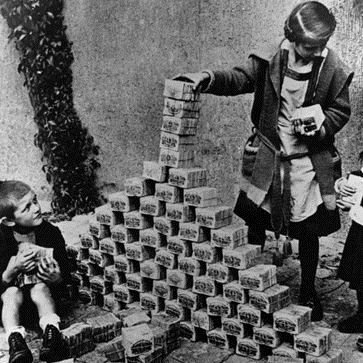
The depreciation in value of money made paper notes so worthless that children used them as building blocks

Furthermore, another known and current example is Venezuela. Throughout the last decades, Venezuela’s currency, the Bolívar, and its overall economy had been highly dependent on oil exports. However, due to the global price drop, the foreign demand for the Venezuelan currency to buy oil crashed, and with it the Venezuelan economy. In 2013, after the presidency of Hugo Chavez, his new successor, Nicolas Maduro, decided to start printing money as a solution, because of its intrinsic inflationary force.

However, as the price of oil kept falling and Venezuelan oil output decreased, even more investors decided to look elsewhere, which deepened even further the devaluation of the bolívar. As prices began to rise, the government kept printing more money to pay its bills and debt, entering into a hyperinflation cycle.

Faced with the tremendous devaluation of the currency and to deter the population of adopting the US Dollar, the government decided to issue currency controls, namely a fixed exchange rate that would stop currency transactions. The government also made many attempts at valuing the currencies by creating new ones tied to the oil price but never succeeded. Moreover, this led to many cases of unofficial currency trading, fomented by the uncertainty and distrust of the Venezuelan population towards the country’s political and economic instability, which only worsened the situation.

Regarding this case, we may note that, faced with a crisis, the Venezuelan government emphasized inflationary mechanisms, failing to establish a sustainable balance.

Venezuelan population started trading bolívars with dollars

A look in the present

One of the most discussed policies nowadays is Biden’s. After Fed’s injection of 2.3 trillion dollars in the economy, with a total amount of stimulus checks to households of 391 billion dollars, we have seen rising inflation in the US, with the consumer price index reaching 5,4% in September 2021 (Graph 1).

Graph 1: Annual percentage change in consumer prices

In order to explain this value, there are several matters to consider. Firstly, some external shocks to monetary policies have an impact, such as the energy shock, as the prices of energy and fuel have been rising (consequence of lack of resources). Besides that, some supply chains that were disrupted have not returned to normal, leading to price increase in imported goods. On the demand side, with the economy returning to ordinary again, the demand escalates in some sectors, such as services, and this disturbance can lead to the rise of prices, as families attempt to return to their previous consumption habits and companies seek to compensate the losses. Another important aspect is related to long-term expectations. The inflationary forecast can lead to an even higher inflation rate in the long run.

Will the United States repeat the past?

All in all, USA’s inflation is dependent on many consequences that came out of the pandemic crises other than Biden’s stimulus policies, unlike the mentioned examples. However, all of them share a similar imminent problem regarding the excess amount of debt they are supporting, despite the United States currently being able to attenuate it.

We are living uncertain times and as long as policy makers are aware of the need to find an equilibrium between inflationary and deflationary waves, this current deleveraging may occur in a stable way.


Sources: Business Insider, Caixa Bank Research, CNBC, Financial Times, Forbes, The Conversation, The Economist, The Guardian, The New York Times, The Washington Post, The White House, Trading Economics, VOX.

Benedita Elias

Mariana Gomes

The Pandora Papers

Reading time: 6 minutes

Tax revenue keeps civilization afloat but not all taxpayers play by the same set of rules. While some wealthy and well-connected people have avoided paying trillions of dollars in taxes, you are left to cover the bill.

            The Pandora Papers are a leak of almost 12 million documents that uncovered hidden wealth, tax avoidance and money laundering by some of the world’s rich and powerful. These include the King of Jordan, the presidents of Ukraine, Ecuador and Kenya, the prime minister of Czech Republic, and more than 130 billionaires from Russia, the United States, Turkey, and other nations. This leak comes years after the well-known Panama Papers.

            This is made possible by tax heavens. These are generally countries or places with low or no corporate taxes that typically limit public disclosure about companies and their owners. Independent countries like Panama, some areas within countries like the U.S. state of Delaware, or territories like the Cayman Islands are examples of such.

Figure 1 – Number of politicians named in the Pandora Papers per country.
Source: Statista

What is offshoring: technicalities and legalities

When investigations such as this come to light, talks about tax evasion or money laundering inevitably lead to discussions about the practice of offshoring and its legalities and technicalities. Offshoring can be succinctly defined as the practice of moving economic activities (be it a company or a bank account, etc.) from the country of origin towards a foreign jurisdiction overseas, separate from the one where the beneficial owner resides. Therefore, in its simplest form, as the name indicates, offshoring is primarily a geographic activity of moving operations from one country to another. However, the legal intricacies and moral aspects that revolve around it make it an activity quite frowned upon in the international community. 

Offshoring offers a number of enticing advantages to those who practice it, such as simpler corporate regulations and possibly lower costs for companies going offshore, as well as better asset and lawsuit protection. Moreover, and perhaps the biggest reason why people choose to move their enterprises and records of less than morally righteous business deals to countries such as Panama or the British Virgin Islands has to do with the tax benefits those countries provide to outsiders, as well as a promise of financial privacy and confidentiality that many appreciate in order to keep their financial transactions under the radar.

Concerning these taxation benefits, most of the so called “Tax Heavens”, terribly appealing to offshoring practices, allow these foreign entities to usufruct from an entirely different fiscal system from the national one, having to pay much less taxes (and in some particular cases none at all) and to collect tax-free capital gains from the operations conducted.

However, and as ludicrous as it may seem, the issue lies in the fact that this practice of moving operations from one country to another mostly to pay less taxes is entirely legal in many cases. In fact, despite all the scandal surrounding the Papers, most of those indicated are not infringing any law – rather they just opt to adhere to a judiciary and fiscal system quite different from the one in their home country. Hence, while tax evasion is illegal, tax avoidance by moving to a different jurisdiction is entirely legal, only not very morally accepted by society.

Why is this practice legal then?

That is a rather difficult question to answer as these offshore tax heavens have existed for many decades and not much seems to have been done to end them, despite all the investigations that have revolved around them in the past few years. In the end, it is very much the issue that many of the power players who could actually have a say in putting a stop to these practices – such as politicians and influential personalities – are also those that benefit the most from it, making it clear that it is really not much in their interest to limit offshoring in the near future.

From the Panama Papers to the Pandora Papers

The Pandora papers are similar to its predecessor, the Panama Papers, in that they both revealed the inner workings of offshore loopholes and shed light on many of the dealings that some high-profile, well-known figures engaged in.

Both the Panama and the Pandora papers consist of millions of files, 2.6 TB and 2.94 TB worth of information, respectively, which included legal and financial documents detailing many of the activities and property purchases of high-profile individuals, including billionaires, politicians, and world-leaders.

The Pandora papers were obtained and compiled by the International Consortium of Investigative Journalists (ICIJ) from a variety of different sources of information: 14 in total. ´

Meanwhile, its predecessor, the Panama Papers, came from a single source: Mossack Fonseca. Mossack Fonseca was a law firm and provider of corporate services, located in Panama (therefore, Panama Papers) that specialized in offshore financial services and that, before the leak, had a very relevant position in the industry. Because of this, it had access to large amounts of documents and files that detailed the activity that went on within the offshore dealings of many individuals. In 2016, a whistle-blower, whose identity is still unknown, leaked many of Mossack Fonseca’s documents to the International Consortium of Investigative Journalists.

While offshore activities are not, by themselves, illegal, they can be used to disguise and hide criminal activities. As a result, with the help of the information detailed in the Panama Papers, crime authorities in many different jurisdictions were able to uncover criminal activity and arrest and prosecute many suspects: In the U.S., the Panama Papers allowed the IRS to uncover several cases of tax evasion through offshore dealings, ultimately leading to the arrest of several people; U.S. authorities also found several cases of fraud. The Canada Revenue Agency also claims to have discovered 35 different cases of tax evasion. In late 2020, Germany issued two international arrest warrants for Juergen Mossack and Ramon Fonseca (the founders of Mossack Fonseca) for their involvements in the criminal activities of Mossack Fonseca, although they are unlikely to be extradited.

However, these types of investigations and legal procedures often take years to culminate in an arrest or a conviction and, so, we can expect that the Panama Papers will continue to aid authorities in investigations for many years to come. That will likely also be the case for the more recent Pandora Papers.

A possible solution – The Global Minimum Tax

A possible solution to tax heavens might be through a global minimum tax. A global deal to ensure big companies pay a minimum tax rate of 15% and make it harder for them to avoid taxation has already been agreed by 136 countries. The global minimum tax rate would apply to overseas profits of multinational firms with 750 million euros ($868 million) in sales globally. Governments could still set whatever local corporate tax rate they want, but if companies pay lower rates in a particular country, their home governments could “top up” their taxes to the 15% minimum, eliminating the advantage of shifting profits. A second track of the overhaul would allow countries where revenues are earned to tax 25% of the largest multinationals’ so-called excess profit – defined as profit in excess of 10% of revenue. Applying a similar version to individuals might just do the trick to combat tax avoidance by wealthy individuals.

 Conclusion

Offshoring allows companies and individuals to take advantage of low or no corporate taxes and limit public disclosure about companies and their owners. These practices are legal, but they pose a fundamental morality question. Offshoring practices provide benefits for the countries being used as the offshoring destination while negatively impacting the ones from which the money is being taken out off. This might create social unrest on these practices as taxpayers feel like not all citizens/companies are paying their fair share.


Sources: DW, Forbes, ICIJ, The Guardian.

Diogo Almeida

João Baptista

Jonathan Magzal

Inês Lindoso

João Correia

2021 Local Elections: Surprise in Lisbon, landslide in Cascais

Reading time: 7 minutes

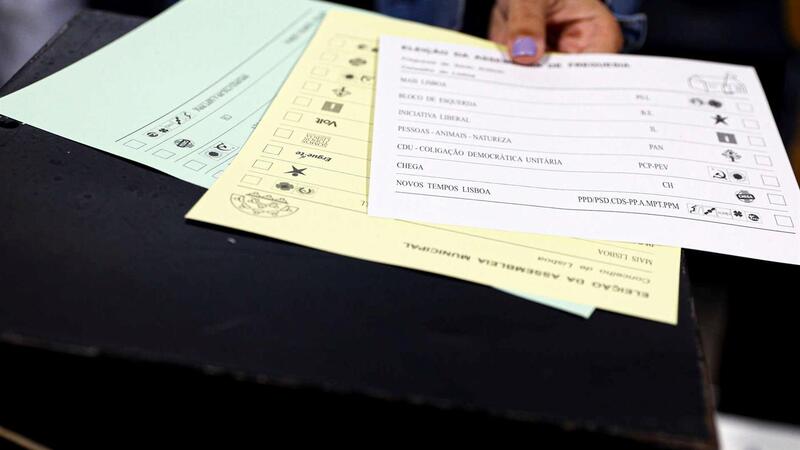
On the 26th of September of 2021, every single Portuguese over the age of 18 had the opportunity to cast 3 ballots, one to elect its mayor (green), one to elect its parish council (white), and one to elect the members of its municipality assembly (yellow). In total, there were 3707 elections on this day and over thirty-five thousand people were elected across the three different local governing institutions. In no other electoral act in Portugal are so many citizens involved and elected as in the local elections the country has every 4 years.

Figure 1: The three balots of the local elections.
Picture by António Cotrim from Lusa

National Results

On the national level, the ruling Socialist Party (PS) won, for a third consecutive time, this year ‘s local elections, obtaining 37.1% of the national vote. The party elected 148 mayors out of 308. In second place and with a 32.1% share of the vote, came the main opposition party, the Social Democratic Party (PSD), electing 114 mayors. The remaining 46 elected mayors are from smaller parties or independent movements.

Despite the win for the government’s party (PS), at the end of the night, they had a net-loss of 12 mayorships while the main opposition party (PSD) had a net gain of 16.

Figure 2: National election results for every mayor’s race. Picture from Diário de Notícias

Cascais, the municipality of Nova SBE

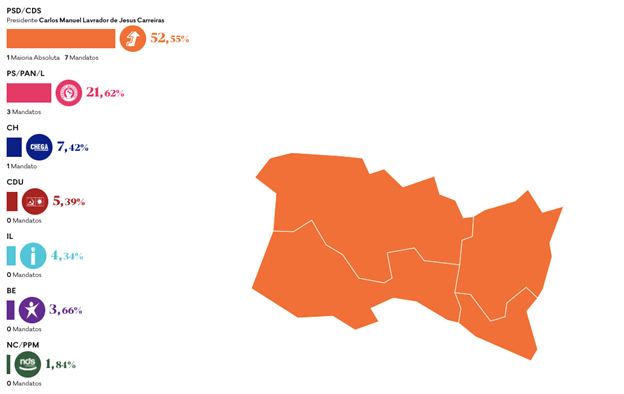
              Our university is located right at the border of the Municipality of Cascais and all the students who live here have Carlos Carreiras as their mayor. Mr. Carreiras is 60 years old and has been mayor of Cascais since 2011. He was re-elected for a third time under a coalition called Viva Cascais which was supported by PSD and the People’s party (CDS), beating his main rival, Alexandre Faria, from the Socialist Party, by more than 30% points and winning 7 out of the 11 councilors. Viva Cascais also won all 4 of the Parish Councils. The Carcavelos e Parede Parish, where Nova SBE is located, will be presided by Nuno Alves. Contrary to Mr. Carreiras, Nuno Alves did not win a majority of the councils in the Parish (9 out of 19 mandates) so he will need to work with one of the 5 opposition parties to govern.

Figure 3: Carlos Carreiras, the Mayor of Cascais.
Picture from WSA

Figure 4: Nuno Alves, President of the Parish of Carcavelos and Parede.
Picture from União de Freguesias de Carcavelos e Parede
Figure 5: Electoral result in Cascais.
Picture from Expresso

Carreira’s program

On his program, Carreiras proposed several measures to prepare Cascais’s economy for the post-covid world. The three main ones are policies to support local businesses to transition to the digital economy, create a digital local currency, and use Cascais as lab to the introduction of a universal basic income.

With regards to mobility, the electoral program promises to maintain free public transport for every resident in Cascais, the creation of more bike lanes plus bike-sharing stations, and the continuation of the replacement of fossil-fuel powered buses with ones that are powered by either electric engines or hydrogen.

For housing, the program includes an investment of 160 million euros (paid by European funds) in the construction of 800 houses for low-income people. Additionally, the Convent of Saint Mary of the Sea, in Carcavelos, will be renovated to offer rent-controlled residences for college students.

As for the environment, the executive led by Carreiras pledges to reduce green-house gases emissions in the municipality by 55% until 2030 and promised that every citizen of Cascais will have a green space less than 400 meters from his or her house. Despite these promises, the opposition has accused the mayor of causing the destruction of hundredths of thousands of square meters of green areas due to the substantial number of new housing units being built over the last 4 years. On top of these accusations by the opposition, due to the possible construction of a massive residential neighborhood in the “Quinta dos Ingleses,” the green area right by Nova SBE with more than 4 thousand trees, is in danger of disappearing.

Additional proposals from Carreira’s electoral program are the creation of a fund of 2.5 million to finance an e-learning scheme for the unemployed, increase in the amount of charging stations for electric vehicles, and the attribution of 25 scholarships in universities located in the municipality of Cascais, Nova SBE being one of them.

Contrary to all the other 7 candidates who ran for mayor of Cascais, the program of Carreiras is the only one that is no longer online, as the campaign website has been shut down. Thus, the information previously mentioned is not easily accessible.

Lisbon, the surprise of the night

Before the election on the 26th of September, every single poll gave a significant advantage to the incumbent Mayor of Lisbon, Fernando Medina of the Socialist Party, to be easily re-elected. However, against all expectations, the former European Commissary for Innovation, Carlos Moedas, defeated Medina by less than 1% of the vote. Moedas led the Novos Tempos coalition, which was supported by PSD, CDS, and 4 other smaller parties. Although the former Commissary won the plurality of the votes, the Socialist Party and other left-leaning parties elected the majority of the councilors (10 of out the 17) and the deputies in the Municipality Assembly of Lisbon (41 of 75). This means the new mayor of Lisbon will have to negotiate with the opposition to successfully implement the electoral program promised to the citizens of Lisbon.

Figure 6: Carlos Moedas, the new Mayor of Lisbon giving his victory speech on election night. Picture from TSF

Moeda’s program

              One of Moedas biggest campaign’s promised was to offer free public transportation for people who are under the age of 23, 65 or older, unemployed, and handicapped. In addition to free public transport for some residents of Lisbon, the “Yellow-Bus” program would guarantee free transportation to school for children in primary school. Moedas also wants to expand the metro line in Lisbon by building new stations in Alcântara, Miraflores, and Algés. If you are a monthly subscriber to monthly public transportation pass, Moedas also wants to include the bike sharing planform in Lisbon, called Gira, in the bundle of methods of transport that you can use.

Although the new Mayor promised a lot to the users of public transportation, car users will benefit from parking meters that are 50% cheaper plus 20 minutes of free parking per day in the city.

              Another campaign promise was the exception of the municipal tax on the transaction of properties to buyers under the age of 35 who are buying their first house. This measure could save young home buyers thousands of euros in taxes. The municipality will also return 32 million euros in income taxes to its residents. However, these last two measures could be rejected by the opposition as they have been accused of benefiting wealthier individuals; this is supported by the fact that 60% of Lisbon residents do not make enough money to pay income taxes, and young first-time home buyers tend to be wealthier than younger people who are renters.

As for climate related policies, the Moedas is not as ambitious as the former Mayor, who had promised to cut emissions in the city by 70% until 2030. Despite these smaller focus on the climate crisis, his program includes a modernization of the flood preventing system of the city, the promotion of solar panels in buildings, and the gradual implementation of a “Pay As You Throw” system of garbage collection to prevent waste.

Additional proposals on Moedas’ electoral program are the creating of a grid of free Wi-Fi in Lisbon, the creation of cultural centers in every neighborhood of the city, and free health insurance for seniors.

Figure 7: Electoral result in Lisbon
Picture from Expresso

For the coming 4 years, both Lisbon and Cascais will have mayors from the center-right Social Democratic Party, although both Moedas and Carreiras were elected under an electoral coalition that involved other political parties. Whether or not the two politicians will be able to implement their electoral programs is impossible to know, but 4 years from now, all the Portuguese voters, including the ones from these two municipalities, will have the opportunity to scrutinize their local leaders with their vote, or even by running for office.


Sources: Expresso, Cascais24, TSF, RTP, SICNoticias, Publico, ONovo.

Afonso Monteiro

Hugo Canau

João Sande e Castro

André Rodrigues

Maria Mendes Silva

The Power of Peers: How we are influenced by others 

Reading time: 6 minutes

Have you ever found yourself overthinking about that party you did not go to or the sunset you missed out, and now that is the only thing you can think about? Or maybe something even smaller than that? I bet so. We all have felt that way at least once in our lives.  

FOMO, a constant in our lives 

This feeling can be described as FOMO – fear of missing out – and not only it is common, but it also plays a big role in our lives. Even in the smallest decisions we take into consideration (most of the time unintentionally) what our peers do or what will they think of us.  And despite being aware to some extent that our actions are affected by others, the question is: do we truly understand how broad/strong this influence can be? 

Imagine the following situation: you are in a room full of strangers, and all of you are being asked the same simple questions. In the first round of questions, you are the last one to answer. All before you give the correct answer and, when your turn comes, give the correct answer as well. However, in another round, at some point those before you all make a very evident mistake, giving the wrong answer. So, what would you do? Give the (correct) answer that you are sure about, or conform to what others said and give the wrong answer as well? 

As obvious as it may seem to answer correctly independently of the other answers, almost 75% of the people did not, despite knowing the right answer, and conformed to the group’s incorrect answer.

Shocking results, right? However, this experience only confirms the considerable influence that others have in our actions, which can be reflected in all aspects of our daily life, from college performance to drug consumption. 

Peer influence is related with many other situations  

Social Identity Theory 

For starters, in order to understand why people behave in such a way it is necessary to grasp the basics of Social Identity Theory. This concept first appeared in 1979, when Henri Tajfel and John Turner made a breakthrough in social psychology, changing the way we perceive intergroup behaviour.  

Whether we like it or not, our brains tend to categorize society into a variety of groups, going as far as also categorizing ourselves, be it by social class rank or favourite football team. This is a common cognitive process, vital for humans to function as a society. Nevertheless, such train of thought may result in the exaggeration of both the differences between the groups and similarities within the same group. People in a group(the in-groups), by considering their peers similar between each other and acting alike, distinguish themselves from those who belong to other groups (the out-groups) and, consequently, tend to view them in a negative light as to enhance their own self-image. 

Aside from the prejudice and discrimination matters which may arise from this, social identity is crucial in providing pride and self-esteem to an individual. By affiliating oneself with a group, one adopts its identity and will act accordingly to that group’s characteristics in order to preserve their sense of belonging. To illustrate this, we do not need to go far from our own realities. By categorizing ourselves as students, we embrace that identity and start to behave in ways we believe students do (by conforming to the norms of the group). 

When we belong to a group, we start to see ourselves as the same and to act identically 

Boomerang effect 

Another concept that arises when discussing peer influence is the boomerang effect. This effect occurs when efforts to persuade someone result instead in the opposite outcome.To further understand this concept, we can think of an actual boomerang. If there is some wind, throw it to one direction and it may go to one completely different from what you wanted.  

There are many real-life examples demonstrating this effect, some by which you might have been through already, except you did not know it was, in fact, the boomerang effect.

A simple example is when we are kids, and many times, when told not to do something, we intentionally do the opposite. We can even go as far as thinking of situations when parents forbid teenagers to go out and drink alcoholic beverages, which only result is having them wanting to do so even more. Thus, their efforts only contribute to the outcome being the opposite of what they intend originally. This effect demonstrates that one must be careful on advising close peers, for the effect can be precisely the opposite. 

Is peer influence positive or negative? 

The human vulnerability when it comes to peer influence on decision making can have both negative and positive consequences. As to illustrate this idea, we may consider a reality that is familiar to us all, our academic life: let’s suppose that you belong to a well-behaved group of friends that studies a lot and has good grades. Naturally, your sense of belonging will motivate you to increase your study hours, as to make sure you are still welcome in that group, even if done unconsciously. This is a clear example of how our peers can have a positive influence in our lives. However, the opposite can also be true: if your group of friends decide to lower their academic performance because they shifted their priorities and would rather engage in other activities, you will not enjoy feeling an outsider and will gradually shift your priorities as well, perhaps leading to lower your performance as well, until you match the group’s standards. 

The risks associated with this issue are found mostly in early ages, among which tolerance is lower and the risk of dependency is higher. As so, peers and family have a key role in promoting good behaviours during adolescence, not only serving as role models, but also providing easy access and encouragement in performing good actions. As the Social Learning Theory suggests, teenagers do not need to observe a given action in order to adopt it, they only need to get acceptance from the peer group in order to be able to perform that action. 

An important factor that is proven to impact the extent to which an individual is influenced by its peers is the reciprocity of the relationships in discussion: individuals may only be affected by social groups they feel they belong to and the peers they are particularly attached to may have a stronger impact in their decision-making. Studies show that the negative influence of the peer group is usually more connected to the involvement in risk behaviours, whilst the positive influence is more connected with protective behaviours. Stronger friendships may lead teenagers to an appropriate environment to develop in a healthy way and to achieve good academic results.  

Negative peer influence can lead us to pursue negative habits 

All in all, the need for belonging is something common to all of us, humans, and it is that same need that leads us to categorize people, to conform with groups, and to behave in ways we never thought we would. Nonetheless, peer influence will always be present in our lives, and as mentioned previously, it can have both positive and negative impacts, and we can try to use it in our favour, by surrounding ourselves with the right people.  


Sources: THALER, Richard; SUNSTEIN, Cass – Nudge. 3ª edição. Lisboa: Leya, 2021Simply psychology, Science Direct, Raising Children, National Center for Biotechnology Information, SpringerLink, Behavioural Scientist, Taylor & Francis Online       

Benedita Elias

Mariana Gomes

Madalena Andrade

Does Europe have any energy left?

Reading time: 6 minutes

Europe is facing a record-breaking surge in energy prices after coming from historical lows in the second quarter of 2020. A series of market, geographic and political factors are weighting in and creating the perfect conditions for further rises. This not only threatens the post pandemic recovery and the European green transition but will certainly impact households’ income. Data from Eurostat showed that, in Europe, 37% of the total household energy consumption in 2016 was Natural Gas, with Dutch TTF Gas Futures up more than 350% this year. Electricity and petroleum products are also up 70% and 60% year to date. The trend observed in energy prices can have a serious impact on Portuguese households that pay some of the highest energy prices as percentage of income in Europe.

What factors are driving the surge in energy prices?

The Electricity Market

To understand the reasons behind climbing electricity prices it is important to grasp the basis of how the electricity market works in most of Europe. At the first level, we have production of electricity. In this part of the market, producers of electricity and sellers of electricity trade in the wholesale market. For the Iberian Peninsula this market is the MIBEL (Mercado Ibérico de Electricidade). At an intermediate stage, electricity needs to be distributed. Usually, there are single, state-regulated entities which handle the necessary infrastructure for the electricity grid. At a final stage, there is the retail of electricity, where electricity companies sell to final consumers.

The recent rapid rise in electricity price to consumers is mostly due to price increases in the wholesale market. This market is structured in a way where renewable energies are normally firstly supplied given their low costs per unit of electricity produced while sources like natural gas, coal and fuel oil are only supplied after since they are more costly.

The weak wind speeds in most of Europe during 2021 has reduced much of the available energy supply in renewables, making the price jump to higher levels of the supply schedule. In addition, the extra demand for natural gas, coal, and fuel, has raised the prices of these commodities considerably, leading to a further increase in the cost of producing electricity with these resources.

Germany, for instance, which is phasing out its nuclear power plants until 2022, has had to rely more on energy production using coal, whose price has greatly increased. In addition, the price of carbon emission allowances in Europe (EUA – EU Allowances) has also greatly increased. The need for burning fossil fuels and the increase in the cut of supply per year, dictated in July by the European Comission, have ratched up the demand for these allowances.

Natural Gas has also seen a surge in price due to high demand as industrial production surges. The price was also ramped up by natural disasters and geopolitical factors with Russia State-owned company Gazprom withdrawing some of its gas reserves located in the EU.     

Installing new renewable energy capacity can grasp as a possible solution yet it is unlikely to be an effective strategy to combat high energy prices in the short-run since it requires time to implement.

Figure 1 – European electricity markets price per MWh. Source: AleaSoft

The Oil Market

When it comes to what is undoubtedly the most used fossil fuel around the world, oil prices have been accompanying the increasing price trend that almost all energy sources have been experiencing all over the world lately. In oil’s specific case, this phenomenon can be clearly explained by the demand and supply forces/dynamics at play.  

On the consumer’s side of the equation, demand has been gradually growing after many months of stagnation during covid lockdowns in most countries. Indeed, with the recent lift of COVID restrictions, particularly in the US and the EU, there has been a boost in consumer’s demand for petrol fuel. Nevertheless, consumption levels are still significantly behind pre pandemic levels, with major oil-dependent industries such as air travel still slowly recovering.  

Combined with this scenario, on the supply side, OPEC+ producers have yet to improve much from the huge supply cut that was agreed upon last year to face off the drastic reduction in demand. Therefore, supply levels are still far below what would be the optimal level to respond to the current boost in demand, contributing henceforth to a spike in prices. Whether this restriction comes mostly from a strategic viewpoint so as to keep prices high, from recent disputes in OPEC+ meetings which have led to impasses in defining the quantity to be supplied by each member or to the impossibility of raising production due to underinvestment issues in countries like Nigeria and Angola is not entirely clear – most likely, it’s a combination of all of those three. Nonetheless, there is no doubt that this has greatly contributed to market instability and uncertainty, adding to the already high pressure on prices.

  Figure 2 – Brent Crude Oil Prices. Source: DailyFX

How do Portuguese Energy Prices compare with the EU?

Even though energy prices of EU countries differ from one another due to specific factors such as geographic location, taxation, network charges, environmental protection cost or severe weather conditions, the recent surge in prices was seen across all Europe. This surge was mainly driven by an increase in price of the raw commodity, which affects rather similarly all EU countries.

Analyzing the electricity price in EU over the last 10 years we can observe a general growth trend. In Portugal its price has increased 13%, with the UK having the most significant increase of 39%. On the opposite side there is Hungary that saw electricity prices fall 34% during this period.

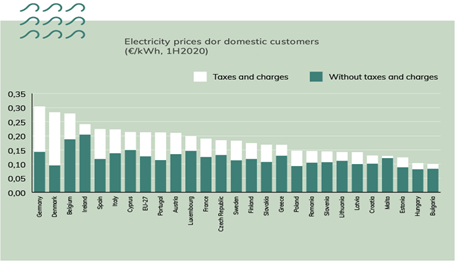
In 2020, Portugal occupied the 14th place in terms of electricity prices without accounting for taxes and charges, below the EU-27 average. However, accounting for taxes and charges takes Portugal to the 8th place, barely below the European average. For Portuguese households, the taxes and charges on their energy bills accounts for almost half of the final price.

    Figure 3 – Electricity prices for domestic customers. Source: EDP

In the gasoline market the story is similar. In 2021, 60% of the price of gasoline is coming from taxes. This places Portugal among the top six for EU countries in terms of absolute value of taxes per liter.

The increase in the commodities’ price directly affects the living standards of the Portuguese population. As seen before, the prices practiced in Portugal are in line with the EU-27 average, yet one important factor is that the Portuguese purchasing power is below the European average. If we compare electricity prices with purchase power, Portugal has the 5th highest price in EU.

Conclusion

Despite the impressive surge in energy prices, it may just be the beginnings of a bigger move. The interactions between supply and demand, and the geopolitical factors may continue to have an imperative roll on the development of these prices in Europe. Also, Central Banks policies can also impact the dynamics seen in the energy markets. A weaker Euro will mean higher commodities prices, ceteris paribus.

The current prices of these commodities are already significant when compared to Portuguese households’ income and a persistence in this trend in prices may strain their budgets. Not only, but also Portuguese companies will suffer from the increase in costs and the consequent reduction in margins. This fact can be especially important given the predominance of low added value sectors in the Portuguese economy.


Sources: Busines, EDP, Markets Insider, Reuters

Diogo Almeida

João Baptista

Inês Lindoso

João Correia

Turbulent times in Afghanistan

Reading time: 5 minutes

The retreat of NATO forces from Afghanistan in late August 2021 was no surprise by any means: the Doha Agreement that had been signed in early 2020, between the US and Taliban, had long foresighted this event. Nonetheless, the quickness with which the Taliban managed to seize the territories of the former Islamic Republic of Afghanistan left much of the world in awe. Who was this new political force, one that in days could defeat an entire nation?

History of the Taliban

The Taliban, meaning a group of students in Pashto, one of the many languages of Afghanistan, emerged as a political identity out of the englobing Mujahideen warriors who, with the financial backing of the US, China, Pakistan and others opposed the soviet aligned Democratic Republic of Afghanistan. With the Soviet retreat in the Soviet-Afghan war in 1989, followed by the DRA collapse in 1992, the path was clear for the Mujahideen to take control of the nation.

Unfortunately for them, the different political movements who fought under their banner failed to settle their differences and, without the existence of their common foe, the DRA, a new civil war erupted. It was amidst this chaos, in late 1994, that the Taliban emerged, as a new group mainly encompassed by students from different madrasas, schools focused on the teaching of Islam, of the region. With their conquest of Kabul in 1996, they became the de facto rulers of the country, forming the Islamic Emirate of Afghanistan.

This dominance lasted until 2001, when the American-led NATO forces invaded the country under the pretext of the Taliban government allowing the creation of terrorist training camps, led by Osama Bin-Laden’s AL-Qaeda, in their nation. After being ousted out of power, it was only now, in August of 2021, that the group has managed to reclaim political power over the region.

Figure 1 – Picture in a British Journal depicting Osama Bin-Laden and the Mujahideen in their fight against the DRA

Political Structure  

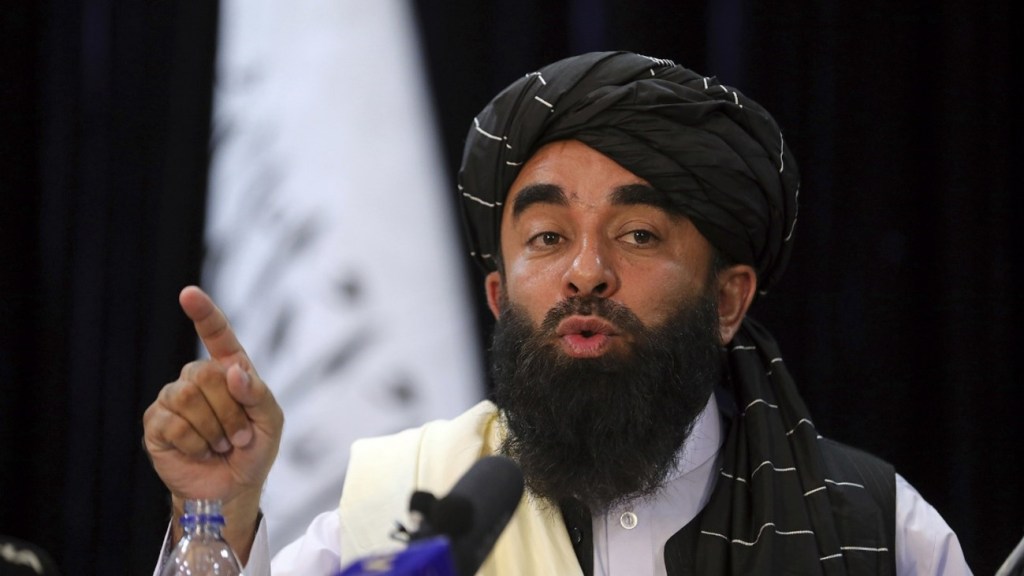
As one can imagine, this series of conflicts and civil wars severely impacted the country, with much of it needing reconstruction. As such, it is not surprising that in the first conference after the reconquest of Kabul the Taliban spokesperson, Zabihullah Mujahid, said that there would be no purges of supporters of the old regime, to guarantee stability to the local population. Nonetheless, NATO-aligned intelligence servers have warned about the risk of collaborators of the previous government being persecuted by the Taliban.

Figure 2 – Zabihullah Mujahid, the Taliban spokesperson, in his first conference after retaking Kabul

Furthermore, the Taliban quickly announced the creation and dissolution of new ministries for the nation. Headed by Mohammad Akhund, who had previously worked as the Foreign Minister of the country in the ‘90s, 11 men have been appointed to guide the nation within the framework of Sharia law. One of these men, however, has particularly raised concerns among western nations: Sirajuddin Haqqani.

Having been appointed as the new interior minister, who is responsible for the organization of the police and internal security, Haqqani is the leader of the Haqqani network, an organization that has been accused to have had links with al-Qaeda in the past, according to American sources. He is also on the FBI’s most-wanted list, leading to increased concerns regarding the maintenance of human rights in the country. 

Human Rights Concerns

Having already ruled the nation in the 1990s, many analysts have already drawn attention to the previously alleged violation of human rights by this group: in 1996, the Islamic group had prohibited women from studying or working due to concerns over their security. This ban lasted until the administration was toppled in 2001.

Furthermore, the EU and the US have criticized the lack of representation of women in the new Afghani government, claiming that this new institution ought to preserve the rights of existing minorities. Likewise, the former leader of the Afghan Ministry of Women Affairs, which was dissolved by the Taliban, Hasina Safi, has requested international donors to only provide foreign aid to the country on its commitments to respect women’s rights.

Figure 3  – Afghan women protesting in Herat

As a response, the spokesperson Zabihullah Mujahid has asserted that there was still the possibility of having women appointed to the new cabinet and that “women will be afforded all their rights, whether it is at work or other activities, as they’re a key part of society. We are guaranteeing all their rights within the limits of Islam”.

In addition, the new higher-education minister has said women will be allowed to get an education, but women and men had to attend different universities. Likewise, female students would only be taught by female teachers, with the same teachers not being allowed to teach male students. While this would be an improvement over the previous state of affairs, it is unclear whether in the eyes of international entities this would be enough.

External Relations

The opinion of foreign entities might prove to be crucial to the development of the Afghani society, as the Taliban have inherited a country whose economy is overwhelmingly dependent on foreign aid, therefore keeping positive relations with their neighbours will be a must. To the northeast, the winds seem to have been favourable to the Taliban, as the People’s Republic of China has announced a 31 million dollars’ worth foreign aid donation, including 3 million Covid vaccines to the Afghan people.

Figure 4 – Taliban and Chinese representatives in a joined meeting in Tianjin

Likewise, Vladimir Putin proclaimed his willingness to cooperate with the new Afghan administration, as “Russia is not interested in the disintegration of Afghanistan. If this happens, then there will be no one to talk to”. In a joint meeting with his Chinese counterpart, Putin echoed Xi’s call for all regional capitals to increase their cooperation on sharing information on potential terrorist organizations. Finally, the fact that Pakistan was one of the only countries that formally recognized the Taliban government in the ‘90s indicates that both countries will continue their long history of cooperation.

There will be many challenges for the Afghan people in the nearby future, as their country is in dire need of political stability and reconstruction. With a median age of 18, one can only hope that the newer generations can guide the country to a sustainable future. It’s time that the Graveyard of empires stops being the graveyard of its people and becomes a blossoming and prosperous sovereign society.


Sources: Stanford, Human Rights Watch, New Cabinet, Chinese Aid, Putin Cooperation

Afonso Monteiro

André Rodrigues

Hugo Canau

João Sande e Castro
Gamification in Behavioral Economics 

Reading time: 5 minutes

Game mechanics that drive people to Action

Behavioral science is openly related to psychology, economics, and marketing. However, not as many individuals make the same relation with game design or software engineering. Where can we set borders? In reality, there is a broad set of tools and frameworks used in behavioral economics that benefit from other sciences. In this article, we aim to address the increasingly important engineering area Game Mechanics, and its applications to the educational sector. 

Definition of Gamification: “The addition of game elements to non-game activities”, is particularly effective for increasing people’s engagementmotivation, or improving learning. 
(Deterding et al., 2011) 

First of all, why gamify something? Especially in economics, where we already have game theory, cost-benefit analysis, and other theoretical frameworks that facilitate complex reasonings and aid in perfecting the decision-making process, it may seem redundant. Nevertheless, the objective of gamification is substantially different. The main purpose lies in engaging and leading the consumer, and not so much in dictating their action. As a result, more and more real-life problems are being adapted to game situations where the consumer/user is nudged towards a specific path. Essentially, it leverages fun to create motivation, just like in addicting video games. 

In every job that must be done, there is an element of fun. You find the fun, and – SNAP – the job’s a game! – Mary Poppins 

In conventional behavioral economics (if we already arrived there), the focal point of any consultancy project is the experiment. The solution to a problem, being it in marketing, human resources, or any other area, passes through understanding what behavior an organization wants to stimulate in its target group or society. This is precisely why corporations are searching for better solutions through gamification. Certain human psychological actions are difficult to stimulate through “normal” methods and even harder to predict from game theory or related tools that perceive the representative agent as rational

Let’s take Duolingo.com for example. If the reader has ever tried to learn a foreign language independently (without any teacher, book, or guide), then probably has encountered this user-friendly website. Duolingo was founded 10 years ago and today is a publicly-traded company valued at USD 161.7 million, with more than 400 employees, 500 million users, and 106 different language courses in 40 different languages1. But, if the reader has ever tried to learn a foreign language independently, then probably has found it not as captivating or easy as it may seem. How did Duolingo achieve this level of success? Can we restrict its merit to simply better or more disciplined users? 

Well, the internet plays an important part in today’s world of education, but game mechanics might also be a source of success in this case. The difference between learning a language from a regular website and Duolingo lies in how the language is taught. The latter brings about different features that the reader may not encounter often, such as storytelling, goal framing, badges, points, levels, and other virtual incentives that promote the user to be disciplined and maximize their learning experience. The key lies in turning actions and exercises into fun challenges and creating a story behind the user’s progress so that he stays addicted to the “game” and finding out what is next. These gamified features transform the user’s involvement and the nature of the task at hand (from boring L to exciting J). 

This concept may appear to the reader as simple, straightforward, or even common. However, behind these ideas and their application, there is a team of designers, whose objective is to put themselves in the users’ point of view and trace their mental steps. Where would they quit? There is the need, as in any problem-solving situation, to identify and understand the problem, conceptualize the right game mechanic, and finally test it to figure out if the correct mental aspects of the user’s cognitive perception were addressed. In fact, this is a complex process. Amongst all the known (and unknown) biases, being able to understand the real drivers of a specific human choice is a behavioral trial by itself, thus this synergy between behavioral science and gamification enhances the strengths of both areas. 

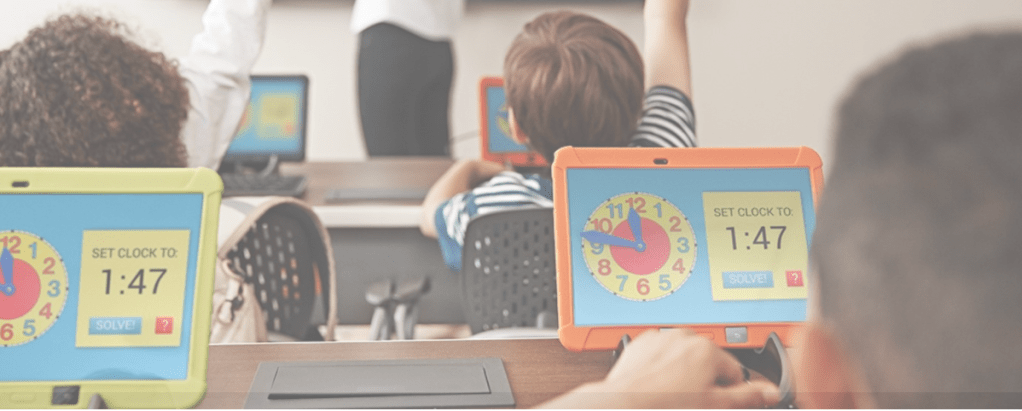
Like Duolingo, many other non-game situations are being transformed by fun, consequently increasing motivation and creativity. Yet, we should never take this as a closed subject. Taking Education, for example, it has been a static, unchanged sector for several decades, that stimulates risk aversion. As Scott Hebert said in his 2018 Ted Talk on gamification uses for education, “the Education system is a system in an engagement crisis”. Children are in school to learn, and shouldn’t be scared to fail or be creative and innovative. We should encourage autonomy and make learning fun so that the behavior and opinion towards school takes a positive and rewarding turn. The setup of a non-game question needs to address the participants (as different individuals), their expectations, and all the time-sensitive and contextual factors, hence it is clear that children’s opinions on how to learn should be taken into consideration. Only then can their behavior be effectively altered over time, possibly creating a new generation of learners. 

In sum, gamification constructs a setting where the user is led towards a specific outcome, like learning a new language or a new subject in school, through the construction of a fun, engaging, and playful setting. At the end of it all, it is a win-win


Sources: John Bell’s WebsiteNudge UnitDr. Zac Fitz-Walter, The Power of Gamification in Education

Ana Clara Malta

Scientific revision: Patrícia Cruz

China’s Victory on Absolute Poverty

Reading time: 6 minutes

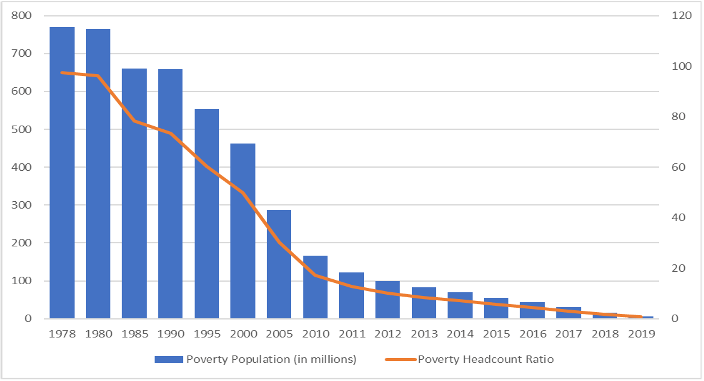
On the 25th of February 2021, President Xi Jinping of the People’s Republic of China (PRC) announced that China had achieved an outright victory in eliminating absolute poverty in the country by lifting 770 million people out of poverty in the past 40 years. It was also stated that over 70 percent of the total global reduction in absolute poverty was attributed to Chinese efforts, for the same time frame.  

Nevertheless, there has been plenty of scepticism from western media regarding these achievements, especially concerning potential differences between what the World Bank and the PRC consider to be absolute poverty. With this article, our aim will be to analyse the veracity of these claims by examining the statistics concerning China’s poverty alleviation efforts, while also assessing what policy measures were adopted to reduce abject poverty. 

What does the PRC consider to be poverty? Concerning China’s poverty line, there have been three different standards employed by the Chinese government to characterise poverty: the 1978, the 2008 and the 2010 ones, the latter being 2300 yuan per person per year, meaning 6,3 yuan ($0,94) per day. For the World Bank, the most recent standard for poverty sits at $1,90 per day (at 2011 Purchasing Power Parity (PPP)). Unfortunately, for the untrained eye and sensational media, this glaring 1 dollar difference implies that it exists a discrepancy in criteria between the two institutions. However, this thought process has a crucial failure: it fails to put China’s poverty line value in 2011 PPP prices. 

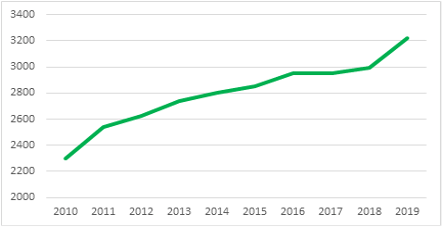
Figure 1 – China’s 2010 poverty line at constant prices

From the graph above, it can be observed that China’s poverty line value is not a constant 2300 yuan for each year, but rather one that has adapted to price changes, with a poverty value of 2536 yuan per year, equivalent to 6,95 yuan per day, for 2011. According to the 2011 PPP, 1$ would be equivalent to 3,52 yuan, meaning that China’s poverty line would be approximately 2,00$ day (2011 PPP), which is in fact a higher value than the World Bank’s. 

Figure 2 – China’s Population living in poverty throughout the years (2010 standard) 

Regarding the second claim made, the data indicates that it was in fact in China where most poverty alleviation occurred: in the 1980–2018 timeframe, the 750 million Chinese who were lifted out of poverty represent approximately 63% of the total change in the poverty population, which went from 1926 million people in 1980 to 698,4 in 2010 (at the $1,90 Standard). 

One might still think that the 1,90$ standard is still too unambitious for a person to be considered lifted out of absolute poverty, because even if an individual does earn this minimum amount of money, he/she might still not have access to clean water or proper medical care. In fact, while the World Bank claims that in 2018 there were around 700 million people living in extreme poverty, the UN reported a whopping 1,5 billion people as being food insecure and unable to conduct normal human activity. 

Two assurances and three guarantees

Consequently, the Chinese government, when establishing the 2010 poverty line, deemed essential to include in the poverty alleviation objectives the “two assurances and three guarantees”: the two assurances, also called the two no worries, being adequate access to proper food and clothing, which would be assured if the 1,90$ benchmark was to be achieved, whereas the three guarantees are the following ones: 

The access to compulsory education, which was boosted by investing in new public-school facilities in poorer regions, especially for pre-school children who lack the independence to go to distant schools on their own. In addition, the PRC government established a subsidy program where families only gained access to extra income if their children attended compulsory schooling.  

The access to basic medical care, which, once again, was boosted by investing in new health care facilities and in the number of medical personnel employed by the state. For remote impoverished villages, a program was created where poor families were ensured at least a visit from a state physician each month.  

Figure 3 – Chinese Government’s investment in Poverty alleviation measures 

Finally, the access to secure housing, as most of the previously impoverished counties, in this past decade, were in mountainous regions, such as the Sichuan or Yunnan provinces, which have limited potential for economic growth. These citizens’ decrepit homes, which lacked access to essential amenities, combined with their low incomes derived from old-fashioned agricultural practices, possessed a significant challenge to their lives’ improvement. Thus, the Chinese government subsidised the construction of new houses where the access to clean water and electricity was assured in areas with less arduous conditions, allowing these citizens to relocate to them for free. 

Figure 4 – Newly built relocation homes for Sichuan’s impoverished families

The Job-Placement

Evidently, when establishing these new communities, the necessity to create new job opportunities for the relocated citizens arose. For those that were re-established in different rural areas, they were able to maintain their agricultural practices, albeit with renewed tools and machinery funded by local governments. For those that were moved into urban areas, most were able to find new jobs in the secondary sector, many of which were propelled by the e-commerce sector.

The prevalence of e-commerce in China means that it has never been so easy for local firms to ship their products to other parts of China, which increases their potential consumer pool and allows for remote regions to have more profitable firms. As such, local governments were able to cooperate with the private sector in establishing new factories to employ these relocated citizens. 

This job-placement example demonstrates what has been a continuous process in Chinese society for the past 40 years: the organised cooperation between the government/public sector and private enterprises. As a market-socialist nation, China’s economy is organized in a considerably different way than Western Countries’: if not for the prevalence of Public State Enterprises in the economy, then the regulatory hand of the Chinese government vastly outweighs the West’s, who more often adopts a laisse-faire style approach to solving economic problems. 

Nonetheless, despite running these government projects, China’s debt-to-GDP ratio has remained at relatively low levels, although it has recently risen, mainly due to COVID19. Likewise, its GDP growth rate has remained positive throughout this period, meaning that these types of projects are not some sort of far-fetched utopian idea, but rather they are feasible projects that tackle poverty problems at their core

Figure 5 – China’s real GDP per capita (at 2017 dollars PPP)  

China as an example to follow 

In conclusion, it is vital for policymakers, especially those working in the field of development economics, to understand how China’s implemented policies could be adopted in other parts of the world, because, as it stands, it was in China where most progress has occurred. Furthermore, as the UN 2030 goal is to eliminate absolute poverty, the effective way to achieve it will surely involve getting a better grasp on past data and policy decisions guiding the world towards a better future. 


Sources: The World Bank, National Bureau of Statistics of China, The Guardian, Beijing Review, BBC, CGTN, Council Pacific Affairs, Xinhua News Agency 

André Rodrigues

The ugly truth about palm oil

Reading time: 5 minutes

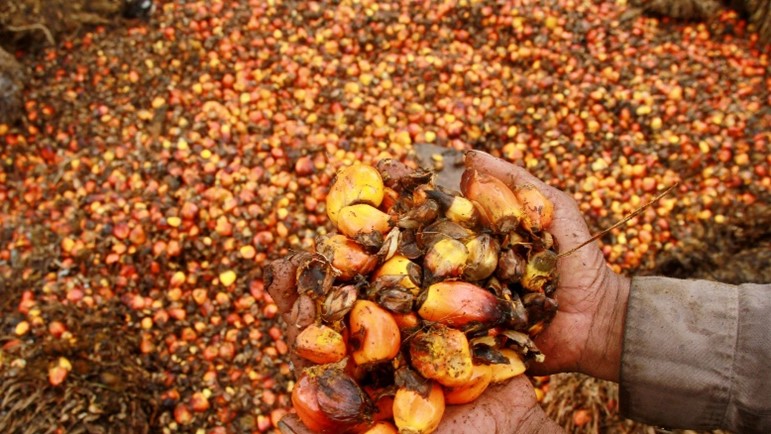
Palm oil is a silent presence in most of our daily lives. It can be found from bread to ice cream, from toothpaste to chips and from soap to fuel, but do we really know the truth about it? 

Palm oil is an edible vegetable oil original of a palm tree named Elaeis guineensis, native from Africa, even though most plantations nowadays are in south-east Asia, with Indonesia and Malaysia representing 85% of global production. Due to its characteristics, such as high saturation, oxidation resistance, stability at high temperatures, low cost and versatility, it is widely adopted on a globe scale.  

It can be found in more than a half of packaged products consumed in the US, in 70% of personal care items and it can be used as animal feed, as a biofuel or as cooking oil, and it is estimated that we consume, in a global average, 8kg of palm oil per year, making it the most used and demanded vegetable oil in the world.  

On the one hand, this crop is the most efficient when compared with others, such as soy, coconut or sunflower. Also, its costs of production are lower than every other animal or vegetable oil, making it very cheap and accessible to the consumer, allowing it to be the used widely as a cooking oil in Asia, where the economic and demographic growth would lead to the increase in demand in the future (today India, China and Indonesia account for 40% of the world’s consumption). In the west, it was adopted in some diets, because it is healthier than other fats, and its use as a biofuel corresponds to more than half of its importation into Europe. 

To supply all the palm oil demand with alternative vegetable oil, it would take almost five times more land than coconut, sunflower and rapeseed, and more than eight times soy. Due to this, palm oil supplies 35% of the world’s vegetable oil, on just 10% of the land. Thus, the suppliers were encouraged to increase production, and, for that purpose, they counted with the support of private funds, bank loans and the IMF (International Monetary Fund). 

This industry has a considerable impact on the economies of its producers, accounting for 13,7% of Malaysia’s gross national income, and it is the product more exported by Indonesia, the world’s top producer, accounting for nearly 40% of the worldwide production, providing employment to over two million Indonesians directly. 

Between 1995 and 2015, its annual production quadrupled, from 15.2m tonnes to 62.6m tonnes and by 2050, it is expected to quadruple again, reaching 240m tonnes, which lead the production to spread through Africa and Latin America. This production expansion promoted an increase in employment in this sector and, consequently, could lead to a decrease in poverty. However, this is not what has been happening

The workers in Malaysia and Indonesia complain about gender inequality: “The women on the plantations have no rights, not even the right to a salary in many cases” says Herwin Nasution, president of SERBUNDO, a trade union alliance representing mainly agricultural workers in Indonesia. The inexistence of an official employment contract makes these workers vulnerable to illegal conditions, turning the plantations into a place where labour exploitation and human rights abuse are a reality, and where, sometimes, child labour is found.  

In fact, the working conditions are very poor, with long shifts, limited access to clean water and use of toxic chemicals without adequate protective equipment, and the workers receive no support from their employees regarding health insurance, maternity license or school facilities.  

Additionally, palm oil production has a devastating impact on the environment. In order to produce the palm trees, tropical forests were burned and cut down, in one of the regions of the globe with more biodiversity and making it responsible for about 8% of the world’s deforestation between 1990 and 2008 (only in Indonesia there was recorded a loss of 25.6 million hectares of tree cover, during the period from 2001 to 2018). By burning these forests, greenhouse gas is released, namely CO2, having a severe contribution to global warming, and it is the main reason why Indonesia is the third country in the world with more gas emissions. Moreover, the intensive cultivation method without planning or care for the environment could lead to soil erosion and water pollution.  

Furthermore, it destroys the habitat of hundreds of species, even when it is considered illegal, as it happened in Riau, Indonesia, one of the most affected regions, where 84% of elephants living there died after losing 65% of its forest, in the last quarter a century. But Bornean Pygmy elephants weren’t the only ones affected by the deforestation. More than 100,000 Bornean orangutans, a critically endangered species, died between 1999 and 2015, and almost 75% of Tesso Nilo National Park in Sumatra, that secured the habitat for the endangered Sumatran tiger is now covered with illegal palm oil plantations.  

You could think that a way to solve this would be if we stopped producing or consuming it, and instead started buying other vegetable oils, such as soy. However, the problem would remain, because the need to make way to the plantation would stay the same. Also, these other plantations would need more land than palm oil, making these alternatives possibly worse, and, besides that, none of them would be a perfect substitute since none of them has the same versatility, utility or functionality as palm oil.

Despite this, the palm oil problem could still be lessened. The solution to this problem could be to change the way it is produced to a more sustainable one, that respects the rights of workers, recognizes the responsibility with the environment and uses the effluents and waste to other activities, along with the increase of inspections in order to close all the illegal plantations. The consumer could distinguish the products produced in a sustainable way through the RSPO (Roundtable on Sustainable Palm Oil) certificate (around 20% of the world’s production), that forbids deforestation and promotes the conservation of these highly diverse habitats.

The awareness regarding this topic has increased and, as a consequence, several companies and countries demand the production of this vegetable oil to have a certification of sustainability or are applying measures against it. In Norway, all importations of this oil as biofuel were banned, and in the UK, the supermarket chain Iceland started a campaign[1] to ban palm oil from their label products until it is proven to be of sustainable origin. In some cases, we can already see the results, such as in the UK, where 75% of the total palm oil imported was sustainable, by 2016.  

With development economies pursuing an exponential growth in palm oil production, such as Colombia, where fields that were formerly used to coca plantation or to raise cattle are converted to palm trees plantations, making it more sustainable, a new tomorrow to palm oil production arises.


[1] An example of this campaign is the following advertisement: https://www.youtube.com/watch?v=oA10-oZi4Xc


Sources: The Guardian, Org, WorldWildlife, Statista, Dialogochino, Cell, BBC

Mariana Gomes

European Football | Cash is king in the king of sports

Reading time: 7 minutes

Football is king in Europe; it is a sport that moves millions of die-hard fans as well as billions of euros every year, 28.9 in 2019 to be precise. Despite the fact that the COVID-19 pandemic took a major hit on the finances of most football clubs, the revenue of the big five leagues (England, Germany, Spain, Italy and France) is expected to reach a new record of 18.2 billion euros in 2021.

Even tough business seems prosperous, there are a number of problems to be addressed, and the Super League, the international competition announced earlier this year that quickly fell apart, suggests that the elite of football wants to solve only their own problems. It is, however, important not to forget that this competition points to a huge problem in modern football – the growing asymmetries within the sport.  

How did we get here?

Disregarding the health-driven financial crisis lived today, Football’s health has been struggling for a while now, as there has been an overall overspending by teams, mainly from larger clubs, either on the acquisition fees or payroll. Moreover, most domestic leagues have become uncompetitive and monotonous and, there has been a lack of commercial interest in most of the “smaller” confronts.

The importance of the competitions and broadcasting’s income for the clubs and their rapid growth have led to major “financial confronts” outside the pitch, with every club looking for the best talent out there. This has been transformed into skyrocketing wages and transfer fees between clubs, with the average Premier League transfer fee having more than tripled since 2007, to an average of more than £16 million. 

Figure 2 – Average Premier League Transfer Fee
Source: Chronicle Live

This has been made possible by overleveraging clubs, through debt or the help of wealthy owners, who can invest large sums of money in hope titles. In fact, only one of the 12 initial clubs in the Super League is free of debt, with several of them having a large net debt as of 2021, which, by not being accompanied by positive profits, keeps increasing from season to season. This has led to enormous asymmetries between those who can sustain said debts, or have wealthy owners who can bail them, and those who rely solely on their revenues from more conventional sources.

Figure 3 – Net Debt of Super League Founding Member
Source: Bloomberg

On the other hand, leagues have been struggling with commercial interest on some of their games, especially those between smaller teams. TV broadcasting rights and sponsorships, which play an important role on clubs’ revenues, also help perpetuate the differences between teams, with some in leagues where there is no “unified type” of TV rights selloff seeing a larger disparity, whereas in the Premier League or Bundesliga there is a more centralized and organized revenue sharing.

This reality leads to the final problem Football is facing: most domestic leagues are becoming uncompetitive. Looking at Top-5 leagues, only the Premier League has constantly 6 teams fighting for the title, whereas the others either have 2 main competitors (La Liga and Bundesliga), or even a single competitor that stands immensely (Serie A and Ligue 1). This era has become more and more polarized between title candidates, and the others, with the second group playing on an unleveled playing ground, and only in some rare occasions being able to surprise the recurrent candidates. This diminishes the spectacle of football, and only helps perpetuate the problems in Football, the inequalities and the surviving difficulties small teams suffer recurrently.

Figure 4  – Market Size of Professional Football Leagues in Europe from 2017 to 2019, by league type (in billion euros)
Source: Statista

How did COVID-19 put the Super League on the table again?

The COVID-19 pandemic affected our lives in every possible dimension, with football not being an exception. According to KPMG, the pandemic had a $5 billion impact on the sport, with the biggest clubs alone having $1 billion losses in revenues.

Figure 5 – Aggregate revenue in European top divisions (in EUR million)
Source: KPMG and UEFA

With the major European clubs taking major hits to their finances because of COVID-19, the plan of a European Super League (ESL) came abruptly to the foreground this April, in an attempt to ramp up revenues.

What is the plan, then?

According to the official ESL plan put out in mid-April, 12 major European clubs (+3 that would be announced) would join as Founding Clubs and the competition would consist of a closed tournament between those teams and 5 other teams in rotating slots that would be chosen each season.

This plan has major implications for the economics of European football:

Firstly, each founding member would have received around $400 million for the founding of the ESL. Secondly, revenues coming from broadcasting and advertising would be much more concentrated on the ESL founding member-clubs, because such a league would siphon off much of the attention from the Champions League and other competitions in Europe. Furthermore, as an essentially walled-off competition, the ESL would hurt revenues of smaller clubs which would be left out of the ESL’s elite roster, thus losing access to the millions of the European stage.

Finally, it could have large impacts on the wages paid to players and on the clubs’ finances, as many large clubs spend considerable percentages of their revenues on players’ wages to attract the best players in the world, and ultimately win titles.

Figure 6 – Wage burden of clubs looking to join the new Super League
Source: FT

The new ESL founding clubs would commit to spending limits of 55% on wages. This would reduce competitive behaviour between these large clubs, leading to lower wages for players and more profits for clubs.

The potential negative effects on smaller clubs and the fact that the 15 founding clubs would have their place in the ESL guaranteed, no matter what, led to outrage from both football fans and football confederations, who claimed that this would further increase the inequality between clubs and would hurt the spirit of the sport. The UEFA went further threatening sanctions against the clubs who would undertake the project, namely barring clubs from all its competitions and preventing their players from representing their national teams.

Eventually, as pressures from the backlash increased against the large clubs, even from politicians, English clubs began to pull out from the ESL project and the ESL put out a statement saying that the project was “suspended”.

What does the future hold for European Football?

Though the Super League was killed off earlier this year, it does not mean that European Football will stay the same, as a new format of the Champions League is to come into effect in 2024. Moreover, an all-new tournament is coming in 2021, the UEFA Europa Conference League, a third-tier competition. The new Champions League will adopt a swiss-style model instead of the traditional group stage, and there will be a single league in which teams play 10 games each against “teams of their level” to qualify for the knock-out stage. This new format addresses some complaints of the biggest clubs regarding the quality of the matches, as the best teams will face each other more frequently. Furthermore, the addition of 4 more teams to the competition serves the same purpose as the Conference League, that is allowing for more teams to have a chance in the European stage, hopefully making the sport more competitive, which is what fans look for. The problems that football faces today are not exclusive to the sport. We have witnessed sports introducing significant changes in order to remain relevant. Formula 1 is a great example, as the sport has changed itself over the years, managing to attract a new generation of fans in return. F1, perhaps the most expensive sport in the world in which money means titles, recently announced budget caps, as well as sliding scale for car development, which intends to create a level playing field for teams and ultimately make the sport more interesting for fans.

Figure 7 – F1 rebranded itself in 2017 to attract new fans
Source: F1

Football faces the same challenges as F1 in terms of competitiveness and the difficulty to resonate with a new generation of fans that, due to social media, is more interested in the accomplishments of players such as Ronaldo or Messi than in their teams’. Consequently, football must constantly reinvent itself too, without losing the essence that made it what it is today.

Football is at a crosswalk; the sport must remain relevant in the modern era of entertainment and social media, while still being a profitable business. The innovations brought by UEFA show that the sport is evolving. However, that alone will not make it. Certainly, the smaller teams will get a bigger pie of the money and the elite better matches, though that will be verified only in the short run.


Sources: Bloomberg, Chronicle Live, FiveThirtyEight, Financial Times, KPMG, The New York Times, Statista, UEFA

Tiago Rebelo

João Baptista

Jorge Lousada