Are robots taking our jobs?

Reading time: 6 minutes

A brief overview of technological disruption on industries

The automation of activities via technological breakthrough is no novelty to society. It no longer strikes us as surprising the fact that pilots only steer the plane themselves for around 10% of the course, or that money is drawn from ATMs rather than from a bank teller, as opposed to what happened a few decades ago. However, as we experience AI and machine learning development at an ever-accelerated pace, the future of many industries and employment as we know it may be at stake.

Overall, economies had to adapt to maximise the value they get from the digital disruption phenomenon, but at a micro level how did businesses across industries changed? First, they transferred some of their power to consumers, making their needs the main focus of the company. Also, they changed the way they operated, shifting to a more agile and sharp way of acting, simplifying the decision-making process and making their dynamics more competitive. And lastly, firms reinvented their operating models, using advanced analytical tools in order to reduce costs and to drive revenue, while improving insights.

Recently, AI has been subject to groundbreaking discoveries, accounting for significant advances in many sectors and placing us in the middle of the fourth industrial revolution. As the world’s top enterprises strive for the best AI in order to capture its vast market (Amazon with Alexa, Apple with Siri, IBM with Watson, and countless other examples), we observe time and again a wider scope of industries that are possible to restructure and enhance via technology – healthcare, retail,  manufacturing, finance, customer service and transportation, only to name a few.

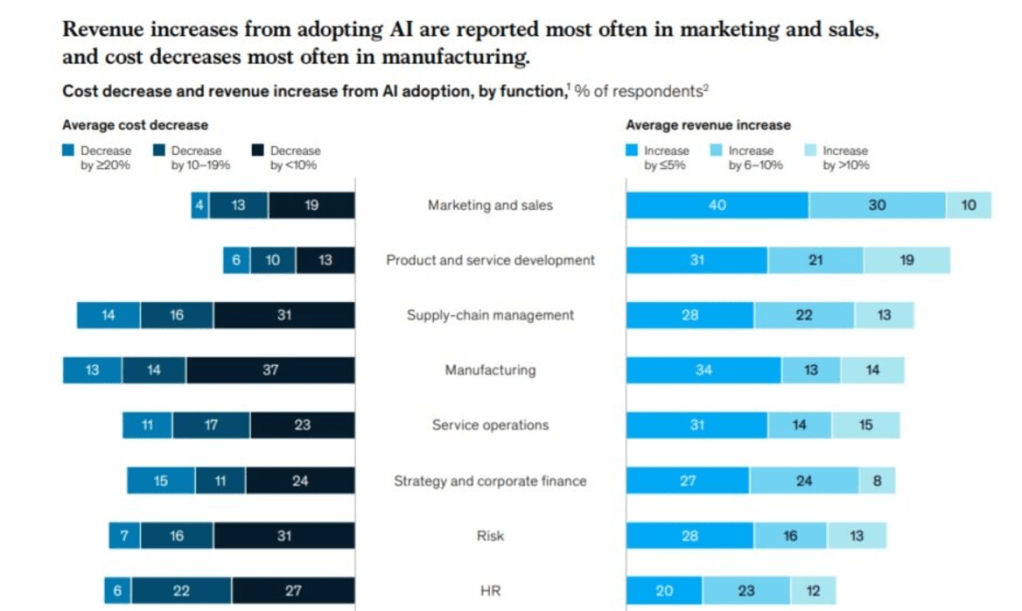
As more companies adopt artificial intelligence for revenue boost and cost reduction, global AI startup funding has been growing vertiginously over the past years. The ease with which manipulation of AI capabilities can be done allows each industry to tailor it to their value chains and, consequently, increase efficiency.

Source: McKinsey

What’s more, machine learning is also a tool increasingly more explored by corporations, from financial services to entertainment. PayPal, for instance, makes use of machine learning to analyse and compare users’ activity in order to detect legitimate and fraudulent transactions, namely money laundering. Netflix makes use of intelligent machine learning algorithms that compare viewing activity in order to make recommendations on what to binge-watch next. These sorts of tasks involve the quick analysis of big data, a task in which humans cannot compete with machines.

One of the sectors that is already being revolutionized by technology is transportation, and one does not even have to go as far as Tesla to mention automated vehicles. As Mobicascais rolls-out its first automated bus, the future of self-sufficient public transportation  is imminent. And it does not stop here: with multiple trials on autonomous ships, mining trucks and aircrafts, the only thing stopping driverless vehicles from becoming mainstream is regulation.

When it comes to manufacturing, the automotive sector is historically known for using cutting-edge technology to improve efficiency. While Industry 4.0 technology brought considerable gains in productivity, ranging from production design to quality control, being able to keep up with increasing consumer demands for more choice, it has also been able to mitigate the fear that this industry belongs to the robots. Breakthroughs in the field of robotic technology brought the so-called “co-bots”, artificial intelligent robots that are much lighter and agile – thus safer for humans to work around – and, more importantly, they are trained rather than programmed. A study conducted by the MIT in alliance with BMW found robot-human teams to be 85% more productive than either of them alone, and the manufacturing industry is responding, tending towards a common-ground future for man and machine.

By affecting industries, automation is bound to change labour. In fact, this has been a trend for decades now and the further development of AI will inevitably change the workplace and how we work, which will bring positive and negative consequences. The global impact, however, is still unknown.

In the US, since the 80s, computers have led to 3.5 million jobs destroyed, according to a McKinsey study. Nevertheless, in that same time frame, over 19 million jobs were created as a result of the personal computer, as technology increased productivity and spending power, which consequently created new demand and new jobs. Technology has changed labour, not destroyed it. As the service sector gained weight, so did the median household income, as a result of some low-paying and low-skill jobs being replaced. Also, automation led to vast improvements in terms of quality of life, hours of work as well as replacing repetitive tasks, meaning its impact extends beyond just economic indicators.

AI, machine learning and other recent technologies stand to change the labour market similarly to how computers did, although to a further degree. The World Economic Forum claims that from 2018 to 2022 automation will destroy 75 million jobs, but, as was seen previously, 133 million jobs will emerge in that period due to the same event. However, when talking of automation and job destruction, it is important to distinguish between occupations and activities. According to McKinsey, 45% of activities performed can be automated by adapting currently demonstrated technologies. When it comes to occupations that may be fully automated that figure is only 5%. This scenario is far less drastic, because the change affects primarily tasks rather than occupations themselvesNonetheless, 60% of occupations could have 30% or more of their constituent activities automated, which means the vast majority of professions will still suffer significant changes, namely job redefinition along with transformation of business processes.

The difference from previous seen automation lies in the incidence. Whereas the industrial revolution led to mainly low-skill tasks disappearing and the computer age  affected workers more in the skilled middle, such as travel agents, this time technology will also affect high-paid occupations, such as executives and physicians. Machine learning and AI’s expertise will exceed humans’ and, as a result, more demanding tasks and decisions can be automated, making even high-skill professionals subject to the phenomenon, something not seen before. As profound as these changes may seem, they will not occur all at once, instead AI will slowly move into the workplace gradually replacing humans.

All in all, additionally to affecting companies financially, automation will deeply affect workers financially, because as labour becomes a less important factor in production, a majority of citizens may find the value of their labour insufficient to pay for a socially acceptable standard of living, which will require society to come up with solutions to prevent a part of the population from falling behind. AI and machine learning are successful as long as they create value for human lives. To safeguard human labour from becoming obsolete and inequality from increasing, it is vital that governments take an active role when it comes to defining policy. While it is important to stimulate investment in R&D, it is crucial to adopt a “humans first” position. Although it may be difficult to predict in which direction technological disruption may point towards, it will surely be impossible to go back from it, so legislation must be shaped in a way that advances in technology focused solely on corporate profit and disregard human capital are forfeit.

Sources: McKinsey, Statista, MarketLine, Forbes

Written by Diogo Alves, Lourenço Paramés and Tiago Rebelo

Scientific revision: Patrícia Cruz

German elections

Reading time: 6 minutes

In September of this year, German voters will head to the polls to elect a new Bundestag or German Federal Parliament. However, for the first time in 16 years, they will not be able to vote for Angela Merkel, who announced in 2018, she would not run for a fifth consecutive term. Angela Merkel was the first female Chancellor of Germany and has been widely described as the de facto leader of Europe. If the reader wishes to know more about the legacy Merkel leaves behind, both in Germany and the European Union, we have written two articles that discuss this very topic. You can find part one here [Merkel Part 1] and part two here [Merkel Part 2]. So, if Merkel is out, who will be the next Chancellor of Germany? Let us look at the three front-runners.

Main candidates

Figure 1 – Armin Laschet; Source: FR.d; Taken by Federico Gambarini

Armin Laschet is a 60-year-old former layer and journalist. He is currently the State Premier of North Rhine-Westphalia, the most populous state in Germany. Laschet is the current leader of the center-right party, Christian Democratic Union of Germany (CDU), and he will head to the elections under a political alliance between CDU and the Christian Social Union of Bavaria (CSU), the latter being a sister party of the CDU that operates in the German state of Bavaria. Angela Merkel was the leader of this political alliance in the elections from 2005 to 2017, so the reader can think of Laschet as her successor.

Figure 2 – Annalena Baerbock; Source: buchreport.de

Annalena Baerbock is a 40-year-old member of the Bundestag, and co-leader of the center-left party alliance called the Greens. In April, the Baerbock was announced as the Greens’ candidate for Chancellor for this year’s federal elections, which was the first time the Greens announced a sole candidate for Germany’s head of government. She has been a member of parliament since 2013 but has never held any public office.

Figure 3 – Olaf Scholz; Source: globsec.org

Olaf Scholz, 62-years-old is the current Vice-Chancellor and Minister of Finance of Germany. He is the nominee of the center-left Social Democratic Party of Germany (SDP) for Chancellor. He has been part of the SDP since 1975 and has had a long political career. He is seen as being part of the more conservative wing of the SDP. Scholz is by far the most experienced candidate of the three.

What do the polls tell us?

As for the time of writing, it is still early to tell who will win the elections in September. The current polls show the Greens of Annalena Baerbock ahead in the polls. Despite her lack of political experience, Baerbock’s smooth nomination process and message of reshaping German politics have resonated with voters. In second in the polls and within the margin of error comes Armin Laschet’s CDU/CSU bloc. The long political battle between the two parties of this alliance to choose the nominee for Chancellor and widespread accusations of corruption against some CDU members of parliament have damaged the image of the bloc in the public sphere. In third, and quite far away from both the Greens and the CDU/CSU block, is Olaf Scholz’s SDP. Despite being either the largest or second largest party in every election since the end of WWII, the SDP has been on a declining trend over the last 16 years and had its worst result since 1932 on the last Federal elections. If the party does not manage to recover, it will have its worst electoral performance since 1887 (134 years ago).

The numbers now show that the winner in September will be either Baerbock or Laschet, however, both parties are polling quite far away from winning an absolute majority in the Bundestag. Therefore, either one will face the challenging task of forming a coalition able to govern Germany until 2026.

Consequences on for the EU

However, the Chancellor of Germany is often described as the de facto leader of Europe, so it is important to understand what type of policies the two favorite candidates defend for the EU.

Figure 4 – Time’s Magazine Cover from January 11th 2020

Both candidates are pro-European, with Laschet recently saying that “in any global problem-solving, we need multilateral solutions, we need a European Germany.” However, their views towards Europe are quite different.

Armin Laschet is one of Merkel’s closest political allies so his policies towards the EU and other European countries will follow in the steps of his predecessor. He is a strong defender of Merkel’s stance on the Covid-19 recovery package and controversial migration policy. He has also defended a closer relationship between Germany and France, and an attempt to improve diplomatic relations between the EU and Russia. In his program, “Impulse 2021”, Laschet states the importance of completing the Single Market, increasing the use of qualified majority voting, and reinforcing the European Border and Coast Guard Agency.

On the other hand, the election of Annalena Baerbock could dramatically change the EU and its relationship with the rest of the continent and the rest of the world. First, Baerbock has defended the reform of the German “debt brake” that prohibits the government from having a structural deficit above 0.35% of GDP, saying it leads to low public investment, which in turn, hurts the competitivity of the German economy, additionally it makes it harder for the country to fight global warming. This change in fiscal policy could translate into a less strict approach by Germany towards fiscal responsibility being forced upon highly indebted European countries, such as Italy and Greece. The Greens have also defended making the EU’s recovery package permanent, and that the Stability and Growth Pact is excessive and should be reformed. For the readers who do not know, the Stability and Growth Pact is a set of fiscal rules which state EU countries cannot have budget deficits above 3% of GDP and the national debt cannot surpass 60% of GDP. As of 2021, only 13 of the 27 member states meet both criteria, and Germany is not one of them. Baerbock’s dedicated support for action against global warming will also likely lead to a more climate-focused EU, she has even supported a transatlantic Green Deal. As for Russia, Baerbock defends the suspension of Nord Stream 2, a project set to deliver Russian natural gas to Germany through the Baltic Sea, and defends a tougher stance against Putin’s actions on Ukraine. Regarding China, the Greens see a necessity for Europe to cooperate with the country to fight climate change, however, the party advocates for EU sanctions on China over its treatment of the Uighurs minority. The reader can learn more about China’s violations of human rights against Uighurs in this previous article [Uighurs] we have written about the topic. The Greens have also shown opposition against the EU’s recently concluded Comprehensive Investment Agreement (CAI) with Beijing and seeks to block Huawei’s participation in Europe’s switch to 5G.  

As already mentioned in this article, it is still too early to know what will happen in this year’s election, and Laschet’s or Baerbock’s ability to change the European Union’s domestic and foreign policy will depend not only on their electoral result but on what sort of coalition they will be able to form to govern Germany. However, there is one thing we know for certain, with Merkel’s exit, come 2022, Germany and the EU will have a new leader.

Sources: The Wall Street Journal, Rusi, Politico, BBC, CNBC, DW, The Economist, Financial Times, The Times


Francisco Pereira

João Sande e Castro

Pedro Afonso Estorninho

The Asian Tigers: Successful Economic Development in the XXth Century

Reading time: 7 minutes

Introduction 

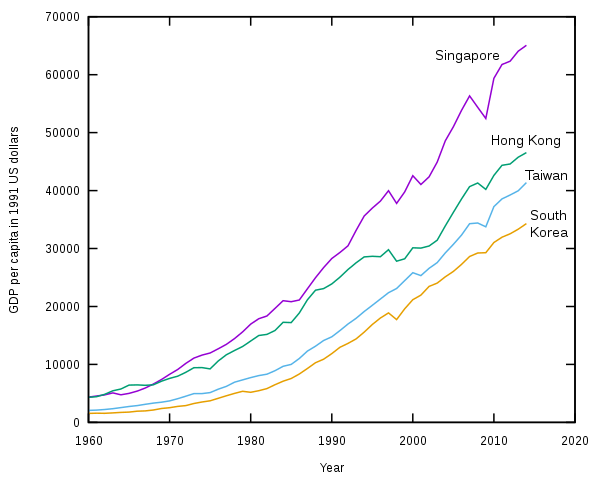
After the Second World War, East Asia was facing multiple political and economic problems. Few would predict that four countries in the region would be the best example of successful development: Hong Kong, Singapore, Taiwan, and South Korea embarked on an unprecedented economic transition. In the beginning of the 1960s they were all low-income countries. Rapid and sustained economic growth and equal income distribution provided for by intelligent industrial policy, with some state intervention turned them into some of the world’s richest countries by the end of the century. 

In this article we will present the decisive economic and political factors in each of four tigers’ trajectory, and what they teach us about economic development.  

Evolution of Real GDP per capita in
all four Asian Tigers

Hong Kong’s Positive Non-interventionism 

         The city of Honk Kong was a British protectorate until 1997. Thus, its economic development in the 20th century was made under colonial rule. The economy was devastated after the Japanese occupation in WWII and the embargo from China during the Korean War. Nevertheless, it was able to produce an industrial take-off in the 1950s. The reasons for this take-off are twofold: first, the city benefited from capital and know-how brought from refugees from communist China; secondly, the colonial authorities opted for a liberal approach to policymaking. 

Sir John Cowperthwaite (1915-2006), Financial Secretary of Hong Kong (1961-1971)

The authorities, headed by Sir John Cowperthwaite (financial minister from 1951 to 1971), chose a laissez-faire policy, with openness to trade and to capital flows, low taxes, balanced budgets and the creation of the necessary institutional conditions for agents to operate in free, competitive markets. At the same time, the government intervened in the supply of public goods, strong and efficient regulation, and some welfare measures such as supply of housing. 

         These institutional conditions provided a framework for a rapid economic growth in the 1950s through the 1970s that was heavily based on industry. Structural changes were brought by China’s relative openness after Deng Xiaoping’s reforms. From the 1970s onwards Hong Kong’s economy moved from an industrial economy to an economy based on trade and value-added services, with a particular emphasis on financial services. 

         Today Hong Kong is one of the technological, financial, and trading centers in the world. Its economic results are sound and believed to continue to be so in the future. After the 1997 handover, it has become more economic integrated with China. However, the economic freedom and progress coexisted with lack of democracy and basic freedoms both during Britain’s rule and today. 

Singapore: Growth without Freedom 

         The city of Singapore gained its independence from Britain in 1963 and it seceded from Malaysia in 1965. At the time it was an underdeveloped city, with most of its inhabitants living in poverty while unemployment soared. Furthermore, it was a small state lacking natural resources, and basic economic and well-being infrastructure. 

         Inspired by the example of Israel, the government of Singapore tried to reap gains from trade and globalization to develop its economy. The government embarked on a set of policies designed to attract foreign direct investment and develop and liberalize trade in the region. Taxes were low, incentives given to investors and the rule of law was strictly enforced. In a couple of years most production units were owned by foreign investors, particularly American and Japanese ones. In the 1960s and 1970s, the country’s GDP grew at an annual double-digit rate. To industrial economic dynamism Singapore created was further enhanced with investment in education, particularly on technical skills. 


 Lee Kuan Yew (1923-2015), Prime Minister of Singapore (1959-1990)

   Singapore produced real structural reforms that created a resilient economy that dealt with relatively ease with the Asian Financial Crisis of 1997-98, the Dot-Com bubble and the 2008 Crisis. Today the city-state is one of the world’s trading and financial services centers, with many exporting high-tech industries. Furthermore, it shows many good results in quality-of-life indicators. 

         However, development came at a cost. The reforms were made by a strong government, under the leadership of the People’s Action Party since the late-1950s. Particularly, the reforms are associated with the person of Lee Kuan Yew, prime minister from 1959 to 1990. The business-friendly measures were coupled with a strong authoritarian government that constantly curtailed individual freedoms. Prosperity came at the cost of democracy, which is not the most desirable model to emulate. 

Taiwan: an active government 

Taiwan became an independent country after the Chinese Civil War, which opposed nationalists and communists. As the communist regime of Mao Tse-tung was implemented, the Chinese business elite was forced to flee to Taiwan, bringing capital and economic power to the island.  

The miracle of Taiwan’s economic growth was only possible due to an active posture of the government, which encouraged enterprising and development of the economy, providing several incentives.  

The plan for this growth consisted of transforming an economy based on agriculture to manufacturers, namely in the textile industry, modernizing the stages of production and trying to make it self-sufficient. The support of the government was fundamental since it supported the investment and capital acquired. This plan proved to be a huge success, as it drove Taiwan’s economy, shifting from the primary sector to the services sector, increasing exports and attracting investors.  

Another factor to consider in this process was that the labour force was extensive and very cheap, as the degree of education was not very high in most of the population, lowering the costs of production and allowing an establishment in the world’s market with competitive prices. Besides that, Taiwan also invested in the consumption and production of electronics, namely in integrated circuits. As the know-how and quality of the products increased, it boosted Taiwan’s economy, receiving plenty of foreign capital and exporting most of the production.  

South Korea: an exemplary case of diverging paths 

South Korea’s case is interesting, because, unlike the other three nations, it is noticeably larger and borders one of the worst cases of regime failure – North Korea. 

General Park Chung-hee (1917-1979), ruler of South Korea (1963-1979)

The Korean peninsula was home to a mostly agrarian society prior to World War II, making it one of the poorest in Asia. With the end of the world war, Cold War followed, and the Korean war broke out in full force, pitting the communist forces of the North (backed by China and the Soviet Union) against the US-led troops in the South. This was a defining moment in the Korean economy, leading to a coup by South Korea general Park Chung-hee in 1961. Chung-hee was a de facto dictator; however, the country flourished with him spearheading efforts to transition from an agrarian to industrial economy. His iron-fisted rule ensured controlled growth in the early 1960s. A lot of South Korea’s early prosperity stems from foreign aid provided by the United States – the chaebols, family-ran corporations, the backbone of the Korean economy, benefited greatly from these donations, in addition to tax breaks and easy financing. This period, between the 1960s to the 1970s, led to the consolidation of household names, such as Samsung, LG, and Hyundai. 

During the Asian Tigers growth period, South Korea’s GDP grew at an exceptional average of 8% per year – one of the fastest in Asia. Contrary to its neighbor to the north, South Korea adopted an export-heavy economy, which contributed to this growth as the West turned to Asia for its industrial and electronic goods. South Korea also had a booming steel industry, with some of the largest shipbuilding yards in the world. 

Conclusion 

The ascension of the Asian Tigers would shape our world, changing the dynamics of the worlds’ economy and the balance of power in South-East Asia. 

There were differences, for instance Hong-Kong adopted a policy of laissez-faire, with a very reduced intervention from the government, unlike Taiwan, Singapore, and South Korea where that entity played a major role, controlling the reshape the economy. Despite the variety of measures and different approaches, the ultimate result was an astonishing economic growth. 

This series of economic growth is an example to follow, as they show how, with the right measures, adapted to each situation, economies can flourish in a sustainable way.  


Sources: 

American Economic Association; BBC; Berkeley Economic Review; Borgen Magazine; Corporate Finance Institute; CNN; Economic History Association; E-International Relations; Food Research Institute Studies; Geographical Association; Ichiro Sugimoto; Investopedia; International Development Society – King’s College London; Journal of Comparative Economics; Kellogg Institue; MacroTrends; Montreal Economic Institue; St. Louis FED; Taiwan Today; The China Quarterly; The Economist; ThoughtCo; VoxEU; Wikipedia; WorldAtlas; World Bank; ZBW. 


Team

Rui Ramalhão

Guilherme Barroca

Mariana Gomes


Crisis after crisis, a short story of Argentina’s economy

Reading time: 7 minutes

Argentina seems to be constantly in a crisis and COVID-19 has not improved that record. Nonetheless, the untapped potential of the country remains there.

There are many countries which owe their success to their abundance of natural resources or geographic characteristics. However, there are also many which, despite all their natural fortunes, seem to be unable to fulfil their potential. There should not be a lot of countries embodying this reality as well as Argentina. The country is blessed with hundreds of thousands of square miles of extraordinarily fertile lands, as well as oil and natural gas reserves. Besides this, the country also has sizeable mining reserves of copper, aluminium, zinc and lithium. There is an old saying amongst economists that “throughout history, there have been only four kinds of economies in the world: advanced, developing, Japan and Argentina”, and, although Japan is no longer the bustling economy it once was, the South American country still remains very much economically unstable.

Argentina’s Belle Époque

Figure 1 – Streets of Buenos Aires in the early 20th century

Albeit struggling, Argentina has not always been economically troubled. In fact, in the late 19th and early 20th centuries the country was quite prosperous. This period was an era of rapid economic growth with large inflows of capital and labour from overseas, as a result of the expansion of the agricultural frontier, fueled by a surge in the world demand for commodities, particularly, cattle meat. This led to the country entering the 20th century as one of the wealthiest places on Earth. In 1913, the country’s GDP per capita was larger than France or Germany and was almost as large as that of Canada. However, it must be said it was also a very unequal society.

A story of economic instability

In spite of the expansion, as it often happens with commodity dependent economies, the boom was not to last and, by 1913, fortunes were already changing, starting with a major downturn that emerged in the London capital market and that spilled over to Argentina. The next year, WWI started, greatly constraining capital and goods markets, leading to a major recession.

Some years later, in 1929, the world was hit by the Great Depression, which led to further instability in external markets. Surprisingly, though, it was a shock that had a relatively mild effect on Argentina, when compared to the US, with unemployment never going above 10%. From 1929 to 1932, the country’s real domestic output “only” fell by 14% and, by 1935, it had already surpassed its 1929 level. Nonetheless, the Great Depression has ultimately led to a halt in the country’s relative prosperity, as it culminated in a military junta taking power in 1930, which would be a recurring theme throughout the 20th century. Throughout the 1930s and WWII, the economy would continue to be sluggish.

This increased instability eventually resulted in Juan Perón – a military general whose ideas still influence Argentinian politics to this day – taking power in 1946. His tenure was marked by flirtations with fascism, combined with the idea of self-reliance and import substitution of industrial goods. Nevertheless, even though the economy continued to grow, this growth was slower than that overall registered across the world and the quality of life of the average population declined. In the end, the regime lost popularity and was eventually overthrown.

“Instability” is the word that best describes the rest of the 20th century for Argentina. Throughout this time period, the country experienced constant upheaval, with weak democratic governments and military juntas being overthrown as quickly as they would rise. Needless to say, the country entered in a period of stagnation, only made worse by recurring inflation crises.

Troubles with inflation led Argentina to adopt a fixed exchange regime with a peg to the US dollar in 1992, which was accompanied by increased openness to trade and market reforms. For a short period of time, things seemed to be heading in the right direction, since the peg helped the country stabilize prices and get rid of high inflation, with large capital inflows following.

Unfortunately, the 90s also saw major recessions in Latin American economies that negatively impacted Argentina. Eventually, the country would find itself forced to drop its peg in 2001, leading, once again, to high inflation and to the worst economic crisis in the country’s history. GDP fell by nearly 20% in 4 years, unemployment reached 25%, the peso depreciated by 70% and the government defaulted on its debt. Savings of entire working-lives were wiped out, contributing to a dollarization that is still largely present.

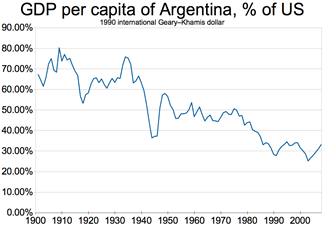
Figure 2 – GDP per capita of Argentina as percentage of US GDP per capita. In the early 20th century, Argentina was close to US levels of GDP per capita, but since then it has only strained further away from the North American nation.

Fortunately, Argentina did recover from 2003 onwards, thanks to expansionary policies and, especially, to a surge in commodity exports and prices, with the economy nearly doubling by 2011. The following years were not as fortunate, though, and, by 2018, the government found itself asking for IMF intervention once more, as it had already done in 2001.

How is the Argentine economy currently doing?

With COVID-19 now impacting the economy as well, Argentina has struggled to recover. During 2020, the country suffered a new series of demand-side shocks, causing an already struggling economy to plummet, in one of the largest retractions in 2020 – GDP declined by 9,9%. The effects were also felt in the labor market, with nearly a third of the country’s workforce unemployed or that has given up on finding work. To counteract the impacts of the crisis, the Government implemented an emergency package, in order to protect the most vulnerable and support companies during lockdown.

Figure 3 – Inflation in Argentina throughout the past 25 years. Recent levels of inflation have been especially high, even surpassing the levels experienced following the break of its currency peg in 2001.

Meanwhile, as inflation nears 40% and its central bank is short on dollars, Argentina faces renewed pressures to devaluate its currency. Furthermore, the $30 billion bail-out that benefited the country in 2018 are part of the total of $44 billion in loans that the country owes to the International Monetary Fund and that President Alberto Fernández and his government are trying to renegotiate.

President Fernández has a chance to implement reforms to create opportunities for renewed investment, job creation and economic growth, but the delicate situation of Argentina implies extensive due diligence by investors to understand the country’s political risk dynamics and outlook.

What are the future preventive measures for the coming years?

As aforementioned, the risks associated with the political and economic outlooks have kept investors’ attentions out of Argentina.  Fernandez’s only chance to return to meaningful growth in the medium-term is to provide investors, both domestic and foreign, with legal and macroeconomic assurance.

One of the key elements to do so is a successful renegotiation of the IMF bailout in 2021. This should set a clear path for the reduction of the fiscal deficit and the gradual removal of major operating constraints on businesses. Among those are liberating the ARS/USD exchange rate, as well as capital and import controls, even if slowly. Deeper changes involving significant tax and labor reforms to improve doing business in the country should also be considered.

Final Remarks

With a history of political and economic instability, Argentina faces, once again, a tumultuous period, as the effect of the pandemic spreads through the economy. But there might be some light at the end of the tunnel. Rising commodities prices may give Argentina some breathing room to survive the devastating effects of the pandemic crisis and the renegotiation of the IMF bailout may be the first step of a series of reforms in public and monetary policy which may bring back the prosperity once seen in early 20th century.


Sources: Bloomberg, El País, Forbes, IMF, History Channel, Wikipedia, World Bank

Rodolfo Carrasquinho

João Diogo Correia

Raquel Novo

US Prision

Reading time: 6 minutes

The US has the largest prison population in the world, as well as the largest prison population per capita. The incarceration rate in the US is six times higher than the EU average, while the sentence times are on average three times longer than in the EU.

These statistics came as a consequence of decades of policies and has increased the disparities between the United States and other economically developed countries. According to academic and activist Angela Davis, as mass incarceration has increased, the prison system has shifted from being about criminality towards economic factors.

US’s mass incarceration problem

In June 1971, President Nixon declared officially a “War on Drugs”, stating that drug abuse was the US’ “public enemy number one”. This followed a sharp increase in recreational drug use in the 1960s and marked a key moment in the development of the US Prison System.  Nixon increased the funding of drug-control agencies and proposed strict sentances for drug crimes.

The critical moment, however, came during Reagan’s second term, where a bi-partisan Congress approved the Anti-Drug Abuse Act of 1986. This law substantially increased the number of drug offenses with mandatory minimum sentences. It also penalized disproportionately drugs that were typically associated with the black community, such as crack cocaine, as compared to drugs that were typically associated with white communities such as powder cocaine. The act, for example, mandated a minimum sentence of 5 years without parole for the possession of 5 grams of crack, while the same sentence would only be applied for 500 grams of powdered cocaine.

As expected, following the approval of this Act, there was a sharp increase in drug offense imprisonment, as well as an increase in the racial disproportion of said arrestees. The number of incarcerations for nonviolent drug offenses increased from approximately 50.000 in 1980, to 400.000 in 1997.

Comparison between systems

The European Prison rules are a set of legally non-binding standards drawn up by the Council of Europe. The members of the Council include all countries in continental Europe, except Belarus and Kosovo, and countries are expected to comply with its rules.

The main difference between the American Prison System and the largest European Prison Systems is their general goal. Germany’s Prison Act states, for example, that “the sole aim of incarceration is to enable prisoners to lead a life of social responsibility free of crime upon release”, while the American Prison System focuses on punishing inmates. According to a report commissioned by the U.S. Department of Justice, the prison system has responded to escalating crime rates by enacting highly punitive policies and laws. This has led to great disparity in incarceration rates, the European average in 2018 was 103,2 prisoners per 100.000 people, whereas in the US this number reached 655 prisoners per 100.000 in 2019.

In Europe, prisoners keep their right to vote, are allowed to receive welfare benefits and in some instances get the chance to spend some time away from prison (not uncommon in the Netherlands for prisoners to go home for the weekends). Family visits in the US happen in guarded visiting rooms, the prisoners generally forfeit their right to vote and (in some states) are not allowed to serve as juries.

In the US, little consideration is given to minor offenders, with some States trialling teenagers as young as 16 as adults. In some European countries, those under 21 are trialed in youth courts as to consider developing morals and psychologically or if crimes are considered “typically juvenile”.

Figure 1: Aftermath of a prison riot in California in 2009

The Economics of the American Prison System

The total annual expenditure of the US government on prisons and jails amounts to $84.6 billion, and, after adjusting for inflation, has quadrupled since 1982. There are therefore people with significant economic interests in maintaining mass incarceration. CoreCivic, the US’ second largest private corrections company, is traded at the NYSE and is a component of the S&P600. From 1999 to 2010, CoreCivic spent on average $1.4 million per year on lobbying on a federal and state level. An August 2016 report by the U.S. Department of Justice asserts that privately operated federal facilities are less safe and more punitive than other federal prisons.

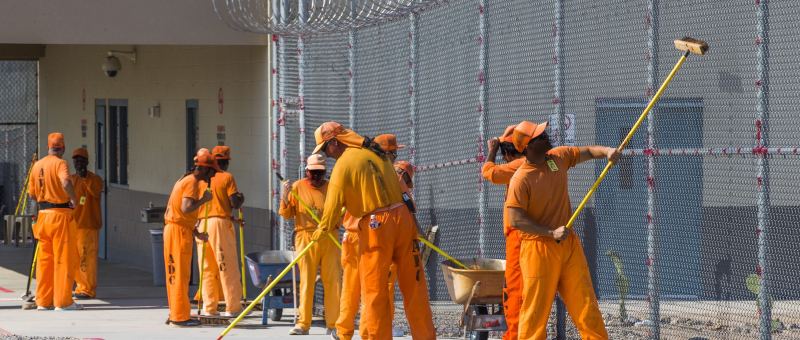
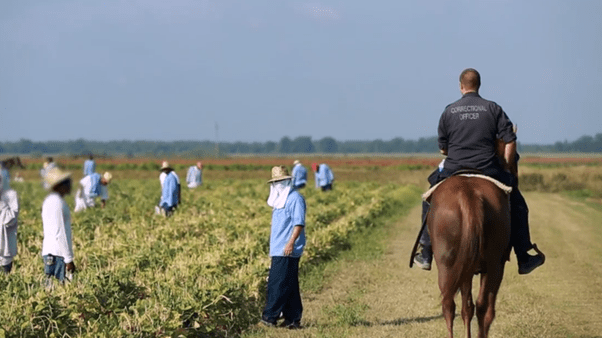
Recently, these companies have come under fire and are even facing lawsuits as allegations of forced and underpaid labor came to light. These reports allege that these companies are exploiting people who are in vulnerable situations to reap profits. The hourly pay for inmates working in the US can vary anywhere from $0.09 to $4.90, depending on the State, while four States do not pay inmates any form of salary. This only decreases their chances of success once they are released, as they have little to no savings, and oftentimes are ineligible for government benefit programs like welfare and food stamps.

Former inmates also face significant difficulties when trying to reenter the job market, as they face unemployment rates approximately five times higher than the general US population. This employer discrimination also affects disproportionately people of color and women. Formerly incarcerated black women face hardships finding employment, as their unemployment rate is almost seven times higher, at 43,6%, than the unemployment rate of their general population peers. The racial disproportionality regarding the incarcerated population, as well as the disadvantages they face once out of the Prison System will perpetuates racial inequalities, affecting particularly minority communities.

Figure 2: Prisoners at the Louisiana State Penitentiary working at a farm

The consequences of mass incarceration

The consequences of mass incarceration go far beyond the financial impact, they affect individuals and communities all over the US. A prison sentence oftentimes has the opposite effect of what it is intended to achieve. Instead of being rehabilitated and ready to integrate society, many former prisoners fall into a cycle of crime after their release, due to either being pulled into gang activity within the prison walls, or turning to illegal activities due to financial need. Mandatory sentencing has doomed the lives of people charged with low-level offenses, punishing them for the rest of their lives.

According to a research conducted by the Congressional Research Service, on average, over a five-year period, 76,6% of released inmates will return to prison.

The effect on communities is also extensive, affecting primarily minority communities as these are the ones with the highest incarceration rates, even though they have similar drug usage and drug trafficking rates as white communities. Residents of neighborhoods with high incarceration rates face a disproportionate level of stress, due to a combination of disrupted family and social networks, as well as increased rates of crime and infectious diseases such as HIV. Furthermore, studies have shown that this also takes a toll on mental health, as one study concluded that “The effect of neighborhood-level incarceration on mental health is similar for individuals with and without a history of incarceration.”.

Mass incarceration has had a negative impact on individuals and society, the policy choices of the last 50 years have helped perpetuate racial inequalities in minority communities. One possible way to overcome this issue, would be to transform the American Prison System from a punitive one, into a rehabilitative Prison System, as seen throughout the EU. The question that remains is, when will American lawmakers tackle this issue, ensuring the American Prison System becomes an efficient tool for rehabilitating felons, making them ready to integrate society.


Sources: American Civil Liberties Union, History Channel, Reuters, NPR, sentencingproject.org

Afonso Monteiro

Hugo Canau

Christian Weber

Hidden Risk– A Behavioral Economics perspective on gun control

When we think of behavioral economics, we usually tend to relate it with producer and consumer decisions and the construction of economic models to better understand decision-making. However, its applications goes way beyond that. Throughout this article, we will try to explain how behavioral science can help fight a major issue of modern society: Gun control.

According to the most recent National Firearms Survey, there are approximately 4.6 million children in the United States that live in homes with at least one loaded and unlocked firearm. Despite the strong recommendation of the American Academy of Pediatrics for people to store it safely away from children, studies find that one in three US homes with a child under 18 years old has a firearm, of which 43% are unlocked and loaded. Thus, it is not surprising that firearm-related injury was the leading cause of deaths among children and adolescents in 2017, with the odds of a child being killed by a firearm being 36 times higher in the US than in any other high-income country.

Firearm-related injury was the leading cause of deaths among children and adolescents in 2017

In this article, we will apply behavioral economic theory to identify some of the cognitive biases that may explain the motives that lead millions of people in the US to purchase guns and, more precisely, that lead millions of parents to store firearms within their children reach. The main advantage of analyzing this critical issue is to understand both sides of the debate as to solve some ambiguities about the best way to minimize fear while maximizing personal and public safety. Moreover, it is important to educate legislators about the behavioral economics’ principles that may impact decision-making, so that they can implement strategies to enhance safer firearm storage practices and contribute to injury prevention efforts.

So, how can we explain the overpowering need to own guns in the U.S? Would you ever own a gun? For what purpose? Most people would answer that it is simply a way to protect oneself from someone else that owns a gun. However, this will inevitably result in an economics problem called the Tragedy of the Commons. It means that the individual has an incentive to consume a resource but at the expense of everyone else. One classic example is what would happen if every shepherd allowed their sheep to graze in a common area. If everyone thought that way, then it would result in harmful over consumption, essentially being detrimental to everyone.

To have an even better picture, we can use the study tool Game Theory in order to further analyze this issue. Hypothetically, imagine you were in an ideal world where the rest of the society was gun free, and everyone would feel relatively safe. Now, imagine that your friend has the idea of owning a gun because that will make him feel even safer. His individual payoff will increase but he is not taking into consideration the effect that this will have on others, namely that he is armed, and the rest is not. Hence, he is better off than the rest, leaving others worse off in comparison. In this particular case, it is obvious that the society as a whole is better off when no one owns a gun. However, from the moment that one single individual makes the decision of buying a weapon, everyone else feels that they could now benefit from deviating from the optimal point to society (no guns), leading to a snowball effect, where at the worst-case scenario everyone owns a gun.

Now, let’s imagine that you’re an entrepreneur who despite all the business knowledge, past good grades and amazing ideas, your past 6 attempts at creating a business restaurant have flopped. However, in the seventh attempt you feel it in your heart that this will be the one despite the endless advice to not pursue and stubbornness to admit defeat. What do you know? You failed for the seventh time. So, what happened? This is one of the various scenarios in which some people exhibit the optimism bias.

The optimism bias refers to “our tendency to overestimate our likelihood of experiencing positive events and underestimate our likelihood of experiencing negative effects.” This of course can be quite dangerous depending on the circumstances. Once again, this is one of the many biases that can make us irrational and ignore important information that can either make or break our outcome.

In terms of gun usage, optimism bias can shed light on many of the decisions and thoughts that gun owners make. For example, too much optimism can lead a gun owner to think that despite the various gun related crimes and even domestic accidents, being in those said dangers will never happen to them despite worryingly increasing every day.

In general, we have the tendency to underestimate our likelyhood of experiencing negative effects

Moreover, with the increasing mass shootings and gun violence in the United States, gun owners have become more aware of possible dangers and want to be protected. This leads them to unlocking their firearm and maintaining it loaded for the sake of individual safety and their family, ignoring the threat it may impose on the household members, especially children. So, why does this happen? Behavioral economics can explain this behavior as availability heuristic bias.  This can be defined as the propensity people might have to place more significance on events that are more easily remembered than ones that become harder to imagine. No parent wants to hurt their child but rather protect them, which unfortunately leads to accidents.

Present bias can also be related to these accidents as people have the tendency to give greater importance to events that are closer to the present rather than ones in the future. Individuals might view the immediate risk of gun accidents with children as lower than potential future benefits (protecting them from intruders), and this leads to the mistaken belief about possible advantages in the future against what something may cost today.

In this article we hope to raise awareness to a major issue of modern society, and how alternative methods such as behavioral economics can help explain this many times misinterpreted phenomenon.
Having this said, we also must recognize that firearms have been and will continue to be part of our society, as they have been around for over 650 years and, as of now, there are over 875 million guns in the world.
This begs the question, if firearms are staying, what must change? The simple answer is the usage of those firearms; however, this is easier said than done and first we must understand why we don’t use guns properly.
Throughout this article we try to present the multiple behavioral biases that shed light on the many times perceived “irrational” usage of guns and with this, give the first step to change behaviors: understand what we do and why we do it.


Madalena Andrade

Daniel Calado

Afonso Serrano


Is the Real Estate Market too heated?

Reading time: 6 minutes

Recently, the housing market in the US has been experiencing a major boom quite unlike anything that has been felt in the past 14 years.

According to the National Association of Realtors, demand has been skyrocketing for the past months, with prices hitting all-time highs: median sale prices close to $350,000 and asking prices even higher. This price-frenzy is in large part due to supply being unable to quickly catch up to the unsurmountable demand, with almost 50% of offers under contract just one week after listing. For all involved, this expansion of the real estate business after such a long-lasting stagnation is indeed cause for celebration; however, for those whose memory does not falter, this scenario may seem reminiscent of what the American economy was experiencing prior to the housing bubble burst of mid 2000s that paved the way to the 2008 financial crisis. Thus, this poses the question: are those concerns valid and if so, should we worry that a new crash may be on its way?

What forces have been triggering this spike?

Numerous reasons have been behind the current real estate rally. As we have mentioned, demand has been pressuring a relatively distressed supply in the past months, leading to an increase in prices that is far beyond the levels one would expected in an economic crisis of this dimension.

Starting on the demand side of the equation, experts point out to three different reasons driving this demand mania.

First, by decreasing interest rates as a way to ensure liquidity during 2020, the FED forced mortgage rates to fell considerably during this period, reaching a record low of 2.65% in 2021 (from 3.73% in February 2020). Now, a 1 pp decrease might sound small for non-homebuyers. However, imagine a homebuyer buying a $300.000 house just before the crisis began. In this situation, he would, most likely, be paying up close to $499.000 over a 30-year mortgage agreement. Now, if that buyer had done the same deal in January 2021, he would be paying around $436.000, a discount of more than $60.000 (or 12.5%). This effect has incentivized buyers to look for more expensive houses than before, as it pushed them into the market to lock these mortgage rates before the FED tightens its policies.

Figure 1: 30-year Mortgage Rates in 2020. Source: Freddie Mac

Second, as Millenials are entering the housing market more fearlessly, the largest generation on Earth is now dominating demand, as they are keen to either leave their parents’ or just quit rentals. According to the National Association of Realtors, the median age of first-time homebuyers is now 33, which turns out to be the median age of Millenials. Alongside this, despite some increase in unemployment levels, salaries and overall income were kept stable the past year, as loose fiscal and monetary policies helped mitigate losses in purchasing power.

Combine low interest rates policies with no decreases in disposable income, plus a generation looking to buy their first house, well… you just set up a buying frenzy.

Finally, this pricing boom couldn’t be made possible without a supply shortage. In fact, after several construction companies went bankrupt during the Great Recession, fewer homes were built in the 2010s than in any decade going back to the 1960s. This sluggish construction activity has now been left out in the open in a market where home sellers are seeing double digit offers in the first 24 hours of bidding.

Moreover, with the pandemic causing some uncertainty regarding future paychecks, homeowners have had some reservations regarding the possibility of selling their current house and move to a more expensive one. Besides this, with a contagious disease spreading as fast as COVID-19, people do not want strangers traipsing through their living areas during open houses.

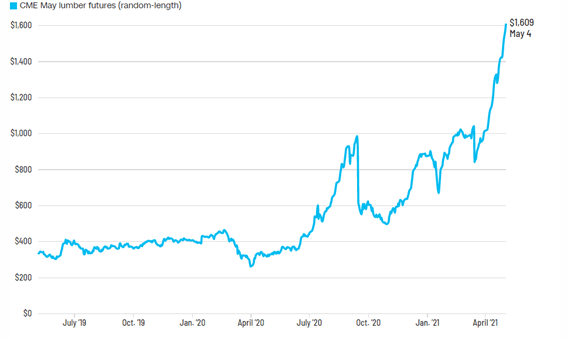
Finally, one recent element causing prices to rise is actually related to its intrinsic cost. Recent commodities shortages have been rising its prices significantly, ultimately increasing building prices and delaying orders. Lumber has been the most recent commodity on the spotlight, with its 3-fold growth in the past year raising housing cost by tens of dollars.

Figure 2: Lumber prices skyrocketed in the past year. Source: Refinitiv

Is history repeating itself?

This resurgence of demand in US real estate and the booming prices currently being practiced have led many to fear that a new crash similar to that of 2007 may be on its way. However, all evidence points out that this current boom is quite the inverse to that of mid 2000s.

For once, the current boom is mostly motivated by an excess of demand over the supply (the reason why prices are being pushed up), whereas prior to the sup-prime crisis the opposite was verified: the market was over-flooding with houses and there were not enough high-rating buyers for them, which led to an opening of the market to low creditworthy buyers (which inevitably was at the root of the problem). Currently, the market is still experiencing a shortage of houses (definitely not enough to meet demand), as construction is still catching up to the slowdown that was prompted by the pandemic.

Moreover, nowadays, the type of buyers is also quite different from that of the previous boom. They are of a higher credit rating and much more willing to put on their own money to buy their house. As a matter of fact, real estate companies are reporting that a lesser amount of the houses is being paid with resort to loans, as customers put more cash up front. This poses a great contrast to the low-credit-rating buyers that dominated the housing market in mid-2000s, most of whom could not afford the houses they were signing contracts to acquire.

Finally, lending rules are much more restrictive, carefully attributing loans only to those with enough credibility to ensure future payments. Back then, risky mortgages were provided to households with a high default risk who had no means of paying for them and only small down payments were required most of the times. Therefore, prior to the financial crisis, the so-called NINJA loans (no income, no jobs, no assets) were the rule, which ended up being the downfall of the market.

All things considered, current circumstances are much different from what was observable in the past.

Is There a Bubble Though? And What Does the Future Hold?

Housing experts claim that the housing market is not yet in a bubble. This is despite home prices being soaring at historical highs across the country. However, some claim that a small price correction can take place.

On the one hand, while the housing market is composed by low inventories, high demand and a risk-averse lending environment, extreme spikes in home prices could result in some prices rolling back soon. Subsequently, in the future, these peaks in prices can disappear as people will return to their normal activities

The future will depend on the pace of new construction, the strength of the economy, the quantity of homeowners willing to sell their houses and overall demand in the market.

When it comes to buyers, people who could afford a home pre-COVID-19, will be, most likely, in good financial positions to buy a home after Covid, as the majority of this people is stable and financially comfortable.

On the contrary, people who lost their job or received low wages, even before the pandemic, could not buy houses, as they usually rent the places they lived in. So, unless there is a recession in the future, the level of demand will, most likely, not change anytime soon, causing housing prices not to decrease as well.


Sources: Better Homes & Gardens, The Wall Street Journal, VOX

Francisco Nunes

Alexandre Bentes

Inês Lindoso

Healthcare Without Borders: Poland’s Abortion Ban and the EU 

Reading time: 6 minutes

On the 22nd of October 2020, the Constitutional Tribunal of Poland ruled that the present law authorising abortions for malformed foetuses was unconstitutional, banning most abortions performed in the country. Poland already had some of the harshest restrictions on abortion in Europe. This has led Polish women to take advantage of the European Union’s freedom of movement and look for safe abortions in other member states. 

Abortion and Conservatism in Poland 

Formalised by the law of 1956, abortion was legal in Poland during the period of state-socialism, when pregnancy termination was possible based on social grounds. Despite the many protests organised by several women’s organisations, new legislation was adopted in 1993 that severely restricted the possibility of having a legal abortion. In particular, according to Article 4a of the new law, termination of pregnancy is possible only in three specific circumstances: 

1. If the pregnancy constitutes a threat to the life or health of the mother. 

2. If the pre-natal examination or other medical reasons point to a high probability of severe and irreversible damage to the foetus or of an incurable life-threatening disease of the child. 

3. If there is a confirmed suspicion that the pregnancy is a result of a criminal act, the termination of pregnancy in this case is allowed, if the woman is less than 12 weeks pregnant. 

Performing an illegal abortion is a criminal offence subject to a fine and/or 10 years imprisonment. 

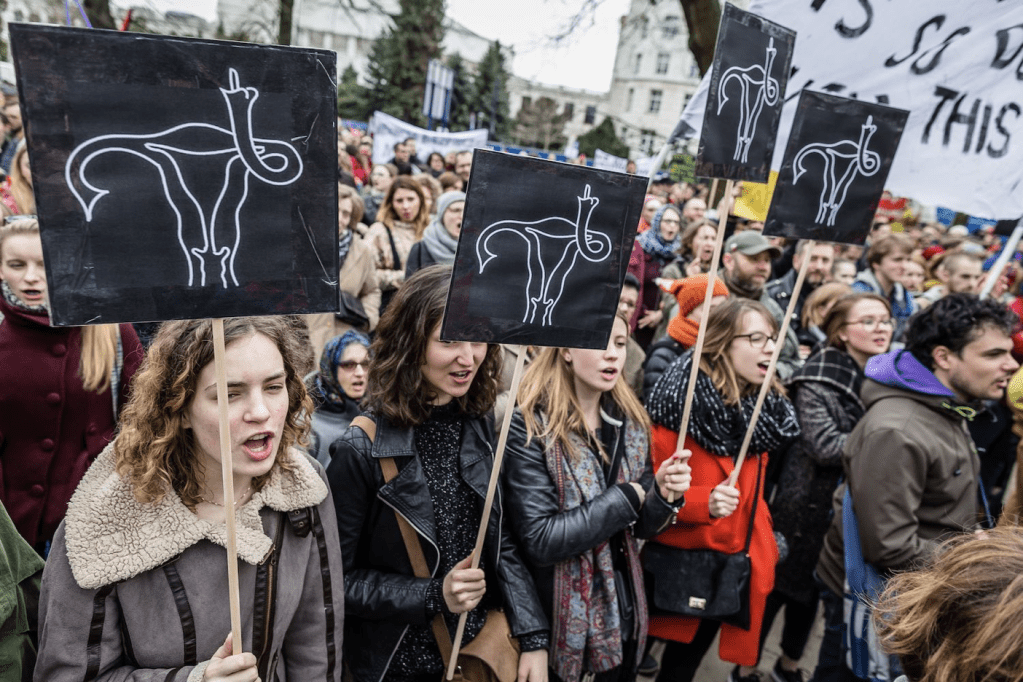
However, more recently, the governing Law and Justice party has tried to ban abortion as a whole. In March and April of 2016, an initiative to completely ban abortion led to a series of street protests and the mobilisation of women’s organisations. The initiative was eventually voted down. 

Access to contraceptives in Poland is also quite restricted, as in most cases no refunds are available from the National Health Fund and the costs of contraceptives need to be covered privately. Consequently, the use of contraceptives in Poland is one of the lowest in Europe. A recent survey shows that methods such as coitus interruptus or the “natural method” (the so-called “marriage calendar”), which carry no cost, are popular, while modern contraception methods, such as intrauterine devices (IUD), have little use. 

Until 2015, emergency contraception was only available with an adequate prescription. In February 2015, the law was amended so that any person at least 15 years old was free to purchase the pill in a pharmacy, without the need of a prescription. This law was reversed by the current government in March 2016, and again emergency contraception is only available after a prescription. Additionally, pharmacists started to use the so-called “conscience clause” which allows them to refuse sell of contraception in their pharmacies.  

In 2019, a group of MPs from the Law and Justice party referred the abortion law, then in force, to the Constitutional Tribunal. The Tribunal is mostly composed of judges nominated by Law and Justice, after a series of moves by the party to have more control over the judiciary. 

In October 2020, the Constitutional Tribunal ruling banned abortion on the grounds of severe health defects of the foetus – which accounted for 98% of all legal terminations in Poland in 2019. One opinion poll suggested 59% of Poles disagreed with the ruling. Abortion is now only possible when a mother’s health is at risk, or in cases of criminal acts. 

With these restrictions, Polish women are turning to the freedom of movement in the European Union – which means that abortions available in one member state are available to all citizens of the EU. A situation that is not new. 

Freedom of Movement and Medical Tourism 

Until 2018, Ireland also had restrictive laws on abortion. The Eighth Amendment of the Constitution Act 1983 equated the unborn foetus’ life to that of its mother and allowed for abortion only in circumstances where the life of a pregnant woman was at risk. 

Abortion law in Ireland received worldwide attention resulting from the death of Savita Halappanavar, who had been denied an abortion while suffering from a septic miscarriage. This case resulted in the Protection of Life During Pregnancy Act of 2013, which allowed for abortion when the pregnancy endangers a woman’s life, including through the risk of suicide. 

In 2018, this amendment was replaced by the Health Act 2018, which permitted abortion in the first 12 weeks of pregnancy and later in cases of risk to the woman’s life or fatal malformations of the foetus. Abortion services commenced on 1 January 2019. 

Before the Health Act of 2018, women in Ireland seeking abortions often found them abroad, typically in Britain. In 1992, the Attorney General sought to prevent a 13-year-old, who had become pregnant as a result of rape, from obtaining an abortion in England. The Irish Supreme Court ruled in favour of the girl. This case led to the thirteenth and fourteenth amendments to the Irish constitution, legalising women travelling abroad for abortions. 

After the passage of the thirteenth amendment in 1992, the practice became more common. In 2001, an estimated 7.000 women travelled abroad to obtain an abortion. Statistics showed that 4.149 Irish women had abortions in Britain in 2011, and 3.265 did so in 2016. A study found that in 2014 a total of 5.521 women gave Irish addresses to English and Welsh clinics that provided abortion services. In some cases, women travelling do it with the assistance of the Abortion Support Network – a UK-based charity that helps women in countries such as Poland, Malta and (formerly) Ireland to obtain abortions abroad. 

Abortion is also illegal in Malta, where the practice is a criminal offence punishable with 18 months to three years in prison. It is currently the only country in the European Union to ban abortion in all cases. A key argument against the decriminalization of abortion is to preserve Maltese national identity as rooted in conservative politics, Catholic morality, and family values. 

It is estimated that 300-400 women a year travel out of Malta to perform abortions, mostly to the UK (around 60). As a result of the ongoing pandemic and closing of borders, this has become impossible. The Abortion Support Network saw a dramatic increase in calls to its hotline when borders closed in March of last year. 

Abortion Laws in Europe 

Currently, 24 EU member states allow abortion on request – everyone but Poland, Malta, and Finland. In Finland, a woman can have an abortion with a note from two doctors and a social or financial reason to justify her decision. As mentioned, Malta is the only EU country to prohibit abortion in any case. Poland now has, after Malta, the most restrictive abortion law of any EU member state. 

The European Union follows a principle of subsidiarity as laid down in article 5 of the Treaty of the European Union – meaning that decisions are the responsibility of the member states if the intervention of the EU is not necessary. Additionally, under the principle of proportionality (article 5 as well), the EU must only act when it is necessary to achieve the objectives of the treaties. In 2014, both the European Commission and the EU Parliament stated that Member States are free to choose their own abortion legislation since there exists no right to abortion under the treaties of the EU and other international law. Having this in mind, it seems unlikely that the EU will find legal grounds, or even motivation, to impose an EU abortion law without amending the treaties. 

Future 

With the tightening of abortion restrictions in Poland, and the continued growth of conservative and populist movements in the country, Polish women seeking an abortion will probably have no option in the near future but to travel abroad, by their own means or with the support of organisations. This provides a daunting preview into the tightening of other civil liberties in Poland and in other countries. 


Sources

The Economist, Amnesty International UK, ABC News & The Guardian 


Team

Afonso Monteiro

Hugo Canau

João Sande e Castro

Manuel Barbosa


The  disproportionate effects  of climate change

Reading time: 6 minutes

Nowadays, climate change is more and more discussed to a point where one might think that he/she already knows everything there is to know about it. However, there are still many aspects that we are not aware of. For example, many do not know that pollution itself, be it air, land, or water, causes more than 9 million premature deaths, which put into perspective represents almost 3 times more than deaths caused by AIDS, tuberculosis and malaria all together. Therefore, although climate change and everything that can be included in this topic is very much discussed, to this day, it continues to be a very present and important topic in our lives, and we, as  humanity, still have a long way to go. This article seeks to explore the disproportionate consequences of climate change in the developing world and the role that developed countries must take to help reduce the burden.  

But what is the developing countries’ contribution to climate change?  

Primarily, it is important to take a look at the global carbon emissions and realize that developing nations are responsible for 63% of it. Apart from the fact that China and India alone account for 28% of the global carbon emissions, which corresponds to almost 50% of the developing countries’ emissions, the value is still alarming. Asia, Latin America and Africa are the regions that contribute the most to current carbon emissions due to lack of technology and resources to fight pollution, as their economies are still growing, and this must be considered when deciding what policies and measures to be taken.

The Paris Agreement indeed acknowledges that the efforts to reduce carbon emissions cannot be the same for developed and developing countries, allowing the less developed ones to emit more carbon until they reach a certain development level that enables them to stop relying on carbon-intensive industries. However, the World Resources Institute shows that it is possible to reduce annual emissions while growing the economy, and the key is to raise the use of renewable resources. This approach looks ideal as it combines decarbonisation with economic growth and poverty reduction, which must remain the priority. Yet, there are still significant barriers preventing developing countries from adopting renewable energies, as many struggle with poor governance, gaps in technical and financial expertise, and lack of resources. The need of implementing specific strategies and policies shaped to each country’s circumstances requires the expertise that only developed countries can provide, reinforcing the importance of a global coordination to shift economies away from carbon-intensive industries.  

The rebound of climate changes   

Besides being the ones that contribute the most to carbon emissions, developing countries are also disproportionately affected by the negative effects of global warming. Observing graph 1, it becomes clear that the developing world has the highest mean exposure to air pollution. According to the World Health Organization, around 98% of people in developing nations live in polluted air areas, while in developed countries the number decreases to 56%.  

The vulnerability that defines the less developed countries ends up limiting their ability to prevent and respond to the impacts of climate change. Let’s consider the fast fashion industry to better understand this issue: as to avoid the bans of chemicals that most governments of developed countries set, multinational companies place most of their manufacturing processes in developing countries, where the dependency on the clothing industry does not allow governments to act as a way of prevention. Moreover, these countries are the least able to afford the consequences and it has been shown that climate change can reverse significant development gains.   

Furthermore, one of the main consequences of the high incidence of emissions in developing countries is the increasing number of climate refugees. Although it does not have an official recognition, the term climate refugee is often used to identify people who are forced to leave their homes because of climate change and global warming. It is also common to hear the term environmental refugee, which aggregates not only the effects of climate change, but also natural disasters that may force people to be displaced. The international organisation Red Cross estimates that the number of climate refugees is higher than the number of political refugees, and scientists predict that in 2050 the number of people leaving their homes due to the consequences of global warming might reach 200 million. Since most displaced people move to safer areas within the same country or near the borders, the burden will continue to fall onto the developing world. The scarce resources become even scarcer with the arrival of refugees, which may end up threatening the lives of millions of people.   

The sad reality  

However, as the gap widens between the wealthy and the poor, the unfortunate reality of developing nations is revealed: there is no infrastructure in place to fight climate change. Funds are mismanaged, resources are scarce, and governments have other priorities – feeding their present population, for example. Sadly, the burden of this fight is done through foreign aid.  

Foreign aid has been effective in the past in combating climate change and is an important tool for those most in need. In Africa, there have been repeated efforts to slow down the desertification of the Sahel, a land strip which divides hundreds of millions between the desert and fertile land. On the other hand of the spectrum, preventative measures have also been put in place, such as giving the native population more incentives to adopt more sophisticated farming methods rather than the slash-and-burn one, still used in many African villages today. Michael Hübler, professor at the Leibniz Universitat in Hannover, claims that, in the future, foreign aid will be divided in two branches: short-term emergency needs, and long-term development needs. He argues that foreign aid must be given in equal parts to both societal development and the preservation of the planet’s biodiversity, as only this will foster real growth in the far future.  

Nevertheless, foreign aid can only last so long. Developed countries have limited amounts of resources that can be used to help other nations in need; developing economies must find a self-sustaining way of fighting climate change. In many cases, foreign help does not account for traditional solutions which have been reliable in the past. For example, in the Pacific Islands, rising sea levels have historically been fought through natural solutions, such as planting more mangroves, a small tree that is more readily sustained in poorer contexts. Foreign aid lacks this nuance. Looking at this from another perspective, as the threat of climate change looms over the world, developed countries will begin focusing retaliatory efforts on themselves rather than developing countries, hence why foreign aid will reach its end date in the near future.  

A change is in order   

It is not known whether humanity will overcome climate change, but the reality is clear: this is the most important issue facing the planet in the 21st century – and, sadly, none will be more affected than those living in developing nations. The consequences will be disastrous if not dealt properly, and we can expect millions of climate refugees flocking to major metropolises in the next 30 years. Poor nations must pollute to grow; developed nations did the same over one hundred years ago – but this is not sustainable. Foreign aid can only do so much to offer alternative methods of growth; sustainable growth may only be achieved in a clean manner by using natural methods, harkening to other times without factories and pollution. It may be hard, but it is possible. 

Sources: The World Bank, Unites Nations, Earth.Org, National Geographic, UNHCR – The UN Refugee Agency, The conversation  

Written by Madalena Andrade and Guilherme Barroca

Scientific review: Patrícia Cruz

100 days of Biden: Back to the Future?

Reading time: 7 minutes

Joe Biden has completed 100 days in office, a mark historically known to be thoroughly scrutinized by the American society and a key point to illustrate what the Administration has done so far, and what are their main goals and challenges ahead.

The 100 days mark is known to be a predictor of how well the Administration will perform during the 4-year span, and the first moment of analysis of approval ratings of the President compared to some of his predecessors.

A fast mover

Joe Biden has moved fast and steadily, with the Biden Administration issuing more executive orders than his predecessor Donald Trump. Executive orders include not only executive actions, but also reversals of predecessors’ actions.

Biden has issued 52 executive orders against 39 of Donald Trump and 34 of Barack Obama, in the same time period. Of those 52 executive actions, close to half, 24, have been reversals of orders executed by the Trump’s administration, mainly in the health and immigration sector.

The focus has been on tackling the biggest health crisis the United States has faced: The Coronavirus.

Figure 1: Joe Biden’s Executive Orders (First 100 days), Source: The White House; Graphic: Christopher Hickey, CNN

Immigration policies and equity have been two of the other key components where Joe Biden has invested his time, which can be explained by Donald Trump’s strongly opposing views on the matters.

Vaccination and SARS-CoV-2

Regarding vaccination, the President has set bigger goals as his tenure went forward. The initially set goal of 100 million vaccine shots was substituted by 220 million shots by the end of March, which was seen by many as an unrealistic goal. The truth is, according to official data from US Centers for Disease Control (CDC), the goal has even been surpassed: 235 million vaccine shots have been administered during this period.

The increase has mainly been done through the information campaign that has been led by this Administration, which ensures the safety of the vaccines and its long and short-term benefits for the country. The American Rescue Plan (ARP) also included a strong funding component for vaccination, which cannot be understated in helping the country achieve its targeted goals.

The Administration has also pledged close to $4 billion to COVAX, the main program designed to achieve global vaccination.

Schools have been reopened slowly and the healthcare investment, fueled by the ARP, has reached all-time highs to fight the spread of the virus.

As a result, there has been a strong decrease in cases and deaths all around the country, which reduced the pressure on the American health institutions, as well as on the governors of each state, that were coping with challenges hard to overcome regarding Covid-19 measures.

Figure 2: Covid-19 cases from March 2020 to the 25th of May 2021, Source: CNN/CDC

Immigration: the great challenge ahead

Immigration was a strong topic of discussion during Biden’s campaign, as there was a general uncertainty to how the Democratic president was going to manage the strong stances the previous administration had towards border control and immigration in the country.

The strategy regarding immigration has mainly been to reverse what was done by Donald Trump, as there have been 10 reversals regarding the topic, more than in any other area of action of the Biden’s administration.

One of the key reversals was to the law passed by the previous administration that empowered the U.S authorities to rapidly expel migrant children caught at the border without their parents. The measure, which has been seen to have been crucial to improve the efficiency of the reunification process, has led to a raise in the number of children looking for their families at the borders of the country.

Despite the positive early results, the sheltering of children has been under fire by fellow democrats, as well as the increased strain on healthcare services, who reduced the number of beds destined to migrants by 40% due to the Covid-19 pandemic.

The health situation of these children has been one of the main topics of American politics for the past few months and will certainly be an interesting topic to follow as it unfolds.

Economic Relief and Job Creation

The economic recovery in the United States due to the effects of SARS CoV-2 has generated the biggest stimulus plans the country has ever witnessed. 

The massive relief proposal, the American Rescue Plan, was approved last March and includes strong economic stimulus, such as $1,400 stimulus’ checks and a $15 increase in the federal minimum wage.

Some of the other measures include a federal income tax break and more than $350 billion to states and local governments, the latter being seen as a key turning point in the states’ fight against difficult challenges, such as the renters and child tax credit struggles.

A record number of jobs have been created by the Biden Administration in the first 100 days. More than 1.3 million jobs have been added, a record number that will likely keep rising due to the strong stimulus strategy that has been employed by the Administration.

The American Jobs Plan intends to increase that number. The 22.5 trillion dollars plan is not going to be only focused in traditional infrastructure (roads, railroads, bridges, among others) but also in electric vehicles, R&D, green economy and supply chains, just to name a few. It is important to highlight that bipartisan commitment in this matter is hard and tends to lower the original proposed value of the plan.

Figure 3: Job growth evolution, Source: BBC: Bureau of Labor Statistics

It is also important to state that future economic measures may not have Congress’ easy approval, as the expenditure is already achieving high numbers which may trigger a negative response by the conservative members of the Congress and the House.

Foreign Policy

Although many thought the US-China relationship was going to be the main discussion point of the Biden Administration regarding foreign policy, the President has overcome the topic by putting in place a measure that trumps it: the complete withdrawing of troops from Afghanistan until September 11, which marks the anniversary of the 2001 terrorist attacks, in New York.

The withdrawal of troops from the country was initiated by Barack Obama, and slightly reversed by Donald Trump but is now being fulfilled by Biden, as he looks to only keep in the country the crucial troops for American diplomats’ protection.

The strategy has, however, been thoroughly criticized by the conservative wing of American politics, as it is believed that it will undermine the strength of the United States position in the Middle East.

The Administration has also placed efforts on salvaging the US-Iran nuclear deal, with ongoing talks at a very early stage.

The position on Russia, a long-declared enemy, has also been strong and decisive, with the President expelling Russian diplomats in response to the SolarWinds attack and to the interference in the 2020 US elections. The president went even further accusing Vladimir Putin of being an “assassin” in a BBC’s official interview.

The efforts to restore policies regarding the environment have been headlined by the return to the 2015 Paris climate agreement, even though no plan has yet been underlined to meet the goals of reducing carbon emissions.

In sum, President Biden has been active regarding foreign policy, which was seen as crucial to reverse Donald Trump’s stances on the matter.

Approval Ratings

Joe Biden has shown strong approval ratings, higher than Donald Trump’s 40% but still not matching his democratic counterpart, Barack Obama.

Of the 53% of adults that approve Biden’s first 100 days, 90% are democrats, 61% independents and just 9% republicans.

Coronavirus and the economic recovery seem to be the main booster of Biden’s public perception, as they represent the two main reasons for the approval rating of the 46th President of the United States.

What is further restraining the approval rating are two challenges that strongly lie ahead, as mentioned along the article: border patrol and immigration.

Figure 4: Presidential approval rating, Source: NBC News

In sum, Biden’s first 100 days have been eventful and challenging, due to the lack of unity in the Nation after the incidents at the nation’s Capitol. Many challenges lie ahead, such as bipartisan commitment in key issues, such as the America Jobs Plan, and diplomatic crisis such as Israel, Iran, or the EU. It will be interesting to see how the administration will fare in these matters.


Miguel Ferreira

Miguel holds a Bachelors in Communication Sciences and is a NovaSBE Alumni. He previously worked as an external consultant for Câmara Municipal de Cascais and currently has a role of political consultant at Companhia de Consultadoria e Comunicação do Porto.

In September 2021, he will be integrating EY-Parthenon as a Consultant in the area of Public Policy.

He considers himself an avid reader with interests over public policies and political strategies.