Electric rEVolution | Will Tesla win the race?

Reading time: 6 minutes

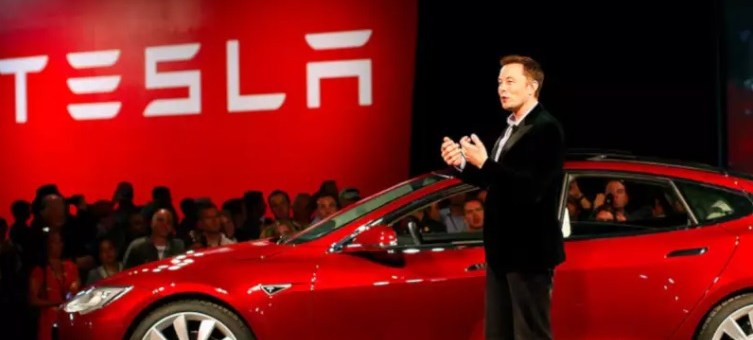
Tesla, the electric car company, has been making headlines on a regular basis, not only due to Elon Musk’s unique persona, but also owning to pioneering growing trends in the market, including driverless capabilities and car sharing.

The company’s innovative approach changed the landscape of the automotive industry from the process of buying a car all the way to what powers it. Its influence is so significant that the public’s changing perspective regarding electric vehicles has come to be known as Tesla effect, as a result of the role of the American manufacturer in marketing the segment as tech and performance oriented, rather than just environmentally friendly, as previously perceived.

However, Musk’s success in the automotive world may be short-lived as traditional manufacturers, such as Volkswagen, Volvo and Chinese brands follow suit and make a move to the now-mainstream electric vehicles, a market Musk essentially created, thus threatening Tesla’s dominance in the process.

A bubble waiting to burst?

Tesla’s impressive current market capitalization makes it the most valuable car company worldwide. In fact, its share price skyrocketed more than 700% just last year; if we went back a decade, then, since it went public in 2010, Tesla´s stock price registered no less than a monstruous 20,000% increase. However, digging deeper into production output and financial performance, there is not much significant substance to back up this massive growth, other than investors’ expectations.

Figure 1 – Tesla 5 years stock price performance
Source: Nasdaq

As a matter of fact, only last year was Tesla able to avoid a net loss (registering for the first time a positive $690 million net income), with a net profit margin of 2.2%. Adding this to an extremely high P/E ratio of around 1000, it is not difficult to reach the conclusion that Tesla is be overvalued.

Figure 2 – Tesla Net Income evolution 2011-2020
Source: Macrotrends

Nevertheless, we cannot possibly disregard the huge driving force that Tesla represents as the clear market leader among the EV (Electric Vehicle) market, being undoubtedly the main trigger of the electric revolution we are currently facing. Indeed, Tesla has a great lead in this ever-growing sector, both with its first-mover advantage and its crucial competitive advantage in terms of technology and batteries, as the partnership with Panasonic provided the manufacturer with the best-performing battery autonomy range in the market. Moreover, the fact that the company was able to experience such an impressive sales growth in a year in which many car makers saw their revenues decreasing is by itself a remarkable achievement, leading many to expect Tesla to become the future leader of the car industry.

Figure 3 – Global Plug-In Electric Vehicle Market Share between January and June 2020, by producer               
Source: Statista

A future market leader?

This poses the question of whether, once the EV market matures, Tesla will be able to maintain its position as market leader, with other historical giants of the industry massively shifting their production towards the electric sector. Most likely, the answer to this question will be directly linked to the direction towards which Elon Musk will decide to take his company; by all means, choosing to focus on high-performance vehicles or opting instead to pursue his original master plan of making cars affordable to all may dictate Tesla´s future fate in the car market.

Despite the fact that Tesla’s product portfolio is on the high-end side with prices up to $140k, the brand had long planned an affordable vehicle – Model 3. This is a $35k (in the USA) entry level car and bestselling EV with 365k deliveries in 2020, though the car is still rather expensive for most people, particularly outside the US. Moreover, it comes packed with technology and features seen as luxurious, which are not a priority for the majority of consumers who see price as a determining factor, especially now that EV are no longer a niche market.

Can Tesla withstand competition from legacy manufacturers?

As aforementioned, the company’s plan to dominate the industry is now threatened by conventional carmakers, such as Volkswagen, which is committed to this new market and even has an ambitious plan to knock out Tesla from the podium by 2025.

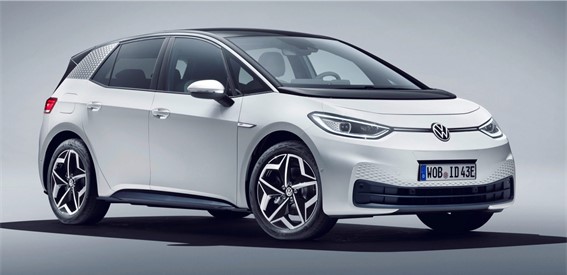
Last December, the new ID.3 from Volkswagen was the second most sold car in Europe, with 27,997 units sold, 3,430 more than Tesla’s Model 3. Volkswagen’s brand-new car has a slightly greater range (15km) and is cheaper (€4,000), but has lower power than Model 3, smaller cargo space and does not have autopilot. Most importantly, it does not seem to discourage consumers from buying a ID.3 instead of a Model 3, especially because the car already fulfils the needs of most consumers in a great package overall.

Figure 4 – New Volkswagen ID3, released in September 2020.

Competition also comes in the tech segment, mainly in China. The commanding position in the biggest electric vehicle market (China) is occupied by Tesla. Nonetheless, during last year, Tesla saw rivals such as Nio Inc., Xpeng Inc. and Li Auto Inc. catching up. The difference in cars sold between the trio and Tesla has been declining, reaching the lowest value in September 2020, amounting to a total of 1,000 cars. The rise of Chinese EV is strongly connected to Nio’s boosted sales, even though at a higher price tag than Tesla’s Model 3. The threat from China should not be ignored, since it is Tesla’s second largest market.

Figure 5 – Monthly EV Sales figures in China in 2020 by producer                    Source: CAIN

Which Tesla will we see in the future?

Although Tesla has surprised us before, its best chances are to stick to its current target market of high-performing cars, that offer the best technological features to consumers who value those features and are willing to pay a premium. In this area, Tesla has a big advantage that allows it to exercise a fierce competition with its direct rivals: no other car company has yet been able to offer the same high-speed range in an EV and battery autonomy like Tesla. However, it is unclear whether the company will be able to sustain this competitive advantage in the long term, as the tendency is for other companies to be able to eventually reach the same technological potential. Moreover, even with superior features, Tesla has not been able to convince a big share of the loyal consumers of long-standing companies, who prefer to abdicate some horsepower for the quality and reliability traditional automakers have left us accustomed to. Most importantly, legacy manufacturers seem to be transporting the driving essence people are familiar with to electric cars, making the move to electric easier, which might make Tesla’s job to win over customers certainly more difficult.

Notwithstanding, Tesla has been especially successful in captivating the American market, with more than 50% of its sales being centred in the US, a fact they have most definitely taken into consideration, as it has been made clear with Tesla’s bet on the innovative Cybertruck, surely having this prosperous target market in mind.

Regardless of Tesla being or not the biggest manufacturer in 5- or 10-years’ time, one thing is certain: Tesla has accomplished every objective the company established back in 2006 when Musk released The Secret Tesla Motors Master Plan. Furthermore, the brand shed light on a fundamental aspect, the sustainability of transportation, a sector responsible for 28% of all greenhouse gas emissions. Whether you buy a Tesla, a Volkswagen ID or any other electric car, you are proving Elon was right in pursuing the sustainable energy project.


Sources: Business Insider, CAIN, Car and Driver, Cleantechnica, Forbes, Inside EV, Macrotrends, Marketline, Nasdaq, Statista, Tesla, Volkswagen.

Tiago Rebelo

João Correia

Inês Lindoso

Scientific revision: Patrícia Cruz

The Po(o)rtuguese Problem: Portuguese Economic Growth Backwardness

Reading time: 6 minutes

Introduction

The Industrial Revolution in 18th century Britain was a turning point in History. With industrialization countries were able to have sustained economic growth for long periods. Successive waves of industrialization, occurred in Europe during the 19th century, bringing a period of great economic expansion. However, some countries, like Portugal, grew but not as much as the European leaders. This trend continued for most of the 20th century, with some exceptions. Today Portugal still lags in many indicators from its European counterparts.

            Our goal with this article is to understand a part of the historical dynamics that prevented Portugal from reaching sustained economic growth. We will use the “four golden rules to achieve lasting economic growth” as explained by a group of our colleagues (https://theawarenessnews.com/2021/03/08/four-golden-rules-to-achieve-lasting-economic-growth/) and explain how they evolved during Portugal’s contemporary history.

Economic Diversification

One of the main drivers for real economic growth is economic diversification. Succinctly, if an economy is well-diversified, then its performance will not be as crippled if one of its sectors faces adversities, thus being easier to deal with shocks and facilitating long-term economic growth.  

Concerning Portugal, it would be valuable to analyze the impact of its different economic sectors on its GDP to discover whether the country ever was dependent on a specific area of its economy.  

Table 1 – Percentual impact of each sector on Portugal’s GDP; Source: Bank of Portugal (1954-95) and INE (1995-2010)

From the table presented above, we see that Portugal’s Agricultural and Industrial sectors have lost significant influence over this period, going from a combined 55% of Portugal’s GDP in 1954 to a mere 14,5% in 2011. Consequently, a gradual increase in the services industry has been observed, overtaking the previous two as the main sector in Portugal’s economy.

One must ask then if this evolution is different than the one experienced in most Western countries. The answer is negative. This information is reflective of the contemporary deindustrialization phenomena that have led to a gradual shifting of industries that were once established in the Global North to the Global South, particularly to South East Asia. Likewise, the development of the services industry, mainly propelled by developments in technology, has been observed throughout most developed economies.

Besides, Portugal has never even been a country with the possibility of being dependent on a certain commodity which could have swayed Portugal’s past leaders to fully focus on the development of a certain facet of its economy.

Therefore, we do not believe that a lack of economic diversification could explain Portugal’s economic shortcomings.

Productivity

Another factor that is usually employed to explain long-term economic growth is the level of productivity of an economy. Productivity measures the efficiency of production, meaning that a productivity improvement would be an increase in the output produced by each worker or each machine in an economy. It is expected that higher levels of productivity would lead to greater profits for businesses and income for individuals.

Regarding Portugal, throughout its history, there have been many periods where productivity growth was observed. From the late 19th century to the First World War, when the fires of industrialization were first ignited in Portugal, to the periods of 1951-1973 and 1985-2000 there have been plenty of years where productivity in Portugal grew.

However, these levels of productivity have always been worse than the ones experienced in most of western Europe. When in the mid-19th century countries in central Europe started to benefit from the industrial revolution, Portugal’s main economic activities were still related to the primary sector, with the exportation of cork and wine, for example. It seems as if, throughout its most recent history, Portugal has always been trailing behind the rest of Europe in this field.

Figure 2 – Labour productivity per hour worked in Portugal; Source: Pordata

This trend has not stopped for the past two centuries, resulting in Portugal today being the 7th least productive country in the European Union, having only 65,9% of the EU average levels of productivity in 2017.

Could lower levels of productivity explain the economic flaws of Portugal? Perhaps. The problem with productivity is that many other variables can influence it, such as geography or the a country’s institutions. For example, it would be nonsensical to claim that the main reason why the Bedouin tribes of Mauritania are not as wealthy as the Portuguese is a reduced level of productivity when the hardships of the Sahara Desert and the historical phenomena of the region are vastly different from the Portuguese’s.

Openess to trade

It is a well-known result in economics that openness to trade is highly correlated with long-term economic growth. As the economic historian Jaime Reis pointed in his investigation of the phenomenon of Portuguese economic backwardness, peripherical economies in Europe seemed to benefit from integration in international trade in the 19th century. However, for the Portuguese case, the data indicates that there were not many developed exporting sectors in the country that could have lead to an industrial take-off. Even more, Portugal was not fully open to international trade, nor able to exploit all opportunities trade gave to development.

Analysis for other periods gives even more evidence of the important correlation between a higher degree of openness to trade and economic growth. A study by Óscar Afonso and Álvaro Aguiar concludes that the acceleration of trading relations relates to the improvement of the economy’s productivity from the 1950s and 1960s onwards and the convergence with the most developed European countries. The integration in the European Economic Community in the 1980s was also an important driver of economic growth and convergence.

In conclusion, it does seem that openness to trade is correlated with the historical growth of the Portuguese economy, but there is not much evidence to support the idea that this is the most important factor to explain the country’s problems.

Institutions

Lack of “inclusive institutions” might be the factor. This term first appeared in Why Nations Fail and reinforces the importance of respecting property rights and having an effective justice to achieve continuous prosperity. The concept is defined in opposition to the concept of “extractive institutions”, ones that extract resources from the economy to the benefit of a small group, thus preventing sustained growth.

Portugal’s contemporary history is a pendulum that swings between more inclusive to more extractive institutions, and back to more inclusive institutions. The 19th century starts with the end of absolutism and the instauration of the liberal monarchy. However, the monarchy was not always a fully liberal regime, with periods of instability and authoritarian rule. In 1910 came the Republic, another period of instability that ended in the corporativist dictatorship of the Estado Novo, an obvious example of “extractive institutions”. Only in the 1970s did Portugal come to be a modern democracy.

We see that overall, the period is marked by instability, lack of liberal and democratic institutions, and by regimes and elites that prevented the development of growth-friendly institutions and reforms.

The weight of history can be seen in the institutional problems Portugal faces today. The 2020 Corruption Perceptions Index places Portugal in 33rd place, behind several developing countries. This value suggests Portugal is not among the most efficient economies, as corruption is expected to result in lower levels of capital productivity.

In the 2020 Economic Freedom Index, Portugal has an overall score of 67, making it the 52nd freest economy in the world and 29th in Europe. The index identifies the government’s longstanding record of overspending and the continuing need for labor market reforms to reduce the number of workers who are forced to take temporary or part-time positions as the two major impediments to a greater economic freedom. While the business and monetary freedom are considered attractive from a regulatory point of view, labor reform packages in recent years have not been able to succeed in raising labor productivity.

The institutional factor may be the reason why Portugal is not achieving strong prosperity and still lags behind the most developed countries.

Sources: Análise Social; Banco de Portugal; Conselho para a Produtividade; ECO; Francisco Manuel dos Santos; Jornal de Negócios; Jornal I; Instituto de Ciências Sociais; Instituto Nacional de Estatística; Pordata; Público; Sábado; Transparency International; The Heritage Foundation


André Rodrigues

Madalena Andrade

Rui Ramalhão

The Wall Street Crook

Reading time: 6 minutes

“In today’s regulatory environment, it’s virtually impossible to violate rules […] it’s impossible for a violation to go undetected, especially for a considerable period of time” was Bernard Madoff’s opinion on how “wrong” people misjudged Wall Street, in October 2007, one year before being considered the greatest scammer of Wall Street history for having ran, more than 15 years, the largest Ponzi Scheme the world had ever seen. Madoff has passed away on the 14th of April 2021, at the age of 82, due to health complications, in the Federal Medical Center, in North Carolina.

Bernard Madoff: The Rise

Bernard Lawrence, known as “Bernie” Madoff, was an American hedge-fund investment manager and former chairman of the NASDAQ stock market (in early 1990s), who executed the largest Ponzi scheme in history. This scheme translates into a financial fraud in which the first investors are reimbursed with money acquired from subsequent investors, instead of the real return on investment. He defrauded thousands of investors by tens of billions of dollars over at least 17 years, and possibly more.

Bernie Madoff started his career as a penny-stock trader in Wall Street. At age 22, in 1960, he created “Bernard L. Madoff Investment Securities, LLC”. He started by trading penny stocks with $5,000 earned by working as a lifeguard, and then persuaded family friends and others to invest with him.

The success of the company began when Madoff and his brother Peter started developing electronic capabilities that attracted a large flow of orders and boosted the business by providing insights into market activity. By the 1990s, Madoff’s broker was processing 10% to 15% of all trading orders for the New York Stock Exchange (NYSE).

Madoff was so well-respected on Wall Street that he also served three terms as chairman of NASDAQ stock exchange board of directors. This would later provide him the reputation and networking he needed to create a Wealth Management unit within his investment firm. It was in this department that Madoff pulled off the largest Ponzi scheme in history.

The Scheme

It is hard to comprehend the reason why Madoff started his Ponzi scheme, in the first place. Equally shrouded in mystery is the time at which it all started.

Madoff claimed in court that his scheme started in 1991. However, one of his closest associates, Frank DiPascali, who had worked at his firm since 1975, said the fraud had been occurring “for as long as he remembered”.

Madoff’s Ponzi scheme story is, in many ways, a story of successful marketing. Indeed, one of the reasons why Madoff was able to sustain the operation for so long was his great ability to bring in new investors. He started off by introducing a brand-new investment approach that would involve a highly complex derivatives trading strategy. He named it the Split-Strike Conversionstrategy, and began pitching it to his investors, stating that it was able to provide them with steady returns, alongside low-risk.

Madoff would sometimes reject new clients at first, to create a feeling of exclusivity around his money-management services.  Overall, his reputation in wealthy social circles grew and the steady and high annual returns, always between 10 and 20%, made it so that he did not have any shortage of new people wanting to invest their capital. Madoff did not attract wealthy investors from the social elites only. His scheme also affected many people who were not very wealthy and that entrusted him with their life’s savings. Among his clients were also several non-profit organizations and major banks and corporations, such as BNP Paribas, Banco Santander, and Bank Medici.

Madoff mostly kept his investor’s funds at an account in Chase Manhattan Bank and would pay out their supposed “returns” from the capital acquired from other investors. The great complexity of the whole operation was in forging the return statements and other documents that might come under scrutiny from clients or from the SEC (U.S. Securities and Exchange Commission). Madoff would work from his returns backwards, that is, he would start off from a certain return and then see how to forge a trading record that could justify that return. So, Madoff and his associates would look at previous price changes in stocks and other assets and would create an investment strategy that would have corresponded to the paid returns.

Overall, Madoff’s great attention to detail when forging all the required documents, and his intelligence to lay low, sometimes fake negative returns, either during stock market rallies or crashes, allowed him to go under the radar for so many years.

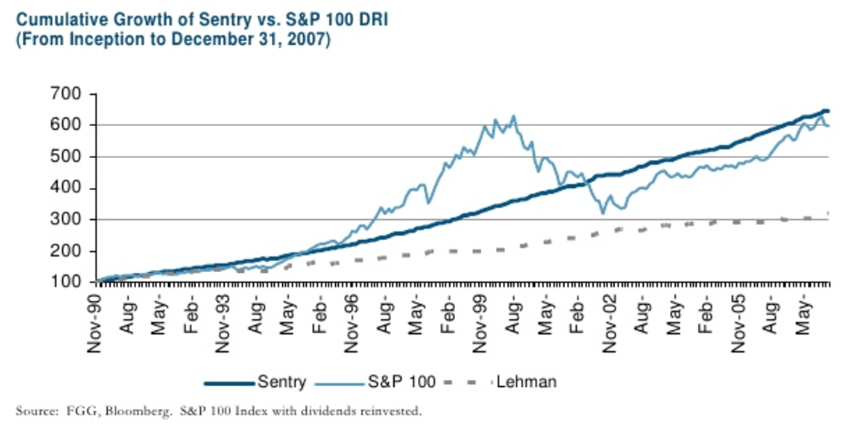
Madoff’s Fund returns vs the Benchmark (Sentry was Madoff’s largest investor). Madoff’s scheme almost always provided the same results, even laying low when the market spiked in the Dotcom bubble (1994-2000). Source: Investing Per Excellence

There were also some special clients, the so-called Big 4 (not the ones you are thinking about, but unknown multimillionaires), whose accounts stood out and were handled differently from the other clients’. There were instances when some of these clients would send back their forged trading statements to Madoff and his accountants, when they thought that their returns were too low. Miraculously, the amended accounts would then show higher returns. Indeed, this proves that there was some pressure on Madoff for higher returns from clients who knew about the fraud that was occurring.

The Fall

Well, as the old saying goes, “if something seems too good to be true, it probably is”, and, even though the collapse of Madoff’s wealth management division surprised the financial system, it was not by lack of warnings.

Harry Markopolos, known today as “Madoff’s whistle-blower” was a portfolio-manager at a Boston trading investment firm that first spotted the fraud in 1999. Back then, his boss informed him of a hugely profitable hedge fund, ran by Bernie, that was delivering steady 1 to 2% returns a month, and would latter ask him to recreate his “Split-Strike Conversion” strategy to try and duplicate Madoff’s results for their own firm. In Markopolos’ words: “It took me 5 minutes to know that it was a fraud, it took me another 4 hours of mathematical modelling to prove that it was a fraud”. For Madoff to be executing his trading strategy and perform the way he was, he would have had to buy more options on the Chicago Options Exchange than actually existed. For Markopolos, there were only two plausible explanations for the outstanding performance: either Madoff was insider trading or he was running a huge Ponzi scheme. He later took his suspicions 5 times to the Securities Exchange Commission (SEC), to which they replied that “there was no evidence of fraud”.

Harry Markopolos, Madoff’s whistle-blower, testifying in the senate how he was ignored by the SEC. Source: CNBC

Despite numerous warnings concerning Madoff’s activities, the suspicions of fraud did not themselves led to the collapse of his investment firm. Amidst the 2008 subprime mortgage crisis, multiple investors tried to withdraw their money from the fund only to realize that, from the supposed $20bn he was holding, only $200mn were left. On December 11, 2008, Bernard Madoff was arrested and charged with securities fraud, one day after revealing his scheme to his two sons, Mark and Andrew Madoff.

The End

Following Madoff’s arrest, the case was publicized around the world and was talked about in the news 24/7: it was the largest Ponzi scheme in history. Madoff plead guilty to all charges brought against him in court. The judge sentenced him to 150 years in prison, the maximum for his crimes, and a symbolic sentence for what the judge considered was “extraordinarily evil” conduct by Madoff.

Bernard Madoff arrest. Source: nypost

Following Madoff’s arrest and incarceration, efforts began to try to help victims recover their lost funds. The Madoff Victim Fund was created to try to restore funds to victims of the scheme, many of whom were thrown into financial instability with the collapse of the scheme. People who benefited from Madoff’s scheme had to forfeit their gains and, through this fund, this money is being returned to those who were affected by the scheme. So far, Madoff’s victims have been able to recover about 80% of their losses.

On April 14, 2021, Bernard Madoff passed away at the age of 82, in the Federal Medical Center in North Carolina, due to kidney disease.


Sources: Encyclopedia Britannica, Fortune, Investopedia, The Motley Fool, Wikipedia

Francisco Nunes

Raquel Novo

João Baptista

João Correia

Portuguese Presidency – Priorities for the EU

Reading time: 4 minutes

On midnight of January 1st of 2021, while most Europeans were celebrating the end of annus horribilis 2020, a team of hundreds of people, divided between Lisbon and Brussels, were taking on the six-months challenge of the Presidency of the Council of the European Union. To those readers who are not up to date on how the European machine works, the Council of European Union – not to be mistaken by the not at all confusingly named Council of Europe – has a rotating six-month Presidency among the 27 members of the EU. To avoid further confusion, from now on, we will be referring to the Council of the European Union as simply, the Council.   

The moto of the Portuguese Presidency is “Time to deliver: a fair, green and digital recovery”, and it will be working around the following 3 priorities: 

I. Promoting an European recovery boosted by the green and digital transitions. 

II. Delivering the European Union’s Social Pillar as a key element for ensuring a fair and inclusive green and digital transition. 

III. Strengthening the strategic autonomy of an Europe that is open to the world. 

Portuguese Prime Minister, Antonio Costa, in front of the logo of the Portuguese Presidency. Picture from Politico. Taken by Antonio Pedro Santos 

According to the Portuguese government, these three priorities will  be achieved under a program focused on five lines of action. The first of which is a Resilient Europe that promotes the Union’s recovery, cohesion, and values. Ensuring the implementation of the new seven-year Multi-annual Financial Framework (MFF) that came into effect on January 1st is one of the responsibilities of the Presidency that fall under this line of action. You may learn more about the new €1 trillion 2021-2027 MFF on a previously published article titled “European Budget”. On top of the new MFF, Portugal will have to ensure the implementation of the €750 billion NextGenerationEu recovery package that aims at helping member states recover from the economic and social deterioration caused by the Covid-19 pandemic.

 In this context, Portugal has invited all 27 member states to a high-level summit in Lisbon focused on the recovery and response to the economic crisis. Besides the goal of guaranteeing the recovery of the EU from the Covid-19 pandemic and its devastating impacts on the European Economy, Portugal wants to strength the EU’s coordination in disaster response and enhance its capacity to identity and tackle future infectious diseases. This objective is aimed to be achieved through a reinforcement of the European Union Civil Protection Mechanism, which may be used by countries when their own domestic capabilities are overwhelmed by a disaster.  

The European Budget for 2021-2027 and the NextGenerationEu recovery plan. By the Council of the EU 

As for the controversial Pact on Migration and Asylum that was announced by the Commission President Von der Leyen in September of last year, the Portuguese Presidency hopes to bring “the positions of the Member States closer together”. The pact can only become EU law if it is both approved by the Council and the EU parliament. The position of the Portuguese Presidency is to create as much common ground as possible among the member states, however, it has not shown an intent to bring the proposal into law by the end of its presidency. 

The second line of action is a Green Europe that promotes the EU as a leader in climate action. Portugal announced as a “big priority” the approval of the European Climate Law by the end of the mandate. The European Climate Law aims to write into the law the Green Deal’s goals of reducing greenhouse gases in the EU by 55% compared to 1990 levels and achieve net-zero emission by 2050.  

Despite being the 12th country of the European Union in terms of land area, Portugal’s exclusive economic zone is the 3rd largest in the Union. Having this in mind, it is easy to understand that an important target for the country, during the following months, is to highlight the importance of the blue (ocean) economy and its sustainability. A conference on this very subject is expected to be held in June on Azores’ islands.  

The Portuguese Presidency has also committed itself to conclude the negotiations on the Common Agricultural Policy with the objective, among other things, of improving the environmental sustainability of the Union’s agricultural sector.  

The third line of action is accelerating the digital transformation in service of citizens and enterprises. Portugal will focus on accelerating the Union’s digital transition as a tool to foster a faster economic recovery, from the covid-19 pandemic, and to bolster European leadership in digital innovation. On January 7th, the Portuguese minister for economic affairs, Pedro Siza Viera, announced Portugal intends to move ahead on negotiations on two legislative packages called the Digital Services Act and the Digital Market Law. The two proposals are protecting European consumers’ rights by increasing regulatory control on major technological platforms, such as Google and Facebook. Although the minister acknowledged he does not expect to reach a complete agreement on these two measures, he hopes to achieve “a consensus that can soon be followed up”. Portugal also plans to upgrade the continent’s digital infrastructure by creating a strategic European Data Entry platform based on submarine cable that will link Europe, South America, and Africa. There is hope that this project could result in a boom of Europe’s telecom industry.  

World map of active (orange) and planned (red) submarine cables. Source Politico EU and TeleGeography 

The fourth line of action is the enhancement and strengthening of the European social model. With the planned high-level Porto Social Summit, the main focus of the Portuguese Presidency appears to be on energising political support for the implementation of the European Pillar of Social Rights and its action plan. The European Pillar of Social Rights sets out 20 key principles and rights that aspires to an EU that is “fair, inclusive, and full of opportunities”. The action plan by the European Commission turns these principles into actions and it proposes targets to be reached by 2030. The President of the European Foundation for Progressive Studies, Maria João Rodrigues, has said the Porto Social Summit “can be an historic moment” of the EU’s commitment to social rights.  

The 20 principles of the European Pillar of Social Rights. Source: European Commission 

The fifth and final line of action is promoting an Europe that is open to the world. The Portuguese Presidency will continue the European diplomatic strategy of openness to the world and effective multilateralism. The Portuguese minister of foreign affairs has acknowledged that he hopes to have a free-trade agreement between the EU and Mercosur concluded before the end of the presidency, which shows a synchronisation with the EU’s trade strategy that focuses on the development of new bilateral or plurilateral trade agreements. The 6th EU-African Union Summit demonstrates the interest of Portugal to maintain a strategic dialogue between the two continents to address global challenges such as climate change or peace and security. Lastly, there has been a renewed interest by Portugal to strengthen the dialogue between the EU and both the United States and India. As for the time of writing, there are ongoing negations for a meeting between the EU and the Biden administration, and the prime minister of India has been invited to a meeting with European leaders that will take place this May in Porto.   


Sources

  • 2021portugal.eu 
  • Politico.eu 
  • Observador.pt 
  • Público.pt 
  • Euroactiv.com 
  • Ec.europa.eu 
  • Bellona.org

Authors

Ana Terenas

João Sande e Castro

Francisco Pereira


A New Era for Development Economics

Reading time: 7 minutes

Economics is commonly seen as a theoretical branch of the social sciences – one of its own branches, however, is not. Development economics, which deals with growth of lower income countries, provides, in contrast, a very hands-on approach to the application of its models. Central to this branch of economics is the last mile problem. 

The Last Mile Problem 

Many fail to understand the obstacles towards providing supplies to remote areas in underdeveloped countries. Medical supplies, schoolbooks, and transportation of essential goods (all of which are the basis of human development) cannot be sent to their destinations due to a lack of supporting infrastructure. To illustrate this, let us take the example of a shipment of vaccines to a village in Africa: while it certainly is possible to get the vaccines to the closest regional capital, many times, there is no infrastructure that can safely transport from the capital to the village. This last stretch is the crux of the last mile problem. 

Fig. 1 – Illustration of the Last Mile Problem

Theory vs Experience  

Older development economics theories have sought to fight the last mile problem (decades before the term was even coined), but in a standoffish, figure-it-out-yourselves way, post-WWII economists such as Ragnar Nurske saw that development was to be overseen by the nation’s government, investing in many different industries, rejecting trade with other countries. Others preferred neoclassical models, where a laissez-faire market approach would of most benefit, the government interferes the minimum in economic affairs of both individuals and society. However, what most economists from this era failed to understand were the underlying issues that were at the heart of these countries’ underdevelopment: disease prevention and education. These were crucial points that not just theory could solve. They had to be tested on-field. 

A revolutionizing and experimental approach to Development Economics was introduced to us in 2019 by Michael Kremer, Esther Duflo and Abhijit Banerjee, awarding them the Nobel Prize in Economics. This innovative approach implemented Randomized Control Trials (RCT) experiments, a reliable way to infer and confirm causality relationships, and so much was achieved. When faced with a certain question/concern, through randomised allocated regions or groups of people, experiments are assigned, tackling the problem in many ways. Afterwards, the outcomes between the different trials with or without interventions are compared. With this experimental process one can assess the impact of social policies on poor and middle-income countries.  

Process of Randomized Controlled Trials

So, if in the past, most development economists created their work tucked away in the comfort of their offices, many have now started to complement and base their ideas and deductions in experimental on-field work. In special focus on the work of these three pioneers, their trials were mainly conducted in India and Africa, striving to find new and innovative ways to fight poverty and improve people’s living standards. Some of the problems tackled regarded important old concerns such as health and education.  

The impact of randomized controlled trials 

When it comes to health, immunization rates are the most predominant issue. According to UNICEF, to this day, around 27 million children and 40 million pregnant women are not provided with a basic package of immunizations, yearly. This leads to many deaths that could have been prevented by more efficient practice and supply of incentives for vaccination.  

In India, although vaccination services are offered exempt of any charge, in public health facilities, the immunization rate still remains low in some areas, specifically the more rural and poorer. As a response to this, Duflo and Banerjee randomly grouped 134 villages in rural India into 3 groups: one in which there was a monthly reliable mobile immunization camp, where a nurse and an assistant went to the villages, providing easier access to vaccination services in those villages; another with the same immunization camp, but for each completed immunization, the children’s households received incentives (raw lentils and metal plates); and finally the control group (i.e. with no intervention done).  

The results showed that the second group had the most positive outcome, increasing vaccination rates by six times more than before. This was a result of people having easier access to getting vaccinated and incentives that gave a reason to not postpone their immunization. In fact, it ended up being less costly per vaccination to provide these incentives, since the medical professionals needed to be paid regardless of the services being provided or not.  

Moreover, efficiency in education, in terms of incentivizing children to attend school, was also empirically studied by these three economists. They started by discarding previous objectives/solutions that came from the assumption that the problem was centred around the poor management and inefficiency of teachers, curriculums, and pedagogy programs, and instead focused on the design of the educational system itself. Thus, in contrast, Pathram and J-PAL, the research organisation founded by Banerjee and Duflo, studied a practical and innovative way to teach primary grade children which prioritized and assessed their actual learning levels (not the specific class year they were in). Instead of constantly flunking children that lacked specific knowledge from previous school years, they undertook another methodology, which was evaluated and found effective, known as “Teaching at The Right Level”. Such method grouped students into the same learning levels and provided them with targeted resources to achieve higher levels. This ended up showing that children were capable of learning fundamental skills such as how to read and basic math in just 30-45 days.  

At a 2010 Ted Talk event, Esther Duflo also shed light on how to subsidize education by observing in which interventions a 100$ grant would be more effective in incentivizing extra years of education. Surprisingly, it turned out that just by explaining to people the benefits of education, something inexpensive to do, it increased school attendance by 40 extra years in that community. Furthermore, based on a past field study by Kremer, in regions where it is common to have worm infections, offering deworming treatments to children in schools added up to 28.6 more years, being the second most effective intervention. 

A step in the right direction 

All in all, the world of development economics was forever changed with the introduction of experimental research. For years, most economic reasoning and foreign aid has derived from a neo-classic economic approach in which it was believed that by increasing GDP per Capita through improvements in market structure, technology and public goods would make people automatically behave in a more socially beneficial way. As a result, the impact of this help was never capable of being accountable or fully efficient and most poor countries remained in the same situation. 

However, as one can imagine, these small and geographically exclusive experiments are also restricted by some issues. The broader is the problem we want to solve, the harder it is to draw a specific and effective resolution for it, so this field of study needs to be continuously evolving. Nevertheless, a new collaboration with behavioural economics and experimental approach, through Randomized Control Trials, opened the doors to new ways of unconventional thinking, providing life changing solutions and helped development economists improve substantially causality reasoning.


Team’s note

Dear reader, as we have reached the end of the article and being RCT a very broad topic, if you would like to further explore RCT in the context of economics, then take a look at this article. If you also wish to know what Nudging and RCTs have in common, check this article.


Sources: Brookings, ResearchGate, Journal of African Economies, Habitat for Humanity, Great Britain, J-Pal, MIT News, The Conversation, TED Talk Ideas Worth Spreading, Firstpost, Thebmj, Hindustan Times 

Benedita Elias

Guilherme Barroca

Economic and societal effects of military conscription

Every once in a while, there comes a time when the debate of whether we should bring back obligatory military service resurfaces in the mainstream societal discourse. However, opinions aside, what are the economic and societal effects of a conscription system?

Following the end of the Second World War, the number of countries that implement conscription (also referred to as the draft, or obligatory military service) has declined considerably. While most OECD countries have transitioned to all-volunteer militaries, many countries still have active conscription programs. In Europe, for instance, countries like Greece, Denmark, Austria, Lithuania, and Switzerland have some degree of mandatory service for males. Even as recently as 2017, Sweden reintroduced conscription due to fears caused by the Russian annexation of Crimea and its military exercises conducted at the border of Baltic states.

Figure 1 – Distribution of countries that still have some sort of conscription system; Source: Pew Research Center

Although the effect of geopolitical threats on reintroduction/continuation of conscription regimes in Europe is an interesting topic, we would like to take a broader look at some of the economic and societal consequences of obligatory service and discuss some of its advantages and disadvantages.

The true costs

 Proponents of conscription argue that a draft lowers personnel costs considerably, when comparing with an all-volunteer military. While it is true that the budgetary costs of conscription-based militaries are lower, this ignores all the economic costs that are imposed by this regime.

 In fact, the economic costs of drafting an individual will be equal to the value of his foregone production, were he not drafted, in addition to any disutility that may be caused to him by his service. These economic costs can be sizeable and even exceed the budgetary costs of a conscription-manned military. According to a paper that analysed the now-extinct Belgian draft, the authors estimated economic costs to be at least double the budgetary costs.

 In general, manning a country’s armed forces with conscription amounts to front-loading much of the costs onto the conscripts, as opposed to spreading costs more evenly and equitably through taxes, as it is done with an all-volunteer military. Furthermore, the artificially lowered price of draftees’ labour can lead to an inefficient organization of the armed forces, due to unduly high labour-to-capital ratios. These high ratios can manifest themselves as excessively manned army-units, for example.

Effects on human capital

We should also keep in mind that the economic costs that we previously mentioned were merely static (relating only to the time an individual spends in obligatory service). There are also dynamic effects caused by the draft (which relate to effects on periods after the draft). This is because drafting occurs at a very specific period of the lives of individuals (18-26 years of age) when they are making decisions about their education and when they begin to accumulate work experience. In essence, drafting coincides with a crucial period for the accumulation of human capital, which will have ramifications for the rest of the individual’s life. Therefore, conscription can have a negative dynamic effect on society in so far as it jeopardizes individuals’ accumulation of human capital.

 This is where advocates of the draft may argue that conscription, in fact, allows conscripts to accumulate valuable human capital due to the development of soft skills, such as team-work or personal discipline during their service. This argument has some merit. Indeed, a paper that studied the effect of the Portuguese peacetime draft found a positive impact of 4-5% on wages of conscripted men with only primary education.

 Furthermore, Israel’s military became a catalyst for the creation of specialized start-ups in fields like cyber-security, since it allows for the development of important technical skills and serves as a networking place, important for the creation of these new companies.

 Both examples illustrate the potential for the military to be a place for the accumulation of human capital by its service members.

 It is true that the military, as in the case of Israel, can be a good place for the acquisition of specialized skillsets that allow individuals to be more productive and innovative. It is also true that conscription can benefit low-education individuals by providing them with opportunities to accumulate human capital that they might not have access to otherwise.

 However, most conscripts never reach a level of specialization close to the one that is needed to create a start-up like the ones in the Israeli example. Furthermore, as economic activities evolve, and the jobs associated with them become more complex, educational requirements become longer and harder to achieve. This means that, going forward, the potential benefits of conscription will increasingly be overshadowed by the value of the education/experience that conscripts are forced to forego, and which they need to stay competitive in an ever more educated world.

 Also worth mentioning is a Dutch study that took advantage of a change in the drafting age of young men, which had the effect of exempting an entire birth cohort from obligatory military service in the Netherlands. The authors found that the draft had negative effects on individuals’ educational attainment and earnings.

 Contrary to the findings of this previous study, an interesting effect that the draft can have on educational choices and attainment is reported by a paper that analyses the effects of Germany’s re-introduction of conscription in 1937. The authors found a positive impact of conscription on the probability of individuals getting a college degree. The authors argue that this is likely due to draft-avoidance behaviour. Indeed, it was possible for young men to enrol in college in Germany, as a temporary safe-haven from the draft. After finishing their degree, the now-older men would be much less likely to be drafted. These types of effects of conscription on educational demand have also been documented in the United States and France.

Conscription does not reduce conflict

Supporters of the draft may also argue that an army manned by conscripts will decrease unnecessary belligerent behaviours by states, as this would impose casualties on all groups of society. However, this argument is empirically unsubstantiated. As Poutvaraa and Vagener, in their analysis of the economics and politics of conscription, put it:

Between 1800 and 1945, basically all wars in Europe were fought with conscript armies, and democratic countries like the U.S. and France even later used conscript military in unpopular colonial wars in Vietnam and Algeria.

Figure 2 – U.S. congressman drawing the first capsule for the Selective Service draft, during the Vietnam War, Dec 1, 1969; Source: Wikipedia

Final Remarks

There are many more economic and political dynamics related to this topic that could be discussed, though at the expense of making the article too long. However, we can say with some confidence that, all in all, peacetime conscription has a negative effect on economic performance in countries, and that this effect will, most likely, become more pronounced as time goes on.


Sources: Bloomberg, Bauer, Paloyo & Schmidt (2014), Card & Cardoso (2012), Financial Times, Hubers and Webbink (2015), Keller, Poutvara & Wagner (2006) Meyersmans & Kerstens (1991), Poutvaara & Wagener (2007).


Rodolfo Carrasquinho

João Baptista

Raquel Novo

Alexandre Bentes

Brazil, a story of socio-political divide

THE BACKGROUND: A (quick) political overview

Brazil’s past is no fairy tale. From 1964 to 1985, the country was governed by a military dictatorship. Although promised to last a few years, it took two decades for the nation to freely choose its leaders once again. The long years of authoritarianism left, however, a deep footprint difficult to cover in the transition towards democracy.

Instability is at the heart of a country whose motto reads “Order and Progress”. The men and women, that once promised to serve the country, have failed. Historically, elected presidents had a certain pattern: wealthy, full of promises’ mandates marked by economic distress but, mostly, corruption. The hopes (and fears) of the nation focused on Lula da Silva, a working-class man, that promised to save Brazil from corruption and poverty. In the latter, he saw a slight success, but in the former, he saw himself and his protected successor Dilma Roussef being involved in the greatest corruption scheme in Brazil.

In 2018, the elections shone a light on how Brazil had become divided. Those who remembered the dictatorship, feared the return of authoritarianism, while others had had enough of the system and rallied behind Jair Bolsonaro. In the end, Bolsonaro emerged as the 38th president with 55,1% of the votes. Now we ask ourselves how this once marginal political figure ended up winning half of the country’s trust, and how his influence evolved throughout the mandate and the current pandemic.

Source: Brasil de Fato, Bolsonaro greets demonstrators in Brasilia

THE CAUSES: What led Brazil to its current state?

I. A Never-ending Internal Battlefield

In 2017, Brazil was facing a record-breaking number of around 65.000 homicides; a country representing 8% of the world’s population accounted for 33% of all murders. This ever-growing trend of violence, stemming largely from drug gang rivalries, was further aggravated by the ill-management of security funds, which left police forces underpaid and underprepared. The established chaos fuelled police violence, including extrajudicial executions, which only undermined public security and further endangered the lives of police officers.

This incited support for the far-right candidate, who praised the armed forces and promised loosening gun laws and making the police force more affirmative. For many, this stuck a chord and Bolsonaro became a champion of law and order, most notably for a young core of supports, to whom the thought of oppression and violence of the military regime had faded into history.

At the end of 2019, Bolsonaro had seemed to uphold his campaign promise. Killings were down 19% from the previous year, reaching the lowest number since 2007. There were, however, doubts regarding his involvement in this feat, as the number had already begun to fall in early 2018 and the leader had signed an anti-crime bill at the end of 2019. Reports of a militia-run Rio de Janeiro – organized crime groups that control entry into neighbourhoods, run extortions and drug trade, i.a. – only seem to disprove this claim.

II. A Never-fully-honest Government

Though the war on violence gathered a large following, what secured Bolsonaro’s candidacy was the conviction of his strongest opponent, Lula da Silva, which barred him from the presidential race. The former president of Brazil was, however, only one of several convicted in one of the biggest corruption investigations of the recent ages, “Operation Car Wash”. It uncovered a laundry scheme that funnelled billions into politicians’ and big companies’ pockets. According to a Datafolha study, the general public’s faith in Brazilian institutions had eroded over the years, with trust in the presidency and congress falling below 40%. Bolsonaro seized this opportunity to emerge as an outlier and promised to end corruption.

Source: Agência Brasil, demonstrators take the streets to protest against Dilma Roussef’s government and the corruption scandal

Almost two years later, both the president and his family have been ensnared in corruption scandals. Most notably, his oldest son and former senator of Rio de Janeiro, Flávio Bolsonaro, was charged this past November of embezzlement, money laundering and criminal association.

The very probe, that shed light on the institutional corruption in Brazil via “Operation Car Wash”, has now wound down following pressure from parts of Congress as well as the Bolsonaro administration. The outbreak of the Coronavirus has only helped Brasilia in sweeping any talk of corruption under the rug.

III. A Never-stable Economy (in the heat of a pandemic crisis)

Social and political instability were not all that troubled the nation, which was coming out of the worst recession in its recent history. The economy had barely grown for almost a decade, incurring even in contractions. Both the commodities’ boom and tourism, one of the country’s largest economic motors, had collapsed. Inflation and unemployment had risen significantly, the former reaching 10.7%, in 2015, and the latter reaching a century-high value of 12.82%, in 2017.

Efforts of Bolsonaro’s administration to depart from the status quo of deep recessions were cut short as Brazil was hit severely by the global pandemic. Today, the country has the second highest death toll in the world and more than 2,000 daily deaths from Covid-19, which might be higher due to lack of reporting. In a country struggling with inequality, the disease has struck distinctly among social classes, affecting mostly people living in extreme poverty, who are less able to follow social distancing and other health norms. There are more than 14 million people unemployed, an astonishingly high number, since 40% of the workforce depends on daily wages to eat and survive.

Source: Market Watch, Workers bring the coffin of a police sergeant deceased from Covid-19 to the cemetery in Brasilia

At the beginning of the pandemic, a stimulus package of 50 bn$ was widely credited for Bolsonaro’s popularity and for boosting the economy. However, the president continued to dismiss and even mock health measures, while strongly questioning official statistics. He incited public disrespect of curfews and fired those who did not agree with him, such as the health minister.

Now, there is a new smaller stimulus package on its way. The package enables Bolsonaro’s administration to relaunch a cash transfer scheme to the nation’s poorest during the next four months, while limiting the impact on fiscal accounts, since investors are worried with debt rising above 90% of GDP. There are, nonetheless, questions as to whether they will be able to keep people from hunger.

IV. A Never-equal society and a Never-prioritized Environment

Bolsonaro’s mandate is full of controversies created by strong statements of the president against the LGBTQ+ community, black minorities, and women. His promise to make “Brazil safe for all its people” might not be real after all, as, socially, he turned out to be polarising, and excluding minorities. In addition, Bolsonaro and his government’s denialism of climate change remains unchanged. As widespread fires hit the Amazon forest last summer, the president intends to exploit deforested lands, rather than preserve them, which will severely affect indigenous communities.

Brazil: A Never-united country?

Source: LatinAmercian Post, A country divided in two by Bolsonaro

As the 2022 presidential elections draw ever closer, it seems the division that plagued the country four years ago has only deepened. Despite unfulfilled promises and mismanagement of the ongoing health crisis, Bolsonaro has managed to maintain a significant following.

New developments have seemed, albeit, to undermine his re-election campaign. Former president Lula da Silva has been released by the supreme court of justice, which decided to overturn graft convictions. While the decision has yet to be finalized, it has set the scene for a contest between opposite sides of the political spectrum in next year’s presidential race.

As the emerging candidate once said, “We all know that, all over the world, never did the workers’ win a single thing without fighting, without perseverance.” It remains to be seen who the nation will be fighting for.


Sources: BBC, Britannica, CSIS, Financial Times, Folha de S.Paulo, Forbes, the Guardian, Latin America Reports, Open Democracy, Vox, FRED, Human Rights Watch, Abc News

Afonso Monteiro

Pedro Estorninho

Maria Mendes

Anchoring: What strands your preferences in a sea of option

Reading time: 5 minutes

Imagine yourself in a clothing store. You find the perfect pair of jeans but, unfortunately, they’re WAY above your budget. However, the store saleswoman says that right now it’s at 35% off. Joyfully, you might think it’s a bargain and you might agree to buy it. Now, picture yourself waiting in the entrance of a restaurant.  You are told to wait 30 minutes but when the 30 minutes are up, your name isn’t called. However, when the host says it’ll be just 5 more minutes, rather than complaining about it, you start getting excited that it’s almost your turn. Do you notice a pattern? In both situations, your expectations before deciding were strongly influenced by the information you received and that served as reference point for your actions (the 35% off doesn’t seem expensive in comparison with the full price and a 5-minute wait is nothing compared to half an hour). 

Is a good deal always a good deal?

This phenomenon is known as anchoring. It is a type of cognitive bias,1 where a person is exposed to (typically) a first piece of information (whether it be a number, an idea, a belief, etc.) and that piece of information (this is the anchor) will be the reference point for all subsequent decisions. Once the value of the anchor is set in stone, all future negotiations or arguments are discussed in relation to that anchor. We invite you to explore this intriguing psychological effect, learning more about how exactly it manifests and how we can outsmart it. 

A very common anchoring effect can come in the form of numbers.  An experiment has been used to measure the strength of an arbitrary anchor when judging house prices using a group of college students. The students were first given an introductory 10-minute presentation on facts and figures regarding the housing market in the beginning of the experiment. After the presentation ended, they were asked to write down the last three digits of their phone and then multiply that three-digit number by one thousand. Finally, when asked to estimate the house prices, the results showed that the student’s estimates were strongly influenced by the arbitrary number or rather anchor, despite going through the presentation. Notice how the number was completely randomised. There is no correlation between your phone number and the housing prices, yet the effect was still present. Therefore, irrelevant information can appear “relevant” even when it is completely nonsensical. 

Would you predict the housing price of your local neighbourhood with just a phone number? 

The effect can also be present in negotiations. During courtroom proceedings, an attorney and prosecutor might discuss the sentencing of a defendant in hopes of achieving a fair trial. However, these discussions might not always be fair. For example, when looking at the news about the results of a court case, you might notice that people charged with very similar, if not, equal crimes are sentenced differently. This can be explained by the anchoring bias. In the research paper, “Heuristics and Biases in Judicial decisions”, Eyal Peer and Eyal Gamliel found that judges were highly susceptible to this effect! Both novice and experienced judges were given two different demands for a sentence by an alleged prosecutor. One sentence was 12 months, and the other was 34 months. The results showed that when given the 12-month demand, the judges requested more information that was consistent with this sentence and the same was done for the 34-month demand. Rather than using their own judgement, they used the number as a reference point despite it not being legally relevant to the actual crime.

Even highly qualified judges can be swayed by the anchoring effect

Businesses also are known for taking advantage of the “first impressions” felt by their clients through their marketing campaigns. Let’s look back to the release of the original iPad. After Steve Jobs listed the iPad’s amazing features, he asked the audience how much they think it should cost. He initially said that the price was $999 and left the number there for a few moments. Afterwards, he concluded that Apple was able to meet its cost goals and so the actual starting price of the iPad was $499. In the presentation, the number $999 was destroyed by a falling number $499. In that exact moment, we can see that the iPad was perceived as “cheap” because the previous price became the anchor.  

Steve Jobs announcing the “cheaper” price during his presentation of the iPad

Of course, anchoring can come also extend past the numbers. We can easily be influenced by opinions or ideas and set those as our anchors.  For example, let’s suppose that your parents lived well into their 90s or even 100s. You might expect that, being their son/daughter, you will also live a long happy life. However, this anchor can lead you to ignore the fact that your parents lived a much healthier and more active lifestyle that could’ve helped them reached a very old age while you may eat poorly or lead a sedentary lifestyle. Again, we can see how the anchoring effect can not only be inaccurate but also lead us to think poorly and not reconsider the repercussions. In a more serious situation, let’s say that you are feeling ill, and you consult a physician in order to take a better look at you. While the person examining you is indeed a licensed physician, their first impressions of you regarding your symptoms inevitably will create an anchor point for them while will impact every examination or assessment you do with them.  

There are various ways that help mitigate the influence of the anchoring effect. Two studies have shown that before accepting an anchor, it’s important to list the cons or arguments on why that anchoring point is disadvantageous. Thomas Mussweiler, a professor of organizational behavior expressed the following: “In a real-world setting using experts as participants, Study 1 demonstrated that listing arguments that speak against a provided anchor value reduces the effect. Study 2 further revealed that the effects of anchoring and considering the opposite are additive”. Another way to reduce the impact of anchoring is by “dropping you own anchor”. For example, when looking for a home. Do not simply stick by one desirable price point. You’re better off finding a home with similar features, similar square foot, similar price points, etc. The more you research, the easier it is to determine a reasonable anchor. In case of any doubt, the last step would be to simply know when to walk away. When for example determining your salary for a job, if you find that the employer is giving you a salary below the average and refuses to budge from it, it’s not a bad idea to respectfully decline and/or walk away.  

From the convenience store around the corner, to the courthouse, or even passing through the most mundane interactions we have, anchoring is everywhere we look. It´s a fascinating phenomenon that is bound to be part of nearly every decision we make. Anchoring is a mental shortcut that allows our brains to make comparisons and value the numerous items we see every day, however, as any other shortcut in life, it has its risks. With the help of this article, we hope that you, as, a judge, an entrepreneur, or simply a consumer, can harness the advantages of this effect, but at the same time, be AWARE, of its dangers. 


Daniel Calado

Afonso Serrano

Mariana Gomes


Commodities Super Cycle: Are We Entering One Now?

Reading time: 7 minutes

Over the last few months, commodity prices have been on the rise, and increasingly more market participants are suggesting a new commodity super cycle. But what is this?

The United Nations (UN) describe it as a “decades-long, above-trend movements in a wide range of base material prices”, which differ from short-term fluctuations, in terms of span, with trough-to-trough cycles usually lasting 20 to 70 years, and in terms of range, affecting a broader spectrum of commodities, mostly inputs for industrial production and urban development.

Historical Super Cycles

Comparable previous Super Cycles include the mid 1940’s and 1950’s super cycle, during the reindustrialization and reconstruction of Europe and Japan (after World War II) and, later, aided by fears over the Korean War and its effects on South and East Asian trade, both of which led to a greater demand and a build-up of strategic inventories. As an example, the price of copper per long ton rose from $62.10 during WWII to $420 by 1954, an appreciation of 580% in 15 years.

More recently, in the beginning of the present millennium, commodities also saw their prices spiking, starting in 2000, up until 2013 (though a dip occurred between 2008 and 2010), mainly due to the rising demand from Emerging Markets, such as the BRIC countries, particularly China, which could not be accompanied by the supply side: the price of oil rose 1,062%, copper rose 487% and corn rose 240% from 1999 to 2008. It began showing slowdown signs after the great financial crisis and the Euro crisis in 2008 and 2011, while finally winding up during the 2015 Chinese Stock Market Crash, caused by the deceleration of the Chinese economy.  

Figure 1: GMO Commodity Index 1900-2013
Source: A roadmap for a smart Artic specialization

What is going on with Commodities

This present run, however, has started in March 2020, when markets reached their lows, with commodities’ prices plunging due to lockdowns and global stoppages of industrial activities. Since then, all major commodity indexes have recovered from their losses last year, mainly dragged by the momentum of Oil (up more than 180%), Gold (up more than 15%) and other specific metals, such as Copper and Silver (up more than 100%).

What are the factors driving this new commodity Spike?

The current commodities appreciation, and prospects of a new super cycle since the election of Joe Biden, have been caused mainly by three different forces. Two coming from short-run scenarios: Future Shortages of Supply and Inflation Expectations; and one from a long-run trend:  The Green Transition.

Starting off with the hypothesis of Future Shortages of Supply, this event is expected to be triggered as mass vaccinations and reopening of economies boosts the demand of multiple commodities, whose capacity has been depressed after the 2020 reductions in Capital Expenditure (CapEx), -25% on average for Oil and Gas companies.

Nevertheless, corporations from many other industries, that were forced to divest their activities during the demand crisis last year, are now about to be blessed by worldwide pandemic relief programs that have promised public large-scale infrastructure projects, such as the $10 billion Highway Infrastructures Program in the US and the $26 billion Investing in Canada Infrastructure Program.

Figure 2: CapEx cuts on the largest Oil and Gas companies
Source: Bloomberg

Secondly, the US loose monetary and fiscal policies, alongside a foreseen economic expansion, has left space for concerns regarding a prolonged inflationary and currency devaluation period that will highly benefit investors holding commodities on their portfolios. This asset class may have played a very timid role last decade, but with the Fed targeting an average of 2% inflation, instead of having this value as a threshold, and with investors looking to hedge their Fixed Income and Speculative positions, a commodities momentum has been building recently.

If we look at historical data, there has been a positive correlation between commodity prices and the CPI, with an increase of 1% in inflation resulting, on average, in a subsequent 3.5% appreciation of the BCOM (Bloomberg Commodity Index)

Figure 3: Scatter plot of the quarterly returns of the BCOM and changes in US CPI
Source: Bloomberg, NN Investment Partners

Finally, the transition for environment-friendly alternatives and new technologies, starting this decade, is likely to reshape the near-future of many commodities. On one side, the promotion of renewable energies from the US, Europe and China is going to require large investments for the creation of solar panels and wind turbines, which will pump up demand for metals such as Silver and Copper. Then, the incentives for an EV transition are also going to further risen the demand for other metals, such as Lithium, Cobalt and Nickel, required for its batteries.

However, on the other side, this transition is likely to have a contradictory effect on oil prices. Whilst these are expected to decrease in the Long-Run (given the decarbonisation process), the US re-entry into the Paris Agreement, in which it will agree to decrease its oil production by millions of barrels, will give the OPEC+ the opportunity to control even further the price of worldwide crude. Furthermore, as these countries seem to show no interest in the subject of climate change, they are set to leverage on what might be the last decade of strong demand for this commodity, thus pushing prices as high as they can.

Impact of a super cycle in the Economy              

Fluctuating commodity prices have a significant impact on business, but they also impact markets and the overall economy. Generally, the impact of commodity price fluctuations depends on whether that economy is a net importer, which typically benefits from the reduction in prices, or net exporter of commodities, which should be better-off with price increases.

Oil is the most important commodity for most economies worldwide.It is crucial, because it plays an important role in power generation, logistics and industry. If the price of oil increases due to higher demand, it is a good sign for the global economy, which will continue to expand alongside with the oil price. The intuition behind is that the increased production and consumption in the economy will generate the demand for oil. On the other hand, when the increase in price is due to a supply deficit, it normally means a potential contraction in the economy. Most of these shocks are associated with natural disasters or agreements by oil producers to fix the price.

Copper is sometimes named “Dr. Copper” for its ability to predict where the global economy is heading. When its price increases, the economy is normally on an uptrend. Other commodities, such as Timber, Cotton, Wheat, Corn and Coffee are broadly used throughout the economy. An increase in their price means that the prices for the products they input will increase.

Lastly, it is important to mention Gold, given its special characteristics. It is used in various sectors across the economy and its price also depends on the value of the US Dollar. Contrary to other commodities, gold price normally goes up when the economy is in bad shape, since it is seen as a stable investment.

Future Perspectives

As the world re-opens, demand for commodities has surged throughout countries. Combining this with rising inflation, a weaker dollar and low interest rates, resulting from the highly expansionist monetary policies in response to the pandemic crisis, it might create a new super cycle in commodities in the US, as investors and businesses demand commodities either to hedge these risks or for production. Also, as the US looks to join the Paris agreement, infrastructure will have to be built to meet the requirements.

Overall, the conditions seem favourable for a new super cycle to be starting. Nevertheless, some of the drivers might not play out as expected or even be a temporary glance that won’t be able to impact commodities price on the long run and sustain the cycle over time.


Sources: Australian Financial Review, Blackwell Global, BRINK, Business Insider, NN Investment Partners, The Economic Times, United Nations Industrial Development Organization

Scientific revision: Patrícia Cruz

Francisco Nunes

Jorge Lousada

Diogo Almeida

Israel’s [uncertain] future

On March 23rd  2021 Israel held its fourth legislative elections in two years. No candidate was able to secure enough parliamentary seats to stay in power, meaning Israel’s political crisis will remain unsolved in the months to come.

Following the 2009 legislative elections, where Benjamin Netanyahu’s Likud party finished second, Netanyahu was able to create a majority coalition with several other right-wing parties. He formed a new government and was nominated Prime Minister. This was his second term as Israel’s head of government, following his 1996-1999 term that ended with a vote of no confidence by the parliament. Netanyahu managed to win both the 2013 and the 2015 elections, securing his stay in power by forming coalitions with smaller right-wing parties.

In 2016, Israeli prosecutors started investigating Netanyahu on charges of corruption, and on November 21st 2019 the Israeli attorney general formally indicted Netanyahu on charges of bribery, fraud and breach of trust in three separate cases. If convicted, the sitting Prime Minister could face up to 13 years behind bars.

Netanyahu’s charges

Benjamin Netanyahu is involved in three court cases, known as 1000, 2000 and 4000. Case 1000 concerns the Prime Minister’s relationship with two businessmen. Netanyahu allegedly received from these businessmen a quasi-continuous supply of cigar boxes and cases of champagne. These gifts amounted to almost €170,000, and Netanyahu is accused of fraud and breach of trust.

Likewise, Case 2000 also sees the incumbent Prime Minister charged of fraud and breach of trust, but these charges regard Mr. Netanyahu’s meetings with Israeli media mogul Arnon Mozes. Both are alleged of striking an agreement, where Mozes’s media group would improve their coverage of Mr Netanyahu, in exchange for restrictions on the Israel Hayom newspaper, Mozes’s competitors. The attorney general has also charged Mr. Mozes with bribery.

Case 4000 concerns what attorney general Mandelbilt called a “reciprocal agreement” between Prime Minister Netanyahu, who at the time was also the communications minister, and Shaul Elovitch, the controlling shareholder of Israel’s largest telecommunications company, who also owned the news website Walla. Netanyahu is accused of using his powers and authorities as a public servant to promote matters of substantial financial value pertaining to Mr. Elovitch’s businesses, dealing on several occasions with changes in regulatory frameworks. In exchange, Mr. Elovitch and his wife exerted continuous pressure on the director-general of the news website Walla, to change their coverage to be aligned with Mr. Netanyahu’s demands.

Benjamin Netanyahu in his second court appearance

Israel’s political crisis

With the investigation and indictment of Prime Minister Netanyahu came a clear rise in “anti-Netanyahu parties”, whose main campaign goal centred around deposing the Prime Minister. The largest contender to Netanyahu’s power was Benny Gantz, who had the support of the Blue and White political alliance. Gantz managed to tie Netanyahu in terms of parliamentary seats in the April 2019 elections, preventing Netanyahu’s coalition from obtaining a majority in parliament and forcing renewed elections in September 2019. In the September rerun both main parties lost seats, making considerable efforts to form a new coalition. Netanyahu approached his religious and ultra-orthodox allies, and Gantz the liberal aisle of the parliament. Nonetheless, those efforts fell short, and new elections were yet again scheduled for March 2020.

Benny Gantz managed to secure a parliamentary majority, but his coalition parties failed to agree on a government program and refused to sit together in government. The Covid pandemic led to the need of an emergency coalition, and Gantz felt forced to break his campaign promise and form a coalition government with Netanyahu and other smaller parties. This decision severely affected Gantz’s popularity, both inside his party and among voters. This, together with disagreements between Gantz and other parties in the coalition, led to the collapse of the government, when it did not manage to approve a state budget before the end of 2020. According to Israeli law, this calls for the dissolution of the parliament, and the scheduling of elections within 90 days, resulting in the March 21st elections.

Sara and Benjamin Netanyahu casting their vote

Political deadlock

With all votes now counted, no party can be considered a clear winner. Netanyahu’s opponents hold 57 seats of the parliament, while Netanyahu and his coalition partners solely hold 52. 11 seats are still up for grabs as two parties are yet to commit to either side, the United Arab List and Anthony Bennett’s Yamina. The decisive party may well be the United Arab List, a small Islamist party that won four seats. Their leader, Mansour Abbas, has openly stated his willingness to negotiate with both sides of the aisle. For Netanyahu to secure a majority, he would need his former aide turned critic Naftali Bennett and the United Arab League. However, to balance a coalition with nationalists, ultra-orthodox members and an Islamist party seems like an impossible task.

The anti-Netanyahu camp, however, only needs the United Arab List’s four seats to secure a parliamentary majority and oust Benjamin Netanyahu. Benny Gantz already tried to form a coalition with Islamist parties following the last elections, to no avail, citing disagreements with the Islamist party’s leadership over national and security issues.

President Rivlin is trying to solve this deadlock by holding consultations with each party in the coming weeks, but it is far from clear what the outcome of this stalemate will be. If a coalition fails to be formed, the President will be forced to dissolve the Knesset and call new elections, the fifth legislative elections in two years, leading to further political instability in a country that has been plagued by it throughout the last two years.


Sources: Al-Jazeera, BBC, CNN, Deutsche Welle, Reuters


Hugo Canau

Manuel Barbosa

António Payan Martins

Christian Weber