
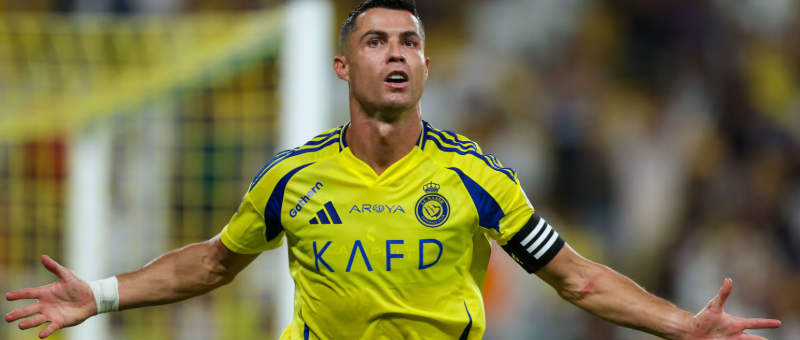
Cristiano Ronaldo is indisputably the most recognized Portuguese person in the world. Thanks to his abilities and performances in football, as well as the global brands he and his name have created, owning more than five companies, from clothing to hotel chains, he is an influential personality who makes an impact wherever he appears, whether on the pitch or at the White House, as he did last week. Since 2002, when he joined Sporting, he began stepping onto the world stage, carrying Portugal’s name to all corners of the globe. But can Ronaldo be considered a Portuguese ambassador, or is he a brand that can be bought and owned by others?
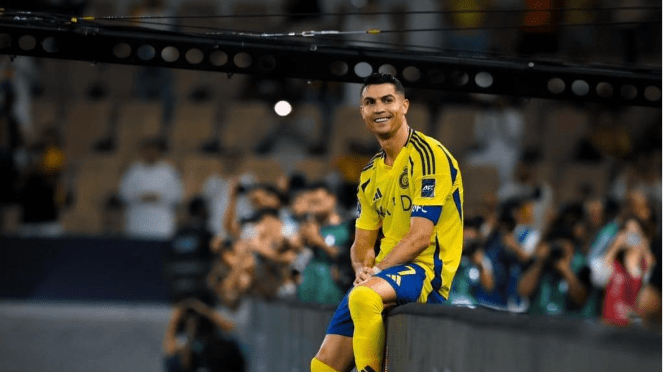
Ronaldo’s impact extends far beyond the football pitch, he has become an unofficial ambassador for Portugal, shaping how the world perceives the country. His success brought unprecedented visibility to Portuguese culture, language, and identity, often sparking global curiosity about his origins and upbringing. Tourism campaigns have leveraged his image, and Madeira, his birthplace, has experienced a noticeable increase in international visitors partly due to the global popularity he helped generate. This was evident in a study published in 2021 by the researchers in the Centre for the Study of Geography and Spatial Planning of the Faculty of Arts of the University of Coimbra (FLUC), the study emphasizes that Madeira Island “was consecutively elected” as “Best destination Island in Europe” between 2013 and 2021 (only with the exception of 2015) and, cumulatively, “Best Island Destination in the World” between 2015 and 2020. Adding that “the notoriety of Cristiano Ronaldo influences a whole chain of attitudes, reactions and personal and social behaviours with a positive impact on tourism in Madeira”. The study conclusion was that Ronaldo contribution was important for the island and that he should be used as a role model for other known Portuguese figures to promote their Portuguese home cities and regions. Even in moments of tragedy, Ronaldo image was spotted and helped to raise awareness to the cause. This is the example of “Martunis” an Indonesian boy that was found alone and malnourished in a beach in Indonesia, after the 2004 tsunami that hit Indonesian. The boy was spotted using a Portuguese jersey with the name Ronaldo in the back, the story gains immense media coverage and raise a lot of attention to Indonesia, even leading to CR7 to visit the country and becoming “godfather” of the little boy “Martunis”, sponsoring his studies and career.

However, in recent years, Ronaldo’s move to Al Nassr also placed him at the centre of Saudi Arabia’s ambitious global rebranding efforts. Beyond playing football, he has become one of the country’s most visible cultural promoters, appearing in campaigns that encourage tourism and international investment. While this is part of his contractual obligations as a global athlete, it inevitably raises questions about how far a personal brand can be integrated into the strategic interests of a nation. The scale of his salary and commercial responsibilities suggests that Saudi Arabia did not just sign an athlete, they acquired a symbolic asset capable of shifting global narratives. These suggestions came since Saudi Arabia has been attempting to reshape its global image amid international criticism of certain policies, such as restrictions on civil liberties, the treatment of dissidents, and human rights concerns frequently raised by global organizations. These issues have at times overshadowed the Kingdom’s efforts to present itself as a modern, forward-looking nation. Ronaldo’s visibility, charisma, and global following provide Saudi Arabia with a powerful cultural tool that can redirect attention toward tourism campaigns, entertainment initiatives, and economic reforms presented under Vision 2030. While Ronaldo himself is primarily fulfilling the professional and promotional obligations of his contract, his presence inevitably becomes part of a wider attempt to soften international criticism and project a more positive image.
Although, joining Al-Nassar in 2023, the past week Cristiano Ronaldo made headlines by visiting the White House alongside Saudi Arabia prince Mohammad bin Salman and his delegation. The visit aimed to formalize the trade deal between the U.S. and Saudi Arabia of 300 U.S. made tanks and the 1 trillion investment guarantees from the Saudi’s. Nevertheless, what was most reported from the meeting between the two countries was the dinner, that featured Cristiano Ronaldo as an ambassador of Saudi Arabia. Ronaldo’s presence blurs the line between being an ambassador by choice and being a figure whose image has been strategically “purchased” to serve broader political and economic objectives. In Portugal, a heated debate arises. For some Portuguese, like the President of the Regional Government of Madeira, Ronaldo´s trip brought pride to Madeira, since he represented the region and Portugal near the most powerful men of the free world. Nonetheless, some political commentators wrote and openly stated that the visit was an “embarrassment” for them as Portuguese people, with Elma Aveiro, Ronaldo’s sister, responding to the criticism from commentators like João Maria Jonet that said live in “SIC Notícias” that he was “shocked” with Ronaldo visit. Even Ricardo Araujo Pereira ironically commented on the situation, saying in his Sunday show: “What would D. Afonso Henriques, founder of Portugal, that fight the moors to gain independence, say seeing Portugal biggest personality in the white house representing Saudi Arabia, home of the founder of Islam”.
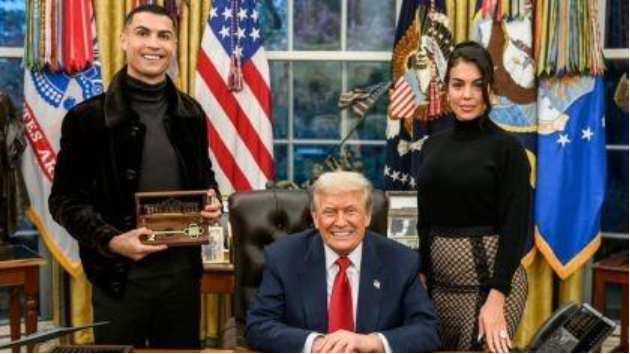
To conclude, Cristiano Ronaldo’s trajectory from global sports icon to a figure intertwined with Saudi Arabia’s political and economic ambitions illustrates the increasingly complex relationship between celebrity, national identity, and international power. His presence at events of geopolitical significance shows how his image now functions far beyond the boundaries of sport, becoming a tool capable of lending visibility and legitimacy to the agendas of states. This dual role has intensified debate within Portugal, where admiration for Ronaldo’s achievements coexists with discomfort over the symbolic weight his endorsements carry. Ultimately, Ronaldo’s case exposes the delicate line between personal success and political appropriation, raising broader questions about how much control public figures retain over their own narratives once they become global brands embedded in international strategies.
Sources :
- https://www.quora.com/How-many-brands-are-owned-by-Cristiano-Ronaldo
- https://www.theportugalnews.com/news/2021-11-03/reaping-the-rewards-of-the-ronaldo-effect/63325
- https://www.record.pt/jogo-da-vida/detalhe/martunis-o-menino-que-sobreviveu-ao-tsunami-de-2004-vai-casar-se-e-convidou-ronaldo
- https://www.bbc.com/news/articles/c993e74pxd7o
- https://www.bbc.com/sport/football/63805297
- https://abcnews.go.com/Politics/new-us-saudi-security-deal-raises-questions/story?id=127753446
- https://www.dnoticias.pt/2025/11/19/471021-e-um-orgulho-para-a-madeira-a-ida-de-ronaldo-a-casa-branca/
- https://www.noticiasaominuto.com/fama/2891678/katia-aveiro-defende-cristiano-ronaldo-apos-ida-a-casa-branca
- https://sic.pt/programas/isto-e-gozar-com-quem-trabalha/videos/2025-11-23-video-eu-acho-que-devia-ser-feriado.–encontro-de-cristiano-ronaldo-com-donald-trump-torna-se-num-momento-historico-para-portugal-2ed9f788

Guilherme Mendonça
Writer










 theawarenessnews.com