Market Democratization and a new wave of investors

Reading time: 6 minutes

Greater ease of access to information and technology created a new paradigm in the market that was further accentuated by the COVID-19 pandemic. The result has been a new balance of forces in the market, as seen in recent events. Whether this new paradigm will last, only time will tell… or the SEC.

Financial markets have long been associated with high-net-worth individuals and institutional investors. In fact, as of 2017, according to the National Bureau of Economic Research, the top 10% in the United States were in control of 84% of the total value of stocks, bonds, trusts and business equity. Much of this wealth is managed by institutional investors, such as hedge funds, commercial banks, or mutual funds – the so-called “smart money”. The dominance over the market by institutional investors meant that retail investors – individual investors often referred to as “dumb money”, due to the belief that these lacked the expertise, as well as the understanding of market forces – were undermined by hedge funds managers and investment banks for a long-time.

However, greater ease of access to information and technology created a new paradigm in the market that was further accentuated by the Covid pandemic. The result has been a new balance of forces in the market as seen in recent events. Whether this new paradigm will last, only time will tell…or the SEC.

The rise of retail investors

The coronavirus outbreak in the mid-quarter of 2020 triggered the growth of retail investors, which translated into a revolution in the stock market. With millions of people worldwide confined in their homes, their attention to the stock market increased, with more than 1 million new online brokerage accounts opened in the first three months of 2020. The new market participants were mainly young investors with little or no expertise who disregarded risks while pursuing new opportunities.

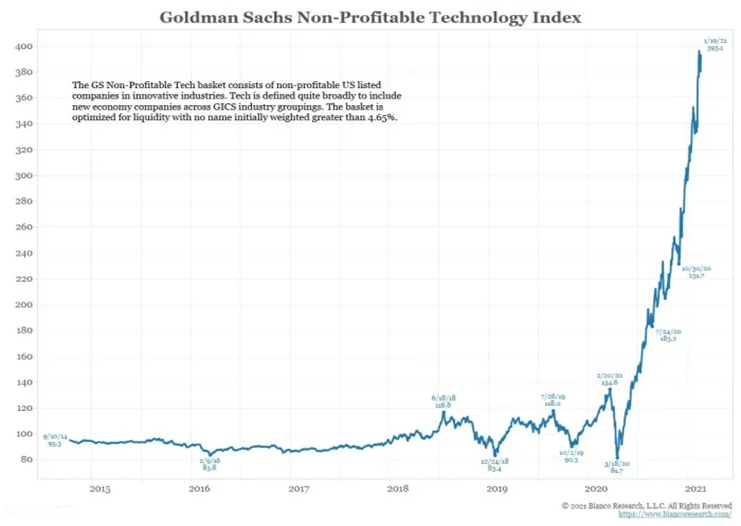
According to Deutsche Bank, “increased retail trading is ‘largely responsible’ for elevated stock prices and record-high options activity”, showing how these individual investors are driving the stock market. In addition, this increase in the number of call-options was mainly evident in small companies with low profitability. Retail investors are trading speculative stocks with low share prices, due to zero-commission investing apps and online brokerages. The New York Stock Exchange report demonstrated that, during several months in the Spring and Summer of 2020, more than 25% of the shares traded in the U.S. stock market were in companies with a share price below $5. To reinforce this tendency, Goldman Sachs, an investment bank, provided an index of non-profitable technology stocks, usually one of the main drivers of stock market valuations, which has raised nearly 400% since mid-March of 2020.

Source: Bloomberg

What lies behind that surge?

A global pandemic marked the year of 2020, as well as the stock market. While markets flopped and recovered in the first half of the year, retail investors sought an opportunity to try to take advantage of the circumstances to invest. The coronavirus pandemic led to an increase in retail investing. With the majority of people working remotely and having more free time to spare, many experimented the investment world. Nowadays, retail investors dispose not only of more financial information, but also of better investment education and trading tools. Furthermore, the $1200 COVID-19-relief check the US Government issued in April 2020 helped fund the trend, as shared by many redditors, users of the online social media platform Reddit where investors gathered in the R/WallStreetBets forum to discuss investments.

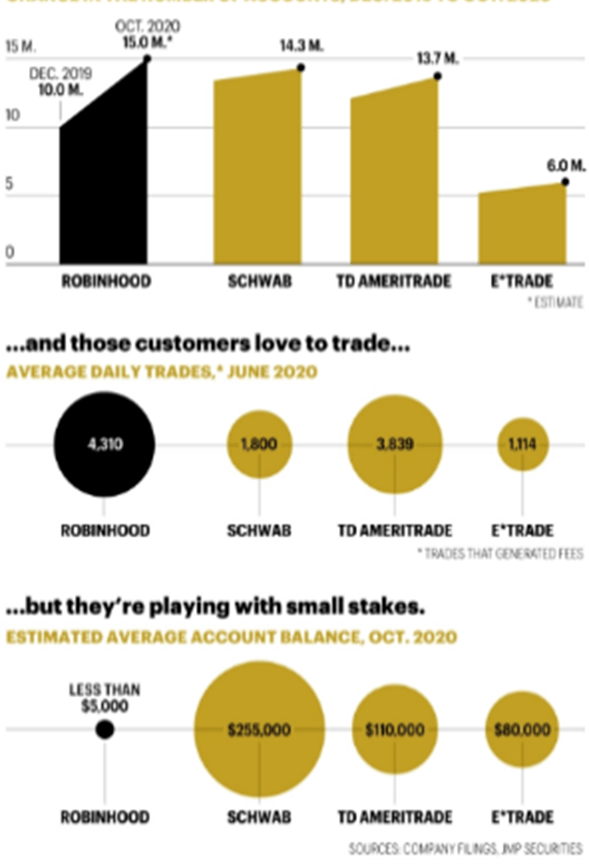
Another boosting factor that allowed the rapid growth of retail investment were online brokerages, enabled by the payment per order flow, which is the form of compensation for the firms charging zero-commissions to traders. These online intermediaries enabled investors to swiftly and easily sign up and try investing, this being far more accessible when compared to traditional intermediaries. At the end of 2019, most major online brokerages eliminated commissions for online stock trades. One example in which it is clear that this cut provoked a rise in retail investing is Robinhood. This investing app offers commission-free stocks, no minimum balance and permits the acquisition of fractional shares. From the beginning of 2020, Robinhood had reported 3 million new accounts, being half of them the first accounts of the investors.

The combination of these factors supports the idea of financial democratization that was accelerated in 2020 when millions of consumers where confined.

What does it mean for the stock market?

The impact of this increased predominance of retail investors is significant for all parties.

The first outcome would be the democratization of the markets in the sense that new trading platforms eliminate some barriers that restrict access to the market, namely commissions or capital requirements. As a result, financial gains from the stock market are more equally spread over the population. On the flip side, loss of capital is more harmful for retail investors, especially considering the frequency of bet-like investing behaviour among zero-commission trading apps through high leveraging and options that some do not fully understand.

This has been a major critic from hedge funds, which argue that the lack of expertise may affect basic market assumptions, such as the efficient allocation of resources, besides overinflating prices. For instance, despite the fact that retail investors provide liquidity when institutional investors pull back, that increased activity from herd behaviour creates volatility, which may ultimately affect the liquidity of that “hot” stock, as well as lead to panic selling. Therefore, retail investors end up underestimating their own market power.

For that reason, there have been calls for the SEC to implement more regulation on trading apps, and, consequently, on retail investors. The way these apps work is also under scrutiny, owing to the gambling experience they provide, by rewarding and incentivizing purchases rather than serving as simple intermediaries, which blurs the line between investment and entertainment.  

One way of reducing the negative aspects of a broader market access is through financial literacy. If the process is accompanied by proper education on financial markets, new investors will be equipped with the tools they need to make rational investments, instead of gambling on stocks. This would not only benefit them, but also institutional investors, by solving the most prevalent argument invoked by the latter.

How does GameStop fit into all this? GameStop was one of the “meme stocks” the new wave of investors, armed with new trading technologies and funded by savings and stimulus checks, laid their eyes on. The army of traders working together in a short squeeze exerted enough strength to force a bailout on a number of hedge funds betting against the company. Without going into detail on the structural problems of payment per order flow or the technical terms behind the short squeeze, the case of GameStop shows individual investors are a force to reckon with.

There is, however, one important aspect to consider. Retail investors have flooded the market before whenever barriers to the market decreased. The phenomenon first occurred in the 70s, through discount brokers, and then in the 90s, as a result of online trading. The newest trading platforms have eliminated almost all barriers. Consequently, trading volumes are now twice as much as in 2010, whether this trend will continue is contingent on action from regulators. The scandal over the brokerage app Robinhood will likely lead to action either from Congress or the SEC, which, in turn, may affect how these apps function and access to market.     


Sources: ABC News, Business Insider, Financial Times, Market Watch, Medium, Nasdaq, National Bureau of Economic Research, Statista, University of Chicago, Wall Street Journal

Tiago Rebelo

Raquel Novo

Fast Fashion: what we are not seeing

Reading time: 5 minutes

The term “fast fashion” refers to the highly profitable first world fashion industry grounded on the low-cost mass production of clothing, accessories and footwear in third world countries, which allows consumers to purchase new, trendy and readily available garments for the lowest prices. 

The word “fast” describes how quickly retailers can place new designs into the stores all around the world, keeping pace with the constant demand for more and different styles. Its origins date back to late 20th century as manufacturing became cheaper with the use of new materials like nylon and polyester. Many companies, such as Zara, H&M and Forever21, started building its business models on inexpensive labor industries in Asia, creating seasonal and trendy designs that easily pierced consumers all over the world due to its low prices. But what is the cost of this rapid turn-over of low-cost garments?  

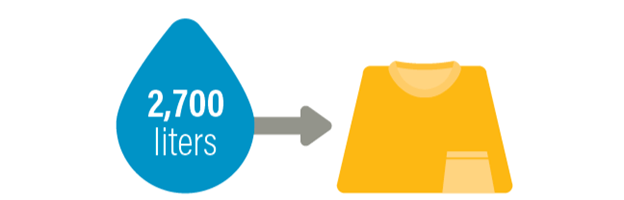
Primarily, we must focus on the significant environmental impacts of fast fashion. Approximately 80 billion piecesof new clothing are purchased every year, leading mass production of clothing to account for 8% of worldwide carbon emissions and placing the fashion industry in the top 5 of the most polluting industries in the world. Moreover, this industry is considered to be the second-largest consumer of the world’s water supply: according to a National Geographic study, each cotton shirt takes 2700 litters of water to be made, enough water to sustain one human being for three years.  

Water needed to do a shirt 

On top of that, fast fashion uses pesticides for dyeing and production, leading to a heavy pollution of waterways in many developing countries. This happens because whilst in developed countries governments ban most of these chemicals, in the poorer ones their dependency on the clothing industry does not allow them to do so, which leads us to the main damage made by this industry: its tremendous impact on the countries in which production takes place.  

Because most multinational fashion companies set their factories in countries with inadequate labor laws and little to no government control, working conditions are dehumanising and dangerous, as many people do not have the luxury to turn down any form of work and have no choice but to work under these conditions in order to survive. 

These conditions include a 14 to 16 hours of work per day, seven days a week while facing physical and verbal abuse from their supervisors and often locked in closed spaces filled with toxic substances and no ventilation. In many countries, minimum wages range from a half to a fifth of the living wage required for a family to meet its basic needs, leading textile workers to be some of the lowest-paid employees in the world. 

However, the main issue taken by the fast fashion industry into developing countries is child exploitation. The race between companies to find the ever-cheaper sources of labor, in order to achieve the common goal of maximising profits, has led them to neglect basic human rights and cope with some of the worst forms of child labor. This happens because many employers in these countries actually prefer employing children, as much of the supply chain requires low-skilled tasks and some are even better suited to children due to their small fingers, which do not damage the crop.   

Bangladesh, India, China, Thailand and Pakistan are some of the 51 countries that use child labor in the garment industry, in which millions of children are subject to long working hours, exposure to pesticides and often paid below the minimum wage, which we have already discussed is far from being enough for living a decent life with basic needs. According to the International Labour Organisation, there are around 170 million children aged between five and seventeen years old in child labor, almost 17% of the global population of children. Of these, half are working for fashion supply chains.  

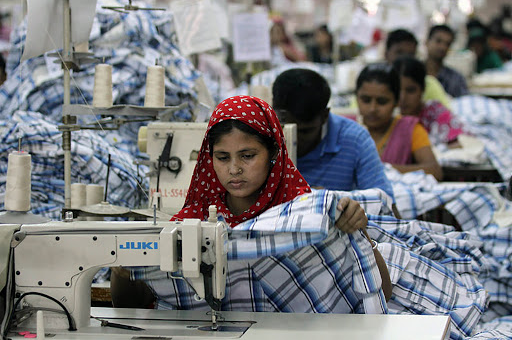
Children working on factories

But  as with most topics, there is another side to it. While the treatment and compensations of textile workers in developed countries is inhumane and a potential violation of basic human rights, there are positive effects that cannot be ignored. The choice between a life on the streets and a modest-paying job is a choice between life and death for many in developing countries. Not to mention children, without a certain commitment to a place to spend their time, tend to fall towards prostitution and drugs as a way to make ends meet. Despite all its flaws, the textile industry is, at the moment, one of the factors that plays a part in deterring the descent of the younger generation into an even worse life. 

In addition, this industry employs thousands of workers and, in an extreme scenario where people simply stop consuming, it will cause many who really needs this job, despite its atrocious conditions, to lose it and be in an even worse financial situation.  The lesser of two evils.  

Nevertheless, the fast fashion cycle isn’t limited to its production in developing countries; a piece of clothing can travel half the globe in its lifetime. Finished products are shipped and sold to Western nations – this is fast fashion’s first pipeline. In developed countries, damaged or unwanted pieces of clothing are donated to charitable organisations, which redistribute them to developing countries – this is the second pipeline.  

Therefore, the cycle of self-consuming fast fashion is perpetuated across the globe, incentivising poorer countries to keep producing clothing articles at extremely low costs, as the resulting influx of donated clothes from developed countries is a cheaper alternative to clothing than the establishment of a self-serving textile industry within the developing country.  

Let us take the African example: the continent once renowned for its fabrics and textiles, coveted by European explorers, has a dying clothing industry due to overwhelming donations from abroad. The image of an African child in a worn-down graphic tee or a Los Angeles Lakers jersey is all too common. Foreign imports of clothing intensified during the 1980s and 1990s when trade barriers were removed.  

Some East African nations, in an effort to reignite their textile industry, proposed a ban of clothing imports by 2019. This plan was swiftly rescinded due to pressures by developed countries such as the US, which stand to gain from fast fashion’s second pipeline – over 40,000 US jobs would be lost. It is important to take into account the negative effects of donating clothing towards developing countries, as they may be causing more harm than good.  

All in all, fast fashion is a contentious topic; there is no denying that our lives, as developed nations, have benefited from its fruits. Our easy clothing doesn’t come without its downfalls, however. Where do we draw the line? Many turn a blind eye to fast fashion’s vicious cycle – but we cannot keep ignoring it. Perhaps a more conscious choice of clothing is in order.  


Sources: The New York Times & The Guardian

Foto de perfil de Guilherme Barroca

Guilherme Barroca

Foto de perfil de Madalena Andrade

Madalena Andrade

Myanmar’s Coup d’État

Reading time: 6 minutes

On the morning of February 1st, 2021 several members of Myanmar’s ruling party, the National League for Democracy (NLD), were deposed by the military, which proclaimed a year-long state of emergency, and handed the power to the Commander-in-Chief of the Armed Forces, General Ming Aung Hlang. The military declared the November 2020 General Election invalid, claiming the vote was fraudulent. By February 2nd, 400 members of Parliament had been placed under house arrest, confined to their government housing complex, and guarded by soldiers.  

For some westerners, this coup d’état may have come as a surprise, but Myanmar’s high-ranking military officers have been threatening this for months. 

What led to the coup? 

On November 8th, 2020, Myanmar held General Elections that resulted in a landslide victory for NLD. The military and the Union Solidary and Development Party (USDP), which hold close ties, as many party officials are former military personnel, began making allegations of widespread voter fraud following their defeat. They even threatened to take decisive action if these matters were not properly addressed.  

All allegations were dismissed by the election commission, on January 27th General Min Aung Hlaing publicly announced he would not rule out the possibility of a coup d’état and the abolition of the constitution if the constitution would fail to be upheld.  

Then, on February 1st, one day before the scheduled swearing-in of the new government and members of parliament, the coup d’état was carried out. 

How was the coup carried out? 

The military placed various members of the NLD under house arrest, as well as other civilian officials, such as Ms. Aung Saan Suu Kyi and President U Win Myint. Furthermore, the military quickly gained control of the country’s infrastructure and telecommunication services, suspending television broadcasts, as well as telephone and internet coverage in most major cities. 

As soon as February 2nd, people started flooding the streets in protests against the military. Hospital staff, teachers, and government officials joined civil disobedience movements threatening to strike until the elected government was restored. The protests escalated daily, with information being shared through Twitter and Facebook, leading the military junta to shut down the internet. 

Protestors defying military orders in a mass stike
Source: BBC

By February 9th, the police were using crowd control tactics to disperse the masses, such as water cannons and rubber bullets to clear the streets. This day was also marked by the shooting of Mya Khaing, a 19-year-old protester, shot by police while seeking shelter from water cannons under a bus stop. The shooting was recorded by bystanders. She was declared brain dead on February 12th and was taken off life support on the 19th. Mya’s death sparked national outrage, which further fueled the protests. 

Mya Khaing (20) became the face of the protests after she was shot and killed by the police, while seeking shelter from a water cannon under a bus stop
Source: CNN

The military junta tried to deescalate the situation by promising to hold new elections as soon as the state of emergency is lifted. This promise failed to appease the masses, as they continued to flood the streets by the hundreds of thousands. This defiance of the military’s orders was confronted with an escalation of violence by the police and armed forces, who launched a brutal crackdown.  

As of March 20th, the international press reported that over 2100 people were arrested, including 29 journalists, and over 120 have been confirmed dead. The deadliest day was the 3rd of March when at least 38 people were killed during protests, with witnesses saying the police and the military were using live ammunition against unarmed crowds. On the evening of the 6th of March, NLD party official Khin Maung Latt was pronounced dead while in police custody, following his arrest by the military earlier that day. Official sources state he died of a heart, but family members quickly questioned the various bruises found around his head and neck, arguing their family member was beaten to death. 

The historic role of the military in Myanmar 

Following Myanmar’s (then called Burma) independence from Britain in 1948, a democratic system was instituted until the 1962 coup d’état orchestrated by General Ne Win, who ruled the country for 26 years. General Ne Win tried to implement a new ideology, which became known as “Burmese Socialism”, where Marxist views were influenced by Buddhism. 

General Ne Win was ousted in 1988 following a wave of protests against the dire economic situation Myanmar was facing in the 1980s. These protests resulted in 3000 deaths, and Ne Win was forced to resign, being replaced by another military junta, but maintaining an active presence behind the scenes. 

Myanmar’s military junta was officially dissolved in 2011, following the 2010 General Elections, which were widely dismissed as fraudulent by western nations. For a country that, at the time, was celebrating 63 years of independence, this marked the end of 49 years of military rule. However, the military continued to hold a substantial amount of power, as according to the constitution, it has the right of holding 25% of the seats in the House of Representatives, as well as in the House of Nationalities. Furthermore, the ministries of home, border affairs, and defense must be headed by a serving military officer. 

The role of Aung San Suu Kyi 

Ms. Aung San Suu Kyi, daughter of General Aung San, an instrumental figure in Burma’s independence from Britain and considered the “Father of modern-day Myanmar”, was under house arrest for a total of 15 years between 1989 and 2010, on charges of undermining the community peace and stability. 

Ms. Aung San Suu Kyi
Source: The Guardian

In 1991, as the leader of the NLD and under house arrest, she won the national elections but was restrained from assuming power by the military junta. Ms. Suu Kyi was an international symbol of peaceful resistance in the face of oppression and was therefore awarded the 1991 Nobel Peace Prize, while under house arrest. 

After her 2010 release, she contested and won the 2015 general elections, the first openly contested General Elections of the 21st century, by a large margin. As Ms. Suu Kyi was married to a foreign national and has children who have foreign nationalities, the constitution forbids her from becoming president, and she assumed the role of state counselor to President Win Myint. 

Her international image was tarnished by her defense of the military during the Rohingya Crisis, where Myanmar was accused of genocide by the International Court of Justice, for crimes against the Rohingya Muslim minority. 

This support of the military did not save her during the coup, as she was one of the first politicians detained by the military. She is once again under house arrest and faces obscure charges that could land her in prison for up to 6 years. She is accused of violating import restrictions, as six walkie-talkies were found in her villa compound, as well as contravening a natural disaster management law by interacting with a crowd during the Covid-19 pandemic. Ms. Suu Kyi has been denied legal representation during her trial, and this process is widely seen as a pretext to keep her under detention.

 It is not power that corrupts but fear. Fear of losing power corrupts those who wield it and fear of the scourge of power corrupts those who are subject to it

Aung San Suu Kyi, 1991

The upcoming weeks will be decisive for the prospect of democracy in Myanmar. If the military junta is able to maintain its firm grip on power, we could expect another chapter in the history of military oppression of political and individual freedoms in Myanmar. However, if the masses can resist and depose the increasingly violent military junta, this could be a major step in the development of their freedom, as it could lead to a clear separation of powers within Myanmar’s political system, paving the way towards democracy. 


Sources: Al-Jazeera, BBC, CNN, Nikkei Asia, Reuters, The New York Times

Francisco Pereira

Christian Weber

Afonso Monteiro

The Great Rebound | 1-Year Anniversary of Black Monday II

Reading time: 7 minutes

The beginning of March 2021 marks the first anniversary of the elevation of COVID-19 to the status of a pandemic. It has also been a year since the growing concerns about the economic consequences of the pandemic, coupled with the oil war, caused the collapse of worldwide stock exchanges. 

The stock market crash of 2020 began on March 9, when the Dow Jones Industrial Average (DJIA) registered its worst single-day point drop in history of 7.79%. This fall was followed by two further record-high plunges, first on March 12 (-9.99%) and then on March 16 (-12.93%). This alarming tumble ended the 11-year bull-market started in March of 2009, with the lowest point – a 33% fall from February-of-2020 highs – being reached on March 23. The DJIA has been recovering ever since, accumulating a 68% gain by March 17, 2021

Source: CNBC, Figure 1 – 10 biggest one-day point losses in DJIA history

Did the FED finally get the formula right?

Milton Friedman, the renowned Nobel-prize winning economist, published in 1963 what would be then remembered as a ground-breaking book regarding monetary policy: A Monetary History of the United States. In one of its most famous chapters, where the author focused solely on the Federal Reserve’s actions during the Great Depression, he pointed out several reasons to why the FED had not only perpetuated the crisis for more than a decade (after the famous 1929 crash), but also had helped worsen it. Three of the main reasons sustaining his arguments were the lack of liquidity it provided to the economy, enabling disastrous bank runs, the lack of forward guidance, a tool which informs investors about future interest rates policies, and the time they took to put their policies into practice. Consequently, the US faced deflationary and unemployment levels that, to this day, are still regarded as having acted as catalysts for the worst American crisis in history.

Source: Federal Reserve History, Figure 2 – Ben Bernanke speaks about the Great Depression

Ironic enough, it was under Bernanke’s term as Charmain that the second most devastating financial crisis (only less severe than the one initiated in 1929), in late 2007, took place. However, once again, and despite the reduction in the Federal Funds Rate from 5.25% to 0-0.25%, combined with similar forward guidance, the enormous QE, Open-Market-Operations Programs and even the controversial bailouts from the “Too Big to Fail” who had gotten into the subprime mess, the consequences drawn from the time taken to implement these policies are still regarded as a big mistake.

But how does this relate with the current economic downturn and the stock market?

Unlike the previous two major recessions, often described as man-made crises, the stock market collapses that followed were pretty much impossible to contain by any federal institution, as they were caused by investors realizing they held worthless assets from financial companies destined to bankruptcy. These collapses ended up damaging the ability of the economy to bounce back faster, as businesses saw their savings being erased from day to night, then lost the ability to fund their activities through capital raisings and, ultimately, closed doors.

However, this time, society was faced with a nature-made crisis. There was no systemic cancer under the economy. Despite generous stock valuations, the crash starting in March was mostly due to an exogenous shock leading to expectations of yearly negative economic growth. Therefore, the Fed made sure to leverage on that detail as much as possible, by trying to have the stock market at its side and prevent even worse economic outcomes.

By March 15, even before lockdowns started in the country, the Fed had already adopted the same expansionist monetary policies as in 2008 and, on March 23, made QE open-ended, a euphemism for “unlimited funding until needed”, ending there the stock market crash and its bearish trend. It has also been supporting loans to businesses with near-to-0% interest rates, giving rise to the so-called “zombie companies”. These are businesses that were in fragile conditions before the pandemic, but which were able to keep its activities, due to the bailouts. The percentage of these firms in the Russell 3000 as lately reached values close to the dot-com bubble.

Source: Financial Times, Figure 3 – The rise of ‘zombie’ companies

These measures, alongside supporting fiscal policies coming from the government, have been creating a liquidity phenomenon characterized by a shift from fixed income to equities, due to the unattractive yields being carried by investment-grade securities. It has been growing the investors’ appetite for growth and speculative stocks, with valuations as a whole being totally disconnected from the economic reality.

The rise of retail investors and sector performance during the pandemic

Source: Fortune, Figure 4 – The rise of retail traders

There has been considerable surge of day trading since the onset of the pandemic. With many people stuck at home and extra income brought by the Relief Package Deals, there has naturally been an increased curiosity in trying to make money from the stock market.

In the first quarter of 2020, day trading increased dramatically when compared to 2019. TD Ameritrade, one of the online brokers that provides access to such activities, reported that visits to its website giving instructions on trading stocks have nearly quadrupled since January 2020. JPMorgan estimates that the brokerage industry added more than 10 million new accounts during 2020, mainly on commissions-free brokerages.

Some of these new retail investors are induced by the gains other people have made on certain stocks. They follow short-term speculative plays, attracted by the promise of big gains, which do not turn to be the case most  times. The main focus of these new investors were mega-cap growth stocks, especially tech-related. These were among the big winners, alongside industries such as online retailers, cryptocurrencies, housing and solar. On the losers’ side, one can find travel and leisure, oil and gas, banks, and manufacturing.

Stock Market vs Economy: related, but not related

While the past year has seen a great economic downturn, the evolution of the stock market since the crash seems to contradict this pattern, as aforementioned.

With the current economic situation failing to keep up with valuations, there are reasons to believe the stock market is highly overvalued, leaving investors in the fear they may be facing a dangerous speculative bubble that might burst at any moment. History has shown that tables may turn at any moment and this likelihood is increasing with volatility in investors’ confidence and uncertainty regarding the effectiveness of the vaccines.

Source: Bloomberg, Figure 5 – Buffett Indicator

Overall, it is true that most of the times the stock market and the economy do not fluctuate in tandem and there is evidence that they have been negatively correlated (-0.04 correlation over the past 10 years). 

Source: US Bureau of Economic Analysis, Figure 6 – Stock Market Performance vs Economy

All things considered, stock market fluctuations may be due to various reasons external to economic performance, the most prominent one being the unpredictable behavior of investors, whose confidence and moods change drastically from one moment to another, many times for no apparent reason or tied to either unrealistic optimism or subconscious fear of the future performance of the market. 

What does the future hold?

The inability for investors to predict an upcoming crash was still very much present during last year’s rally, with many unable to comprehend how such a big economic downturn could coexist with such a strong bull market. Nonetheless, these past weeks may have brought to light some of the stock market’s weaknesses, by showcasing how fragile it is to inflationary expectations. It seems that the lack of action coming from the Fed to contain inflation at targeted levels and real yields at positive ground have triggered a sell-off from US treasuries and an upward movement in long-term yields. However, with risk-free rates increasing and becoming more attractive, highly-speculative and growth stocks have also been suffering from the new discount factors in play, and from massive corrections leading up to a rotation to bonds and value plays.

It is still unknown whether these events can trigger a potential crash or only minor corrections, but, once these become coupled with possible bad earnings seasons or any slips coming from the vaccines rollouts, you might want to hold on to your cash, stand back, and enjoy the show.


Sources: Bloomberg, CNBC, CNN, Corporate Finance Institute, Federal Reserve History, National Bureau of Economic Research, The Balance, Visual Capitalist.


Francisco Nunes

Diogo Almeida

Inês Lindoso

The Spanish Flu and Covid-19: Parallel Crisis?

Reading time: 6 minutes

The world in 1918 was completely different from what it was a few years before. Four years of the most devastating war ever seen up until then destroyed not only millions of lives, but also countries, cities, economies, and even beliefs and faiths. Decades of liberal optimism, faith in progress, and economic development came to a sudden stop.

There was hardly a worse time for a pandemic to devastate the world. The Spanish flu was provoked by an influenza A virus known as H1N1. Its origin is from an animal virus, with which human immune systems were not capable of fighting. The first reported cases were in the United States in February 1918, among soldiers training for deployment in Europe. The name “Spanish” comes from the fact that the Spanish press was able to cover the disease since the country was neutral in WWI.

The data about the pandemic is elusive and the estimates may be somewhat vague. Nonetheless, there are some established facts. No region of the world was left untouched by the pandemic. The estimates of total deaths vary from less than 20 to 100 million. The lowest estimation points to the death of around 1% of the world’s population at the time, and some say a third of the world population may have been infected. It affected particularly young and healthy adults, from 20 to 40 years of age. This pandemic was the last time there was a decline in population worldwide. The reasons for such mortality are easy to point: global movements of troops and standing armies in the first waves, the medical science was not ready to face the virus, healthcare was precarious even in rich countries, populations were generally poor, and governments were not able to impose lockdowns or treat adequately most people.

This brief enumeration shows how much the world changed for the better in only 100 years. Our article will build from it and show how the Spanish flu impacted the world of 1918 both in economic and socio-cultural terms. At the same time, we will compare those changes to what our world in 2021 is experiencing due to the covid-19 pandemic. Can History tell us something about what we will live as soon as the pandemic ends?

Economic impacts

Gauging the economic effects of the Spanish flu is not an easy endeavor. On one hand, the proximity of WWI makes it complicated to separate the economic effects of the pandemic from those caused by the war. In addition, economic information was not as thoroughly recorded in those times as it is nowadays, making analysis even harder.

The available macroeconomic data was sufficient to create a statistical model that separates the pandemic-related impacts from the war-related ones. One study concluded, through a regression analysis, that, on average, the Spanish Flu was estimated to have reduced real GDP per capita by 6.2 percent. Although this number was not as high as the expected 8.4 percent decline resulting from World War I, it still represents a considerable decline.

Many workers in the secondary sector remained unaffected by the flu

Likewise, concerning asset prices, the same study concludes that, on average, for a death rate of 2.1 percent due to the virus, the real stock returns would be lower by 28 percentage points, these stocks being based on broad market indexes. Similarly, short-term government bills (analogous to today’s US Treasury Bills) on average, for a death rate of 2.1 percent due to the virus decreased by 14 percentage points. This decrease can be seen partly as a decline in the “safe” expected real interest rate, as people’s expectations on economic performance were surely affected by the climate of uncertainty surrounding the pandemic.

It might be tempting to establish a connection between the current Covid-19 pandemic and the Spanish Flu, as both pandemics have severely disrupted society.  However, the way western economies are structured today is vastly different from those of the past: in 1918, less than half of the population worked in the services industry, whereas today more than three-quarters work in this sector. As such, western economies 100 years ago were not as dependent on customer traffic, meaning that they could absorb better a decrease in the confidence of the general populace.

Another significant difference, for western countries at least, is that global supply chains were nowhere near as prevalent as they are today, resulting in countries in the past being able to deal with supply shortages more easily, as they would become a regional issue, rather than a global one. Lastly, businesses are more highly leveraged today than they were 100 years ago. This higher debt combined with the economic shock of covid-19 will likely cause a higher blow to the current economy in comparison to 1918.

The fact is that despite the pandemic having negative implications for the economies, the following decade was one of unprecedented economic growth, particularly in the United States. For the Weimar Republic and the other defeated countries, not so much. Although it is early to affirm this with certainty, when comparing the Spanish Flu with our current pandemic, likely the economic impacts of the latter will be more significant than the former. We are not sure about the future growth of our economy. However, we have to control the restart of the economy and society in order to contain any possible risks that may lead to another “Great Depression” as in the 1920s.

Newspaper carriers wearing surgical masks to protect themselves from the Spanish Flu.

Social Impacts

There is no doubt that a pandemic has a tremendous effect in social dynamics as well as in the economy. A study made by Bocconi University Research states that the Spanish Flu caused a permanent impact on individual behaviour relative to social trust. Social trust is the confidence and reliability that we perceive in others as honest individuals. Immigrants in the USA who lived through Influenza show much less levels of trust, and this was passed on to the next generation. Such attitudes may have come from the lack of efficiency of healthcare institutions. Weakening the social trust of individuals also has important consequences on economic activity.

A man disinfects the top of a bus. London, 1920.

With respect to the ongoing Coronavirus pandemic, thanks to advancements in public healthcare, this reaction is attenuated. Furthermore, although still early to draw any definite conclusions, a panel study developed in Sweden shows a considerable increase in social trust with the implementation of lockdown measures. There is also a big emphasis on the importance of political trust, since it may relate to the actual compliance with the law and with the policies made by the government. As this pandemic continues to unfold, it will be crucial to analyze if this specific crisis will add to or alter the conclusions of most scientific work.

Another curious aspect to explore is the post-pandemic behaviour that happened in the 1920s and may occur also after the covid-19 pandemic. After WWI and the pandemic, the world (and particularly the United States) entered the Roaring 20’s. People celebrated their newfound freedom from violence and disease and were willing to spend more than what they were used to, to compensate for the time lost. Many social conventions, particularly regarding women were shaken. Art and Entertainment also blossomed during this period, with many new developments.

Soldiers from the US Expeditionary Force who contracted the flu in an Army Hospital. France, 1918.

Nowadays many hope for the same thing to happen after the current pandemic ends. Many believe a new Roaring 20ss awaits us. According to Yale Professor and social epidemiologist Nicholas Christakis, in his book Appolo’s Arrow: The Profound and Enduring Impact of Corona Virus on the Way We Live, once an health crisis comes to an end there is often a period where people look extensively for new social interactions.

We cannot predict what will happen after covid-19 ends, but the study of the spanish flu gives us some clues about what can happen to our economy, society and personal lives.


Sources: Bloomberg; Bocconi University Research; Centers for Disease Control and Prevention; CNBC; Diário de Notícias; HISTORY; Jornal de Negócios; National Bureau of Economic Research; National Geographic; NPR; Our World in Data; Political Studies Review; Público; Sociedade Portuguesa de Medicina Interna; Times of India; VOX

André Rodrigues

Rui Ramalhão

Benedita Elias

Italy’s New Hope: Mario Draghi

Reading time: 7 minutes

On the 2nd of June of 1946, following Mussolini’s fascist regime, Italy finally became a democracy. Since then, 67 governments and 30 Prime Ministers (PM) rose to power, some more than once, in only 75 years, hinting at the instability of Italian politics.  

This past January, the country was confronted with yet another political hardship. Italia Viva’s leader Matteo Renzi disagreed with the government’s allocation of over 200 billion euros of EU funds, intended to tackle the country’s crises. Renzi wanted the funds to be spent in new infrastructure projects, while former PM Giuseppe Conte was planning on appointing a panel of experts to direct the allocation. In response, Renzi withdrew two ministers from Conte’s government, making him lose majority in Parliament. Unable to form a government, Conte resigned. Hence, President Sergio Mattarella decided to appoint a technocrat, Mario Draghi, to form government, as calling for early elections would not be advised during a pandemic. 

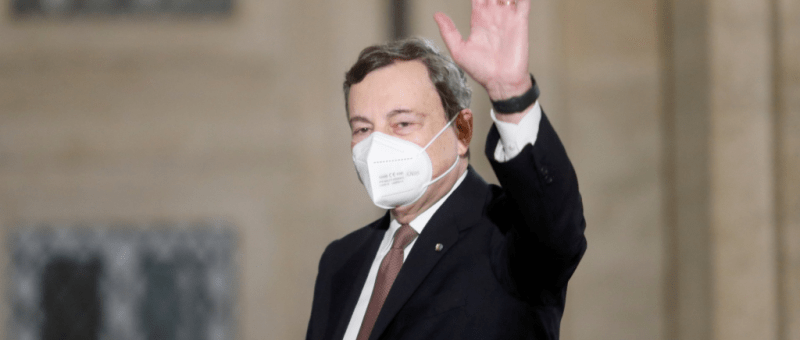
Source: Reuters, Mario Draghi leaving after a meeting with Italian President Sergio Mattarella at the Quirinale Palace, in Rome, this February 

What awaits Mario Draghi?  

I. CORONAVIRUS  

Draghi is confronted with an Italy in deep economic recession amidst a global pandemic. The country was the first in Europe to impose a nation-wide lockdown last March and during the second surge, in the Fall, Italy reached almost 100 thousand virus-related deaths. Falling behind its vaccination program, blaming delivery delays, and having a national pandemic plan that has not been updated since 2006, Italy urgently needs a structural reform. 

Draghi’s main objective is to accelerate the national vaccination program. He stated that his «main duty […] is to fight the pandemic with all means and safeguard the lives of our fellow citizens». For this purpose, he intends to mobilize the armed forces, civilian volunteers, and civil protection units. As such, the civil protection agency’s chief and Italy’s COVID-19 commissioner were already fired. The latter was substituted by an army logistics expert. Additionally, the PM hopes to enact reforms on the health sector such as strengthening local hospitals and community health services.  

How to survive coronavirus: Italy shows the world
Source: Unicef, a pedestrian in Piazza Del Duomo, a place normally crowded with many visitors. 

II. ECONOMY 

Italy is living its worst recession since World War II, with 10,6% real GDP growth rate in 2020, one of the lowest in the euro zoneThe unemployment rate is around 9,84% and expected to rise after a possible lift in employment dismissals ban. Although it has been decreasing recently, youth unemployment marginally increased to 30,9% in 2020. Several EU Member States worry about the country’s public debt, 4th largest in the world, estimated to rise to almost 160% of 2021’s GDP. Italys economic issues are structural: real GDP per capita has barely grown in the last two decades; the labor force shows low productivity and fails to integrate young workers; the business environment is unattractive and uncompetitive, owing to the red tape, legal and tax systems affecting corporations. 

The root of Italy’s most recent political crisis, the allocation of 200 billion euros in EU funds  will be Draghi’s challenge. The EU program, NextGenerationEU, is heavily directed towards the digitalization of the economy, the ecological transition, R&D, and healthcare. The PM stated he would follow the previous government’s proposal, assuring that it would be strengthened with more details «in the coming weeks». 

Mario Draghi has major economics functions in his curriculum. A graduate from “La Sapienza” University in Rome, he received his PhD from MIT, where he was mentored by renowned economists such as Solow and Modigliani. He was Director General of the Italian Treasury and, in 2006, became Governor of the Bank of Italy, until being nominated President of the European Central Bank (ECB), in 2011.  

Draghi’s background led him to the forefront of European monetary policy regulation until 2019, carrying the weight of the 2008 financial crisis and following sovereign debt crisis. On the 26th of July 2012, as ECB President, Draghi proclaimed three words that defined the turning point in the crisis, reclaiming investors’ trust: “Whatever it takes”, implying that the Euro would sustain any backlash regardless the cost.  Now, he assumes responsibility over a highly fragile Italian economy.  

POLITICS 

I. Asking a technocrat for help… for the fourth time 

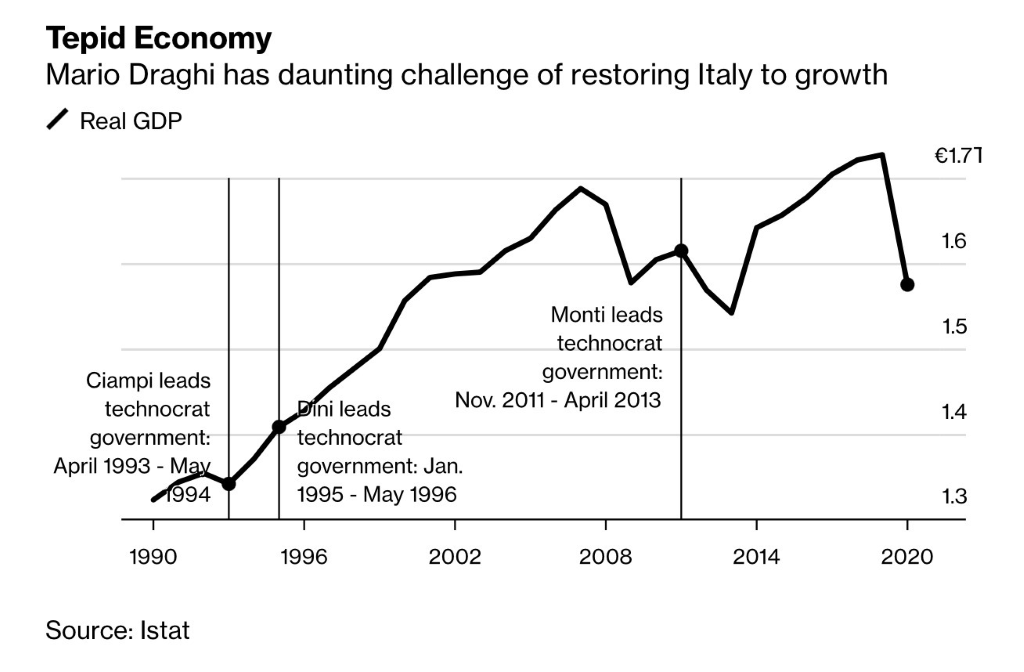
Draghi is the fourth technocrat in three decades invited to lead. In Italy, citizens elect Parliament representatives, body composed by the Chamber of Deputies and the Senate. The creation of a government occurs when the new chambers take office and elect their Presidents. It is albeit often difficult to form a government because parties do not always obtain a majority, obliging the leading forces to negotiate. These resulting coalitions have often been ephemeral. It is in times of crisis and when elections are too risky, such as in January, that Italy’s President may appoint an expert. 

Although many share Renzi’s belief that “[Draghi] saved Europe, he will save Italy”, past experiences with technocrats have not always been positive. The first was formal central banker Azeglio Ciampi (1993-1994) amidst a recession and following a large political corruption scandal. Shortly after was the International Monetary Fund’s executive director, Lamberto Dini (1995-1996). Finally, in 2011 and due to political failures, former European commissioner Mario Monti was appointed. His policies included pension reforms and strong austerity measures, which did not resonate with the electorate. Although the economy did somewhat improve, his elections campaign was not good enough to save him and his coalition, coming in fourth place in the following elections.  

Source: Istat, Real GDP over time, according to each technocratic government 

Almost all major figures and parties support Draghi’s government, which includes both experts and professional politicians. Overall, many consider resorting to technocratic governments temporary solutions which forget underlying problems such as corruption, leading to constant political instability. Additionally, some consider such governments to be anti-democratic, as they include figures which have not been chosen through representative democracy. According to an EU survey in 2019, 82% of Italians claim they “tend not to trust” their politicians, a sentiment which has materialized into increased support for the anti-establishment 5-star movement.  

II. More than a technocrat  

Mario Draghi is not any technocrat. Having been ECB’s President, he is known for his negotiation and rhetoric skills. His appointment comes at a time when Europe is facing difficult administrative challenges. According to The Economist’s Ben Hall, he «gives the French leader a partner in Rome who is a powerful and credible advocate of closer European integration just at the time when Germany prepares for a change in leadership». 

Draghi’s global respect is one of the main differences from his technocratic predecessors. Being largely credited for saving Europe during the sovereign debt crisis, not only does he intend to save Italy from this crisis, but to introduce structural and social measures. 

III. Bigger dreams 

In fact, the new PM’s aspirations for Italy are not limited to solving the economic and health crises. He plans on instating several structural reforms, for instance in the legal system, education, and public administration, as well as adjusting Italy’s tax system. While addressing Italy’s Senate, he stressed the importance of closing salary gaps and strengthening the welfare system, with the intent increasing the number of women in the labor force. Lastly, he paid special attention to Italy’s younger generation, stating that a vast number of talented people led the country to seek more prosperous futures over the last 20 years, which can be achieved by improving training and career prospects nationally.  

With an existing history of technocratic governments failing to resolve important structural issues, some might feel skeptical regarding Draghi’s success probabilities, defending that a career politician might be more suited for the position of PM. Nevertheless, his career path has demonstrated strong political, negotiation, and rhetorical skills, bringing hope to a country in need of deep reform in many fronts. Will Mario Draghi’s appointment bring real change, or is history just repeating itself? 


Sources  

AP News, Barrons, Bloomberg, CNBC, DW, Economist, Euractiv, European Central Bank, European Comission, Eurotopics, Expresso, Financial Times, Guardian, Jacobin, NBC News, Político Europe, Reuters, SIC Notícias, Statista, The Local, U.S. News 


Ana Terenas

Maria Mendes

Hugo Canau


Four Golden Rules to Achieve Lasting Economic Growth

Reading time: 7 minutes

Economic growth is verified once in a while in virtually every country across the globe. As a matter of fact, economic growth as it is is almost as unavoidable as an economic recession at least in a point in time. What is truly hard to achieve is lasting economic growth, as it demands some features which seldom coexist in a country. In this article, four of them are analyzed, in an attempt to shed a light on why some economies thrive, while others seem doomed to failure.

Economic diversification

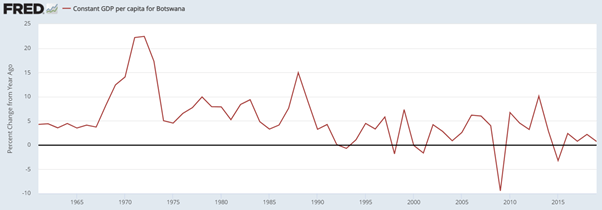
When Botswana grew at an average rate of 13% per year during the 1970s and 1980s, soon after conquering independence from the United Kingdom, people thought they were in face of the ultimate economic miracle (Graph 1). Economic expansion in the Southeast African country just seemed unstoppable. This period coincided, however, with a world high in the price of diamonds, which the Botswanan economy heavily relied on (diamonds account for about 60% of government revenue). When prices fell in the 1990s, they were not able to sustain the remarkable expansion they had registered until then.

Graph 1 – Constant GDP per capita annual growth for Botswana (1960-2019)
Source: Federal Reserve Economic Data

In turn, other countries such as Angola and Venezuela, have shown a great dependence from oil prices to improve their general living standards, facing deep recessions whenever there was a trough in this market.  

Graph 2 – Constant GDP per capita annual growth for Venezuela (1980-2014) and Angola (1980-2020) vs. annual growth of Brent Crude (1990-2020)
Source: Federal Reserve Economic Data

As a matter of fact, these countries have other structural problems, which will be explored throughout the article, but it is undeniable that the lack of economic diversification exposes them to large fluctuations in commodities’ prices.  

On the other hand, if we look at a set of developed countries which are also world leaders in oil reserves, such as the United States, Canada or Norway, one can understand that they are much more insulated from the evolution of commodities’ prices (Graph 3). Even though one can spot a significant correlation between the growth rate of these countries’ GDP and the trough in oil prices in 2008 and 2009, for instance, this does not imply causality, as this was also the time of the great financial crisis. Furthermore, all these countries were able to grow steadily, for example, in the beginning of the century, when the oil price was everything but favorable. This must mean they have other sources of growth, as opposed to countries like Venezuela or Angola. When an economy is not diversified, people are subject to wider income variations, leading to social unrest and, therefore, to greater difficulty in implementing the so-needed structural reforms.

Graph 3 – Constant GDP per capita annual growth for the United States, Canada and Norway (1960-2019) vs. annual growth of Brent Crude (1990-2020)
Source: Federal Reserve Economic Data

These conclusions allow us to hereby distinguish Group 1 (Botswana, Venezuela, Angola) from Group 2 (United States, Canada, Norway) countries.

Productivity expansion

Beyond resource endowment dependence, Group 1 countries exhibit stagnant productivity levels. Despite widely discussed among economists, the true nature of the term productivity is fairly unclear to the common reader.

Taught in virtually every business school, Robert Solow (1987 Economics Nobel Prize) came up with a model which allows one to better understand the concept. Put simply, he argued that a country’s GDP could increase via mere labor (workers) and capital (machines) accumulation. Nonetheless, he sustained that long-term economic growth could only be achieved as long as the output each worker or machine produced increased as well – that corresponds to a productivity improvement. Otherwise, growth would not be sustainable in the long run, as inputs depreciate, meaning they lose value (e.g.: the likelihood of a machine needing to be fixed increases with its useful life). Productivity is, therefore, a measure of efficiency of production, which, when high, can lead to greater profits for businesses and income for individuals. Conversely, when low, a country cannot aim at achieving lasting growth.

Comparing Group 1-alike countries (this time, focusing temporarily on Ecuador and Nigeria, due to the lack of data for Angola and Botswana) with Group 2 countries, one can clearly observe that growth in labor productivity is once more very dissimilar (Graph 4). This difference is also embodied in the remarkable dissimilarity in absolute productivity levels, but that fact directly departures from different growth rates. In fact, in the 1970s, absolute levels were not that different – a great divergence only arose when Group 2 nations consistently outperformed Group 1 countries.

Graph 4 – Productivity per hour worked in the United States, Canada, Norway, Venezuela, Ecuador and Nigeria (1970-2017)
Source: Our World in Data

Incipient productivity growth is, therefore, one of the reasons why some countries do not thrive, but it is also a direct consequence of another flaw – lack of openness to trade.

Openness to trade

The benefits of free trade go back to David Ricardo. He defended that it allowed countries to specialize and increase their productivity, translating into a higher national welfare. More specifically, trade made it possible for countries to access goods which otherwise would not be reachable and sell products whose production they were relatively more productive in (concept of comparative advantage). The greatest advantage from international trade is, nevertheless, the exposure of national firms to greater competition, forcing them to constantly improve production processes, which has a direct positive impact on productivity.

When comparing Group 1 with Group 2 countries, one can, once again, identify quite decisive differences between them in this regard. This time, however, Botswana is spotted half-way through to Group 2 countries. The African country exports mainly beef and diamonds and, although the products it sells abroad are not particularly diverse, it does not seem eager to avoid foreign, more efficient firms to access domestic markets. The same cannot be said regarding Venezuela or Angola, where barriers to trade are enormous. Speaking about Venezuela, oil exports have been steadily decreasing since the highs of 2014. Also, the fact that the country has the world’s largest oil reserves makes gasoline shortage today a bit ironic. On the other hand, Group 2 countries have historically been great supporters of international trade, allowing firms to access cheaper raw materials and to find new markets. Consequently, this set of countries proves it is possible to be blessed with natural resources, while still having organized societies and developed industrial and service sectors. All in all, embracing world trade is highly correlated with long-term economic growth. In reality, the great economic boom after World War II was mainly pushed by an increase in the relative importance of exports in the global scenery, as shown by Graph 5.      

Graph 5 – Value of exported goods as a share of GDP
Source: Our World in Data

Inclusive institutions

Despite being needed to achieve economic diversification, productivity growth and greater openness to trade, structural reforms are only possible to implement as long as national institutions support them. This is a major problem in Group 1 countries, especially in Venezuela and Angola. Indeed, there is a notorious lack of democratic institutions in these countries, which are also characterized by high corruption levels.

As a matter of fact, in the 2019 Corruption Perceptions Index, which ranks countries in terms of corruption from 0 (very corrupt) to 100 (very clean), they registered very low values, while the United States, Canada and Norway scored relatively higher values (Graph 6). Botswana is in the middle. It is, therefore, of no coincidence that Botswana is the best-performing country among Group 1 countries.

Graph 6 – Institutions’ inclusiveness as measured by corruption and economic freedom
Data sources: The Heritage Foundation, Transparency International

Overall, corruption results in lower levels of capital productivity. As corrupt government favor private interests, it often gets stuck in a state of inefficiency (no incentives to control costs), led by wasteful rent-seeking (manipulate economic conditions to generate profit) and distorted public decision-making. The side-payments involved and hidden within each transaction create an unstable amount of uncertainty, which not only serves as an incentive not to engage in economic exchanges and disincentivizes investment, but promotes of these corrupt transactions. Moreover, the misaligned incentives result in an inefficient allocation of resources.

Another dimension in which institutions can be evaluated is through the 2020 Economic Freedom Index, where results are similar to those regarding corruption (Graph 6). In this regard, empirical data support the fact that liberalization induces growth, despite significant gaps in the levels of productivity and economic freedom index between groups of countries. So, the patterns verified across these countries are once more consistent with the existing data.

This reaffirms the importance of inclusive institutions – a term coined by Acemoglu and Robinson in Why Nations Fail – where property rights are respected, justice is effective and government spending is wise and clean-fingered. Only institutions providing the right incentives to individuals and businesses can bring continuous prosperity.

Heading towards lasting economic growth

Sustainable prosperity directly relies on economic diversification, productivity expansion and international trade. However, these three golden rules demand a fourth – inclusive institutions. This explains why some people get very rich and other struggle to accumulate some wealth across the globe. As long as institutional flaws persist, so will economic stagnation. This is perhaps the most important problem developing countries face nowadays.


Sources: Federal Reserve Economic Data, JSTOR, Our World in Data, ResearchGate, Statista, The Heritage Foundation, The Independent

Scientific revision: Patrícia Cruz

Gonçalo Silva

Mariana Soares

Nuno Sampayo

Rodolfo Carrasquinho

The Collapse of the Portuguese Empire – The War

The Portuguese colonization of Africa in its contemporary form, dates from the second half of the 19th century, with the Conference of Berlin (1884-85) being a pivotal moment. The colonization of the African territories was marked from its inception by violence against the local populations, including military operations in Angola and Mozambique (the so-called “campanhas de pacificação”) that lasted well into the 20th century.

Ever since the Monarchy, colonization was a vital part of the self-image of the country and its elites. The rising nationalism, common to all sides of the political spectrum, often stressed the historical mission of the empire. The First Republic substituted the Monarchy after the revolution of 1910, but Republicanism was also nationalist, and consequently drawn special attention to the African Empire. Maintaining the colonies was one of the reasons for Portugal to intervene in WWI.

The Republic fell in 1926 to a military coup d’état and was replaced by a Military Dictatorship, which evolved, in 1933, to a different form of dictatorial rule – the Estado Novo, under the leadership of António Oliveira de Salazar, until 1968. The Estado Novo was a conservative, catholic, anti-liberal (socially and economically), anti-communist and anti-parliamentarian regime. There is disagreement among historians as to whether the concept of “fascism” accurately describes the regime. The lack of mass political participation and involvement from the population signifies that this regime was not sustained on a popular movement, a characteristic that largely contributed to the success of fascism in Germany and Italy. Furthermore, after the end of WWII, Salazar relaxed some characteristics of his regime that resembled more extreme ones, in order to maintain his governance.

Salazar supported a colonial Portuguese rule, often referring to the Portuguese empire as an extension of Portugal (“Portugal goes from Minho to Timor”, as the regime propaganda stated). This implied a unitary territory despite the geographical distance and a union between the people that inhabited those lands. This notion of a unitary nation that the regime maintained is important in understanding why the government harshly handled any type of dissent.

The craving for independence in the territories under rule from the European powers reached its highest point in the aftermath of WWII. Local nationalist movements grew, and independence was given or conquered, first in Asia and then in Africa, where most countries became independent in the 1960s. The Portuguese colonies were similar in that the independentism grew in those decades, aided by a growing native elite that was educated in Europe and exposed to these new ideas, as well as contacted with the opposition to the dictatorship.

The first armed conflict was the annexation of the Indian colonies. The British left India in 1947, granting independence to India and Pakistan. Until 1954, the French would peacefully hand over their colonies to the Republic of India. The only remaining European power present in the region was Portugal, with the control of three cities – Goa, Daman, and Diu. After years of failure of political decisions (the idea of a referendum in the Portuguese territories was vetoed by some figures of the regime, and negotiations with India failed) and violent border clashes, Nehru opted for a military annexation in December 1961. The Portuguese troops were urged to fight until death, but the Governor-General decided to surrender instead, due to the lack of weapons and men to repel the better equipped and larger Indian army. The occupation had a large moral blow on the rest of Portugal. The regime would not recognize the former Portuguese territories as part of India until its fall in the democratic revolution of 1974. The events in India showed the regime would not drop the idea that the colonies were an integral part of Portugal and prelude the armed reaction in Africa.

The war came to the African colonies in the beginning of the 1960s. Nationalism and independentism grew in popularity as more and more countries became independent in the continent. Even the UN formally recognized the right to auto-determination of colonies in 1960. At the same time, the Cold War would  influence these events. As the Portuguese regime became more and more isolated on the international stage, the two superpowers (USA and USSR) aligned themselves with the resistance movements. These movements were formed in the 1950s in Guinea and Angola, while the Mozambican ones were formed at the beginning of the 1960s. The USSR gave support to PAIGC (Guinea-Bissau and Cape Verde), MPLA (Angola), and FRELIMO (Mozambique), while the USA supported FNLA and UNITA (Angola). There were competing ideologies in the independence struggles. As with most conflicts around the world in the second half of the last century, the Cold War provided a decisive background. The superpowers’ involvement was also clear in the civil wars that occurred after independence.

It is beyond the reach of this article to provide detailed information on the military side of the war, which was a particularly bitter and violent conflict. This article seeks to understand how the war was a decisive aspect in the fall of the Estado Novo. It caused a lot of structural problems to the regime and to the Portuguese society. Its consequences were political and ideological, but also material, economic and human.

The war contributed to the international isolation of the regime and brought to the surface many tensions within it. In the 1960s, signals of opposition became clearer, even though Salazar managed to maintain its grip on power. In 1961 there was a failed military coup d’état to depose Salazar and over the years the opposition to the regime grew mostly due to opposition to the war. At the same time, the war presented an enormous economic cost to the nation, imposing major expenditures to the state and limiting the economic growth in the 1960s, which was crucial for a country that was trailing behind the economic and social development of its European counterparts. Furthermore, the human costs were also massive counting more than 8,000 deaths and thousands of psychologically and physically wounded, in the Portuguese Empire.

The regime was further disturbed by Salazar’s declining health which led to his substitution by Marcello Caetano, in 1968. An expectation of social reforms and liberalization of the regime was created. Indeed, as soon as he became President of the Council (equivalent to the current position of Prime-Minister), he had a series of initiatives to increase the communication with the people, to positively influence public perception of the regime and to create a feeling of proximity. However, censorship, repression, and political suppression remained. In that sense, the so-called Marcellist Spring failed.

The regime faced an ongoing crescendo of social tensions in the university students’ community and within the ranks of the military. The political opposition was more organized and vocal in its protests. The great protests by university students after 1968 were in large part motivated by hostility to the war. Even more dangerous to the government, between 1969 and 1974, in the ranks of the military, desertions, protests, and insubordination became common. This unrest showed the atmosphere of opposition against the war that led to the creation of the Armed Forces Movement and, eventually, the overthrow of the government.

Regarding the war and its potential resolution, Marcello Caetano was stuck between a rock and a hard place. On one hand, he firmly believed that ending the war abruptly was the wrong decision as he dreaded the idea of having the pro-independence factions taking control of the colonies. Even if he wanted to transition away from the war by negotiating with the pro-independence factions, he would likely not have the support of Américo Thomaz (the President of the Republic) and other figures of the regime,  risking the loss of his power. On the other hand, Marcello Caetano seemed to know that the tensions brought about by the war were a powder keg waiting to explode. And so accordingly, they did, on April 25th, 1974.

Documentary Suggestion: “A Guerra”

Sources: Arquivos RTP; Diário de Notícias; Sábado; Judith E. Walsh, A Brief History of India, Lambert Mascarenhas, Goa’s Freedom Movement; Luís Pedro Melo de Carvalho, O Movimento dos Capitães, o MFA e o 25 de Abril: do Marcelismo à Queda do Estado Novo; Pamela Peres Cabreira, Contra o Estado Novo: manifestações e organizações em Portugal no período marcelista (1968-1974); Encyclopedia Britannica; Wikipedia

Rui Ramalhão

Afonso S. Botelho
João S. Castro

João Baptista

João Oliveira

Telecommunications: The next big step for Africa

Team’s note

Dear reader,
The article you’re about to read is the product of a challenge the teams Development Economics and Technology made to each other: to create a relevant article about submarine telecommunication cables. Curious about how can these cables possibly relate to Development Economics? Keep reading!

Every day, we hear about new technologic innovations and digital products and services made to boost our economy and make our lives much easier. This quick access to any sort of information at just a tap of a finger has been considered the new normal. But how is it evolving in developing countries on the African Continent?

Contrary to what you would think, Africa has been evolving quite rapidly in terms of telecommunication infrastructures. Did you know that, in 2019, the number of cell phones per 100 habitants in Botswana was 174? This comes from the fact that cell phones are way cheaper and easier to use than personal computers, for example, making the implementation of the internet in Africa mostly instigated by this.  

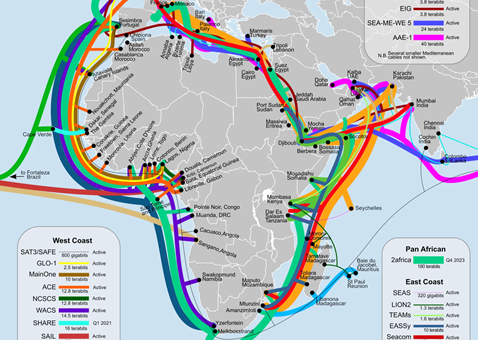
One of the key players in enabling Africa to connect countries both inside and outside the continent are the submarine telecommunication cables. With its establishment in some key regions alongside the coast of Africa, such as South Africa and Nigeria, this continent was exposed to a new era of globalization. The purpose of the cables is to transmit telecommunication signals across seas and oceans in order to connect continents and provide easier access to data/internet. As a result, it launched a digital economic expansion and overcame many communication boundaries.

Unfortunately, the truth is that more than 60% of the African population does not have yet access to the Internet and its perks, and there are still many difficulties regarding the adaptation to this new reality that needs to be solved.

Considering these facts, how can this connectivity benefit Africa? And what are the main challenges of it?

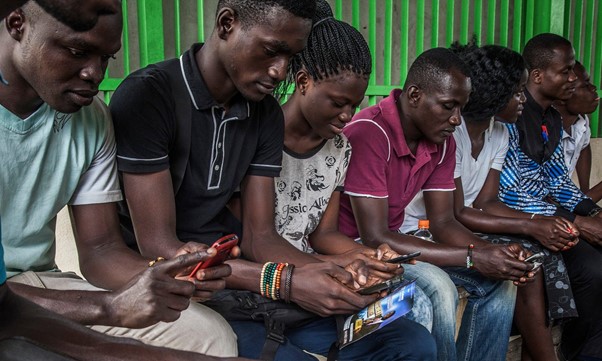
Travellers consult their mobile phones in Abidjan, Ivory Coast

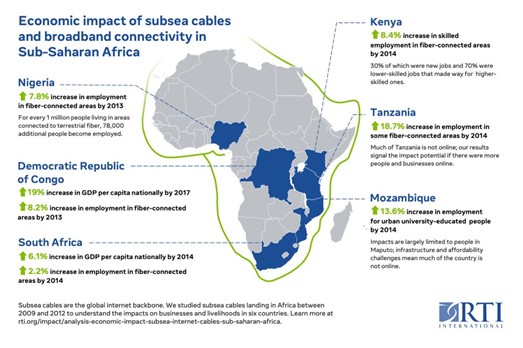
Until 2009, only three submarine cables provided the whole African continent with internet. Besides, only one of them was located in the South, meaning that the population in Sub-Saharan Africa was limited to a single outdated cable in order to access the internet. Due to this lack of infrastructure, it was hard to broadcast data within the african continent and between continents. Fortunately, over the past decade, many more cables were installed across thirty-seven countries. Just this improvement led to a great change in Africa’s connectivity. In the regions that are online, we are already able to see the economic impact that these new infrastructures can trigger. For instance, a study from a partnership between RTI (an american nonprofit research institute) and Facebook states that in Kenya there was an increase in employment and job quality in fibre-connected areas, characterized by the creation of new jobs and the replacement of low-skilled jobs for more skilled ones (more specifically, an 8.4% increase in skilled employment). Other outcomes include the increase in foreign investment, governance quality and in the national GDP for many countries.

And yet, almost half of the countries with the capability of having a direct submarine cable connection are only connected to one or two, despite being able to withhold more. Such dependence on a few number of sources made these regions vulnerable to consistent internet outages and slow-downs. For example, it is common for these cables to become disabled by several incidents in particular cuts caused by maritime activities and natural disasters. In June of 2017, an anchor of a container ship damaged the only submarine cable that was connected to Somalia. The Internet outage transpired for more than 3 weeks, causing chaos across the country and economic losses around $10 million per day. Alternatively, digital outages may also come from cable breaks provoked by natural landslides i.e. seaquakes. These incidents tend to be more of a risk to East and Central African regions and are usually more costly to repair as it takes a longer time to reverse the damage.

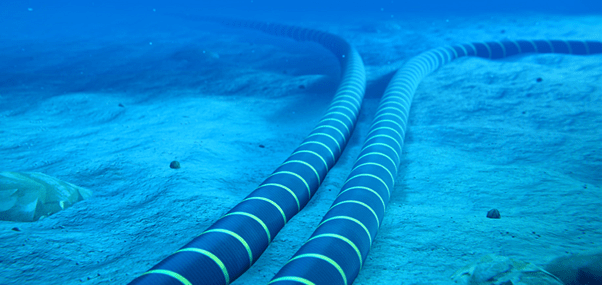
Submarine cable

Furthermore, African countries also face another big challenge regarding connectivity isolation. The introduction of submarine cables in Africa only reached a small portion of its population, mainly people who lived in urban coastal regions and belonged to an educated and upper class. In contrast, most Sub-Saharan African countries are characterised by vast landlocked territories scarce in infrastructures and a predominant rural population. Although there is a need for terrestrial infrastructure, it seems to be less effective because not only is it more expensive, but also quite complex given the need to cross several borders. In addition, non coastal areas who are digitally isolated are more prone to suffer network outages and take more time to recover, incurring high economic costs. As a result, the deployment of these submarine cables contributed to a digital divide.

Evidently, the problem surrounding rural connectivity will not be solved through traditional solutions, and so some companies like Google and Facebook offered innovative ideas to tackle this issue. In Kenya, Google, through a sister company called Loon, partnered up with Telekom Kenya (Public-private telecommunications entity) and came up with a project that consisted in distributing helium filled balloons above 20km from sea level around the country’s most inaccessible regions. These balloons are powered by a solar panel and have an antenna which provides internet signals within a 5000sq km reach. Moreover, Facebook tried another approach through the usage of drones and satellites and is still to this day studying alongside Airbus various ways of high-altitude internet supply.

Other great examples of landlocked areas’ effort to overcome these boundaries are Botswana and Rwanda. Botswana’s government, alongside with 11 private companies, created a program named “Fibre to Home” with the purpose of offering boundless bandwidth for internet connection in homes. Besides, Rwanda has been partnering up with KT Rwanda Networks and GSMA in order to develop new infrastructure to increase mobile deployment in the country. As a result, between 2014 and 2016, the individual access to the internet increased from 10.6% to 20%.

As we can see, Africa has been on the eye of many private companies willing to invest and solve the problems that this continent is now facing regarding the development of telecommunications. The most ambitious project coming up is 2Africa. Facebook is working with african and global telecommunication operators to create a 37,000km long subsea cable that will connect 23 countries, spanning from Africa to Europe and the Middle East. The joint network capacity that it will offer is three times more than the one that currently exists in Africa. Despite it being expected to improve the continent’s economy and provide a more stable connectivity, it’s difficult to make more accurate predictions since the impact of Covid-19 on the African economy is yet to be analyzed, and it could greatly affect the outcomes of this new project.

Nonetheless, we must not forget that effective and precise regulation needs to be formulated to ensure an open and competitive environment. Without this, cartel agreements and monopolies may appear and thus benefit from an excessive market power and the ability to overprice services and goods. This may deeply affect the growth of the telecom sector. Additionally, we also need to consider the high digital illiteracy across the continent. As a way to combat this problem, ITU and Norway have combined forces to provide training for 14,000 Ghanaians in order to better and strengthen their digital skills, allowing them to undertake jobs in the future that work with this technology and make the most of the internet.

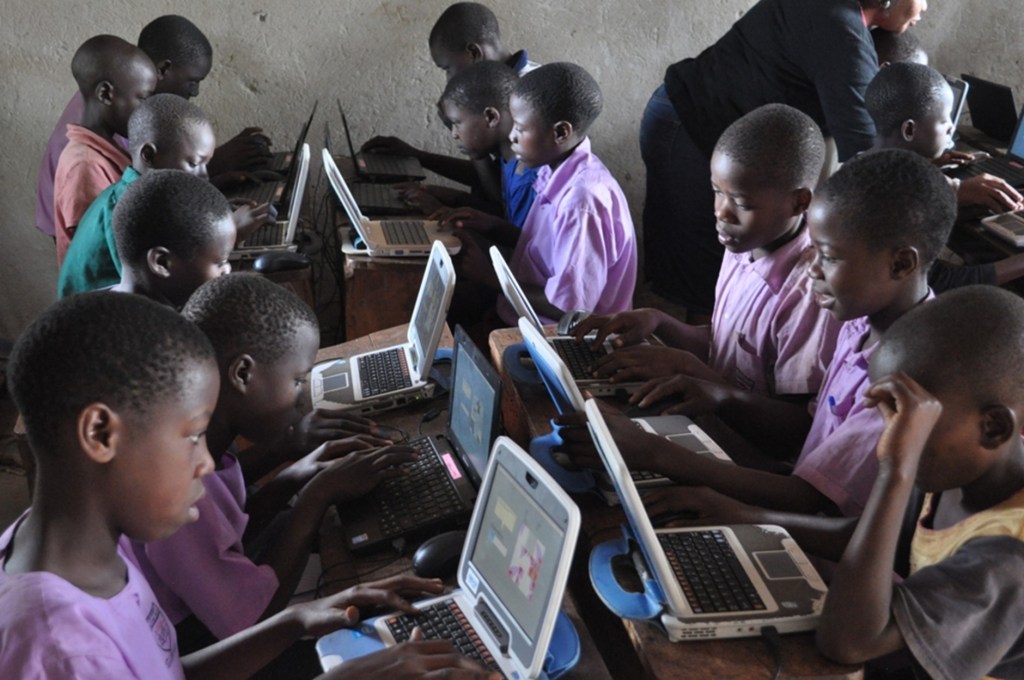
Students of Kibiribiri Church of Uganda Primary school during a Computer Training Meetup at their school

The Covid-19 pandemic has greatly affected our economies, and Africa is no exception. Still, it did not slow down foreign investment nor did it diminish international interests in this continent. In fact, it is anticipated that Africa will grow more than ever after this crisis comes to an end. Investments in fintech, a digitalized way of providing financial services, is among the most important matters that countries and companies are willing to develop.

All in all, Africa still has a long way to go. It will be through the combined efforts of both public and private investment that Africa will overcome the many prevalent challenges and reach its full potential. This way, we believe that the development of telecommunications in this continent will grow exponentially in the upcoming years. The future is bright.

Team’s note

Dear reader,
Having reached the end of the article, we hope you found it insightful and interesting to read. We kindly remind you that this article is the product of a partnership where both the Development Economics and Technology teams challenged each other to write a relevant article on the same topic – submarine telecommunication cables. Don’t forget to check out their article as well. Until then, stay tuned, stay aware.

Benedita Elias

Telecommunications’ Forgotten Link

Deep under the ocean lies a wide reaching entity spanning over a million kilometers, with the power to influence and shape our very own society. This mysterious object is known to attract sharks’ voracious appetite, yet it is not an animal of any kind. It’s not Cthulhu[1], it’s fiber optic submarine cables. And believe it or not, these structures are the foundations of the telecommunication systems that we are so reliant on. But why and who place cables at the bottom of the ocean?

For this month’s article, the teams behind Development Economics and Technology, Health and Environment have challenged each other to bring their own spin on cables running through the ocean’s floor.


From the telegraph to the internet

The concept behind wired communications isn’t properly new. Curiously enough, neither is the idea of running them by the ocean floor to connect regions far part. In fact, the first Transatlantic cable was installed all the way back in the 1850s. This venture – an attempt to shorten communications between the UK and its American allies from a week’s long process to a single day – would take the form of a telegraph line. Composed by just seven innocuous copper wires, it lasted all of three weeks before it broke. Nevertheless, it laid the groundwork for the communication’s architecture of the future.

Fast-forwarding to today there’s a 1.2 million kilometers long fiber-optic submarine cable infrastructure connecting the world together. Whereas the first cables were dingy and incapable of sustaining a slightly higher voltage, these optical fibres are protected by several layers of plastic and metals, shielding them fromthe hazardous threats of the environment (at least non-shark related threats). They weigh over 1.4 tones per kilometer and come to about 10 cm in diameter.

It’s fair to say that a lot of resources go into these cables, and one cannot help but wonder how they are made or even how they monetized.


Picture 1.png

The answer should be intuitive for both: in one, the telecoms footing the bill split the bandwidth – the rate at which data is transferred – between themselves. With this allocated bandwidth, they provide communications services (such as loading up this webpage) to their respective markets.

As for laying the down cables, it is mostly a matter of preparation and work. Firstly, the installers must evaluate the ocean floor path they wish to install the cables on, something done through different scanning methods, which is both arduous and expensive. After choosing the desired path, a special type of cargo ship, such as the one in figure, must be employed to lay the cables underneath the ocean floor, in order to prevent their breakage.

Be it due to the need of each of these companies to operate several of these vessels in order to lay down these cables, or the fact that they are expensive to make on their own, it’s fair to call it a capital-intensive industry. New players are inhibited by the steep entry barriers, even taking into account that these cables have a relatively short lifespan – each should last about 25 years – and don’t seem to keep up with the demand of our increasingly tech-hungry societies. Competition is nevertheless fierce for a relatively limited number of contracts.

But who are these companies: are they privately or publicly owned? Currently, the submarine fibre optic cablesare owned by private companies with a stake in communications. This also includes companies such as Fujitsu, Alcatel, Huawei and so on. However, they often receive funding for these ventures and cooperateclosely with public entities – after all, communications are essential to any functional nation-state, even beyond consumer markets.

But here’s a question that you might have asked yourself already: Why not satellites? Couldn’t this essential service be assured by satellites, whilst also ensuring a wider reach? After all, satellites are all over the place and next-generation connectivity tends to take wireless form; be it my earbuds or even charging my phone.

For starters, there is latency. Fiber optic has lower latency times, meaning that the travel time for the internet signals to their destination and back are shorter. It might not appear to be that relevant – unless you play videogames – but even a difference as small as 20 milliseconds can severely disrupt your internet activity. Second, wired connections have larger bandwidths, which as mentioned before, are the aggregate maximum capacity of an internet connection. This is especially true when taking into account larger scales: whilst our beloved cables operate at a capacity measured in the terabits per second (1012), satellites only provide around the gigabit per second (109) region. From 5G to autonomous cars, the main driver for these technologies are the submarine cables.


Big tech and the scramble for the African market


Locations of the world’s data centers

Locations of the world’s data centers

Underwater sea cables are not only a better solution when compared to satellites, but are also good investments for companies that have to think big. Whereas in the past the main investors were telecoms, the new wave of investors across Europe and America are big tech. But what about Africa, does it apply to that continent as well?  The answer is yes.

Companies like Google and Facebook, among others, have made considerable investments in Africa since it represents a market with highly unexploited potential. Moreover, network traffic in this continent has increased sharply, in addition to demand for the Internet, therefore making it both viable and vital.

Cloud computing is also on the rise. As companies migrate their IT infrastructure to the cloud, big tech companies who already provide the bulk of cloud computing and services start building more data centers. They consume a lot more bandwidth.

Therefore, gaining a stake in fiber optic cable is an opportunity for both vertical and horizontal integration. Google is already providing phone plans across the world. But as with any continent and country, Africa comes with a number of challenges. For starters, it is limited in the number of English speakers as well as levels ofliteracy; the bulk of the internet is made up of English-language websites, effectively making the contentsinaccessible for most. Reliable access to power, in addition to economic barriers, are very preponderant as well. Nevertheless, the implementation of communication technology is of extreme importance in mitigating the gap between developed and in-development countries, as well as empowering their populations.

In Africa, there are still many countries without any cable connection. The countries with the highest number of subsea cables landing stations are Egypt with 15 and South Africa and Djibouti with 11 cables each.


The number of connections between Africa and the world. The number of connections between Africa and the world.

The predicted investments in Africa will imply a greater need for data centers. At the moment, these are located in South Africa and Nigeria. This location corresponds more or less with the countries where there are more cable landing stations – in other words, countries with more and better infrastructures. Either because they have a bigger need for services, or because they are more stable, those are the places where companies will want to put their new data centers in.

Picture 1.png

Partly because the country with the largest number of data centers in Africa still has 20 times less centers than in Europe, Africa could become the next big battleground for companies vying for a stake in the world stage.


Picture 1.png

[1] “(…) fictional cosmic entity created by writer H. P. Lovecraft and first introduced in the short story “The Call of Cthulhu” (…) Lovecraft depicts it as a gigantic entity worshipped by cultists, in shape like an octopus, a dragon, and a caricature of human form.” (Wikipedia)

André Rodrigues André Rodrigues Daniel André Daniel André Laura Osório Laura Osório