Is there hidden inflation in a sea of deflation?

Economists around the world are rightfully concerned about inflation trends. Headline inflation does not tell the full story, though.

Extraordinary times, unconventional measures, doubtful results

With the recent economic woes caused by the pandemic, governments and central banks have been called for an unprecedented role of support to the economy, so as to limit the damage it has ravaged. Central banks, in particular, have come up with enormous economic stimulus packages, only comparable to the ones used following the Great Recession of 2008. One of the objectives of these institutions is price stability, normally measured with inflation – a quantitative measure of the rate at which the average price level of a basket of selected goods and services, primarily of interest to consumers, in an economy increases over some period of time –, which has seen great disruption.

At the moment, however, in the Euro Area, countries are experiencing deflation, the opposite of inflation, that is, a decrease in the price level. This is often seen as a bad indicator for the economy, as deflation could cause consumers and firms to delay consumption and investment decisions, so as to buy the same goods and services at a cheaper price in the future, which can lead to increased unemployment and, therefore, to an even greater reduction of consumption, pushing production and unemployment down even further. Thus, it is of no surprise that it is also seen as a sign that wages are not increasing or even worse, decreasing. Because if salaries are stagnant or diminishing this will negatively affect the consumers demand for goods, which could sometimes help to explain part of said deflation. This is the reason why central banks target an inflation rate around 2-3%, neither too high nor too low.

In order to combat this low inflation and bring liquidity to financial markets, so as to allow firms to more easily find credit to finance their day-to-day operations and their short-term cash flow strains, the European Central Bank (ECB) has embarked on a massive stimulus program.

Nonetheless, the purpose of this article is to assess whether or not the reported headline deflation, measured by the Consumer Price Index (CPI), seen in the indicators is not perhaps “hiding” inflation of substantially important goods for consumers and, therefore, turning  the well-intended actions of the ECB and other Central Banks to bring inflation up in order to help households, ending up hurting them.


Hidden inflation?

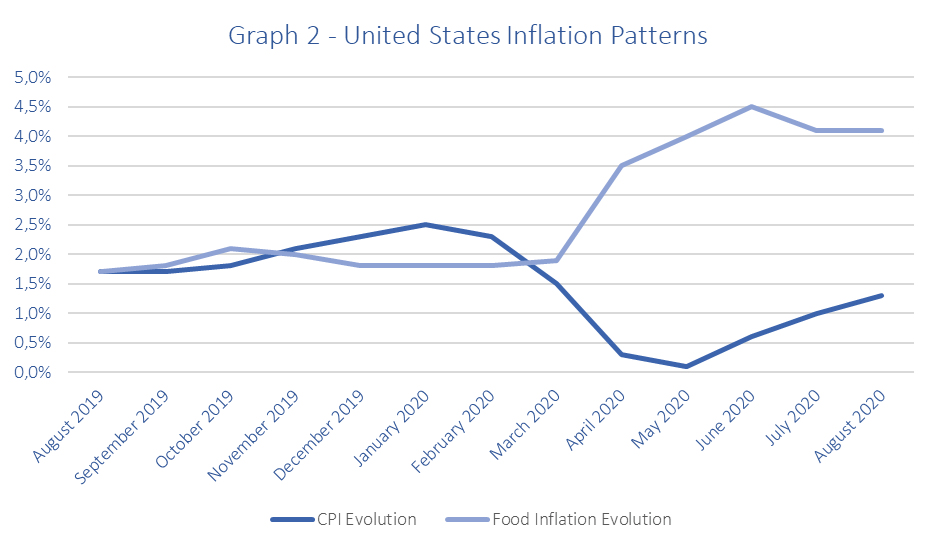
One of such “hidden” inflation phenomena can be seen primarily in the price evolution of food products, as seen in the graphs below.

Source: Trading Economics
Source: Trading Economics

Source: Trading Economics

Source: Trading Economics

 As it can be observed, food products inflation in the US has not always been above CPI inflation throughout the past year, but there was a large spike of the former, right when COVID-19 started spreading around the world and lockdowns began being enforced, which ground to a halt almost all economic activity.

Whilst CPI inflation decelerated, food inflation experienced the opposite. Focusing on the Euro Area in particular, even though there were some differences (in the Netherlands and Germany, the CPI has actually grown since March), in most countries, the correlation between CPI and food inflation was considerably negative, reinforcing the notion that the two evolved oppositely. Consequently, it would seem plausible that central banks could be emphasizing too much the low rates of inflation as measured by the CPI, but ignoring the increase in prices for food products, which are considered essential goods and represent a significant amount of an average household’s disposable income. So, central banks could be hurting households whilst trying to help them. And there is a valid argument to be made here, as in times of crises people tend to buy more food products as a proportion of their income and low-income families have a greater percentage of their income being spent on these products.


Breaking down inflation

Nevertheless, before making any hastily conclusions, we should first acknowledge that there are sectoral differences in inflation, meaning that different sectors in the economy tend to experience different inflation levels. For example, in terms of inflation, goods can be divided into non-tradable goods and tradable ones. The former group includes goods that can only be consumed in the economy in which they are produced in or that are not able to be exported or imported and, thus, face less exposure to international markets and price fluctuations. The latter group encompasses goods that are free to be traded between countries and are, thus, more susceptible to international price fluctuations. In the case of non-tradable goods, their prices can be greatly influenced by increases in productivity in the tradable sector, because such improvements will lead to higher wages. Also, as the intrinsically less globalized sector is more dependent on labour, it will result in higher prices of the produced goods.

However, one only ought to go to the nearest supermarket and check the origins of products on the stalls to realize the food sector is most likely a tradable goods sector, as much of the food we consume is imported from elsewhere, meaning it is exposed to international shocks, such as the one we are currently experiencing. But it is a special subsector, in the sense that, in developed countries, it enjoys a certain degree of isolation from the outside world, due to the higher health and safety requirements of these countries. Moreover, it is traditionally a sector that experiences higher inflation, because of the above-mentioned characteristic, but also due to an increase in living conditions in emerging countries, which are causing increases in demand, not fully matched by increases in the supply side. Besides this, the costs of storing, transporting and distributing have also risen and, in some cases, climate change has played a role in affecting the supply side (example: recurring droughts in California, that increase the costs of irrigation and loss of crops for farmers, largely as a result of the increased activity of the El Niño effect).


The effect of the pandemic on food prices

All this goes to show that inflation is traditionally higher in food products, but the levels that have been observed this year have been particularly high. This is majorly the result of the stress the pandemic has put on supply chains. As countries went into lockdowns, very little production was happening and trade between countries sharply decreased as well. As a matter of fact, in Europe, for instance, many nations closed their borders during March and April, which increased the costs and time of transporting goods between countries, resulting in an over-supply of some goods in some countries, which were destined to foreign markets, and in a shortage of other goods. Adding to this strain on supply chains, there is also the observed behaviour of consumers increasing sharply their spending on food products during crises, as they fear supply chains may be at risk or that prices might increase rapidly. However, this is almost a self-fulfilling prophecy, because, by increasing demand so dramatically in such a short period of time, consumers can make a “secure” supply chain of food, suddenly becoming overwhelmed due to the supply side not being able to meet such levels as rapidly.
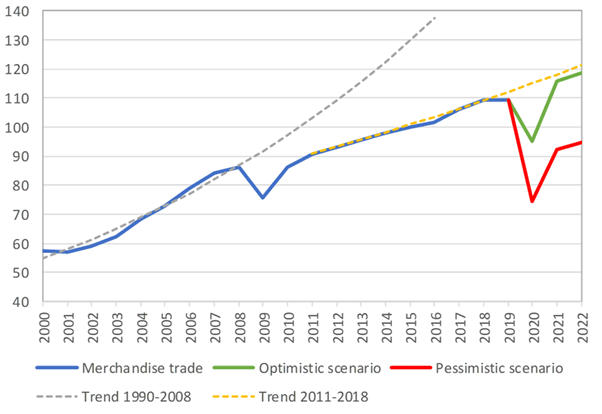
Graph 3 – International trade has been suffering a severe hit in 2020     Source: World Trade Organization

Graph 3 – International trade has been suffering a severe hit in 2020 

Source: World Trade Organization

Besides the stress on the supply chain, farmers also have to deal with another problem resulting from the pandemic – the low availability of workers for harvesting crops –, either due to travel restrictions, little possibility of meeting the safety requirements or by people simply not feeling comfortable enough to work. This last occurrence has been especially problematic in the American and German meat industries, as slaughterhouses have had major out-breaks of COVID-19, which have caused prolonged and recurring shutdowns, contributing to even greater prices of meat comparing to other food categories, something notably concerning, as it is a very important part of average consumer diet.


A final verdict

In conclusion, is there “hidden” inflation? Yes, there is, mainly in the products which are of most importance for consumers, which are also having to deal with higher unemployment and decreases in income. So, it is reasonable to ask if central banks are not perhaps too focused on overall inflation levels to be able to notice an already high inflation level that greatly affects families, which might be causing an inadequacy of stimulus programs to revamp inflation, in terms of improving people’s situation. Even so, as we have seen, it is mainly a matter of problems of the supply side in meeting demand, something that should be smoothed out in the coming months as producers tackle the problems of the new working environments and consumers realize that supply chains are not as in danger as previously feared.

Sources: Centre d’Etudes Prospectives et d’Informations Internationales, Economics Help, European Central Bank, Food and Agriculture Organization of the United Nations, Investopedia, Norges Bank, Taylor & Francis Online, The New York Times, Trading Economics, tutor2u, World Trade Organization.

The Barefoot College

“What’s the best way of communicating in the world today?
Television? No.
Telegraph? No.
Telephone? No.
Tell a woman.”

— Bunker Roy

By definition, development implies an act of change.

However, the current pandemic endangered the traditional flows of humanitarian aid between the developed and developing countries, surfacing an ever existing problem. The usual view of helping by exchanging first necessity goods was also corrupted by the lockdown and the disruption of supply chains. Companies are cutting costs and there aren’t as many supplies to give away as before, and in the unfortunate event of a ONG having to close down, even for a couple of months, the targeted community will go back to needing clothes, food and medicine shortly afterwards as they remain without some self-sustainable, independent way to get those basic products. Consequently, more and more search comes for lasting, self-growing, universally obtainable means, like education, in the hopes of creating a solid ground that can’t be as easily affected by unpredictable world-level crisis such as the present one.

The creation of a physical, usable bridge between the developing and developed worlds was a dream of Sanjit “Bunker” Roy, a young freshly graduate student that decided to make a real lasting change. As one of India’s privileged, Sanjit had a world of opportunities, he could go anywhere and do anything. Instead, he felt that what he really wanted to do was make a change and so he went to one of India’s poorest regions and began transforming it as a single man in a strange place.

One of Sanjit’s most valuable practices was to start small and local. To feed this idea of an impactful project he could not just make huge changes in the local villages of rural India from his perspective of what would benefit the community. As a literate man, he could think for himself, alone, making sole use of his knowledge, but he didn’t. He understood that the key to a measurable transformation was actually speaking with local farmers, children and women, people who could actually explain their needs and dreams.


“Listen to the people on the ground. They have all the solutions in the world.”

— Bunker Roy

Picture2.jpg

Surprisingly, he began realizing that, although without education, these people knew whatever they needed to know to sustain an impressive standard of living given the poor resources available. They possessed incredible tools, knowledge and ideas that would never be reached by the institutional, formally educated brain. In fact, “Bunker” Roy talks about an important woman that couldn’t read but worked as a dentist and had under her care more than 7.000 children. Also, a gentleman that couldn’t read, but challenged the vision of educated architects who said it was impossible to build something sustainable out of the dry “unusable” land, and gave instructions on how to build and grow life in that unfavourable environment. These people and their mentality looked past modern age obstacles and defied contemporary reasoning.


“[The Barefoot College is] the only college where the teacher is the learner and the learner is the teacher.”

— Bunker Roy

Picture4.jpg

With this, Sanjit “Bunker” Roy ended up creating The Barefoot College, a school Built by the poor, for the poor, where they teach groups of women from different, poor villages all around the country how to become solar engineers, innovators and educators. Women who afterwards return to their homes and transform their communities by harvesting solar energy for electricity and becoming teachers to those around them. In these women, Sanjit found a source of real power and lasting, self-sustainable change, so much so that he found best to provide them with all the necessary capacities to transform their realities.


“Our job is to show how it is possible to take an illiterate woman and make her into an engineer in six months and show that she can solar-electrify a village.”

— Bunker Roy

Sanjit knew that giving and installing solar panels himself would have an overwhelming impact in his community, but he chose to go further and gave more than 1,000,000 people in over 96 countries access to clean energy for heating and cooking and clean water to drink.


“We went to Ladakh … and we asked this woman, ‘What was the benefit you had from solar electricity?’ And she thought for a minute and said, ‘It’s the first time I can see my husband’s face in winter.”

— Bunker Roy

Picture5.jpg

The increased quality of life given to all these different villages and communities exceeds the power of one man and it is only possible because there is a system and a mentality already in people’s souls that goes beyond traditional education and degrees. It comes from the day to day living that a “privileged outsider” would never be able to comprehend. So, it is to people as Sanjit Roy that we have to thank every day. Sometimes it is easier to overlook this idea that we need to go out of our comfort zone to find the strategies and change lives but is necessary to confront ourselves and evaluate if whether we are making use of our knowledge to find impossible solutions.

The human race has the power and knowledge to find impossible solutions


If you have time, please visit https://www.barefootcollege.org/about/ and watch https://www.ted.com/talks/bunker_roy_learning_from_a_barefoot_movement?language=zh-TW.


Clara Malta - Clara Malta

Erdoganism: The Republican Sultan

TURKEY’S PAST represents prosperity and pride for the Turkish people. The vast Ottoman Empire which spread across the European, Asian and African continents fell just before the end of World War I. Mustafa Kemal Ataturk, former Turkish president, led Turkish people against invaders during WWI and, in 1923, implemented a secularist and independent republic. Turkey joined NATO in 1952 under the Democratic Party, which many saw as the “saviour of Islam”. Due to its closeness to religion, the party was overthrown in 1960 following a coup by the armed forces. In recent decades, Turkey has long been entangled in internal divisions between leftists and rightists, the latter often associated with nationalist islamists.


Political ascendance

Already from a young age, Erdogan was known for his oratory skills defending the Islamist cause. During his studies at Marmara University’s Faculty of Economics and Administrative Sciences, from where he graduated in 1981, Erdogan embodied the cause of nationalist students’ movements. He was part of the islamist Welfare Party, which was later banned following accusations of religious meddling in government affairs. His Justice and Development Party (AKP), which he co-founded in 2001 and persists to this day, was also imposed financial penalties for anti-secularist behaviour in 2008.

Erdogan was first elected for a political office in 1994, as mayor of Istanbul. He was elected then prime-minister in 2003 and later, in 2014, rather than being chosen by the parliament, he was elected president of Turkey by universal suffrage, for the first time in the country’s history.

Internal Policies

In 1998, Erdogan was convicted for inciting religious hatred after reciting a poem that compared mosques to barracks, minarets to bayonets, and the faithful to an army. In fact, he progressively started promoting authoritarian and islamist initiatives. He prohibited alcoholic beverages in the city’s cafes as mayor of Istanbul and later lifted the headscarves ban in public institutional places. He also unsuccessfully attempted to criminalize adultery.

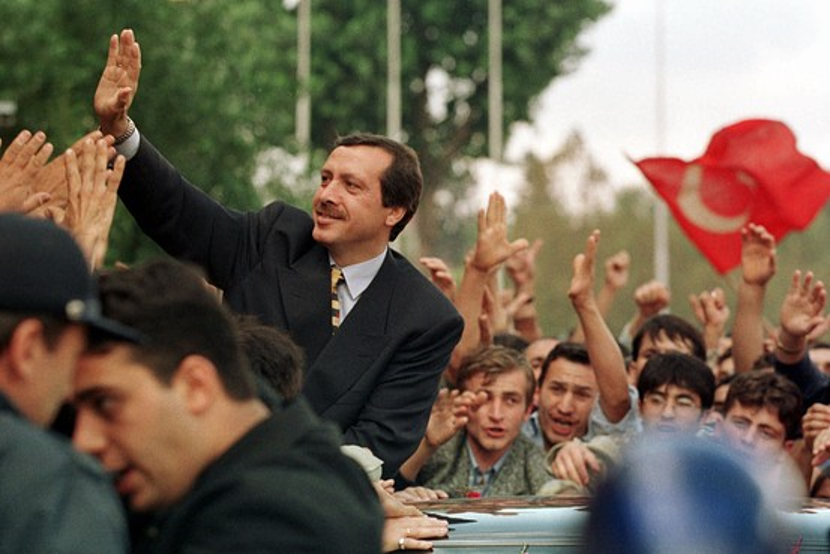
Erdogan as mayor of Istanbul. Source: Wall Street Journal

Erdogan as mayor of Istanbul. Source: Wall Street Journal

Erdogan frequently expressed pronatalist views, against reproductive rights, birth control, and abortion. The government has thus promoted financial incentives to encourage family growth, such as a severance payment to newly married women who leave their job within a year after their wedding.

Furthermore, Erdogan’s control of religion in society largely passes through his policies on education. Under the AKP, the Directorate of Religious Affairs (Diyanet) plays a central role, and the Imam Hatip Okulları (IHLs), which used to be religious courses, are now equivalent to secondary schools. In 2011, the AKP decreased university entry barriers to IHL students. In 2018, those constituted 12% of the total secondary school population, an increase of about 3.4 percentage points since 1997.

In 2013, a large-scale US$100 billion corruption scandal, involving two of Erdogan`s sons, culminated in the arrests of Erdogan’s closest allies, with some political figures being dismissed from office.

In that same year, the Gezi Park protests erupted in Istanbul and later spread across the country. This represented an anti-government uprise against growing authoritarian and islamist initiatives. In fact, a law penalizing insults towards the head of state, in practice since 1926, had rarely been used before Erdogan. Until 2016, more than 1500 people have allegedly been investigated, kept in custody or imprisoned under this law. Critics accuse the party of significant control of the media and public opinion, oppression of political opponents, and an overall violation of freedom of speech.

In 2016, the military orchestrated an unsuccessful coup to strip the president off his title. In response, Erdogan ordered mass arrests and show trials. In 2017, he won a referendum, backed by 51% of voters, which strengthened his constitutional competence. This granted him the power to directly appoint top public officials, including ministers and vice-presidents, to intervene in the legal system, and possibly remain in office until 2029, in addition to abolishing Turkey’s parliamentary system.


Economy

As mayor of Istanbul, Erdogan strived to overcome the city’s main problems: setting up new recycling facilities, developing natural gas projects to clean the air, and introducing hundreds of kilometers of new pipeline to ensure water supply. Macroeconomic reforms attracted more foreign investors, which allowed for more infrastructure projects such as the construction of bridges, passageways, and freeways. Concerning Erdogan’s early years as prime-minister, Zafer Caglayan, the former Economic Affairs Minister, described them as the «Turkish Miracle». In fact, for most of the 2000s, Turkey was Europe’s fastest growing economy, reaching an annual growth rate of 7%. Between 2002 and 2012, the country’s Real GDP increased 64%, while GDP per capita increased 43%. Additionally, as prime-minister, Erdogan implemented reforms and increased investment in infrastructure such as roads, airports, and a high-speed train network.

However, since 2013, the «Turkish Miracle» has been fading as Turkey has been witnessing the abandonment of soft power. In 2014, growth fell to 2.9% and unemployment rose above 10%.

Turkey’s intervention in several international conflicts, such as the Israeli-Palestinian and the Turkish-Kurdish, also contributed to its economy flagging. Between 2016 and 2017, several rating agencies downgraded Turkey’s sovereign credit ratings, expressing their concern about rule of law and the pace of economic reforms. With investors’ confidence declining since 2016, US sanctions imposed against Turkey in 2018, and staggering inflation, the economy reached a recession at the end of the year, urging the government to implement measures to alleviate pressure on the population. The lira dropped by 40% against the dollar, while industrial production slowed and housing sales dropped. Since then, the party has been increasingly losing control over the economy, with significant consequences during the 2019 local elections, losing both the capital Ankara and Istanbul.

III. Foreign Policy

Regarding foreign policy, Erdogan has focused on defending the Islamist cause worldwide, intervening in several international conflicts, which he perceives as beneficial for national security. He sees himself not only as the savior of Muslims but also as of «all the aggrieved people in our region, all the oppressed in the world», as he stated in his victory speech in 2018.

The conflict with the Kurds has led Turkey to occupy north-eastern Syria. Firstly, Erdogan’s aim was to stabilize the regions in the country controlled by rebels who wanted to end Bashar al-Assad’s regime, a strategy to stop floods of refugees to cross the border. But since Kurdish forces have controlled Syria’s northern region, taking advantage of the withdrawal of US troops, Erdogan pushed them out.

Simultaneously, a war of words between Greece and Turkey has been escalating over Mediterranean waters. Erdogan signed a deal with Libya’s unbacked government, allegedly granting Turkey´s access to Greek waters and gas reserves. In August this year, Turkey sent a ship to exploit hydrocarbon offshore, deepening the tensions. The EU, although having abandoned negotiations with Turkey in 2016, accusing it of basic human rights violations, has appealed for dialogue. To this day tensions between Turkey and the block still persist, notably regarding the refugee crisis.

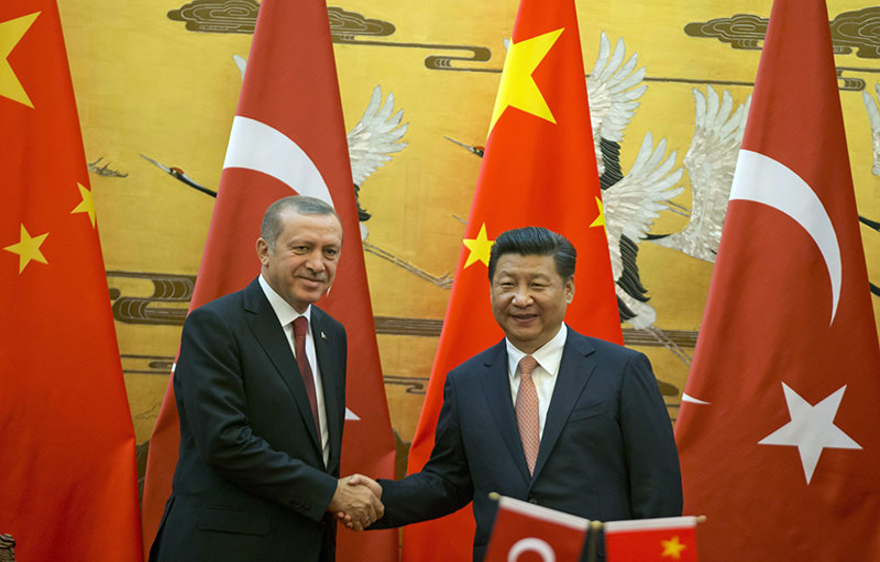
Concerning the east, Turkey has seen its ties with China strengthen, signing bilateral agreements on health and nuclear energy, while ignoring the Muslim Uighurs’ modern concentration camps. On top of that, Erdogan has shown support for repressive regimes, such as Nicolas Maduro’s.

Source: Daily Sabah

Source: Daily Sabah


Conclusion

Since his rise to power, Erdogan’s grip of Turkey has been increasingly marked by authoritarian policies. Initially praised for turning around the country’s economy, Erdogan’s disregard of the rule of law and human rights have put him under fire in the international scene.

But his focus on social values is two-sided: they both reflect his personal views as well as the source of where he harnesses support. In July of this year, the Turkish President ruled that the 1,500-year-old Byzantine Hagia Sophia, a former cathedral turned mosque which until recently served as a museum established by Ataturk, would once again become a mosque. The move, which sparked international outcry, served as a strategy for Erdogan to ensure his popularity, as he avidly relies on his conservative supporters. In fact, the government has been criticized for mishandling the Coronavirus pandemic as the mayors of Istanbul and Ankara, Turkey’s two largest cities, accused it of covering up the real numbers. This precarious and uncertain situation, alongside a frail economy, raises questions on the future of Erdogan’s controversial leadership.

Regulating Big Tech

To which degree should technology influence our human experience? Some believe this question to be only ethical and philosophical, yet, nowadays, this discussion is shifting from existential fields and stepping into economical ground.

Economic theory tells us monopolies hurt consumers, as these end up paying higher prices otherwise would under a competitive environment. Governments often intervene when consumers are harmed or when unfair competition takes place. This was the case when in 1909, the US Government sued Standard Oil under the Sherman Act, leading to its breakup into 34 independent companies. Undoubtedly, a resembling situation is on an eminent stand regarding Big Tech enterprises and their evident market abuse, leading to economic distortions.

Big Tech companies are seen as today’s monopolies, the winner takes all nature of the tech industry has given the Big Five – Microsoft, Amazon, Apple, Facebook and Alphabet – an incentive for abuse of power, as well as an edge over the competition by allowing to use their platform power to promote other services or eliminate potential rivals through acquisitions. Furthermore, the internet has made regulators’ job increasingly difficult because a new currency has emerged, data.

Source: Statista

Source: Statista

Consequently, combining the rise of the technology market with data becoming the most valuable asset on earth, the concern is becoming tangible and several institutions have expressed their worries. Now, the question is if and how regulatory entities should intervene. Different approaches have been taken by distinct institutions yet, three main possible responses have been on discussion: tighten up laws to allow enforcers to better enact them; enforce already existing antitrust rules; or creating new regulatory parameters in order to stop the rise of power of market players – a more extreme solution.


Indeed, a new regulation paradigm is in the works, one that focuses not only in the price paid by consumers, considering many of the services are provided free of charge, but  a more value-based understanding of the real exchange that takes place.

This brings us to another concern about the current self-regulating environment in the Tech industry, privacy. Although big steps have been taken in ensuring the protection of users’ data, improper use, leaks and unlawful data collection are still too common, leaving a sense of insecurity and distrust for tech companies.

These concerns have been left unanswered, in part, due to the enormous political influence the tech sector has, especially in the US. Tech giants spend millions of dollars lobbying US officials. A good example is the effort in maintaining the famous Section 230 of the Communications and Decency Act.

“no provider or user of an interactive computer service shall be treated as the publisher or speaker of any information provided by another information content provider”

— Section 230 of the Communications and Decency Act

The controversial law essentially takes responsibility of some illegal contents away from tech companies, being particularly relevant in the 2020 US Presidential Elections, due to scrutiny over hate speech protection, political biases, and misinformation. In addition to the social and political effects, the power of Big Tech has also made US markets less competitive.

EU has taken big steps in holding Big Tech accountable

Figure 1 - EU Competition Commissioner Margrethe Vestager

Figure 1 – EU Competition Commissioner Margrethe Vestager

EU is already taking action and discussions are taking place in regard to limiting the power of these Tech Giants. As a matter of fact, EU regulators are working in order to establish a “Hit list” composed of up to 20 large companies that would be subject to more restrictive and regulatory measures than those applied to smaller competitors, with the main purpose of restraining their market power. The criteria for inclusion on the list (as well as the precise number of companies to make the list) is still under discussion, but it is likely to revolve around market share of revenues and number of users.

Additional measures include the grant of free-access to competitors, namely the sharing of data with its rivals, as well as the power to force these companies to change business practices considered harmful to consumers or unfair to its competitors without requirement of a full investigation or any finding attesting that they have broken the law. Furthermore, these new rules intend to restrict the companies´ liberty to pre-define their own services by default on consumers´ gadgets (such as is the case of Google apps on smartphones), as well as setting a preference for their own services in browser search results.

Should these measures prove to be insufficient, Brussels also concedes that more extreme ones may be taken against these Tech Giants under special circumstances, such as the power to exclude them from the market altogether, forcing them to sell part of their units or even ultimately breaking them up.

These proposals are likely to integrate the new legal framework concerning digital services that is expected to be published in the forthcoming new Digital Services Act, consisting of an update of the e-Commerce Directive adopted in 2000, in order to accommodate for the on-going incremental technological changes that we have been subject to in the past 20 years.

Also, in a joint document sent to the European Commission, France and the Netherlands suggested EU Authority should have the power to control the market position of some large tech platforms.

“Our common ambition is to design a framework that will be efficient enough to address the economic footprint of such actors on the European economy and to be able to ‘break them open’”

— France and Netherlands in the joint document sent to the European Commission

Nonetheless, these are only small examples of a conversation that is far to be finished and whose end is not nearby.

Overall, while these measures denote a strong concern of the European countries regarding the constraining of the power of platforms that are perceived to be acting as “gatekeepers”, it is still yet to be seen whether these changes will be effective or sufficient to prevent them from exploiting their powers. Moreover, it is important to highlight that most of these companies that are being targeted are US Giants, making it so these measures will probably be badly received by many of them, causing additional friction between Europe and the US.

The US still lives in a self-regulating environment

Figure 2 - Mark Zuckerberg, CEO of Facebook Inc. testifying before US Congress

Figure 2 – Mark Zuckerberg, CEO of Facebook Inc. testifying before US Congress

In recent years, the USA has become increasingly conscientious over the impact tech companies have on consumers and politics. The government has also started acting, with the Department of Justice soon releasing a landmark lawsuit against Google for illegally invading the privacy of its users, the biggest in the past twenty years. Also, a recent damming 449-page congressional report by the House Judiciary Committee accuses Big Tech of abusing their market power “by controlling access to markets, these giants can pick winners and losers throughout our economy. They not only wield tremendous power, but they also abuse it by charging exorbitant fees, imposing oppressive contract terms, and extracting valuable data from the people and businesses that rely on them”. The report suggests restructuring the business model of some companies and breaking them apart, similarly to what happened to Standard Oil, in what seems to be the biggest threat ever posed to corporate power.

Republicans disagree on some of the proposals, nevertheless it is commonly believed more resources to enforce the existing laws are needed. However, the GOP is more concerned over the alleged social media bias against conservative ideas, although there has been no evidence whatsoever.

Although there is consensus on the need for regulation, we are still uncertain on how it will come, and the November Election will be key to understanding which side will have its way.


Sources: Financial Times, European Commission, Federal Communications Commission, United States House of Representatives, New York Times, Reuters, CNBC, Statista


Tiago Rebelo - Tiago Rebelo Matilde Mota - Matilde Mota


João Caetano - João Caetano Inês Lindoso - Inês Lindoso

From great power (of Habit) comes great responsibility

The corporate world surely can be a challenging and high-pressured environment to work in. It is a place where people with very different backgrounds, education and beliefs have to collaborate and work together.

In the hopes of building and sustaining a successful project within competitive industries, organizations have to look deep inside their own dynamics with the goal of harmonizing everyone’s interests in the search for a common goal.

Human behaviour is considered one of the most difficult things to understand completely but one thing is certain, we are creatures of habit. Our brains are subject to numerous stimuli every day and forced to make millions of decisions, so as an evolutionary feature, we evolved to have programmed patterns, routine processes that allow us to save our much needed mental energy.

The American psychologist William James once compared habits to water, he said “water hollows out for itself a channel, which grows broader and deeper, and, after having ceased to flow, it resumes, when it flows again, the path traced by itself before.”, revealing this way, how we systematically repeat behaviours without even realizing it. These habits show up in our daily lives in the form of automatic routines: we don’t have to think about the route for work or university, and we end up drinking the usual morning coffee in the same shop without realising it.

the power of habit

However, it is possible to redirect the path this water takes and adjust behaviours by creating new habits.“The Power of Habit” explores this deeply. According to the author,  the best way to get rid of a bad habit is simple: create a new one. From a more scientific perspective, we form habits following a 3 step loop: Cue (the external or internal stimulus that makes you perform the habit), Routine (the act of practicing the habit)  and Reward (the satisfactory feeling from performing the routine) which can be anything. From a feeling of accomplishment by finishing a task to a dopamine release when you open social media and see dozens of messages and likes. By being able to identify the cue, that is, what triggers a bad habit, you can change your routine to a new one and adjust the reward accordingly.

However, one must understand that there is no secret formula to do it. It depends on multiple factors like will power (highly subjective), personal background and it’s even harder when dealing with the habits of possibly thousands of employees that, altogether create what is the company culture. Some habits appear harder to change than others and some people can go a lifetime without realizing or being able to change any of them.

Some explanation could be found when looking to groups of people that are designed to fight (bad) habits. It is not enough to get used in fighting habits or even change it for a new one. As shown in a study from the California’s Alcohol Research Group for the Alcoholics Anonymous, in most cases, respondents revealed that when a stressful event occurred, the habit tended to come back, as they found comfort in the reward associated (quoting William James, the habit path never entirely disappears). In this perspective, organizations might have to play a vital role.

As stated, habits depend a lot on will power and this is highly correlated to the environment surrounding each individual: social norms, peer pressure and other phenomena can either make the ground for beneficial or bad habits. Is about which group and which norms you’re exposed to that determines how your behavior will be beneficial or not. As for drinking (often a group activity), take the AA: they try to provide individuals with a feeling of inclusion, understanding, and offer a base of support to fight addiction (assigning a mentor, sharing with fellows struggling like them…). By finding a common ground and goals to move towards together, organizations might have the base to form a stronger group identity: a culture.

Some organizations fail to succeed in the corporate world for the lack of an identity, something that everyone in the company embraces and fights towards. But even though a unifying culture is vital for success, it is even more imperative that this culture is the right one for the organization.

Take what happened at the Rhode Island Hospital a couple years back. This hospital, one of America’s leading medical institutions, was known as a place with many internal tensions. The relationship between doctors and nurses was difficult and after years of strikes by the nursing staff, the situation remained similar by the lack of effort of the administrators.

Nurses came up with a damage limitation solution: they created a blackboard where they could all see the doctors they would work with on the operation room and they would write those names with different colours, so that each nurse knew what to expect when entering the room, if the name was written in red or black, they knew they shouldn’t even make a suggestion or they would be in trouble.

This way, nurses thought they would avoid unnecessary conflict. But how wrong they were… Without noticing, the nurses created a habit: if the name is written in black or red, I will not intervene and correct the doctor’s decision, no matter what.

The result? Malpractices, one after the other, that sometimes, led to deaths.

Whenever a surgeon (human after all) was about to make a mistake, due to past conflicts, nurses would simply follow their habits and not intervene; these habits were instilled through unwritten rules that have been interpreted as part of the culture.

Rhode Island Hospital, one of America's leading medical institutions.

Rhode Island Hospital, one of America’s leading medical institutions.

Sometime after, due to all the pressure from the media, the administration came to their senses and applied measures that eventually conceded nurses a voice and created new habits that changed the organization’s dynamics. However, it remains a perfect example of how an undirected bad culture within an organization, can lead to harmful outcomes (in this case, for the health of patients). Corollary: in moments of crisis and public exposure, organizations have a unique opportunity to make changes. When everyone involved is in some way or another negatively affected and there is a sense of collective struggle, the chance to set aside divergences and move towards a common goal, rises.

Let’s relate to the covid-19 pandemic. For a company to survive these uncertain times it is essential to maintain its culture. However, with most people having to work from home, the overall company dynamics had to be changed or completely reinvented. By looking at some top renown companies we can see the path that company cultures’ development is taking.

For instance, Google has allowed its employees to work remotely until the end of 2020. Besides, it also provided a work from home allowance of 1000$ for equipment costs. Such action made it possible for workers to create their own home office environment with less propensity of getting distracted and more sustainability.

Take instead the measures taken by Target. Target’s main priority was to ensure employee safety by extending sick leave for everyone and offering high-risk workers a thirty-day paid leave in case they were uneasy to come back to in person work. In addition, Target also offered financial aid to employees working in the stores (and implemented similar programs for ones who wished to contribute.)

On the influence of leaders, we have an example from a firm: Alcoa, an aluminium company. When their new CEO, Paul O´Neill took over in 1987, everyone was confused by his presentation speech. His main goal, he said, was to “make Alcoa the safest company in America”, he added, “I intend to go for zero injuries”. Every shareholder in the room was surprised, not only did he not talk about raising profits and cutting costs, he intended to transform one of the most risky workplaces into the safest in the country. One year after his speech, the firm hit an all time record of profits, and by 2000, when O´Neill left, the annual Net Income of Alcoa was 5 times larger. So, what happened?

The CEO was aware of the power of good practices, good examples, and more importantly, of the impact of a good culture. By defining a clear goal that everyone could work towards and support (relatable), Paul created a culture where everyone felt part of something bigger and got each worker excited to do their best for a company that defended their interests.

With this measure, everything improved: happy workers were more productive, less accidents meant less costs and more available workers, but, more importantly, in order to achieve the goal of zero injuries, everyone had to be well aware of what everyone had to do. In other words, the change of a habit triggered a chain reaction. It made workers not only be more careful and productive, but they also felt entitled to give suggestions to improve the company: they felt like they mattered more, and had a saying in the path the firm took.

This just goes to show that even though managing thousands of workers, pleasing shareholders and simply put, running an organization, can be difficult, it is possible, even with simple ideas, to create a good culture, unite everyone and run a successful business.

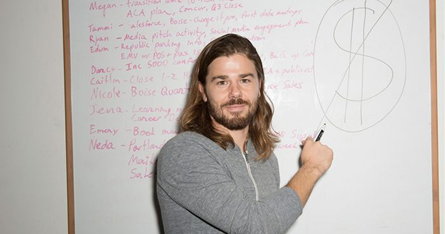
More recently, Dan Price (CEO of Gravity Payments) made the news cutting his own wage to reach a minimum salary of 70k$ for all its employees. Deemed as a madman by the media, actually had a more interesting effect: its company valuation went from ~4 b$ to ~11 b$ dollars in 4 years. More than 10% of the company have been able to buy their own home, in one of the US’s most expensive cities for renters. Before the figure was less than 1%. People even started having babies all of a sudden.

The examples presented painted very different pictures, however, both help prove the argument that an organization is much more than the individualities and much bigger than an idea.

Dan Price, CEO Gravity Payments

Dan Price, CEO Gravity Payments

Companies and institutions are made of every single person involved in the final product or service provided, and without a common ground, an identity or a culture to unite the interests of everyone, it is only by chance that success lasts.

The Fall of Social Democracy in Europe

Historical context

Social Democracy was born in the second half of the 19th century, inspired by labor, socialist and Marxist movements. Germany can be considered its country of origin, with the SPD (established in 1863) as the first social-democratic party. The labor and social-democratic movements were already important even before WWII, with the British Labour Party governance in the 1920s and the French and Spanish Popular Fronts in the 1930s. In post-war Europe, Social Democracy (along with Christian Democracy) was a large contributor to the modern welfare state, frequently switching power with more conservative governments, and maintaining influence in politics even when not governing.

In the 1980s, there was a conservative neoliberal turn and the center-left lost some appeal. Indeed, at the beginning of the 21st century, the Third Way arose, i.e, a shift in leftist parties around the world towards a more moderate, market-friendly economic policies, moving further away from the strong welfare states established after WWII. Nevertheless, social democratic parties managed to be in power until the 2008 crisis. However, since then, they have lost power in most countries and became the opposition (in some cases even losing the position as the biggest opposition party).


Countries where social democracy has failed

The rise of the Third Way was particularly stronger in Europe’s biggest nations. In Germany, this rightward shift of Social Democracy occurred with Gerhard Schröder, leader of the Social Democratic Party of Germany (SPD) and Germany’s Chancellor between 1998 and 2005. Schröder introduced the Agenda 2010, a series of reforms aimed at cutting German’s welfare system and labor protections, to promote economic growth and reduce unemployment. This clear shift to liberal policies cost the SPD the 2005 election and the party has not led the German Government since.  It has been the junior party in a grand coalition led by Angela Merkel’s CDU since 2013.

The French Socialist Party has suffered an even greater decline. After narrowly being elected in 2012, Socialist president François Hollande failed to bring down unemployment and made several unpopular political moves. In 2017, facing dismal approval ratings, he became the first president in the Fifth Republic not to run for re-election. Among many others, the main reason for the decline in social democracy in France presents a familiar story: with globalization, as factories moved from France to third-world countries, the Socialist Party’s traditional voting base became unemployed, facing economic hardships and thus, started to move to political extremes and populist parties. Regarding the newer generation, it is divided between a more moderate wing, trying to appeal to the center, and a more radical one, seeking to recover the party’s former working-class base. Consequently, since 2017, the Socialists have not managed to attain more than 8% of the votes.

A different shift from social democracy occurred in Greece. In January 2015, Syriza, the radical left-wing party led by Alex Tsipras, characterized by a staunch opposition to austerity measures imposed by Troika, won the Greek legislative elections. Tsipras was elected just as the negotiations started for a new bailout. Unable to reach a compromise with Troika, he held a referendum on the opposed austerity measures, which were refused by 60% of Greeks. However, Tsipras was still unable to negotiate better terms and ended up agreeing to the bailout terms and austerity. The economy was going through a U-turn, taking a complete opposition of policy than the defended one in the beginning. Despite the recent economic improvement, Syriza finished second in the 2019 Greek elections and lost power.

A possible solution to the crisis of social democratic parties would be a shift to the left, unlike the moderate turn in Germany and France. This happened in the British Labour Party with the election of Jeremy Corbyn, who had major support of trade unions and the more left faction of the party. His more leftward stance included opposition to austerity and the renationalization of public utilities and railways. However, with Brexit as the main hot issue in the UK and Corbyn’s non-existent position on this matter, the Labour Party faced a historical defeat in elections.


Countries where Social Democracy is still in place

The most well-known case of Social Democracy’s success in Europe is Portugal. The country is led by a center-left minority government with the support of other left-wing parties. On its first mandate (2015-2019), PS (the Socialist Party) governed Portugal through a coalition with the other left-wing parties, commonly known as Geringonça, to form a “majority” in parliament. Geringonça proved to be a success, leading the country to a stable period of economic growth, which increased confidence in voters, who maintained the left voting tendency. This has also happened in the neighboring country, Spain where Partido Socialista Obrero Español (PSOE) has collided to govern with a more radical left party, Podemos. This comes as no surprise in the Iberian Peninsula, as it has a large percentage of working-class voters (traditionally centre-left voters), unlike other European countries.

Another European region where Social Democracy has been able to stay in power is Scandinavia. However, its molds are different from Iberia’s, as it has been struggling not to succumb to Europe’s rightward trend.

Unlike Portugal or Spain, where social democracy has been relatively open to immigration, Denmark’s Social Democratic Party has engaged in an anti-immigration speech, as a way to attract far-right opposition party voters. Some voters supported it and switched their votes, while others did not and left the party. Nevertheless, the trend winded to other left-wing parties, which allowed Mette Frederiksen, the current Danish Prime-Minister, to engage in alliances with the left and form a government.

In Finland, the social democrats won by a small margin with the nationalist right-wing party (the latter having a strong anti-immigration stance) ending up in second place. Still, the Social Democratic Party won the election. Nevertheless, to govern, it had to coalite with four other parties.

In Sweden, after many tries of coalition by the Social Democratic party, it was necessary for the center-left and right to unite with the former to avoid the far-right from taking power. Therefore, while in Denmark and Finland the undecided votes were determined through stances on immigration, in Sweden Social Democracy has been in power mainly due to the fear of far-right movements, encouraging moderate left and right to collide.

Poll results for S&D (Progressive Alliance of Socialists and Democrats) member parties (March 2019)

Poll results for S&D (Progressive Alliance of Socialists and Democrats) member parties (March 2019)


Overall, why has social democracy fallen? 

The social-democratic project mainly focuses on the fair redistribution of income and equality of material ends, which has a strong connection with unions and the working class. More eloquently put, it is a fight within capitalism for less unequal capitalism. However, in the last 30 years, there were major ideological changes, caused by technological and cultural forces that shifted production away from big factories and nation-states to other places across the globe. This deeply eroded the power of the working class (the main electorate of this ideology) and thus, the engine of social democracy stalled.

This fall in popularity is complex to explain. Primarily, since 2008, the promise of materialism has been curtailed by austerity and neoliberal measures, which many social democrats were complicit too. Secondly, the globalization led by a now hegemonic neoliberalism made working-class people feel as though they lost control of their lives, regarding economics (negative income effect of immigration on jobs and wages), identity, purpose, and meaning. There was a shift in the electorate: originally a traditional working-class population, most of these social-democratic parties are now composed of progressive, urban, and well-educated electors. With globalization, these parties participated in the de-industrialization that put them at odds with their original electorate. As the latter felt it was left with no political representation, it shifted towards far-right and populist movements that followed narratives such as blaming immigration for the faced economic problems. The austerity and contraction of the welfare state after the Great Recession affected particularly the working middle-class society. This class saw immigration and the refugees’ crisis as the perfect scapegoats, the used narratives by many radical right-wing parties.

Stating that far-right parties and immigration were the main causes of Social Democracy’s fall can be simplistic. It was the lack of political representation and economic instability that played a major role.

Percentage of votes for European Social Democratic parties (base year: 1970)

Percentage of votes for European Social Democratic parties (base year: 1970)


Sources: The Economist, The Guardian, Journal of Democracy, Politico, Washington Post

Day Trading

What is Day Trading?

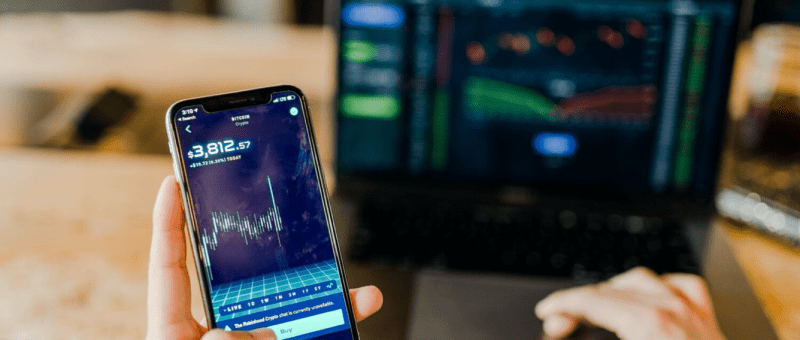
Day trading is the practice of buying and selling a security on the same day. That is, an investor enters and exits the transaction on the same trading day, and no open positions are maintained overnight. It essentially occurs in any market; however, it is more prevalent in the stock and foreign exchange markets. It entails using large amounts of leverage to make the most of price fluctuations, be it a short or long trade. Given gains are made on swift price changes, investors seek out volatile and highly liquid assets.

 Day traders base their decisions on numerous indicators, news, scheduled announcements (e.g. corporate earnings, interest rate changes) while trying to predict future market inefficiencies that can be exploited for capital gain. Meanwhile, day traders try to rely as little as possible on their gut feeling and emotions, for that reason money invested is often the amount they can afford to lose.

 The most common trading strategies range from making numerous small profits on various small price changes (Scalping), to take advantage of the volatility created by news events (News-Based Trading), all the way to using algorithms to identify and make the most of small market inefficiencies (High-Frequency Trading).

 Day trading can be traced back to 1867, before computers, the internet or even electricity existed. Stock markets used the telegraph’s communication technology to create the ticker tape, the earliest electrical dedicated financial communications medium, which allowed for brokers’ transactions to be communicated. In the past, those who were able to day trade were brokers working for large institutions, which managed the firm’s money, as well as that of its clients. They had access to a direct trading line, a trading desk, great amounts of capital and highly advanced analytical software. Nevertheless, the position of day trading has extended to anyone interested, though with a more limited know-how and access to financial tools, as platforms now offer lower fees.


Different types of strategies 

Each trader usually creates his strategy based on one simple criteria: Risk. As financial markets teach us every day, trading on riskier approaches tend to end up either in disastrous trades or in absolute jackpots or, on the off chance the market shows low levels of volatility, the gains/losses can be closer to zero. However, professional and retail traders tend to focus more on volatile and high beta’s assets that, at the end of the day, can turn a soft overall market movement into a considerable profit return for the portfolio. Traders do have to consider the need to top commission fees so that the high number of trades won’t eat up the gains and leave them holding nothing.

Taking these facts into account, traders choose the strategy of which they feel mostly suits their reach. So, components as the time, money willing to involve on the portfolios, experience in trading, and the knowledge behind market movements may drive different approaches from traders.

Arbitrage Trading:

Arbitrage is solely the act of purchasing and selling a financial instrument by exploiting market inefficiencies.

Take for example the simplest arbitrage trade possible, imagine you hold Apple stocks and you realize that it is selling for $118 on the NYSE and it has a bidding price of $117.5 on the LSE.  With this you could incur in free-of-risk transactions from one Stock Exchange to another until the market gets corrected, which until then, profit would be assured. However, arbitrage opportunities are said to have gone extinct for retail investors due to the highly computerized financial software, which when any dysregulations like this occur, are promptly put to an end by the fastest market-maker that sees it and takes advantage of it with the use of advanced algorithms.

Swing Trading:

Swing trading is a type of trading that implies seeking for a big chunk of a potential price movement, instead of settling for small movements caused from natural volatility. Due to the end goal that this strategy aims to achieve, it usually forces the trader to hold the security overnight and to sell it in the following days. This method highly relies more on technical analysis rather than on fundamental analysis, considering the trader incurs in the purchase and selling of the security regardless of what he believes the intrinsic value of the asset is. A swing trader supports his decisions by looking for common patterns, moving average crossovers, cup-and-handle, as many other multi-day chart patterns in order to set the buying price and then the chosen Stop Loss/Take Profit values.

Picture 1.png

News Trading

As the name suggests, news trading strategies implies the trader to make its judgement of pursuing a transaction based on news and rumors, either before they are announced or after. This type of strategy does not require the trader to undergo any detailed technical analysis but rather to focus its trade on the qualitative side of the fundamentals of the company, thus, in this case, to know if the announcement or the new will meet the markets expectations or, if on the other hand, might change the investors’ opinion of the companies’ value.

Merger Arbitrage

Often referred to as Hedge Fund strategy, this strategy comes from the purchasing and selling of a stock that is supposed to be acquired by a second company at a higher price. This type of strategy involves calculating the probability that either the merger is going to be settled at that given price, as it will occur at the time expected.

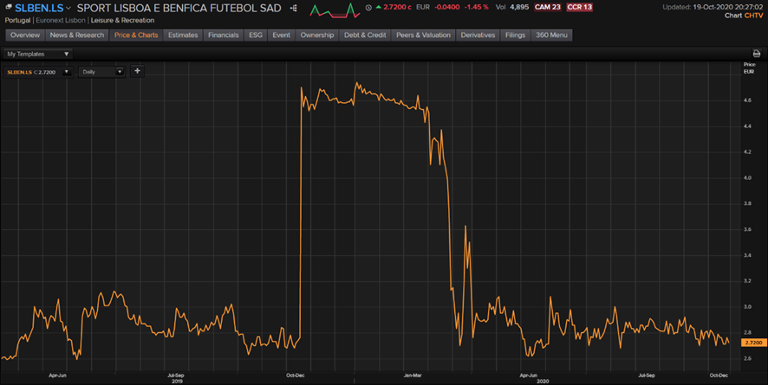
One controversial example in the Portuguese stock market’s sphere was the “Benfica’s takeover bid” (OPA do Benfica). Benfica filed in for a takeover bid on its “SAD” in November 2019, by willingly acquire about 30% of its shares for a price of €5, when its stock was at the time valued at €2.71. Traders soon pumped up the stock to a value close to the acquisition one, only to see that acquisition takeover overruled by the Portuguese Securities and Exchange Commission a few months after.

Picture 2.png

Why is it so controversial?

Day trading is regarded as one of the riskiest ways to invest your money in financial markets nowadays. There is still a general idea that this type of trading is just gambling and a scheme to make bulky profits within days. Furthermore, most experienced asset managers and financial advisors have a negative opinion regarding day trading stating that the risks almost never justify the gains received. When we long at the long-turn, day trading practices tend to underperform traditional investment practices. It is true that it often includes leveraged positions that can make traders lose much more than they initially invested, and this often happens. Although traders are only forced to show their gains and losses to IRS, several studies and market research data show that their success rate is very low, only a small percentage managing to consistently deliver relevant gains, considering the high amount of brokerage fees they pay.

Advantages of Day Trading

 Although day trading practices are shown to be risky, from what we saw earlier, they are quite common today and there are reasons for it. The most advertised by day traders is the huge gains that they can make in relatively shorter periods of time. Despite depending on the amount of money that a trader is willing to risk at each trading session, the leverage mechanisms available can transform small investment sums into robust sums of money. This makes a lot of day traders believe they will be part of the small portion that is able to beat the market.


Final Thoughts

Day Trading is definitively risky by itself, it requires a filled margin account to start with and any potential profit is already cut by the brokerage fees of making many trades every day (this burden will depend on the brokerage firm). Data shows that most day traders lose money and a high percentage of the ones that have any gains have a small profit margin. With all this information in mind and considering the inherent risk, it is a legitimate way to make a significant return with low-enough initial capital and in a few days or weeks. Day trading is not for the faint of heart and is only advisable with the right market information and experience in financial markets. It ultimately falls on each investor to decide if the reward is worth the risk.

Picture 3.png

Sources: Investopedia, BeBusinessed, MelMagazine, The Balance

Foreign Aid: are we doing it right?

Poverty, disease, famine. If we were to ask you which places would you associate with these three simple words, most likely African nations would be the first ones to come to your mind. However, these problems are not by any means limited to this group of nations, but rather to those whose economies are underdeveloped, where many people live under the poverty line. As such, significant efforts have been made in the past decades to try and overcome these issues, generally through foreign aid mechanisms aimed towards struggling nations. Nevertheless, a consensus is yet to be reached on what is the most effective way to help develop these economies.

Sachs – the foreign aid enthusiast

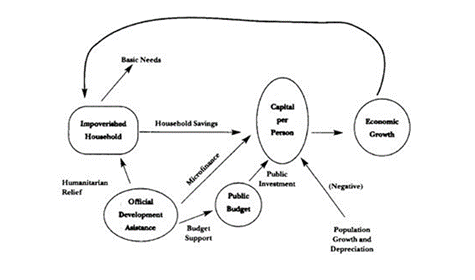
There is a school of thought, defended primarily by Jeffrey Sachs, an American economist, which argues that it can indeed be through Official Development Assistance (ODA) that impoverished households and developing economies can improve their economic paradigms. ODA is what is commonly referred to as Foreign Aid, which is defined as “a set of flows that are concessional in character and are administered with the promotion of economic development and welfare of developing countries as its main objective”. Sachs argues that developing nations frequently fall into a “poverty trap” where households only have enough income to cover for their basic needs, which leads to them both not increasing their household savings and not paying taxes. The absent supply of loanable funds to the loan market and the low amount of money that can be funneled into public investment lead to a situation where there is not enough invested capital to sustain economic growth. This is where ODA can play a vital role. By providing ODA to households their savings can increase and, if there are also other funds that can support public investment and microfinancing to firms, the capital per person can increase and this poverty trap can be overcome (Figure 1).

Figure 1 - The importance of ODA in breaking the poverty trap

Figure 1 – The importance of ODA in breaking the poverty trap

Now, it is easy to quote all these theoretical assumptions, but to verify their veracity in the real world is a whole different story. Fortunately, there have been examples where Sachs’ framework has proven to be effective in developing impoverished economies, the most famous of which being the Green Revolution that occurred in India between 1965 and 1990.

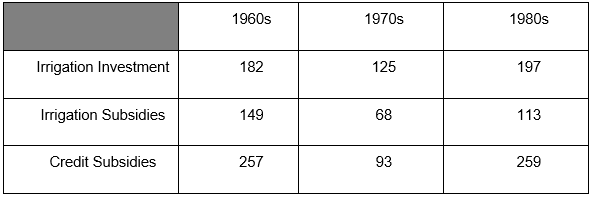
In 1975, 59,1% of India’s population lived in poverty and in 1970 only 18,4% of India’s agricultural area was irrigated, the other part being composed of less sophisticated agricultural technologies. As such, the Indian Government, in collaboration with its International Development partners, launched a massive investment campaign to modernise this sector of the economy and support its struggling population. The adoption and development of irrigation techniques were subsidised, which alongside the creation of new credit and microfinance mechanisms aided the lower-income population (Table 1). These policies allowed small farm owners to have access to cheap inputs that improved their financial situation and, in turn, India’s economic position: in the 1990s the percentage of population that lived in poverty fell to 43,1% and 31,8% of the agricultural area became irrigated.

Table 1 - Decrease in the number of poor people per million Rupees spent in India

Table 1 – Decrease in the number of poor people per million Rupees spent in India

Picture3.png

Easterly – the foreign aid skeptic

On the other end of the aid debate spectrum is William Easterly, an American economist specialized in development economics. Easterly believes that the current system to provide foreign aid is neither working efficiently nor achieving its goal, since it’s not being well structured to obtain real effects. He further states that, if not provided correctly, it can be a disincentive to the economy.

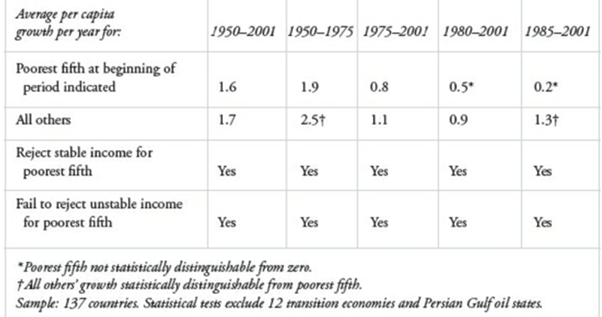
The “poverty trap”, first introduced by Sachs, predicts growth per capita of the poorest countries to be zero or negative. However, data tells us another story: according to studies (Table 2), many poor countries verify, in fact, a positive per capita growth.

Table 2 - Testing the poverty trap for long periods

Table 2 – Testing the poverty trap for long periods

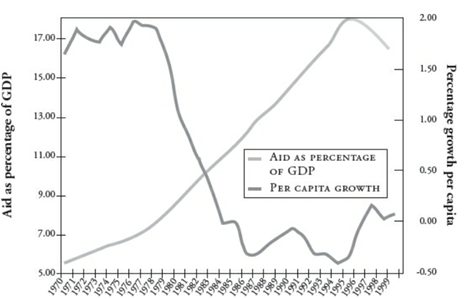
Furthermore, one of the characteristics of the “poverty trap” is that savings are very low for populations, leading countries to need large receipts of aid. In fact, in 1990, more than 15% of Africa’s income was from foreign donors. However, as shown in the graph below (Graph 1), as aid increased, per capita growth didn’t necessarily increase, contrary to what would be expected. Furthermore, some infer that it is not the increase in foreign aid that causes a fall in the growth rate, but rather a fall in growth that incentivizes increases in aid.

Graph 1 - Aid and Growth in Africa (ten-year moving averages)

Graph 1 – Aid and Growth in Africa (ten-year moving averages)

Nevertheless, although one can make the case that there is no such thing as a poverty trap, since poor and undeveloped countries show small, but still positive, growth rates, it still cannot be ruled out that these same countries need external assistance in order to reach higher levels of development.

Unfortunately, it’s usually the way this assistance is provided that is the reason why providence of foreign aid isn’t accompanied by increases in growth per capita. In fact, much of the donations’ money is not effectively reaching those in poor living conditions. There exists a chain through which money must travel until it finally reaches those who it’s meant for, and it’s exactly somewhere along this chain where a lot of things can fail and prevent funds from reaching their final destination. In many cases, it’s corruption and embezzlement from political elites that will keep the foreign aid from being correctly allocated. Sierra Leone officials’ stealing of a total of 1.2 million GBP (british pounds), in 2010, and Uganda’s education ministers’ embezzling of a staggering of 16.5 million GBP are only a few of many, many examples.

One way of preventing this misallocation of fundings is to increase monitoring and evaluate the impact of foreign aid. The monitoring allows the aid donor to ensure that the aid is being correctly allocated, while the evaluation enables them to make sure that, after the aid has reached its recipient, it’s being well used.

Then… What should we do to help fight poverty?

Easterly’s answer is simple. Before all, western countries should make peace with the fact that they are not as much a part of the solution as they think they are. After accepting that fact, those who wish to help can focus on the importance of rights: only in an environment where an individual has political rights and economic freedom there is propensity to development. Hence, donors should not try to separate themselves from political questions, but rather fight for a democratic and free political environment.

An unreachable consensus

An agreement between Sachs and Easterly is highly unlikely. An absolutely correct and universal answer to world poverty is even less. But it still is a matter that should be addressed. According to the last estimates available on global poverty (from 2015), 9.9% of the population lives in extreme poverty (i.e. under the poverty line). That is 730 million people subsiding with less than $1,90 a day and without access to basic essentials that many of us take for granted, struggling to survive yet another day. If, on one hand, there is an ongoing discussion about how aid should be provided, on the other hand, whether or not we should help these countries is not up for debate.


Sources:

  • Business and Economics Journal

  • Green revolution paper

  • Reinventing Foreign Aid, William E., The MIT Press, 2008

  • The economics of international development: Foreign Aid versus Freedom for the World’s Poor,  William E., The Institute of Economic Affairs, 2016

  • The End of Poverty: Economic Possibilities for Our Time; Sachs, Jeffrey D., Penguin Press, 2005

  • The Treasury

  • The white man’s burden: Why The West’s Efforts To Aid The Rest Have Done So Much Ill And So Little Good, William E., 200633

André Rodrigues - André Rodrigues Laura Osório - Laura Osório

Trump vs Biden Clash – The Illusions within US Politics

Reflecting on 2016-2020

In January 2017, Donald Trump took the office of the United States presidency, carrying with him the promise to “Make America great again”. Somehow, it feels like Trump has been there for a lifetime, while simultaneously having arrived just yesterday. Four years have passed since the 2016 elections and, in retrospect, it surely feels like it was a decisive moment in time. Brexit had just happened, right-wing populism was gaining traction throughout Europe, and Donald Trump seemed to be going all-in on his presidential campaign; overall, there was a huge wave of uncertainty, a collective feeling that something big was about to happen, and that nothing would ever be the same. In November, Trump’s victory pointed towards this change. The defeat of the Democrats was supposed to mean a greater landmark – the categorical rupture of the status quo, a definite breach in the politics of the establishment – or so it was portrayed by Trump and his team.

Four years have passed, and we recognize a fragile, divided America. A nation fiercely hit by the Coronavirus pandemic, disrupted by boiling racial tensions, alarmed by the uncertainty of a perilous recession and, amidst all, the distressing political environment over in D.C.. Once again, the American people will go to the polls and decide who will lead them in the next four years. The questions to be raised should reflect an interrogative posture toward the change that Trump promised, whilst reflecting on the economic achievements of the current administration, the social attainments to better the lives of the population, which encapsulates the management of the pandemic outbreak.

Supporter of Trump’s 2020 campaign

Supporter of Trump’s 2020 campaign

The purpose of this article is to provide an insight on Trump’s time in office, whilst simultaneously analyzing his and Joe Biden’s campaigns, the ideological contrast between the two, reflecting on the decisiveness of the result. Has Trump’s America experienced a structural shift, when taking into account the political history of the US, or is a hitch-like phenomenon present, where a country reminisces over a past that never was?


The Promises and Misadventures of Donald Trump

President Trump has been rather consistent regarding his controversial character and erratic persona. He has been able to remain in the spotlight throughout his four-year term, whether we take into consideration cases like his 2020 impeachment process or his contentious posture towards the media, his opponents, and his political counterparts. Economically, the US has achieved some important goals, from drastic tax cuts to historically low unemployment rates. Trump has been somewhat successful at putting his protectionist agenda into practice, renegotiating trade deals, and positively impacting domestic manufacturing industries. However, Trump’s action towards healthcare, environmental policy, social matters (gun laws, abortion), immigration measures, have all been subject to severe criticism and have induced concern from national and foreign politicians.

One should question if the USA is any different from when Trump took office or, in other words, whether America has become great again. The impact of the Trump presidency has been felt, but did it really disrupt the political paradigm? Has the swamp been drained? In many crucial issues, the President has been unable to reverse the position in which America is placed. The US has gravely increased its trade deficit with China. It has not cemented a particularly stronger position regarding foreign policy. It has yet to make a strong reform on many issues Trump committed to, concerning health, crime and justice, among others. The President’s campaign this year emphasizes the major improvements of his term, while continuing to promise big boosts in employment, tax cuts and American foreign affirmation, mainly concerning his Chinese counterparts. Is this enough?

All the turmoil that hit the US in 2020, from the Covid-19 pandemic, to the racial division, which caused riots all over the country, indicates that we should understand the direction in which the country is moving. In 2016, America felt it needed Trumpism – it craved for disruption. Has that necessity been expanded, or is it time to return to normalcy?

A cartoon by Joe Heller on Trump’s America

A cartoon by Joe Heller on Trump’s America


The Case for Joe Biden

Former Vice-President Joe Biden is the embodiment of this return to normalcy. In a way, he is the representation of a traditional American politician. He rose to the Senate at a very young age, held numerous important public positions and he has to him an old-fashioned appeal and a charismatic honesty, which has always allowed him to connect with the working-class, blue-collar community. His politics serve as an ideological alternative to Trump, leaning towards a moderate approach to solving the problems of the USA, to water down these turbulent times and to heal together. Incidentally, these bases are the ones which the Democratic Party intends to present as the Trump alternative. We must analyse what a Biden presidency would really represent for America.

Biden’s campaign has placed focus on Trump’s mismanagement of the pandemic. The USA has the most cases and deaths across all countries, and the Democrats have pointed to the President’s recklessness and late action as a major cause of such impact. Furthermore, Biden is focused on improving and building upon the Affordable Care Act, ensuring an equitable solution for the health and the economic crisis and is overall aligned with the usual Democratic Agenda. This comes to show Biden is not proposing anything particularly innovative or different from the usual politics of the US. His campaign is far more ideological, emphasizing a message of rebuilding the country and “soul of America”, starting over and starting better.

The Trump vs Biden Debate, on the 29th of September

The Trump vs Biden Debate, on the 29th of September

However, Biden has had quite a controversial side to his demeanour. For once, his age is being pointed out as a major drawback, as his health conditions, regular gaffes and blunders are often in the spotlight. Besides, he has been under a number of controversies. Past ones include sexual harassment allegations and conflicts of interest in his action in the Ukraine involving his son. Presently, he stirred turmoil by questioning the identitary legitimacy of African-Americans who failed to cast a vote for the Democrats.

Joe Biden has an appeal to him. Many consider him to be “the lesser of two evils”. However, it should be enquired – is he truly offering something that America has never had?


A Final Note of Hopelessness

Many Americans are questioning how it got to the point where they have to choose between two unloved figures. One can blame the whole structure of American Politics and the two-party system. Some say the ruling party changes whilst nothing else does. Others say these tendencies lead to extreme and populist positions. Yet, the truth is that there is a sense of hopelessness in the politics of America. These sentiments are strikingly reflected in the reactions to the first Presidential Debate, as the majority perceived it as a circus-like show displaying the absurdity of politics.

Polls are suggesting a Biden victory, not only on the popular vote, but also in the majority of the so-called “swing states”, fundamental to win the Electoral College. The Senate polls also give a good chance of a Democrat win. Should they be able to conquer the Presidential position and the Senate, while maintaining the House, the Democrats would have a clear upper hand in the decision-making process within the US.

Whether we take into consideration the populism within Trump’s “Law and Order” rhetoric, or the “return to normalcy” approach by Biden, it is crucial to comprehend the lucid limitations of these elections. The structural shift Trump promised is rather questionable, whilst his campaign has been lacking the strength and efficiency we witnessed in 2016. On the other hand, we must look at the America Joe Biden is promising to heal. Surely, one should question – isn’t the status quo politics what caused the US to hurt in the first place?

If America is constantly facing a cycle of booms and contractions, an unwanted loop in the socioeconomic core of the country, Americans may be questioning not only their politicians, but also their political system. Nonetheless, the American people shall make themselves heard on the 3rd of November.

Stay-at-Home protests in Denver, Colorado, demanding the ceasing of the pandemic restrictions                                                           

Stay-at-Home protests in Denver, Colorado, demanding the ceasing of the pandemic restrictions

Protests in Minneapolis, following the death of George Floyd by an act of police brutality

Protests in Minneapolis, following the death of George Floyd by an act of police brutality

joao.sc João Sande e Castro

The (Next) Generation of Energy

“Climate change is, quite simply, an existential threat for most life on the planet – including, and especially, the life of humankind.”

— António Guterres (2018)

For the past decade, the world has witnessed the incremental transformation of the mobility industry, largely through the phenomenon of electric cars. Nowadays, beyond Tesla’s Gigafactory walls, traditional carmakers are making the necessary steps to phase-out the combustion engine. Several prominent and prolific car makers expect the majority of their income to come from all electric car sales by 2030 and to have an all-electric offer – counting hybrids and other mixed-possibilities as well. In the short to medium term, expect as many as 500 electric car models to be available by 2022.

Concurrently, the energy sector is slowly weaning off its thirst for fossil fuels through renewable energies. As countries rethink their energy concerns – a matter of debate that goes well beyond the environment – and implement change through public policy, the automotive industry is being remade with battery powered electric vehicles.

This transformation, slow as it may be when contextualized with the environmental crisis we are in, is crucial but not without its own set of problems. Energy from renewables is largely dependent on factors beyond our control; how feasible would it be to have a fully renewable electric grid, and what good is it to power car batteries if the electricity produced comes from fossil fuels? And in the topic of car batteries, what about their environmental cost, how reliable are they, what alternatives could we consider?

This semester, the team behind the Technology articles at Nova Awareness Club has been tasked with two other topics – Health and Environment. This is no small task in the year of 2020, a time where the world has been ravaged by a global pandemic and where there is a sense of urgency about taking the necessary steps to prevent irreversible damage to the environment.

Although the choice for this article has mostly been fortuitous in a sense – the main idea was to showcase what the readers of The Awareness News should come to expect this term – the underlying message has never been truer. Within our scope, the team pledges to bring awareness to several environment related questions; and to do so using language that portrays the environmental crisis we are in as well as reducing unnecessary technical jargon to a minimum.


Renewable Energies, the Powergrid and the duck-related neologism

Duck Curve . The practical effect of renewable energies on power grids, as seen in California (The curves vaguely shape the outline of a duck). Source: Vox

Duck Curve. The practical effect of renewable energies on power grids, as seen in California (The curves vaguely shape the outline of a duck). Source: Vox

As previously stated, renewable energies are often dependent on factors beyond human control, namely, the weather. Solar farms only produce solar energy when the sun shines (usually not at night). A drought, in the aforementioned hydroelectric example, is typically a factor of extreme weather conditions.

Learning how to juggle these power outputs is key to one day achieving a fully renewable electric grid – a concept that has yet to materialize in real life. For this next part, consider the graph pictured above.

The Duck Curve is a recently coined term that shows the discrepancy between peak power production and peak power needs. Ultimately, this graph shows a very specific example likely to occur in places with an elevated solar output. Different electricity profiles – in other words, the different ways you power an electric grid with all different types of energies – dictate the circumstances.

Keep the following takeaways in mind before we delve into a practical question:

  1. As of yet, there is no such thing as a powergrid fully supplied by renewable energy sources

  2. Consequently, the electric cars you see run on electricity generated by fossil fuels. The degree likely depends on the electricity profile of the place you live in.

The question of whether an electric car is better from an emissions standpoint is often finicky; an article by The Guardian in 2017 states that the benefits of an electric car emissions’ wise throughout its lifetime are just 20% lower than a traditional combustion car. There is, however, a reduction in day-to-day use, and it relates directly to your electricity profile.


The burning questions behind the ‘B’ word… for Batteries

For a consumer, the limitations of an electric car largely revolve around its battery. From an environmental standpoint, making batteries also posts an acute environmental cost.

The deeper we go into the topic, the more fraught it is. The production of lithium-ion cells is energy intensive and demands rare metals – in other words, analysing battery production as a greener or environment friendly alternative to traditional cars starts off as an opportunity cost analysis between both. Fortunately, as energy is increasingly sourced from renewables, it becomes less of a question.

Taking into account the pollution from old batteries – which has not been overlooked in the research for this article – the real environmental cost of batteries seems to be hidden behind several layers of externalities. As such, the next part of this article is dedicated to the often-overlooked brother to battery powered vehicles – hydrogen and hydrogen powered cars. The process behind it is simple enough; joining hydrogen with oxygen generates energy and clean water vapor.

From a functional perspective, hydrogen cars work similarly to battery powered electric cars but with the added benefit of discarding the battery. Albeit with its own set of challenges, hydrogen powered vehicles offer conventional and green mobility. As such, it has gained attraction in spite of its obscure media coverage.

The challenges, however, should not be overlooked. Although hydrogen is the most common substance in the universe, it is rare to find it in its pure form. In what accounts to a net negative energy exchange, to produce it we must spend X amount of energy to obtain X – Y amount of hydrogen in fuel form. It is also very difficult to contain. There are two alternatives here: either pressurise a container, or turn it into a liquid by reducing the temperature. Both these options are costly. With everything tallied up, the average price per kilometer at the time of writing is estimated at $0.17 versus $0.02 in electricity.

Ultimately, Hydrogen can be seen as a tradeoff between efficiency (creating it is a net negative in energy) and storage capacity; of which hydrogen wins in spades against current lithium-ion battery technology. This, in turn, opens up possibilities that seemed impossible or too far off with batteries – namely the possibility of replacing fossil fuels in commercial air travel.

Some governments are ready to invest and incentivize the transition into hydrogen. Japan was the first country to develop a Basic Hydrogen Strategy, in 2017, the most promising initiative to establishing hydrogen as the main energy source in not just mobility. So far, Japan has succeeded in extracting hydrogen from other sources such as manure and waste plastic and with a decent-sized hydrogen car fleet, it is an important proof-of-concept for hydrogen’s efficiency and sustainability. It is the most successful case of a country committing to hydrogen for its energy needs.

Germany is another adherent to hydrogen, producing already 20 billion standard cubic meters, although 95% comes from fossil fuels such as coal and natural gas. The Bundesregierun – the German federal government – has adopted a national hydrogen strategy in June of this year. This will ensure support on Hydrogen innovation and technology for both German and European companies in the international stage.


Sources: The Guardian, Vox, New York Times, BBC, Youtube Videos, UN News, BloombergNEF, California Energy Comission, NREL, European Environmental Agency.