EU’s Black Sheep: The False Prophets of Poland

Freedom, democracy and the rule of law. These were the three most important principles upon which the European Union was founded, as stated by Article 2 of the Treaty on the European Union. In May 2004, when Poland and nine other countries accessed the EU, these were the beliefs they sought to comply with, to their people. However, never have these values suffered from such blatant and dangerous violations, as of today. Sixteen years after the largest expansion of the Union, the Polish state constitutes a major threat to the ideals that cement and define Europe. But how have we come to this point? And most importantly, how will this mayhem be turned around?

Context and History

The Polish “European Project” dates back to its notable economic performance in the 1990’s and its desire of convergence and dissociation with the eastern bloc. Years of negotiation led to a national referendum, in which 77% of voters were in favour of Polish accession to the EU. In 2007, charismatic pro-EU politician Donald Tusk became prime-minister, ensuring a somewhat successful ruling alongside his party, Civic Platform. The following years marked a significant period of growth in Poland, with the reinforcement of its infrastructures, schools, industries and highways, the financial support of the EU and remarkable economic development.


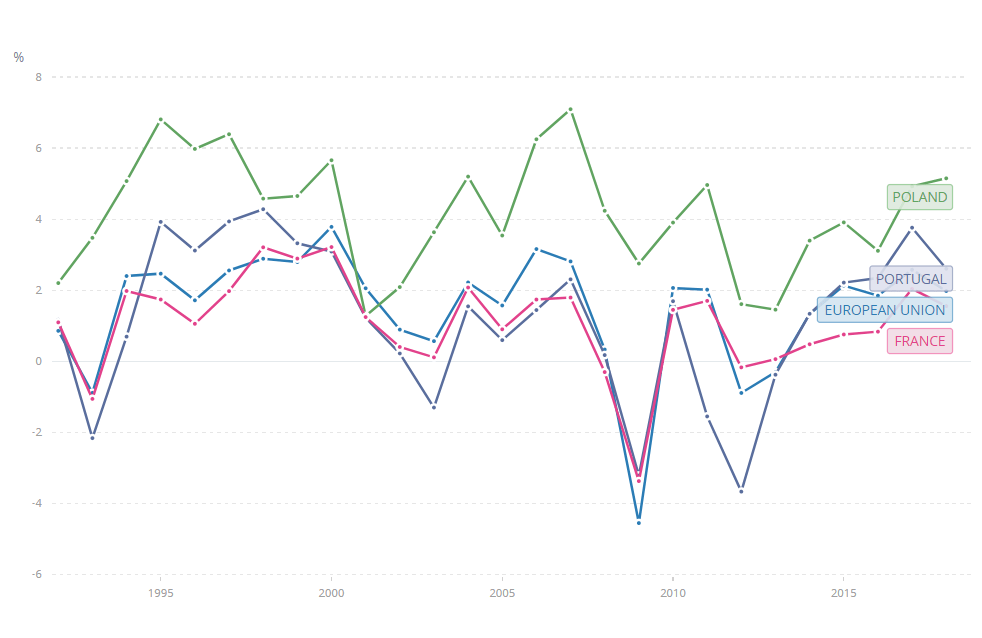
Image 1 - Poland’s GDP per capita growth rate (1992-2019), compared with other European counterparts. The Polish growth has been considerably superior.

Image 1 – Poland’s GDP per capita growth rate (1992-2019), compared with other European counterparts. The Polish growth has been considerably superior.

Although the approval rates of the EU were indeed favourable in Poland, the rise of the nationalist, conservative and Eurosceptic party, PiS (Law and Order) was imminent. Founded in 2001 by the Kaczyński twins, two enticing politicians, this party claimed that the Polish government had become representatives of a corrupt and elite institution, submissive to the European Union. This narrative was appealing to a conservative mass of Polish citizens. It is important to highlight Poland’s issues with its independence, as the country has faced numerous attacks and invasions in the past centuries, often having its own sovereignty withdrawn. The impact of all these devastating decades was a collective trauma and insecurity of losing independence and identity. PiS were very successful in portraying this image to the Polish people, promising to retrieve Poland to its fellows citizens. In the 2015 parliamentary elections, the moderate coalition was unable to secure a victory, after Tusk, its main figure, left to preside over the European Council. As a result, PiS formed a majority government, following its crushing victory.

After PiS gained control of both houses of parliament, they also took over the presidency, with Andrzej Duda’s victory in 2015, who stands in office as of today. His voter-friendly appearance and posture allows the party to appeal to the more moderate voters, while Kaczyński operates behind the curtains. The next step for the party was to take over the judicial system.
 

Democratic Threats and the European Response

Firstly, Law and Order neutered the constitutional court. What was supposed to be an unbiased judicial body to assess the legislation according to the fundamental laws of the country, was now a servant of the main party, packed with loyalist judges and lacking any sort of independence.


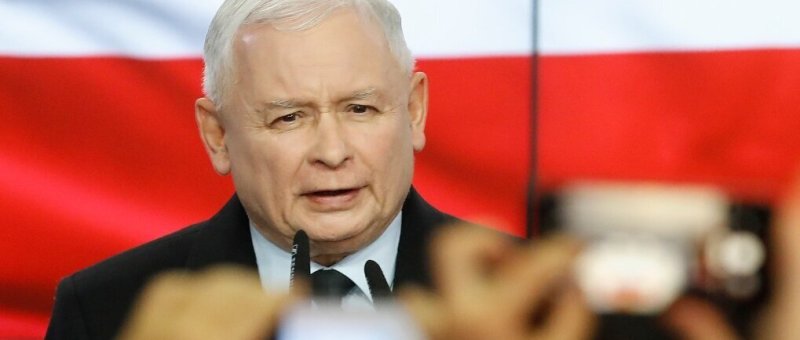
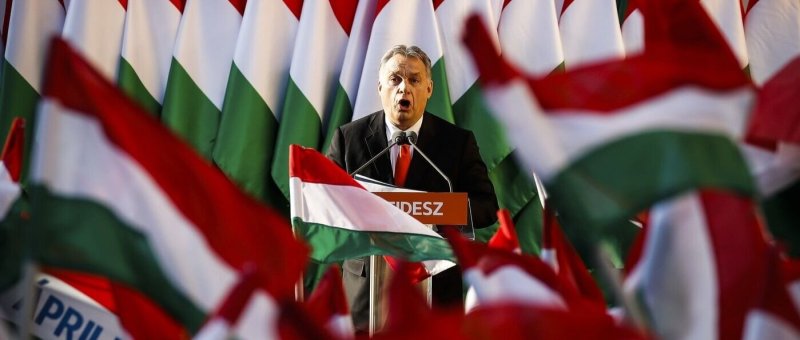
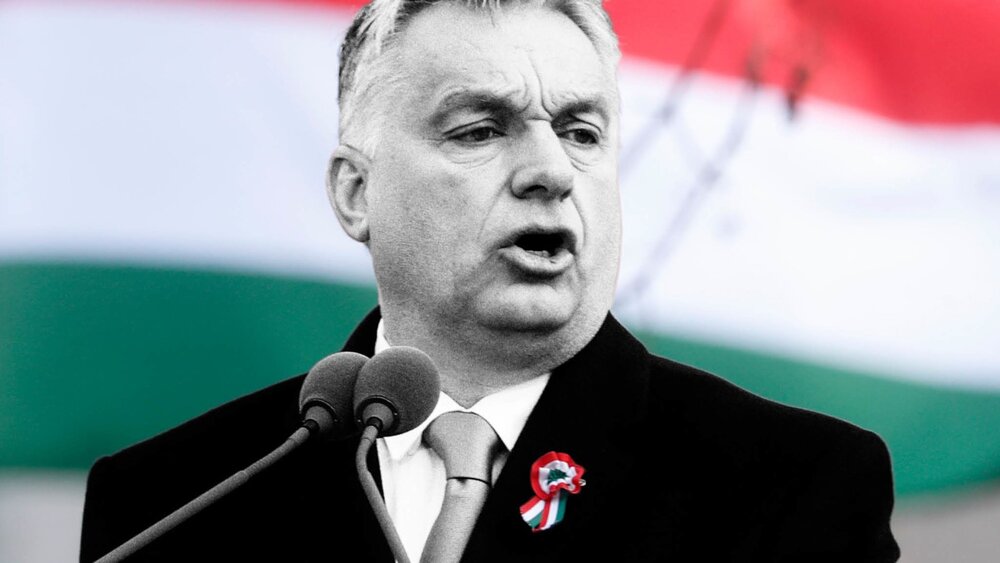
Image 2 - Jarosław Kaczyński, the leader of PiS. This politician has been successful for the rise of a nationalist, conservative movement throughout the Polish territory.

Image 2 – Jarosław Kaczyński, the leader of PiS. This politician has been successful for the rise of a nationalist, conservative movement throughout the Polish territory.

Following this, the government set a number of laws that threatened the whole independence of the judicial branch. For instance, in 2017, a law was passed that set different retiring ages for male and female Supreme Court judges and giving the minister of justice discretionary power to prolong the mandate of some judges. Furthermore, a Disciplinary Chamber was created to review the decisions of the Supreme Court. Many questioned the independence of this body, whose members were appointed by the government. The Rule of Law was under imminent threat. Political rule reigned amidst Polish Courts, a pattern that followed through the next years, illustrated by various new laws. One of which was a recently appointed act which determined that judges may be punished for implementing a judgement of a supranational court. This represented a flagrant attack on the prevalence of European Law over domestic mandate. A further infringement occurred over a 2018 law that lowered the retiring age of all Supreme Court Judges. It resulted in the dismissal of 27 of the 72 justices, one of which was the President of the institution. The tension between the Supreme Court and the government had risen tremendously as an attempt of judicial takeover was on sight and European action was urgent.

“It is with a heavy heart that we’ve decided to initiate article 7.1”

— Frans Timmerman

These were the words of Frans Timmerman, the then European Commission First VP, in late 2017. The article in question is a punitive clause seeking to discipline countries that breach the core principles of the EU, and if needed to sanction them or even suspend their EU voting rights. The Union viewed the recent laws passed by the Polish government to disrupt the necessary independence of the judicial structure of the nation and an evident violation of the Rule of Law. It was not only a threat to the Polish people, but to the whole foundation of the European Union.


However, the case of Article 7 is still ongoing. Europe seems to be incapable of resolving the rule of law issues in Poland and the main cause of such irresolution is the need of unanimity from the remaining member-states for the European Commission to apply punishments. Poland is being backed by Hungary, another nation dangerously sliding onto autocracy and illiberalism. These two have formed an unofficial partnership which empowers their continuous breaches on democratic values through the need of unanimity vote to implement the punishments the EU seeks to apply. The constant mutual support of the two governments endangers all the values that shape the EU, since every time one ruptures the rule of law, it has the pat-on-the-back-like comfort of the other, which perpetuates the cycle to this day.

Freedom in Peril

The attack on judiciary independence doesn’t stand alone in the repertoire of the government’s attacks on democracy. Despite the democratically legitimacy of both parliamentary elections and a rule marked by intensifying nationalism and strong economic growth, Poland is holding a questionable position on humanitarian and progressive causes. During the refugee migration crisis, Poland was one of the nations who bluntly refused to receive migrants and blocked a deal on the redistribution of refugees within Europe. Kaczyński and PiS have adopted an Islamophobic, anti-immigration stance in their phenotype, despite the ECJ declaring their refusal to be against European Law.


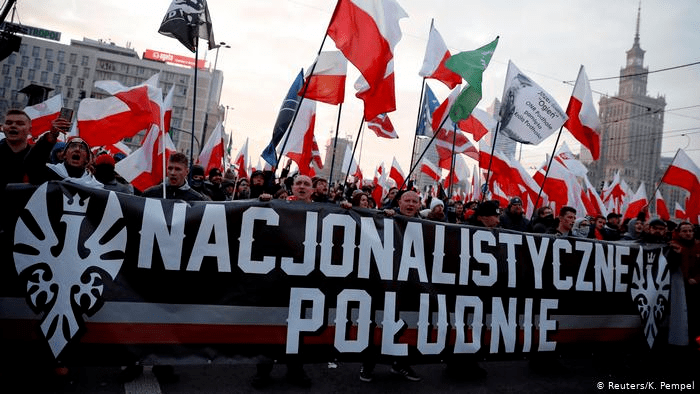
Images 3 and 4 – Throughout the last decade, Poland has been marked by a number of protests from conservative to progressive ones. The most notable ones were the manifestations on Poland’s National Day in 2017, carried out by nationalists and white-supremacist groups.


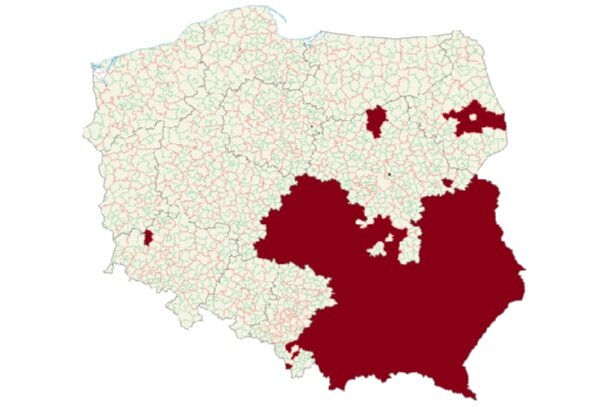
Moreover, last year Poland declared the creation LGBT free zones, where almost 100 municipalities adopted an unwelcoming stance on the ideology. Whilst the declarations were local and unenforceable, the ruling party has often supported homophobic stances, further enhancing the Christian rhetoric of PiS. Poland is still a considerably homophobic country, as same-sex marriage and civil union are still not permitted. Freedom of press is equally in danger, as a growing tendency to criminalize defamation has pushed the expression of media and news outlets to an increasingly restricted ethos. Poland is the third worst-positioned EU country in the World Press Freedom Index, only behind Greece and Hungary.


Image 5- Map of Poland, with the LGBT ideology-free zones in red. Almost a third of the country territory has declared these statements

Image 5- Map of Poland, with the LGBT ideology-free zones in red. Almost a third of the country territory has declared these statements


Image 6- Poland’s data regarding the 2020 World Press Freedom Index

Image 6- Poland’s data regarding the 2020 World Press Freedom Index

The future is rather unsettling for Poland. If on the one hand, Poles are aware and willing to protest against the undemocratic decisions of the government, on the other, the residing feeling of Polish identity, the Polish family and Polish patriotism is boiling up through the masses, fevered by Kaczyński and his party. The certainty is the following: one must not overlook Poland’s situation. To say this is just a regular right-wing ruling would be an understatement, for we are witnessing the endangerment of European democracy right before our eyes.

Europe must stand its ground and fight the rise of illiberalism, or continue to dig an endless hole of bureaucracy and futile irresolution.


Sources: Financial Times, POLITICO Europe, World Bank, EuroActiv, Deutsche Welle

Teams: Global Politics, European Affairs

EU’s Black Sheep: Orbanism

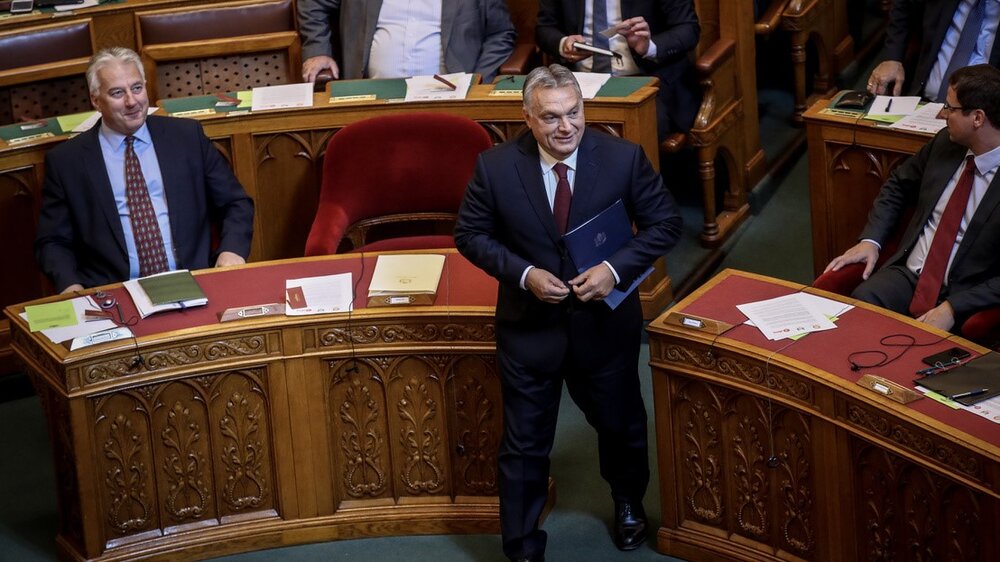
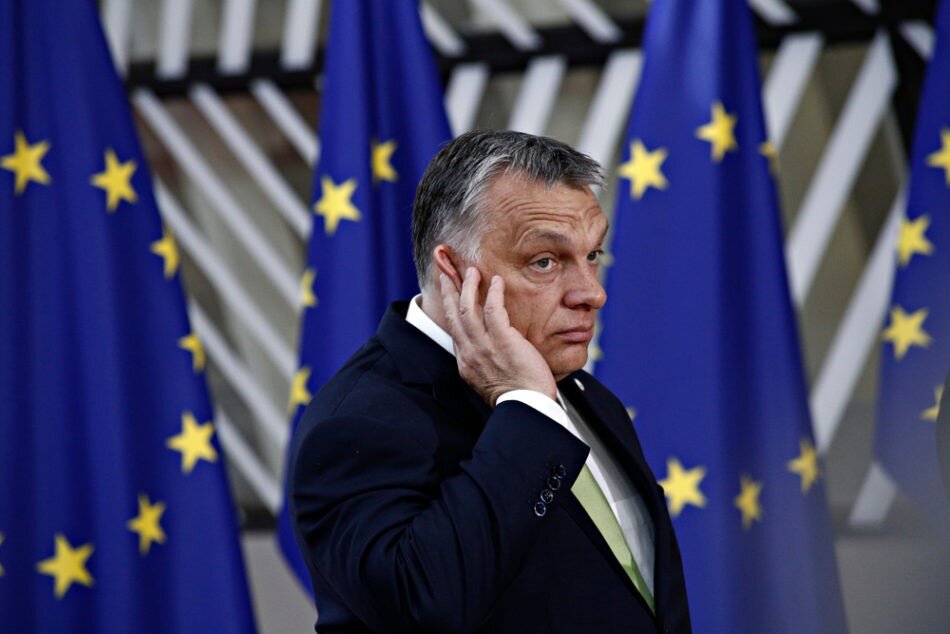
Almost two months ago, Hungary made news all around the world after the country’s National Assembly voted to allow Prime Minister Viktor Orban to rule by decree for an unspecified amount of time. He can now bypass the legislative body if deemed necessary, to fight the coronavirus pandemic. The parliament can repeal this at any time, but the current two-third majority Orban’s party, the Fidesz, holds on the National Assembly makes such a repeal without the government’s approval unlikely. As it was probably predicted, this sedation of Hungary’s democratic institutions resulted in widespread condemnation from all over the western world, but the authoritarian tendencies of Orban’s government have been making headlines for decades.

Hungary is a fairly new democracy, having only had its first free election after a smooth transition from a socialist soviet bloc country into a western-style democracy 30 years ago. Prior to this, the country has an extensive history of authoritarian domination. After breaking away from the Austrian-Hungary Empire at the end of WWI, Hungary became a totalitarian state and lost two-thirds of its territory as a result of the Treaty of Trianon. The humiliation of having lost a majority of its country and having more than three million Hungarians living in neighboring countries lead the government to eventual join sides with the Axis powers in WWII. The war was devastating for Hungary and after the Nazis surrender, the country was turned into a one-party socialist republic under the influence of the Soviet Union for the next 50 years. The lack of a long history of democratic institutions in Hungary could explain the insouciant feeling of the electorate towards Orban’s style of governing, but democracy is also fairly new in the Baltic States, and we do not see this sort of attacks on democracy in those three countries. The success of Orban seems to lie on his talent to appease to the nationalistic and conservative electorate that still dream of unifying the Hungarian people under one great country. 


ght.jpg

Road to Power

Viktor Orban was born in 1963 in a rural zone near Budapest. He studied Law after his compulsory military service. His time in the military is said to have molded his opposition to the communist regime in Hungary, and soon he became very outspoken, with his master thesis being about Poland’s Solidarity Movement, which opposed communism in Soviet-controlled Poland. In 1988 he co-founded Fidesz (an acronym for “Federation of Young Democrats”) with other young opponents of the regime and demanded free elections and the withdrawal of Soviet troops from Hungary. In these early years, Orban was seen as a young liberal icon behind the Iron Curtain. In the late 1980s, Viktor Orban’s career was symbolic of the democratic and western leaning transformations of Eastern Europe. On the first free elections in 1990, Orban was elected as an MP for the National Assembly for the first time, transforming Fidesz from a youth political movement into an important party in the new democratic Hungary. Orban took over control of the party three years later, and under his direction, Fidesz moved away from the liberalism ideas that originally defined it to a more right-wing ideology. First, he rebranded it as a center-right Christian democratic party, and then later in 2002, as the nationalist and authoritarian party it is today. Orban thought that assuming an empty space on the political spectrum was the best way to have success against the left and liberal parties. Gradually, it became the dominant right-wing party in Hungarian politics. Fidesz’s changes are best understood as responses to Orban’s pursuit of power than as driven by ideological evolution. In 1998, Orban was elected prime minister, the youngest ever in the country’s history. His first term was a regular center-right government. Under his leadership, the foundations for Hungary’s membership of the EU and NATO were laid, and his performance was mostly praised. In 2002, Fidesz lost power to the Socialist Party, and Orban lead the opposition until 2010, when he was once again elected as prime-minister by using the Hungarian’s discontent with the Great Recession and widespread corruption charges against the socialist government to win in a landslide.


dtfgd.jpg

The second term of the new Orban government would start the demolition of democratic institutions in Hungary. After the win in 2010, Orban’s party had a two-thirds majority in the National Assembly, and it used it to approve – and then later amend to his benefit – a new constitution that reduced the power of the courts and severely diminished the freedom of the press. Under the new constitution, the number of MPs in the National Assembly was reduced by almost half. The now reduced number of MPs would be elected in redrawn constituencies that are believed to favor Orban’s party, the Fidesz. The new constitution also ended the requirement that judges for the Constitutional Court needed the support of the majority of the parties’ in the National Assembly to be elected, which means judges can now reach the court with a two-thirds majority despite objections from opposition parties, allowing Fidesz to pack the court with allies of the government. As for local courts, the government reduced the retirement age of judges, which forced hundredths to retirement and allowed the government to pack all levels of the judiciary system with Orban sympathizers. With government control of the media, the vanished power of the courts, and a political ally as President, Viktor Orban has created a fortress of power that allowed him to win once again a two-third majority in the National Assembly in 2014 and 2018. With this new coronavirus emergency bill granting Orban the power to rule by decree and to suppress what little remains of the free media in Hungary, the elections of 2022 will likely not be any different.

Can Europe do anything?

The European Union’s reaction to Orban’s recent power grab has so far been diplomatic and deemed “modest”. Although Orban has been suspended from the European People’s Party on his conduct, he has openly characterized the outcome as being “mutually agreed”, instead of a punishment. However, former EU chief Donald Tusk is urging the largest party in the European Parliament to expel Orban’s party, the Fidesz. A statement by thirteen EU countries reminded the risks to fundamental rights and the rule of law but did not directly name Hungary. President of the Commission Ursula von der Leyen urged governments to take strictly proportionate measures, without specifically targeting Budapest, although then mentioned it would analyze the newly passed law and monitor its application. The Council of Europe, the European Commission, Reporters without Borders and the European Parliament all have expressed that the law would pose a threat to democracy in Hungary.

The options the EU has to tackle a case like Hungary are limited. The sanctions process in Article 7 can end up in a member state losing its EU voting rights, but another member can block it – in this case, Hungary could most likely count on Poland’s vote. A proposal to include the rule of law into EU budget negotiations has not been conclusive. The most effective move the European Commission could make might be taking Hungary to the European Court of Justice, as non-compliance with the latter’s rule may lead the country’s first step to exiting the Union. Nonetheless, this process takes time, and for the time being, we have a de facto dictator in the European Union.


gcfr.jpg

Sources: Euronews, Politico, New York Times, Institute Montaigne, The Atlantic, Kim Lane Scheppele on Hungary’s new constitution – the full lecture at CEU


Ana Salgado - Ana Salgado Christian Weber - Christian Weber


Ana Terenas - Ana Terenas João Sande e Castro - João Sande e Castro
Rui Ramalhão - Rui Ramalhão

Teams: Global Politics, European Affairs

Is self-control equal to sacrificing pleasure?

Have you ever regretted eating that hamburger or that pizza some days later? Probably you have, and you are not the only one. How can this possibly be explained? Well, we are humans, it all lies in the way we perceive our own self-control.

Self-control is the concept of sacrificing short-term pleasure for an important long-term benefit. All existing theories are based on this idea of conflict of preferences between the “now” self and the “future” self. The “now” will seek (and consume) a tempting good, but the “future” one would regret such consumption.

Following this idea, preferences are a key element to have present. It is crucial to understand the reflection of individual taste as it explains one’s choice of consumption. Therefore, to address this opposing conflict we have to explore various properties of preferences and relate them with time.

Firstly, it must be recognized that the conflict between the present and the future implies that preferences actually change over time. This is what behavioural economists and scientists like to call time-inconsistent preferences.  Similarly, preferences are usually ranked, meaning that one is more important than the other. So, as the importance of immediate gratification fades quickly as time passes, long-term preferences end up being superior to the short-term ones, forming a hierarchy which consequently characterizes all forms of self-control conflicts. Considering the previously mentioned characteristics, talking about anticipated regret seems pretty logical. Smoking a cigarette provides pleasure to the smoker, but brings with it a sore throat immediately after smoking and potentially cancer in the long term. Knowing this, the smoker who anticipates that he may regret giving into the temptation of smoking a cigarette is experiencing a self-control conflict.


self control conflict

Where does this bring us? Around 96% of the papers that explore the concept of self-control and present it use this idea that self-control lies where there is a given sacrifice of pleasure. More recently this idea is being presented as flawed mainly because of its assumptions. On one hand, it assumes that all consumers trade-off short-term goals with long-term ones and that the absence of a self-control conflict would inevitably result in the choice of the long-term goal (while the short-term goal always represents a breakdown in self-control).

Nevertheless, many elements may change since not all consumers pursue the same superordinate long-term goals. Consider the choice between pizza and grilled chicken salad. A consumer may choose the former but not necessarily experience a self-control failure because he/she does not care about restraining her calorie intake, or because she is a vegetarian, or because she likes pizza more than salad. (Actually, even though American consumers, in general, believe the better a food tastes the less healthy it is, in a recent cross-national survey conducted in the US, UK, France and Belgium, consumers associated ‘unhealthy’ only weakly with ‘tasty’).

Why is this relevant? This is a powerful insight into consumer behaviour that is even relevant in policymaking. A good example of this is the food industry. Behavioural economists cannot substitute nutritionists but they can find a way to help consumers align their goals and actual behaviour with objective criteria. Consumer behaviour researchers can devise interventions that motivate consumers to consider the long-term consequences of their actions. Based on this “theorizing”, it should also be easier to exert self-control when abandoning the idea that pleasurable and beneficial consumption (hedonic consumption) represents a self-control failure. Rather than categorizing foods into good and bad, consumers could train themselves to use relative quantities as a benchmark for harmful consumption. Rationing portion sizes and consumption frequency are indeed powerful strategies to limit food-intake since how much we eat is as much governed by a food’s tastiness as by serving size.

Beyond food and bad habits, self-control is present in our day to day and regret is inherent to human nature. The more we sacrifice short-term pleasure for an important long-term benefit, the more we become aware and the less probable we are to be disappointed over something that we did or failed to do. Regardless, not everything in life is to be regretted and some things are meant to be done today.

Lab Grown Food: Opportunity for sustainability or dystopian nightmare?

In 2014, the United Nations issued a report claiming that at current rates of soil degradation “all of the world’s topsoil could be gone within 60 years”.

The production of livestock is responsible for 14 to 18% of our greenhouse emissions and takes up to 70% of all agricultural land. Most of the world’s crops are used to sustain livestock and it is a major cause of deforestation and water contamination, problems which farther aggravate climate change and the health of our ecosystems.

While the world population has doubled over the last 50 years, the amount of meat produced has more than quadrupled – in fact, if the world ate as much meat as the top 20 meat-eating countries, the whole surface of habitable land would have to be used to feed people, and, even if packing animals together, that still wouldn’t be enough. Moreover, factory farmed animals are fed antibiotics: in the US, more than 70% of all antibiotics sold each year now go to farm animals, which has lead many to speculate that the industry is fueling the risk of a deadly pathogen that is resistant to bacteria, a so called super bug, that will have consequences greater than the current Covid-19 pandemic.

By changing the way we grow meat, or our meat consumption habits, this diagnostic would improve significantly. However, what if we could grow all our food from a lab? Meat might not be the only lab-grown product of the future.


Lab-grown meat, as the name suggests, consists on creating a piece of meat through cell culture. Initially, a small segment of cells tissue is taken from an animal and subsequently, added to a growth medium – like a soup that provides proteins, vitamins, sugars, and hormones. Along with a temperature-controlled environment, the cells are tricked into thinking they are still inside their owner, hence growing and replicating themselves. This process takes between two to six weeks, and the final product is a doughy chunk of meat, close to minced meat, which will then give rise to our everyday meat-products.


Artificial lab grown meat in Petri dish (YouTube)Artificial lab grown meat in Petri dish (YouTube)

Since the 80’s, many products have been used as an attempt to substitute meat, such as soybeans and wheat gluten, however, they could never replace the taste of a hamburger. The objective of cultured meat is quite complex: to create something that tastes just like regular meat, with as much vitamins, proteins, and nutrients, that can be cooked and is as affordable. The biggest challenge, however, is to reproduce its consistency, which hardly influences its flavour and juiciness.

Scientists are looking for ways to reproduce a steak structure: they need to supply nutrients to cells in the centre of a piece of meat, like vessels do in a body. This has been a huge challenge, and the latest progress was made by a Harvard team, using a type of gelatine. They came up with a product that, although not having as much muscle fibre as natural meat, had a similar texture. But even if muscle cells, fat and connective tissue can be made from scratch, the biggest challenge still remains: how can we combine them in order to build an actual steak, with its texture, aroma, flavour, appearance and functionality?

And is lab grown meat even affordable? The first lab-grown burger, produced in 2013 by Mosa Meat, cost $1.2 million per pound (more or less 2.45 million euros per kilogram), due to cell production process’ large costs. However, Future Meat, another lab-grown meat start-up, is planning on launching a new line of in-vitro meat that will cost less than $10 per pound (more or less 2 euros per kilo). This exponential decrease in price in a few years is expected to continue

When it comes to the environmental impacts, they are still being discussed. While Mosa Meats, a clean meat producer, states that cultured meat process requires 99% less land and 96% less water than livestock agriculture, some say producing all our meat in labs would only cut greenhouse emissions from beef by 7%, because of the energy the process requires.

There is also a moral dilemma which still needs to be tackled, i.e. the growth medium. Currently, scientists are using Fetal Bovine Serum, which is, in other words, blood harvested from the fetuses of slaughtered pregnant cows, immediately killing them. While firms are looking for a plant substitute, these processes do not help much on reducing the cruelty of the current methods, although they would drastically reduce the number of slaughtered animals.

Finally, one must also consider the yuck factor: many people are still resilient to the idea of eating something created in a lab, which can be explained by the Uncanny Valley effect. In robotics, this is known as the discomfort with «humanoids» that are closed to being human but not quite there yet. The same happens with meat: when you are faced with something that is a very close imitation, your brain is forced to expect it to be exactly the same, and if not, you will most probably freak out. In February 2019, Animal Advocacy Research Fund funded a survey which revealed that 29.8% of U.S. consumers, 59.3% of Chinese consumers, and 48.7% of Indian consumers would be very/ extremely willing to regularly purchase cell-based meat.


Meat is not the only food that scientists and entrepreneurs are trying to grow in a Lab. Solar Foods grew flour, the main source of calories in the west, from within a metal tank. The process, described like a froth-like soup of bacteria fueled by hydrogen, allowed for the creation of artificial flour. The use of hydrogen was touted as being 10 times as efficient as photosynthesis. And in these labs, where food is grown in giant vats, the land efficiency is estimated at 20.000 times greater by Solar Foods. Under these circumstances, food could virtually be grown anywhere on the world, on a fraction of the area.

Soylent Green – a 1973 movie featuring Charlton Heston and based on a story by Harry Harrison describes a world in the year 2022 where exponential growth of the population has led to natural disasters and chronic food and water shortages. As the actual year 2022 looms, this seems a good time to discuss our options to ensure this fiction does not become reality


World Population Projections (ResearchGate)World Population Projections (ResearchGate)

Maria Mendes

João Guedes

Daniel André

From the conference room to Zoom: the future of remote working

Telecommuting, or remote working, has been frowned upon by employers for many years, who feared unsupervised workers would be much less efficient. However, developments in teleconference and telework technology and, most importantly, the constraints imposed by the coronavirus outbreak, have brought forward a great increase in the remote workers count, and key takeaways from the situation include a boost in employee productivity and reduction in fixed costs for firms, which not only mitigated the fears of employers, but also anticipated a shift in strategic and operational paradigms for firms.

Global crises are historically known to alter societal behaviours, namely on consumption and organizational levels, ultimately altering the path of history. The Black Death, the most fatal pandemic recorded in human history, which is estimated to have killed nearly half of the European population in the 14th century, is credited to have dismantled feudalism, as serfs (peasants) searched for higher wages due to labour shortages.


Rosie the Riveter Inspired women to serve in World War II Rosie the Riveter Inspired women to serve in World War II

Another example is that of World War II when, due to the allocation of a significant share of the male population to war efforts, women were encouraged to enter the workforce, and such effects persisted in the aftermath. COVID-19 is no different, and while changes in consumption habits may only be temporary, this might be the beginning of a new era for employment in general.

From companies’ perspective, it is not only expected, but necessary, an increased focus on reconfiguring the work space to promote safety, as well as on enhancing working-related software, de-risking their supply chains and raising efforts for crisis preparedness. What’s more, a survey conducted by PwC unveiled that 49% of companies plan to make remote work discretionary for positions that allow them to do so, 40% intend to accelerate automation and new ways of working and 26% want to reduce real estate footprint. The latter finding means that this transition in work ethic is likely to hamper office real estate, as firms opt for smaller office spaces or none at all as their workforce transits to their own homes.

Regarding efficiency gains, there is no consensus on how productivity is affected at home. Despite some studies suggesting that teleworking leads to a substantial decrease in productivity, sometimes as much as 45%, there is no clear evidence of such, as there are external factors at play, for instance the conditions of the workplace. In fact, the impact on productivity depends, in part, on the nature of the characteristics of occupations and the nature of tasks, as more creative duties are likely to experience a positive impact, while more dull, repetitive ones are likely to be negatively affected.


mw-860.jpg

Regardless of the possible impact on productivity, the current crisis changed both employees and employers’ perception over teleworking and its benefits.  A survey conducted during the pandemic showed 82% of employees in offices would like to telework one or more days a week after the Covid-19 crisis (Colliers, 2020), implying the experience has been positive. Furthermore, 74% of companies say they intend to formally implement telework (Gartner, 2020), meaning companies are also satisfied with the new working conditions.

In these times of great uncertainty, it seems as if one thing is certain:

the working experience will not be the same even when normality returns.

According to researcher Christopher Kent, work routines and rhythms will most likely be restructured, shifting from the general workday structures of a 9 to 5 towards a more objective-based workday, managed by deadlines and check-ins. Furthermore, the technological developments that enhanced and allowed companies to continue its operations should not be set aside, but integrated and internalized. Now that the majority of companies have already gone through the painful process of adaptation of these tools, it is important that firms take the most out of them even after the crisis has gone by. Lastly, business leaders and managers must be wary of changes in policy and regulations in the work environment in order to prevent future crises like the one we are currently experiencing, while ensuring viable forms of staff surveillance shall telecommuting persist.


Sources: McKinsey, PwC, BCG, Lavola, Forbes


Lourenço Paramés - Lourenço Paramés Tiago Rebelo - Tiago Rebelo Diogo Alves - Diogo Alves

Dubai: The Pearl of the Middle East

This city needs no introduction. As the main attraction and destination of the Middle East, Dubai is an exotic and trendy city full of luxury and amazement. Skyscrapers everywhere, including the highest in the world, building new ones nonstop. The most amazing and extravagant hotels, such as the Burj Al Arab: a seven-star hotel with 200 rooms, each 2 stories high. A coast with artificial capes and islands, full of extraordinary mansions. Its very own indoor ski resort, the Ski Dubai, while outside temperatures reach more than 40º Celsius. One of the most spectacular cities in the world, that in many ways makes no sense at all. How can a city so successful in so many ways be built in a hostile desert, by a previously unknown people, in a region so influenced by political tensions and wars?


The Past

Dubai is one of 7 monarchies that would make the United Arab Emirates (UAE), located on the coast of the Persian Gulf.

In the beginning of the twentieth century, Dubai was just a small insignificant trade port. The city survived by having special diplomatic relations with the United Kingdom, offering stability, and by selling its finest trade resource: high quality pearls. The only special thing about this city was its strategic position, close to the Strait of Hormuz.

In the 1930s, the creation of high-quality fake pearls and the Great Depression devastated the economy. Dubai experienced great migrations and economic losses, now as an official protectorate of the British Empire. It was in this period that the people realised the disadvantages of being dependent on one trade resource and the advantages of having stability in the region, provided by the British. These will be the two factors that will define Dubai.

Old Dubai in 1950 (source: wikipedia)

Old Dubai in 1950 (source: wikipedia)

Throughout the twentieth century, more and more oil was being found in the Emirates, but not much in the Emirate of Dubai. When the UAE became independent in 1972, the country was increasingly dependent on their oil exports. But Dubai learned from its past; it focused on diversifying its sources of income. As such, it invested their share of the oil revenues on infrastructure like ports, roads and airports. From there, they attracted foreign investment, granting special economic zones for any interested. All of this was only possible by having almost perfect stability in the country. As the years passed, they became great competitors in maritime trade, banking, finance, energy, science innovation, aviation and, of course, real estate. It was in the 1990s that the city exploded with the famous skyscrapers, while wars were being fought all over the Middle East.


The Present

Nowadays, it is a global city like no other. Over two million people live in Dubai, with more than 3 quarters being immigrants. While more than 80% of UAE’s GDP is dependent on oil related revenues, less than 5% of Dubai’s GDP is as such. Because it is right between Asia, Europe and Africa; and is so safe and diversified in its services, it serves as a bridge for business and diplomacy between the continents. It is, in many ways, the Switzerland of the Middle East.


Present Dubai

Present Dubai

The main types of people that Dubai attracts are entrepreneurs, to establish their companies in the city so that it becomes increasingly competitive; qualified workers, to work in such companies; and tourists, 13 million per year, from the extremely rich to the normal western, as tourism is a field where Dubai excels at.

I was able to interview an entrepreneur and a tourist so that they could share their experiences in Dubai:

Our entrepreneur is the owner and CEO of a marketing company in Portugal. He chose to do business in Dubai to take the advantage of the bridge between societies. Not only is it easy to set up business in the city, but also there is easy access to other markets from Asia and Africa. There are companies from all over the world in Dubai, making the competition fierce. It’s extremely difficult to survive in such a market, with all the big international players present. Still he is steadily surviving.

Our tourist is a student from Nova SBE that travelled to Dubai during the summer holidays.  She found many comparisons between Dubai to the big cities of the USA: big skyscrapers, big shopping malls, great suburban areas, gigantic highways and the automobile as its main form of transportation. Everything like that, only everything more extravagant. She particularly liked the desert landscape, the extravagant shopping malls and the culture. Most of the old Dubai is often forgotten, but that is where you can truly find the roots of the people, in the old part of the city, like per example, the Souks, covered traditional markets with a different one for each type of product, from clothes to gold.


Dubai’s traditional covered markets, the Souks

Dubai’s traditional covered markets, the Souks

Her trip dismisses the myth of Dubai being only for the super-rich. You can still have a great holiday in Dubai without spending that much.

These testimonies only confirm what was already stated. Dubai is a safe and exciting place to visit and work. But the city is far from perfect: it has serious problems.

The city grew exponentially in only 30 years. The city was not planned to grow that greatly, so there are very serious logistical problems. Big highways separate entire neighbourhoods and many streets are completely disconnected from each other by foot.

Dubai is seen as having a very relaxed law relative to neighbouring countries, and that is true for the most part. Women do not have to cover their hair, other religions are free to be practiced, even alcohol is legal. But there are still harsh laws. You can’t drink in the street, you can’t show intimacy in public (like hugging, holding hands and kissing) and you can’t say or report badly about the government, not in public nor in social media. There is no freedom of speech. One shocking case was of a British Phd student that was in Dubai to study. He was arrested for just suspicion of spying. Trialed and sentenced for life imprisonment with no lawyer present. He was later released, but not after 5 months in solitary confinement.

And then there is the rule of law itself. Many laws are ignored when it becomes convenient. There are reports from tourists of showing intimacy and drinking in public with no repercussions. Some labor laws are also ignored.


Living conditions of forced labor workers

Living conditions of forced labor workers

And that leads to problems in human rights. Many less educated people come to Dubai to work. The more desperate are cheated out of their salary when recruited to various jobs, mostly construction. They are maintained in conditions considered less than humane, forced to work without pay. This is no different than slavery. It is possible that those amazing skyscrapers were constructed by these people.


The Future

Dubai will certainly outlast oil, thanks to its diversification and its eccentric identity, attracting business and attention worldwide. It has serious problems, but they should be overcome with increasing influence from the west.

Meanwhile, the increasingly more bizarre construction projects are underway, like the Dubai Creek Harbour. This will be an urban complex full of luxury apartments, green parks and the Dubai Creek tower. This latter will cost one billion US dollars and it will be the tallest structure ever made by mankind, standing 1,3 kilometres high. Construction was expected to finish in 2021, but that will probably be postponed due to the Covid-19 pandemic. Nevertheless, when it does finish, it will maintain Dubai in the hotspot that it is currently standing.


The Dubai Creek Tower (source: EMAAR Properties)

The Dubai Creek Tower (source: EMAAR Properties)

Crisis Makers: CDS and CDO

CDS

A credit default swap, also described as CDS, is a type of financial derivative that provides an investor protection against the payment’s default.

In these types of derivatives, there is the buyer who is insured by a compensation in case of default. Usually, the payoff corresponds to the face value of the loan. And then, there is the seller who agrees to reimburse the investor in a situation of default. Most of the time, the holder of a CDS is required to pay a continuous premium called “fee” or “spread”, whilst holding the contract. The value of a CDS is determined upon the likelihood of default, as well as its demand.


CDO

It is also important to mention CDO’s, short name for collateralized debt obligations, when mentioning the financial securities involved in the 2008 financial crisis. These products are another type of derivatives and they are created by banks by pooling individual loans into a single product and sold to investors in the secondary market. Hence, the payment’s installments are now redirected to the investor who bought the CDO’s. They are collateralized, meaning there are assets associated with it that work as collateral in case of loan defaults. When constituted by mortgage-loans, these derivatives are called Mortgage-backed securities (MBS).

There is a variation of these instruments called synthetic CDO’s. It uses other derivatives to generate income such as credit default swaps or options, rather than mortgage loans that correspond to cash assets. The buyer takes a short position assuming the underlying assets like the CDOs or mortgage loans will default, paying a premium for the position. Essentially, the buyers are betting for the outcome of the loans. Usually investment banks or hedge funds are involved in finding the counterparty of the deal, since these instruments are not traded in the stock exchange.


The role of CDOs and CDSs in 2008

We often hear the terms CDS and CDO intertwined with the extreme economic downturn period that started in December of 2007 in the US and turned into a global recession in 2009, known as the Great Recession. The reality is that the collapse of the US housing and financial markets can be traced to the unregulated and irresponsible use of these financial instruments.

From 2001 to 2004, the US Federal Reserve held low interest rates to fight slowdown in the growth of economic activity. Simultaneously, federal policy encouraged home ownership which led to a boom in the housing market and its weight on the US economy. Mortgage debt rose at an astonishing rate at the same time as CDOs, using mortgage loans as collateral, proliferated.

Households resorted to mortgage lenders for mortgage loans with small worries about paying back since real estate prices were continuously rising. The lenders would sell these mortgages and pass the risk to investment banks who compiled mortgages in CDOs and split them in three tranches for their clients, passing on the risk. If the loan would default, the first tranche would be the first to get paid followed by the middle and the bottom, which made the top tranche safer than the middle or bottom. As it is in the financial markets, more risk was rewarded with higher return rates. Credit agencies would label the top tranches AAA, the middle BBB and would not even bother to rate bottom tranches.

The continuous rise in the housing market made the demand for CDOs very high, so mortgage lenders lower the standards for qualifying for a mortgage. In other words, these financial intermediaries attributed mortgages to households that were not credit worthy (subprime mortgages). Defaults were not a worry since mortgages would immediately be sold to an investment bank and house prices kept rising. Credit rating agencies did not downgrade these CDOs and investors kept blindly buying them until borrowers started defaulting and lost their homes. Lenders tried to sell all these houses, but since there were so many, housing values did the impossible and plunged, bursting the housing bubble and destroying the value of CDOs. Synthetic CDOs amplified the exposure of the economy to the mortgage market since they enabled infinite bets on the mortgage market and were easy and cheaper to create. Banks and financial institutions were filled with these assets and were unable to sell them, which collapsed and crippled the financial system dragging the US and World economy along.


Collapse of Lehman Brothers in 2008, Source: The Guardian

Collapse of Lehman Brothers in 2008, Source: The Guardian


Post 2008 Scenario

A major lesson withdrawn from the crisis was the lack of regulatory oversight over CDS, which was considered one of the main grounds for the turmoil. Therefore, shortly after the financial crisis, on July 21, 2010, as an attempt to regulate de credit default swap market, the Dodd-Frank Wall Street Report Act of 2009 was signed into US federal law by President Barack Obama, the greatest regulatory overhaul of financial markets since the Glass–Steagall Act almost eight decades earlier. The act not only phased out the riskiest CDS, but also forbade banks from using customer deposits to invest in derivatives, including swaps – Volcker Rule -, enhancing the separation of proprietary trading from commercial banking activities. Also, it required the Commodity Futures Trading Commission to regulate swaps, setting up a clearinghouse to trade and price this type of derivatives.


Sign of the Dodd-Frank Wall Street Report Act of 2009 by President Obama

Sign of the Dodd-Frank Wall Street Report Act of 2009 by President Obama

Consequently, many American banks shifted their swaps across the Atlantic to escape the strict U.S. regulation, since, although all G-20 countries agreed to introduce new legislation, most of them were still finalizing the rules. However, in October 2011, this strategy was sabotaged when the European Economic Area introduced the MiFID II, ensuring fairer, safer and more efficient markets and facilitating greater transparency for all participants.

Furthermore, in 2010, during the November Seoul Summit, leaders of the G-20 countries agreed on new bank capital and liquidity regulations – Basel III-, proposed by the Basel Committee on Banking. These new rules addressed some loopholes that had been exploited by banks, through CDS contracts. Yet, although these regulations appear to convey some degree of safety to banks, if many of their activities are taken off their balance sheets, the risk associated with their portfolios might, on the contrary, be amplified.

Also, the 2008 financial crisis aftermath meant a dry up in demand for CDOs. However, in the years following, the disappointment for the low returns of other bank vehicles reignited investors’ interest in these complex securities. Nevertheless, the environment is undeniably distinct from the scenario leading up to the “Great Recession”. Due to the tighter regulations and capital requirements imposed on these markets, lenders are far more cautious, and investors seem more reluctant when investing in these assets.

Despite the introduction of several regulatory measures on the credit default swap market two years earlier, public attention was once again focused on CDS after the large trading loss sustained by J. P. Morgan. On May 10, 2012, Jamie Dimon, J.P. Morgan Chase CEO, announced the loss of $2 billion, due to the bank’s bet on the strength of the market and, by 2014, the trade had cost the bank $6 billion. Some acknowledge the London Whale (1) case as the result of ineffective risk management, reigniting the controversies about the misuse of CDS and the need for even stricter regulations. 

A decade later, the post crisis credit market is still undergoing major structural changes and one can argue that both Dodd-Frank and Basel III are still works in progress, ultimately reinforcing the emergence of Basel IV. Indeed, the effect of such regulatory measures remains under-research, but their impact is undeniable, and the market is responding through the creation of new products, such as CDS index swaptions and CDS futures. Hence, although there is an emergent need for greater regulation and insight of the market, the development of new CDS and CDO related products gives rise to an innovative market channel full of financial opportunities, setting the tone for a whole new paradigm in credit markets.


(1) Nickname given to the trader Bruno Iksil, who was considered the responsible for the loss of at least $6.2 billion for JPMorgan Chase & Co. in 2012.


Sources: Corporate Finance Institute, The Balance, Bank for International Settlements, Investopedia, Business News Daily


João Ribeiro - João Ribeiro Matilde Mota - Matilde Mota Martim Leong - Martim Leong

Taiwan’s Search for Status

Taiwan in the Past

The island of Taiwan was first settled by the Chinese in the 7th century AC. Its early history is intertwined with that of mainland China. The Portuguese reached the island in 1590 and named it Formosa, “beautiful”, it was then known by this name in the West for the following centuries. Taiwan was once a colony of the Netherlands and Spain, until mainland China regained control in 1683, under the Qing Dynasty.

In 1895, after the Sino-Japanese War, the island was ceded to Japan, who retained it until the end of the Second World War. After Japan’s defeat, the Allies conferred Taiwan to the Republic of China (ROC), a democratic republic that had replaced the Qing Dynasty in 1912.

However, at the time the ROC was fighting a civil war against Communist rebels in the mainland. Even Though the Nationalists, or Kuomintang, led by General Chiang Kai-shek, and the Communist Party of China, led by Mao Zedong, had made a truce during WWII to fight the Japanese invasion, after the war, hostilities resumed. In 1949, after losing four successive capitals in the mainland, General Chiang took refuge in Taiwan and declared Taipei the temporary capital of the Republic of China. He was followed there by two million people – mostly soldiers, members of the Kuomintang intellectual and business elites – and brought with him many Chinese national treasures and much of China’s gold reserves.

Henceforth, Taiwan was ruled as a single-party autocracy under martial law.

General Chiang regarded himself as the legitimate ruler of China, promising to one-day reconquest the mainland. His government retained China’s seat in the UN General Assembly and on the Security Council until October 1971, when both were transferred to the People’s Republic of China. Along with Richard Nixon’s 1972 visit to Beijing recognizing the PRC, this marked the end of the ROC’s plans to reconquer the mainland.

In 1987, martial law in Taiwan was lifted, opening the doors to democracy. In 1988, Lee Teng-hui became the first Taiwan-born president. Lee continued democratic reforms and replaced many mainland-born high officials with ones born in Taiwan. He promoted Taiwanese culture and held the first legislative elections in four decades. The old Parliament, elected in 1947, still had representatives of mainland China; the new Parliament only represented Taiwan, acknowledging it had no control over the mainland.

Throughout the 1990’s, Taiwan continued to move towards democracy and away from its territorial pretensions. A constitutional amendment in 1991 designated Taiwan as the “Free Area”, the only area under the government’s jurisdiction.

Taiwan Currently

Despite operating independently since 1949, China still regards Taiwan as a rebel region that they urge to recapture.  Plus, due to Chinese pressure, merely 15 countries have official diplomatic ties with Taiwan, and though the US is not among them, they provide Taiwan with military support, serving as their grand ally and protector. Therefore, the China-Taiwan relationship is somewhat combative. However, it has been improving: transport, trade and communications were restored between the countries in 2008.

Though initially deep-seated in Chinese tradition, Taiwan has been able to move far enough from the Chinese core ideals for them to be differentiated. For instance, even though their official language is Mandarin, they have also developed their own dialect, Min Nan Chinese. Moreover, they have their own currency, and their political system is visibly disparate from the mainland´s.

The current Taiwanese president, Tsai Ing-wen, became Taiwan’s first female president, after winning the 2016 elections with 56% of the votes in favour of her traditional, Democratic Progressive Party (DPP), 16 years after the party’s first presidential victory. Tsai’s vision has always empowered the idea of an independent, Taiwanese identity, while putting democracy at the country’s steering wheel. 

While Tsai devotes her political involvement to Taiwanese sovereignty, she must mind the consequences of her actions, in order to prevent estranging China, and throwing to waste the 8 years of friendly ties, under the former President, President Ma Ying-jeou.

In defiance of China’s oppression, Taiwan ranks among the world’s leading computer technology producers, with Foxconn Technology Group as its leading firm, netting an income of 4.24 Billion US Dollars in 2018, making it a major economic player in Asia. In addition to that, it has marked its presence globally, as one of the freest places to live, despite the uncertainty surrounding it being an independent nation.

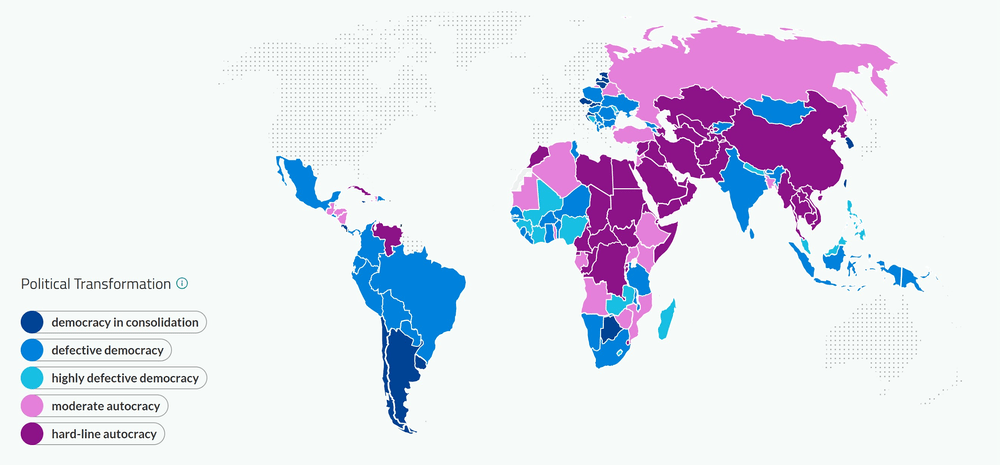
Freedom, according to data, is correlated with the political system – democracies seem to provide freer living standards. In a report done by the Cato Institute, the Fraser Institute and the Liberales Institut at the Friedrich Naumann Foundation for Freedom, the Human Freedom Index (HFI) represents the state of human freedom globally, to what pertains personal, civil and economic freedom. It is estimated that Taiwan has an HFI of 8.4, ranking closely to Nordic countries in terms of freedom; while China merely has an HFI of 6.17, which ranks closer to less developed countries, such as Libya (4.64) and Iraq (4.34). This could be rooted in their different political systems, though other factors contribute too.


democracy index 2019 graphdemocracy index 2019 graph

Taiwan in the future

Taiwan’s future remains uncertain. The last elections were the result of Taiwan’s will to remain detached from China. Tsai Ing-Wen, the re-elected president from the democratic progressive party, had an expressive victory, in the 2020 presidential elections, over the second favourite pro-China candidate. He is the only hope, for many citizens, to maintain and reaffirm Taiwan’s sovereignty.

China, however, doesn’t seem to give up on Taiwan that easily. President Xi Jinping has already clearly stated that Taiwan’s issue “should not be passed down generation after generation”. China’s plan to finally solve Taiwan’s question seems to be near. Many doubts arise from this desire. How will China accomplish the so-called Chinese reunification, after already having retrieved Macau and Hong Kong territories?

Many say that Taiwan will not be able to manage China’s growing diplomatic and military pressure. Others argue that Taiwan is willing to fight for their recognized independence, at whatever costs. The truth is that military investment from both countries has been growing during the past years: In 2020 Taiwan announced that military expenses would amount to 11.9 billion dollars, roughly 2% of their nominal GDP. China’s army, on the other hand, will have a budget of 180 billion dollars, corresponding to 1,3% of their GDP.


chinese military superiority taiwanchinese military superiority taiwan

An obvious interrogation arises:

Can we be witnessing the escalation of an unavoidable war?

Sources: BBC, Statista, Taiwan Government Website, CATO Institute, Economist Intelligence Unit, Financial Times, Council on Foreign Relations

European (Dis)Union: North vs South

The health crisis

The current public health crisis, which has put the world on pause, is a test to human beings and to societies in general. It’s one of the biggest challenges faced by humanity since WWII (as stated by Germany’s chancellor Angela Merkel) and has put in check all structures of society and their response to the unknown. With that being said, the Coronavirus crisis has also been a test to the European Union (particularly, the Eurozone) and its unity.

Since the beginning of the crisis, the unity has been questioned as there wasn’t a prepared common strategy to deal with it.  Indeed, borders started to shut down individually rather than collectively, which didn’t make much sense as it affected the free movement of people, a key pillar in European unity; Italy, which was the first European country severely affected with the virus, appealed to its neighbours for medical equipment and aid, which was promptly denied, further increasing the division and loss of faith in the EU; the question regarding coronabonds re-woke the mutualised debt discussion in the Eurozone and increased pre-existing tensions, with southern countries strongly defending this mutualised debt instrument to respond to the crisis and others (Germany, the Netherlands, Finland and Austria) initially denying it, reopening the old gap between North and South.

Productivity

Indeed, every major crisis becomes a challenge to the EU (more specifically, to the Eurozone) and to its continuity and reinforces core differences between these “two regions”.

One key difference that cannot be ignored is productivity. On average, the “North” is much more productive than the “South”. According to OECD data, in 2018, countries like Germany, Netherlands, or Austria presented a higher GDP per hour than the average GDP per hour in the Eurozone ($59.64/hour); on the other hand, southern Eurozone countries such as Portugal, Spain, Italy or Greece had a lower productivity, below the Eurozone’s benchmark. This productivity division exists for a while and has impacted how countries experience economic growth and thus, their position as economic powers in the EU. Over the years, productivity has been increasing in both regions, with North above and the South always below the benchmark.


1.jpg

This difference has given space for some remarks throughout the EU’s history, with Southern nations being perceived as lazy by some Northern nations (let us remind some unfortunate comments made by former Dutch Finance Minister and president of the Eurogroup, who stated that crisis-hit countries, which were mainly Southern countries, spent their money on “drinks and women”). As shown in the graph, these comments are somewhat unsubstantiated, as Southern European countries work more hours yearly than Northern countries, reducing productivity, a complex and broad concept, often inherent to cultural characteristics. This serves only to further increase tensions between the two regions and further divide the EU, more noticeably in moments of crisis.


2.png

European Debt Crisis

Another moment of division in the Eurozone dates back to 2008, when the Great Recession led to the European Debt crisis, resulting in the collapse of financial institutions and high government debt. This occurred due a high fiscal divergence between the member states, with Northern countries lending intensively to the South, creating an imbalance of capital flows.

 Indeed, in years prior to the crisis, current accounts of the two “regions” were symmetric, with Germany, Austria or Finland experiencing positive values, while Portugal or Greece had negative accounts. Also, capital accounts presented a similar pattern, with the North experiencing much lower values than the South. Instead of promoting structural change in the economy (greater capital accumulation) to converge with the richer countries, the South channelled capital flows from the North to non-tradable goods, i.e., having no export value and created both consumption and investment bubbles (due to low interest rates). Following the 2008 financial crisis, this led to an unbearable situation that culminated in the financial rescue of many southern countries.


3.jpg


Sem Título.png

Who is to blame?

From the North’s point of view, the South was living above its means and was not taking essential structural fiscal measures: while Germany was promoting fiscal discipline (surplus over deficit), the South was excessively expanding domestic demand to raise consumption and investment, unprecedentedly. Southern countries argued that this crisis was a double-edged sword, as creditors were lending at their own risk (low interest rates) and thus, they also had some responsibility for the imbalances in the eurozone.

The lack of common analysis on the crisis encouraged division and the financial rescue packages (based on strict conditionality and fiscal consolidation, dictated by the North) generated political and public criticism in the South, as austerity was deteriorating socio-economic structures and life conditions. The South blamed Germany for imposing its domestic preferences, with major protests against austerity, criticizing what they called the “German-run” Europe.

Nevertheless, while Portugal, Greece or Cyprus were tightening their budgets to repay the debt plus interests, with low investment and unemployment was peeking, Northern countries, like Germany or Austria, benefited from the shift of investment from the south, improving borrowing conditions for their companies (for instance, in 2014, Portugal’s yield of its 10 year bonds were at 5.675%, while Germany’s were 1.944%) and hence, promoting their economic growth, further deepening the division.

Coronabonds

In order to respond to this pandemic crisis, eurozone members discussed possible emergency economic solutions for 10 days, reaching a consensus. The coronabonds, a jointly issued bond, was one of the possible solutions, which intensified the friction between “North” and “South”. The eurobonds were mainly defended by Southern countries because it would be less costly to their governments to pay back the debt, also given the considerable amount of debt that they already have, as they would have easy access to credit at low rates. However, countries in the North, led by the Netherlands (and Germany), declined the idea of a eurobond because it would mean that their own taxpayers would be on the hook for the benefit of other countries, who they claim to have lived beyond their means, raising concerns of moral hazard. This divergency is not new; in 2008, in the financial crisis, the idea of eurobonds also emerged and was not applied. Unlike the previous crisis, where one can argue was caused by financial misbehaviour of some countries (endogenous factors), the current crisis is an exogenous shock that doesn’t discriminate based on cultural and fiscal differences, meaning that there should be a common solution rather than trying to blame countries on something that it’s not their own making.

Even though the EU has reached a short-term agreement worth over €500 billion to respond to the crisis, it hasn’t yet agreed on a common economic recovery, which is still a source of division. The real test will be when the economy slowly starts the path to normality. Meanwhile, populist, right-wing forces and eurosceptics observe, with discontent, how this crisis unfolds.

It’s up to the European Union to stay together.


0.jpg

Sources: Financial Times, Time, Público, OECD, Pordata, Expresso, npr, NAC, Euronews, The balance


Raquel Novo - Raquel Novo Teresa Thomas - Teresa Thomas

Behavioral economics in action: the role of behavioral units in politics

In this era of social networks, communication has reached new levels of virality. The Network of Networks – the Internet – has facilitated the creation of a new status quo: from governments and businesses to common citizens, each piece of information inserted and shared in the Web has the potential (given some very small probability factors) to become viral. If that happens, it cannot be stopped. No matter how far you are from the formal location where the original information fluctuates you will know about it. And it only needs a fraction of seconds.

How should people be in such an environment?  At the current speed at which media spread, even words have tremendous impact when misused. Likewise, silences also have a tragic impact when speech is needed. There is a need to be fast and ready to process information. In the case of politicians, words mean actions, words mean decisions, and these decisions impact much more than themselves: they affect millions of lives.

One lesson that Behavioral Science has taught well is how it is human nature to systematically make mistakes in evaluating circumstances. This comes with no shame: our ancestors needed to make decisions quite fast, and that led us to develop mechanisms to quickly judge whether a shadow was one of a rock or say, a lion. This is no different at this time, as we are still required to make these fast decisions. Politicians, corporate top management, governmental bodies’ leaders, some people’s job is to make decisions better than others for others. Yet, very often is forgotten how even our leaders are human. As so, they are equally prone to the same heuristics of anybody else. Yes, they may be more aware, and yes, they are skilled decision makers (usually), but emergency situations require quick reactions.

Our brain is programmed to follow a more rational, logic system (lets call it system 2) when decisions are complicated and require abstraction. However, most is processed by a quick, instinctive mechanism (that we call system 1). The latter, is the one responsible for both convenient intellectual shortcuts as well as for all of our biases and heuristics.

Availability is the name for the heuristics that describes how we evaluate situations based on examples that come up to our mind. This is among the main reasons why people are more scared about a plane crash when the news has reported one unlucky case, ignoring how many flights are done daily, yearly, with virtually no accident.

For the same reason, when something has never happened (or, to better put it, has never happened while we were conscious and alive…), we fail to capture the potential consequences of that event dramatically. We human beings are simply very bad at evaluating probabilities. Again, this is true even for the most capable, skilled leaders! (see our article on Nudging for more insights)

The work of behavioral economists has helped highlight this condition. Starting from the first inception with the research of psychologists and Nobel prize recipient Daniel Kahneman and his fellow Amos Tversky, the more recent work of economists such as Richard Thaler and Dan Ariely (author of the acclaimed Nudge and Misbehaving, among others), helped spreading awareness about the potential benefits of the behavioral science among various high ranks. President Obama himself has been a perpetrator of the nudging theories in his second mandate; yet, it is a case rather than the norm.


2.png

Availability heuristics, Groupthink (the tendency of believing something just because others believe it), Inertia and many other cognitive and emotional biases, help us explain why governments failed to evaluate the Covid-19 threat on a systematic, large scale. Why did this happen, despite early warnings and examples by the first victims, from China to South Korea? No simple answer is the right answer: many actors from different contexts with different interests likely lead to an environment where cooperation and mission alignment is tough to achieve. But one thing we can be sure: we are all humans, and as such, as scientific research has demonstrated, we are all prone to biased decision making. Through this, perhaps we could find a common denominator, a common ground for global discussion, from individual to country level.

The current situation shows how the role of behavioral science is still unclear. As an example, the UK has indeed a behavioral insights team operating. In the last days, the debate is around the decision of prime minister Boris Johnson not to enforce quarantine measures but rather “nudge around” the situation. Is it the right choice? Is it the right time to act like this? Is behavioral science going to be blamed in case the decision doesn’t have the hoped results? Still, the ultimate decision power doesn’t lie in behavioral units, but in politicians. Takes unbiased foresight for a leader to understand when a threat has to be taken seriously despite no direct consequence can be observed in his/her community. In this case, we should keep in mind that it is the prime minister’s decision on when to take action and who to ask for collaboration from.


1.jpg

Should perhaps behavioral science be first a way to improve decisions at a widespread individual level, before becoming a toy at disposal of biased leaders? Behavioral units are still scarce, with a bunch of countries actively using them. We shall see how events unfold…

Take this little quiz to test which system you’re naturally relying on to read a piece:

1-A bat and a ball cost 1.10€ in total. The bat costs 1.00€ more than the ball. How much does the ball cost? … cents

2-If it takes 5 machines 5 minutes to make 5 widgets, how long would it take 100 machines to make 100 widgets? …Minutes

3-In a lake, there is a patch of lily pads. Every day, the patch doubles in size. If it takes 48 days for the patch to cover the entire lake, how long would it take for the patch to cover half of the lake? …days

To check your answers go to our instagram/web page. Did you get them? Maybe just some? If you’re interested in exploring more of the research behind “clever formulations” and its applications, consider the read of “Nudge”, by Richard Thaler and Cass Sunstein.

Sources: The Guardian, Politico, Apolitical, The conversation, Behavioural Economics.com, Springer

QUIZZ SOLUTIONS:
1- (5 cents)
2-(5 minutes)
3-(47 days)