Daniel Zhang: From Janitor to Chairman

Once mistaken for the janitor by an employee’s parent, Alibaba Group’s CEO Daniel Zhang will be replacing Jack Ma as chairman of the company. What are the prospects?

In 1999, the biggest e-commerce and retail company in the world was created in an apartment in Hangzhou by a team of 18 individuals. One of the co-founders, Jack Ma (7.8% stake), then became the enterprise’s CEO and chairman and, consecutively, China’s wealthiest man, with a net worth of around US$42 billion. On September 2018, Mr. Ma publicly announced that he would be stepping down as Alibaba’s chairman and, one year after, on the 10th of the same month, the role of executive chair was passed on to Daniel Zhang. But what legacy did Jack Ma leave behind?

The Alibaba Group provides business-to-business – B2B – (Alibaba.com), business-to-consumer – B2C (Tmall) and consumer-to-consumer – C2C – (Taobao) sales services. It is considered the largest e-commerce company, with a gross merchandise value in 2018 of US$854 billion, outperforming Amazon3 and eBay4 combined. Furthermore, the company had the highest initial public offering (IPO) in history, with an astonishing value of US$228 billion when Alibaba raised more shares shortly after getting listed in the stock market5. As of 10th September 2019, when Jack Ma resigned from his position, the Alibaba Group had a market cap of US$455.6 billion.

It looks as if Daniel Zhang has some really big shoes to fill, and the Chinese situation is very precarious at the moment, with its economic growth slowing down (6.2% yearly growth rate, the lowest since 1992), the trade war with the US and due to the protests in Hong Kong, that have already resulted in delay of a stock offering that could have raised US$20 billion for the company.

However, Mr. Zhang has proven so far to be extremely competent for this task. He joined the Alibaba Group in 2007 as CFO of Taobao (comparable to eBay) that, despite being the most visited website at the time, was suffering from severe losses and fraudulent sellers. In the following year, he was put in charge of the development of Tmall (comparable to Amazon) and, in order to attract brand names to this subsidiary of Alibaba, not only did he provide top merchants with relevant information regarding their buyers – who was buying what, area of residence, which ads were more effective – but he also installed a more complex security system concerning copycats and, as a result, sales rocketed. Daniel Zhang was also responsible for the creation of Singles’ Day, which is an annual deals-fest whose sales amounted to US$31 billion last year alone, outdoing the values of Black Friday in the USA.

And it does not stop here: as a chairman, Daniel Zhang has revealed initiatives to place Alibaba in fields such as finance, healthcare, films and music. He has stated in an interview with Bloomberg:

“Every business has a life cycle. You have to be innovative and create new businesses with new technology, with a new model. Then that can make our entire business sustainable. We always say that we want to build a sustainable, long-term business. But most of it is not evergreen. I strongly believe that if we don’t kill our existing business, someone else will. So I’d rather see our new business kill our existing business.”

— Daniel Zhang

Of many projects that Zhang has been developing, however, there is one remarkably ambitious and innovative, Freshippo. This is a start-up of the Alibaba Group that would unite the concept of a grocery store, a restaurant and a delivery app all together, along with the aid of robotics and facial recognition. With 150 stores across 17 cities, Daniel Zhang states that Alibaba is determined to take 50% of the food delivery sector. Moreover, on the 25th of this month, the enterprise unveiled its first chip developed for artificial intelligence, becoming the most recent non-traditional chipmaker company to develop its own AI hardware.

The future, however, is uncertain, as many start-ups strive to compete for leadership of the food delivery market, and expansion has been challenging. Alibaba has already sunk US$4 billion in attempts at expanding to Southeast Asia and Donald Trump’s administration is considering the banning of Chinese companies listing in the US as a move in the trade war, which will greatly impact Alibaba’s shares, that have gone down by 4% since the news were released.

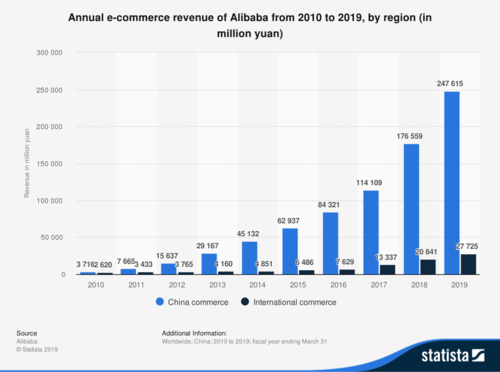
In order to analyse the outlook for Alibaba, it is important to consider its current presence in global markets while comparing it to China, its main source of revenue. One of Jack Ma’s long-term goals was to have half of the revenue coming from outside of China, but it is clear that the company is far from independent of the Chinese market provided that, in this year, its e-commerce revenues from international commerce only amounted to a mere 10% of Alibaba’s total revenues. However, both its subsidiaries Taobao and Tmall are clear leaders in the overall global markets when comparing gross merchandise value.

Annual e-commerce revenue of AlibabaAnnual e-commerce revenue of Alibaba

Most popular marketplaces worldwide in 2018Most popular marketplaces worldwide in 2018

All things considered, although the leadership of Daniel Zhang has been looking promising for the company, there are many key factors that are weighing Alibaba Group down, so large global expansion opportunities might be jeopardized by several adversities. The question that lingers is: Will Daniel Zhang leave triumphant or was he at the right place at the wrong time?

Have you ever heard about Switzerland?

Finland, Norway, Sweden, all these countries are seen as the dream country to raise your children, but have you ever heard about Switzerland? I’m not talking about its chocolate, inventors or its capability to shelter its entire human population in nuclear fallout shelters in the event of a nuclear war; in fact, what is more intriguing it’s their education system and the possibility of it being strongly related to the Swiss economy.

Swiss Education System in a Nutshell

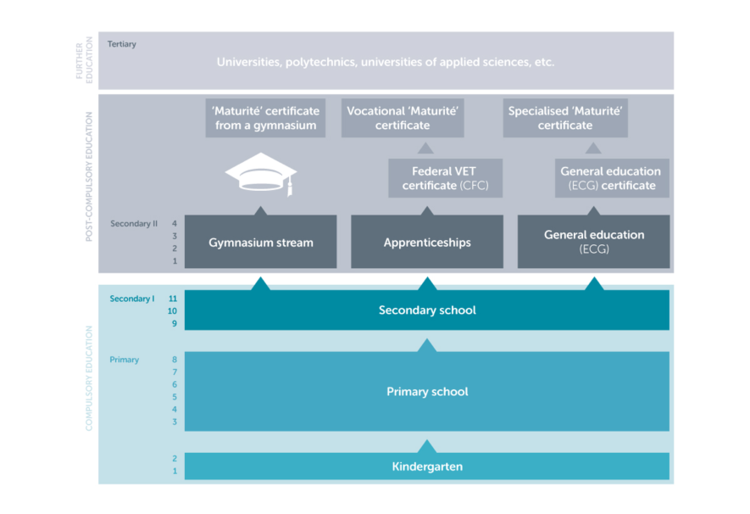
Image 1: Swiss Education SystemImage 1: Swiss Education System

The Swiss educational system is decentralized, and the cantons (member states of the Swiss Confederation) are responsible for providing educational services. Therefore, some content may vary significantly from one canton to another. Nevertheless, the general structure consists of eleven years of free compulsory education. Now, here’s what’s peculiar: at the end of the primary cycle (6th grade), students make some theoretical and psychotechnical tests in order to be selected to different schools according to their specific characteristics, competences and psychotechnical trendsStudents with lower grades or with more practical competences go to Oberstuf, a school more vocationally oriented; depending on their success as students, they can choose the area they want to study and take a 3-year course in a dual system – 1 day per week having theoretical classes and 4 days doing an internship. Everyone can take as many as courses they want to. On the other hand, students with the best grades tend to go to Gymnasium, ending up with more theoretical and intellectually demanding programs so they are well prepared for tertiary education.

Now, while this intervention and channeling of students from an early age may seem discriminatory, cruel and rushed, in fact, it may be a key factor for the Swiss Economy success. It is also interesting and useful to compare the performance of Switzerland with another European country. In order to do so, Portugal was chosen.

Note: The analysis will be focused on the population with upper secondary and post-secondary education. All statistical data was provided by PORDATA.

Key indicators

I. Early Leavers from Education

Concerning the early leavers from education and training between 18 and 24 years old, both countries show a significant decrease. However, Portugal has made a bigger effort on this, by lowering the rate of 40,1% in 1996 to 12,6%, in 2017. Switzerland, on the other hand, already had a very low rate of early leavers in 1996 (6,1%), even though it also got lower over the years, reaching a rate of 4,5%.

In both countries if students are having low academic performance, school is in charge of talking to their parents. However, in Switzerland they give a special attention to the discouraged students by having social workers that make sure they do not drop out easily of the courses: if they don’t like the course, they’re immediately accompanied in order to find the course that fits them better. This may explain the low rate of early leavers in Switzerland when compared to Portugal.

II. Population with upper secondary and post-secondary non-tertiary education 

The part of population with upper secondary and post-secondary non-tertiary education, in percentage of the population between 25 and 60 years old, increased in Portugal and decreased in Switzerland. However Switzerland’s values are still very high comparing to Portugal’s. In Portugal, it started with a 10,8%, in the first year of analysis, and had a 23,9%, in 2017. However, Switzerland shows significantly bigger values in these periods, having 61,4% in 1996 and 42,5% in 2017, twice Portugal’s rate.

In Switzerland, as you finish any vocational course you are considered specialized in that area, having a certificate that is highly valued by the companies. This is an incentive for students who want to take these courses. Unfortunately, in Portugal, professional courses are not as valued by neither the students nor the employers – they’re seen as an alternative way of ending compulsory education rather than being a way of getting instructed in a future viable employment. The exception seems to be tourism and hospitality schools, which have been rated as good and reliable vocational schools. In the end, this is a possible reason for this difference between the rates. This said, a lot of firms find themselves constrained in their business growth due to the lack of qualified workers in the industrial area, such as electricians, mechanics or even locksmiths.

III. Unemployment rate by level of education

 When analysing the unemployment rates (considering population from 15 to 74 years) in these two countries, it’s clear that they are both increasing, with Portugal at a higher pace than Switzerland. Between 1996 and 2017, Portugal went from a rate of 7,4% to 8,87% while Switzerland went from 3,7% to 4,8%, keeping it substantially low.

 When going through the unemployment rate by levels of education, one can observe that this rate is higher for people with lower education, referring to 2017, in both countries. However, concerning post-secondary non-tertiary education, there is a huge difference between the two countries:

None or Primary Education:

  • Portugal: 9,8

  • Swiss: 8,3

Post-secondary Non-tertiary Education:

  • Portugal: 9,9

  • Swiss: 4,7

Tertiary Education:

  • Portugal: 6,5

  • Swiss: 3,8

The lower rate of Switzerland may be explained not only by the facts supra mentioned but also due to the fact that at the end of the vocational formations, most of the students are automatically hired by the firms where they worked during the 3-year internship, as they already have confidence in their abilities and commitment.

Furthermore, this education system reflects the real needs of the country: they change the number of course vacancies depending on the demand and supply of the labor market. This way, one could say that the government tries to maximize the efficiency between unemployment rate and the lack of people in some sectors. This is one of the strongest points where any kind of relation between the existing courses in the education system and the economy of this country can be inferred.

Wrapping up

 Swiss companies do not need to waste their main resources – time and money – in workers’ training – the employees already know exactly what to do and how they should behave within the company. This is one of the most impactful advantages of the Swiss system. Firms obtain young and qualified workforce and schools obtain a high level of employability in their courses, while students get a certificated course and will find a job much more easily. Besides being excellent for the macroeconomics of the country, it also allows everyone in the country to have professional and inclusion opportunities.

Switzerland is a country that regards knowledge and education as a key of its development.

1571665844114-MBBH0DK0JACKEFM25CLP.jpeg

MARIANA - INGLÊS Mariana Inglês VLADYSLAVA - SHOTURMA Vladyslava Shturma

Living Under the Uncertainty of Brexit

Brexit: a brief recap

In 1975, Britain held its first referendum on membership, in which 67% of the electorate expressed a desire to stay in the European Economic Community.

In 2013, as part of a political gamble for power, David Cameron promised a national referendum on European Union membership. This referendum was ultimately held on 23rd June 2016 and 51.9% of the electorate voted to leave the EU.

With the public debate being somewhat poor and contaminated by all sorts of ‘alternative facts’, and with the design of the referendum itself being lackluster (pitting two highly vague concepts of ‘Leave’ and ‘Remain’ against each other), the Pandora’s box was opened.

Ever since that day, a nation that was once known for its attitude of stability, diplomacy, and moderation has become increasingly divided, volatile, and polarized. The traditional two-party system collapsed. For the past 3 years, the UK’s entire energy has been devoted to Brexit, and British politicians have had to learn the hard way the intricacies of the European project (something which they had refused to do for a long time). For proof, look no further than the fact that the UK was supposed to have left the EU by 29th March 2019, and more than half a year later is still a full member of the European club – struggling to secure yet another extension to its membership.

A soap opera of biblical proportions

If you are, like I am, an aficionado of politics and international relations, you may have spent the last years savoring popcorn and watching history unfold upon your eyes. You have watched David Cameron’s political bet backfire spectacularly, Theresa May’s deal see the biggest government defeat in decades (not once, not twice, but thrice), and Boris Johnson suspending Parliament, only to have the Supreme Court rule the suspension to be void and null of effect.

You have watched MPs rebelling against their own government and building cross-party coalitions; laws being passed to force the Prime Minister to request an extension of the UK’s membership in the EU; and that Prime Minister repeatedly threatening to de facto disrespect those laws. You have repeatedly thought that this saga could not get any wilder, only to have your expectations defied time and time again.

Life as an EU national in the UK

However, as entertaining as a real-life version of House of Cards may be for those watching in the continent and beyond, it is everything but fun for the nearly 4 million EU nationals residing in the UK.

The fact is, our livelihoods are very closely intertwined with the unfolding of this play. Guessing what comes next is no longer a matter of optional personal leisure, but a mandatory exercise of survival. Mocking the tea-loving version of Donald Trump is no longer amusing when you realize that, for all effects and purposes, that person is your Prime Minister.

Some can handle uncertainty better than others – but all of us need the basic assurances. The assurance that, no matter what happens, we won’t be kicked out of the country where we’ve decided to build our lives in. That we’ll continue to hold on to our job. That committing to a 1-year house renting contract is safe. That if the Government doesn’t reach a deal with the EU, we can continue to get the groceries and the medicine we need, instead of facing a run on stocks. That we feel we are welcomed residents and not temporary guests. That we’re part of a broader community, rather than pawns of a chess game.

Unfortunately, for an EU national living in the UK, those boxes have been hard to tick off lately. When in the other side of the Atlantic you have the leader of the free world ripping international agreements to shreds, and in your own nation you have a sitting Prime Minister unlawfully suspending Parliament and threatening to break the law, the most quintessential foundations of democracy are challenged. And when the fabric of society is stretched to that point, there is nothing you can take for granted.

For instance: in theory, EU nationals can apply to stay in the UK until 31st December 2020 if there is ‘no deal’, and until 30 June 2021 if both parties agree to a deal. In theory, if you get that status, you’re entitled to carry on living and working in the UK as if nothing had happened. But how can you be so sure that theory corresponds to practice when the Prime Minister does not even respect the basic principle of the rule of law?

gettyimages-543428774-2048x2048.jpg

That is precisely the kind of existential uncertainty EU nationals have been grappling with every day.

What comes next?

If Brexit were a drama, its climax would most likely be this upcoming Saturday, 19th October 2019.

This will be the day when we fully grasp the implications of the EU Summit, that will be held between the 17th and 18th October and decide the ultimate fate of the UK/EU relationship. It will also be the deadline of the Benn Act (which mandates the Prime Minister to seek an extension if he is unable to get a deal by then). It will furthermore be the first time the British Parliament seats on a Saturday since the Falkland War of 1982. And, finally, it will be the day of the People’s March, a protest demanding a second referendum.

With such an explosive cocktail of unprecedented happenings, what comes next is anybody’s guess. Will there be a deal or not? Will there be an extension or not? What will be the nature of an hypothetical extension? Will there be a general election? Will there be a second referendum? Will the Prime Minister break the law and be found in contempt? Will we get to the extreme situation of reaching the 31st of October and finding ourselves in a ‘limbo’, with the Prime Minister declaring the UK to be out of the EU, only to have the courts render that decision as void and null of effect days later?

Frankly, nobody knows. Not Boris, not Barnier, and certainly not me. The good (or bad) news is that we won’t have to wait much longer to find out.

Behavioral What?

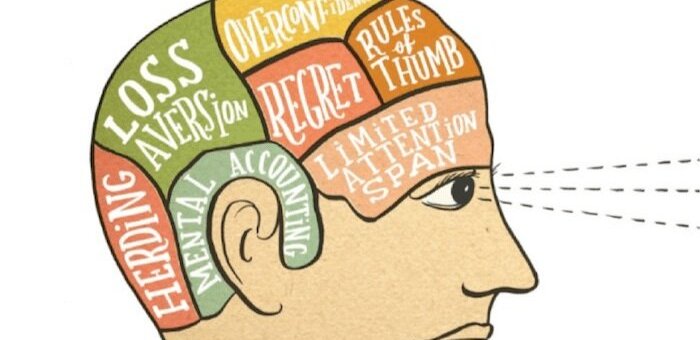
What is in fact behavioral economics? How is our economic understanding related to human behaviour? Nowadays, more people are beginning to change their reasoning from a ‘strictly mathematical’ point of view to a more ‘humanitarian’ one. Being it around the environment, human rights or the effect of advertising on consumerism, the human brain is evolving into a different stage. Since the 18th century, economics has created itself around theories founded on rational human behaviour. However, are we always that rational? It is taught that it is so.

In order to generalize and begin an understanding of an economic model we first simplify. We teach ourselves and each other that all decisions are in the best interest of the maker in hope for the best possible outcome. However, it is not taken into account rapid changes on our opportunity cost due to context and circumstances.

For example, when we go to the supermarket, the economic meaning for our decision on what to buy lies only our own affordability of the price, tastes and needs, even though we are influenced by our context. For instance, variations of our shopping list may occur if we go in on an empty stomach since we tend to buy more of what we need and other superfluous and not-thought-before goods. But that may only appear as a textbook footnote named Assumptions. Behavioral economics studies what is the mental process behind this reasoning and how can we predict it.

It is difficult to mathematically estimate the “percentage of irrationality” that is present on our personal and economic decisions. Nevertheless, it is remarkably easy to get a hold of the subsequent effects.

As Dan Ariely exposed in his book The Upside of Irrationality, human beings are very conscious of their own tendency to procrastinate, to put off decisions that are in their best interest.

Economically, in a perfectly rational world procrastination wouldn’t be a problem. By comparing short and long-term benefits the decision-making process would be obvious and unquestionable, we would follow the market models and operate accordingly to what was foreseen. Still, actual human actions have caused the implosion of Wall Street in 2008, bringing down entire markets because the financial market is man-made. Actual humans made the wrong, self-interested decisions that crashed the Venezuelan economy when the president and all associated government should be responsible for their people and should have followed what was in the country’s best interest.

Image 2

More and more today we are acknowledging both the rational and the irrational of human behavior and decision-making in order to be able to better adjust economic predictions to the actual future stream of events. By analysing how all of us are influenced by irrationality, models are being reviewed and completed. Our assumptions on what rational model-acting humans think and do may not be, under most circumstances, are not wrong. However, the human brain is complex enough to turn the economic thinking around and make textbook decisions different from the real deal.

A Very Brief Overview on U.S. Tariffs

Simply searching “Trump tariffs” on Google, at the moment of writing this article, presented me with a staggering amount of 149 000 000 results. At the same time simply searching “tariffs” yielded 92 700 000. This is both a testament to the strangeness of Google’s algorithm and to how much of a contentious issue this has turned into throughout the presidency of Donald Trump. We’ll take a short look at tariffs’ history in the U.S. and at some recent issues regarding them.

Shortly after the American Revolution, in a period from 1783-1789, states would often levy tariffs towards one another. However, in 1789, this was changed with the ratification of the Constitution of the United States which now did not permit those restrictions between states. In this Constitution it is stated that Congress has the power to: “…lay and collect taxes, duties, imposts and excises, pay the debts and provide for the common defense and general welfare of the United States”, and to “…regulate Commerce with foreign Nations, and among the several States, and with the Indian Tribes”.

It was exercising this power that the first major piece legislation after the ratification of the Constitution, known as the Tariff Act of 1789, was passed by Congress and signed into law by president George Washington. This Act served to address the government’s need of funding to pay off debts it had acquired during the Revolutionary War. It is worthy of note that the first individual income tax in the U.S. would only come into existence in 1861, and so, at the time, tariffs were one of the government’s primary source of revenue. It was also enacted in order to protect domestic industries struggling to compete with cheaper European goods, in the period after the war.

Perhaps the reader has heard in recent news that Mr. Trump’s recent tariffs were brought about by executive order. This would seem to be an overreach on part of the President. However, in the 20th century, two different pieces of legislation were enacted that gave the executive branch the ability to set tariffs, under certain conditions. They were the Trading with the Enemy Act and the Trade Expansion Act in 1917 and 1962, respectively. The former gives the president the ability to regulate all trade made between the U.S. and one of its enemies in time of war. But it was due to the latter that the infamous steel and aluminum tariffs were brought about in 2018. Indeed, this act gives the executive branch the authority to levy these restrictions on trade if “an article is being imported into the United States in such quantities or under such circumstances as to threaten or impair the national security.

George Washington once said something reminiscent of this:

A free people ought not only to be armed, but disciplined; to which end a uniform and well-digested plan is requisite; and their safety and interest require that they should promote such manufactories as tend to render them independent of others for essential, particularly military, supplies.

— George Washington

In itself, this reasoning is not at all devoid of merit: indeed, it would not be wise for the U.S. to depend solely on China for their supply of steel, a material of high importance for national security. What might be worrisome, though, is that this reasoning is very broad and prone to abuse. Furthermore, it is also worthy of note that the U.S, like the rest of the world, are nearly solely dependent on China for their supply of rare earths, which are crucial for a lot of technologies including those of high-end military gear. Indeed, in 2018, China extracted around 70% of the world’s rare earth supply for that year.

Some claim that Mr. Trump is simply catering to voters in the so-called Rust Belt, which was negatively affected by the decline of the coal and steel industries, and that this issue was merely disguised as a national security risk to avoid the troublesome and time-consuming bureaucracies of the legislative branch.

Undeniable, however, is the adverse impact such tariffs had and will have on other industries which use steel as an input. For example, General Motors closed several plants cutting around 14.000 jobs, claiming that the increased production costs, driven up by the tariffs, were among some of the reasons that lead to the downsizing.

Although the cascade of effects from this policy is still ongoing, there might be something to learn from looking at what happened to the economy after Mr. Barack Obama tariffed Chinese tire imports in 2009. A study from the Peterson Institute of International Economics calculated that the policy had a net effect of killing 2.531 jobs, considering their most generous estimate for the amount of jobs saved by the tariff.

Just like with Mr. Trump, some state that the former President’s policy was done in an effort to pander to his base. For example, the Republican Party’s nominee for the 2012 presidential election, Mitt Romney, wrote:

President Obama’s action to defend American tire companies from foreign competition may make good politics by repaying unions for their support of his campaign, but it is decidedly bad for the nation and our workers.

— Mitt Romney

We should be wary of our own tendencies to defend or to attack these policies (and any others, of course) based on tribalism and sheeplike party allegiances. Instead, we must aim to use the unbiased reasoning needed for successful and fruitful policy decisions.

What Is the Repo Market and Why Was Wall Street Worried?

Some of us may have been aware of the big fuss that started a few weeks ago in the “repo market” and that required the intervention of the Federal Reserve through the injection of money. But how many understand what is traded in this market and why is it important for the US economy?

What is a repo?

First, we must grasp this concept of Repurchase Agreements. A repo operation occurs when one party lends money to another using US Treasury notes (or other types of securities, although less usual) as collateral. The party that exchanges the securities for cash agrees to buy them back for a higher price at a later date, usually the following day. The difference between these prices is the repo rate

Repurchase agreements allow lenders to earn a low but secure return while holding safe securities as collateral and borrowers without liquid assets to meet their short-term obligations. Borrowers regularly consist of Wall Street brokers or hedge funds that must manage large portfolios through day operations. Lenders can be anyone with a money-market savings account looking for a short-term risk-free investment.


structure of a repo


Federal Funds Market

Besides covering short-term needs in terms of liquidity and providing a safe investment for the agents previously mentioned, repurchase agreements are also an important money-market tool in the federal funds market. As we are aware, banks work with financial assets, loans and deposits but they require cash to manage their day-to-day operations and short-term obligations (mostly payments and other transactions). Therefore, banks (and some other parties) trade their reserves at the Federal Reserve with one another overnight through repurchase agreements. The banks with excess reserves lend them to less liquid banks in exchange for US Treasury notes that will be returned next morning for a higher price. The repo rate in this market has the name federal funds rate and is the Fed’s goal to keep it between defined lower and upper bounds.

The importance of repurchase agreements

The repo market is a vital cog in the US economy by accomplishing different functions:

  • Arrange efficient short-term funding: by offering short-term deposits supported by safe securities and enabling lenders other than commercial banks, it makes funding easier, cheaper and more efficient;

  • Allow the management of day-to-day operations of low-cash portfolios: investors and especially large funds don’t keep many cash assets since they are considered unproductive, so repos allow for short-term payments without the sale of long-term positions;

  • Provide an accessible risk-free short-term investment: the fact that repos are collateralized by US Treasury notes makes them the perfect short-term choice for riskaverse investors such as money market funds or non-financial corporations; repos are also more available than other short-term options such as risk-free deposits at the Central Bank (only available to institutional agents) or Treasury bills (crowded primary market and tight secondary market);

  • Facilitate Fed operations: due to their low-risk, collateralized nature, and efficiency repurchase agreements are a widely used instrument by open market operations to increase or decrease money supply;

  • Foster price discovery: repos ease the primary market and most importantly inject liquidity in the secondary market, therefore fostering trade and arbitrage and aiding in discovering the relative prices of the securities used as collateral.

What is happening in the repo market?

Middle of September, interest rates on the obscure part of U.S lending spiked, prompting fears on broader problems. A few weeks ago, there was a big cash shortage where banks and hedge funds excessively demanded more funding that the market couldn’t supply. Monday 16th was a tax payment deadline for big companies and a holiday in Japan – which meant a large portion of funds’ sources were shut off – and after a recent Treasury auction for government bonds, there was a liquidity crunch.

These series of events shot interest rates up to 10 percent on overnight lending, more than four times the Fed’s target rate, as commercial banks saw their reserves shrinking unexpectedly. The federal funds rate hit 2.3 percent a day after, which is above the central’s bank target. This reflected in unexpected strains. (image 2.)


The Federal Reserve’s balance sheet

These increases in the interest rates of repurchase agreements were also influenced by the fact that there is less cash in the system compared to previous periods. Over the past years, the excess reserves have been declining since the Federal Reserve started shrinking its balance sheet, limiting the amount of money available in the markets. Since 2017, the Fed has been shortening their treasury and mortgage-backed securities (MBS) portfolio, now being at $3.9 trillion of assets, a significant reduction when compared to the $4.25 trillion worth of securities back in the period of 2008-2014 when there was a quantitative easing programme.


The Federal Reserve had to immediately intervene with a temporary injection of $75billion, open market operations to prevent borrowing costs from spiralling even higher. By fuelling the money market, the Fed was able to stabilize interest rates and slowly bring them to a suitable window within their parameters. It also announced the lowering of interest rates by a quarter percentage points as part of its effort to encourage economic growth, leaving interest rates between 1.75% and 2%.

The Fed chairman Jerome Powell said they had been expecting an extra demand because of Treasury settlements and the need for cash by tax-paying corporations. However, they were not expecting this amount of volatility in the market.


Federal Funds Chart


“The effective federal funds rate is the interest rate banks charge each other for overnight loans to meet their reserve requirements. Also known as the federal funds rate, the effective federal funds rate is set by the Federal Open Market Committee, or FOMC. The effective federal funds rate is the most influential interest rate in the nation’s economy. It affects employment, growth and inflation.”

— Bankrate Sourced

Why is or should Wall Street be concerned?

Well, any unwanted and unexpected volatility in the financial market tends to distress investors, especially in what some people think is a pre-recession phase of the US economy. However, the Fed came out to say that as they were shortening their balance sheet and reducing the excess reserves in the system it was inevitable for a moment like this to happen. This could have been seen by investors as a distraction by the Central Bank or as foreseen and expected event. Unfortunately, as in the 2008 recession, people are starting to feel like someone’s not telling them something, and adding this unanticipated rise of the overnight lending rates to the $17 trillion dollars’ worth of bonds with negative interest rates and to the inverted yield curve, they feel like something’s missing them. Maybe the real problem is not only on the shortage of reserve but on the essence of the transaction: the collateral

US Treasury bonds have been perceived for a long-time now, as risk-free securities, while still giving an average annual return of 2%. However, is it that unlikely that the US defaults on its debt obligations? If so, how can some financial institution let these considered risk-free bonds be a collateral in a repurchasing agreement that goes up to 10% in interest rates and how can the Fed lose such control over these interest rates? It may only be a normal Supply-Demand situation where lenders have that power to determine the interest rates due to the borrower’s despair, but questions about its intrinsic value are starting to appear raising concerns across the markets

As mentioned previously, the repo market, though rather unknown, played an important role in the crashing of the economy in 2008, where both the lenders and borrowers were destined to lose and lost money, since mortgages bonds were being used as collaterals with triple A ratings. When the economy suffered its great contraction and some big corporations and banks that made repos went bankrupt, the other parties were then trapped with securities that were in fact worthless. On the other side, some companies tried to save themselves in the short-term by making repurchasing agreements with the same collaterals that were now considered risky, even when lenders lost faith in these securities and withdrew their funding, leaving them with no chance of negotiating and trapped as well with them.

So, what if the US economy is heading in the same direction as a decade ago and no one is noticing it like they did then? Economists are still arguing, but still, the 16th September event may have been a sign of the times to come.

João Ribeiro João Ribeiro Martim Leong Martim Leong Francisco Nunes Francisco Nunes


Will You Let Others Decide For You? Get up off the couch and cast your vote

Being one of the biggest problems in today’s society, abstention, a notorious election procedure in which an electorate does not go to the ballots on election day, is undermining the whole political system across democratic countries.

Portugal has the most prepared generation of all time. It reached the best indicators in education, health and quality of life in its history. It has never had so many people with secondary and higher education. Still, Portugal has one of the highest abstention rates in Europe. Since 1975, these rates keep expanding unstoppably, with an abstention rate, in the 2019 European elections, bigger than any Portugal has ever seen, as reported by “Pordata”. If in the first years of the democratic regime the participation rates were among the highest in Europe, in the past few years the situation has reversed and today we present substantially low values compared to other European countries. Portugal bears further resemblance to emergent democracies in the soviet bloc, than democracies in Western Europe.

It is estimated that between 1996 and 2016, there were a million less voters in the Presidential elections and between 1995 and 2015 half a million fewer in the Parliamentary ones. Also, between 1995 and 2015, the 3 main parties lost approximately 1,3 million voters.

Some questions arise from these facts, such as “Why don’t the Portuguese exercise their right to vote?”“Should voting be mandatory?” or “Would electronic voting help decrease abstention?”. Therefore, we must understand which factors influence Portuguese participation, abstention, and which solutions would be effective in raising the participation rate, taking other examples throughout the world into account.

Abstention is a profoundly serious problem. The Portuguese democracy is at stake, as electors are progressively further away from politics and its agents. Populism is striking Europe and if it reaches Portugal it will be a large concern, as the country’s democracy is quite debilitated and it is at risk of being damaged.

It can be related to indifference and alienation of the voters and to a way of protest, but also to a decrease in the relevance of parties and syndicates, to the entry of young people in the voters’ group and their preference to discuss politics online, join public petitions and take part in protests, instead of showing their beliefs with their vote, and facing voting as a right rather than a civic duty.

Corruption and distrust in public institutions are among the many justifications of the alarming abstention rates as well. As a matter of fact, in 2018, Portugal was in 30th place in the Corruption Perceptions Index. If abstention is a way of protesting against corruption, it is gradually damaging democracy and undemocratic political systems are the perfect environment for the proliferation of corruption. That said, it is essential to break this vicious cycle.

A Portuguese group of political scientists, coordinated by the investigator João Cancela, concluded that rural areas are the ones where the participation rates are lower in the Legislative, Presidential and European elections. On the other hand, the opposite happens in the elections for the local authorities. Although, the lack of updates in the electoral roll can partially contribute to such inflated values in these areas.

It is high time for Portugal to rethink the way it addresses the electoral process. Portugal should analyze, discuss and adapt some of the successful measures applied around the world in order to invert this increasing tendency for the abstention. Otherwise, what should we expect from our democracy in the future?


Can compulsory voting be a solution?

Why do the Latin American nation shave such a high rate of voter turnout, compared to many European countries and, especially, Portugal?

The answer is simple, and has nothing to do with great empathy between population and politicians. In fact, in most of these countries, compulsory voting has been adopted as an effective measure to mitigate abstention. But how have these countries come to this point?

The common view on the matter is that voting is a civil right, but some parties argue that it is instead a civic duty, just like paying taxes or serving in the military. Despite being somehow linked to a threat to freedom, this measure was adopted by many Latin American countries. Compulsory voting requires registered voters to actually vote, otherwise they will face some sort of penalty.


1 (1).jpg

This is a region of huge disparities that mainly arise from unequal income distribution and power imbalance. The people were (and still are) oppressed by the elites, who wanted to perpetuate and extend their power, but, being much more numerous, have been able to form powerful and diverse coalitions which threaten the power of the elites. In such a scenario, elites were obliged to concede some civil power and this explains the generalization of universal suffrage.

Compulsory voting is nothing more than an attempt carried out by both sides to conquer some kind of supremacy in the political game, once the referred sides perceived some potential in those who do not usually turnout in elections in these countries. Their main goal is to persuade this part of the population to vote on their ideas, so that they can succeed.

Despite not being exactly the goal of the political forces involved, compulsory voting brings some benefits to the democracy’s development process in these countries. In this regard, besides contributing to a more reliable representation of public opinion, as it covers the opinions of a wider range of population, compulsory voting forces politicians to adapt their speech to the (different) needs of more segments in societies. Its implementation undoubtedly represents a fair point when it comes to discuss ways of reducing abstention. This way, the legitimacy of those who govern is more evident, contributing to more stability in politics.


What about the Nordic Measures?

One of the reasons why abstention is so low in Nordic countries can be attributed to transparency. Denmark is tied for first in Transparency International’s corruption index, and the rest of the Nordic countries aren’t far behind. Finland and Sweden are tied for third, Norway is tied for fifth and Iceland is tied for 12th . Given these countries have low levels of political corruption and their government decisions are unambiguous, people feel more encouraged to vote. But still, this factor does not completely explain the low abstention rate:


2 (1).png

“A striking feature of all three countries was the level of public commitment to monitoring and promoting voter turnout, seeking innovative ways to engage with younger voters and tracking voting patterns. This is borne out, for instance, in the number of multi-stakeholder initiatives dedicated to promoting youth turnout, with academics, government ministries, and municipalities joining forces (and budgets) to experiment with new ways of reaching young voters.”

— Celia Davies, an associate editor from Edinburgh, was awarded a Churchill Fellowship to research voter turnout in Denmark, Sweden and Iceland. Her objective was to generate policy recommendations for the UK, where voter turnout has been dropping for decades.

For instance, Denmark has a mock polling system in their schools. Their students go through these just as they would for the official ones, and see the outcome. This way, they get to experience how elections work and are incentivized to learn about the parties and their proposals. Sweden is adopting a similar programme as well.

Nordic countries also introduced other innovative ways to simplify the voting process, such as polling hubs in stations, online voting and automatic voting registration.


How can we overcome abstention?

After this analysis, we present some solutions that might help fighting this problem. Firstly, we should make voting registration easier. Either by enabling automatic registration or by making it possible for voters to register at the day of the election. Another possibility would be to allow people to vote at any poll in the country. Finally, the implementation of online voting could be explored. Therefore, reducing bureaucracy and making the voting process more flexible seem to be key factors.

afonso.botelho.jpeg Afonso Botelho Ana Mota.jpeg Ana Mota

Should We Fear the Next Recession?

The past weeks have been tense for the financial markets, with the stock market reacting negatively to the inversion of the Yield curve, one of the most preeminent indicators of recession in the past, which adds up to the failures registered in the last two years in making the economy dynamic again (via extremely low interest rates).

The truth is that the alarms are starting to ring in several fronts. Tensions between the US and China increased concerns among investors, and may deteriorate the whole economy, taking another step towards the recession. Investors have started to leave the common equities to take refuge in sovereign debt and gold, with the latter one being traded at around 1500 dollars (28.3% increase in the last 52 weeks according to Bloomberg), the highest since 2013.


Germany

Financial data about Germany, the strongest economy in the eurozone, also shows that an economic breakdown could be just around the corner with the country’s interests in sovereign debt negative in all the available periods (including the 30 years bonds) helping keeping the country slightly above the recession line.

The PMI (Purchasing Managers’ Index), a widely used economic activity indicator, stated a decrease in the country’s performance (43.5 in a scale from 0-100 where values below 50 indicate an expected retraction) and the industrial production registered the biggest fall of the last ten years (being affected by the US-China trade war in the exports field).

If we add up all this data to the fact that in the last year the country barely avoided a technical recession (GDP contraction for two consecutive quarters), it might be possible that the recession in the eurozone’s biggest economy is close to happening and with that its main traders will suffer repercussions.

To support this opinion, the reading of this year’s data about Germany’s economic performance is recommended, since this last quarter (April-June) the economy sank 0.1%. Next quarter prospects are not that good as well, but will depend on the markets’ reactions to the new quantitative easing programme (which will be launched in November).


Monetary Policy

Negative interest rates? Once seen as an anomaly, negative interest rates are becoming increasingly more common since the last financial crisis. Among the countries/monetary unions with «subzero» interest rates we have Denmark, Japan, Sweden (the first to adopt the strategy), Switzerland and the Eurozone.

Mainly used as an extension of the traditional monetary policy tools to avoid deflation, encourage lending and promote economic growth, these policies have lost their catalyst power, with the economy being “trapped” into an inefficient mechanism that contributes more to feed the Assets and Real Estate “bubble” than to give a temporary stimulus for a sustainable growth in the future. (Housing prices in the US are 8% higher than at the peak of the real estate bubble in 2006, and the CAPE ratio, Cyclically Adjusted Price to Earnings Ratio, that is generally applied to broad equity indices to assess whether the market is undervalued or overvalued, is also higher than in 1929 and 2008).

In fact, the bond market with negative yields already reached 17 trillions, roughly 30% of its entirety, which reveals the uncertainty amid the remaining market (not to be confused with the bond market, which is historically safe), with people willing to lose some money in order to avoid major losses.

It is also worth mentioning that these measures do not give signs of stopping, since Mario Draghi decided to restart ECB’s economic stimulus efforts with a quantitative easing programme of €2.6 tn, an act heavily contested by some of his peers in the Central Bank such as Klaas Knot, Dutch Central Bank governor, who said “this broad package of measures, in particular restarting the asset purchase programme, is disproportionate to the present economic conditions” and also “there are increasing signs of scarcity of low risk assets, distorted pricing in financial markets and excessive risk-seeking behaviour in the housing market”.

The Central Banks of Thailand, New Zealand and India have also started to cut heavily on the interest rates, more than investors were expecting, putting the monetary policy concerns into a globalised proportion.


Trade War

In the geopolitical arena, we have another big threat to the current weak balance of the worldwide economy: the worsening of the commercial tensions between the US and China, which has been speculated to degenerate into a currency war. This derives from China’s reaction to the implemented tariffs in every Chinese product applied by the US, that resulted in the devaluation of the Renminbi, with all the consequences that this measure means for the trade balance. Also regarding this topic, it is important to mention that China’s economy grew at its slowest pace in almost three decades in the second quarter of this year, as the trade war with the US took its toll on exports. Despite remaining with relatively good income and consumer spending growth rates, the year on year growth rate was “only” 6.2%, the lowest since 1992.

Maybe it is only one more episode in an endless novel, with both sides continuously failing to find a solution to their divergences, but as the time passes and the patience burns out, this might escalate into even more serious issues, with Bloomberg predicting a 0.6% decrease in global growth if the two countries expand their tariffs to all goods and services.


1.png

2.png

Yield Curve Inversion

Even more distressing is the inversion of the Yield curve of US Treasuries, that basically retracts the evolution of the 3 months interest rate versus the 10 years’ one (we can compare several periods within this range), meaning that the cost of borrowing long term is falling below that of borrowing short term, which is the opposite of what it should be. This phenomenon reflects investors’ collective uncertainty towards the current economic outlook and is thought to be the biggest warning to the markets since the 2007 recession, with investors turning to safer assets, such as the 10-year treasury bonds.

This is supported by the fact that the last 5 recessions were all preceded by one of these inversions (approximately between 12 to 18 months after). Despite this historical data, it is also important to bear in mind the economic environment we face today, since the extremely low interest rates in the eurozone and Japan and the mistrust of the investors are increasing the demand for US treasury bonds.

Naturally, and following Alfred Marshall’s law (Demand and Supply), the prices of the bonds are increasing and consequently the yields are decreasing in the same proportion, contributing for the inversion of this curve.


Counterarguments

Nonetheless, it is important to mention that there are also positive signs within the economy that might, at least for a while, dispel the recession. These signs include the fact that the low bond yields are widely explained by the aggressive monetary policy stimulus, that might distort a little bit the effectiveness of its predictions. Also, in the yield curve “field”, its small amplitude when compared with the likes of mid 70’s and early 80’s in terms of percentage, until a certain extent reduces the urgency of the warning.

The fact that the S&P 500 is just a few points below July all-time high,which signals goods expectations among the investors in what concerns corporate earnings.

Lastly, and perhaps one of the most important indicators, the fact that wages are growing strongly and the spectrum of deflation, characterized by a general decrease in the prices of goods and services with its implications in terms of wages, is for now a distant reality. This is of huge importance for the US, given that their economy is based 70% on consumption. (Wages grew 4.7 percent annualized in the second quarter of the year, US poverty rate has fallen to its lowest level since before the last financial crisis and Bloomberg Consumer Comfort index that assesses buying climate and personal finances reached an 18 year high, motivated by the good atmosphere that surrounds both the job and equity markets, with its value being fixed in 67.4 by 14th July.)


Conclusion

The past and the economic background that comes with it tell us that the inversion of the yield curve should be considered a serious foreshadowing of a recession, although the current economic atmosphere might have until some extent distorted the trustworthiness of this predictions. It is also important to state that a recession is not necessarily dreadful or horrific, it is indeed natural and takes part in all economic cycles.

However, alongside with continuous decreases in interest rates, trade wars, China’s growth deceleration, wealth and income inequality and others, a recession can be indeed “horrific” and “dreadful”, since it might trigger a more serious economic and political crisis, posing important challenges to government policies, that each day are getting more exposed with the decreasing power of one of its major mechanisms, the monetary policy.

Behind the Portuguese Miracle

As is commonly known, the Portuguese economy has been appearing to turn itself around quite remarkably in the last 5 years.

The unemployment rate in Portugal has been going down considerably, being now at 6.3%. The unemployment rate reached its peak of 16.2% in 2013 after a big economic slowdown due to the international crisis of ‘08, that led to the sovereign debt crisis in Europe [PORDATA].

At present times, Portugal’s unemployment rate is at 6.3% [STATISTICS PORTUGAL].  Portuguese wages also appear to be improving, the minimum nominal wage went up from €485 per month in 2014 to €600 in 2019 [PORDATA]. In the past 5 years, the average Portuguese nominal monthly wage went up from €1,120.4 to €1,170.63 [Gabinete de Estratégia e Planeamento].

Not so long ago, GDP growth in Portugal was negative and now is higher than the European Union’s average. In 2012, GDP growth in Portugal was -4.0% and in 2018 was recorded to be 2.1%, higher than the EU´s growth of 1.8% [Banco de Portugal]. It is expected that in future years Portugal´s GDP growth will continue to surpass Europe´s average growth.

Portugal´s budget balance in past decades has been a dreadful number to look at, it has always been negative and since 2008 has reached incredibly low numbers, coming to a very big trough of -11.2% of GDP in 2010 [EUROSTAT]. However, outstandingly, Portuguese deficit had a big upturn in the past recent years. In 2018, deficit was only 0.5% of GDP and according to the Portuguese government and it is forecasted to be 0.2 % of GDP in 2019 and the budget balance is expected to have a surplus of 0.3% in 2020.

Looking at this numbers, one would think the Portuguese economy is growing at quite an outstanding pace for a developed country after suffering such a hard-economic recession. One would also think that the Portuguese economy has showed the capability to turn itself around. However in order to understand this big “economic upturn “, one needs to look beyond the appealing numbers and analyze the “not so great“ numbers behind them.

Portugal´s Nominal GDP was around €201 billion in 2018, the highest number since 2011 [INE]. However, Portugal´s nominal public debt is already at 252 billion euros, the highest ever on the history of Portugal [Banco de Portugal].

In the present economic cycle, interest rates have been something to worry less and less about since they have been going down on most bonds and in some they are even negative. Currently the Portuguese yield curve is in negative territory until 8 years of maturity. Portugal´s budget balance has certainly benefited from this, since interest expense has gone down outstandingly in the past year. In August 2019 interest on public debt on 3 years bonds was -0.43%, on 5 years bonds was -0,262 % and on 10 years bonds was 0,2 % [Bloomberg].

Tax revenues in Portugal are higher than in the past two decades, being 35,4% of GDP [INE]. Although wages are higher, so are taxes, especially indirect taxes, creating amongst the people an illusion of higher consumer power than reality upholds.  

Noticing the outstanding growth of tax revenues and the big decrease on interest expense, the big improvement on the Portuguese budget balance doesn´t seem that miraculous anymore. 

Even though deficit is now lower and GDP is higher, public debt keeps growing at an outstanding pace. This economic cycle in which interest rates are negative or extremely low hasn´t come to stay and once it leaves it will generate a big financing problem. Since taxes are the government’s main revenue and are as high as they can be there will be no sustainable way to finance the Portuguese economy when interest rates rise.

In an open economy like the Portuguese’s, fiscal revenues tend to be very elastic and expenses quite rigid. In 2008/2009 after the recession, tax revenue went down 14%, and if there is another slowdown in the economy most likely fiscal revenues will go down extremely. The big problem Portugal faces is that in a recession, current expenses will remain pretty much the same or even increase due to jobless claims and therefore deficit will tend to increase.

Still it is questionable how a country that has been increasing its debt year after year has also been decreasing its public investment. Portugal´s public investment has gone down on average 12.28% in the past three years, showing that Portugal is not generating future sustainable income [INE].

It is safe to say, that even though Portuguese economy looks as if it has turn itself around, Portugal´s economy is without a helmet and once it trips the fall is bound to be a hard one.

“Whatever it takes” until when? ECB monetary policy of the last 10 years

On the 12th of September, the European Central Bank (ECB) decided, after three years of unchanged monetary policy, to cut the interest rate on deposits to -0.5% and to restart, although with small dimension, Quantitative Easing in November with purchases of 20 billion euros of bonds. At the end of his mandate, Mario Draghi, the ECB president, does a last attempt to fulfill the ECB objective: price stability. In this article, on the one hand, we explain how these two measures will fulfil the ECB’s goal and, on the other hand, possible outcomes for the European economy.


An expansion for the last 10 years

The objective of the Central Bank is, indeed, to ensure price stability, that materializes in having the inflation rate below, but close, to 2%. Since the creation of the ECB, and up until the Great Recession of 2008, this goal was achieved, with some minor exceptions. However, since this major event, the achievement of this goal has been more problematic; in particular, in the last 7 years, the inflation rate was consistently below the target, with some years registering a negative inflation rate (meaning prices were falling). Furthermore, looking to the last year, we observe a fall in the inflation rate.

A Central Bank, and in particular the ECB, has several instruments to execute monetary policy. The conventional ones are the interest rate on the main refinancing operations (MRO), which provides the bulk of liquidity to the banking system; the rate on the deposit facility, which banks may use to make overnight deposits with the Eurosystem, and the rate on the marginal lending facility, which offers overnight credit to banks from the Eurosystem. Besides that, the ECB also has unconventional instruments, from which the most famous is the Quantitative Easing programme that consists in the Central Bank buying government securities from the market, thus increasing the money supply, as an attempt to “directly” inject liquidity into the economy, thus encouraging lending and investment. This is an efficient alternative when short- term interest rates approach zero, and open market operations lose their effectiveness. During the last decade, the ECB has been decreasing their interest rates persistently and it was in 2014 that the deposit facility interest rate became negative for the first time.

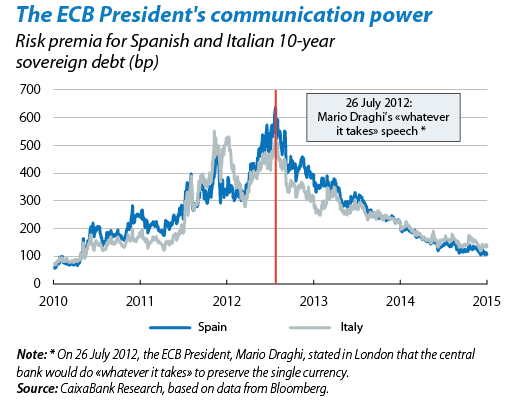
In fact, Mario Draghi’s popular speech in 2012, when he said that he would do “whatever it takes” to battle deflation, has been the perfect representation of the dovish behaviour of the Central Bank.

This conduct has prevented economic slowdowns in the recent years and, again, it is being used right down to prevent the recession that is expected by the markets in the future, although this is out of the scope of the ECB, the latter being the major difference between the European Central Bank and the North American Federal Reserve.

Euro Zone Inflation rate (HCPI) and GDP real growth rateEuro Zone Inflation rate (HCPI) and GDP real growth rate

The implications of an Expansive Monetary Policy

However, there is a lot of controversy around the stimulus presented by the ECB. On the one hand, by decreasing even more the deposit interest rate, the ECB discourages banks to deposit their money in the Central Bank and, therefore, encourages them to lend it to their customers more easily or to invest it in financial markets. In fact, it is important to have larger amounts of currency in circulation, since this way, households will spend more because they feel wealthier and investors will have more funds to allocate in their portfolios. In other words, the goal is to stimulate consumption and investment and, hence, economic growth.

Moreover, the banks themselves also have greater incentives to invest their surplus (this is, the amount of money they have besides the minimum reserves stipulated by the ECB) since, with negative deposit rates at the Central Bank, investments in financial instruments that are considered nearly as safe as deposits (for example, German bunds) yield a better return, and thus are seen as better investment opportunities. In this way, also the financial markets are stimulated and there are more flows of capital for investment. With the purchase of assets through QE, the ECB can, effectively, when the financial system is under stress and risk premia are high, raise prices of assets, reducing their yields. Consequently, governments have more incentives to increase public investment. This is, indeed, a concern of the ECB, as it has been demanding, from national governments, more fiscal stimulus.


Problems of a long-lasting monetary policy

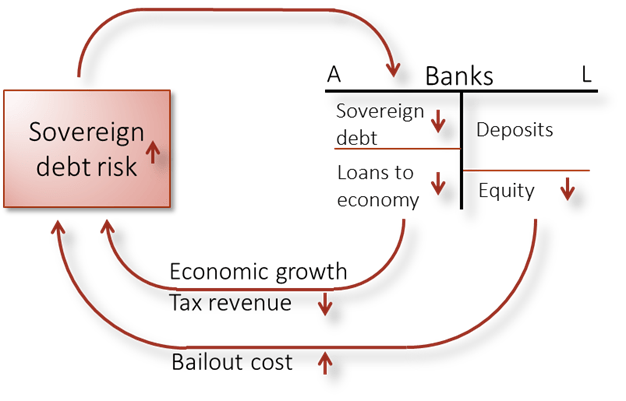
There are also several problems associated not only with negative rates, but also with the asset-purchase program. Given that rates are at historic lows, each additional stimulus will have to be reduced and, therefore, the effect will not be sustainable enough to provide economic growth; instead, may have adverse effects on fragile banks of the Eurosystem, taking into account that banks are forced to reduce interest rates on deposits for their customers and, as such, suffer great reductions in their profits. Furthermore, the ECB already has 25% of the bonds issued by Eurozone governments, which means that the values of these assets are superficially higher and as such, the balance of the assets of euro area banks does not reflect their true value, which at the end of the QE program will cause major problems for banks. Something to also keep in mind is the risk of being at the famous “zero lower bound” (also known as “liquidity trap”) when the next recession hits. If the interest rates set by the ECB are still this low when the European Economies start really slowing down, the monetary policy will have no room to stimulate the economies and have them grow again. In an era where the southern European countries are still plagued by the large debt levels from the aftermath of the Great Recession, and thus have limited capacity to conduct expansionary fiscal policies, stimulating methods could very well be running short.

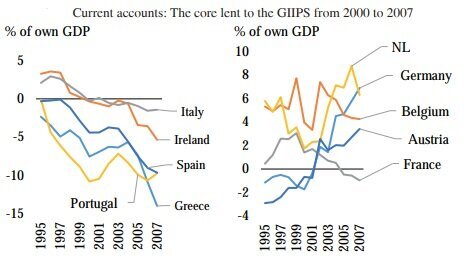
Finally, another problem underlying the ECB’s policy is that this is not a normal central bank, but a central bank that serves a confederation of countries and, as such, is subject to conflict of interests from each part in their decision process. In recent years, it has been evident a big difference between the northern countries (such as Germany and the Netherlands), who do not want more stimulus since their inflation figures are above the Euro-area average levels and not so far from the 2%; and the countries of the south, such as Spain and Italy, facing situations of political instability and inflation figures close to zero and needing that extra help to see their economic output grow. As such, the President of the ECB must consider a wide range of realities and, consequently, the decision process results in delays and half measures and the effect is not as substantial and immediate as it should. One example is that this announcement lead to the decrease of more than 20 basis points of the Italy’s 10 years bond yield.


Where will policy be heading next

Currently, it seems that there is no reason for worries and no need to anxiously implement stimulus in the economy since, although economic activity has weakened in recent quarters, it is still much better than in March 2015, when the ECB introduced the QE program. Headline and core inflation are also at higher values as well as inflation expectations from customers. As said by the Dutch central bank chief Klaas Knot, “the only observation [about the Euro Area economy] is currently that the inflation outlook lags behind the ECB’s aim”. However, there are, undeniably, some international threats as such the trade war which may affect some sectors of activity (mainly, manufacturers) in the euro system economies; Brexit, whose future is still very uncertain and entails mistrust for firms and investors; and, among others, political instability in Italy. Hence,

European countries will go through unknown paths in the next months and the future of the economy is quite unpredictable nowadays.

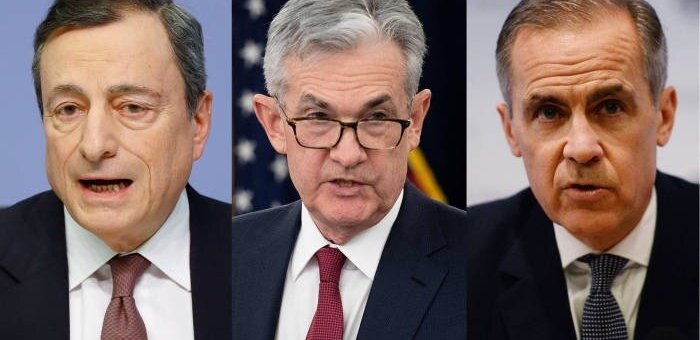
This is why Mario Draghi decided to bring back in the end of his mandate the monetary weapons, that allowed him to win some battles in the past and called governments to action by saying that monetary policy alone is not enough and fiscal policies are also important to keep economies moving in the right way.

Tiago Bernardino Tiago Bernardino Diogo Costa Diogo Costa