To Moral Hazard or Not to Moral Hazard?  

It would be possible to end poverty in the United States, at least in theory. Using a pure means-tested transfer system, the authorities could compensate each individual in the amount remounting the difference between the poverty line value and their income. This would cost only 131 billion dollars, about one-sixth of the value cost of the Social Security program (Using the U.S. Bureau of the Census 2019). The problem is that such computation doesn’t account for the Moral Hazard implications that come with benefit guarantees, as Jonathan Gruber points out in his book Public Finance and Public Policy (2019, Chapter 17).  

What happens is that this program may have a way of disincentivizing work to some extent, as it can motivate people slightly above the poverty line to stop working to receive the full benefit without substantially having to lower their consumption. Thus, increasing the number of people receiving the benefits, along with the policy’s costs

This phenomenon, named Moral Hazard, largely studied by economists, constitutes a change in people’s behavior provoked by the acquisition of insurance, either literally or figuratively speaking. In economics, this event usually leads to inefficient allocations of resources since it induces individuals to have a consumption different from the optimal level. The most common examples of Moral Hazard situations are observed in public policy, such as in the scenario described above, with insurance-related issues, such as health insurance or car insurance, and even during the Great Recession, the topics for the discussion in this article.  

Illustration by Christoph Niemann, The New Yorker 

Moral Hazard in Public Policy  

There are multiple applications of this concept within the realm of insurance in public policy. Unemployment, disability, injury, retirement, and poverty, appear as somewhat unpredictable situations against which agents want to be insured. If one is to think about it, much of the population seeks to smoothen their consumption throughout life. This can be translated into preferring to pay a fixed amount in insurance premiums so as to benefit from compensation in the face of an adverse event, like job loss, in such a way that consumption does not brutally fall.  

Here, Moral Hazard usually conveys disincentives to work: Take the example of Unemployment Insurance (UI), that functions as a means of compensating individuals if they lose their jobs. If the payment amounted to 100% of workers’ salaries, people would not have the incentive to seek employment throughout the duration of the benefit, which would ultimately lead to a lower-than-optimal provision of labor in the economy. Additionally, much of the workforce would have an incentive to stop working, adding up to the costs of the program. This is why not only UI but also schemes that cover these and other types of adverse events often do not contemplate full insurance. Instead, they try to weigh out the consumption smoothing ability that the program carries with its Moral Hazard costs.  

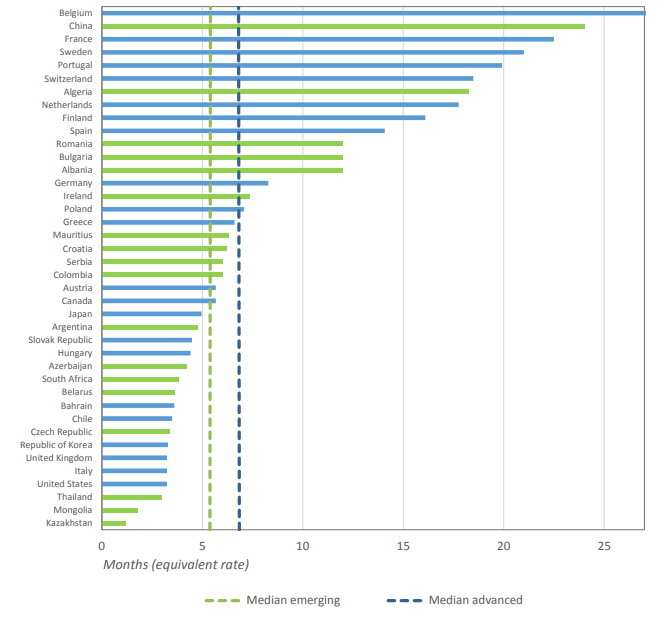
Countries may choose different schemes of Unemployment Benefits, depending on their internal policies. According to the Figure, it can be pointed out that the United States provides one of the lowest financial disincentives to return to work and constitutes one of the countries with a lower maximum amount for the duration of the benefits program (Figure 2). On the other hand, in most European countries the disincentive is more substantial and the threshold for the benefits is higher.  

Fig.1 – Financial disincentive to return to work (2023, OECD Data) 

Fig. 2 – Maximum duration of unemployment benefits at an equivalent rate (2019, ILO) 

Moral Hazard in Health Insurance  

Once again, insurance (in the health case) promotes consumption smoothing when faced with an adverse event (sickness). Its importance relates to the fact that it facilitates necessary treatments without the injured having to carry out major payments.  

Yet, another common means for Moral Hazard to manifest itself is through health insurance, which can comprise two types: Ex ante and ex post Moral Hazard. The first one illustrates cases where individuals have less incentive to indulge in activities that reduce the risk of sickness or illness (e.g. smoking), when insured, whereas the last comprises a circumstance in which insurance beneficiaries are less likely to limit the use of healthcare when sick (e.g. going to consultation because of a cold).  

When provided with health coverage, individuals may be more prone to seek medical care for minor conditions or undergo unnecessary procedures. This overutilization can strain healthcare resources, and lead to inefficiencies in the delivery of care. Additionally, it can drive up costs for insurers, leading to greater insurance premiums.  

However, would it be unreasonable to assume this increase in healthcare utilization can come from the actual need for medical care?  

“Too Big to Fail”: Moral Hazard in the Great Recession 

Moral Hazard is not only present in the daily life of the average person but also in the most pressing global financial crises. The most prominent example being the 2008 Financial Crisis. In the years leading up to this crisis, the United States had evidenced an exponential increase in housing prices, stemming from factors such as the accessibility of credit, lower interest rates, and permissive lending standards. This allowed a significant number of subprime borrowers to obtain mortgages, bundled by Financial Institutions to form Mortgage-Backed Securities (MBS) and Collateralized Debt Obligations (CDO) which were posteriorly sold to international investors with higher credit ratings.  

Why did Financial Institutions engage in such risky lending practices? 

Credit rating agencies played an instrumental role in the crisis by assigning high ratings to MBS and CDO, prompting a false sense of security about the degree of risk of these securities. This is where Moral Hazard comes in, as the financial institutions involved operated in accordance with the misbelief that they were “too big to fail” (Stewart McKinney, 1984). This entailed the expectation that, because of financial institutions’ vitality to the economy, regulating authorities would not allow them to fail due to the systemic risk that could influence the course of the global environment. Thus, these continued to operate with disregard for possible unfavorable outcomes so, when housing prices peaked and proceeded to decline in 2006, borrowers defaulted on their mortgages, leading to a collapse in the value of MBS.  

The losses caused a domino effect in the financial sector and major financial institutions faced bankruptcy, with long-lasting effects on the global economy prompting a significant need for regulatory reforms. One measure was the Dodd-Frank Wall Street Reform which implicates more strenuous capital and liquidity requirements for banks with at least $50 billion in assets, and the Consumer Protection Act in the US to further protect financial activity in the country. Its provisions included the Volcker Rule, which argues that banks that take on hazardous risks should not be government-subsidized and aims at constraining banks from using their own money to trade securities, rather than depositor money. The latter faced opposition as many of the institutions that integrated this failure did not take on deposits and would not have been subject to such rules. 

So, are authorities able to contain Moral Hazards? 

Silicon Valley Bank (SVB), a bank with assets totaling $209 billion in late 2022, according to the Federal Deposit Insurance Corporation, collapsed one week after being listed on Forbes’ America’s Best Banks List, making the sour transition from one of the best American banks, into the second-largest bank failure in US history.  

This unfortunate occurrence sprang from the large amount of deposits with scarce cash held by the bank, with which SVB would buy treasury bonds and other long-term debts that have low returns and risk. However, as the Federal Reserve increased interest rates to combat inflation, SVB’s bonds became riskier and, thus, saw a stark decline in value which prompted mass customers to withdraw funds, leading to its collapse.  

It is also argued that this failure started before the Federal Reserve’s regulations, with the overturn of the Dodd-Frank Act whose requirements were relived in 2018 by former President Donald Trump. This was done through the Economic Growth Regulatory Relief, and Consumer Protection Act, according to which the law increased the threshold to $250 billion. Thus, another instance of moral hazard lies with the bailout provided to SVB, raising concerns regarding other banks’ propensity to take risks. It is, therefore, of great importance to acknowledge the dichotomy faced by the Federal Reserve when weighing price stability and financial stability, since interest rates, despite being conventionally perceived as a powerful strategy to stabilize inflation, can rapidly escalate to become a trigger for Moral Hazards within the financial sector, rooting global financial instability. 

Policy implications  

Evidently, public policy applications of Moral Hazard come with implications. Many economists focus their work on the design of these. With the UI, policymakers try to balance the consumption smoothing benefits of the insurance with its Moral Hazard costs, which depend on the magnitude and predictability of adverse events. For example, retirement is a rather predictable event, so people may prepare in advance. On the other hand, unemployment is considered of low magnitude, meaning that some may be able to self-insure. The functioning of both Disability Insurance (DI) and Workers’ Compensation (WC) goes along those lines, which ultimately impedes these programs from offering full coverage. 

Poverty alleviation programs, as mentioned in the introduction, also carry Moral Hazard concerns. In such a case, there are policies designed to try to make sure that everyone who needs the benefit gets it and those who do not don’t, although this might be difficult. There are some instruments impregnated in society to try to regulate this, such as ordeal mechanisms, that make welfare programs somewhat unattractive to guarantee that only the population that necessitates benefits from them. For example, the long lines in soup kitchens.   

In 2010, President Barack Obama signed the Patient Protection and Affordable Care Act, often referred to as the Affordable Care Act (ACA) or Obamacare. This legislation aimed to extend health coverage to millions of uninsured Americans by expanding Medicaid, establishing health insurance exchanges, and introducing various health-related provisions. The ACA sought to make health insurance more accessible and affordable. It offered premium tax credits and cost-sharing reductions to individuals with lower incomes. However, the Act may also have exacerbated existing moral hazards within the health insurance industry, as Sean Ross discusses in his article (2023). Some of the provisions included the mandatory coverage of some essential benefits, the obligation to buy insurance, provided with an exemption for low-income citizens, and restricting prices. However, in such a scenario, one should also consider the fairness argument for the existence of programs that lower the efficiency of an economy. At the end of the day, it is a trade-off.  

Illustration by Andrew Grossman, IAS 

Conclusion 

From work disincentives to devastating financial crises, moral hazards’ ever presence within a country’s economy underscores the intricacy in policy making towards a balance between social welfare and economic efficiency. While initiatives such as healthcare or social benefits aim to mitigate disparities, moral hazard reminds governments of the complexity implicit in policymaking and surfaces the question introduced in this article: To moral hazard or not to moral hazard? 

References  

Aklin, Michaël, and Andreas Kern. 2019. “Moral Hazard and Financial Crises: Evidence From American Troop Deployments.” International Studies Quarterly (Print) 63 (1): 15-29. https://academic.oup.com/isq/article/63/1/15/5290056 

Asenjo, Antonia, and Clemente Pignatti. 2019. Unemployment insurance schemes around the world: Evidence and policy options. ILO Working Paper no 49 (October): 20-24 https://www.ilo.org/wcmsp5/groups/public/—dgreports/—inst/documents/publication/wcms_723778.pdf 

Dewan, Shaila. 2012. “Moral Hazard: A Tempest-Tossed Idea” The New York Times. February 25, 2012. https://www.nytimes.com/2012/02/26/business/moral-hazard-as-the-flip-side-of-self-reliance.html 

Duggan, Wayne. 2023. “A Short History of the Great Recession.” Forbes Advisor, June 21, 2023. https://www.forbes.com/advisor/investing/great-recession/ 

“Financial Crisis and the Ethics of Moral Hazard on JSTOR.” n.d. Www.Jstor.Org. https://www.jstor.org/stable/24575743 

Gruber, Jonathan. 2019. Public Finance and Public Policy, 6th Edition, Chapters 14, 15, 17. New York: Worth Publishers 

OECD (2024). Financial disincentive to return to work (indicator). https://data.oecd.org/benwage/financial-disincentive-to-return-to-work.htm#indicator-chart  

Ross, Sean. 2023. The Affordable Care Act Affects Moral Hazard in the Health Insurance Industry. Investopedia. 2023. https://www.investopedia.com/ask/answers/043015/how-does-affordable-care-act-affect-moral-hazard-health-insurance-industry.asp  

Stiglitz, Joseph. 2023. “Silicon Valley Bank’s Failure Is Predictable – What Can It Teach Us?” The Guardian, March 13, 2023. https://www.theguardian.com/business/2023/mar/13/silicon-valley-bank-failure-svb-collapse 

SVB: US Regulators Have Generated a ‘Moral Hazard.’” n.d. The Banker. https://www.thebanker.com/SVB-US-regulators-have-generated-a-moral-hazard-1679645486 

Team, Investopedia. 2023. “How Did Moral Hazard Contribute to the 2008 Financial Crisis?” Investopedia. October 26, 2023. https://www.investopedia.com/ask/answers/050515/how-did-moral-hazard-contribute-financial-crisis-2008.asp 

The Economist. 2017. “How The 2007-08 Crisis Unfolded.” The Economist, June 8, 2017. https://www.economist.com/special-report/2017/05/04/how-the-2007-08-crisis-unfolded 

Madalena Martinho do Rosário

Maria Francisca Pereira

Reddit’s IPO: Was The Buzz Really Worth The Hype? 

Reading time: 7 minutes

INTRODUCTION 

The debut of a company on the stock market through an Initial Public Offering (IPO) is a momentous occasion that captivates the attention of investors, business enthusiasts, and the wider public. The excitement surrounding an IPO is palpable, driven by a convergence of factors that elevate it beyond mere financial transactions to a symbol of innovation, growth, and opportunity. From the allure of exclusive investment opportunities to the potential for substantial returns, and from media attention to the economic impact and innovation potential of newly public companies, the commotion of an IPO transcends traditional market dynamics to embody the spirit of entrepreneurialism. All aspiring companies want to be the next Saudi Aramco or Alibaba, however, this time, we will take a deeper look at Reddit. Was the buzz worth the hype? 

A BRIEF HISTORY OF REDDIT 

First and foremost, Reddit operates as a platform where registered members can submit content, such as text posts or direct links, and engage in discussions through comments. The content is organized into “subreddits,” which cover a wide range of topics, from niche hobbies to global news. What sets Reddit apart is its emphasis on user-generated content, fostering a sense of belonging and authenticity among its users. 

In 2005, Reddit was created by two programmers from Virginia University, Steve Huffman and Alexis Ohanian, in the aftermath of attending a lecture by programmer-entrepreneur Paul Graham, leading to Huffman taking charge of coding the site, using Common Lisp, and launching Reddit in June of that year. As the platform gained traction, Christopher Slowe was welcomed onboard and eventually merged with Aaron Swartz’s company, Infogami. Swartz played a crucial role in revamping Reddit’s software by implementing his web framework, web.py, thus leaving a lasting mark on Reddit’s technical evolution and the broader web development community.       

The following year, Reddit was swiftly acquired by Condé Nast Publications for a raging sum ranging from $10 million to $20 million, thus, prompting the team to relocate to San Francisco. Afterward, both Huffman and Ohanian departed Reddit’s helm in 2009. Since then, Reddit gained operational independence from Condé Nast in 2011 and many years as well as CEOs later, the original co-founder, Huffman, returned as the Chief Executive Officer. 

REDDIT’S REVENUE SOURCES 

Reddit earns money primarily through advertising, premium memberships, and partnerships

When it comes to advertising, Reddit has a unique system that allows advertisers to target specific subreddits or communities, making it attractive for those aiming to reach niche audiences. These offer both managed and self-serve ad options, with prices varying based on the audience targeted. In recent years, Reddit’s ad revenue has seen significant growth, with increasing projections indicating substantial earnings: about $119 million in ad revenue in 2019, which skyrocketed the following year by 52.4%, to $181.3 million. 

Picture 1: Reddit’s co-founders Steve Huffman and Alexis Ohanian 

Reddit Gold, a premium membership, offers users extra features and benefits for a fee. This includes an ad-free experience and several other perks. The revenue from these memberships has been steadily increasing, showing that users are willing to pay for additional benefits. For example, in 2021, about 344,000 Reddit users brought in a staggering value of $17.21 million in revenue for the platform, considering that in 2020 it had only generated 12.38 million. Moreover, Reddit partners with other companies to provide sponsored content and promotional opportunities, thereby assisting the company in generating revenue while also offering value to its users. 

THE IPO BUZZ: EXCITEMENT AND EXPECTATIONS 

The IPO buzz can be traced back to 2021. However, one of the main reasons why this IPO gained so much attention was due to the introduction of AI.  

Reddit disclosed its plans to allow third parties to access its data for purposes like training artificial intelligence models, as the company has already entered into data licensing agreements worth $203 million. From these agreements, Reddit anticipates earning at least $66.4 million in revenue this year. 

Additionally, Reddit has partnered with Google, allowing Google’s AI products to utilize Reddit data to enhance their technology. This collaboration underscores the growing importance of original human-generated content, particularly, as AI-generated content becomes more prevalent on a day-to-day basis. 

THE INITIAL IPO: TRIUMPHS AND CHALLENGES 

On the morning of March 21, 2024, Reddit debuted on the stock market with the ticker symbol RDDT

Reddit Inc.’s shares surged an astonishing 48% above their initial public offering price, which reflected the investors’ enthusiasm for the company’s futures secured around artificial intelligence. The San Francisco-based firm’s stock closed at $50.44 each on Thursday in New York, following a successful offering where the company and some of its shareholders raised $748 million, pricing it at the top end of the marketed range. Furthermore, Reddit’s IPO now stands as the fourth largest on a US exchange, demonstrating a revival in the market for initial public offerings after a two-year sluggish period. This successful listing is expected to encourage other tech companies that had delayed their plans to go public. 

With a fully diluted valuation nearing $9.5 billion, Reddit falls just short of the $10 billion mark it achieved in a 2021 funding round. Analysts, including Mandeep Singh, senior industry analyst for Bloomberg Technology, had suggested even before pricing that Reddit could be valued at as much as $10 billion. 

Reddit’s IPO pricing implied an enterprise value-to-sales multiples positioned between Meta Platforms Inc.’s higher multiples of eight times and the lower multiples of smaller digital advertising peers like Snap Inc. and Pinterest Inc., according to Singh. He emphasized that investors are willing to pay for growth, particularly given Reddit’s accelerated growth in the past six months, making a strong case for a premium valuation. Hence, it is worth mentioning that Reddit’s IPO surpasses notable listings in September by US tech firms Instacart and Klaviyo Inc., both of which raised substantial amounts. 

THE FALL: UNFORESEEN OBSTACLES AND MARKET VOLATILITY 

Following a report by Hedgeye Risk Management suggesting Reddit Inc.’s stock should decline by about 50%, Reddit shares experienced their largest one-day drop since their trading debut. The stock fell 11% on Wednesday, closing at $57.75 per share, its lowest since March 22. While Reddit shares had surged more than 90% since the IPO on March 21, Hedgeye deemed the stock “grossly overvalued” and recommended it trade closer to its IPO price of $34. 

Reddit is set to report its first-quarter 2024 results in late May. While Hedgeye anticipates positive momentum in the first report, they caution potential weaknesses in future reports, particularly expecting a slowdown in user and revenue growth in the second half of 2024 and the first half of 2025. The company also disclosed in a corporate filing that Huffman (the CEO) sold 500,00 of his shares and that the Chief Operating Officer, Jennifer Wong, sold 514,000. Furthermore, Bloomberg interviewed Omar Abbasi, a 34-year-old software engineer in the Bay Area, who received a job offer, partly due to his unpaid work as a moderator for Reddit’s gaming communities. However, he declined the offer, citing concerns about the risk involved, drawing a parallel with Facebook’s stock stagnation post-IPO in 2012. Abbasi’s views and worries are most likely shared with many others. 

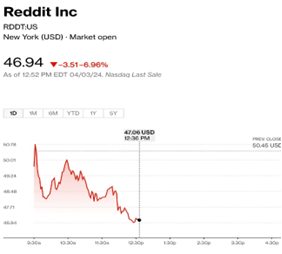
Picture 2: Reddit Inc market data on 03/04/2024 

CONCLUSION 

In a nutshell, it is still not clear if the buzz was really worth the hype, considering that the market is showing volatile behavior. Nevertheless, it is worth noting that Reddit posted a net loss of $91 million last year, while still having more than $700 million of cumulative losses. Therefore, the company has to make some drastic changes for their situation to turn around. Furthermore, it is remarkable that this website is very community-oriented. In fact, Reddit’s most loyal users were able to buy 8% of the shares at IPO price, but users could prove tricky to monetize since there’s opposition to intrusive advertising. Hence, Reddit has a difficult ride ahead in trying to appease their tight-knit community of “redditers” and manage to make a profit. 


Sources: Business Insider; Bloomberg; Financial Times 

Alegra Maza

Is It Morally Correct to Separate Art from its Artist?

Reading time: 7 minutes

Separating art from the artist is a concept that refers to the idea of appreciating or evaluating a work of art independently of the personal characteristics, actions, or beliefs of the artist who created it. This concept arises from the recognition that an artist’s personal life, behaviour, or views may not be associated with their artistic output. And that the value or merit of a work of art should be assessed based on its own qualities rather than the character or actions of the creator.

Some people believe that art stands on its own and has its intrinsic meaning, which is not impacted by an artist’s actions. They find it easy to enjoy the work put out by artists whose actions they disagree with, treating them as two separate entities. Other people will say it’s impossible and morally incorrect to bear the idea of said separation, saying that art fundamentally must reflect the artist’s beliefs and ideas, that being an artist is a deeply intimate experience, and to remove an artist from their creations, is to decontextualize their work and leaves it devoid of meaning. Another worry is that if we are too rigorous towards which art to consume, we would be reduced to a very limited number of creations.

Where did “separate the art from the artist” come from?

From a historical standpoint, the idea of separating art from the artist was first introduced under the New Criticism of the early 20th century, a time when English literature was heavily analysed and prioritized over classical literature.

The New Criticism was a formalist Movement in literary theory that dominated American literary criticism. It emphasized close reading, particularly poetry, to discover how a work of literature functioned as a self-contained, self-referential, aesthetic object. The method of New Criticism is a close reading and concentrates on such a formal aspect as rhythm, theme, imaginary metaphor, etc.

The essence of New Criticism lies in the analysis and interpretation of literature solely through the text itself, without considering the influence or intentions of the author, or the historical and cultural context that might have shaped the work.

Examples of influential people with controversial histories

Chris Brown

Musician Chris Brown has been known and talked about for his documented history of violence towards women, and, in 2009, musician and businesswoman Rihanna was a victim of his abuse. Since then, assault and battery charges (battery is a criminal offense involving unlawful physical contact, distinct from assault, which is the act of creating apprehension of such contact) have been recurrent in the last several years of his public image, particularly accusations from women who have filed police reports against the singer and dancer.

Despite his violent actions and behaviour toward women, Brown releases music regularly. This type of situation made some people ponder if they should keep on streaming Chris Brown´s songs because by supporting his career and ability to create more content they are directly benefiting him.

Caravaggio

Caravaggio’s “Judith Beheading Holofernes,” 1599

This painting, like many others by Caravaggio, is probably familiar to most. The Baroque artist is renowned for his grim and violent depictions, such as the one represented above. However, Caravaggio´s notoriety extends beyond his artwork. In the early 17th century, he faced trial at least 11 times for various offenses.

His life was marked by a pattern of recklessness and conflict. As his fame grew, so did his reputation for indulging in vices such as drinking, gambling, and brawling. Between 1598 and 1601, he faced legal troubles for yielding a sword without a permit, assaulting a man with a stick, and allegedly attacking another with a sword. Additionally, he found himself embroiled in a bitter rivalry with fellow painter Giovanni Baglione, who accused Caravaggio of hiring assassins to kill him.

The artist´s run-ins with the law were numerous and varied. He was taken to court for acts ranging from throwing a plate of artichokes at a waiter to breaking a window shutter in his rented room. He even spent time in prison for offenses like pelting stones at policemen and verbally abusing a woman and her daughter. Then, in May 1606, he killed a man named Ranuccio Tomassoni.

This type of action makes one question whether they should worship his art and be indifferent to what was previously expressed or take a stand against such faults and not contribute to his further recognition as an artist and person.

Rex orange county

The 25-year-old British singer and songwriter, whose real name is Alex O´Conner and is well known for being the creator of songs that touch and inspire his fans carrying them through dark phases, was charged with sexual assault accusations by a woman who alleges he assaulted her in London on six separate occasions in two days, leaving some fans devastated. Some of them, who had tattoos in honour of some of his songs, stepped forward and claimed their disappointment in social media “My heart immediately broke for the alleged victim,” Kayla Ellis told BuzzFeed News “I started crying almost instantly because I knew nothing was going to be the same after hearing this.” Eventually, the charges were dropped due to lack of evidence, but during that time, die-hard fans were struggling with separating the art from its artist, especially the ones that shared they had been through similar experiences related to sexual abuse.

R. Kelly

Chart-topping R&B singerRobert Sylvester Kelly had, for more than two decades faced allegations of sexual and child abuse. In 2022, Kelly was convicted of three child pornography charges of enticing a minor.  He was sentenced to serve 31 years imprisonment in a combination of concurrent and consecutive sentences.

He was convicted of child sexual abuse in a second federal trial in Chicago and faced charges due to sexual misconduct charges in Minnesota.

Some examples of people who came forward are Tracy Sampson, who sued R. Kelly, accusing him of inducing her “into an indecent sexual relationship” when she was 17. The woman, a former intern at Epic Records, said she was “treated as his personal sex object and cast aside”. Patrice Jones is a woman from Chicago who claimed he impregnated her when she was underage, and that she was forced to have an abortion.

In June 2002 he was charged over child abuse videos. He was charged with 21 counts of making child sexual abuse videos involving various sexual acts. In 2002-2004 arrest prompted further charges. Kelly was charged with further 12 counts of producing child sexual abuse images in Florida, where he was arrested at his holiday home.

Additionally, allegations depicted an organized effort from the singer and his associates to recruit and transport underage girls over state lines for illegal sexual purposes, including the production of child sex abuse images, as well as conspiracy to obstruct justice by destroying evidence and bribing or threatening witnesses.

There are several reasons why people might choose to separate art from the artist:

Artistic appreciation, some individuals believe that the intrinsic qualities of a work of art, such as its aesthetic beauty, technical skill, or emotional impact, should be evaluated independently of the artist´s attributes or behaviour. Artistic legacy, in cases where an artist’s personal conduct or beliefs are controversial, separating art from the artist may allow the artwork itself to be preserved and appreciated for its cultural or historical significance, even if the artist’s reputation is tarnished. Artistic freedom, being able to absorb art independently can also support the idea that artists should have the freedom to express themselves creatively without fear, censorship, or judgment based on their personal lives and beliefs.

Conclusion

For some people, in modern days, it´s unbearable to shy away from accusations, trials, and skeletons in closets, as we become ubiquitous in the media. This debate made the term cancel culture (the mass withdrawal of support from public figures or celebrities who have done things that aren’t socially accepted today) emerge. Cancel culture is adopted by those who find it hard to manage the difference between art and its creator. They state that we, as consumers, can have a momentous impact and can no longer claim ignorance of what is constantly in plain sight, leading us to the question that plots this article, is it morally correct to separate the art from the artist?


Sources: New York Post, BBC, Biography, RollingStone, English Literature Zone

Laura Casanova

Are Industry Plants that bad? 

The term Industry Plant is not new, and more and more artists are getting accused of being one, examples include Jack Harlow, Adele, Ice-Spice, Lorde, Lil Nas X, Cardi B, Bobbi Althoff from the overly awkward interviews with various celebrities, Chance the Rapper, and even Billie Eilish. However, what is this concept? In this article, I will delve into the ambiguous definition of Industry Plants, analyze some questions that arise when we try to define this notion, and briefly explore the dynamics of the music industry and why these phenomena appear. 

Is it a definable concept? 

The sources for the definition are far from scientific or academically reviewed, however since it is a term not commonly used by sociologists or scholars of the matter, I’ll have to rely on these ‘underground’ sources. According to Urban Dictionary, an Industry Plant is ‘an artist who has major/indie label backing their movement but presents themselves as a “home-grown start-up” label to create a pseudo-organic following. They act as if things miraculously happened for them based on their talent. The reality is a low-risk/high-reward situation for labels looking to build the next “new star”’. We need to break this definition down into two parts: Why does the consumer feel so strongly that they have been deceived? And how is this strategy beneficial for big labels? 

Firstly, why do consumers immediately categorize some artists as industry plants when they, the artists, gain overnight success? Is virality not a thing anymore? In show business, especially in music, we gravitate to personalities that feel authentic, and we want to support them due to factual situations that they have been through. We feel some type of comfort when we see that an artist’s setback or struggle has, however small it may be, a connection with yourself, if you think about it, most likely, this relationship is present in your favorite artists. Since this connection with an artist takes time when people cannot pinpoint the moment when they saw the artist finally getting some recognition from other people or the industry, the notion of an Industry Plant appears. 

By following this logic, an artist that has gone viral overnight is not credible and not even worth consuming? Noah Callahan-Bever, founder of Idea Generation, and a music industry icon, states that ‘Before you had the internet, it almost felt like artists came out of nowhere (…) All of a sudden they’re in The Source every month for three months in a row (…) unless you were super plugged into the industry, it was always like, “Who is this new person?”’.  

The concept of virality is much more difficult to achieve nowadays, in part because of the high exposure to content we have through various platforms but also due to the high amounts of content being created and uploaded daily to those platforms. Therefore, it seems fair for suspicion to be raised when out of a sudden Bobbi Althoff, the previously mentioned podcaster, has Drake on her fourth episode. People believe this only happens with backing from large corporations, these being management agencies or music labels. A clear example of this is Coi Leray, who was featured on big playlists, which always brings a lot of exposure, performed at big, televised award shows but only managed to sell 10k copies of her sophomore album in the first week.  

A very recent example of an artist being accused of an Industry Plant is R&B singer 4Batz. With only 3 released songs, the 22-year-old artist from Dallas, Texas, has quickly amassed a considerable amount of streams on DSPs (Digital Streaming Platforms) and a remix with Toronto’s very own, Drake. Its rough public image deceives consumers into thinking the sound of the artist will resemble something like a NLE Choppa, who raps about violence and firearms, however, the presence of a high-pitched voice creates a certain “wow” factor and seems to attract people, at least for now. What seems to be bothering some music fans is the fact that affiliations with big labels are present, with its manager being the lead creative director of RCA Records (owned by Sony Music), Amber Baker. Although all of its music is independently distributed, 4Batz’s affiliation with Amber supports the argument that there is an involvement of big labels in this, allegedly, fully independent artist.  

Coming back to the idea of authenticity, modern audiences are captivated, more than ever, by personalities who present to them an idea of a spectacular journey that started from an ordinary beginning, in Hip-Hop especially. However, what big music labels seem to fail to understand is a fundamental aspect of Hip-Hop as a cultural movement, the artist’s growth not only in their art but as an individual and the duality of their past and present living conditions is more important than rapping or singing about “cool stuff” in trendy instrumentals. When Notorious B.I.G, Future, Kanye, Drake, and others, ‘flex’ on their, sometimes considered, shallow lifestyle is not to show that they have all these possessions per se but to demonstrate how they went from living in the Southside of Chicago to designing couture with head designers of famous French fashion houses, in the case of Kanye West. More specifically, it’s the journey of flipping the odds and overcoming the hardships of life that attracts people, and when commercial interests, generally of big labels overpower the need for authenticity, a discontentment among Hip-Hop fans arises.  

Is the development of Industry Plants a good business opportunity for big labels? 

On superficial analysis, we quickly realize that it is much cheaper for labels to develop an artist from the ground up since signing them has less demand from competitors, and bidding wars between labels are less likely to happen. Not to mention, the investment that happens when labels sign an already established artist. During the Soundcloud era, labels would say an artist gained a following on the platform, but they were signed to a label before that. In theory, this is a great way of labels making a buck, but in reality, it is not that simple. The public normally realizes when they are being ‘fed’ a manufactured act. According to an article by Billboard Pro, outside of Olivia Rodrigo and Ice Spice, there are no artists to break through the industry. However, this is not because they developed artists in the past, the causes are much more worrying, as previously explored. 

Conclusion 

From all the examples given and the nuances analyzed, I can conclude that, regarding the accusations of artists being Industry Plants, if the success of the artist is documented, people do not seem to care as much about authenticity, however, if it appears out of nowhere, the relevancy of the artist itself is put into question. That is one of the reasons why labels do not just manufacture artists to cater to the market needs, as we have seen in the case of Hip-Hop with its growth as a genre in the 2000s, but a recent decline, in part, because of a ‘dumping effect’ of music, but also a lack of authenticity in the artists being pushed and backed by labels.  

Francisco Agostinho

Foreign Aid: A curse or a blessing? 

Reading time: 9 minutes

So, what is a poverty trap? At first glance, we can perceive that it associates a notion of persistency or inevitability with poverty. Well, a trap is, in fact, a situation in which one gets into, and from which it is difficult or even impossible to escape. So, to put it in a simple manner, let us use the case of the “nutrition-based poverty trap,” originally portrayed in the Dasgupta and Ray paper.  

The common person will need food to perform their daily tasks and earn money, which, in turn, allows them to sustain their own existence. Take the case of a person with no energy or nutrients left in their body; certainly, the first few calories they ingest are going to be consumed by their body just to survive: they will not make her strong! Once the person starts to eat enough to survive, the following calories ingested will give her strength and energy to perform other activities. Thus, someone in poverty may not have enough to eat to become very productive, but if she could eat more, she would.  

This portrays exactly the notion of the poverty trap, understood as self-reinforcing mechanisms whereby poor individuals or countries remain poor. Departing from the observation that poverty begets poverty, in such ways that current poverty can itself be a direct cause of poverty in the future. 

But, why care about poverty traps? Because being in the presence of a poverty trap opens the possibility for a “Big Push”: a single push that could have disproportionately big benefits. Some examples, that have materialized, are the distribution of free bed nets, which carry massive health benefits regarding disease spread, namely malaria prevention; And the increased productivity gains for a community that a single season of free fertilization of fields can bring. However, it is necessary to understand that if we are not in the presence of a poverty trap, then providing help to those in poverty in this way will become a form of redistribution, but it won’t produce efficiency gains.  

As bluntly put by Aart Kraay and David McKenzie, the idea of a poverty trap is very compelling in terms of motivating policy, because it suggests that people and countries may not only be unable to climb out of poverty on their own. But also, that much poverty is needless in the sense that a different equilibrium is possible at a much higher level of income and that one-time policy efforts may have lasting effects. 

Let’s move now to the concept of Foreign Aid. The Development Assistance Committee (DAC) of OECD defines Official Development Assistance (ODA) as: “The flows provided by official agencies, including state and local governments, or by their executive agencies, to countries and multilateral institutions, that are administered with the objective of promoting economic development and welfare of developing countries.” 

The aid debate: Context  

To better understand the debate around Aid, one should first examine its origins, or better yet, the context in which it occurred. 

The Aid legitimacy crisis in the 90s emerged because of significant shifts in the international landscape. Following the end of the Cold War, the political foundation of bilateral aid underwent a profound transformation as the focus shifted towards aid’s economic effectiveness. Moreover, the 90s saw donor countries grappling with economic crises and strong budgetary constraints, particularly EU countries, which led to a sharp fall in aid flows. At the same time, recipient countries started to face increasing debt burdens and financial crises of their own. This sparked the broader debate over the need to reform the international aid architecture, particularly reshaping the role played by multilateral institutions in addressing the root causes of instability in recipient countries.  

Positions: Is Aid Effective? 

The 90s marked the beginning of a period where questions arose about the efficacy of the existing aid mechanisms and three main positions on the role of Aid emerged: 

  1. AID ENTHUSIAST 

The first position, by the American economist Jeffrey Sachs, emphasizes how poverty stems from a lack of six crucial types of capital: Natural, Human, Infrastructure, Public institutional, and Knowledge capital. Sachs argues that governments should offer extensive Aid to these areas because of the existence of natural monopolies in essential services, like power and transportation, public goods that benefit everyone without depleting resources, externalities, such as disease prevention and education, that have widespread benefits and that societies worldwide aspire to ensure universal access to critical goods and services as a fundamental right.   

One example of a successful large-scale policy was “The Green Revolution”: when the Rockefeller Foundation promoted high-yield varieties, of staple crops, fearing a massive hunger in more rural populations. Mexico went from a large net importer of grain to a large net exporter in just 20 years and India followed in its footsteps, going from 11m tons of wheat production in 1960 to 55m tons in 1990. 

Sachs proposes the Millenium Development Goals as the solution. The programme establishes that poor countries have no guaranteed right to receive assistance from rich countries to meet the MDGs, with this right conditional on countries’ commitment to good governance. However, the biggest problem today is not that poorly governed countries get too much help, but that the well-governed ones get far too little. 

  1. THE DEATH OF AID 

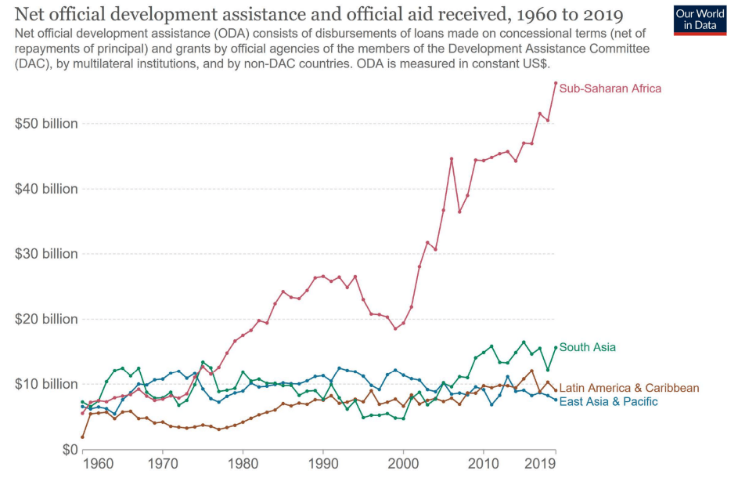
The second position, developed by the Zambian economist Dambisa Moyo, identifies aid dependency as the major obstacle to progress. She notes how, despite African countries having received over US$300 billion in development assistance since 1970, aid-dependent countries have experienced negative economic growth, and poverty rates have skyrocketed up to 60% in the same period, up until 1998. Moyo contends that aid inflows exacerbate problems in African nations by reducing government accountability to taxpayers, discouraging entrepreneurship and innovation, and fuelling corruption and conflict.  

Figure 2- The impact of remittances. 

Contrasting the African landscape with the success of Asian emerging markets, Moyo suggests as alternative strategies the access to international bond markets, and the attraction of large-scale direct investment in infrastructure, such as the Chinese investment policies. Moyo also advocates for genuine free trade in agricultural products, by ending farmer subsidies in major economies like the US, EU, and Japan and the promotion of financial intermediation, fostering the spread of microfinance institutions, granting legal titles to property for use as collateral, and facilitating remittances.  

  1. AID BACK IN THE POLICY MENU 

The third and final perspective is presented by the British economist Paul Collier, who views aid as a fundamental part of a broader strategy for addressing global challenges. Directly advising policymakers on the issues concerning the “Bottom Billion”, Collier identifies 4 Traps that hinder development:  

1. “The conflict trap”: Many of the world’s poorest countries are trapped in cycles of violence and conflict, which disrupt economic development and perpetuate poverty. “73% of people in the societies of the bottom billion have recently been through a civil war or are still in one”. 2. “The natural resource trap”: Countries rich in natural resources often suffer from commodity price volatility, political checks, and deteriorated balances as accountability deteriorates. 3. “The Landlocked trap”: countries that are landlocked face significant challenges in accessing global markets, which hinders their ability to trade and grow economically. “While in the World as a whole only 1% live in landlocked resource-scarce areas, in Africa, that same percentage goes up to 30%”. 4. The trap of bad governance in small countries, as in small countries, the government necessarily plays a larger role in guiding economic development. 

To address these same challenges, Collier suggests four main tools:  

1. Targeted aid programmes to help alleviate poverty and address the root causes of underdevelopment. 2. Military intervention, is necessary for maintaining peace in post-conflict situations and preventing coups. 3. International agreements and legal frameworks that can help address issues such as corruption, resource management, and governance. Examples include the Kimberley Process for diamond certification, aimed at curbing the trade in conflict diamonds. 4. Reforming trade policies in the West (“Rich countries’ trade policies” include agricultural subsidies to their own sectors and higher tariffs for processed materials) and Improving access to global markets. 

Is Aid effectiveness supported by the data? 

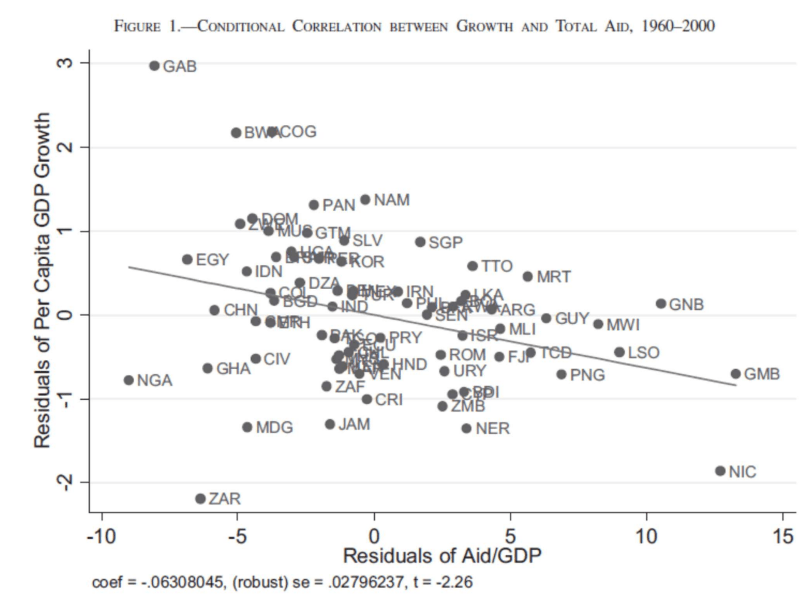
Although relevant, these three positions are simply the theories of their authors. Thus, to have a more comprehensive understanding of the issue around aid, one must observe what the real data reveals. Many studies have been developed regarding the effectiveness of Foreign Aid. In this article, only the Rajan and Subramanian paper on Aid and Growth will be referred to as its data gives comprehensive coverage of all variations of the aid-growth relationship. 

One of the key findings of their analysis was that the relationship between aid and economic growth is complex and context-dependent: there is evidence that aid works better in better policy or geographical environments, and that certain forms of aid work better than others. This brings out the need to move away from one-size-fits-all approaches to foreign aid and instead tailor interventions to the specific context and needs of each country. Rajan and Subramanian also observe little robust evidence of a positive relationship between ODA inflows into a country and its economic growth. Thus, empirically, no conclusions can be made regarding the relationship between both variables.  

Overall, diverging political views on the role of aid bring dynamism to the Foreign Aid debate. Although one position is yet to be selected as “the right one”, it is easy to see how they can be complementary to each other. They have inclusively been the root of many projects that have already improved people’s lives, with Sachs’s preferred example remaining “The Green Revolution”. So, before deciding whether Aid carries efficiency gains and other benefits for developing economies, keep in mind, as prize winner Esther Duflo once said: “Innovation often comes from unexpected sources; we should be open to diverse perspectives and ideas.” 


Sources: Duflo, Esther, and Abhijit Banerjee. Poor economics. Vol. 619. New York: Public Affairs, 2011. Kraay, Aart, and David McKenzie. “Policy Research Working Paper 6835.” Policy (2014). Dasgupta, Partha, and Debraj Ray. “Inequality as a determinant of malnutrition and unemployment: Theory.” The Economic Journal 96, no. 384 (1986): 1011-1034. Collier, Paul. The bottom billion: Why the poorest countries are failing and what can be done about it. Oxford University Press, USA, 2008. Rajan, Raghuram G., and Arvind Subramanian. “Aid and growth: What does the cross-country evidence really show?” The Review of economics and Statistics 90, no. 4 (2008): 643-665. This article was built on slides by Victoire Girard. 

Catarina Ribeiro 

The Tulip Mania: Insights into Speculative Behaviour and Market Dynamics

Reading time: 6 minutes

Exploring Tulip Mania

The Tulip Mania of the 17th century in the Netherlands persists as an enigmatic chapter in financial history, characterized by a fervent obsession with tulip bulbs that escalated into a speculative frenzy of unprecedented proportions, often considered the first speculative bubble. Against the backdrop of the Dutch Golden Age, marked by economic prosperity and cultural flourishing, the saga of Tulip Mania unfolds as a complex interplay of socio-economic dynamics and speculative behavior. This research article aspires to dissect the phenomenon of Tulip Mania, examining its origins, the socio-economic landscape of the Dutch Republic, the mechanisms of tulip speculation, modern reinterpretations of the event, and its enduring significance.

Netherlands Economy at the 17th Century

In the 17th century, the Dutch Republic emerged as a formidable economic powerhouse, propelled by thriving trade routes facilitated by the Dutch East India Company. The Netherlands enjoyed unparalleled wealth and prosperity, powered by commercial ventures that span the world. Amsterdam, in particular, emerged as a bustling hub of finance and commerce, attracting merchants and investors from across Europe. The city’s stock exchange, established in 1602, facilitated the trading of shares in various enterprises, further fuelling economic growth.

Moreover, the Dutch were pioneers in industries such as shipbuilding, textiles, and banking, fostering innovation and entrepreneurship. Their mastery of water management and land reclamation enabled the cultivation of vast agricultural lands, enhancing food production and bolstering the economy.

The Dutch Golden Age, as it came to be known, was characterized not only by economic prosperity but also by the flourishing of arts, sciences, and philosophy. The patronage of wealthy merchants and civic leaders fuelled a cultural renaissance, producing masterpieces by renowned painters like Rembrandt and Vermeer.

Tulip Mania: Insights and Analysis

The phenomenon of Tulip Mania traces its origins to the introduction of tulip bulbs from the Ottoman Empire to the Dutch Republic during the early 17th century. These bulbs, admired for their rich colors and intricate designs, were initially seen as exotic novelties. However, their fascination quickly spread among the Dutch upper class, igniting a growing fascination.

Picture 1: Tulips in Netherlands

What began as a mere curiosity for rare tulip varieties gradually transformed into a thriving speculative market. The escalating demand for these bulbs, coupled with the introduction of innovative trading methods such as futures contracts and options, contributed to the rapid expansion of tulip speculation. This combination of factors led to a frenzy of buying and selling, driving prices to unprecedented heights, and ultimately culminating in the infamous Tulip Mania.

By 1636, speculative fervor surrounding tulip bulbs had reached fever pitch, driven by a combination of factors including the novelty of tulips, their limited supply, and the allure of potential profits. Traders, both seasoned investors and novices alike, became increasingly caught up in the excitement, fuelling a frenzy of buying and selling.

The introduction of futures contracts revolutionized the tulip market, enabling traders to speculate on the future value of bulbs that had not yet bloomed. This innovation not only expanded the scope of tulip trading but also intensified speculation, as traders leveraged their positions in the hope of securing substantial profits.

Prices surged to unprecedented levels, with some rare tulip bulbs fetching exorbitant sums that far exceeded the value of even the most prestigious real estate properties. The rapid escalation of prices only served to attract more participants to the market, including individuals from all levels of society who were enticed by the prospect of quick riches.

However, the euphoria of Tulip Mania was short-lived. In February 1637, the market sentiment abruptly shifted, triggering a sudden and catastrophic collapse in tulip prices. This loss of confidence is believed to have been fuelled by various factors, including concerns about the sustainability of the speculative bubble and a realization of the inflated nature of tulip prices.

Graph 1: The Evolution of Tulip Price (Source: Genuine Impact)

The collapse of the tulip market served as a sobering lesson about the dangers of speculative excess and the inherent instability of asset bubbles. Nevertheless, Tulip Mania remains a compelling case study in financial history, offering valuable insights into the dynamics of speculative markets and the psychology of investor behaviour.

Tulip Mania: Contemporary Perspectives

Recent research has offered compelling challenges to conventional narratives surrounding Tulip Mania, providing nuanced insights into the socio-economic realities of the period. Anne Goldgar’s meticulous examination, in particular, has reshaped our understanding of Tulip Mania, emphasizing the limited scope of the speculative frenzy and its relatively contained economic repercussions.

Contrary to sensationalized portrayals of widespread financial ruin, Goldgar’s analysis suggests that Tulip Mania primarily affected a small segment of Dutch society. The resilience of the Dutch economy and the absence of widespread bankruptcy among speculators challenge simplistic interpretations of Tulip Mania as an economic catastrophe.

Picture 2: Anne Goldgar (historian specialized in seventeenth and eighteenth-century European history)

Furthermore, modern economists propose alternative explanations for the fluctuations in tulip prices. One aspect that economists highlight is the role of geopolitical events in influencing tulip prices. The Dutch Republic was a major player in international trade during the 17th century, and fluctuations in political relations with other countries could have ripple effects on the tulip market. For example, conflicts or alliances with tulip-producing regions could impact the supply chain, leading to price fluctuations.

Additionally, economists emphasize the natural volatility inherent in markets, especially those dealing with novel or exotic goods like tulips. The tulip trade was still relatively new during Tulip Mania, and market participants were navigating uncharted territory. As a result, price swings could occur due to factors such as changes in consumer preferences, variations in weather affecting bulb growth, or shifts in demand from domestic or international buyers.

By re-evaluating the historical context and economic realities of Tulip Mania, recent research prompts a more nuanced understanding of this episode in financial history, offering valuable insights into the complexities of Dutch economic expansion and cultural development during the 17th century.

Conclusion

The Dutch Tulip Mania of the 17th century serves as a cautionary tale about excessive speculation and societal fascination. Against a backdrop of economic prosperity and cultural refinement, tulip bulbs became incredibly popular in Dutch society, leading to an unprecedented speculative frenzy. However, the subsequent market crash showed how fragile speculative bubbles can be, highlighting the importance of being cautious and rational in financial decision-making.

Anne Goldgar’s research has provided valuable insights into Tulip Mania, revealing that it primarily affected a small segment of Dutch society, challenging the notion of widespread financial ruin. Economists also suggest that geopolitical events and market volatility played significant roles in the rise and fall of tulip prices, emphasizing the complexities of market dynamics. Despite occurring centuries ago, Tulip Mania remains relevant today, serving as a reminder to approach financial markets with prudence and awareness of the risks associated with speculative behavior.


Sources: History, Amsterdam Tulip Museum, Genuine Impact

Beatriz Gomes

Police brutality in Portugal 

When you think of police brutality, your mind probably tends to think of the United States. Indeed, this topic has been put in the spotlight throughout the past decade and is being more and more publicly debated, especially in relation with the growth of the Black Lives Matter movement. Although they are vital, the talk against police brutality can give the impression that it is something that happens significantly more in the United States. This is inaccurate and stems from the fact that cases of it from the US are much more mediatized than ones from other countries. Accusations and cases of violence from the police, some of which accusations of racist violence, have been occurring for the past decades in Portugal. The police are essential in protecting the population and preventing crime. However, with any position of power can come abuse, which is why some of their actions can spark debate. 

How to navigate public protesting?  

Firstly, on a more general scale, the excessive use of force by the Portuguese police, specifically PSP and GNR, has been called out on multiple occasions. During protests, police intervention tends to stir up the public. For instance, in December of 2023, the non-profit association for sustainability “Academia Cidadã” gathered sixteen other associations related to the fight against climate change, to write an open letter, addressed to the Portuguese President and to the deputies of the Republican Assembly, denouncing the “repression of climate activists by the police”. In the letter, they asked for the cessation of the arbitrary detention of activists as well as of “intimidating tactics and physical violence” and even police repression inside universities, claiming that the activists were merely exercising their right to non-violent protesting. The young climate activists had caused moments of disruption throughout the end of the year, especially in Lisbon, by painting building facades, interrupting initiatives, hitting ministers with paint or cutting off streets in their protests against insufficient environmental action from the government. More than two dozen had already been detained. The authors of the letter argued that the acts of violence from the police were a “threat to the existence of democracy, freedom of speech and the right to protest”. The letter was posted on Academia Cidadã’s website and has received no answer from the president, although he had stated, after climate activists had hit Minister of Finances Fernando Medina with green paint, that these attacks were not efficient: “If the goal is to attack the Portuguese environmental policy, it is very ineffective”, said Marcelo Rebelo de Sousa to journalists, on the sidelines of the 25th anniversary Congress of Family Businesses on the 20th of October of 2023. Furthermore, the actions of climate activists tend to divide public opinion. Many civilians not only defend the need for police intervention but take action themselves. This was the case when protesters blocking the entry in Lisbon on Viaduto Duarte Pacheco on the 14th of December of 2023 by sitting on the road, were dragged away by some of the drivers before the arrival of the police. 

An International Angle on the police 

On a more official note, the Department of State of the United States highlighted in its 2022 Country Reports on Human Rights Practices the growth of complaints relative to the excessive use of force by the police in Portugal. The report states: “While the constitution and law prohibit torture and other cruel, degrading, or inhuman treatment or punishment, there were credible reports of excessive use of force by police and of mistreatment and other forms of abuse of prisoners by prison guards.” This observation is based on the Inspectorate General of Internal Administration (IGAI) that indicated 1.174 accusations of mistreatment and abuse by the police in 2021, including slaps, punches, and kicks to the body and head as well as beatings with batons. This number has grown during the past decade and continued to do so after the report: there were 772 accusations in 2017 and 1.436 in 2022, the highest number in a period of 6 years and 22,3% higher than in 2021.  

The European Committee for the Prevention of Torture (CPT), an organization from the European Council has also been addressing the topic of police brutality in Portugal for the past years. In 2016, Julia Kozma, attorney responsible for the delegation of the Committee that visited Portugal in 2016, claimed that the country was at the top of West European countries in terms of cases of police violence, also stating that Afro-descendent people were more at risk of this violence. The Committee called for an investigation on this topic by the Ministry of Internal Investigation (MAI), who, after being asked about the CPT’s report by the newspaper Publico, stated that “police training incorporates the priority given to human rights and firm opposition to any xenophobic or racist practices, contributing to the good evaluation of Portugal as an inclusive and tolerant country” and that “violations of the law are investigated by the security forces themselves, by IGAI and immediately transmitted to the Public Prosecutor’s Office”. Towards the end of 2020, Hugh Chetwynd, member of the CPT stated in an interview for newspaper Expresso that he considered that the issue of violence at the hands of police in the country is “deeper” than people think and that in a report from the Committee that gathered data from 2019 indicates that the mistreatment of civilians by police officers is a “reality” and not just a panoply of isolated incidents. Moreover, the report again states that a considerable number of the civilians that endured mistreatment from the police were foreign and, mostly, Afro-descendent. In December of 2023, the Committee published another report to highlight “once again” the necessity for Portuguese authorities to implement an efficient system to investigate mistreatment at the hands of police. However, in its reports, the CPT does not include quantitative data. 

Some perspective on mainstream cases 

Finally, a number of accusations of police brutality do stem from people of colour, many of which from peripheral neighbourhoods such as Cova da Moura, Quinta do Mocho, Quinta da Fonte, Quinta da Princesa and Bela Vista. Here are some examples: 

On the 5th of february of 2015, police arrested young Bruno Lopes during a random search operation after he allegedly threw a rock at their vehicle, witnesses denied this. Bruno’s neighbours later claimed in the trial that the arrest was done in a violent manner and that the police dispersed whoever was on the street with rubber bullets. Later, five young men, some of whom were directors of the Cultural Association Moinho da Juventude, went to the Alfragide police station to get information on Bruno’s arrest. One of the men, Celso Lopes, retells the events of that day in an interview with Fumaça linked below. According to him, while attempting to get information from the police right outside the station, they were cornered and beaten by a group of around 15 officers who proceeded to take them inside the station and assault them again. The men also said that the officers directed racist insults at them throughout the assaults. The group, including Bruno Lopes, was released 48 hours later: one of them had been shot twice in the leg with rubber bullets, two of them had broken teeth and all five of them were riddled with bruises. At first, after the events, newspapers headlines spoke of an attempt of “invasion of the police station”, painting the Amadora residents as the perpetrators of the assaults. However, 5 days later, the High Commission for Migration released a statement indicating that the events suggested an “eventual practice of acts of racial violence”. Some of the agents involved were suspended and the  Public Prosecution Service pressed charges on 18 PSP officers, followed by a trial. The agents were charged with slanderous denunciation, defamation, kidnapping, attacks on qualified physical integrity, torture, false testimony and falsification of documents, all aggravated by racial hatred. More than four years later, on May 20th, 2019, the panel of judges acquitted nine police officers, sentenced seven to suspended sentences (from two months to five years) and one to an effective sentence of one year and six months. It should be noted, however, that by these convictions, the Public Prosecutor’s Office had withdrawn the accusations of torture and racism. 

Another example is the ongoing case of Claudia Simões. On the 19th of January of 2020, forty-two year old Claudia Simões was riding a bus in Amadora with her 8 year old daughter when the driver allegedly called out the fact that the little girl did not have a bus pass. Although children under 12 are allowed to travel by bus without paying, the driver got out of the bus to approach a police officer when the bus reached Simões’ stop. According to Simões’ testimony as well as her partner who was present at the scene, the officer who was approached, Carlos Canha, proceeded to violently assault her, leaving her completely disfigured. The officer claims that Claudia Simões was being aggressive and that he responded accordingly. She was then arrested and put in a police car where she tells was assaulted again and subjected to racist insults while handcuffed. Before going to the station, she had to be taken to the hospital due to the seriousness of her injuries. Canha has also stated that Simões retained her injuries by resisting being handcuffed and by throwing herself on the floor after reaching the station. Another officer who was in the car denied this alleged fall and told that he escorted Simões out of the car and into the station himself. The case went to trial in the Tribunal of Sintra  almost four years later, at the end of 2023 and is still ongoing with the 6th session being held today (March 6th at 13h30). Carlos Canha is accused of three crimes of harm to qualified physical integrity, three of aggravated kidnapping, one of aggravated injury and one of abuse of power. Claudia Simões is also being charged of harm to qualified physical integrity for biting him which, she says was in self defence: “Se eu não mordesse o braço dele, eu morria” (“If I hadn’t bit him, I would have died”). The trial is open to the public. 

There are more examples of accusations of prejudicial violence, however, few cases end in convictions. Furthermore, the subject of police brutality is delicate and gives way to a lot of grey areas as most of the accusations of brutality are based on witness testimonies.  

Sources:  

Plataforma Gueto_Violência Policial e Racismo: O caso do Kuku (Teaser do Doc) 

Celso Lopes sobre como foi vítima de violência policial na Cova da Moura (Entrevista) 

https://expresso.pt/sociedade/2021-02-23-Os-maus-tratos-policiais-em-Portugal-sao-uma-preocupacao-seria-diz-membro-do-Comite-Europeu-para-a-Prevencao-da-Tortura

https://www.rtp.pt/noticias/mundo/violencia-policial-comite-europeu-pede-investigacoes-a-portugal_v1536444

Marta Nascimento

Movie Recommendations According to Your Favorite Books 

Explore the cinematic translation of your favorite books, from page to screen, as we recommend two movies that align with their style and core content! 

George Orwell, 1984Children of Men and Snowpiecer 

For lovers of the 1984 novel, the movie Children of Men (2006) offers a dystopian vision of world chaos, exploring societal control and an upsetting perspective of the future, aligning itself with the novel’s core themes. Snowpiercer (2013) also questions the class struggles of a forcefully confined society and resonates with matters of oppressive regimes and resistance. 

Jane Austen, Pride and PrejudiceJane Eyre and Atonement 

If one is into period dramas, Jane Eyre (2011) and Atonement (2007) are nice suggestions. The intertwining themes of love and morality are a common aspect between all the pieces. Much like in Jane Austen’s novels, a vocal point of the films is their portrayal of a happy ending and its significance. 

Sally Rooney, Normal PeopleThe Worst Person in The World and Before Sunrise 

The contemporary bestseller Normal People delves into the complexity of relationships, with recurrent themes as intimacy and growth. The Worst Person in the World (2021) and Before Sunrise (1995) are strongly suited to those who enjoyed the book. 

Gale Honeyman, Eleanor Oliphant is completely fineSilver Linings Playbook and Lost in Translation 

For enthusiasts of Honeyman’s romance, Eleanor Oliphant is completely fine, which delves into mental health and unconventional connections, the movie Silver Linings Playbook (2012), is a striking movie choice for a cozy night in. Lost in Translation (2003) is another alternative which beautifully captures instances of loneliness and unexpectedly powerful connections, complementing the book’s themes of personal growth and the impact of human relationships. 

Jeff Vandermeer, AnnihilationSolaris and Blade Runner 

The mind-bending world of sci-fi classic, Solaris (1972) will tastefully suit the favoured characteristics of the 2014 novel Annihilation, which could also be associated with themes of self-destruction and the way one’s past shapes the present. A dive into the visually stunning landscapes of Blade Runner (1982) echoes the themes of identity and existential questioning inherent to the novel.  

Hanya Yanagihara, A Little LifeAftersun and Blue Valentine 

A Little Life is considered by many one of the saddest contemporary pieces of literature. If in a mood for a good cry, Aftersun (2022) and Blue Valentine (2010) are a way to go. Aftersun dives into the memory lane of a father-daughter vacation, while he was struggling mentally. Blue Valentine depicts the impact of the past on relationships.   

Oscar Wilde, The Picture of Dorian GrayPortrait of a Lady on Fire and The Prestige 

Portrait of a Lady on Fire (2019) resembles The Picture of Dorian Gray through the great emphasis both pieces put into art and the thematic of the artist and the muse. On the other hand, The Prestige (2006) scrutinizes topics such as obsession and jealousy, also very much present in the novel. 

Joël Dicker, The Baltimore BoysDead Poets Society and Stand by Me 

The Dead Poets Society (1989) resonates with themes of self-discovery and the impact of literature, which are ever-present within the novel, with both culminating in a tragic aftermath. The movie Stand by Me (1986) is also an astounding watch for keen readers of the Swiss writer’s novels, as it focuses on the power of childhood bonds and characters’ journeys to accomplish self-actualization. 

Francisca Pereira

Madalena Zarco

Navigating Nuclear Dilemmas 

The Unfolding Debate Amid Russia-Ukraine Tensions 

The nuclear weapons debate has seen a resurgence amid Russia-Ukraine tensions, with Vladimir Putin pressuring to test atomic bombs, ultimately heightening Western concerns. The international community, including the US, UK, France, and even China, has expressed concern and warned against the use of nuclear weapons in the conflict, and there has been a clear shift in Russia’s approach to nuclear deterrence.  

As these problems arise in the landscape of international security, the enduring debate on whether to develop nuclear weapons, and what protects the international status-quo, remains. 

International Relations Background 

In the relentless pursuit of military superiority, nations have historically engaged in continuous innovation to develop advanced weapons capable of overcoming adversaries during times of conflict. However, the advent of nuclear weapons marked a paradigm shift in warfare, distinguishing them from conventional tools of combat. As observed by Bernard Brodie, one of the first military theorists of the atomic age: 

“Thus far the chief purpose of our military establishment has been to win wars. From now on its chief purpose must be to avert them. It can have almost no other useful purpose”. 

This statement encapsulates the paradoxical nature at the heart of the nuclear revolution.  

Nuclear weapons as deterrence 

In the post-Cold War era, multiple nations have acquired nuclear capabilities. In this scenario, the concept of Mutual Assured Destruction (MAD) renders it challenging to justify or comprehend the meaningful purpose behind engaging in an all-encompassing nuclear conflict, or even a “limited” one. 

Mutual Assured Destruction 

In that case, if nuclear weapons are not useful as “instruments of war”, what is their purpose? The simple answer would be deterrence. In this hypothesis, states use the threat of possible nuclear retaliation to deter other states from attacking them.  

Nuclear Proliferation: More is better or worse? 

In his 1981 publication, “The Spread of Nuclear Weapons: More May Be Better”, political scientist and international relations scholar, Kenneth Waltz, argued that nuclear proliferation could foster peace and stability as a deterrent. He contended that possessing nuclear power would heighten a nation’s awareness of the catastrophic consequences of a nuclear war, prompting caution and responsibility among nuclear-armed states. Would the Bush administration have invaded Iraq, in 2003, if Saddam Hussein had even a small number of nuclear weapons? He asserted that the presence of nuclear weapons would have led the United States to reconsider its actions, given the risk of a retaliatory strike.  

Waltz also addresses a Western bias regarding nuclear-armed Iran or North Korea, challenging the perception that these nations would act irresponsibly. He cites China as a precedent: despite being deemed revolutionary in the 1950s and 1960s for acquiring nuclear weapons, China has maintained responsibility, refraining from their use. Today, it could hardly be defined as an “irresponsible state”, defying initial concerns. 

On the other hand, renowned scholar Scott Sagan, specialized in nuclear weapons policy and disarmament, contends that nuclear proliferation heightens global instability: “More will be worse”, emphasizing that new nuclear states lack robust organizational structures for secure weapon control. Sagan challenges Waltz, pointing out the unpredictability of leaders and governments acquiring nuclear arms, especially in states lacking stable, civilian-run governments, amplifying dangerous circumstances: nuclear weapons are controlled by “imperfect human beings in imperfect organisations”. 

He argues that deterrence depends on the state’s second strike capabilities, this is, the capabilities of that state to inflict unacceptable damage on an adversary, even after the adversary hits first with its best nuclear attack. Lastly, he also mentions the possibility of a nuclear accident, which increases with the nuclear proliferation: 

“Common biases, rigid routines, and parochial interests of military organizations will lead to deterrence failures and accidental uses of nuclear weapons despite national interests to the contrary.” 

Vladimir Putin’s Nuclear Rhetoric 

Vladimir Putin (Source: Financial Times) 

While Putin has dialled down on explicit nuclear threats, recent simulations of a massive retaliatory strike and other manoeuvres serve as reminders of Russia’s nuclear capabilities. Western analysts caution that despite toned-down rhetoric, the nuclear threat persists.  

Rather than overt threats, Russia has explored other ways to use its nuclear arsenal as a deterrent. This includes revoking the ratification of the Comprehensive Nuclear Test Ban Treaty (CTBT), conducting tests on new missiles with potentially unlimited range, deploying tactical nuclear weapons to neighbouring Belarus, and suspending participation in the New Start Treaty. Podvig, a senior researcher at the UN Institute for Disarmament Research in Geneva, said: 

“There was an understanding that Russia won’t gain any friends by putting emphasis on its nuclear weapons, so the de-ratification of CTBT was a kind of compromise, if you will, between those who want a strong stick and those who realise it would be counterproductive.” 

Within Russia, there are differing views on the use of nuclear weapons, with this internal debate reflecting concerns about Russia appearing weak without a credible atomic threat. While some suggest that Russia might consider heightened nuclear containment as part of its overall strategy in the conflict, others advocate for pre-emptive nuclear strikes as a means to halt Western support for Ukraine, with a few figures within Russia’s propaganda machine going as far as suggesting extreme measures such as detonating a thermonuclear weapon in the atmosphere, amplifying nuclear rhetoric: “Less talk, more action”, asserted Dmitry Trenin, a prominent foreign policy academic who supports nuclear sabre-rattling as a strategy to “bring back fear” to Western capitals. 

Conclusion 

While nuclear weapons offer a stabilizing effect through deterrence, the prospect of other states obtaining these weapons raises concerns about potential escalation into devastating conflicts. While these weapons may reduce the likelihood of war, they also amplify the potential for unparalleled destruction.  

It is important to note the intricate dynamics involving nuclear weapons in the ongoing conflict and the potential impact on the geopolitical landscape, especially in Europe. The situation remains complex, and ongoing developments should be closely monitored to understand the evolving nature of the conflict and its broader implications.  

The ongoing discourse on nuclear proliferation and deterrence remains crucial, aided by insights from international relations to enhance our understanding of this complex issue. 

Sources: UN News; The Autralian; Financial Times; “Introduction to International Relations” Joseph Grieca, G.John Ikenberry, Michael Mastanduno 

Catarina Franco
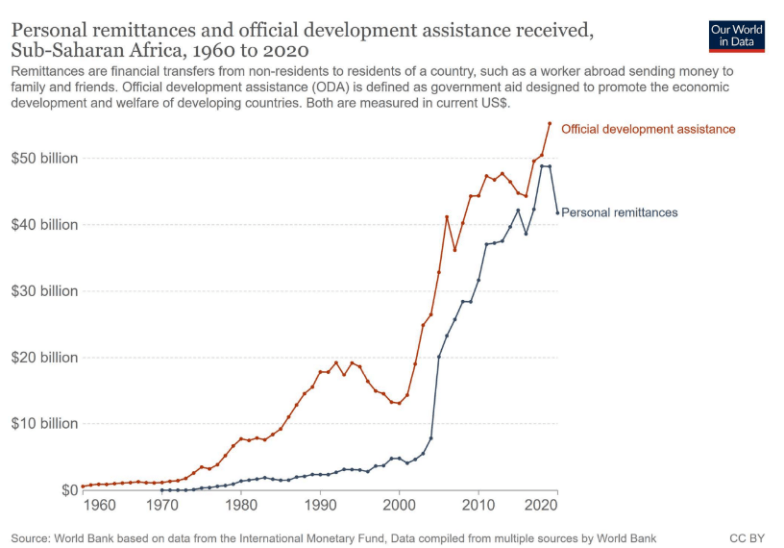
A Summarised History of Jazz 

Reading time: 5 minutes

While jazz became popular in the 1920s, its beginnings actually date back to the early 19th century! A bit before 1820, slaves would gather in the Congo Square, New Orleans, to play music. This was only possible in the state of Louisiana where the Code Noir, a rule book outlining the treatment of slaves, included a clause that allowed some slaves to have a day of rest.
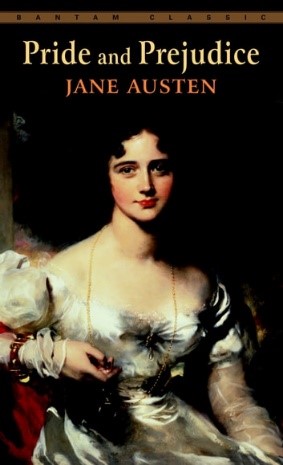
The Congo Square 

Over time, New Orleans would become a “melting pot” of culture, partially due to slave trade: African Americans, descendants of slaves from the Caribbean, Creoles and European immigrants were part of the bustling population of the city. This diversity impacted the evolution of music: the blending of African and Caribbean music, slave songs, and church hymns was joined by marching band instruments, very popular during the Civil War, forming the genre known as ragtime. Then, spiritual music joined the mix, followed by the blues. This progressive build up led to the creation of jazz.  

The cornetist Buddy Bolden is often considered the first jazz musician: he assembled The Bolden Band, in 1895, that would play at dances and street parades. 

Jazz is an extremely unique and colourful genre: it embodies musical freedom. Indeed, some of its characteristics include improvisation, solos, and irregular rhythms spread over many subgenres such as modern and free jazz, bebop and swing

Ella Fitzgerald

Since jazz initially gained widespread popularity in the US and Europe in the 1920s, many people view this period as the beginning of the Jazz Age. The genre rose during the Roaring Twenties, a time of speakeasies in The Prohibition Era, flappers, and music. Artists and great voices like Louis Armstrong, Duke Ellington, Count Basie and Ella Fitzgerald became famous almost overnight. Subsequently, despite losing its place at the top of the musical pyramid during the Great Depression, jazz has continued to echo throughout time, influencing pop culture, even as new styles and subgenres emerged in music.

Louis Armstrong

Unfortunately, the genre has become widely associated with background or “elevator” music, undermining its complexity and beauty, which is why it is important to spread its history. Jazz, with its extensive range of sounds, can truly captivate your senses and immerse you in an exquisite musical universe. So, grab your headphones and put on some Louis Armstrong, Chet Baker or Ella Fitzgerald! 


Sources: Jazzobserver, The History of Jazz by Ted Giogia

Marta Nascimento