Yemen’s Forgotten War

Over 100.000 people killed since 2015

Over 2.2 million children malnourished

Over 19.000 airstrikes

Historical Background

In 1990, the Republic of Yemen was formed through the unification of the People’s Democratic Republic of Yemen (South) and the Yemen Arab Republic (North), under the joint governance of Ali Abdullah Saleh of North Yemen and Ali Salim al-Beidh of South Yemen. Since then, there has been persistent political and social unrest, predominantly in the northern provinces.

In 1993, al-Beidh left the new government claiming the latter marginalized and ignored the needs of the southern people, leading, in 1994, to the rise of a Civil War. He tried to cease the unification by reinstating the Democratic Republic of Yemen, an attempt that failed within less than two months and led to his expulsion from Yemen. After the Civil War, national unity was maintained under the presidency of Saleh, until a 2011 Arab Spring’s(1) popular revolution led to his resignation a year later, leaving power to Abdrabbuh Mansour Hadi, the vice-president.

The 2015 ongoing Civil War

While peace was expected to be restored, President Hadi faced Al-Qaeda attacks, military loyalty to Saleh, corruption, food insecurity and the South separatist movements. After the 2014/15 coup d’état(2), Hadi became an ally of the separatist movement to fight the Houthis, a broad tribal alliance belonging to the Shia minority, which emerged in the 1980s and later developed into a militia. This militia firmly opposed former President Saleh’s rule up to his resignation in 2012, yet joined forces with him and his troops to depose President Hadi.
The Saudis, who supported the presidency of Hadi, found this transfer of power illegitimate and formed a coalition consisting of nine West Asian and African countries (3).  The main objectives of this coalition were to restore the presidency of Hadi, preventing Yemen from fragmenting under factions, and controlling the growing influence of Iran in the region. The Saudi-led intervention consisted in bombing suspected rebel hideouts. The US and UK have assisted the Saudi led coalition via intelligence briefings, military supplies and some drone attacks. Western involvement has the goal of preventing terrorism. The “War on Terror” has been the US’s main diplomatic goal in the Middle East, with Josh Earnest, Obama’s White House Press Secretary, saying back in 2015:

“… the goal of US policy in Yemen is to make sure that Yemen cannot be a safe haven that extremists can use to attack the west and to attack the United States”

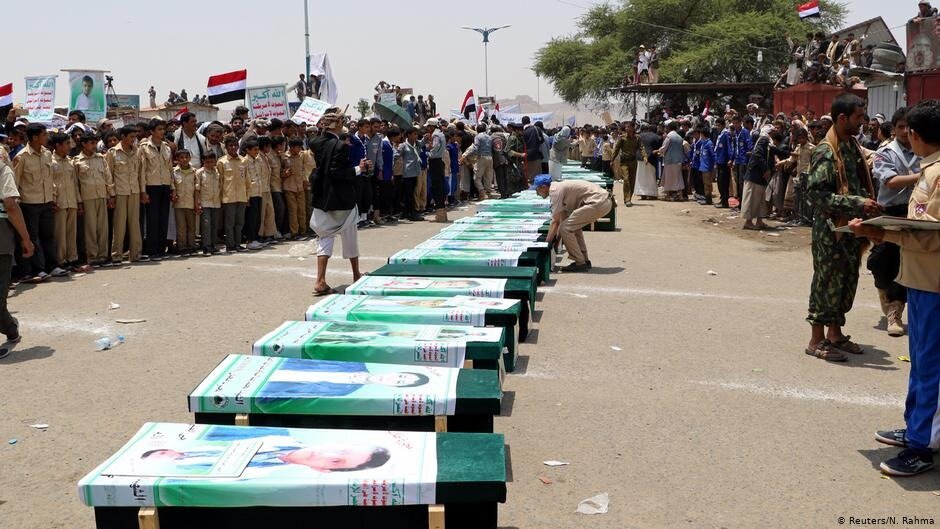
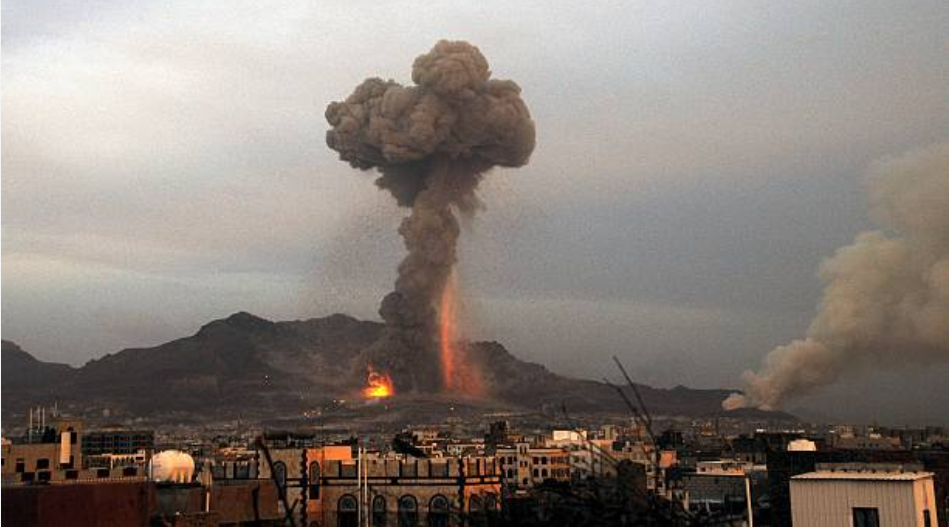
An airstrike hit a school bus filled with children

An airstrike hit a school bus filled with children

UN reports have verified the death of at least 7500 civilians as of September 2019, most of them caused by coalition air strikes. Some estimates indicate a death toll of civilians of approximately 12,000, while 100,000 people have been killed since the beginning of the war. Houthi rebels have also been accused of using banned antipersonnel landmines, recruiting children, killing and wounding civilians by firing artillery indiscriminately at cities such as Taizz and Aden. These numbers, however, do not reflect people who have died as a result of starvation and illness brought on by the on-going humanitarian crisis.

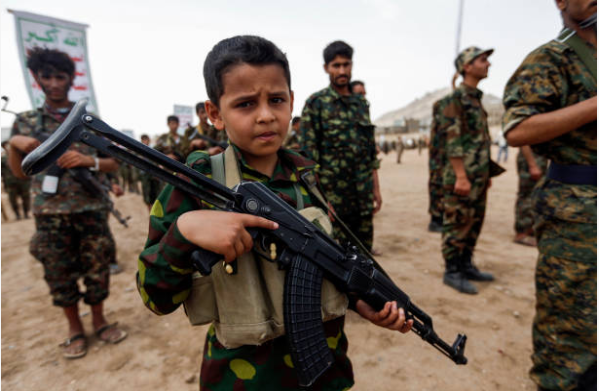
Yemen’s Houthi rebel group has recruited more than 30,000 child soldiers 

Yemen’s Houthi rebel group has recruited more than 30,000 child soldiers

The UN considers Yemen to be the largest humanitarian crisis in the world, with 14 million people at risk of starvation, 2.2 million children being acutely malnourished, as well as 462,000 children suffering from severe acute malnutrition, according to UNICEF. There have been repeated outbreaks of deadly diseases such as cholera and all sides in this conflict have blocked and impeded access to humanitarian aid. The Saudi-led coalition has delayed and diverted fuel tankers, closed critical ports and stopped goods from entering Houthi-controlled areas. By doing this, fuel needed to power generators and pump water to homes has not reached its destination, worsening the already dire conditions within Yemen. Houthi forces have also been accused of confiscating food and medical supplies destined for the Yemeni population. Burdensome restrictions on aid workers have also interfered with the delivery of foreign aid.

There are also instances of aid workers being arbitrarily detained, kidnapped and killed while performing humanitarian operations throughout Yemen.

A quarter of all civilians killed in air raids were women and children

A quarter of all civilians killed in air raids were women and children


 Saudi Arabia and Iran’s involvement

Western involvement is not of the same kind as previous military interventions in the Middle East. Therefore, the most important presence in the war comes from the two biggest middle-eastern powers: Iran and Saudi Arabia. The two countries have been bitter rivals since the Iranian Islamic Revolution of 1979. Although they never entered into direct military confrontations, they engaged in various proxy wars.

What is happening in Yemen is similar to what happened in Iraq during the American invasion of 2003. With the power vacuum, the country became a stage for a proxy war between the two regional powers. Yemen is a neighbor and a former satellite of Saudi Arabia. Iran backed the Houthi coup d’état in 2014-2015 and their militias, whereas the Saudis helped the central government.

Saudi Arabia hopes to keep Iran out of the Arabian Peninsula and to stop the increasing influence Iran seems to be gaining all over the Middle East.


Consequences of a forgotten war

The chaos in Yemen has resulted in two migrant flows into neighboring countries, that has spilled violence and refugees into the Arabian Peninsula and the Horn of Africa.  Refugee flows coming from Africa have reversed, which in turn has only fragilized even further these countries that are already extremely impoverished and dealing with their own internal political conflicts.

The possibility of a break-up of the country is very likely, as the Iranian backed separatists have managed to achieve a strong enough position to force the remaining powers to accept it.

The war has also increased the hostilities between Iran and Saudi Arabia, worsening the stability of the regions’ security, which was already extremely fragile.

For peace to be a realistic goal, there needs to be agreements among national and international players involved in the war. This political settlement, can only be created through extensive dialogue, not continued warfare. To resolve Yemen’s multi-sided civil war, players with polarizing and conflicting interest will have to compromise for the greater good of the Yemeni population, which does not seem very likely in a near future.

While no compromise is made, the ones who suffer are the civilians in Yemen, specially the children who have been witnessing the terrors of war their whole lives, plagued by famine, diseases, poverty and the constant fear of being hit by an air strike or artillery shell. These people have lived in a continuous state of warfare for the last 5 years, with no foreseeable end in sight, and must continue with their daily lives, hoping one day they can return to normality.


(1) The Arab Spring is the name given to a series of protests and revolts spreading through many North African and Middle Eastern countries, starting in 2011, with the goal of establishing democratic regimes. The revolts lead to several regime changes. However, the outcomes were more instability, war and the persistence of repression in the region.

(2) 2014/15 coup d’état: An alliance between the Houthis and forces loyal to former president Saleh took control of the Yemeni capital Sana’a and deposed the interim president Hadi, who was forced to flee to Saudi Arabia.

(3) This coalition, also called Arab coalition, includes forces from Saudi Arabia, Egypt, Morocco, Jordan, Sudan, UAE, Kuwait, Qatar and Bahrain. Djibouti, Eritrea, Somalia made their military bases, airspace and territorial waters available for the coalition, while the US and UK have provided intelligence and logistical support.


Sources: BBC, Yemen Data Project, Anadolu Agency, The Bureau of Investigative Journalism, Reuters, DW, United Nations, Al Jazeera, Human Rights Watch.

Corona, an Economic Virus

As it is noticeable, we have just entered a downturn cycle in the economy. The uncertainty on the markets, the general panic, sudden decrease in consumption, production and investment are primary presages of economic dark times, and it is up to all of us to prepare for the upcoming storm. The next months won’t be easy and irreversible economic losses have already contributed to an approaching feasible collapse in the global economy.

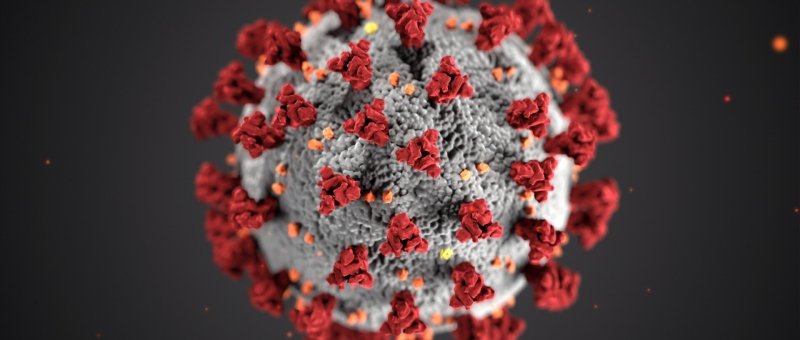
The coronavirus isn´t only responsible for contaminating our health, this contagious virus has and will certainly play a big role in the future of worldwide economies.

e784671a-c780-46e6-878b-057b08d007fe.jpg

EU’s real GDP was expected to grow around 1,4% in 2020, after the hit of the pandemic COVID-19 EU´s output may fall to 0% or even reach a negative growth. Even the Chinese economy, which has been continuously growing in the past decades, was anticipated to grow around 2% more than what it will predictably grow after the spread of the virus and the USA’s real GDP may grow less 1% than previously expected. Overall global GDP growth may fall from 2.5% to between 2% and -1.5%, depending if there is a quick recovery on the economy or a global slowdown.


All industries in the global economy are being contaminated by the virus and the duration of the predicted recovery fluctuates, depending on the economic sector.

As expected, tourism will take the longest time to recover.It is foreseen that it will only restart in the 4th quarter of 2020 (in October), imposing a threat for various countries. A good example is Portugal, whose GDP is highly dependent on the industry, having represented 14,6% of the portuguese GDP in 2018. On the other hand, consumer electronics and consumer products are the sectors that are anticipated to have the fastest economic recovery. Their  global downturn reversal is estimated to be in the 2nd quarter of 2020 (April).

105f450e-ece7-4f67-89ae-3b8e8562d6c3.jpg

Even though there will certainly be an economic global slowdown in the economy many specialists argue that the economic incidence of covid-19 is merely conjunctural. Since it´s repercussions aren’t enrooted in the economy, a severe recession isn’t bound to happen, “markets will recover”.

If we reflect on it, an appearance of the epidemic coronavirus will pose as a temporary shock in the economy and it is one that is far from being neglected. 

Let us take into consideration the 08 financial crisis, a great recession derived from an inundation of continuous bank runs, lack of credit crunch and condensed investment in toxic assets. Within the recession downtimes there was a high level of leverage in the financial market which turned rather more difficult the monetary response of the central banks. Many even argue that the prolonged and inaccurate response of Central Banks took a big part in the colossal breakdown of the economy.

 In the feasible upcoming coronavirus crisis, governments and central banks are already concerned with how to prepare for it, how to mitigate the alarming consequences this global pandemic seems to be able to induce in the economy, and how to aim for a “surely recovery”.

a31f663b-7505-4c79-b7da-c1db7c10b6e4.jpg

It is definitely extremely hard to predict the right measures to fight such an erratic enemy, thankfully many allies have already started to plan ahead.


Central banks are taking out the big guns. The Fed just announced this last Sunday, March 15, 2020 , that it will lower interest rates to 0%, the first time since the financial crisis of 08, and that it will buy at least $700 billion in government and mortgage-related bonds.The drastic low interest rates are expected to remain until the US economy recovers from the coronavirus economic slowdown.

The ECB is also expanding money supply in the economy, buying financial assets with newly created money. However, their fixed interest rates have been on negative territory since 11 of june of 2014, therefore the central bank has no room to lower interest rates.

It becomes clear that European government’s fiscal policy will play a big role in safeguarding the economies. For the approaching months it will definitely be crucial that assertive fiscal policies are created, in order to safeguard employment and ensure direct credit to companies, with the intent that solvency and liquidity issues are avoided.

Acknowledging that the coronavirus outbreak is an exogenous temporary shock in the economy and that global entities are already taking measures to safeguard its repercussions, independently if the recovery process may elongate, there is hope that our economy won’t suffer an irreversible collapse and fall into the next big recession. Nonetheless, we should be aware that an economic downturn is advancing,  it is time for governments to strengthen their weapons and get ready for the shooting.

RTS31D32-Social-Media-Comp-768x512.jpg

Sources:

  • European Commission, McKinsey & Company, Washington post, BBC news, INE, NY Times, Economic Times, European Central Bank- Euro system

The Portuguese Environment for Startups

Portugal lists as one of the European countries most severely hampered by the 2008 global recession. Following the austerity measures implemented in 2011 as a consequence of the country’s economic precarity, unemployment boomed and triggered all-time high emigration in the following years, particularly among younger and highly qualified people, leading to the so-called brain drain. This phenomenon greatly dampened Portugal’s more innovative sectors, making the country lag other economies regarding innovation, and consequently the startup ecosystem.

More recently, in 2016, the Portuguese government implemented StartUp Portugal, a startup acceleration initiative aimed at rejuvenating the country’s industries, boosting economic growth and fostering foreign investment, as well as creating an international hub for innovation.

Still in 2016, Prime Minister António Costa announced in the first edition of Web Summit in Lisbon a €200M fund to co-invest alongside VCs (venture capital) in local startups and foreign enterprises that reallocate to Portugal. Moreover, this event alone (which has been contractually ensured to remain in the country until 2028) has been creating fiscal revenue of over €45M and stimulating venture capital injection into local initiatives. This resulted in venture capital investments of around €44M in that year which, despite not being comparable to the vast majority of the top entrepreneurial countries, was a big increase from the €29M in 2015.

Indeed, a report conducted by Startup Europe Partnership stated that the Portuguese startup ecosystem is growing twice as fast as the European average. The cases of unicorns Farfetch, the online luxury retail platform, the cloud-based call-centre software Talkdesk or the low-code platform for private application creation Outsystems, reiterate the fertility of the Portuguese soil for the creation of valuable global market conquerors.

This month, the American startup accelerator Techstars partnered up with Semapa Next, in order to invest and enhance ten Portuguese newly founded companies that are bringing digital transformation to the areas of Industrial & Environmental Tech and Smart Transportation. This program clearly depicts how accelerators and venture-capital investors are increasingly focusing their efforts on startups that seek competitive advantage through the development of innovative technologies. Among the chosen are “Apres”, a data-driven company that focuses on providing AI solutions to enterprises, and “Qsee”, which devotes itself to the development of advanced analytics to address critical challenges in quality and productivity throughout the production process of firms.

Today, Portugal has a more developed entrepreneurial ecosystem and as a result is becoming a hub for innovation and startups, ranking at #31 on the Global Innovation Index. This progress is a consequence of factors such as Education, Expertise, and Support. The startup ecosystem benefits from a qualified workforce, as well as high quality Universities, with special focus on business and science, also emphasising on entrepreneurship. In fact, Portuguese universities such as Nova SBE, Universidade Católica SBE and Instituto Superior Técnico are ranked amongst the best in their areas of expertise.

Furthermore, partnerships between universities and their respective sectors, which provide students with a more “hands-on” experience, benefit not only students, but also startups, especially those in the growth stage, as more often than not they need access to specialist knowledge, which they lack in-house.

When it comes to support for startups, Portugal is characterised by a great number of initiatives. The number of incubators and accelerators, for instance, has grown to more than 150 throughout the country. They prove to be successful as well: the Lisbon Challenge was named as one of the top accelerators in Europe, and incubators like Startup Lisboa are also key players. Besides the typical startup amenities, there is a wide offer of services for starting and growing companies, ranging from co-working spaces and support services for intellectual property and product development. Consequently, Lisbon is listed in the top 5 best performing startup communities in Europe.

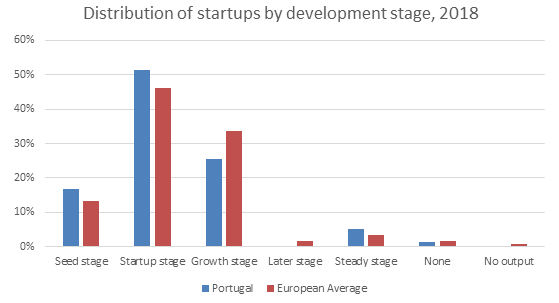
Despite the support in non-financial resources, the country still lacks monetary investment. Difficulty in raising funds helps to explain the higher percentage of startups in the earlier stages of development and the fewer in more advanced stages, in comparison with the European average.

Distribution of startups by development stage, 2018. Source: Statista

Distribution of startups by development stage, 2018. Source: Statista

So far, remarkable improvements have been observable in the startup ecosystem in Portugal, but there is still a long way to go until we reach the same level of entrepreneurship development as our European peers. Venture capital is a valuable source of investment for newly founded companies and, as of 2019, Portugal was still ranked at the bottom (out of 28 countries) in VC funds raised per capita, at only $4 per capita, This value doesn’t even come close to the $771 per capita raised by Luxembourg. In terms of job creation, on average, each Portuguese startup employs 8.8 people, when the European average is 12.8. This fact may compromise the growth of the national enterprises.

Evaluating the stage of development of Portuguese recently-founded companies, the majority of them (51.3%), are in the “Startup stage”, meaning they have completed a marketable product or service and report first revenues/users, and that is the most prominent stage of development for a large proportion of European countries. It is also noticeable that there are still many companies in early stages of development, the “Seed stage”, which accounted for 16.7% of the startups in 2018. These values follow the European trend.


5 startups to look out for

This atmosphere has resulted in a myriad of exciting innovation. As a result, Tech5 was created, with the aim of serving as a community for the most promising startups in Europe and Israel. Each year, the top 5 startups of each participating country are chosen  and brought to Founders Day, an event that brings these companies, top-tier investors and global press altogether. The criteria for selection are based on performance, investment rounds, growth, media coverage and social impact, among other factors. This year’s finalists were:

  • 20tree.ai (founded in 2018, raised $120k): with resort to satellite imagery, AI and computing power, 20tree.ai provides an in-depth analysis of natural resources to companies, in order to ensure a sustained and productive exploration of such resources. From their platforms, they are able to provide insights on growth predictions, harvesting analysis, plagues, damages, predictions on short and long-term impacts, as well as asset monitoring and much more.

  • Barkyn (founded in 2017): an e-commerce website focused on man’s best friend. The platform allows for the creation and purchase of food adapted solely for each dog’s needs with the aid of an expert. Moreover, online veterinary appointments are also a feature of the startup.

  • DefinedCrowd (founded in 2015, raised $12.9M): DefinedCrowd is an artificial intelligence service to train and accelerate data through a combination of human-in-the-loop procedures and machine-learning techniques.

  • Jscrambler (founded in 2014, raised $2.3M): the startup serves the purpose of bringing security solutions for webpages and apps, ensuring tailor-made decisions based on data extraction to ensure maximum compatibility, performance and protection.

  • SWORD Health (founded in 2013, raided $14.1M): the first digital therapist ever, this program allows for physical therapy to be performed at home, while ensuring real-time feedback from the digital therapist and analysis of the rehabilitation process from clinical teams.


Conclusion 

Despite Portugal’s initial setback, due to the community and government’s hard work, what was once the country’s Achilles heel is now one of its most attractive factors. The startup ecosystem improved considerably, more and more money is being invested and, consequently, that hard work is beginning to show results. As the country starts to roll out its first unicorns, the future looks promising…

Sources: “An overview of the Portuguese Entrepreneurship Ecosystem”, Halbe & Koenraads. Financial Times, Startup Europe Partnetship, Dealroom.co, OECD, Tech5, Statista.

Does a flat tax on personal income make sense?

Throughout history, disparities about the definition of social justice, across regions, led countries to adopt different income-tax systems (1). Despite being the most accepted, the progressive way of taxes has been increasingly questioned by academics and political leaders, arguing that a flat-tax system would be a better fit for countries regarding fairness and economic dynamics.

What distinguishes a flat rate from a progressive rate?

Simply put, a flat income-tax system applies the same income-tax rate to all taxpayers, regardless of their income level. Contrarily, a progressive system increases the rate as the income level increases, where the income range can vary greatly, depending on the country.

On the one hand, those who defend the first method argue that it is unfair to charge higher-income individuals a greater tax rate. The rationale behind this position is that they should not be penalized for adding more value to the economy. On the other hand, supporters of the progressive system believe that income distribution before taxes is not fair, i.e., earnings do not necessarily match economic contribution. Furthermore, wealthier households are considered to have the moral duty to aid those struggling. In their view, adjustments are needed and desirable.

Historically, the progressive system has been prevailing in most developed Western countries. In the USA, for instance, only 9 states (Colorado, Illinois, Indiana, Kentucky, Massachusetts, Michigan, North Carolina, Pennsylvania and Utah) out of 50 have a flat income-tax. In turn, only 8 of the 36 OECD member countries currently have a somewhat flat system (Czech Republic, Denmark, Estonia, Hungary, Iceland, Ireland, Poland and Sweden) (2).

In order to accurately address the origins and the main effects of a flat-tax system, some of the referred countries will be used as case-studies in this article.

What caused some countries to adopt a flat-tax system?

It is not a coincidence that most European countries which adopted a flat-tax system were once part of a bigger state. Estonia, for instance, which is perhaps the successful case in the adoption of a flat-tax (1994), was part of the USSR until its breakup in 1991, as well as Latvia (1994), Lithuania (1995) and Georgia (2005). In turn, Serbia and Montenegro, which adopted a flat tax in 2003 and 2007, respectively, are former members of Yugoslavia.

What these countries have in common is the lack of openness of their economies prior to their independence, as seen in the graph. Nowadays, approximately thirty years after the breakup of their previous federations, countries like Estonia and Serbia have shown an intensive internationalization process. Indeed, economic history tells us that global trade increases the welfare of nations. Therefore, it seems logical that former USSR and Yugoslavia members would aim at opening their economies so that they could thrive and catch up with Central and Western European more developed states.

Data source: The Global Economy

Data source: The Global Economy

In a report for The Heritage Foundation, Mart Laar, former liberal-conservative Prime Minister of Estonia (1992-1994; 1999-2002), explained that, when the USSR broke up and the country conquered its independence, the Russian ruble no longer had any value, Estonian industrial production declined by more than 30%, real wages fell by 45%, while inflation was running at more than 1000%. GDP per capita in the country was at $2,000, compared to the $14,370 attained by the Finnish neighbours. This Baltic country was totally devastated, after being pushed to the limit by Moscow, hence lacking urgent and impactful policies to invert its economic path.

Among a set of important measures to stabilize and boost the economy such as the introduction of an own currency (the kroon) which was pegged to the German mark, and balanced Government budgets, openness to global markets also played a significant role by fostering competition and attracting direct foreign investment. Nonetheless, the decisive move «to achieve a lasting breakthrough in Estonia’s development» would be the flat tax.

In the words of Laar, it was all about providing the right incentives to people:

“when people who had started companies realized that the tax system punished success, their enthusiasm to persevere and determine their own future declined considerably”

— Laar

Similarly, in Lithuania and Latvia, nations that share many characteristics with Estonia (these three would become known as Baltic Tigers), the flat tax was introduced to improve the economic outlook after Soviet ruling. Besides, they had to compete with Estonia for foreign investment, for which fiscal policy was a powerful tool. On the other hand, in Russia and Ukraine, the flat-tax was introduced mainly to incentivize higher-income households not to evade their taxes.

How does flat taxation impact economies and societies?

Despite all the positive results political leaders aimed at achieving with a flat-tax system, do/did they really happen? Looking at tax revenue, GDP per capita, income reporting and tax compliance and Gini Index, we can take some conclusions.

Regarding tax revenue, the year immediately after Russia changed from progressive (12%, 20% and 30% rates) to flat taxation (13% in 2001), personal income-tax revenues increased 26% in real terms and 2% as a percentage of GDP, a working paper of the IMF from 2005 concluded. In the case of all Baltic Tigers, Deena Greenberg, despite finding out in the paper The Flat Tax: An Examination of the Baltic States that tax revenue increased after the adoption of a flat tax, could not conclude that both were linked, leaving space for ambiguity as for the effect of flat taxation on personal income-tax revenue. Nevertheless, the fact that these countries decreased their tax rate after some years raises doubts on the effectiveness of this method.

Data source: Taylor & Francis Online

Data source: Taylor & Francis Online

Analysing the evolution of real GDP per capita of some European countries with flat taxation, there is a clear trend: all of them grow significantly in the first years after its introduction, but then growth rates slow down. However, this has more to do with their historical precedents and consequent policies (macro stabilization, property reforms, openness to trade) than with the adoption of the flat tax itself. They happened simultaneously, which may induce misleading conclusions. So, it doesn’t seem to be enough evidence that GDP per capita improvements in these countries over time are due to flat taxation.

Data source: AMECO

Data source: AMECO

In terms of income reporting and tax compliance, it is not clear that a flat tax improves the standards, as the study ‘Flattening’ tax evasion? (2019) concludes by analysing a set of transition European countries. The already referred working paper from the IMF (2005), though, points out that tax compliance in Russia increased after the introduction of a flat tax. Therefore, despite not being totally clear, we could admit some positive impact of a flat tax in tax compliance, especially in less developed countries, in which standards are low.

From an inequality point of view, the Gini Index gives us an accurate insight. The higher the index, the higher the inequality. In this regard, findings are that flat taxation is positively correlated with income inequality, as the following table shows.

Data source: World Bank

Data source: World Bank

All in all, income inequality ends up being a determinant when it comes to deciding which taxation system to use. Despite being correlated with economic improvements, there is no clear evidence that flat taxation plays a role in them. The fact that Slovakia (2013) and Latvia (2018) have recently abandoned their flat systems in favour of the progressive method should be a matter of reflection. Even though the social justice argument is debatable, the economic side does not seem to support flat-tax admirers.


(1) For the sake of this article, only personal income was considered.

(2) Although only Estonia has a perfectly flat tax system, the remaining countries are included in the list either because they consider very few income ranges or because higher tax rates are charged only to abnormally wealthy individuals.


Sources:

AMECO, Deena Greenberg, European Central Bank, European Commission, Global Tax News, International Monetary Fund, LSE Blogs, ProPublica, Taylor and Francis Online, The Balance, The Global Economy, The Heritage Foundation, The Slovak Spectator, Verena Fritz, World Bank

Is the Global Economy Infected? Part II

Despite the world’s biggest central banks intentions to deliver monetary policy in order to soften COVID-19’s impact on the economy, markets continue to fall sharply in an irrational manner. On the last week of February, the major financial indexes showed startling results registering their biggest fall since 2008, with the S&P 500 dropping 11%, its worst weekly decline since the financial crisis,  the Dow Jones Industrial Average crashing 12.4% and the PSI-20, the main Portuguese index, registering its worst result since Brexit.

february swoon.png


How are investors reacting?

A few stocks managed to escape the sentiment of fear by investors. Evidently biotech stocks, particularly the ones involved with the production of vaccines and antivirals, were one of the main class of stocks that rose in recent weeks. A particular example was Zoom, as investors are already pricing an expected period in which people will be forced to work from home and must use systems like the ones this company develops.

Investors quickly ran to the “safest” asset in the financial markets with US Government Bonds surging and dropping the 10-year US Treasury yields below 1%, an all-time low, also as a result of the interest rates cut by the Fed.

The yen is another traditional safe harbour being perceived as one of the most stable currencies amid market uncertainty and, at the time this article is being written, stands at 108.20 yen a dollar. Gold reached a seven-year high last week with investors using the precious metal as a haven from the meltdown in Wall Street. But, in these last few days, gold’s price plummeted with the biggest one-day decline since 2013. Gold dropped 4.5% on the 28th February as investors are selling it to cover margin calls as needs for cash arise due to the sell-off in stocks and fear is rising that China’s demand for gold is severely weakening.

However, ETF investors seem to be the exception in a week of pure panic in Wall Street. When we take a closer look at ETFs linked with the stock market indexes, we observe that the players that shifted higher amounts of cash from SPY have been institutional investors that are being faced with liquidity concerns, it was not a panic move. Another trend is the outflows from funds related to Japan who are in the frontline of the virus and shifts to European markets, for example. At the same time, with the decrease of interest rates and the continuous inversion of the yield curve, investors dumped financial ETFs like the XLF (an ETF that tracks an index of S&P 500 financial stocks) and again it was a very rational decision. Contrary to what is being seen in other markets, even amid uncertainty, there is still a strong demand for ETFs.

Short sellers on the US stock market, that predicted overvaluation and were expecting a period of correction, got a big help from the outbreak of the virus and managed to make $105 billion in a week. This has also prompted a raise in short selling since some believe the bottom has not yet been achieved.

Employees wear face masks as they stand in a reopened Apple Store in Beijing last week. Source: Associated Press

Employees wear face masks as they stand in a reopened Apple Store in Beijing last week. Source: Associated Press

Moreover, some of the world’s biggest enterprises are suffering at the hands of this illness. Dow Inc., Goldman Sachs Group and Intel, alongside Apple, were the sum of main victims as “24 of its 30 components finished in the red”. For instance, Apple expressed its concerns of not being able to fulfil its second-quarter financial guidance since the outbreak has led to a cut in the production of iPhones and the firm heavily depends on factories in Shenzhen, China, and its Chinese customers. Therefore, the American multinational technology enterprise joined the number of companies that are expected to reach the bottom line caused by this pandemic.


What are the main global institutions doing to fight the coronavirus’ economic and social shock?

Governments and Central Banks have been trying to stabilize the markets and diminish the economic effects of the virus before an increase in infection cases cause tougher impacts.

Central Bankers around the world are decreasing rates or acting to ensure liquidity in the financial markets. This support has been the cause for some rallies along these weeks, keeping investors hopeful that the effect of COVID-19 in the world economy will be diminished in some part. At the start of March, the Fed moved from hinting to making an emergency interest rate cut of half a percentage point, its biggest cut in more than 10 years. As of the 3rd of March, interest rates now sit between 1% and 1.25% as Jerome Powell states that the central bank is “prepared to use our tools and act appropriately, depending on the flow of events”. Despite this action, markets reacted negatively hinting that stimulus may make borrowing cheap, but the economic menaces come from a decrease in consumption and an infected workforce. Besides the Fed, the Reserve Bank of Australia has cut interest rates to 0.5% and the Bank of England and the Bank of Japan pledged to use every mechanism in their hands to “ensure all necessary steps are taken to protect financial and monetary stability.” Even the initially sceptical ECB joined other central banks in recognizing the threat and taking arms against it.

The People’s Bank of China was the first to cut its rates and the Chinese Government is expected to increase fiscal stimulus as worries about reaching its economic targets are surging. This fiscal stimulus will probably consist in investment in infrastructure to deter the slowing in economic activity shown in recent reports.

On the other side of the Atlantic, President Trump and the government’s health-care authorities have been releasing contradictory statements in what concerns the extent of the threat this pandemic represents. While the major figure of the United States disregards the impact of the virus, stating that the risk is low and assuring Americans that they’re unlikely to die from an infection, the CDC (Centre for Disease Control and Prevention) has publicly detailed that “an American outbreak would likely cause widespread disruptions in everyday life, including closed schools and cancelled business meetings”.

On the other hand, the Chinese power aggressively acted in order to slow the spread of COVID-19, establishing a Central Leadership Group for Epidemic Response and the Joint Prevention and Control Mechanism of the State Council. Moreover, the General Secretary Xi Jinping personally directed and deployed the prevention work, making the control of the COVID-19 outbreak the top priority of the government at all levels, closing schools and other public facilities, asking overseas Chinese to reconsider travel plans and advising citizens to quarantine. Nevertheless, the attempt to silence whistle-blowers distorts the real figures of the impact the virus has had on China.


What’s next for this pandemic?

Undoubtedly, if the virus continues to spread at this pace, its impacts will reach a greater dimension. Jobs are in danger and most firms’ supply chains are jeopardized, rocking financial markets and tumbling the global economy. Some believe the worst is yet to come. It is also important to remember that the American elections are taking place in November and may have a big impact on investors sentiments. We could see trade wars between China and the US worsening if Trump gets re-elected. The world economy is in a very tight deadlock and the next months will dictate its future outcome. Is this just a glimpse of what awaits us? Either way, not much is within our reach. So, let’s just wash our hands and wait as we watch 2020’s soap opera unfold.

Sources: Bloomberg Intelligence, Market Watch, The Washington Post, CNBC, Financial Times

Is the Global Economy Infected? Part I

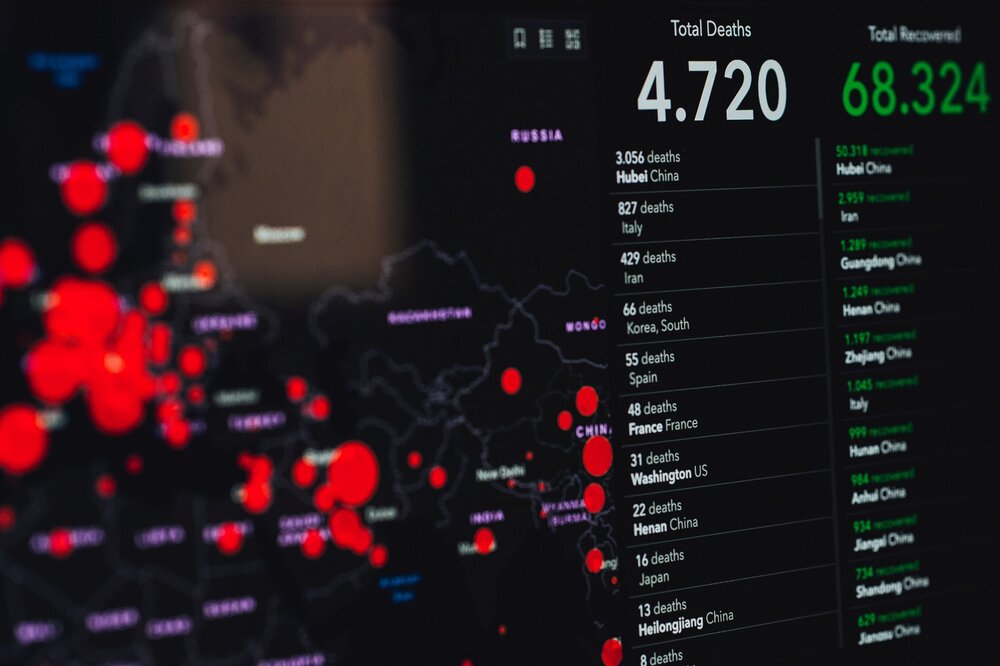
The world is on red alert and has “Coronavirus” as its watchword. But what is exactly this virus that has caught everyone’s attention in the past weeks? This so-called coronavirus disease 2019 (COVID-19) is identified as a new type of coronavirus that belongs to a family of viruses that cause illness such as common cold, severe acute respiratory syndrome (SARS) and Middle East respiratory syndrome (MERS). Despite its scientific definition, not much is known about it yet. Nevertheless, its contagiousness is undeniable and, despite having started in China, according to the World Health Organization, “the number of infections outside China has outpaced those inside the country”, raising the world’s concern about the rise of a pandemic that has made, until now, 3555 victims.  Yet, another question arises: is this mysterious virus only a well-being subject? As a matter of fact, this highly contagious virus is spreading beyond healthcare fields, shaking economies and tumbling global markets.


Hit-hard industries by COVID-19

Closed stores, travel bans, or cancelled conferences are some of the measures imposed in order to combat the spread of the virus of 2020. Plenty of businesses are struggling to get back on their feet and consumers’ worries keep rising after new cases emerge. China is one of the main concerns among industries, as the virus concentration is much greater in this country and the number of stores closing and shoppers sheltering at home are increasing. However, the initially-Wuhan epidemic has now expanded far beyond the Chinese city.

The travel industry is one of the largest industries in the world, with revenues around $5.7 trillion. But now, it’s being hit by travel restrictions and cancelled trips prompting a crisis towards this industry and dragging down the global economy. The international Air Transport Association, IATA, warned that global demand for air travel could fall in as much as $30 billion in revenues, the first time in 10 years. These would correspond to a 4.7% hit in global demand levels, corresponding to a 0.6% global contraction given the 4.1% expected growth for 2020.

Many big shows have been cancelled already, in an attempt to control the outbreak of the virus. Among them are Geneva Motor Show, Facebook’s F8 conference or ironically enough the leading trade show for the travel industry itself, ITB Berlin. Many companies’ business trips are also on hold, concerned about the employee’s exposure. British Airways, Ryanair, Lufthansa and EasyJet have already been forced to cancel hundreds of flights, as the airlines industry body has already warned of a falling number of passengers. Some of them are resorting to price cuts on short-haul flights, in order to dodge demand breaks.

In the tech industry, companies are already sensing the damages being caused by COVID-19 as well. The first ones being those with direct exposure to China, the supply chain of which is so dependent on this country, causing several companies to have issued a financial warning regarding the consequences of the pandemic.

Moreover, shortages in supply are expected in various products ranging from smartphones, headsets or even cars. The manufacturer Foxconn, known to be the main assembler of Apple, has stopped almost all of its production in China, who’s accountable for 75% of the production capacity of the firm. Foxconn’s revenues are down 10% compared to last year’s period. The disruption in the company’s operations has prompted questions regarding the dependence on this geographic location.


Why can this affect the global economy?

The reason is simple: China. Bear in mind that we are talking about the second biggest economy in the world and the world’s largest manufacturing and exporter of goods. Besides losses in China due to decreases in consumer spending and stores closing, the impact will extend beyond the Wuhan province.

Since the outbreak of the COVID-19 virus, there has been a tremendous amount of stoppages and even lockdowns in China’s factories, as only about 50% of them haven’t yet been harmed by the spread of the virus. This not only affects production, but also sales, since people are forced to stay at home, hence, not spending money on a wide variety of products. Furthermore, sales in China are not the only ones doomed to failure this first trimester, as sales in a lot of different sectors outside China are now compromised due to the disruption of supply chains created by all the lockdowns that have been occurring. So, basically, any company directly working with China, as for raw materials or any work in progress goods, is most likely being impacted since, a lot of companies in Europe and the United States are receiving their orders with weeks of delay and some of these can’t even sail through the Ocean due to requirements of a minimum amount of goods to fill the ships, which are simply not coming through.

View fullsize


pasted image 0.png

By looking at the Purchasing Managers’ Index (PMI), we can understand how severe the coronavirus has been to China’s economy given the fact that in 2008’s global recession this index had hit a low of a 38.8 score (to provide some insight, any score below 50 shows that there are more purchasing managers, in the manufacturing sector, indicating a contraction in this sector). Besides this concerning value, the IMF stated that the global spread of COVID-19 will damage economic growth for 2020. After the easement of the US-China trade relations, growth for this year was expected to surpass 2019 , whereas now Global growth in 2020 will dip below last year’s levels, but how far it will fall and how long the impact will be is still difficult to predict as the Managing Director of the IMF Kristalina Giorgieva said last week. This means a revision of 0.4% or higher compared to the values expected in January.

Although it is to be known at what extent, we can definitely agree that COVID-19 is taking a toll on the economy and may even have lasting effects in our lives. What remains to know is how Governments and Central Banks will react and how are investors limiting losses and even making gains during this period.

Sources: Bloomberg Intelligence, Market Watch, The Washington Post, CNBC, Financial Times

Where will Portugal’s next airport land?

Humberto Delgado Airport is an international airport serving the Portuguese capital of Lisbon. However, it has reached its maximum capacity, and the country must now consider the construction of a new airfield.

This is not a new discussion. Humberto Delgado Airport (Lisbon’s Airport) was first opened in 1942. In 1969, when Portugal wasn’t yet a democracy, the discussion surrounding the possibility of a new airport in Lisbon was first officially launched, when the Prime Minister at the time, Marcello Caetano, established a committee to develop an expansion project. However, reaching a solution was a lengthy procedure.

In 2008, the Sócrates government presented a project for an airport in Alcochete. This airport would cost approximately 4.9 billion euros and would entirely replace the existing Humberto Delgado Airport, in response to complaints of how this airport was too close to the city and causing excessive noise pollution. However, the project was suspended in 2010 due to the financial crisis.

The next government then started looking for a cheaper alternative: a smaller airport that would complement, not replace, the existing one. Thus, in 2011, the Montijo idea was born.

In January 2017, the current Socialist government introduced a project for the airport in Montijo. The new airfield would increase the number of aircraft movements per hour from 48, solely supported by the Lisbon airport, to 72 movements, taking both airports into account. It will also be able to draw 8 million passengers each year, providing the Portuguese capital with the capacity to annually receive roughly 40 million air travellers.

Image 1: The Montijo Airport Project

Image 1: The Montijo Airport Project

A study of environmental impact presented by ANA – the Portuguese authority responsible for managing the country’s airports – concluded that the establishment of an airport in Montijo would not have a large environmental impact, although it would induce some territorial changes in the future urban expansion of the area the planes will fly over. APA – the Portuguese Environmental Agency, involved in the elaboration of the study – concluded that a new airport does not constitute a serious threat to birdlife in the surrounding area and acknowledges that future actions may be undertaken in order to minimize those impacts. Also, the study states that birdstrikes (collisions between birds and aeroplanes) are not likely to happen.

For the 94,000 citizens living near the future airport, the study points out that the noise can induce severe exasperation to 12% of the citizens, 17% of them can suffer from moderate exasperation and it can cause sleeping disorders to 3% of the community.

The conclusions of the report didn’t seem to please all specialists. 11 of them presented a study which reveals that in 50 years-time, a significant portion of the landing track will be flooded due to rising sea levels. This study further states that greenhouse gas emissions have been underestimated by the former report. The environmental association ZERO also poses serious doubts in regard to the real impact that the new airport will have in the area’s wildlife, therefore demanding a new environmental evaluation using different techniques in order to better grasp the consequences that the project will have on those natural habitats.

Image 2: How rising sea levels are expected to affect the new airport

Image 2: How rising sea levels are expected to affect the new airport

In 2019, the government tried to sign a contract to start construction in Montijo in 2020, but it ran into some legal problems. A government decree from 2007 regarding the construction of airports in Portugal established, among other things, that no airport could be built without the consent of all municipalities affected by it – the ones where the airport was located, the ones the airspace of which would be affected and any others that would suffer environmental impacts.

This raised a problem when several city councils in the south bank refused to give permission to the construction of the airport, citing environmental reasons. The mayors of Moita and Seixal have since headed the campaign against the new airport in Montijo and in favour of the Alcochete solution. The mayors, both members of the Portuguese Communist Party (PCP), have been accused of rejecting the project for partisan reasons – the Communist Party has long defended the Alcochete alternative, instead of Montijo.


The Minister of Infrastructure, Pedro Nuno Santos, has already stated that the decree could be altered by the government to remove this impediment, but that change could be brought to a vote in Parliament if any party requests it – and the Communist Party is likely to.

Then, the government would have to find a majority in Parliament that would change the decree. The Communist Party, as mentioned above, is opposed to the Montijo solution, and so is the Left Bloc, which also favours Alcochete. The government would then need the support (or at least the abstention) of PSD, the main opposition party. But Rui Rio, leader of PSD, has already stated that his party will not change the law for a specific situation and that the government should follow the law, negotiating with the city councils that raised objections to the airport in Montijo.

Amidst this deadlock, many people have looked for alternatives to the airport in Montijo. Former Prime Minister José Sócrates, in an opinion article in Expresso, argued again for the Alcochete solution developed by his government. He points out that, according to European Union noise and nature conservation regulations, an international airport should not be built too close to a city or next to a protected environmental area. Sócrates further points out that, unlike Montijo, the Alcochete project is already prepared, the environmental impact has been studied, and permission from all city councils affected has been obtained.

In response to the main argument favouring Montijo over Alcochete – the idea that Alcochete is more expensive – Sócrates states that the initial phase of the Alcochete project (which would allow it to complement, not replace, the existing airport) is not significantly more expensive than Montijo. However, he bases these statements about costs on articles written by engineer Matias Ramos, which have never been refuted or confirmed by other sources.


Image 3: The Beja Airport

Image 3: The Beja Airport

Another airport alternative defended by some, would be to capacitate Beja Airport to serve Lisbon. Beja Airport has no regularly scheduled flights and is mostly used by the Maltese airline Hi Fi to store airplanes, so it is free to receive more flights to Lisbon. It is already fully built, and there are plans to connect it to Lisbon by highway, a car trip that would take around two hours.

Modernising the existing train line between Beja and Lisbon to allow the fastest trains operating in Portugal, the Alfa Pendular, to use it would require a significant investment, but it still wouldn’t be able to make the trip between Lisbon and Beja Airport in less than 85 minutes. This can be compared to the 50-minute train trip from the centre of London to Stansted Airport, for example.

Besides, critics point out that Beja Airport was built with the intention of attracting low cost airlines serving Lisbon and the Algarve, but it never succeeded, and it never had any regularly scheduled services.

Another proposed alternative would be to build an airport in Alverca, in a military aerodrome. This aerodrome served as Portugal’s first airport in the 1930’s, before Humberto Delgado Airport was built. However, adapting it to receive modern airplanes has never been studied, in terms of costs or environmental impact.

So, there seem to be several alternatives to solve the saturation of Lisbon Airport. Their costs, their environmental impact and political circumstances will determine where the new airport in Lisbon will be built, changing the face of the city and the region for decades to come.


Sources:

  • Público, Observador, RTP, Jornal de Negócios, Expresso, Diário de Notícias


Manuel Barbosa - Manuel Barbosa Nuno Teixeira de Sampayo - Nuno de Sampayo
Afonso Silveira Botelho - Afonso Silveira Botelho

From Hero to Zero: the Spitzenkandidat System

In late January, MEP Nigel Farage, leader of the Brexit Party, bid farewell to the European Parliament (EP), with a speech in which he accused the EU of being “anti-democratic” and giving “people power without accountability”. His speech is just the latest to add voice to the chorus of criticism pointing fingers at the EU’s democratic deficit. Critics condemn the lack of transparency in the dubious process by which top posts in the EU are chosen, which is decided behind closed doors and backroom deals, and compromises the democratic legitimacy of the EU’s governing bodies. As a result, many have been the appeals to reform the current electoral system of the Union. One of the most daring attempts came in 2014.

For years, as long as a candidate was acceptable by Parliament, the Council could pick anyone they wished for the post of Commission President, without ever presenting that candidate to the electorate prior to the elections. In the 2014 European elections, Martin Schulz, leader of the European Socialists, challenged this idea. His suggestion was that, similarly to any national parliamentary election, each European parliamentary group would pick a Spitzenkandidat (German for lead candidate) prior to the elections, and if the parliamentary group with most seats was able to secure a majority, then the corresponding Spitzenkandidat would be nominated Commission President. This meant that nominees for Commission presidency were picked a priori, rather than a posteriori to the elections, allowing the electorate to get to know the candidates for Europe’s top post and vote accordingly.

This idea gained huge support from Parliament. A broad coalition of the Communists, Socialists, Greens, Liberals and the centre-right EPP all nominated their Spitzenkandidat for the 2014 elections, firmly stating that they would reject any nomination by EU national leaders that wasn’t one of these lead candidates.

The five 2014 Spitzenkandidaten. From left to right: Alexis Tsipras (Communists), Ska Keller (Greens), Martin Schulz (Socialists), Jean-Claude Juncker (EPP) and Guy Verhofstadt (Liberals)

The five 2014 Spitzenkandidaten. From left to right: Alexis Tsipras (Communists), Ska Keller (Greens), Martin Schulz (Socialists), Jean-Claude Juncker (EPP) and Guy Verhofstadt (Liberals)

The scheme was a great success. The EPP emerged victorious with 29% of votes and, with the backing of the Socialists and the Liberals, guaranteed a majority supporting their lead candidate, Jean-Claude Juncker. The Council was caught off-guard, having no choice but to nominate Juncker. For the first time since European elections began in 1979, the electorate’s vote influenced the composition of Europe’s executive branch.

Manfred Weber, the fallen Spitzenkandidat

Manfred Weber, the fallen Spitzenkandidat

However, the euphoria surrounding this apparent victory for European democracy was short-lived. Five years later, in 2019, the Council refused to nominate Manfred Weber as Commission President, the lead candidate for the once-more-victorious EPP. Instead, it picked Ursula von der Leyen, someone relatively unknown to voters and who had not stood in the elections, marking the death of Spitzenkandidat.


So, what caused this demise?

Despite Juncker’s election being regarded as a success for Parliament, there was a general consensus that the system needed improvement in preparation for the 2019 elections. Critics of Spitzenkandidat pointed to the fact that turnout had reached an all-time low of 43%, while a survey revealed that only 5% of people voted to influence the Commission presidency. This effectively meant that only 2% of eligible voters adhered to the Spitzenkandidat system, and solely 0.6% of the voting-age population consciously voted to give the presidency to Juncker, obviously raising doubts on whether the system did indeed increase the Commission’s democratic legitimacy.

Furthermore, as constituencies for European elections respect national borders, this meant that Juncker only appeared on the ballot paper for the 260 thousand Luxembourger registered voters, and the remaining electorate could only vote for him indirectly. To solve this, in 2018 the EP proposed the creation of a transnational European constituency, which would give each voter two votes: one for their national representatives and one direct vote for their preferred Spitzenkandidat. The rejection of this proposal ultimately led some EP groups to retract their support for the system, meaning that, unlike in 2014, the EP wasn’t united behind Spitzenkandidat in the build-up to the 2019 elections.

Simultaneously, EU national leaders, still bitter over being upstaged in 2014, also warned that they refused to relinquish control over choosing who would lead the Commission in 2019. This resulted in an institutional power struggle between Council and Parliament, undermining the entire system.

Ironically enough, non-Spitzenkandidat Ursula von der Leyen has come out in support of the system and has vowed to reform and reinstate it within her mandate.

Truth be told, as flawed as it was, Spitzenkandidat was a boost to European democracy. In a Eurobarometer survey performed in 2018, 57% of respondents stated that they were more likely to go to the polls in the upcoming elections because of the Spitzenkandidat system. Coincidence or not, in 2019 turnout for the European elections increased for the first time in history, from 43% to 51%.

However, for a similar system to be re-established in the future, the electorate must be aware of who they can choose from to steer Europe’s future. Even when it was still intact, very few voters were conscious of the magnitude with which the Spitzenkandidat system amplified their voice in choosing the Commission President (a mere 8% in 2019). In 2019, when Germany was home to two Spitzenkandidaten, Manfred Weber for the EPP and Ska Keller for the European Greens, their media coverage was so low, that only 26% and 7% of Germans knew who these two lead candidates were, respectively.

Furthermore, a survey exposed that 77% of people believe that the lead candidate system “only makes sense if it is accompanied by a real debate about European issues”. Currently, it’s tremendously unclear whether European elections truly exist, or whether instead we have 28 simultaneous national elections. Pre-elections campaigns are typically dominated by national issues rather than European ones, where political opportunism from national parties who want to promote their domestic agenda is abundant. In 2019, Prime Minister António Costa stated that the European elections were to be treated as a confidence vote on his party’s domestic governance. In Germany, in the 2014 EP elections, the CDU’s billboards featured Angela Merkel, rather than her party’s candidate to the European Parliament. Since lead candidates represent EP groups rather than national parties, awareness of the European allegiances of national parties is also crucial for Spitzenkandidat to ever work again, as the electorate must be conscious of how their vote influences the composition of the Commission.

CDU’s billboards for the 2014 European elections featured Angela Merkel, rather than their candidate David McAllister

CDU’s billboards for the 2014 European elections featured Angela Merkel, rather than their candidate David McAllister

There are many hurdles that must be cleared before von der Leyen succeeds in guaranteeing that your vote matters in the choice of who steers Europe’s ship in 2024. The first step should, however, be to increase the number of people aware of the Spitzenkandidat system. As Thomas Jefferson stated, one of the prerequisites for democracy is an informed electorate.

Sources: Politico Europe, European Parliament, Eurobarometer, European Commission, Vote Watch, Euractiv, CDU

What lies behind Singapore’s economic success?

On the tip of the Malaysian Peninsula, lies a string of islands that sit on the cross-roads of one of the most important choke points in international trade, through which more than 750 billion dollars-worth of trade pass yearly. However, as astounding as this tropical wonderland may seem, it is also a dangerous place. To the north looms the oil-rich Malaysia; to the south, the demographic behemoth of Indonesia. Even further north, lies the great dragon of the People’s Republic of China. In the midst of this blessed location, yet where so many powers intersect, is Singapore. How was this tiny city-state, of just around 5.8 million people, able to succeed in becoming one of the richest countries in the world and a beacon of stability in the region?

singapore-map.gif

In order to understand the path that led to Singapore’s success, we first have to go back to its foundation. Its strategic geographic position for trade made it ideal for the British to found a colony in 1819. However, the location is not the sole reason behind its success. Afterall, many countries such as Thailand or Indonesia also benefit from a similar position, yet they were not able to follow such a successful path. The fact that Singapore belonged to the British Empire contributed to develop it into an important hub for connections between the colonies of the far east and Europe. Nonetheless, when the country became independent from Malaysia in 1965, it was considered to be far behind the so-called industrialized world.


Lee Kuan Yew

Lee Kuan Yew

Much of the success of Singapore is owed to one man: Lee Kuan Yew, a British-educated from the Singaporean-Chinese community. Lee is considered by many, such as Robert Kaplan (an influential geo-strategist), to have been an enlightened despot. This is because he ruled with a somewhat authoritarian-like style, but largely assured the rights and liberties of his citizens. Moreover, he was the mastermind behind Singapore’s strategy to foment foreign direct investment and open the economy to globalization, a very innovative idea for its time. Adding to the influx of foreign capital, was the heavy involvement of a large state in the economy. In its early days, Singapore had been plagued by a chronic housing shortage and a lack of access to education, leading the state to prioritise the building of public housing and investing in a good schooling system. This led Singapore to become a very attractive place for investors, as it was largely seen to possess a more orderly society than its neighbours.

This was the key for Singapore’s success: strong institutions that provided for the assurance of the rule of law.

These institutions give investors the confidence to make long term investments, since they do not need to worry about a sudden regime change or an oppressive and corrupt elite. All these factors combined provided for great stability, which soon paid off.


By the late 1970s and early 80s, Singapore was a manufacturing giant in South East Asia, becoming one of the first countries to become industrialized along with the other 3 “Asian Tigers”, in what was largely a rural Asia. These “Tigers” were characterized by experiencing rapid economic growth based on manufacturing. In the case of Singapore, this manufacturing boom was explained by the shipyard industry that created synergies with its important trade port and electronics manufacturing. Singapore was once the largest producer of hard disc drives.

Singapure Shipyard Industry

Singapure Shipyard Industry

However, increased competition from its neighbouring countries in terms of labour costs in the 90s largely caused this sector’s downfall, which meant Singapore was forced to change its economic backbone. An effort in which the country was arguably even more successful, since its rule of law, with the addition of tax and regulatory incentives, made it ideal for the establishment of financial services. Big banks, consultancy firms and insurance providers swiftly moved to the city that quickly became a hub for the service industry, capable of supplying the whole surrounding region.


Eco Building in Singapore

Eco Building in Singapore

Singapore is now mainly driven by the service sector, due to consistently being ranked as one of the easiest countries to do business in, and having a highly qualified workforce, a product of its strong education system.

It can even be argued that Singapore is trying to become an Asian Switzerland, as it has implemented policies that increase bank account secrecy, a move that could mean another influx of capital into the city-state.

Besides this, owing to the high concentration of capital and qualified workforce, the country invested more than a billion dollars in start-ups, meaning it is keeping up with its innovative agenda.


All these economic strategies have made Singapore one of the richest states, averaging a GDP per capita of 57,713 dollars.  Nonetheless, it is still a somewhat unequal country as well, ranking behind countries such as the UK and Japan in the Gini index, but still in a better position than the US. The city is also one of the most expensive places in which to own a car, because of government quotas and taxes that aim at reducing traffic congestion and CO2 emissions, while simultaneously incentivising public transportation.

In conclusion, Singapore is a country that managed to overcome a difficult neighbourhood, surrounded by hostile players, and a lack of important natural resources. It is an example of a country that was able to successfully manage its strengths in order to maximize of its economic potential. But also, one that was based on an orderly society that became a beacon of stability in a tumultuous region.  This order and rule of law was only possible due to a strong government headed by a highly competent individual, and the simple fact that it had a small population concentrated on a tiny piece of land that made it very manageable.


vcx.jpg

Franco’s Exhumation: Long-buried past or revived ghost?

In 2007, the Spanish parliament approved the “Law of historical memory”, the final goal of which was to mitigate the symbolic presence and memory of the period in which Francisco Franco governed Spain. The proposal was presented by PSOE (Spanish socialist party), at the time when Zapatero was Spain’s Prime Minister. The law had some consequences in the following years, with the most recent one manifesting itself just a few months ago. In light of the law approved in 2007, some measures were applied: in 2008, the last Francisco Franco statue within  Spanish ground was removed from the community of Cantábria; in 2012, the children and grandchildren of people who had to flee from the Spanish dictatorship were conceded the right to claim Spanish citizenship (resulting in 442,000 new Spanish citizens); and, on the 24th of October  2019, the Spanish Dictator’s body was removed from its original gravesite.


xd.jpg

In June 2018, after PSOE’s victory in the general elections, the recently elected Prime Minister, Pedro Sánchez, promised the Spanish People to accomplish one of the most essential consequences of the Law of Historical Memory: to resurrect Franco’s body from Valle de los Caídos, making it one of the greatest goals of his governance. Francisco Franco’s body has been buried at the Valle de los Caídos memorial ever since his death in November 1975.

What is Valle de los Caídos, after all?


gvy.jpg

Valle de los Caídos is a monument located near the city of Madrid. It was erected in 1959 at Franco’s demand in order to pay tribute and to bury nationalist fighters that died during the 3 year-long Spanish Civil War.  Nearly 34,000 bodies rest at this site. In 1975, in accordance with his  wishes, Franco’s body was also buried in the same place. Many criticized this deed, since Francisco Franco was not a victim of the Civil War and, therefore, his burial would contradict and distort the monument’s original purpose.


Why did it take so long since the 2007 law approval?

Only in September 2018 was the law of historical memory modified in such a way that made Franco’s body removal from Valle de los Caídos possible. The proposal, presented by Pedro Sánchez’s PSOE, was approved in the Spanish Parliament with 172 favourable votes and 164 votes against. In June 2019, the Government decided to unfold the parliament’s will, decision which was once again delayed due to a judicial fight that broke out between Francisco Franco’s family and the Spanish Government. In September, the Spanish Supreme Court of Justice decided in favour of the Spanish Government.


Where do other dictators lie?


dxf.jpg

Many argue that no dictator should be buried in a prestigious place that promotes regime nostalgia. But where are other dictator’s tombs located? In Russia, for instance, Joseph Stalin’s tomb is located in the country’s most famous square, The Red Square, in a cemetery destined to the most influential and recognized Russian personalities. In Cuba, Fidel Castro’s mausoleum contains the dictator’s ashes. The mausoleum is located at Santa Ifigenia cemetery, a resting place for a few notable Cuban personalities. Mao Tse Tung had a building made just to accommodate his embalmed body and it is located precisely at the centre of the Tiananmen Square.


How was Franco’s exhumation perceived in Spain?

Both VOX and PP contested Franco’s exhumation, accusing PSOE of performing political campaign with a highly sensitive subject. Both parties also accused the government of trying to mask the severe problems affecting Spain, such as the separatist movements striking Catalonia. VOX went even further, accusing the government of “digging up hatreds”. The left parties, in contrast, hailed the government’s initiative.

“a very important step to fix a scandal that had been carried for 40 years of Spanish democracy”

— Pablo Iglesias, Podemos’ party leader

The fact is that Francisco Franco was the first dictator in world history to see a change to their burial place. While some support this for the sake of democracy and to respect the memory of those who were killed and oppressed during Spain’s dictatorship, many others also argue that no government has the power to decide upon one man’s body, independently of the circumstances and, especially, when it goes against the deceased’s family’s will. Critics also pose the following question: doesn’t this resemble an attempt to erase an indisputably important period of Spain’s History?


Sources:

  • Público

  • El País

  • Expresso